Fort Hays State University’s Department of Psychology recently entered an articulation agreement with Kansas City University of Medicine and Biosciences, Kansas City, Mo., that will guarantee reserve acceptances into the university’s clinical psychology program.
The program is for students seeking the degree of Doctor of Psychology in clinical psychology.
To qualify, students must have a bachelor’s degree from FHSU with a minimum 3.25 cumulative undergraduate GPA as well as appropriate research and apprenticeship experiences.
“Clinical Psychology graduate programs are extremely competitive for admission,” said Brooke Mann, director of FHSU’s Master of Science in clinical psychology program. “We’re excited to have the opportunity to create partnerships with schools like Kansas City University that recognize the excellent training and preparation FHSU gives our students.”
The program begins with spring 2018 graduates of FHSU’s psychology program. For information on the program, contact Mann at [email protected], or contact Tyler Seabaugh, admissions coordinator at Kansas City University of Medicine and Biosciences at [email protected].
MANHATTAN — Kansas farmers and ranchers know there is great beauty in agriculture, and photographers are encouraged to capture that beauty and share it with others through the Kansas Department of Agriculture’s annual photo contest. KDA will continue accepting entries until the end of August.
This year’s KDA Photo Contest categories were selected to promote different aspects of Kansas agriculture.
Agriculture in the Fields, Animals of Agriculture, Agriculture in Town, Water in Agriculture, and County Fair categories will showcase the many places and ways we experience agriculture across the state of Kansas — from the crops in the fields to the animals on the ranches, and from the farmers’ markets and agribusinesses in communities across the state to the critical role water plays in Kansas agriculture.
And for the first time we have a category to capture the magic of the county fair. In addition, there will be a separate Youth division, for young photographers age 19 and under.
Prizes will be awarded to the top two winners in each of the six categories.
KDA serves to advocate for agriculture, the state’s largest industry and economic driver. Photos which best capture the categories will be used throughout the year as we tell the story of Kansas agriculture. After submission, KDA is granted permission to use any photograph for publications, social media, websites, displays, etc. without payment or other consideration from the photographer.
Photo entries should be sent in .jpg format to [email protected]. Entries must include a title and brief description, where and when the photo was taken, the photographer’s full name and age, entry category hometown and email address.
Guidelines for the KDA Photo Contest, including deadlines, divisions and prizes, can be found at agriculture.ks.gov/photocontest. Voting to select finalists will begin on KDA’s social media sites in September.
For more information, contact Heather Lansdowne, KDA director of communications, at [email protected] or 785-564-6706.
It is the link between “town and gown” that made Hays my hometown. Mom and Dad attended FHSU, so why not move from the suburbs of Denver, to where I had spent with spring and summer vacations working on my uncle’s farm.
It was on a campus visit my junior year of high school, I saw it—and got it.
Picken Hall, the old main of the FHSU campus in the setting sun. Even looking east, from the Quad, this limestone lovely is always a draw.
Somehow, I just knew. This was home.
Hays is a great home town. As we celebrate Independence Day, the Wild West Festival is always in full swing, with fireworks, a huge carnival and great concerts.
As a FHSU alumnus, Oktoberfest-Homecoming weekend is my favorite time of year. Not only do we think our football team will win, but there’s great food and drink celebrating the heritage of Unsere Leute, or Our People. This year, Oktoberfest is the weekend of Sept. 28. It’s a wonderful time for a reunion, whether by ancestry or by school loyalty.
If it weren’t for FHSU, the growth of the city would likely have never taken place. When my folks were students in the late 1930s and early 1940s, Hays had a population of about 6,300. Now, over 20,000 residents enjoy the lifestyle of a place big enough to accommodate but small enough to appreciate.
The university has boomed through new technology, but still remains, as emeritus President Edward Hammond once said, a high-tech, high-touch environment.
The human touch is felt through the arts in Hays, the first city in Kansas with an arts council. Between the schools and the council, the visual arts, drama, and music programs abound. Even civic beautification is given recognition. Hays is without apology an artsy town.
Hays is a town of science. HaysMed brings advanced medical help, including stroke care and heart surgery, close to home. It’s also home to the Kansas State University Agricultural Research Center-Hays, the largest dryland agricultural experiment station in the world.
Hays has pluck. In 1983, a report surfaced that the city’s domestic water supply was running out.
“We knew we had to find ways to get people to conserve water, plain and simple,” former City Commissioner Errol Wuertz said. “The problem wasn’t from lawn watering. It was from taking a shower, using the toilet, washing clothes. The habits of daily life.”
City officials came up with a plan to have residents turn in their current showerheads for low-flow products. Cash rebates were given for purchases of high efficiency toilets and washing machines. These programs remain in place today.
A few years later, faced with a landfill about to overfill, commissioners came up with a curbside recycling program.
“It was these proactive ways to conserve and save that earned us an All America City designation from the National Civic League,” said State Rep. Eber Phelps, D-Hays, a former city commissioner. “We have problems and we work to solve them. That’s what great communities are made of. We have incredible volunteers, from civic groups like Rotary and Kiwanis, to church groups, and the university students. It makes you proud to live here.”
Larry Dreiling can be reached at 785-628-1117 or [email protected]. Republished with permission.
Is it best to spend time utilizing your strengths or is it more productive to work on your weaknesses?
Gallup’s Strengths theory argues people should spend the majority of their time doing what they do best and use their already existing natural talents to become more productive and profitable in the workplace and at home.
Join the Management Development Center at Fort Hays State University for “StrengthsFinder Essentials,” where participants will discover their top five talent themes, learn how to leverage those talents by turning them into strengths, and determine how to utilize others’ strengths to maximize productivity and team effectiveness.
The workshop will be from 9 a.m. to 3 p.m. on Tuesday, July 31, in Hansen Entrepreneurship Hall on the FHSU campus. A complimentary lunch will be provided.
Sabrina William, MDC director, and senior MDC staff member Hannah Hilker will facilitate.
Each person who completes the workshop will receive 0.5 continuing education units and a certificate of completion. The cost is $199. Hays Area Chamber of Commerce members can call to receive a discount code for 15 percent off registration.
Registration is available online through the sidebar registration link at www.fhsu.edu/mdc. To learn more about this workshop or additional upcoming trainings, contact Hannah Hilker by phone at 785-628-4121 or by email to [email protected].
Every year, in the state of Kansas, more than 5,000 offenders are admitted and released from incarceration from correctional facilities. To reduce recidivism (returns to prison) and facilitate reentry and transition to the community at release, the Kansas Department of Corrections offers a variety of programs, and works to prepare inmates for, and provide access to, work release and prison-and-non-prison-based private industry employment when it is safe for the community and the inmate has a need for such a program. Presently, across the state of Kansas, there are several non-prison-based workforce programs which are serving to reduce the likeliness of recidivism by allowing offenders the opportunity to develop and improve upon their job and life skills, and become tax-paying, law-abiding citizens.
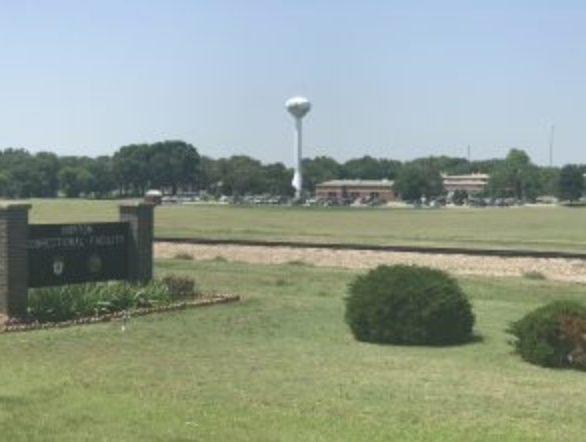
Since its inception last fall, an Inmate Workforce Program agreement, entered into by the Norton Correctional Facility (NCF), a correctional facility of the Kansas Department of Corrections, and Husky Hogs, LLC, a private sector business located in Long Island, Kan. (Phillips County), has been met with a mixed array of opinions from members of the surrounding communities. The program has generated a plethora of interest – and, likewise, has sparked concern – as those unfamiliar with inmate employment have searched for answers to their most sought-after questions. The following is an investigative journalism piece which provides an in-depth look at the creation of this program in northwest Kansas and the ways in which offenders are prepared for and selected for participation, details on the procedures and policies in place to ensure safety and security, details on work duty performance based on eyewitness account, and feedback concerning the impact the program is having on those civilian employees working alongside offenders.
Workforce Program History
Since 1979, various non-prison-based workforce programs have employed inmates across the state of Kansas. Zephyr Products, Inc., a metal manufacturing company located in Leavenworth, Kan., presently employs 71 Lansing Correctional Facility (LCF) inmates, while Henke Manufacturing, a Leavenworth-based commercial duty snow management equipment and allied products manufacturer, has also partnered, since 1993, with Lansing Correctional Facility to employ, as of present time, 22 inmates. Other current partnerships in the state of Kansas, include: Wifco Steel Products, Inc., partnership with Hutchinson Correctional Facility since 2008, 24 inmates employed; Cal-Maine Foods, partnership with Hutchinson Correctional Facility since 2008 (started with Ellsworth Correctional Facility in 2005), 31 inmates employed; and MFL, Inc., partnership with Topeka Correctional Facility since 2007, 22 inmates currently employed. In addition, 39 inmates are presently employed, through a partnership with Larned Correctional Mental Health Facility, at Redbarn Pet Products, Inc., Kirby Custom Cattle Processing, LLC, and LaCrosse Furniture Co.
The first Kansas Department of Corrections non-prison-based private workforce program in northwest Kansas began in 2006 with inmates from the Norton Correctional Facility’s Stockton Unit being employed at Shultz Manufacturing, located in Plainville, Kan. The program continued until the company closed about a year later. A1 Plank and Scaffold Manufacturing was added in 2007, which was successful until the business was closed and relocated elsewhere in the United States. Wilkens Manufacturing was also added in 2007 for employment of Stockton offenders at their plant. The agreement was re-established in 2012, after the closing and reopening of Stockton in 2010, and has remained successful since. The Hess Industries (Hays, Kan.) program was established in 2011, and also employs Stockton offenders.
In an agreement entered into by the Norton Correctional Facility and Husky Hogs, LLC, an Inmate Workforce Program was created to employ, in a manner consistent with their proper training and rehabilitation, a maximum of 25 inmates, while ensuring no civilian employees of the private company would be displaced. After entering into the agreement, the Norton Correctional Facility’s unit team staff began reviewing cases, addressing readiness, determining eligibility based on a stringent set of selection criteria, and preparing offenders for placement.
Preparing and Screening Inmates
To prepare inmates for work release, unit team staff, as part of ongoing case management, reviewed cases that were 12-96 months from release to determine whether an inmate was a likely candidate for future referral for work release. Additionally, the unit team began working with each candidate to help him prepare for work release or private industry employment, addressing, among many topics, barriers to minimum custody (such as detainers, disciplinary reports, other behavior issues, etc.), job readiness, and anti-social thinking.
In determining eligibility, every offender is screened to determine if he is a good candidate for work release placement. An inmate is eligible for work release, in accordance with the selection criteria of the Kansas Department of Corrections, provided: (1) he does not have a diagnosis of pedophilia, or an Axis I diagnosis of not otherwise specified exhibitionism, fetishism, frotteurism, sexual masochism, sexual sadism, transvestic festishism, or voyeurism; (2) the inmate is managed as a sex offender who is not precluded by #1, and he has successfully completed sex offender treatment or obtained an override from treatment; (3) the inmate is physically capable of seeking and maintaining employment, with reasonable and available assistance for any physical limitation; (4) any medical or mental health treatment needs can be adequately addressed in the work release setting, including the ability to access necessary medication; (5) the inmate has no history of escapes from a secure facility in the last 10 years; (6) the inmate is not currently, and has not within the past year been, involved in organized criminal activities, including gang or security threat group activities; (7) the inmate has not been convicted of a Rule 1 disciplinary infraction or a Rule 2 infraction for arson, or dangerous contraband not involving a weapon or statutory violation (felony crime) within the last six months; (8) the inmate does not have a pending felony detainer or a misdemeanor detainer that it is known will require him to serve more than 60 days in a local jail after release from the Kansas Department of Corrections; (9) the inmate’s history does not reflect current, ongoing violent, assaultive, or dangerous behavior; and (10) there are no other indicators the inmate is too great a risk to the community if placed in a work release setting, including recent behavior, discharge summaries from treatment or a Clinical Services Report reflecting high risk for violent behavior, or otherwise. Following screening, the unit team concludes whether or not a referral to work release is appropriate. Once a referral has been completed, procedures are in place to make a final determination as to whether the inmate will be granted placement.
“Security is always the top concern for Department of Corrections staff,” says Kansas Department of Corrections Director of Public Affairs and Chief of Staff, Samir Arif. “The appropriateness of job settings and security risks of inmates are constantly checked and rechecked. This is no different for offenders who work outside of a prison setting. Inmates are chosen to participate in this program because they have proven themselves to not be a risk to the community.”
Once final determination is made, Husky Hogs, LLC receives employment applications completed by inmates, and Human Resources begins to conduct background checks, and determines whether or not each inmate would be a good fit based on the qualifications and job experience on his employment application. The Husky Hogs leadership team, which consists of Human Resources, either one or both Husky Hogs, LLC General Managers, and the direct supervisor(s) of the open position(s), then conducts in-person interviews with each inmate at the correctional facility. Inmates chosen for hire are then placed in the appropriate position based on their skills.
Preparing Civilian Staff
Husky Hogs, LLC first presented the notice of inmates joining the workforce to their leadership staff during leadership training. According to Husky Hogs Director of Inmate Workforce Program, Taryn Graham, the leadership staff collaborated with the group to determine the best way to present the information to the staff, and then put together an educational PowerPoint presentation about Inmate Workforce Programs across the state of Kansas. “We first delivered the PowerPoint to our second-level leadership teams (which we refer to as our Bravo and Delta groups),” Graham said. “Once all our leaders were informed and had all their questions answered, we delivered the same PowerPoint to all of the Husky Hogs, LLC staff.” As part of the onboarding process for any new Husky Hogs employee, an orientation is delivered by Human Resources prior to working with any inmate. Additionally, leadership staff, along with several team leaders, were given an eight-hour training on Offender Supervision, which was provided by the Norton Correctional Facility’s Training Officer.
Hiring Process
The new hire process at Husky Hogs is the same as any new hire, with the exception that the paperwork for inmates is completed at the correctional facility instead of at Husky Hogs’ main office. Offenders complete the same set of documents all employees do, such as: health/allergy information, tax withholdings, an I-9 verification, etc. Inmate employees are also provided with their own copy of the Husky Hogs, LLC Policy and Procedure Manual, which the correctional facility allows them to keep.
Placement and Transportation of Inmates
On December 4, 2017, the Inmate Workforce Program was officially launched when minimum custody inmates were transported from the Norton Correctional Facility to report to Husky Hogs, LLC for their first shift. Inmates are transported from the facility in busses, which are owned by Husky Hogs, LLC and painted to differentiate them, and designated bus drivers have been trained to do the transporting. To account for an inmate’s arrival to, and departure from, the work site, Crew Pack identification cards are put together at the correctional facility which allow the inmates to leave the premises. Prior to departure from the correctional facility or the work site, the transportation driver conducts a role call, verifies each offender with their identification card from the Crew Pack, and marks off their name as they load the bus – this ensures the driver has the correct inmates on board on the correct day.
The transportation bus driver is provided with additional documentation that shows which inmates are scheduled to work on which days, and documentation also accounts for any schedule changes there might be due to an inmate missing work for a medical appointment or a family visitation. When a schedule change is necessary, Husky Hogs works with the correctional facility to accommodate and ensure the inmate doesn’t lose a day of work.
Also on board the transportation bus are Chain of Custody forms, which come off the bus with the inmates to be given to the site manager each morning. Once inmates have stepped off the bus, site managers account for each inmate as they enter the site. The form then leaves the site with inmates at the end of each shift, where the transportation driver conducts another roll call, and confirms each inmate is accounted for on the bus. Once inmates return to the correctional facility, their Crew Packs are provided to the Correctional Officer receiving the inmates, and the correctional facility’s check-in process, which consists of a contraband search of each inmate, is then completed.
At the Work Site
On their first day of work, at the start of their shift, offenders submit to new hire drug testing, which includes a 12-panel cup, as well as a breathalyzer that tests for alcohol. If an inmate should fail either test, though this has never occurred according to Graham, he would be immediately transported back to the correctional facility. Inmates are also part of the quarterly drug testing program for all employees, and tests are conducted at a random time every quarter.
Presently, inmates are employed at three different sites, and the Norton Correctional Facility is notified which inmates are assigned to which sites. Additionally, the correctional facility is provided with further details which include area maps and physical addresses of each site’s barns.
There are multiple job assignments for the inmate staff, including: breeding, farrowing, gestational, weaning, nursery, and finishing. One inmate is assigned to complete maintenance projects within his facility, but helps in other areas as needed. There are no uniformed correctional officers that report to work with the inmates, as the inmates are supervised by Husky Hogs, LLC civilian staff. “After lengthy discussion with the Kansas Department of Corrections on the criteria for individuals to be considered eligible for our work program, it was evident that it was not recommended by the Kansas Department of Corrections, nor did we feel there was a need for correctional officers on site,” Graham said.
Each inmate is assigned to a specific team, and each team has at least one team-leader that is responsible for their team members throughout the day. The teams remain in communication with each other using radios, and all employees are assigned a radio required to be carried on them at all times. Inmates are not allowed to work at any site that does not have a leadership-level supervisor on staff. Additionally, no female is allowed to work alone with an inmate at any given time; any female working with an inmate is always accompanied by at least one male civilian employee.
Vaccinations and medications for the animals are part of the job requirements. While these are tracked and accounted for by management, inmates have been trained to treat the animals by providing vaccinations and medications as necessary for their health and well-being.
Compensation and Benefits
Inmates are employed seven days per week at Husky Hogs, LLC, however each inmate is restricted to working five day shifts (40 hours per week and between the hours of 7 a.m. and 3 p.m.), with two consecutive days off during the week, Sunday through Saturday. Husky Hogs, LLC pays wages to inmate employees at a rate above the state minimum wage, and deducts Federal, State, and FICA/Medicare taxes from inmate payroll checks. Additionally, Husky Hogs, LLC provides Workers’ Compensation coverage for inmate employees, as provided in the Workers’ Compensation laws of the State of Kansas. Inmates are reported as new hires of Husky Hogs, LLC in the state of Kansas, and dependent support withholding orders are sent to Husky Hogs accordingly, which are then withheld from inmate paychecks.
For any inmate placed in a work release program or private industry job, a per diem rate of 25 percent of his income is withheld and payable to the Kansas Correctional Industries Fund for food and lodging. Five percent of each inmate’s paycheck is also withheld to be paid towards court-ordered restitution or to the Crime Victims Reparations Board. After all of the above deductions, 10 percent of each inmate’s remaining wages are deposited into a mandatory savings account for disbursement upon release. Any remaining amount is then put into the inmate’s institutional account. Although private industries can charge inmates mileage to and from their work sites, Husky Hogs has waived this fee.
Because the inmates do not work full-time – employees are required to work an average of 50 hours per week to be considered full-time – they do not qualify for certain benefits such as health insurance and production bonuses. They do, however, qualify for a safety bonus, as they are an integral part of the operation’s safety culture and team.
Performance Reviews and Audits
Within his first 30 days of employment, an inmate completes new employee onboarding, which pertains to Company Culture and safety procedures, with his supervisor. Inmates immediately become a part of the safety program, and attend bi-weekly safety meetings with the team they work with, which includes their civilian co-workers, supervisors, General Manager, and Human Resources. Every employee is required to participate, and bring meaningful near-misses regarding safety to each meeting.
Performance reviews are completed at 30, 60, and 90 days of employment for all inmate and civilian employees. Additionally, inmate employees have a six-month review, and then annually. Reviews include the inmate, their direct supervisor, and Human Resources. Discussions of what is going well, what they need to improve on, and their future goals are a part of the review process. Wages are reviewed at 90-days, six months, and annually, and assessed based on performance.
Periodically, Kansas Correctional Industries conducts random security and labor audits at work release program or private industry job work sites. On February 14, 2018, an audit of the Husky Hogs, LLC work sites was conducted, with no security or safety concerns noted.
An Eye-Opening Experience
Earlier this month, the Telegram’s writer was afforded the opportunity to spend the day observing 19 Norton Correctional Facility inmates as they performed various job assignments at a Husky Hogs work site. While on-site, many of the inmates also provided insight into the experiences they’ve had while participating in the Workforce Program, and civilian staff also offered their thoughts on how inmates have inspired others with their daily desire to demonstrate a strong work ethic.
After starting the morning off with an opportunity to speak to civilian and inmate employees, the Telegram’s writer began the observation process by visiting each of the site’s barns to oversee inmate and civilian employees in their work environment. As members of the team worked to complete the day’s breeding and weaning process of moving piglets out of the farrowing barn, inmates were observed to be extremely diligent in their duties, displaying compassionate assertiveness in carrying out the processes.
As observations of each barn continued throughout the morning, it was quite easy to take notice of the fact that inmate employees truly take pride in their work, find it meaningful and worthwhile, and feel incredibly blessed to be valued, and respected, as key elements and integral members of the team. When the topic of team effort was presented for discussion, not one inmate’s face failed to show true contentment. “When we’re here working to complete our jobs, we are viewed as and treated like men,” one inmate said. “No one looks down upon us, or judges us for mistakes of our pasts.” “It makes me happy to feel that I’m positively contributing to society,” another gentleman said. During observation, one inmate shared with the Telegram’s writer that his favorite part about the job was the compassion he gets to show for the piglets while he’s at work. This particular inmate’s true compassion for animals was evident through the sharing of a heart-warming story in which he rescued a piglet from being suffocated under its mother by performing mouth-to-mouth resuscitation to save its life.
Many of the men take great pride in the fact that they are now able to become financially responsible, support their families, and save earnings that will contribute towards their success upon release from prison. One thing is absolutely certain: the dedication the inmate employees have, and the appreciation they feel from being valued as team members, is undeniable. During observation of, and interaction with, these men, at no point was it possible to recognize anything other than the fact that they feel incredibly fortunate to have been considered for participation in the program.
Team Effort and Civilian Staff Opportunities
Bringing on the inmates has significantly increased the amount of leadership required of the civilians at Husky Hogs and, since the start of the program in December of 2017, eight civilian staff have advanced into team-lead positions. In addition, three civilian staff were hired to fill new managerial roles, with one for a nursery site and two for finishing. Presently, Husky Hogs is recruiting for a Gilt Development Unit Farm Manager to manage the Gilt Development Unit barn, and is also recruiting Swine Breeding personnel to join the team. In May and June of 2018 alone, 10 new civilian staff have joined the Husky Hogs team. As the inmates fulfill the entry-level positions, civilian staff are able to be better utilized in leadership roles.
In visiting with several of the civilian staff members to gather their thoughts on the inception of the program, the Telegram’s writer quickly noted that every civilian employee had nothing but absolutely positive things to say about the Inmate Workforce Program. “I don’t know what we’d do without them,” one civilian said. Civilian employees, both male and female, expressed a high level of satisfaction and gratefulness in the work ethic the inmates have displayed as well. As indicated by one civilian, “Inmate staff inspire and motivate the civilian staff to work harder, smarter, and better.”
“I have had the pleasure of assisting with the implementation of our Inmate Workforce Program, and now play a large role as the Director/Human Resource contact for the program and our inmate employees,” Graham says. “Our Husky Hogs team has built a wonderful relationship with the Norton Correctional Facility and the Kansas Department of Corrections. It is very evident that we, along with the State of Kansas, are true advocates of inmate workforce programs and the rehabilitation opportunities it provides to offenders. This program has exceeded my expectations; the knowledge and hard work the inmates bring to our team is more than we could have asked for. Hearing their testimonies about the impact this opportunity has provided them is the icing on the cake. I am blessed to serve in this role and provide a positive impact in these offenders’ lives.”
“This program has far-reaching benefits for both our staff and our livestock,” said Husky Hogs Public Relations and Risk Manager, Julia Nelson. “From an animal-health standpoint, we now have the ability to schedule our staff so we can provide the highest quality animal care possible. It has given our civilian staff opportunities to advance their careers, play an active role in leading and coaching, and provide the inmate work crew positive experiences and lessons they can use to better their lives upon release. I am very proud to be a part of this program and the positive impact it has had on our operation.”
By offering various impactful programs, such as the Inmate Workforce Program, Kansas correctional facilities have reduced rates of readmission to prison after release by 20 percent since 1999. Every effort is being made to ensure every offender released from prison will have the tools needed to succeed once he rejoins society. The Inmate Workforce Program is just one of the many programs serving to reduce the likeliness of recidivism by allowing offenders the opportunity to develop and improve upon their job and life skills, and become tax-paying, law-abiding citizens. Experiencing success on the job, coupled with the reward of feeling fully valued as an employee, will only serve to further promote the many efforts being made to ensure offenders steer away from continuing a life of crime.
— Republished with permission. Article originally appeared in the Norton Telegram.
As a state comprehensive university, FHSU has a responsibility to be a “steward of place,” a term coined by the American Association of State Colleges and Universities in 2002 to describe the role of our public comprehensive colleges and universities. From AASCU:
“We are ‘stewards of place.’ We engage faculty, staff and students with the communities and regions we serve – helping to advance public education, economic development and the quality of life for all with whom we live and who support our work. We affirm that America’s promise extends not only to those who come to the campus but to all our neighbors.”
Serving as a steward of place is a responsibility Fort Hays State University has always fully embraced and at which it has excelled. Serving the needs of our community, broadly defined, is ingrained in our DNA. In fact, as I started out writing this column, I quickly realized that we are so good at stewarding our community that I had enough information to fill an entire newspaper!
But, in the spirit of brevity, let me highlight some of our key efforts in civic service and leadership, starting with an institution dedicated to the idea of citizenship.
FHSU’s Center for Civic Leadership endorses the view that higher education has a responsibility to prepare students to be active and engaged citizens, and that colleges and universities have a responsibility to make a positive and direct impact in their communities.
The Center’s four programs – the American Democracy Project; the Global Leadership Project; Tigers in Service; and the Women’s Leadership Project – are all designed to develop civic leadership skills. Two I want to focus on here are Tigers in Service and the Women’s Leadership Project.
Tigers in Service is a student-operated program that acts as a clearinghouse for college students who want to volunteer and participate in community service activities. Over the last several years, student volunteers have impacted the Hays community in numerous ways: organizing food drives for local pantries; providing assistance to Boy Scouts and Girl Scouts of the area; tutoring at local elementary schools; and working directly with residents of local retirement homes.
The Women’s Leadership Project creates events and opportunities that are designed to empower, inspire and educate women to overcome barriers they face in today’s society.
Whether it’s standing against victim-blaming, raising awareness about the gender pay gap, talking about the importance of consent or encouraging women to register to vote, students and community members have the opportunity to expand their knowledge and stand up against the misconceptions and labels that are often seen before their voices are heard.
Through this, the Women’s Leadership Project helps build on the talents and skills that women naturally possess and empower them to seek leadership positions and opportunities, then go out into the world – fearless – and speak with the confidence they need to make a difference in this world.
Another agency, the Docking Institute of Public Affairs, began in the mid-1980s as the Institute of Public Affairs. In the beginning it was involved in the birth of the Ellis County Coalition for Economic Development (now Grow Hays). It was also involved, in its early stages, in the effort to find a replacement industry for Baxter-Travenol, a major manufacturer of medical supplies that closed its Hays production plant. That threw hundreds of people out of work in Hays and the surrounding area and left empty the large facility currently occupied by Enersys.
A $115,000 state legislative grant was key in enabling the Institute to fully develop its strategic planning expertise to assist cities, counties and banks in planning for the future. The Institute still provides those services to communities and non-profits in the region. Docking also provides social science research services to many communities in the state and region. Institute staff provides moderators for Smoky Hill Public Television’s “The Kansas Legislature” show each year.
A major public service provided by the Docking Institute is the Kansas Speaks survey conducted each year, which employs professional survey research methods to gather and assess the opinions of Kansans from across the state. No other entity in the state provides this service.
This is just a small sampling, in just one area, of the impact Fort Hays State has had on our students, community and state. I look forward to sharing additional information on our stewardship efforts around art and culture; business and entrepreneurship; community, health and social services, special programs in teacher preparation along with other wonderful examples in future columns.
I am so proud of FHSU and the multitude of ways in which we focus our energies to “advance public education, economic development, and the quality of life” for our neighbors. Our desire to care for others extends beyond the campus and Western Kansas – it is how we do our best to empower the world to greater success.
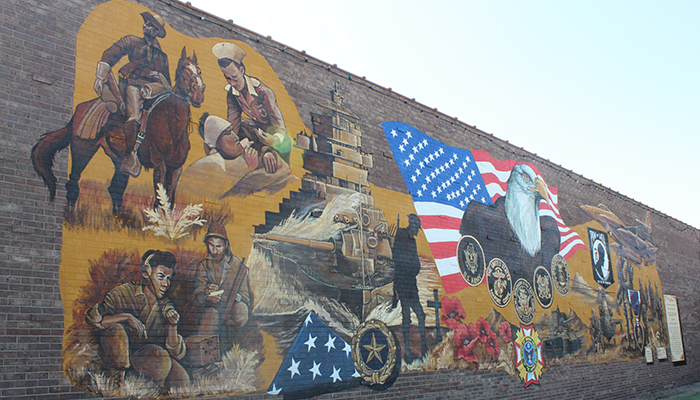
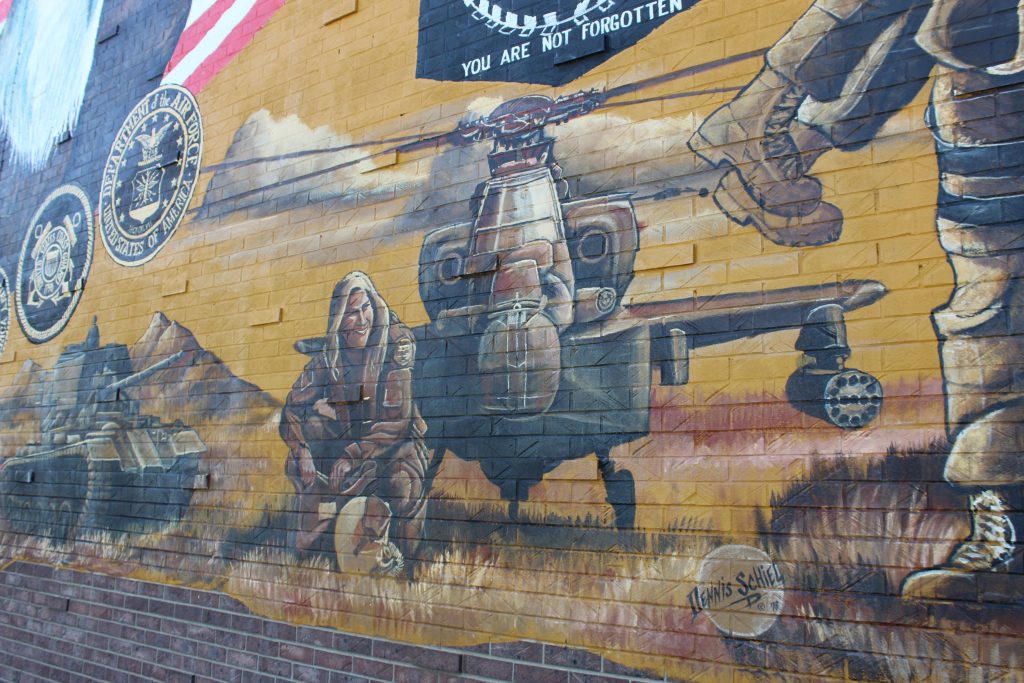
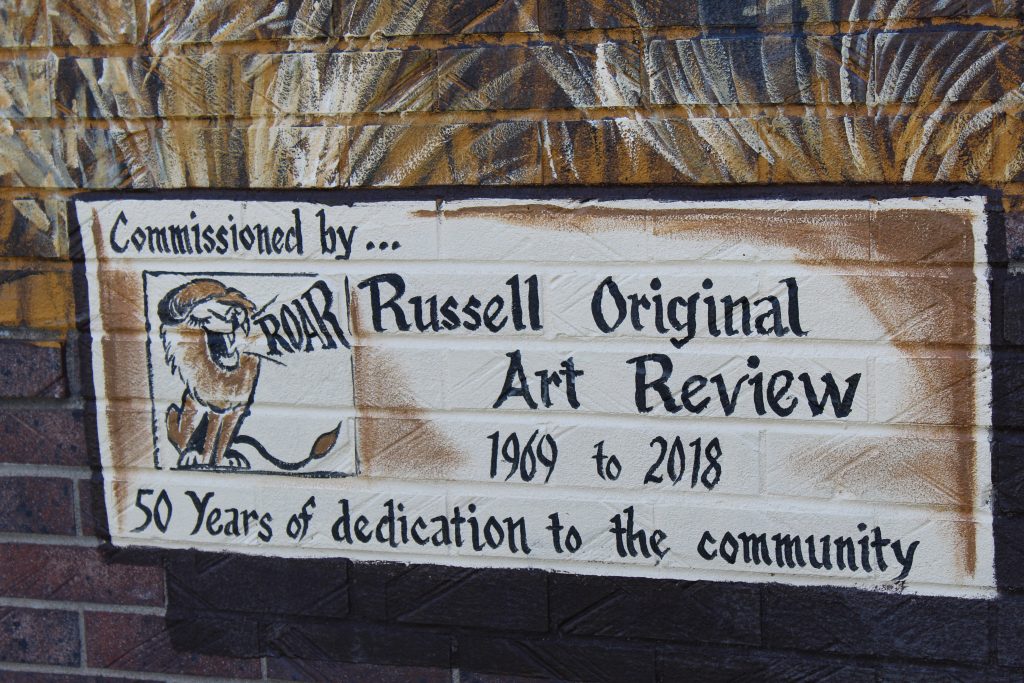
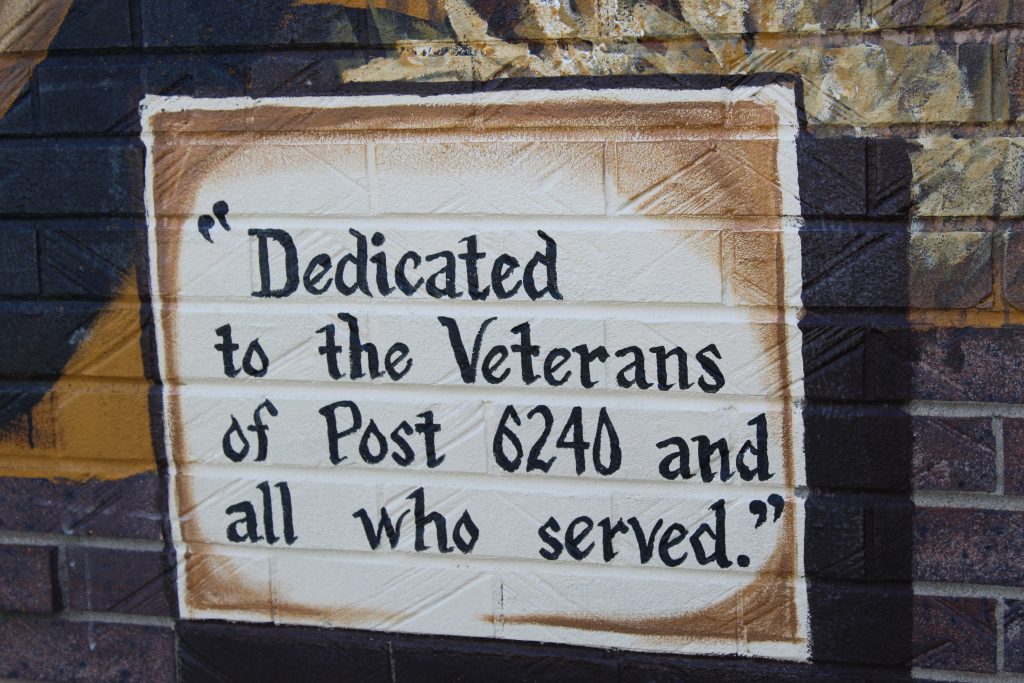
RUSSELL — A patriotic mural sponsored by the Russell Original Art Review (ROAR) was completed last week on the exterior of the Russell VFW, Post 6240.
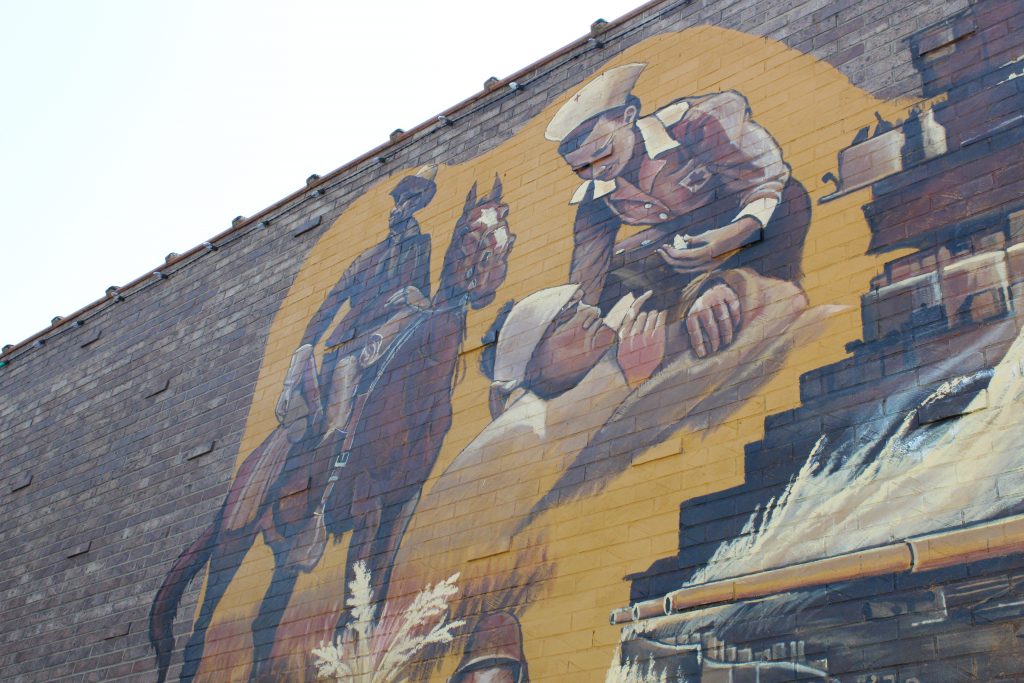
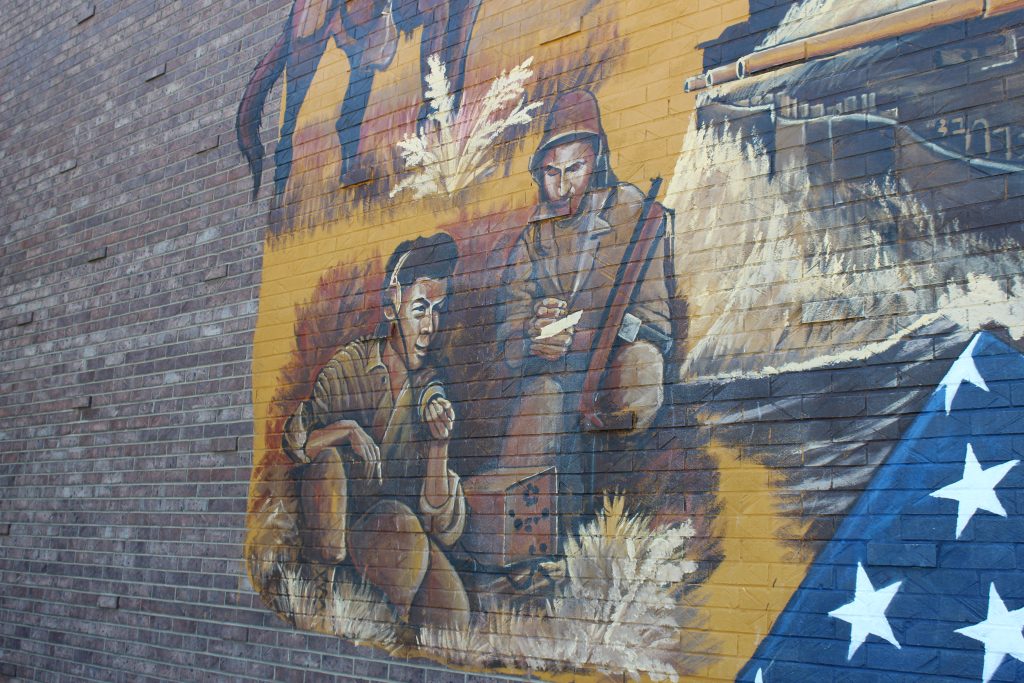
The mural depicts armed forces personnel from a buffalo soldier to the present.
ROAR commissioned the mural as part of its 50th anniversary celebration this fall. The mural will be dedicated Oct. 13 as a part of that celebration.
Micky Zorn, past post commander, said the VFW has received positive response from the public about the mural.
“It is amazing, and I tell you it really has hit home with the veterans, especially for our older veterans. It really has choked them up,” she said. “You know the VFW has been struggling across the board nationally trying to get members. We hope that maybe it might serve as a little spark because we are the ones who are up there at Congress constantly fighting for benefits for the veterans.”
Russell VFW mural
Russell VFW mural
Russell VFW mural
Russell VFW mural
Russell VFW mural
Russell VFW mural
Russell VFW mural
Russell VFW mural
Russell VFW mural
Russell VFW mural
Russell VFW mural
Russell VFW mural
Russell VFW mural
The mural is 17 feet by 60 feet and painted by Dennis Schiel of Hays, who also painted murals on the exterior of the Fox Pavilion in Hays and the Hays VFW. Schiel began painting the mural in April.
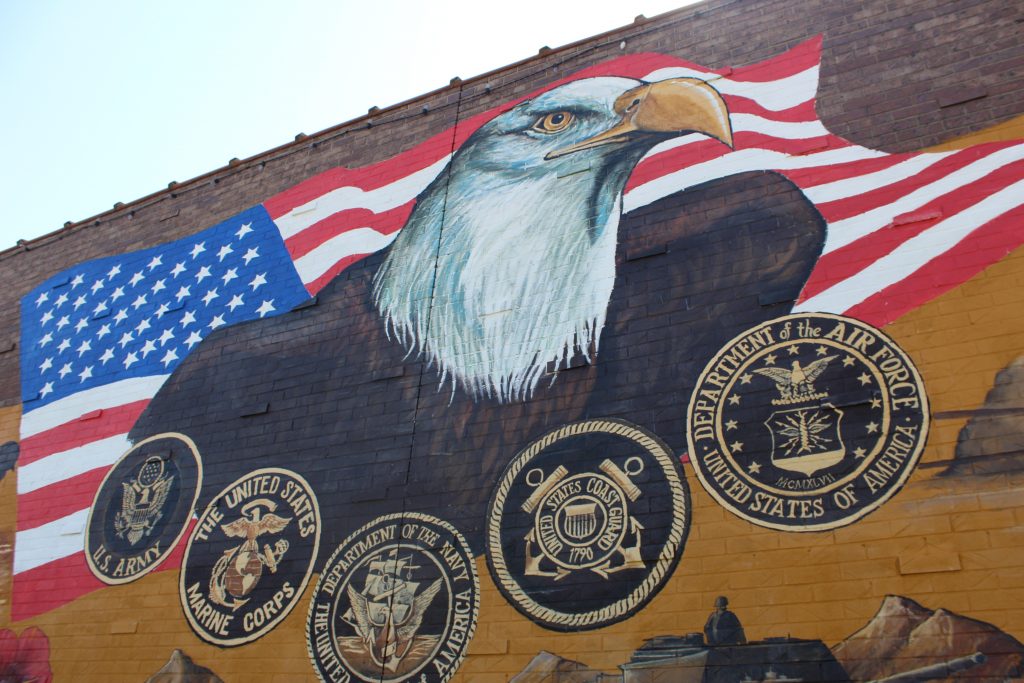
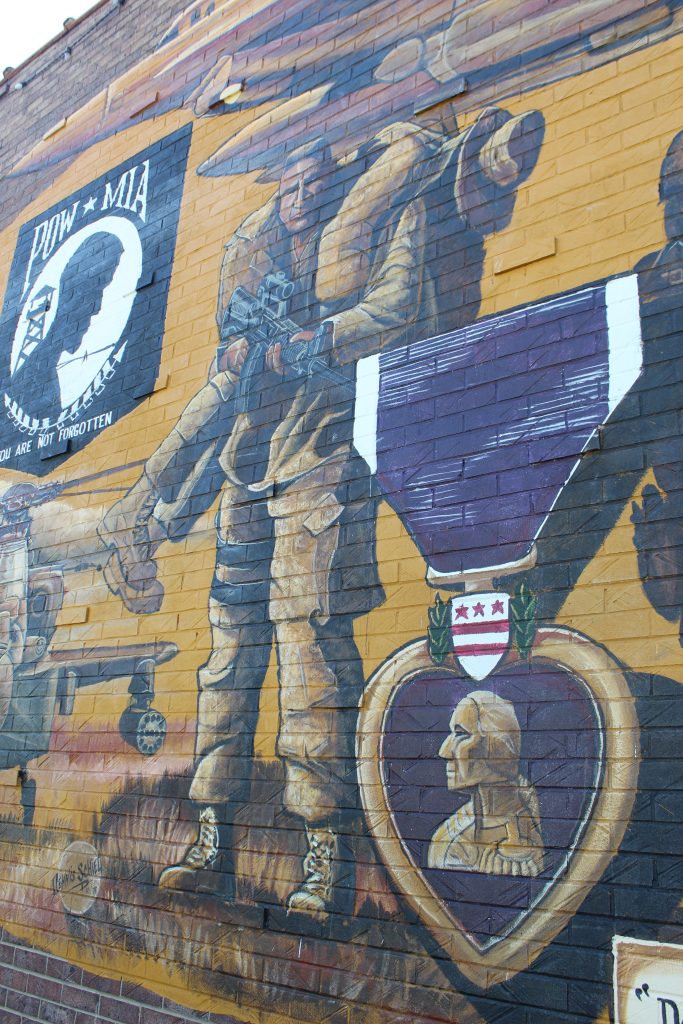
The mural is painted in earth tones similar to the FOX mural with the exception of the American flag, bald eagle, poppies, VFW logo and a Purple Heart. It depicts a timeline of U.S. military history as well as U.S. military symbols. A kiosk will eventually be added to the mural to explain the images in the mural, including the Buddy Poppies, buffalo solider, code talker and military nurse.
He worked with ROAR and VFW to pick the subject matter for the mural and then based the images on historical photographs. He said he appreciated being able to create a tribute to those who served.
“It was fun to do,” he said. “I appreciate the town’s arts commission wanting to do the mural.”
Patty Driscoll, Russell Original Art Review organizer, said she was very impressed with the final artwork.
“We have had so many positive comments about it,” she said. “People are just overwhelmed by it, the size. I guess when they saw a picture of it, they just didn’t realize how large it would be — 20 feet by 60 feet. It was quite surprising for a lot of people. Everybody has been so supportive here in Russell of the mural. They have donated generously, so we are very pleased with the turnout and the response we have gotten from it.”
The mural was funded through a grant and donations. Each of the donors names or their honorariums are listed with the mural. Driscoll said all the funds for the creation of the mural have been raised, but ROAR is still taking donations for the upkeep of the mural. It will need to be resealed every several years.
Mark Bannister, dean of the Robbins College of Business and Entrepreneurship at Fort Hays State University, said in a letter Tuesday afternoon to faculty and staff he is leaving FHSU to take a position at Boise State University.
Bannister has been with FHSU for 26 years.
On Aug. 1, he will assume the role of the interim dean of Boise State University’s College of Business and Economics.
Bannister and his wife, Melanie, have a daughter, son-in-law, and two grandsons in Boise.
In the letter Bannister said, “I am very optimistic about the future of Fort Hays State University and its Robbins College of Business and Entrepreneurship. The university is in good hands, and we have a great team of faculty and staff within the college. I will miss many friends and colleagues, but am excited about this next adventure in life.”
The Hays Post tried to reach Bannister Tuesday night but was unable to make contact.
TOPEKA – The Kansas Department of Health and Environment (KDHE), in conjunction with the Kansas Department of Wildlife, Parks and Tourism (KDWPT), has issued public health warnings for Carbondale West Lake, Clarion Woods Park Lake, Webster Lake, Atchison County Park Lake, Melvern Outlet Pond and Melvern Outlet Swim Pond for the upcoming holiday and weekend.
If a lake is under a public health warning for blue-green algae, activities such as boating and fishing may be safe. However, direct contact with water (i.e., wading, skiing and swimming) is strongly discouraged for people, pets and livestock. The lakes currently under a public health advisory:
Warning: Carbondale West Lake, Osage County
Warning: Clarion Woods Park Lake, Shawnee County
Warning and Beach Closed: Webster Lake, Rooks County
Warning: Atchison County Park Lake, Atchison County
Warning: Melvern Outlet Pond, Osage County
Warning: Melvern Outlet Swim Pond, Osage County
The U.S. Army Corp of Engineers has stated swimming is not allowed at the Melvern Outlet Swim Pond Beach, and all wading and contact with algae is highly discouraged. Melvern Lake visitors can utilize Coeur d’Alene Swim Beach, which sits on the main body of the lake, located west of the U.S. Army Corps of Engineers Project Office. The present algae bloom is isolated to the Outlet Pond and Outlet Swim Pond; Melvern Lake is not affected.
Lakes under a warning are not closed. Marinas, lakeside businesses and park camping facilities are open for business. If swim beaches are closed, it will be specifically noted. Drinking water and showers at parks are safe and not affected by algae blooms. Boating and fishing are safe on lakes under a warning, but contact with the water should be avoided. Hands should also be washed with clean water after handling fish taken from an affected lake. Zoned lakes may have portions fully open for all recreation even if other portions are under a warning.
Kansans should be aware that blooms are unpredictable. They can develop rapidly and may float around the lake, requiring visitors to exercise their best judgment. If there is scum, a paint-like surface or the water is bright green, avoid contact and keep pets away. These are indications that a harmful bloom may be present. Pet owners should be aware that animals that swim in or drink water affected by a harmful algal bloom or eat dried algae along the shore may become seriously ill or die.
When a warning is issued, KDHE recommends the following precautions be taken:
Lake water is not safe to drink for pets or livestock.
Lake water, regardless of blue-green algae status, should never be consumed by humans.
Water contact should be avoided.
Fish may be eaten if they are rinsed with clean water and only the fillet portion is consumed, while all other parts are discarded.
Do not allow pets to eat dried algae.
If lake water contacts skin, wash with clean water as soon as possible.
Avoid areas of visible algae accumulation.
KDHE samples publicly-accessible bodies of water for blue-green algae when the agency receives reports of potential algae blooms in Kansas lakes. Based on sampling results, KDHE reports on potentially harmful conditions.
For information on blue-green algae and reporting potential harmful algal blooms, please visit https://www.kdheks.gov/algae-illness/index.htm. Human and animal illnesses potentially related to harmful algal blooms can also be reported through this website or by calling the KDHE Epidemiology Hotline at 1-877-427-7317.
As always, summer has been off to a very busy start and I have had the opportunity to attend a number of events in our community and throughout the state representing you and our community. I love meeting with constituents, colleagues, friends and family during the summer at all of these events and activities and look forward to the many more to come this season.
I highlight events that I have attended as well as events I plan on attending in the coming months below:
Attended or participated in:
03/23 Appointed to Governor’s Education Council.
04/09 Legislative Update presentation to Hays Lions Club. (Hays)
04/09 Kansas Supreme Court Hearings. (Colby)
04/16 First meeting of the Education Council. Assigned to the Workforce Inventory Sub-Committee. (Topeka)
04/21 Presentation to Options Inc.on legislation pertaining to domestic violence. (Hays)
05/04 Adjournment of the 2018 Legislative Session. (Topeka)
At FHSU graduation with Regent Zoe Newton, President Tisa Mason and Representative Leonard Mastroni.
05/11 Fort Hays State University Spring Commencement (Friday Ceremony) (Hays)
05/12 Fort Hays State University Spring Commencement (Saturday Ceremony) (Hays)
06/07 Legislative Update presentation at Hays Senior Center. (Hays)
06/11 Workforce Inventory sub-committee meeting (Topeka)
06/21 Kansas Water Office Meeting re:R-9 Ranch change of use permit. (Greensburg)
06/22 Hays Arts Council Summer Gallery Walk.(Downtown Hays)
Upcoming:
06/26 Governor’s Education Council Meeting. (Topeka)
06/28 Hays Area Chamber of Commerce Luncheon. (Rose Garden)
07/07 Wild West Festival Parade. (Downtown Hays)
07/14-21 Ellis County Fair. (Ellis County Fairgrounds)
07/26 Hays Senior Companion recognition program. (Hays)
08/03/4 Herzogfest (Victoria)
Over the past couple of weeks, the Kansas Supreme Court and the US Supreme Court have ruled on a number of significant cases that will, or have the potential to, greatly impact our communities and state’s budget.
The Kansas Supreme Court committed to rule on the Gannon v. Kansas school funding case before the end of this fiscal year (June 30). The new ruling was released on Monday, June 25.
South Dakota v. Wayfair deals with how online retailers handle sales tax, and
Murphy v. NCAA could allow sports betting in states who so choose.
SCHOOL FINANCE – GANNON V. KANSAS
I have provided a brief overview of the points made by both sides of the case, those in favor (State) and those opposed to (Plaintiff Districts/Gannon) the most recent school finance formula passed by the Legislature during the 2018 legislative session. Reading those briefs will help provide context to the court’s ruling, which I have summed up below:
Though the court did not find the school funding formula to be constitutional, schools will open on July 1, but that the Legislature has until April 15, 2019 to resolve issues identified by the court. The equity components of the 2018 bill were found to be ok, but the funding levels need to be adjusted in order to comply with the legislature’s metrics for measuring educational standards. Below I have highlighted specific funding concerns addressed by the court:
The legislature utilizes the Rose Capacities to measure the educational outcomes of Kansas students, which provides a specific amount required to meet that level of attainment, which was not reached in the 2018 bill.
Inflation was a key issue that wasn’t properly addressed in the 2018 bill, which states that inflation would be accounted for beginning in 2023. The legislature is tasked with adjusting the funding to account for inflation for the years 2018-2023 as well.
“Excess costs” refer to the cost difference between educating a “general education” student and a “special education” student, which is supposed to be funded to 92%. In the 2018 bill, the legislature only funds 83.2% of those “excess costs”. The court has requested that the funding be adjusted to meet the 92% requirement.
The following initiatives the court mentioned included funding this year, but noted there is no funding included after that. It’s worth noting the funding formula is written to include those things year after year, but since those future budgets are not yet written, they are not specifically mentioned.
Teacher Mentoring: $1.3 million
Paying for student ACT/WorkKeys test assessments: $2.8 million
Community mental health partnership pilot program: $10 million
Industry experts are working to provide us with anticipated costs, which we expect to receive in a few days. The court’s ruling was data-driven and represents a fair and balanced expectation to be met by the legislature. I believe the legislature will make quick work to address these issues early on in the 2019 session.
INTERNET SALES TAX – SOUTH DAKOTA V. WAYFAIR
The much-anticipated ruling of South Dakota v. Wayfair was released by the Supreme Court on June 21st. This case challenged the ruling of Quill v. North Dakota, in which states could not require internet retailers to charge sales tax if they had no physical presence in the state. In a 5-4 decision, the court ruled in South Dakota’s favor, leaving the decision to require internet retailers to charge sales tax up to the individual state, honoring state sovereignty.
This ruling is perceived as a victory for states and localities, who have been losing billions in tax revenue from antiquated laws. Not only will this decision transform how state’s will format and structure internet sales tax laws, but also will have tremendous effects on e-commerce.
The Kansas Legislative Research Department (KLRD) does not have any set-in-stone data regarding how many Kansans are purchasing products online from retailers not charging sales tax. That being said, I have a strong feeling that most Kansans have made an online purchase from a store without a physical presence in the state, leading to the connotation that this will have a significant impact on our state’s ability to restore key programs, re-invest in T-Works projects and other ways to improve our state and the lives of Kansans. The legislature must make calculated decisions, utilizing reliable data that will allow us to balance the tax code and provide for these other key programs.
SPORTS BETTING – MURPHY V. NCAA
The Supreme Court ruled in favor of sports gambling, striking down the Professional and Amateur Sports Protection Act, a federal law enacted in 1992. Not wanting to infringe on state sovereignty, the court ruled to allow the decision to allow sports betting up to the individual states.
In anticipation of a favorable ruling, more than 15 states have either passed or introduced sports betting laws. Rep. Jan Kessinger of Overland Park, a former member of the Kansas Gaming and Racing Commission, introduced HB 2792, Xwhich would have created the Kansas Sports Wagering Act, authorizing the Kansas Lottery to allow sports betting to take place in the state of Kansas, pending the outcome of Murphy, but it did not come out of committee. The bill will have to be reintroduced in the 2019 legislative session in order for the state to take advantage of this ruling.
Those in opposition to the Supreme Court’s decision believe the impact of the legalization of sports gambling will cause match-fixing and lead to corruption of games. Proponents of the ruling argue that countries with legalized sports betting, such as Britain, have yet to face these challenges. They go on further to suggest that the legalization of sports betting will lead to organizations being able to better monitor “betting irregularities that could suggest corruption.”
Director of the Sports Law Program at Tulane Law School, Gabriel Feldman, states that the legalization of sports gambling will transform how we watch sports games and matches, with fans following multiple teams rather than being a die-hard fan of just one athletic program: “It will make every second of every game of every week interesting to fans as it will give everyone something to root for.”
It is a special honor to serve as your state representative. I both value and need your input on the various issues facing state government. Please feel free to contact me with your comments and questions. My office address is Room 43-S, 300 SW 10th, Topeka, KS 66612. You can reach me at (785) 296-4683 or call the legislative hotline at 1-800-432-3924 to leave a message for me. Additionally, you can e-mail me at[email protected]. You can also follow the legislative session online at www.kslegislature.org.
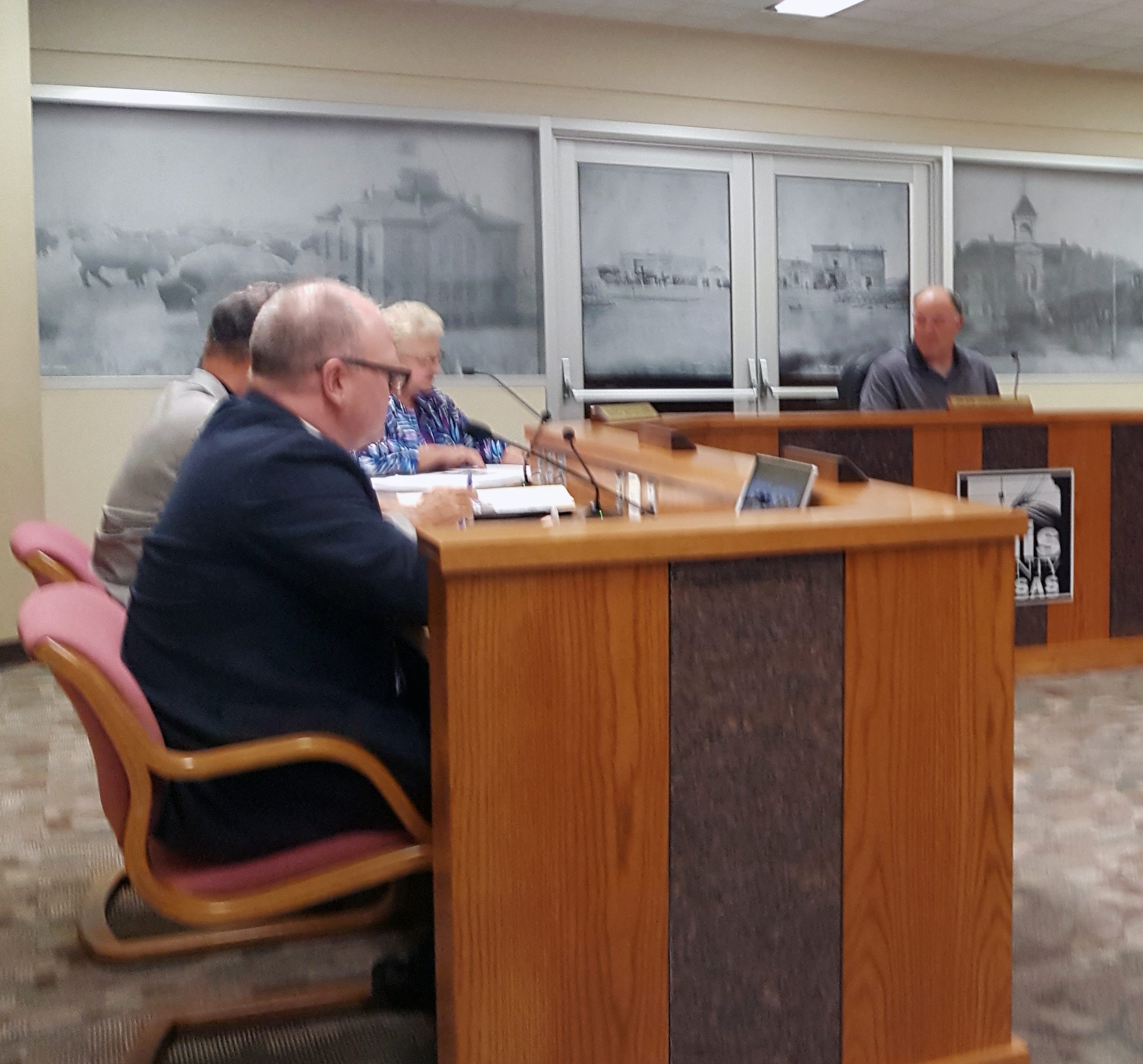
The Ellis County Commission worked to trim a more than $285,000 deficit for the 2019 budget at Monday’s commission meeting.
When the commission began the 2019 budget process, it faced a more than $670,000 shortfall between anticipated revenues and expenditures. Following a pair of budget work sessions, the commission had trimmed the budget deficit to approximately $285,000.
At Monday’s meeting, the commission focused primarily on transfers to the capital equipment fund to eliminate the remaining deficit.
County Administrator Phillip Smith-Hanes described the capital equipment fund as a savings account.
“The operating budget is sort of our checking account, and the capital budgets are kind of our saving account and one of the expenses we have in operating budget is a transfer to our saving account,” Smith-Hanes said. “But if we don’t make that we don’t get to do the things to the house or go on vacation or whatever we would normally spend those saving for.”
At the end of each fiscal year, Smith-Hanses said, departments are allowed to transfer half of any remaining funds into the capital equipment fund that can be used to pay for equipment replacement or upgrades in the future. Those include vehicles, copiers and voting equipment.
Commissioner Barb Wasinger said the commission wanted to avoid taking money once again from the Road and Bridge Department and taking some of the capital budget funds was a way to do that.
The biggest transfer of $130,000 came from the Treasurer’s capital budget. According to information presented, the Treasurer’s department did not have any planned capital expenditures planned for the next five years.
The commission decided to transfer $60,000 from the Appraiser’s capital budget and $78,000 from Risk Management. According to Smith-Hanes the risk management fund is specifically tied to employee health costs and helps to cover the increase in insurance costs.
They also decided to transfer small amounts from the County Administrator, Commission, Environment and Register of Deeds capital budgets.
Those moves along with a few other reductions reduced the deficit to approximately $13,000. The remaining funds, to balance the budget, will come from the buildings capital improvements fund.
Smith-Hanes will present the commission with the proposed budget and they plan to have a public hearing in August.
“I want to thank to commission for your work, I know this sausage making tonight was not practically pleasant,” Smith-Hanes said. “But it is the situation we find ourselves in.”
In other business, the commission got a report and the Ellis County Drug Court from Judge Glenn Braun, appointed a voting delegate for the KAC Conference, got a report from the Cottonwood Extension District and met in executive session to discuss non-elected personnel matters. No action was taken.

 FHSU University Relations