We have a brand new updated website! Click here to check it out!

News From the Oil Patch, July 2

By JOHN P. TRETBAR

US crude prices are on a tear, gaining more than seven dollars a barrel last week, and ending the first half of the year up more than 20% from January.

Prices were over $74 Monday afternoon, after dropping below that mark earlier in the day. The Nymex benchmark contract was up a dime to $74.25/bbl. London Brent was down $1.29 to $77.94. Kansas Common crude at CHS in McPherson starts the week at $64.50/bbl, after gaining 75 cents on Friday.

Baker Hughes reported 1,047 active drilling rigs across the U.S. Friday, a drop of four oil rigs and one seeking natural gas. The count in Texas was down three, and in North Dakota was down two rigs from the active list last week. Independent Oil & Gas Service reported 16 active drilling rigs in eastern Kansas, down two, and 31 west of Wichita, up one. Operators are moving in completion tools to five leases in Barton County and six in Ellis County.

Operators filed 37 new drilling permits for the week ending June 28, 806 so far this year, with 21 east of Wichita, 16 in western Kansas, including two permits for new locations in Stafford County. We’re nearly 90 permits ahead of last year at the end of June.

Independent Oil & Gas Service reported 33 newly-completed wells across the state last week, 15 in eastern Kansas and 18 west of Wichita. Operators completed one well in Barton County producing pay dirt, and one dry hole in Ellis County. So far this year, the state has completed 735 wells, up more than 70 wells from last year’s second quarter totals.

The U.S. is holding steady at record production levels. For the third week in a row, the government said we produced 10.9 million barrels per day for the week ending June 22. That’s the highest weekly figure ever. The four-week average is more than 1.5 million barrels per day higher than it was a year ago at this time.

Energy regulators in Texas report big increases in that state’s oil and gas production during the month of April. Preliminary figures from the Railroad Commission of Texas showed average production of more than 2.7 million barrels per day, up from 2.6 million a year earlier.

The election of Andres Manuel Lopez Obrador as the next President of Mexico could impact the oil and gas industry here and around the world. Obrador hopes to increase the country’s refining capacity instead of importing from US refiners. Mexico is their biggest foreign market, up to an average of 808,000 barrels per day last year. Mexico’s leftist president-elect has vowed to review the outgoing president’s energy overhaul, which included opening the country to foreign energy operators. He said some foreign investment could continue but threatened to cancel the reforms if he found corruption in the awarding of contracts.

The US exported more crude last week than was pumped by all but three OPEC countries. According to the Energy Information Administration, we exported a record three million barrels per day. Analysts say those totals typically fluctuate from week to week; last week’s numbers are up nearly 300,000 barrels a day from the week before. U.S. oil exports reached a record 3 million barrels a day last week— a greater amount than is pumped each day by all but three OPEC countries, and only Saudi Arabia and Iraq are exporting more oil than the U.S. did last week.

The Canadian government would like to see construction accelerate on the Trans Mountain pipeline expansion, but has no control over decisions to resume or start new work until it takes ownership of the project, which would move crude from Alberta to Canada’s Pacific coast. Canada’s Natural Resources Minister Jim Carr told Reuters he expects the deal to close in “mid to late summer.”

The United States is pushing foreign countries to cut oil imports from Iran to zero by November, as the Trump administration escalates its bid to pressure after pulling out of the nuclear deal. The price of U.S. crude topped $70 per barrel for the first time since May on the news that countries were now expected to completely eliminate their imports, rather than the earlier demands that they make “significant” reductions. A senior State Department official says the administration does not intend to give out waivers allowing close allies to keep importing. Among those allies are India, South Korea, Japan and Turkey. China remains the biggest importer of crude from Iran, which remains a party to the nuclear deal despite our withdrawal.

A Texas oil and gas businessman who called himself the “Frack Master” has been charged with securities fraud in connection with a scheme that defrauded investors out of $62.6 million. Federal prosecutors accused Christopher Faulkner and his company Breitling Energy, of selling working interests to investors in Kansas, Texas, Oklahoma and North Dakota, but defrauded them by, among other things, inflating the estimated costs of drilling and testing wells.

A federal judge on Monday threw out lawsuits filed to hold big oil companies responsible for global warming. U.S. District Judge William Alsup said questions about how to balance the “worldwide positives” of energy against its role in global warming “demand the expertise of our environmental agencies, our diplomats, our Executive, and at least the Senate.”


1 hospitalized after driver falls asleep in Trego County

TREGO COUNTY — One person was injured in an accident just after 2p.m. Monday Trego County.
The Kansas Highway Patrol reported a 2012 Ford F250 driven by Ramos, Victor Leeandrew Ramos, 28, Plainview, TX., was southbound on U.S. 283 nine miles south of WaKeeney.

The driver fell asleep. The truck entered the east ditch and vaulted over a field entrance road.

The trailer disconnected and rolled in the ditch. The truck remained upright and came to rest in the east ditch.

A passenger Jose Edwardo Cedillo, 39, Plainview, TX, was transported to the Trego County Hospital. Ramos and another passenger were not injured. All three were properly restrained at the time of the accident, according to the KHP.

And the Ultimate 4th of July Giveaway winner is …

Thanks to the nearly 1,000 Hays Post readers who took part in the first Ultimate 4th of July Giveaway.

And the winner is …

Kenny Raudis of Hays is our Ultimate 4th of July Giveaway winner. He will get to experience Wild West Festival VIP style with four passes for each night.

Other prizes include:

• A Jägermeister cooler and drink accessories, courtesy of 8th Street Liquor.
• The ultimate firework package from Jamie Day Fireworks, located in the parking lot of Big Creek Crossing, where sales benefit Immaculate Heart of Mary CYO group.
• 25 bratwursts from Rick’s Food Store of Lacrosse and Wilson Food Store of Wilson.

🎥 New water play feature to be installed at Hays Aquatic Park

Jeff Boyle, Director of Parks, discusses Elevations, the new HAP water feature to be installed this fall.

By BECKY KISER
Hays Post

The Hays Aquatic Park (HAP) will have a new play feature installed for use next summer.

City commissioners approved the recommendation of city staff last week to purchase the “Elevations” aquatic feature from RJR Enterprises for $185,000 from the Pool Reserve Funds. The multi-play piece will replace the deteriorated “Starburst” in the zero-depth entry area.

Vice-Mayor Henry Schwaller was the sole vote against the proposal.

He said the Pool Reserve monies are primarily for repairs, and anticipates some big needs. He’s also like to see the Hays Convention and Visitors Bureau (CVB) do more promotion of the pool to increase attendance.

“It’s just there. We just expect people to go there,” Schwaller said. “The first thing that is lacking is a marketing plan.”

“We have the right staff in place now at CVB and I think a marketing plant would definitely help,” agreed Commissioner Shaun Musil. “I don’t think this new feature is going to increase attendance but I think it’s going to keep it relevant.”

Musil also advocated raising admission prices “a little bit.”

As HAP approaches its 20th year, Schwaller is more concerned about upkeep.

“The pool reserve funds we have on hand, $321,000, are meant to repair the pool. We’ve been diligent about it but at some point, we’re going to have a lot to replace,” Schwaller pointed out. “And when we use 57% of that money to buy a feature, it concerns me.”

Commissioner Sandy Jacobs said she would vote in favor of the new play feature because the pool represents “quality of life” in Hays, and is not expected to be a “money-maker.”

Jacobs quoted from an email sent to commissioners by a local business owner who wrote “if families from Hays and other communities begin patronizing other water attractions…we will lose their dollars spend on eateries,  shopping, etc….money and sales tax revenue that would have benefited Hays if we had not allowed our community to lose its sizzle.”

The city’s General Fund is funded primarily by a local sales tax.

The four commissioners agreed the pool does provide “quality of life” in Hays.

According to Jeff Boyle, Director of Parks, construction of the new water play feature will begin August 21, 2018 and should be completed by December 21, 2018.

Boyle noted there were already two 1,000 attendance days at HAP. There were only two 1,000 attendance days in all of 2017. “I hope we continue that trend,” he added.

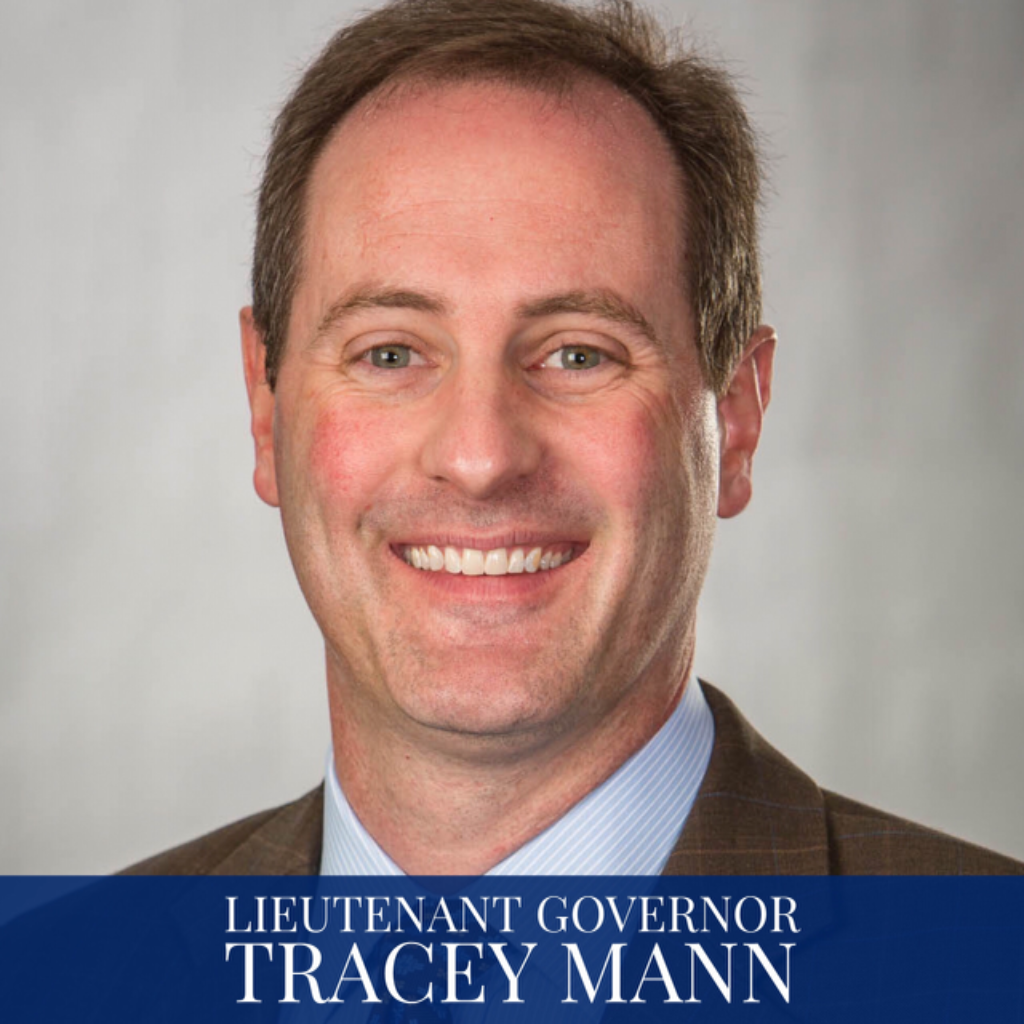
Lt. Gov. Mann to visit area towns Tuesday

OFFICE OF GOV.

TOPEKA – Kansas Lt. Governor Tracey Mann will make several “meet and greet” stops in north-central Kansas Tue., July 3.

The schedule is below. Meetings are open to the public.


8:30-9:15 a.m.

Central Valley Ag, 518 1st St., Lincoln

10:45-11:30 a.m.

Sims Fertilizer and Chemical, 1006  Industrial Avenue, Osborne

1:15-2:30 p.m.

Jewell County Chamber, Mankato Community Center, 214 North High Street, Mankato

4:30-5:30 p.m.

Smith County Chamber, 119 W. Court, Smith Center

Ellis city council to approve 2017 audit report

ELLIS – Ellis city council members will consider approving the recent 2017 audit report during their July 2 meeting. In new business, they’ll also consider approving a budget consultation contract.

Other agenda items for tonight’s meeting include discussion of street repairs on North Madison.

The complete agenda follows.


AGENDA

July 2, 2018

REGULAR MEETING OF THE CITY COUNCIL OF ELLIS

City Hall – Council Meeting Room


BILLS ORDINANCE REVIEW WORK SESSION BEGINS AT 7:00 P.M.

ROLL CALL AND MEETING CALL TO ORDER AT 7:30 P.M.

PLEDGE OF ALLEGIANCE

AMENDMENTS TO AGENDA (if needed)

  • CONSENT AGENDA
    1. Minutes from Regular Meeting on June 18, 2018
    2. Bills Ordinance #2048
    3. May Manual Journal Entries

(Council will review for approval under one motion under the consent agenda.  By majority vote of the governing body, any item may be removed from the consent agenda and considered separately)

PUBLIC COMMENTS 

(Each speaker will be limited to five minutes.  If several people from the group wish to speak on same subject, the group must appoint a spokesperson.  ALL comments from public on agenda items must be during Public Comment.  Once council begins their business meeting, no more comments from public will be allowed.)

  • PRESENTATIONS OF AWARDS, PROCLAMATIONS, REQUESTS & PETITIONS (HEARINGS)
  • SPECIAL ORDER
  • UNFINISHED BUSINESS
    1. Consider Approval of 2017 Audit Report
  • NEW BUSINESS
    1. Consider Approval of Budget Consultation Contract
    2. Consider Ratification of Repairs to Case Loader
    3. Consider Tree Removal Request – St. Mary’s Church
    4. Consider Street Repairs on North Madison
  • REPORTS FROM CITY OFFICIALS
    1. Administrative
      • Public Works
        • Discuss Date for City-Wide Clean Up
        • Department Update
      • Police
        • June Activity Report
        • July Staff Calendar
        • Department Update
      • City Clerk
        • Draft Minutes from Committees
        • Notice of Publication from Planning Commission
        • May Financial Statements
        • Department Update
      • Attorney
        • Update on Status of Code Violation Cases
      • Mayor Update and Announcements

EXECUTIVE SESSIONS

  • ADJOURNMENT

Ellis County Commission to continue budget talks

The Ellis County Commission will continue 2019 budget talks at Monday’s commission meeting.

Following a pair of special budget work sessions, the commission has closed the gap in the 2019 budget to $285,785, according to Administrator Phillip Smith-Hanes.

Chief Judge Glenn Braun of the 23rd Judicial District will also present the commission with information regarding Drug Court.

Monday’s commission meeting is scheduled for 5 p.m. at the County Administrative Center at 718 Main.

Cattle Trace pilot program for disease traceability announced in Ellinwood

Governor Colyer addresses the crowd at Barton County Feeders to announce the creation of Cattle Trace, a pilot project to develop and test a cattle disease traceability system.

KDA

MANHATTAN — Governor Jeff Colyer and Secretary Jackie McClaskey joined leaders from the Kansas livestock industry on Saturday, June 30, at Barton County Feeders in Ellinwood to announce the Cattle Trace pilot project. Cattle Trace is a public-private partnership which will develop and test a purpose-built cattle disease traceability infrastructure in Kansas that will guide discussion and development of traceability on a national scale.

“Kansas is home to the finest beef producers and operations in the nation,” said Colyer. “We are proud that the Kansas beef industry has taken the lead in this important project that will enhance our ability to protect cattle health here and across the nation.”

Cattle disease traceability is an important component in the overall biosecurity of the U.S. beef cattle industry, playing a significant role in resuming and maintaining commerce in the event of a disease outbreak. The development of a viable end-to-end cattle disease traceability system is a top priority in the beef industry in Kansas and nationwide.

“KLA members have long recognized the importance of traceability for animal disease purposes to help protect their livelihoods and the industry,” said Kansas Livestock Association Chief Executive Officer Matt Teagarden. “We are excited to be part of this effort to move traceability forward for Kansas producers and ultimately the entire U.S. livestock sector.” KLA members amended policy in December 2017 to support mandatory cattle disease traceability for all ages of cattle. This policy shift provided momentum across Kansas to take action.

The Cattle Trace steering committee gathered at the announcement of the new pilot project (from left): Matt Teagarden, chief executive officer of Kansas Livestock Association; Justin Smith, animal health commissioner; Brandon Depenbusch, vice president of cattle operations for Innovative Livestock Services; Jackie McClaskey, Secretary of Agriculture; Mary Soukup, assistant secretary, Kansas Department of Agriculture; Cassandra Kniebel, project director, Cattle Trace; Brad White, director of the Beef Cattle Institute at Kansas State University; Kansas Governor Jeff Colyer, M.D.

From end-to-end, each step of the beef cattle supply chain exists in Kansas, positioning the state well to test an expanded system capable of informing and guiding development of an enhanced traceability system on a national level.

“We have the opportunity to develop a cattle disease traceability system on our terms. The capabilities of Cattle Trace will enable us to do the right thing for animal health and biosecurity, and for the entire U.S. beef cattle industry,” said Brandon Depenbusch, vice president of cattle operations for Innovative Livestock Services, a member of the Cattle Trace steering committee. ILS will be one of at least ten feed yards that will participate in the pilot project in addition to livestock markets, cow-calf ranches and beef processors.

In early 2018, the Cattle Trace collaborators began working to develop a purpose-built infrastructure to track cattle movement through the supply chain. Cattle Trace will utilize ultra-high frequency technologies to collect the minimal data necessary, including an individual animal identification number, a GPS location, and date and time, in order to track animals in the event of a disease outbreak. Tag readers will be located at livestock markets, feed yards and beef processors. Movement data collection will begin in fall 2018, and the project will continue for approximately two years.

“We know for a traceability system to be effective, it needs to be simple, fast, and affordable to make its adoption within the industry as seamless as possible,” said Brad White, director of the Beef Cattle Institute at Kansas State University. “We are working to build a system to test today and one that will serve the U.S. beef cattle industry in the future.”

Cattle Trace is a collaborative partnership between Kansas State University, the Kansas Livestock Association, the Kansas Department of Agriculture, USDA, and individual producer stakeholders. It is being jointly funded by public and private resources.

“The development of Cattle Trace is a direct result of proactive leaders in the Kansas beef industry recognizing an opportunity to develop a traceability system that works for producers,” said Secretary McClaskey. “We have seen tremendous leadership from industry partners ready to step up and take an active role on this critical issue.”

For more information about the Cattle Trace project, go to cattletrace.org or contact the program coordinator, Cassie Kniebel, at [email protected] or 785-564-7446.

🎥 Fireworks allowed in Hays today through July 4

By BECKY KISER
Hays Post

It’s going to start getting noisy in Hays at 10 a.m. today in anticipation of the July 4th holiday.

The Hays city code allows fireworks to be discharged on July 2, 3, and 4 between the hours of 10 a.m. and 11 p.m. Fireworks may be sold in Hays during all hours on those dates.

According to Ryan Hagans, interim fire chief, all consumer fireworks legal for sale and use in Kansas are permitted to be sold and used in the Hays city limits. Bottle rockets and skyrockets are prohibited by state law.

City commissioner Shaun Musil reminds residents that persons using fireworks are responsible for cleaning up all debris.

“Please be smart and clean up your mess from fireworks, and be safe because there’s many people that absolutely hate fireworks,” Musil noted. “I think the last few years we’ve had very good luck with people taking care of them but please think about your neighbors when you’re shooting fireworks off.”

Those found in violation of the city code may be fined up to $500 and 30 days in jail.

The Wild West Festival Fireworks Spectacular is scheduled for 10 p.m. July 4.

Portion of 17th Street closed Monday

CITY OF HAYS

Beginning Monday, July 2, 2018, 17th Street in Hays will be closed between Allen Street and Pine Street for waterline work and will be reopened by the end of the work day. This work is part of the Allen Street Reconstruction Project.

Signs will be in place to direct the traveling public. Motorists should use caution in these areas.

The city of Hays regrets any inconvenience this may cause to the public. If there are any questions, please call the Office of Project Management at 785-628-7350 or the contractor, Paul-Wertenberger Construction, at 785-625-8220.

Hays school board to discuss establishing Chromebook pilot program

By CRISTINA JANNEY
Hays Post

The Hays school board is set to vote Monday on program to study the use of Chromebooks in the district.

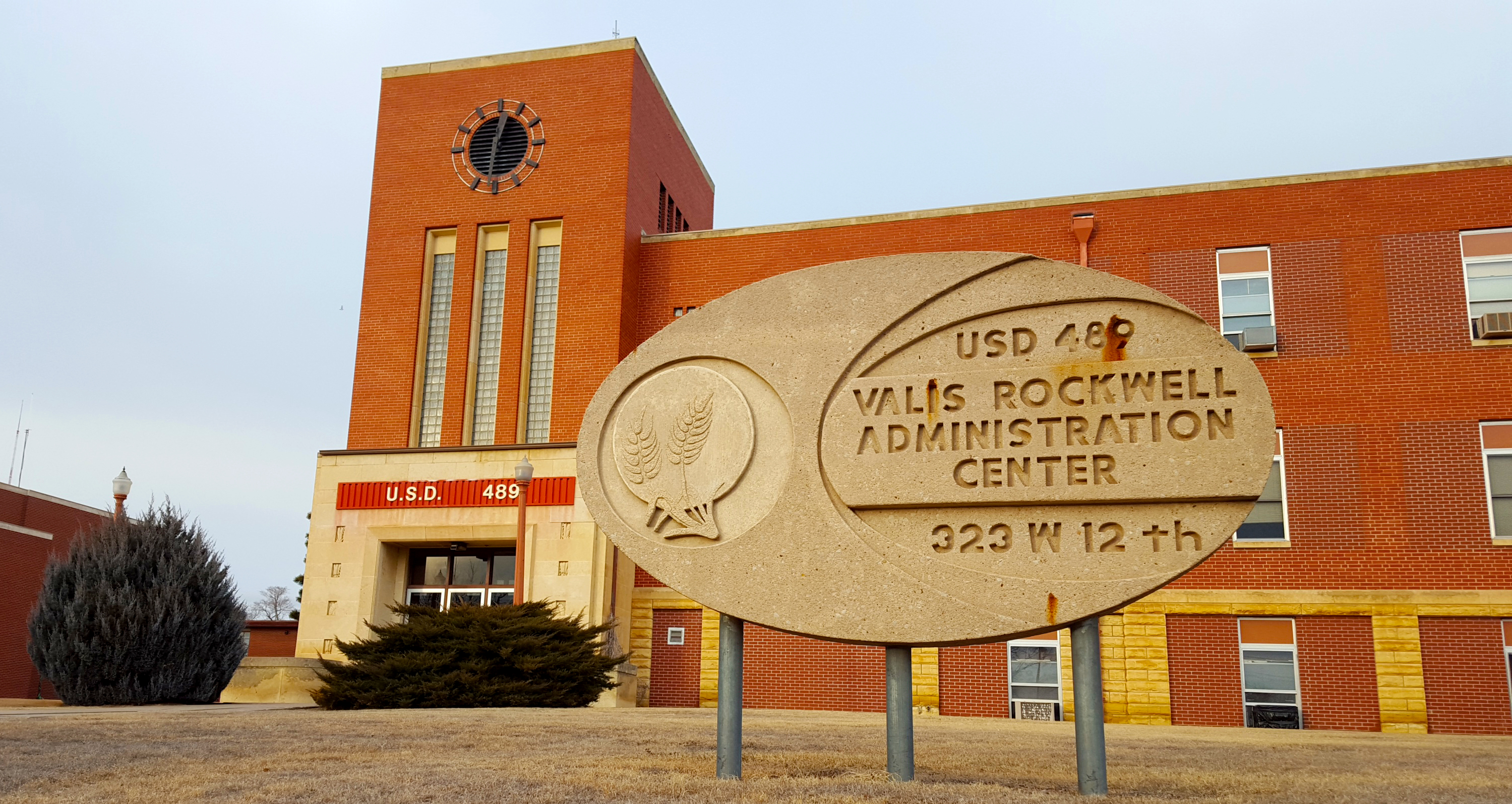
The board will meet at 6:30 p.m. at the Rockwell Administrative Center.

The program would include purchasing Chromebooks for students at the Learning Center, a middle school class and an elementary school class.

The total cost for 70 Chromebooks, licensing and teacher training would be $22,543.

The board recently approved the purchase of Dell computers for high school students. During that debate, some board members expressed frustration the technology committee did not present an option with Chromebooks. Several board members thought Chromebooks might be a cheaper option.

Board member Greg Schwartz asked at the board’s June 25 meeting, why the pilot program included Chromebooks with touch screens.

Superintendent John Thissen said the students are currently using computers with touch screens and Chromebooks with touch screens would be a more equitable comparison.

Schwartz said he wished to see the pilot program use the less expensive option in the Chromebooks that did not have touch screens.

The board will also vote on a number of annual reorganization motions. The board will vote on the president and vice president as well as a variety of appointments.

The board is also set to vote on student handbook revisions. Thissen said during the June 25 meeting there were not significant changes to the handbooks.

In other business, the board will:

• Discuss the establishment of the district mileage reimbursement rate.

• Discuss Kansas Association of School Boards policy recommendations.

Exploring Outdoors Kansas: I’d say these guys deserve a shot!

Steve Gilliland

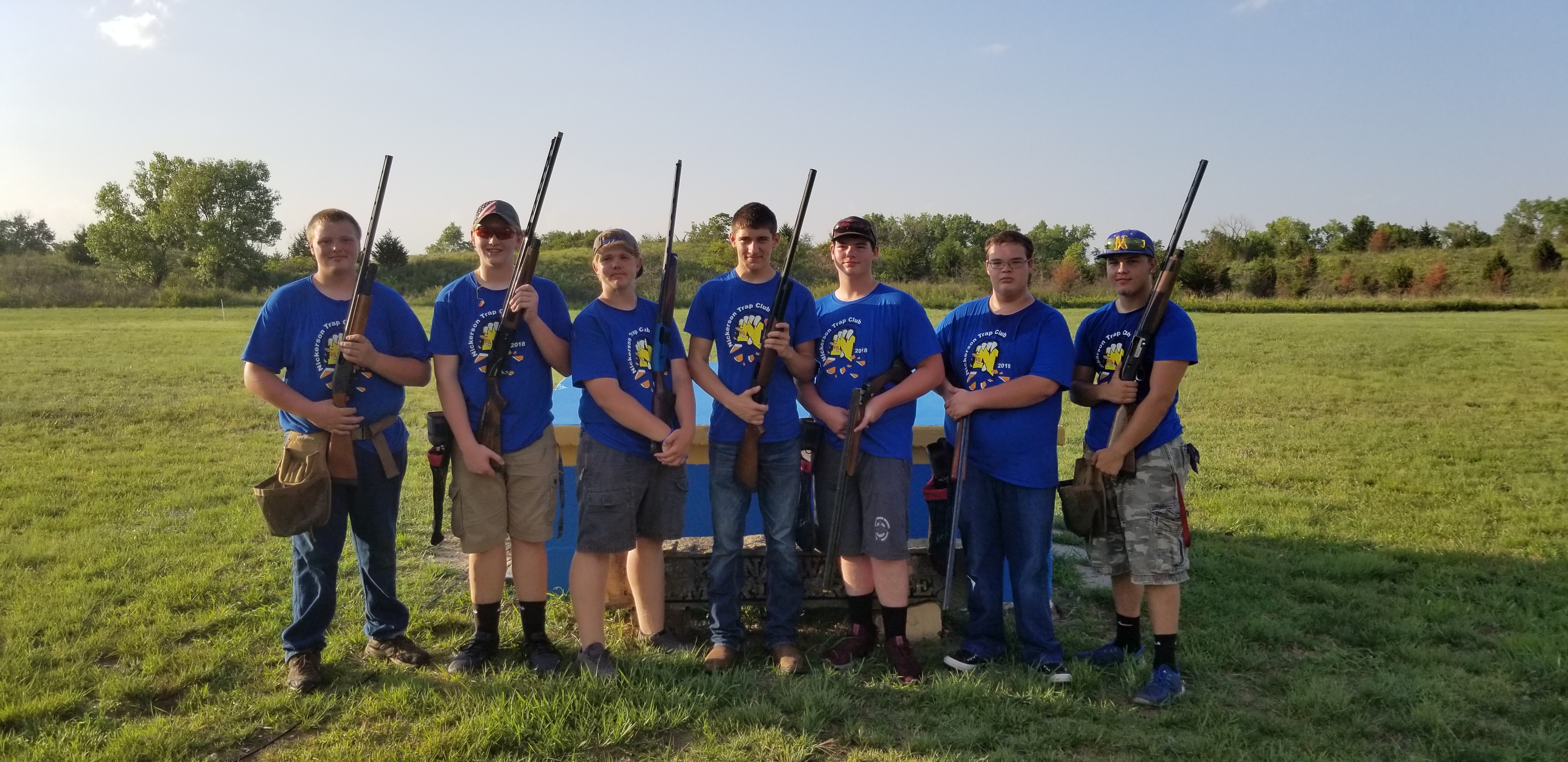
Between my nieces and other high school kids at church, I’m familiar with the term “Going to Nationals,” and it usually means national livestock judging, national scholars bowl etc. But to a group of 7 Nickerson High schooler’s, “going to nationals” carries a slightly different meaning, as they are going to compete in the first ever USA Clay Target League National Championship tournament at Mason, Michigan, where they will shoot against nearly 2000 other high school trap shooters.

Trap shooting is the fastest growing sport in the US, with an average of 3 states adding high school teams each year. Two years ago 13 Kansas high schools had trap shooting teams, last year there were 36 high school teams here in the state and this year there are 59 Kansas high school trap shooting teams with over 1250 shooters. Thirteen Kansas colleges now offer trap shooting scholarships, some of them “full rides,” and about 21,000 colleges nationwide have trap shooting teams.

Clay target shooting comes in 3 forms; sporting clays, skeet and trap. Sporting clays is shot on a course set up in a woodland setting where shooters move from station-to-station and is the nearest to actual hunting conditions. Skeet shooting is done on a dedicated range where clay targets are thrown high or low across in front of the shooters. Trap shooting is done on a range where clay targets come from a “trap house” (thrower) at various angles in front of the shooters and are always going away from them.

From left: Jordon Schmidt, Joe Tuxhorn, Chris Oden, Clayton Edwards, Matthew Meadows, David Graham, Eric Malecki.

The USA High School Clay Target league allows team members to be 12 years old through 12th grade.

Currently in its third year, the Nickerson Trap Club has 21 members, 19 boys and 2 girls, and the 7 that qualified for the national tournament are high school boys. Chris Oden, David Graham, Joe Tuxhorn, Mathew Meadows and Eric Maleckie are the 5 primary shooters and Clayton Edwards and Jordan Schmidt are the alternates. The 3 coaches are Travis Oden, Jeff Harbert and Larry Meadows. All 7 guys and all 3 coaches are also hunters, and it sounds as though that’s a common denominator among most team members.

I asked the guys why they got into trap shooting and got responses like “I like shooting guns,” “Because it doesn’t interfere with other team sports during school,” and “It’s safer than most team sports.” But the response overwhelmingly echoed by all shooters was “Because anyone can do it; it’s a co-ed sport and it doesn’t matter who you are or where you come from. You don’t have to be a jock and it’s a sport you can enjoy for the rest of your life.” That sounds like my kind of fun!

Coach Larry meadows told me “Trap shooting is all about hand / eye coordination. He said “you can’t teach that, but you can coach people how to get better at it.” New or inexperienced shooters are started by positioning them mush closer to the trap house where the targets come from. The coaches watch over their shoulder as they shoot and tell them which way to adjust when they miss targets. Coaches suggest how they stand, how they hold their shotgun and position themselves and how to line up on targets, but in the end, Meadows says each shooter has to find what works best for them. As new shooters get better, they are moved back to the normal shooting line.

At the Michigan tournament, there will be both team and individual competitions. 288 teams of 5 will participate in the team event and 1200 in the individual competition. The course is massive and made up of 44 trap houses stretching for ¾ of a mile. Team shooters will begin by shooting 2 rounds of 25 targets each, take a break then shoot 2 more rounds, 100 targets total. After all teams have completed the first go-around, the top scoring teams will advance. That will repeat, eliminating teams each time until the championship is decided.

YOU FOUND IT! Click the picture for a chance to win Wild West Festival VIP tickets!

During my evening spent with the Nickerson shooters, it was mentioned numerous times just how safe the sport of trap shooting is. At each practice 1 coach assumes the role of range safety officer and strict safety rules are enforced. It’s estimated that this year alone nationwide in the USA High School Clay Target League there have been 28 million trigger pulls without injury! Also noteworthy is that although Nickerson High is financially helping the team get to the tournament, until now the team has been totally self-supported. Getting to participate in this national tournament required the guys to qualify, and they did so by qualifying among the top 5% of teams in the nation; if that doesn’t sufficiently impress you, maybe you should take up knitting!

Continue to Explore Kansas Outdoors.

Steve Gilliland, Inman, can be contacted by email at [email protected].

Summer Reading Camp combats the summer slide

Mandy Meagher, Wilson kindergarten teacher, works on a project with one of her Summer Reading Camp students.

By CRISTINA JANNEY
Hays Post

Thanks to a grant, 120 students in the Hays school district were able to shore up their reading skills during the summer.

A grant from the Dane G. Hansen Foundation allowed USD 489 teachers to choose 10 students from each school in grades K-2 for a free Summer Reading Camp. The students attended classes two hours per day three days a week through the month of June.

Free transportation and snacks were also offered to the children.

The children practiced independent reading, read in groups, had an author visit, went on trips to the Hays Public Library, worked on phonics and practiced writing skills.

One of the goals of the program was to help all the children in program get their own library cards, so they could go back to the library and check out their own books.

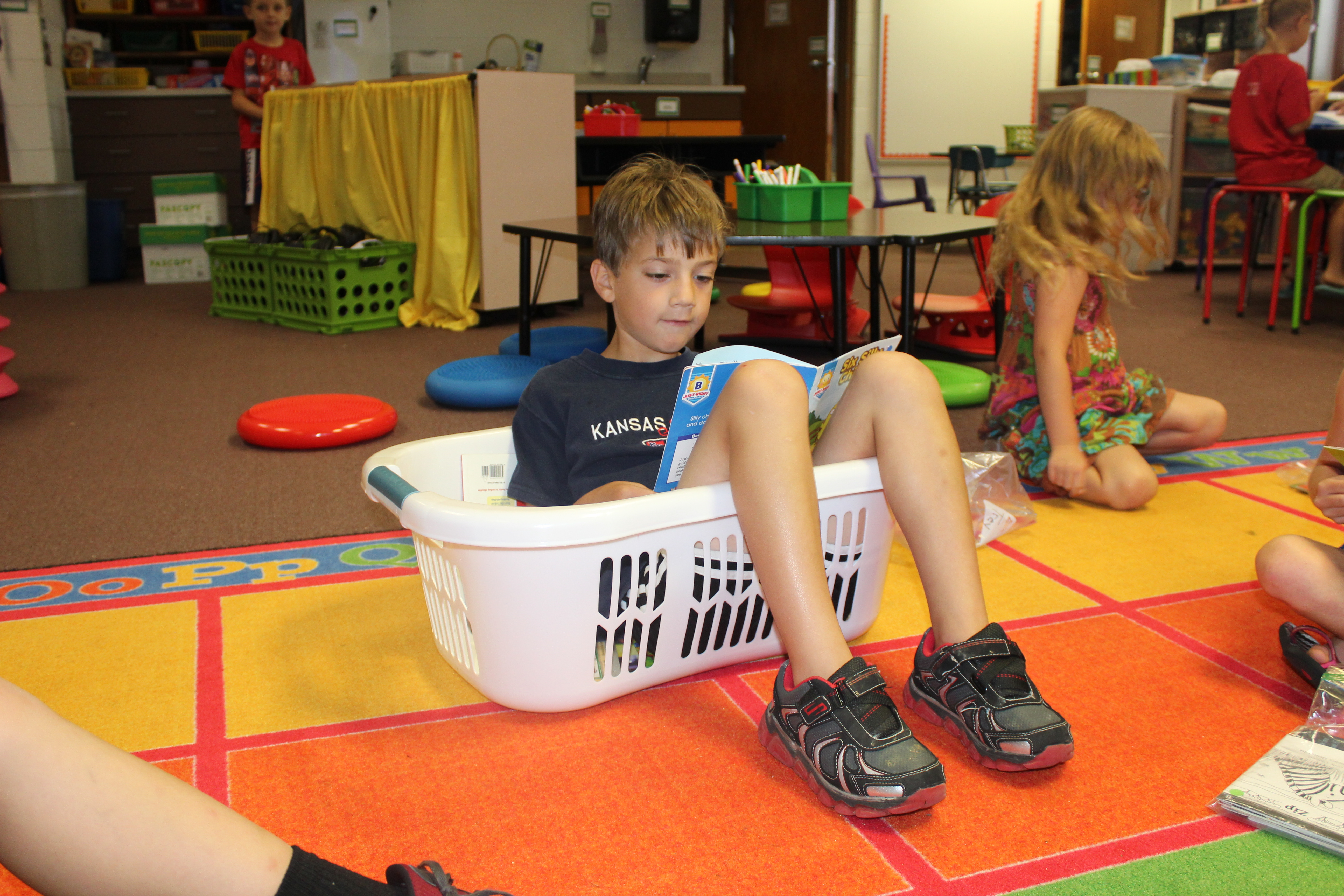
A student takes advantage of individual reading time.

Teacher Aubrey Brooks of Roosevelt Elementary School said students tend to lose some of their skills during the summer.

“A lot of times during the summer the kids slide a little,” she said. “They slide back a little. We really think this is going to keep what they have done during the school year — to keep up those skills and move forward a little bit.”

Brooks said she has seen growth in children — some increasing their skills by a reading level. Practice is the best way to learn reading, and Brooks said the program has created an environment for the children to do that.

“The problem with the summer is children aren’t always reading and practicing their skills, and this is a way to make sure that is happening,” Brooks said. “This makes sure they are still using those skills and practicing their reading and their writing.”

Mandy Meagher, Wilson kindergarten teacher, said she is also trying to promote reading and writing practice among her students.

Students work on a writing assignment during Summer Reading Camp.

“It takes lots and lots of practice. Reading and writing are both skills you have to learn just like riding a bike or playing the piano,” she said. “The more you use those skills and  practice those skills, the better you become. Just giving these kids that extra opportunity to practice those skills with a little bit of guidance will help them continue (to grow) and help them for first grade.”

Meagher said she thought the smaller groups and individual approach has helped the children in the program grow their skills. She said she wished the district could offer it for every child.

This is the first year for the program, and Brooks said she and the other teachers hope they receive the grant next year.

“This has been really wonderful for the kids,” she said. “The kids love it. They really want to come. We make it engaging for them. Our philosophy is that we want to make it exciting — reading and writing we want to make it exciting for the kids, so it is something they want to do.”

Brooks suggested parents continue to encourage their children to read and write during the summer.

“A blank piece of paper and a pen is enough,” she said. “It doesn’t need to be guided writing—just whatever they feel to get used to it and get comfortable with it. And to find a love of reading. That is something through this program and through the school year we try to get children to do so that they feel like they can go on an adventure and make reading exciting and see it in a positive way.”

Students take a survey about what they liked about the Summer Reading Camp.

Meagher said she agreed.

“The best thing you can do from the time they are a baby to the time they are older is to read to them because hearing those words and the fluency and the vocabulary helps them gain. Hearing those books is very important for their development and for them to be ready for school.

“I told my kindergarten class three things I wanted them to do everyday before they left. I wanted them to read a little bit. I wanted them to write a little bit, and I wanted them to have fun and be safe. If they spend just a little time everyday, it will continue that growth because both of those skills just need continual practice.”


Copyright Eagle Radio | FCC Public Files | EEO Public File