We have a brand new updated website! Click here to check it out!

Hays hopes to focus additional state funds on personnel

By CRISTINA JANNEY
Hays Post

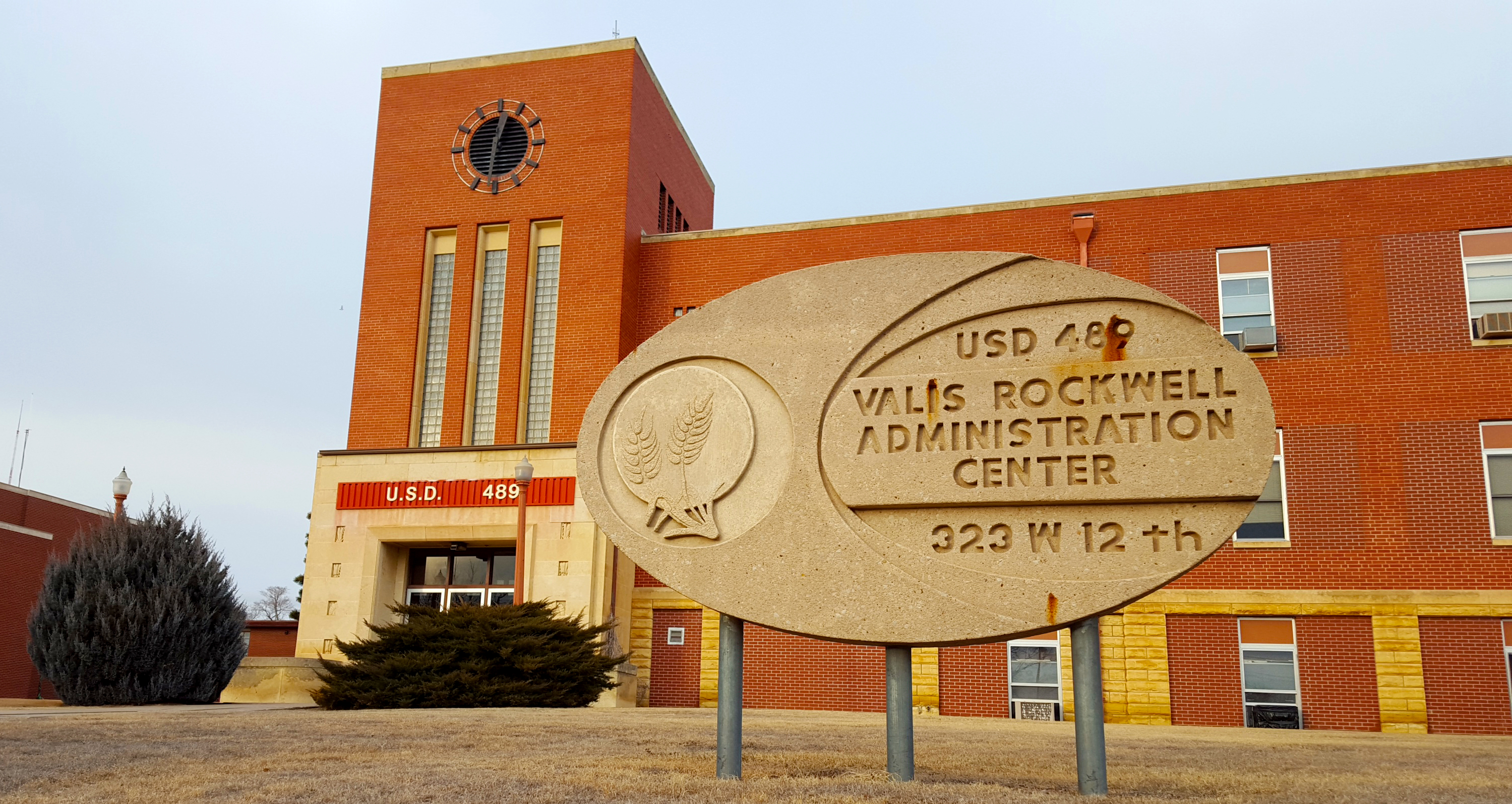
The Hays school district hopes to use additional state money to improve salaries and hire more personnel, Superintendent John Thissen said Tuesday.

The Kansas Legislature approved more than $500 million more for school funding to be phased in over five years. The state has been dealing with the Gannon v. Kansas lawsuit filed in 2010 that argued the amount of money going to Kansas schools was not equitable or adequate.

The Kansas Supreme Court ruled Monday the state’s funding formula was equitable to poor districts, but the Legislature still had not dedicated enough money to the school funding formula. The Supreme Court gave the state until June 2019 to increase school funding further.

See related story: Court: State still must add more money for schools, but not until next year

School districts across the state, including Hays, have been in a holding pattern, waiting for the court’s decision before finalizing their budgets for the 2018-19 school year.

District officials statewide will gather for budget meetings during the second week of July, which is much later than normal. A final budget has to be to county clerks by Aug. 24, which means the school boards will have first review of the budget at their Aug. 6 meetings and final approval of their budgets on Aug. 20.

Tracy Kaiser, Hays director of finance, said the district has been working on the budget for months based on the assumption schools would at least receive the amount the Legislature approved in the spring.

The increase will mean $404,816 more in the general fund for Hays for the next school year, and $242,553 more for USD 489 in special education funds. However, Kaiser noted the district is losing $241,650 from the sate in declining enrollment funding.

In an interview on the KAYS Radio Morning Show, Thissen said the additional funds the district will receive will be used to increase salaries and add certified and classified staff.

Kaiser said the district has faced so many cuts since 2008, it is trying to increase staffing levels to where they were before the recession.

Some of the hires will be for more teachers aides at the elementary level and a least one teacher who will work as a career specialist in the new JAG-K program. JAG-K works with students, who might be at risk of not graduating high school, to achieve academic and career goals.

The district is in the midst of teacher negotiations right now. The board met in executive session to discuss negotiations Monday night, and district officials are set to meet with the Hays NEA negotiations team again on Thursday. Kaiser said she hoped the negotiations would be resolved soon and would not have to go well into the school year as it has in years past.

Kaiser reported at the school board meeting Monday the district was 8 percent under budget as of May. The district’s budget year concludes June 30.

The board approved a transfer of $300,000 to its contingency fund at the meeting Monday. Thissen noted this was budgeted. With the addition of the $300,000, the district will have $961,828 in its contingency account. However, the Kansas Department of Education recommended districts have two months of salary in contingency. For Hays that would be $4.8 million. Thissen said the district’s contingency fund is still short of where it needs to be.

The Hays school board Monday also briefly touched on the capital outlay fund. Board member Greg Schwartz asked the administration to re-evaluate its busing system and look for ways to decrease costs. Several years ago, the district restricted bus routes to those students living 2.5 miles or more from school. This is the requirement for reimbursement from the state for transportation.

Thissen also reported repairs to a water main that failed this spring will cost less than expected. The bid for the repairs came in at $19,000. Thissen told the board preciously he thought the repairs would cost more than $20,000.
Hays school board votes to delay action on bond for six months

By CRISTINA JANNEY
Hays Post

The Hays school board voted Monday to delay action on a third bond attempt until January.

The board has been discussing for months what a third bond attempt should look like after bonds failed in 2016 and November.

The board was supposed to decide Monday night about the composition of a committee, which would develop several bond plans to present to the board. The board was also set to define parameters for what those plans might look like.

However, the board was unable to come to a consensus. Ultimately, on a 4-3 vote, with board members Paul Adams, Mike Walker and Luke Oborny in opposition, the board voted to table any further decisions on a bond until January.

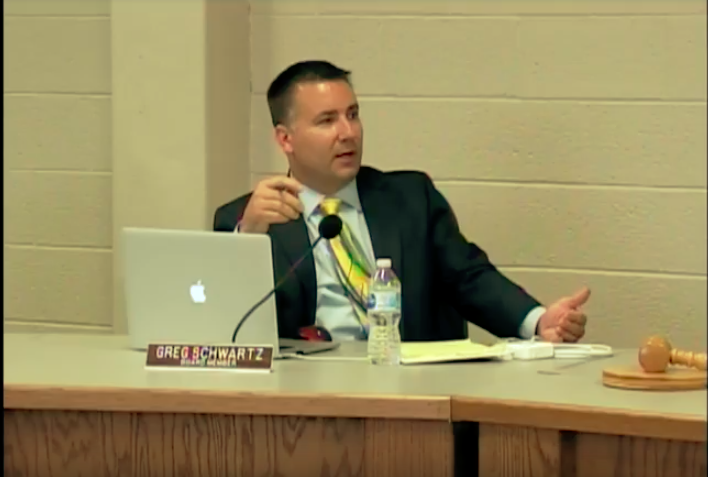
Board member Greg Schwartz discusses delaying any action on a bond during the Hays school board meeting Monday.

Board member Greg Schwartz proposed the move to delay. His first motion was to delay action for a year, saying he did not think the community supported a bond at this time.

Fox said she agreed with Schwartz and added if the board is not unified on a large decision such as a bond, the perception in the community would not be positive.

“I am a person who likes to keep moving forward and not necessarily stand still and keep checking the boxes. In this particular case and the feedback I have received and us not being in a strong consensus, I feel some waiting time … I am not sure a year is where I want to go, but I do feel we need to take our foot off the gas for a little a bit,” she said.

Board member Sophia Rose Young said she supported delaying action on a bond, but wanted to continue to discuss consolidation of schools, especially elementary schools. The board, in its debate leading up to the vote last night, had discussed moving to two or three elementary schools instead of four. However, all of those plans included a new elementary school or an expansion of one of the existing schools, which would have to be financed with a bond.

Adams spoke in opposition of the motion and presented an alternative motion to form a committee and set parameters that had been proposed by administration at a meeting in May. He said if the board charged a committee with creating bond plans it would likely be six months to a year before the school board made any decisions on a bond.

He said was concerned a delay would likely result in increased construction costs due to inflation. He said the new tariff’s levied on steel by the Trump administration also might drive up the cost of construction materials.

“Are we shrugging our ultimate responsibility?” Adams said. “Are we doing the right thing for the students? At the end of the day, the students are there and the board of education does its part. At the end of the day, it is what are we doing to improve the students. … I know we have fiscal responsibilities, but ultimately are we doing the right thing for the education of students?”

Walker said he agreed with Adams. He said the board has already been talking in circles for six months, and it is time to put a committee together and get things moving.

Oborny said the board did not need to rush into another bond, but said he supported the creation of a committee to continue to work on bond plans.

“At some point, safety becomes a factor,” he said. “I am not talking about secure entrances like everybody thinks. I am talking about the buildings falling in around them—46 years on an AC. At some point, that has to start affecting education value. Just the facilities are falling apart.”

In other business:

• The board discussed a pilot study on the use of Chromebooks at the Learning Center and elementary and middle school levels. The board is set to vote on the pilot program at its next meeting.

• The board approved property insurance and workers compensation insurance contracts

Hays attorney appointed to Client Protection Fund Commission

TOPEKA—The Kansas Supreme Court appointed Christopher Sook, an attorney from Hays, and David Trevino, an attorney from Lawrence, to three-year terms on the Client Protection Fund Commission.

Their terms begin July 1 and end June 30, 2021. The two succeed Charles “Ed” Watson, an attorney from Wichita, and Aaron Kite, an attorney from Dodge City, who completed their terms on the commission.

The Lawyers Fund for Client Protection, which the board oversees, compensates people who suffer economic loss as a result of dishonest actions by Kansas lawyers. The fund is financed by annual registration fees paid by attorneys to practice law in the state.

Out of nearly 11,000 lawyers actively licensed to practice in the state, typically fewer than 15 lawyers each year have been subject to claims made to the client protection fund.

The commission is composed of one judge, four actively practicing attorneys, and two nonattorneys.

Other members of the commission are Carrie Allton, attorney, Lawrence; Douglas Anstaett, nonattorney, Topeka; Thomas Hammond II, attorney, Overland Park; Beth Love, nonattorney, Dodge City; and District Judge Michael Ward, who serves in Butler County of the 13th Judicial District.

Douglas Shima, clerk of the appellate courts, serves as secretary of the commission.

Mid-Kansas Electric Company energizes 138 kV line

Transmission project located in Kingman, Harper and Sumner counties

Mid-Kansas Electric Company Inc. placed the Harper-to-Milan Transmission Project in service on May 25. The project, located in Kingman, Harper and Sumner counties, enhances electric reliability and will support economic development in the area.

Mid-Kansas provides wholesale generation and transmission services to its six member-owners, one of which is Wheatland Electric Cooperative Inc., the electric distribution cooperative that serves the area. Operated on the cooperative business model, the mission of Mid-Kansas is to provide reliable service to its member-owners at the lowest possible cost.

“When Wheatland acquired this service territory in 2007, we quickly learned that additional infrastructure was needed to better serve our members,” said Bruce W. Mueller, CEO of Wheatland. “This large project not only improves electric service to our current members, but it is also robust enough to handle considerable future growth of industry in our south central service territory.”

The 138 kV line includes 58.9 miles of new line from Harper to Milan, 12.6 miles of new line from Harper to Rago, 5.8 miles of rebuilt line between Milan and the Viola tie, and the new connection to Westar’s Viola Substation. The $65 million project also includes the new Bluff Creek Substation and modifications to the Harper and Milan substations. Public meetings to determine the route were held in 2015 with the final route determined in early 2016. POWER Engineers Inc. provided technical services, including routing, siting and permitting support and engineering for the transmission lines and substations. POWER also provided material procurement, construction contracting, and construction management of the project. As part of POWER’s team, Land Services Inc. performed the right-of-way acquisition for the project.

“Mid-Kansas is proud to have partnered with POWER and Land Services on the Harper-to-Milan Project, one of our largest transmission projects to date,” said Stuart Lowry, president and CEO of Mid-Kansas. “The new line provides a large conductor, looped transmission configuration to the region that provides greater capability and improved reliability to this part of the service territory.”
The Southwest Power Pool, the regional transmission organization to which Mid-Kansas belongs, identified a need for the project to support growing demands on the transmission grid, both locally and regionally.

“While this project has far-reaching benefits, it’s Wheatland’s local members and other area residents who can take great pride in their cooperation and efforts in seeing this project to fruition,” Mueller said. “It’s an effort that will benefit many generations.”

About Mid-Kansas Electric Company, Inc.—Mid-Kansas Electric Company Inc. is a coalition of five rural electric cooperatives and one wholly owned subsidiary that serve approximately 200,000 Kansans throughout 33 counties. Mid-Kansas’ members include Lane-Scott Electric Cooperative Inc., Dighton; Prairie Land Electric Cooperative Inc., Norton; Southern Pioneer Electric Company, Ulysses; The Victory Electric Cooperative Association Inc., Dodge City; Western Cooperative Electric Association Inc., WaKeeney; and Wheatland Electric Cooperative Inc., Scott City, Kansas. For more information, please visit the Mid-Kansas website at www.midkansaselectric.net.

— Submitted

Micro-surfacing resumes this week

CITY OF HAYS

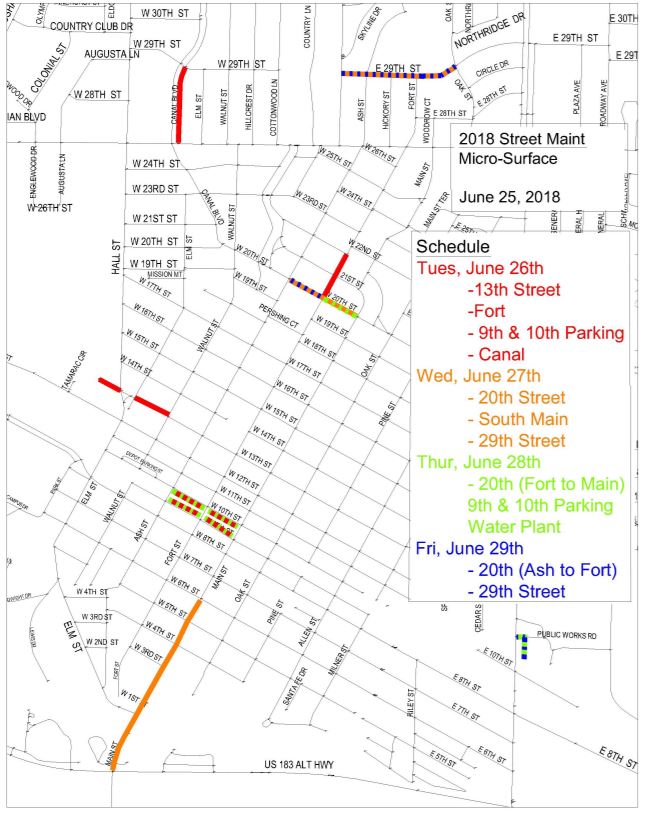
Beginning Tuesday, June 26, 2018, micro-surfacing will begin on various streets throughout the city of Hays. See the map below for street locations and anticipated dates.

Micro-surface is a thin asphalt overlay that levels out cracks and depressions and restores the driving surface.

On the date scheduled for treatment, all cars need to be moved from the street by 6 a.m. Streets being sealed will be closed for several hours during the time of the overlay. Access can be achieved in cases of emergency. Parking on adjacent streets is recommended during the daytime. Parking in driveways is okay if you DO NOT plan on moving the vehicle during the daytime hours.

The new asphalt surface should not be driven on until it has set up (dried). It will stain surfaces such as concrete, carpet, or flooring if tracked from construction areas. Please have all lawn watering devices turned off the evening before the scheduled date. Please help keep the streets clean and dry for a smooth and lasting project. Traffic control will be set in areas of work being completed and picked up by the end of the work day. This project is scheduled to be completed by Fri., June 29 (pending weather conditions).

The city of Hays regrets any inconvenience this may cause to the public. If there are any questions, please call the Office of Project Management at 785-628-7350 or the contractor, Vance Brothers at 816-564-3507.

NW Kan. students earn degrees, graduation honors from K-State

MANHATTAN — Nearly 3,390 students completed degree requirements from Kansas State University in spring 2018. The graduates are from 102 Kansas counties, 47 states and 38 countries.

The university awarded 2,423 bachelor’s degrees, 627 master’s degrees, 183 doctorates — 103 of which are Doctor of Veterinary Medicine — and three associate degrees. Several students earned multiple degrees.

Nearly 605 students earned graduation honors for outstanding academic performance. Of those, 169 students graduated summa cum laude with a grade point average of 3.95 or above, 215 students graduated magna cum laude with a grade point average of 3.85 to 3.949, and 220 students graduated cum laude with a GPA of 3.75 to 3.849.

A list of northwest Kansas students students who have earned degrees and, if applicable, graduation honors from Kansas State University includes:

Cheyenne
Bird City: Ty Carmichael, Bachelor of Science in Business Administration
St. Francis: Randee Grover, Bachelor of Science in Human Nutrition; Mayra Pacheco, Bachelor of Science in Family Studies and Human Services; Tyler Raby, Bachelor of Science in Human Nutrition

Decatur
Oberlin: Hannah May, Bachelor of Science in Education, Magna Cum Laude; Sierra Lohoefener, Bachelor of Science in Education, Magna Cum Laude

Ellis
Ellis: William Poland, Doctor of Veterinary Medicine
Hays: Lauren Braun, Bachelor of Science in Civil Engineering; Marcel Braun, Bachelor of Science in Civil Engineering; Koby Daily, Master of Science; Mikaela Flax, Bachelor of Science; Paul Flesher, Doctor of Philosophy; Zoey Gubitoso, Master of Accountancy; Anna Hickert, Bachelor of Science in Agriculture, Summa Cum Laude; Cora Jaeger, Master of Arts; Allison Pfeifer, Bachelor of Science; Tanner Pfeifer, Bachelor of Science in Business Administration, Magna Cum Laude; Jill Pokorny, Bachelor of Science; Michael Schulte, Bachelor of Science in Mechanical Engineering; Victoria Unrein, Bachelor of Science in Business Administration; Haley Wells, Bachelor of Science in Hospitality Management; Ross Werth, Bachelor of Science in Chemical Engineering; Hunter Wilkens, Bachelor of Science

Ellsworth
Ellsworth: Krystin Guggisberg, Master of Science; Brittanie Miller, Bachelor of Science in Education
Holyrood: Joseph Barton, Bachelor of Science in Technology Management; Miranda Burton, Master of Arts in Teaching
Kanopolis: Trevor Miley, Bachelor of Science in Chemical Engineering
Lorraine: Ty Nienke, Bachelor of Science in Agriculture, Magna Cum Laude

Gove
Grainfield: Hannah Gillespie, Bachelor of Science, Magna Cum Laude
Grinnell: Heather Heier, Bachelor of Science, Magna Cum Laude
Quinter: Shala Kitch, Secondary Major; Jesse Roesch, Bachelor of Science

Graham
Hill City: Kaitlynn Bradshaw, Bachelor of Science; Javil Hansen, Bachelor of Science; Bethany Parker, Bachelor of Science in Education, Cum Laude; Eric Van Loenen, Master of Science
Morland: Chantelle Simon, Bachelor of Science in Agriculture

Greeley
Tribune: Megan Robertson, Bachelor of Science

Lane
Dighton: Ryan Kuhlman, Bachelor of Science in Construction Science and Management, Cum Laude; Samuel Moomaw, Bachelor of Arts
Healy: Wyle Yeager, Bachelor of Science in Education, Magna Cum Laude

Logan
Oakley: Austin Baalman, Bachelor of Science in Agriculture; Kenzie Hemmert, Bachelor of Science in Education, Cum Laude; Andrew Robben, Master of Accountancy; Krista Rumback, Bachelor of Science in Personal Financial Planning; Matthew Temaat, Doctor of Veterinary Medicine, Cum Laude
Russell Springs: Zane Ward, Bachelor of Science in Agriculture
Winona: Madison Mackley, Bachelor of Science in Agriculture

Norton
Lenora: Kyle Pakkebier, Bachelor of Science in Agriculture
Norton: Bailey Ambrosier, Bachelor of Science; Maia Carlson, Master of Arts; Todd Ebert, Bachelor of Science in Business Administration; Kamilla Jones, Master of Accountancy; Cody O’Hare, Bachelor of Science; Cole Renner, Bachelor of Science in Agriculture

Osborne
Alton: Alan Mick, Bachelor of Science in Agribusiness
Osborne: Nicholas Cady, Bachelor of Science; Jayson Carswell, Bachelor of Science in Chemical Engineering, Cum Laude

Phillips
Agra: Taylor Shaffer, Bachelor of Science in Engineering Technology
Logan: Kodi Van Laeys, Bachelor of Science in Agriculture, Summa Cum Laude
Long Island: Ian Vincent, Bachelor of Science in Agriculture
Phillipsburg: Mattison Dusin, Bachelor of Science in Agriculture; Riley Juenemann, Bachelor of Science; Kassidy Roth, Bachelor of Science in Apparel and Textiles

Rawlins
Atwood: Keshia Green, Bachelor of Science in Business Administration, Cum Laude;

Rooks
Plainville: Joshua McCrickard, Bachelor of Science; Allison Sears, Bachelor of Science in Human Ecology
Stockton: Miranda Wildeman, Bachelor of Science in Education

Rush
La Crosse: Shane Miller, Bachelor of Science in Agriculture

Russell
Russell: Sarah Broman, Doctor of Philosophy; Craig Farmer, Master of Interior Architecture and Product Design; Sara Krug, Master of Arts in Teaching; Gage Nichols, Bachelor of Science in Agriculture; Paxton Pospichal, Bachelor of Science in Agriculture; Alexandra Ptacek, Bachelor of Science in Kinesiology, Summa Cum Laude

Scott
Scott City: Aubrey Davis, Bachelor of Science in Agriculture, Magna Cum Laude; Krystal Frank, Master of Arts in Teaching; Brayden Strine, Bachelor of Science; Justin Unruh, Bachelor of Science in Business Administration, Master of Accountancy

Sheridan
Hoxie: Lacie Campbell, Bachelor of Science, Cum Laude; Kathryn Haffner, Bachelor of Music Education, Summa Cum Laude; Mackenzie Mense, Master of Science; Christopher Weber, Bachelor of Science in Agriculture, Summa Cum Laude

Sherman
Goodland: Mara Kling, Bachelor of Science in Education, Cum Laude

Smith
Lebanon: Robert Strine, Bachelor of Science in Chemical Engineering
Smith Center: Weston Rothchild, Master of Architecture

Thomas
Colby: Chelsie Calliham, Bachelor of Science in Agriculture; Abigail Friesen, Bachelor of Science in Agriculture, Summa Cum Laude; Maura Hansen, Bachelor of Arts, Magna Cum Laude; Karly Kriss, Bachelor of Science in Kinesiology; Sarah Lamm, Bachelor of Science, Secondary Major; Kylie Reitcheck, Doctor of Veterinary Medicine, Cum Laude; Michael Schiferl, Bachelor of Science, Bachelor of Science in Family Studies and Human Services, Summa Cum Laude; Haileigh Shull, Bachelor of Science in Agriculture; Katherine Zerr, Bachelor of Science in Interior Design

Wallace
Sharon Springs: Cayden Daily, Bachelor of Science in Agriculture, Summa Cum Laude
Wallace: Callahan Grund, Bachelor of Science in Agriculture

FHSU’s Paige chosen as president-elect of national psychology association

Paige
FHSU University Relations

Fort Hays State University’s Leslie Paige, director of the Office of Scholarship and Sponsored Projects, was recently selected as president-elect of the National Association of School Psychologists.

The professional association, representing more than 25,000 school psychologists, graduate students and related professionals throughout the United States and 25 other countries, is the world’s largest organization of school psychologists and works to advance effective practices to improve students’ learning, behavior and mental health.

“Our vision is that all children and youth thrive in school, at home and throughout life,” said Paige.

Paige has held leadership positions on the NASP board of directors, including treasurer and secretary. She has chaired and co-chaired numerous committees, including awards, leadership development, ethics, professional development, and publications. She has also been a member of the PREPaRE School Crisis Prevention and Intervention Training Curriculum workgroup and the Strategic Planning committees.

Paige was the NASP School Psychologist of the Year in 1996 and the Kansas School Psychologist of the Year in 1994. She has received three NASP Presidential Awards, in 2001, 2007 and 2017. She also received the Alumni Achievement Award from FHSU’s Alumni Association in 1996.

She received her bachelor’s degree in psychology from the University of Cincinnati and received master’s and educational specialist degrees in school psychology from FHSU. She spent 22 years as a practicing school psychologist. Paige was the interim program director of the school psychology program at FHSU from 1993-1994 and has taught as an adjunct instructor.

Paige is a past president of the Kansas Association of School Psychologists and served on numerous state association committees. She has written many grants and technical reports and has presented at local, state and national conferences.

SCHLAGECK: Noble profession

John Schlageck writes for the Kansas Farm Bureau.

Today’s livestock producers must consider their vocation a noble profession. By continuing to care for, and nurture their animals, while telling this story, farmers and ranchers can preserve their freedom to operate and maintain successful animal agriculture in the United States.

So how do farmers and ranchers do this?

To begin with, livestock producers must understand how consumers think and feel. Get inside their heads if you will. Get inside their hearts.

Today’s consumers consider farmers and ranchers responsible for the humane treatment of their animals.

In a recent consumer survey, people rated animal well-being higher than the care and well-being of workers in the food system. It did not rank as high as food safety however.

It is not science, technical capacity or ability that drives trust, instead, it is whether consumers believe agriculture shares their ethics and values.

Farmers and ranchers must talk about their commitment to doing the right thing – their commitment to values and ethics – not just science. While agriculture has plenty of evidence to demonstrate this profession is doing the right thing, it relies too much on that language. It is more important to engage the public on a value’s basis.

The most important job moving forward, is to communicate in a way that helps people trust in what farmers and ranchers say and do. Too often livestock producers take for granted that rural neighbors know and understand who they are and what they do.

Farming and ranching can no longer take this for granted. Agriculture continues to change and evolve and still most of the people in the United States today are not involved in farming and ranching.

At no time in the history of this country have Americans know so little about where their food comes from. What they want is “permission to believe” that what farmers and ranchers are doing is consistent with their values and ethics.

In some instances, telling the story of food production to consumers may move to the point where farmers and ranchers show people what is taking place on this nation’s farms and ranches.

Unfortunately, the perception is that when we don’t show them – we’re hiding something. That said, there clearly remain legitimate reasons, from disease prevention to biosecurity, not to allow unfettered access to farms and ranches.

Livestock production or animal agriculture in the most affluent country in the world is faced with special challenges and opportunities. Among those challenges is that Americans spend such a small percentage of their income on food that they can demand food where they want it, when they want it, in the proportion they want it and produced in a humane way.

Still, there’s no doubt agriculture will win this battle for the hearts and minds of consumers.

Farmers and ranchers must remember whom they are trying to influence. Customers and consumers need to hear from livestock producers.

It is not productive for the agriculture community to attack activist ag groups. Instead, agriculture must retake its rightful position as the people in charge of ensuring the humane treatment of animals.

Farmers and ranchers must continue to tell people they share their concerns and will work hard every day to make sure animals are treated fairly and humanely. Agriculture must also share with consumers how they meet their obligations to humanely treat animals on the farms and ranches across the United States.

John Schlageck, a Hoxie native, is a leading commentator on agriculture and rural Kansas.

HAWVER: Happy New (fiscal) Year!

Martin Hawver
For the folks who hang out at the Statehouse—and for more conventional Kansans—Saturday is New Year’s Eve, though we’re not sure just who’s going to have parties celebrating the clock ticking off the last few seconds of Kansas Fiscal Year 2018.

In the last few seconds of this fiscal year, state agencies will see the current budget expire and the new fiscal year budget open…and some agencies will see increases in funding, increases in responsibility, and the dawning of yet another year of activity.

The budget increases? Look for public schools to get about $185 million more to spend to educate the kids, look for maybe $80 million more for repairs to state highways.

But for many Kansans, there are going to be some probably less earth-rattling new laws that will become effective July 1—New Year’s Day.

One of those new bills eliminates the criminal penalty for breaking out the window of a steamy-hot car to rescue a child, an elderly person or a pet whose health is jeopardized by being in a closed car as temperatures rise to life-threatening levels. Hard to imagine many Kansans wouldn’t make that rescue when they see a child or adult or pet in obvious danger of overheating, but the new law means that the forgetful or negligent driver of that car can’t sue you for the damage to the window to prevent the much more severe damage to a person or pet. Just stay with the car—and the persons or pet you have saved—and call the cops.

Oh, and some folks, besides shopping for the champagne and snacks for their New Year’s Eve party, also will be picking up brochures on cars at local dealers to leaf through while wearing party hats because July 1 is the day that Kansas will stop collecting sales tax on manufacturer rebates on new cars. Until July 1 even though you didn’t pay that rebate and it lowered the cost of the car, you still pay sales tax on that rebate. Make any sense? Not really, but that’s over on July 1. You don’t pay sales tax on money you didn’t spend for the car.

So logical—and expected to save Kansas car buyers about $3 million a year for the next four years—that it expires in four years to give lawmakers a chance to pass the bill again to the likely excitement of new-car buyers in a new election cycle.

And starting with New Year Fiscal Year 2019, we better pay more attention to zooming around trash trucks that are doing their duty. No more zooming, while folks are emptying those trash cans into the trucks. Move over to the other lane, or at least slow down so you don’t present a danger to the trash collectors. To prepare us for that change in law, for the next year you get a warning ticket, and after that, a $45 ticket for endangering those trucks. Probably about two months’ trash pickup fee in many urban areas. So, if you haven’t been careful, start watching out.

And…if you’ve been naughty, or someone thinks you have, the state is lifting that prohibition of service of civil (not criminal, of course) process on Saturday. That’s the paperwork from any district court in a civil suit—think, maybe, divorce? —that current law doesn’t allow to be served on Saturday because Saturday is the Sabbath for some religions. Effect? It means that Saturday is no longer a protected day for getting those court notes…and that process server probably will be working weekends in the New Year.

Happy New Year!

Syndicated by Hawver News Company LLC of Topeka; Martin Hawver is publisher of Hawver’s Capitol Report—to learn more about this nonpartisan statewide political news service, visit the website at www.hawvernews.com

STANDING IN LINE: 30 years in the same seats at rodeo arena for P-burg woman

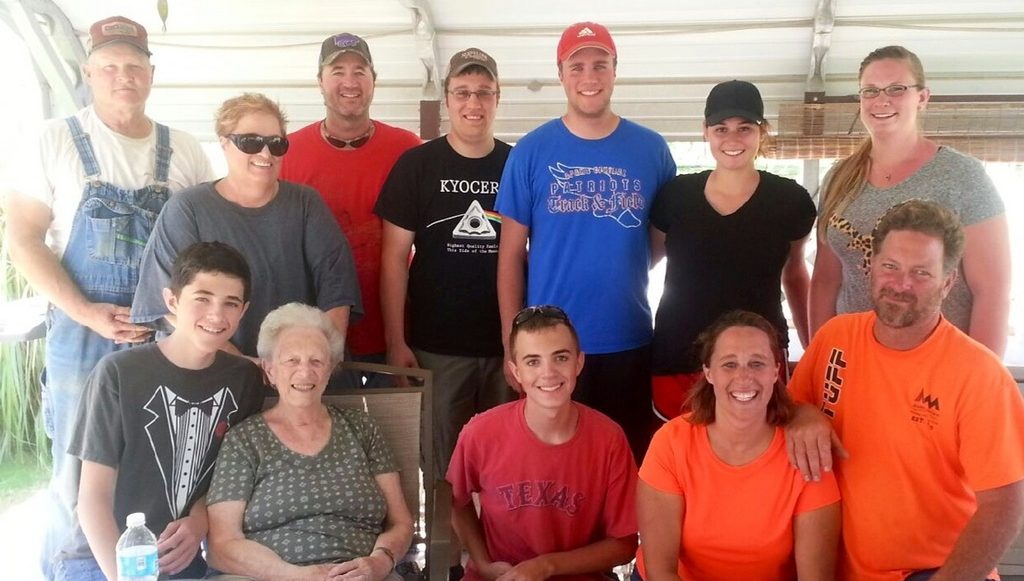
The family of Blaine and Diana Hanchett gather for a picture at the Phillipsburg rodeo. The family has gathered for the last thirty years over rodeo weekend for a family reunion, and Diana stands in line on the day tickets go on sale to buy for the family. Diana stands, second from the left, wearing sunglasses; her son Michael Johnson stands next to her (third from the left). Her daughter Michelle Brown is seated, second from the right. Photo courtesy Michelle Johnson Brown.

PHILLIPSBURG — Diana Hanchett doesn’t mind standing in line.

And every July, usually on the first day of the month, she gets out of bed early to stand in line, to buy Phillipsburg rodeo tickets.

The Phillipsburg native makes sure she’s towards the beginning of the line at Heritage Insurance in Phillipsburg on the first day that ticket sales start. She’s rarely been lower than fourth in line, although last year, she was sixth.

She usually doesn’t have to take a chair; she’s early enough to sit on the bench outside the business, located at 685 Third Street in Phillipsburg.

Hanchett has gone to the rodeo since she was a kid, but for the last thirty years, she’s never missed a year of it, going to the Saturday show and sometimes the Friday show, and always sitting in the same seats.

Her family joins her: husband Blaine and their kids Michelle Brown and Michael Johnson plus Michelle’s boyfriend Marvin Fehlman, Michelle’s two sons and Michael’s daughter and twin sons. Of Hanchett’s five grandkids, two are married and the others have had boyfriends and girlfriends, who have come to the rodeo as well.

Rodeo time is the perfect time for family reunions, and Hanchett’s family gathers in Phillipsburg. Michael and his family come from San Antonio, Texas and Hanchett’s sister, who lives in New Hampshire, makes the trek to Phillipsburg every four or five years. Hanchett’s brothers, both Coloradoans, also make the trip. Required school and sports obligations have occasionally kept a few grandkids from the rodeo the last few years, but Hanchett says, “being at grandma’s is required,” she laughed.

The family gathers for the parade on Saturday as well, putting up a canopy and setting up chairs along the parade route. Then they gather for a barbecue before heading out to the rodeo grounds for the final performance. The reunion often includes friends and other relatives.

When she was in high school, Hanchett worked as an usher at the rodeo, wearing rodeo shirts provided for them by the rodeo association. “We took tickets and made sure everybody found their seats. It was a lot of fun.”

Her mom, Betty Murphy, who turned 86 this year, also comes with the group.

Hanchett’s favorite part of the rodeo is the barrel racing, the bull riding and the clowns. The clowns “make” the rodeo, she said.

There’s protocol for the Phillipsburg rodeo ticket line. People know who is in line ahead of or behind them, so if they get out of line to sit in their cars, their spots are saved when the office open at 8 am.

And while she’s in line getting her tickets, there’s time to visit, make new friends and renew old acquaintances. The people in line are usually the same people, “people I know,” she said, “but sometimes the only time I see them is (in line), and it’s a really good place to catch up. You have the chance to visit, so it helps the time go by.”

And on July 2, Hanchett will be back in line again, waiting for the office to open, visiting with fellow ticket buyers, and buying rodeo tickets for the family.

Tickets for Kansas Biggest Rodeo go on sale July 2 at Heritage Insurance. Heritage Insurance is open from 8 am to 5 pm and closed from 12 noon to 1 pm each day. All reserved seats are $18 for adults and $14 for kids ages 3-12. General admission for Thursday, August 2 is $15 for adults and $11 for kids ages 3-12. General admission for Friday, August 3 and Saturday, August 4 is $16 for adults and $12 for kids ages 3-12.

Tickets can be purchased over the phone with a credit card by calling Heritage Insurance at 785.543.2448.

More information can be found online at www.KansasBiggestRodeo.com.

— Submitted

Sunny, hot Tuesday with a chance for thunderstorms

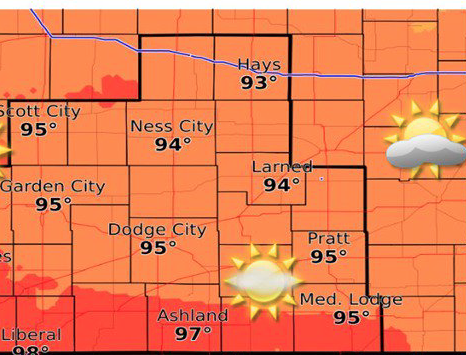
Today A slight chance of showers and thunderstorms between 8am and 11am. Sunny, with a high near 93. Light and variable wind becoming southwest 5 to 7 mph in the morning. Chance of precipitation is 20%.

Tonight Clear, with a low around 66. West northwest wind 5 to 7 mph becoming east after midnight.

Wednesday Sunny and hot, with a high near 100. Southeast wind 5 to 11 mph.
Wednesday Night Mostly clear, with a low around 73. South wind around 11 mph.

Thursday Sunny and hot, with a high near 102. Breezy, with a south southwest wind 9 to 14 mph increasing to 17 to 22 mph in the afternoon. Winds could gust as high as 33 mph.

Thursday Night Mostly clear, with a low around 76. Breezy.

FridaySunny, with a high near 98. Breezy.

News From the Oil Patch, June 25

By JOHN P. TRETBAR

The government reported record U.S. crude production for the second week in a row. The Energy Information Administration says operators produced 10.9 million barrels of crude oil per day last week, equal to the week before, which was the highest weekly figure ever.

The United States has once again surpassed Saudi Arabia as the world’s largest holder of recoverable oil. The research firm Rystad Energy reports the US has added close to 50 billion barrels to its total over the last year and now holds an estimated 310 billion barrels of recoverable oil with current technologies, equal to 79 years of US oil production at present output levels. The report credits the rise mostly to a doubling of hydraulic fracturing operations in the Permian basin. Texas alone now holds more than 100 billion barrels of recoverable oil, 90% of which is from shale or other tight formations.

Operators across Kansas filed 43 new drilling permits last week, 27 east of Wichita and 16 in western Kansas, including one each in Ellis and Russell counties. Independent Oil and Gas Service reports 21 new well completions in eastern Kansas and 27 west of Wichita for a weekly total of 48 completions, 702 so far this year. There were three wells completed in Ellis County last week and one in Stafford County.

Baker Hughes reported 1,052 active oil and gas drilling rigs across the US, down one oil rig and six seeking natural gas. The count in Louisiana dropped four rigs. Oklahoma dropped by two and Texas was down one.

Independent Oil and Gas Service reported 18 active rigs in eastern Kansas, up five for the week, and 30 west of Wichita, up two. Drilling was underway at one lease in Ellis County. They’re moving in completion tools at five sites in Barton County, and five in Ellis County.

OPEC and its allies agreed to raise production by about 1 million barrels per day. This marks a compromise with Russia, which wanted bigger increases, and Iran, which doesn’t have the spare capacity to take advantage of the hikes.

A power outage last week at Syncrude Canada’s oil sands facility near Fort McMurray, Alberta took the facility offline at least through July. With the site’s 360,000 barrels per day production offline, space should open in the region’s pipeline capacity, and that could reduce the discounts on Canada’s heavy crude.

The oil patch in Oklahoma is mirroring earlier reports in Texas: across the country we’re producing more oil and gas with fewer employees. A report from the Oklahoma City branch of the Federal Reserve Bank of Kansas City says productivity in the U.S. oil and gas extraction sector has more than doubled in five years. In both Oklahoma and the United States, total oil and gas production is now about 10 percent higher than its previous record highs reached in mid-2015. Despite that, the report notes that rig counts and oil and gas employment in both Oklahoma and nation remain well below previous peaks.

Pipeline capacity may turn out to be the biggest obstacle to U.S. and Canadian production growth. Crude-by-rail exports from Western Canada to the U.S. reached a three-year high in March of just over 170,000 barrels per day according to the Canadian Press. Producers had been forced to accept bigger price discounts and, in some cases, curtail production, as export pipelines filled to near capacity earlier this year. Takeaway capacity is also reaching critical in the Permian Basin, where Goldman Sachs writes that producers could see discounts of around $20/bbl well into next year.

Reuters reports operators are returning to old plays, long past their peak, armed with new technology from shale operations. Wildhorse Resource Development is among the operators giving the Austin Chalk formation a second look using technology developed for fracking shale. Production from the Austin Chalk jumped 50% year-on-year to 57,000 barrels per day last year. It was just 3,000 barrels per day five years ago.

Wichita oil man Robert E. Campbell has donated $1 million to the Kansas State University College of Business Administration. K-State will name the dean’s suite in its business school in honor of Mr. Campbell, who graduated from KSU in 1950. Campbell is 93.

Local scam caller claims to be from Publishers Clearing House

By CRISTINA JANNEY
Hays Post

An Eagle Communications employee last week reported a scam by an individual reporting to be with Publishers Clearing House.

The alleged scammer left a message on her home landline and told the woman she had won $1.2 million and a Mercedes-Benz.

The woman was told she needed to purchase a money card at Walmart for $499.99 any send the money to a specific account number in the United States.

After the money was sent, the alleged scammer told her she would be sent tax forms and other information to claim her prize. The woman did not send the money.

Assistant Hays Police Chief Brian Dawson said he had not encountered this particular scam before, but the department has encountered other scams that require victims to send money, money cards or provide personal information such as bank account or social security numbers to claim prizes.

He strongly urged residents to not to send money or release any personal information until they have been able to independently verify the person calling is who they say they are and the offer is legitimate. Dawson also recommended requesting any verification of a prize award in writing.

A similar scam involves a supposed call from the IRS, demanding back taxes, Dawson said. However, the IRS will not contact you by phone. It will contact you by mail. It will also not ask you to send money cards for payment.

It can be very difficult for local law enforcement to prosecute scammers or retrieve lost money, especially when the scammer has provided false contact information or if the scammer is located overseas, he said.

However, Dawson encouraged local residents to report scam calls, because it makes law enforcement aware of active scams and allows them to alert others in the community.

Copyright Eagle Radio | FCC Public Files | EEO Public File