The Ellis County Commission approved the creation the position of Medical Billing Specialist within the Health Services Department at Monday’s commission meeting.
Currently, Health Services has a person responsible for handling billing for EMS and an outside entity handles the billing for the Health Department.
Health Services Administrator Kerry McCue said the move will put one person in charge of all medical billing done for Health Services.
“This would do what I would call accounts payable through accounts receivable,” said McCue.
The position will be created by changing the current Public Health Billing Coordinator position to the Medical Billing Specialist and there is no addition financial impact, according to McCue.
The commission also approved the purchase of a new pickup from Long McArthur for the Noxious Weed Department for a new spray truck.
The pickup cost was $39,995 through Long McArthur in Salina. No local company submitted a bid.
The Road and Bridge Department will build the spray system for approximately $47,600.
The truck will replace a 1995 roadside spray truck.
In other business, the commission heard a budget request from the Western Kansas Children Advocacy Center and a presentation from the Northwest Kansas Planning and Development Commission.
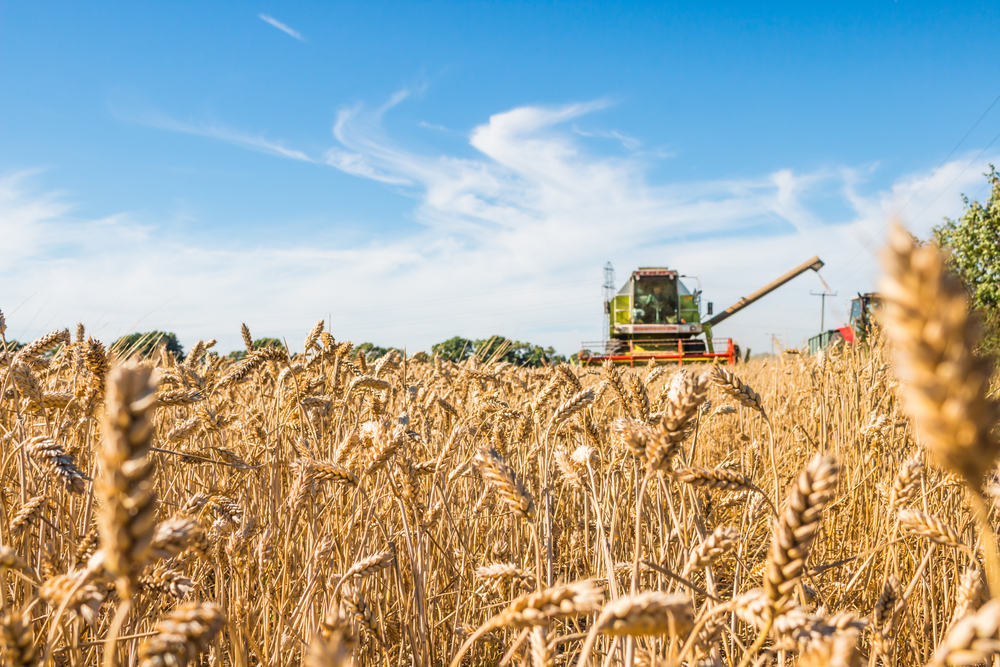
Ellis County Wheat farmers don’t miss out on entering your best wheat into the Ellis County Fair’s Open Class Market Wheat Show.
Entries are fast and easy, fill up a provided bag of your best wheat while unloading at the elevator or at your bins at home and return a crop data card after harvest to either the elevator or Ellis County Extension Office.
Cash and ribbons will be awarded to 1st, 2nd, and 3rd place winners.
Entries are due to the elevator or Ellis Co. Extension Office by July 9.
If you have questions call Ellis County Extension at 785-628-9430.
I just returned from my second trip to China. My first trip was in 2013 when I served as the vice president for student affairs. As president, I had the honor this time of awarding degrees at our two largest international university partners – 618 cross-border graduates at Sias International University and 350 at Shenyang Normal University – as well as building upon the strong relationships we have. Both trips were exciting, exhausting and inspirational, and reaffirmed for me both the importance of our presence there and the reasons we are successful.
Fort Hays State University encourages and supports the development and delivery of programs abroad under partnerships with other universities, colleges, governmental agencies and special organizations. These partnerships are increasingly important in defining the university’s mission as a regional university with a global outlook and its “Forward thinking. World ready.” qualities.
Our international partnerships are delivered through several modalities: cross border, study abroad, student exchange, faculty exchange and online. We currently have signed agreements with approximately 75 universities in more than 25 countries. Each agreement is carefully constructed to ensure our signature, high-quality programs remain supervised by our academic department chairs and deans in Hays. Nothing is more important than the consistent, high-quality delivery of any course offered under the name of Fort Hays State University.
In addition to advancing our educational mission, President Edward H. Hammond often used these trips as opportunities to promote Kansas business in China. Past FHSU delegations have included aviation officials, agricultural business representatives, oil executives and other business leaders. From 2013, I recall a University of Kansas professor of medicine joining our delegation briefly to explore the role of traditional Chinese medicine in today’s world – fascinating!
President Hammond was asked on a number of occasions to host special trips for the governor or for the Department of Commerce. This is important because a significant role of higher education is to be a positive force in economic development. I look forward to creating opportunities to stimulate international prospects for Kansas business.
It is hard to believe we are approaching 20 years of effectively delivering cross-border education to China, which requires strong, mutual relationships with our partners. It involves our faculty living in overseas university communities while teaching classes at partner campuses. We currently have approximately 50 faculty and their families living in China serving about 3,500 of our students at these two universities.
Each May, the FHSU president’s delegation travels to Sias and Shenyang – our largest international partners – to award degrees, meet our new alumni, spend time with our host institution leaders and thank our faculty and their families for making such a strong impact in our world.
As much as I enjoyed shaking the hand of each student walking across the commencement stage, it was the time with the faculty I will cherish the most. They are courageous, committed, excellent educators – true difference makers. I listened intently as they talked about the unique challenges they face and how they navigate their daily personal and professional lives.
Our faculty in China are a force for good in the lives of our students, and they are a positive influence in their communities. There are too many stories to tell here, but some of my favorites include the leadership studies faculty who connect students to nonprofit organizations in China for service learning; an English professor who helped students improve their writing skills by sharing their cuisine and culture through essays and recipes (showcased on a website and published afterward as a cookbook!); international faculty who, on their own, formed a welcoming committee to help incoming international faculty and their families navigate their new home; and the members of our faculty who volunteer in local orphanages.
I also met two FHSU alumni who have opened a school in Hangzhou teaching English to more than 800 children. What an inspiration!
Visiting the U.S. embassy, we learned more about how it supports our faculty and students. Our delegation was met everywhere with graciousness and outstanding hospitality. Our international partnerships are built on many years of friendship and trust and as I met each president, we greeted one another and acknowledged that we share a journey together – continuing the work of those who came before us. We also share a deep sense of responsibility to shape the world’s leaders through the delivery of strong international education programs.
I returned to Hays reaffirmed in my conviction that Fort Hays State University has a vital supporting role to play on the international stage.
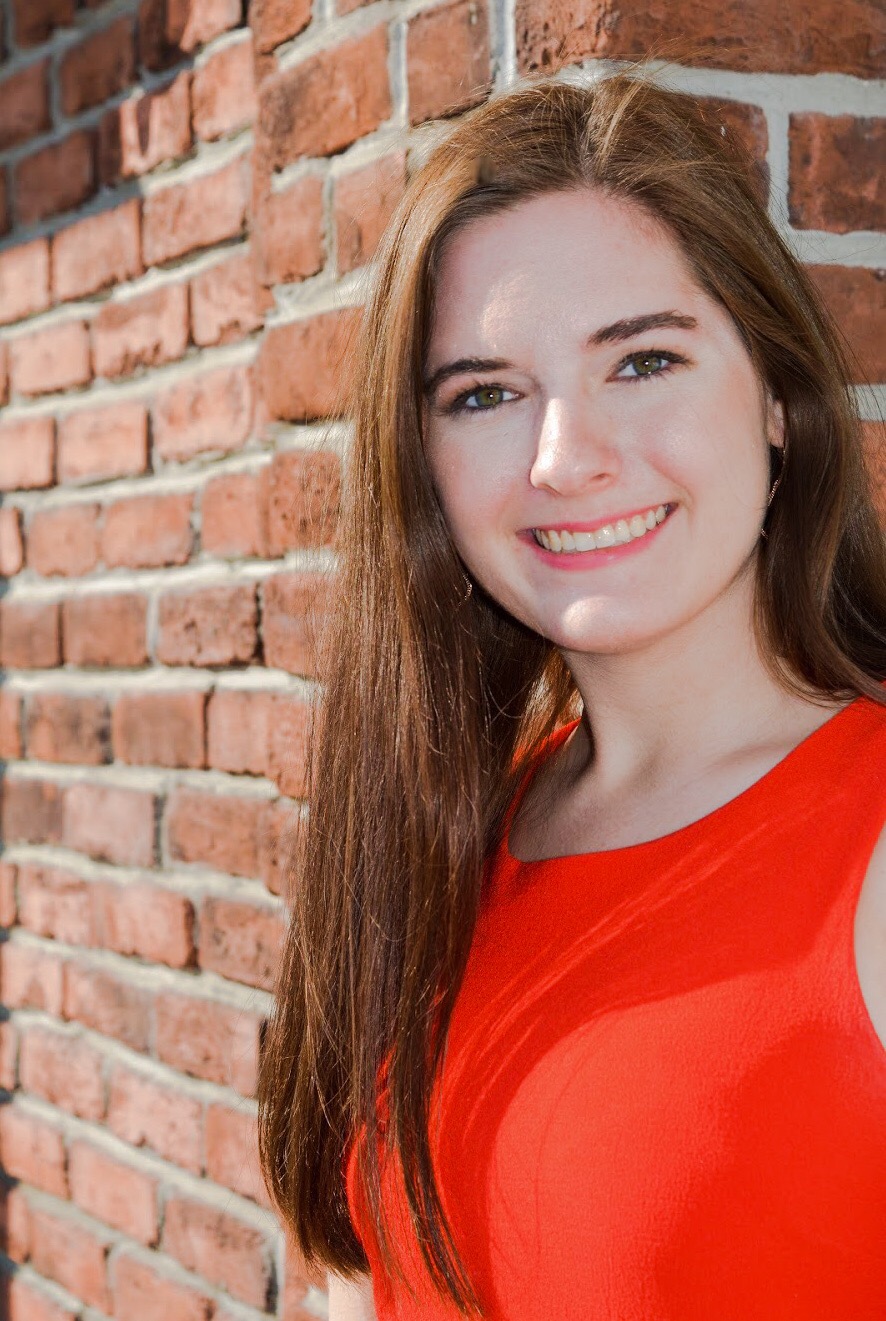
TMP-Marian is pleased to announce that Kate Ebbert has accepted the position of Junior High/High School Social Science Teacher. She begins her role in preparation for the 2018-2019 school year.
Ebbert recently graduated from the University of Kansas in May, with a Bachelor of Science in Secondary Education, Emphasis in History and Government. “I always wanted to be a teacher! My love for history made Social Studies a natural fit,” said Ebbert.
Ebbert grew up in Tonganoxie, Kansas, located in the Kansas City metropolitan area. While Tonganoxie is close to KC, the population is only 5,195 leading Ebbert to like Hays’ friendly atmosphere. “I am looking forward to teaching in Hays. I feel Hays is a supportive, welcoming community to begin my teaching career,” Ebbert beamed. This will be her first experience in the classroom and she is looking forward to the challenges and excitement that will bring. Ebbert said her philosophy in the classroom will be, “Learning together not individually. I want the children to have a very hands on experience.”
“Ms. Ebbert brings an energy for collaboration and problem solving to the Junior High and High School Social Science Classrooms,” Principal Chad Meitner said. “I’m most excited to see her modeling a positive attitude and vibrant faith to our students. I believe our Junior High kids will connect with her right away!”
Located in Hays, Kan., Thomas More Prep-Marian is a Catholic school serving grades 7-12. Students come from Hays, the surrounding region, and from countries around the world. The school was founded by the Capuchin Franciscans as Hays Catholic College in 1908 and ultimately became Thomas More Prep-Marian in 1981. The school continues to serve young people in the traditions of spiritual growth, academic excellence, and leadership formation.
Candidates during their 2018 political campaigns for Kansas Governor and House of Representatives need to factually debate funding of the Kansas Water Plan projects. The 2018 Kansas Legislature continues years of grossly underfunding the Plan projects as unresolved water issues continue to increase.
Kansas voters can stimulate debate by reminding candidates of the state’s long-term Water Vision: “Kansans act on a shared commitment to have the water resources necessary to support the state’s social, economic and natural resource needs for current and future generations.” To realize the Vision and to enable the fourteen regions in Kansas to achieve their Vision-supporting water goals, the candidates need to “act on a shared commitment” to obtain adequate, stable, and long-term funding of Plan projects.
In 2017, the Kansas Blue Ribbon Funding Task Force for Water Resource Management came to the consensus that roughly $55 million in annual funding is needed for full implementation of the Vision. The Task Force recommended one-tenth of one percent of the existing statewide sales tax be dedicated to implementation. That revenue source is unlikely given the continuing financial problems of Kansas state government.
Kansas water right holders have historically extracted free raw fresh water from Kansas lakes, reservoirs, rivers, and aquifers. The annual $55 million to pay for the Plan projects that realizes the Vision can also be obtained by water right holders paying a fee for extracting water. Owners have paid a Kansas fee to extract crude petroleum and natural gas for years.
Kansas voters can act on their “shared commitment” by requesting candidates to debate $55 million funding of Plan projects. Voters and candidates can obtain more water information by typing “Kansas Water Office” in the search box on their computers.
Let factual debate begin!
Allyn Lockner, Topeka, is a retired economist and certified public manager who has researched, studied, written and delivered testimony before Kansas legislative committees on Kansas water issues since 2014.
NESS COUNTY — One person died in an accident just before 7:30p.m. Tuesday in Ness County.
The Kansas Highway Patrol reported a 2017 Ford F150 driven by Shirley K. Weeks, 64, Brownell, was eastbound on 210 Road at Z Road six mile east of Ness City.
A northbound 2014 Dodge 3500 driven by Timothy Turner, 38, Ness City struck the Ford in the intersection. Both vehicles continued northeast into the ditch and then into the field going through a barbed wire fence.
Weeks was transported to Ness County Hospital where she died.
Turner was transported to the hospital in Ransom. He was not wearing a seat belt, according to the KHP.
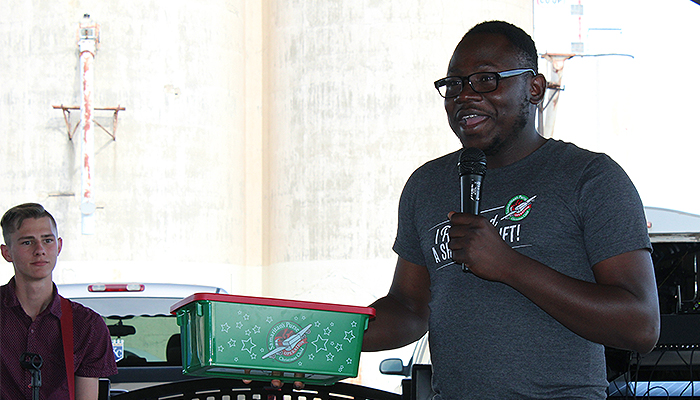
Désiré Nana, who was born in West Africa, holds an Operation Christmas Child box. Nana received a box of toys and school supplies when he was 8. He told his story Saturday to a group in Hays.
Désiré Nana had never received a present in his life and neither had any of his friends.
He lived in the impoverished community of Burkina Faso, West Africa.
Nana’s village did not have electricity and he walked 3 miles one way to school. His parents couldn’t pack him a lunch, so he picked mangoes along the way.
“Our parents were doing the best to feed us, so we did not have toys,” he said.
When Operation Christmas Child came to his school when he was 8 with boxes of toys and school supplies for him and his fellow classmates, it was calamity. Nana, now 25, spoke to a group of Hays residents Saturday at the Hays Downtown Pavilion about his experience with the program.
“I want you to think about it. There are these boxes,” he said. “Children have never received a box. ‘What is going on?’ There is commotion everywhere. There was a team from the United States there. ‘Why are we having people from the United State here? Are we in trouble? I think we are getting gifts.’ ”
Before the children were given their boxes, they were given a booklet in their native French called “The Greatest Gift.”
A minister gave a lesson from the book.
However, the children were rife with anticipation.
“‘Everybody was ‘Oh, my goodness when are we going to open the box!’ The preachers is preaching about Jesus dying on the cross, but I was not listening. I was all about the box. ‘Wrap it up so I can open the box!’ He kept talking and talking. I was thinking, ‘When are you going to wrap it up so we can open the box?’ ”
Finally the children were allowed to open the boxes. It was chaos. Children were ripping into the wrapping paper with their teeth. The children peered into their boxes. Some began to cry. Others screamed with excitement.
That initial sermon may not have completely sunk in with Nana, but he took home and read the booklet, which told of Christian creation, the Gospels and the crucifixion of Christ. He would not fully understand how that shoebox of trinkets would affect his life until he was 12.
Nana received a toy truck, school supplies and a toy he was not sure what to do with. He also received girl’s hair accessories, which he initially didn’t understand. Nana was the only child of his seven-person family to receive a box. Some people who pack boxes account for this and pack items for both boys and girls so the child who receives the box can share items with brothers or sisters.
He did not open the mystery toy for two weeks until one day he dropped it and it lit. His mother “freaked out.” She insisted he open it right away. “Don’t burn the house,” she said. “What is that?” She was scared. Désiré was scared.
It was a light-up yo-yo.
No one else in the village had one. He became famous in his neighborhood.
Désiré Nana talks about the booklet, “The Greatest Journey,” a Christian study guide that accompanies the Christmas boxes.
“People would ask me if they could play with it. I would say, ‘Take it easy, man. That is my toy from the United States.’ ”
There were no lights in his neighborhood, so the children would come and watch him play with his yo-yo. Eventually, he let other children borrow the toy.
Nana said the box and the truck and the yo-yo showed him someone who he did not even know loved him. They did not just say it. They made it tangible with the Christmas box.
Nana came from a Christian home, but his parents did not attend church before the Christmas boxes arrived. The nearest brick-and-mortar church was hours away. After Operation Christmas Child came to his village, his family started attending church together.
When Nana was 12, he organized a children’s ministry in his neighborhood. Two hundred children came. His ministry eventually grew to largest children’s ministry in his country.
“I remembered something about my yo-yo,” he said. “Just like the yo-yo lighted up your dark neighborhood, so are you the light of your neighborhood. According to Jesus, you are to spread out the unconditional love that has been given to you.”
He worked with Operation Christmas Child to train mission workers to accompany boxes.
“The box is just the beginning of the journey,” he said. “In two months, they won’t have the box. They will forget the box, but it is to keep Jesus in their heart. That is the whole point. We do discipleship and multiplication. … We are giving people the opportunity to hear the Gospel.”
After the boxes arrive, children can take a 12-week class guided with another booklet, “The Greatest Journey,” which is also in their language. At the end of the course, the children are given a Bible in their language, and they have a graduation ceremony.
Children don’t have graduation ceremonies in West Africa. Their parents may not know what they are studying in school and likely never attended school themselves.
“That is another opportunity for us to share the Gospel — to tell them somebody loves you and cares about you,” he said.
Churches that were planted in Burkina Faso because of the Operation Christmas Child program when Nana was a child are still operating today.
“I want to say thank you for packing boxes and making a difference,” he said. “You don’t just touch those children’s lives. You transform their lives. If you touch, it would be just for three months. But if you transform them, they know Jesus as their Lord and Savior.
“When people ask me what is the most important thing to put in my box. That is my answer — prayer. The most important thing you put in a box is not the toy that you buy. A flashlight is going to break down. They are not going to use it for eternity. They are going to forget about the box. Your prayer is going to make a difference. I believe the woman who packed my box (She did not put her name or picture in the box, so I do not know who she was.), but I know one thing — she prayed over the box. … That lady prayed I would be a disciple.
“You are actually doing something that has an impact and turning people around. You pray for people to become a disciple or a disciple-maker like me.”
Nana has been studying in the United States for two years. He recently received a scholarship to Oral Roberts University in Tulsa. He hopes to earn a degree in business and ministry. He also has a goal working to establish a hospital in Africa. He has already received a donation of medical equipment toward that goal. He hopes to fight malaria, which kills many children on the continent.
Operation Christmas Child is a branch of the nonprofit Christian mission organization Samaritan’s Purse International Relief. The organization has been led by Franklin Graham since 1979.
Operation Christmas Child encourages volunteers to pack shoeboxes with simple gifts of toys, hygiene items and school supplies. The boxes are sent to children like Nana in countries with extreme poverty or that have been stricken by war.
2.7 million children graduated “The Greatest Journey” course in 2017. 1.9 million of those children made decisions for Christ.
This year’s collection week will be Nov. 12-19. There will be two collection locations in Hays: Messiah Lutheran Church and CrossPoint Church. In 2018 Hays volunteers hope to collect 3,200 shoeboxes to contribute toward the global goal of reaching 11 million children.
If you wish to volunteer or for more information on Operation Christmas Child in northwest Kansas, contact Rachel Albin at [email protected].
RUSSELL – Friday, June 22, two new exhibitions open at the Deines Cultural Center in Russell.
Steve Read is a painter from McPherson who loves color. His paintings along with poetry written by Valerie Boersma will be on exhibition in the north gallery.
Greg Rud is a photographer living in Russell County. His scenic photography focuses on the unique, the abstract, and the under-appreciated. His photographs will be on exhibition in the second floor gallery.
The artist-attended reception is from 5 p.m. to 7 p.m. June 22.
Both exhibits will be on display until August 3rd. Admission is free and everyone is welcome. Regular gallery hours are noon to 5 p.m. Tuesday through Friday and 1-5 p.m. Saturday and Sunday.
The Deines Cultural Center is located at 820 North Main Street in Russell. Call 785-483-3742 for information.
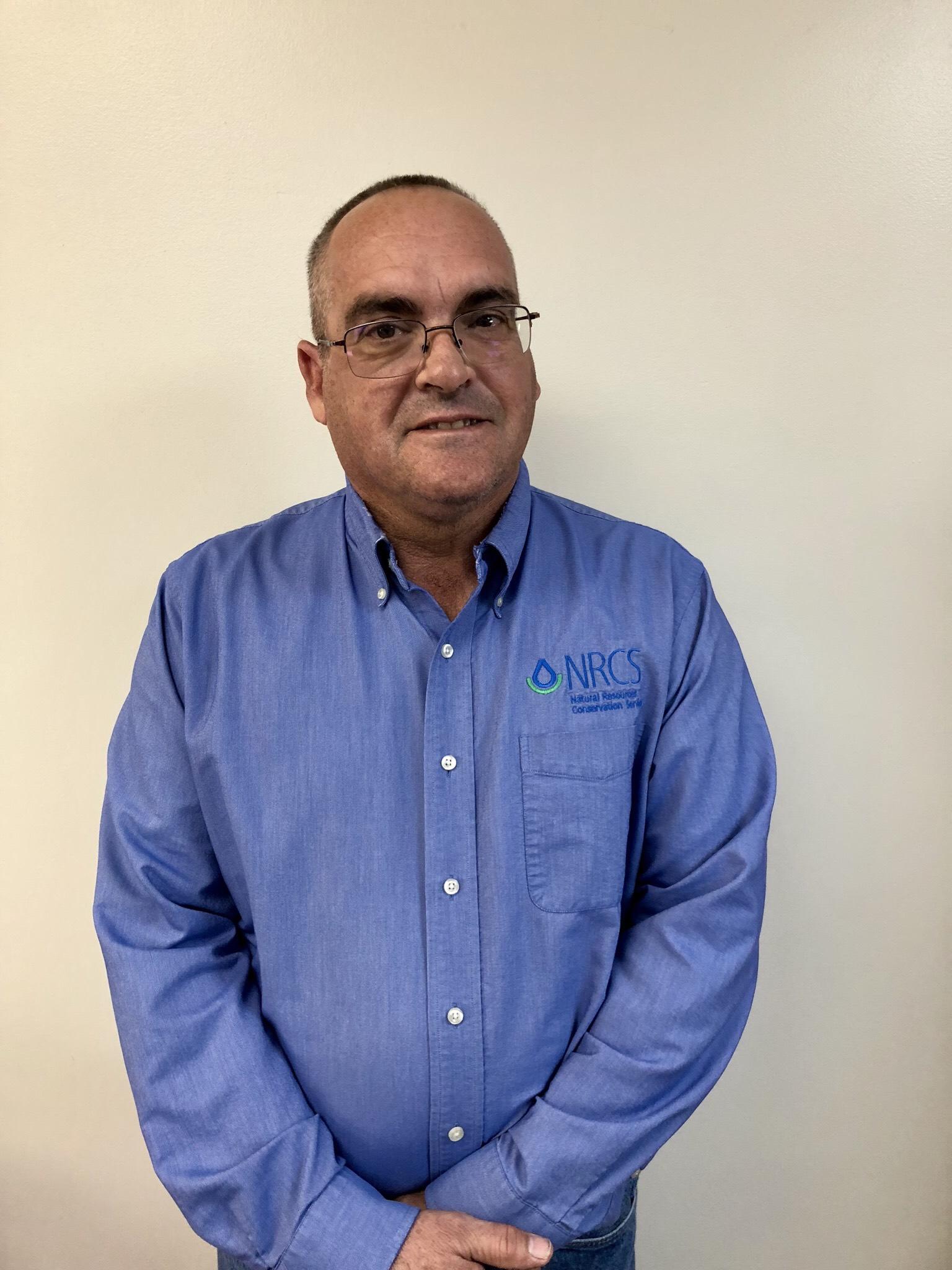
Dale Younker is a Soil Health Specialist with the USDA Natural Resources Conservation Service in Jetmore.
If you are thinking of planting cover crop in wheat stubble after harvest, now is the time to start planning and making arrangements so you are ready to plant when the time comes. So here are a few things to think about before putting the seed in the ground.
First off think about what you are wanting to accomplish? Do want to use it for livestock grazing? Is there a compaction layer that you want to break up? Do you want to increase the ground cover because of the short and thin wheat stubble? Use a seed mix meets your goals. Don’t plant a cover crop just to plant one.
Also ask yourself does it make economic sense for me to plant a cover crop. What is going to be my potential economic return of planting a cover crop, both short and long term, in comparison to not planting one? Try to keep seed cost reasonable at $20.00 or less.
Some herbicides that are used to spray wheat could prevent some cover crop species from coming up. Always check the herbicide label and if in doubt ask you’re your crop advisor or pesticide vendor.
One of the purposes of planting a cover crop after wheat harvest is to reduce evaporation, improve water infiltration and increase the water holding capacity of the soil. But realize upfront that cover crops do use moisture, just like any green growing plant. Depending on the amount of rainfall during the season they may use more then what they save. This could have a negative effect on the next cash crop yield. This is especially true as we move south and west across the state.
Always plant in a clean seedbed. If weeds are present spray to kill them. Cover crops can be very effective in suppressing difficult to control weeds but not if they are already present when the cover crop is being planted.
I like planting the cover crop as soon after harvest as possible. Preferably right behind the combine. This allows full advantage of the moisture and growing season available to grow the cover crop. If you are trying to control weeds you need to get the cover crop planted before a flush of weeds emerge.
Be prepared to spray the cover crop field if weeds become an issue. This is especially important if volunteer wheat becomes an issue since it provides a “green bridge” for the wheat streak mosaic virus. The last thing you want is this virus to spread to your or your neighbors newly planted wheat.
For more information about this or other soil health practices you can contact me at [email protected] or any local NRCS office.
Dale Younker is a Soil Health Specialist with the Natural Resources Conservation Service in Jetmore.
GRAHAM COUNTY — One person was injured in an accident just after noon Tuesday in Graham County.
The Kansas Highway Patrol reported a 2014 Chevy passenger vehicle driven by Jacob Lee Lindenman, 16, Hill City, was west bound on Walnut Street in Hill City.
The driver failed to yield at a stop sign at 7th Avenue and struck a southbound 1999 Buick passenger car driven by Sherry Clemons, 52, Hill City, on the driver’s side.
Clemons was transported to the Graham County Hospital. Lindenman was not injured. Both drivers were properly restrained at the time of the accident, according to the KHP.