We have a brand new updated website! Click here to check it out!

Walz files for Ellis County Commission District 1

Independent candidate and Ellis resident John Walz has filed for the Ellis County District 1 seat on the Ellis County Commission.

Walz filed the required paperwork Friday, according to County Election Officer and Clerk Donna Maskus.

Independent candidates have until 12 p.m. Monday, Aug. 6, to file for the general election. They have to file by petition and collect signatures from 4 percent – or 67 – registered voters from District 1.

Walz works for the Ellis County Sheriff’s Department.

He is the fourth candidate to file for the position.

— By JONATHAN ZWEYGARDT, Hays Post

Hansen Museum home to Albin watercolor painting workshop this month

Hansen Museum
LOGAN — The Dane G. Hansen Museum takes great pride in hosting a two-day watercolor painting workshop with Laurie Albin at the Dane G. Hansen Museum, 110 W. Main, Logan, Kansas. This workshop will run from 9:30 a.m. to 4:00 p.m. on June 22 and 23, 2018, with a lunch break each day. At this workshop, Laurie will introduce basic watercolor techniques and present step-by-step demonstrations providing guidance and inspiration. Day 1 of the workshop, students will practice newly introduced techniques by painting a floral. Day 2, students work from a custom sketch with the goal of completing a work ready for the frame. This workshop is available to all skill levels.

Instructor Laurie Albin is a Kansas Watercolor Society Signature member and has been painting watercolors from over 42 years. Laurie is an experienced instructor, for ten years, she had a teaching studio in WaKeeney, Kansas and for the past eleven years Laurie has been teaching secondary art in public schools. To view Laurie’s art, go to www.albinstudio.com.

This learning opportunity is brought to you through the Hansen Museum Continuing Education Program with funds from the Hansen Foundation. Cost of the workshop is $120.00 with discounts available for members of the Dane G. Hansen Museum. For more information, please call 785-689-4846.

Museum Hours are M-F 9-12 & 1-4; Sat. 9-12 & 1-5; Sun. & Holidays 1-5. The museum is closed Thanksgiving, Christmas and New Years. We are handicapped accessible and there is never an admission fee. For more information about this and other exhibits, contact Shari Buss at 785-689-4846.

— Submitted

Exploring Outdoors Kansas: Behind every man

Because of construction projects and other clutter in my life (sounds like someone needs to revisit their priorities) Joyce wrote this week’s column for me. Steve Gilliland

Over the years, Steve and I have attended several Storm Spotter meetings in McPherson. Ever since I can remember I’ve had a fascination for storms. I think it began when I was about eight or nine and visiting my sister in Hillsboro, when all of a sudden my brother-in-law rushed my sister and myself out of the house. There was a storm brewing and possibly a tornado. I didn’t know what all that meant, but we were in the car trying to see it. I don’t recall that we ever did set eyes on that tornado, but it was exciting and fostered my fascination with storms (read on and you’ll see that is what NOT to do.)
 
Years passed and as a teenager I moved to northwestern North Dakota. As a rule, there are not many tornados up there, but one year while I lived there a tornado hit and overturned several trailer houses, one where one of my friends lived with her six siblings. Thankfully none of the children were at home when the tornado struck. I remembering looking at the devastation and wondering how that could happen and how it only hit that small area and the rest of the town was spared. It was then I learned that trailer houses are not the safest places to be during high winds of any sort. That was long before the weather men and women were able to identify potential areas where tornados might develop. But alas, I did not get to see that tornado either. When I moved from North Dakota to Denver it never occurred to me that tornados would ever hit a city of that size. But again to my amazement there were tornados in Colorado, but they were few and far between, so my interested in tornados waned. When I moved back to Kansas I felt I was uninformed and did not recognize the danger and potential for damage and death due to those unpredictable high winds, so I set out to educate myself in order to be safe and protect my family and property.
 
The potential for damage and/or loss of life from a tornado is high and the chance of a tornado in Kansas is high. Those are two reasons it is good to be educated on what NOT to do when in a tornado warning or tornado watch area.
1.    DO NOT get in your car and go riding. You may not think that would be dangerous, but you are focused mainly in front of you when in a car looking for the storm. A tornado could come from above, either side, or from behind and you would not have a chance to escape.
2.    DO NOT ignore the warnings. There are reasons we have meteorologists watching the radar and reporting the weather (interrupting your TV show). They want to save lives.
 
Now, what you SHOULD KNOW and DO to be prepared for a pending tornado/storm.
1.    Identify your safest place before the crisis such as a small room in the basement, or if you have no basement a closet or a bathroom without windows. You can use your unused luggage to store your supplies during tornado season. It is easy to move from one room to another.
2.   Have an emergency kit ready in your safe area. In this kit, you should have a 3-day supply of nonperishable food, a manual can opener, 3-day supply of water per person, portable radio or TV with batteries, a cell phone charger, flashlight, batteries, first aid kit and manual, hand sanitizer, matches in a waterproof container, a whistle, extra clothing and blankets, photocopies of identification and credit cards, cash and coins, prescriptions, eye glasses, and specialized supplies for your family along with a pair of shoes for each family member.
3.   Use blankets, sleeping bags, etc. to cover yourselves during the storm. When tornados hit they carry lots of debris and that can be very dangerous. Keep your eyes and vital organs protected.
4.   Keep your cell phone close, as they can be very helpful. Make sure your phone is charged and ready for use. This can help locate help.
5.    Monitor the storm by portable radio or TV while in your safe area.
 
I finally saw my first tornado in 1991 when one destroyed several homes in the Hutchinson community of Willowbrook. As my cousin and I stood in the garage watching the ever blackening sky, it was so wide and so close I couldn’t even tell it was a tornado. At the time, I had no idea how dangerous that could have been, but I do now. I think, as a rule, women are more willing to take shelter, but men… well behind every man is a woman yelling “get in the basement now!”
 
Take heed and continue to Explore Kansas Outdoors…. from a safe distance.

MADORIN: Blitzkrieg on the banks of Big Creek

Native Kansan Karen Madorin is a local writer and retired teacher who loves sharing stories about places, people, critters, plants, food, and history of the High Plains.

The London Blitz involved nine months of German bomber-induced devastation that drove people who lived in that city into a state of constant awareness regarding the location of the nearest bomb shelter. While the banks of Big Creek won’t echo with the drone of mechanical motors and sound of carpet bombs exploding one right after another, one locale faces a dive bombing hawk intent on scoring a fresh chicken dinner.

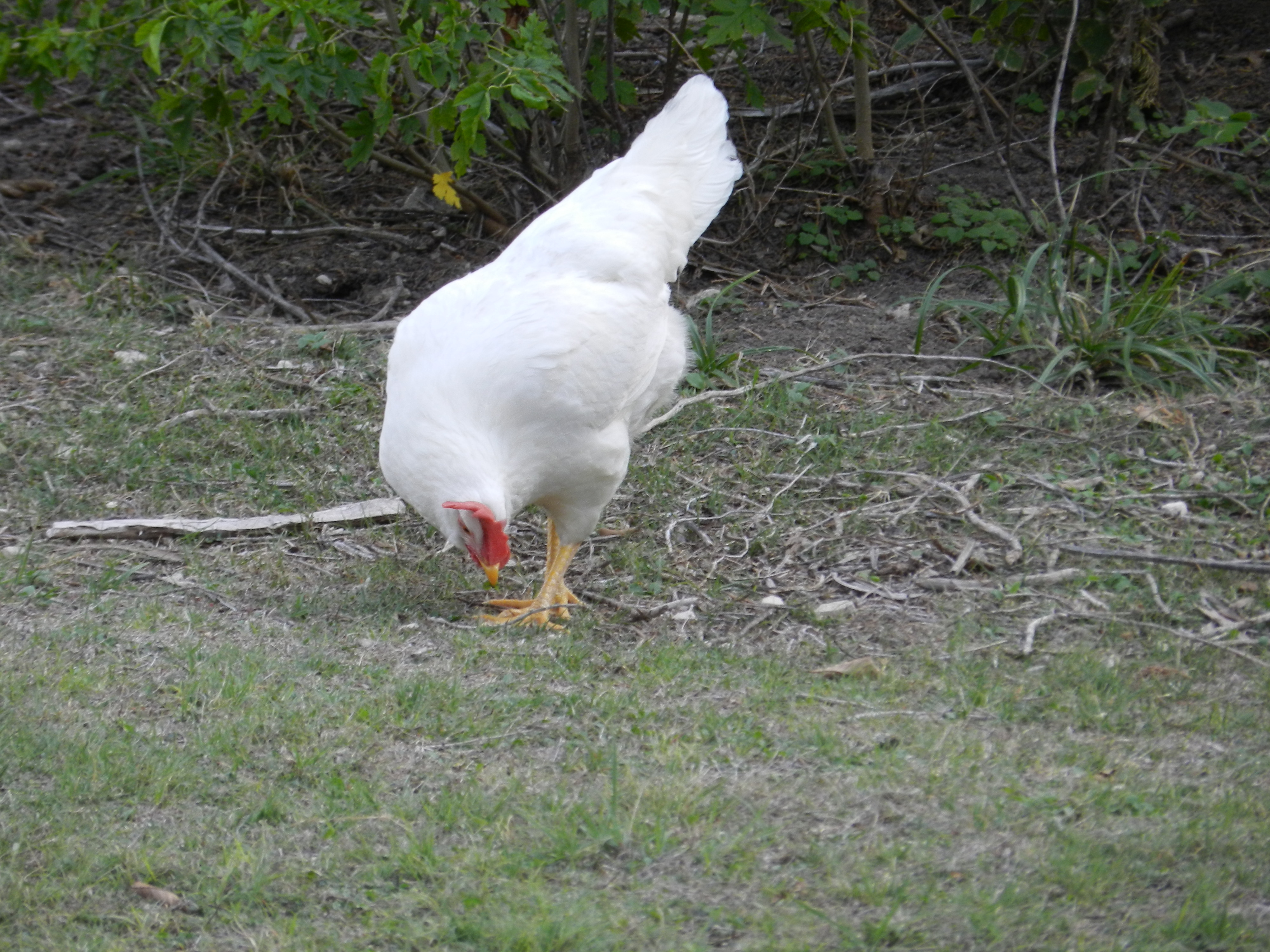
With its military-like forays, this bird of prey forced my six hens and one rooster into a life of focused attention unlike anything they’ve experienced before. Typically, these contented free-range fowl wander only as chickens can over acres of grassland searching out crunchy grasshoppers and other insects that go in the beaks as bugs and emerge from the other end as rich, yellow-yolked eggs.

Every since my flock came to this particularly relentless hawk’s attention, my once free- spirited hens now cower and creep about in the shadows of lilac bushes or tree rows around the property. When they hear the red tail’s distinctive high pitched “scree” or see its shadow, their contented clucks and cackles turn to strident squawks as they run for cover.

Even without stress, chickens don’t run gracefully—think miniature feathered and beaked dinosaurs lumbering frantically for safety. Awkward is the only way to describe their agitated movements. I must give the rooster some credit. After sounding his unique alarm, he stands back like a good commander to make sure his graceless harem reaches the safety of their hen house or protective shrubs.

The other morning our camouflage Jack Russell terrier and I took advantage of the cool temperatures to water flowerbeds. Intent on soaking plants, I barely noticed when Buster, our feisty watch dog, leapt up barking as he raced toward alarmed and noisy chickens about twelve feet away. Jumping to the wrong conclusion, I thought he was chasing a chicken. I scolded and called him back until I saw the red tail swoop down in an attempt to snag with its outstretched talons a young Rhode Island red.

Buster knew his duty. Ignoring his inattentive mistress, he yipped and leapt heroically after the invader’s signature tail. Inspired by his bravery and wanting to keep dog and chickens safe, I turned the hose into a water cannon and began spraying the whole noisy group. Under the veil of water, the little hen dashed desperately toward the lilacs while Buster sounded like Patton giving the Germans heck. At last, the raptor acknowledged defeat and turned to ride a thermal in the blue Kansas sky.

The war wasn’t over. I shooed the hawk away every day when he buzz bombed the yard. The chickens lived restricted lives as a form of self-preservation, and Buster, the watchdog, scanned the heavens like an air raid warden waiting for the next assault. Just as London survived the German Blitzkrieg, our hilltop also did due to the aid of a yappy terrier and garden hose artillery.

Native Kansan Karen Madorin is a local writer and retired teacher who loves sharing stories about places, people, critters, plants, food, and history of the High Plains.

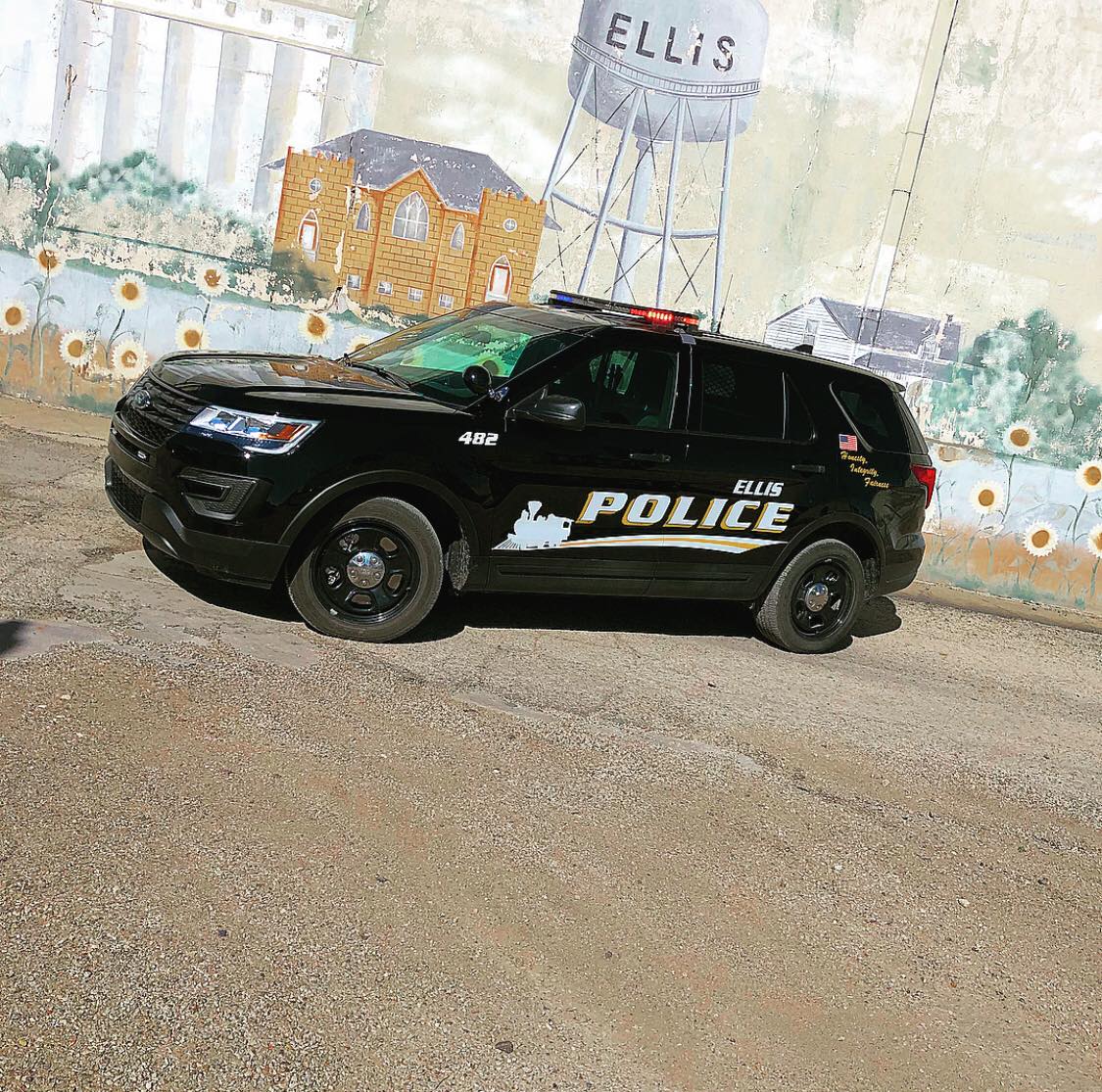
SPONSORED: City of Ellis seeking FT Police Officer

The City of Ellis, Kansas, is accepting applications for a Full Time Entry Level Police Officer or a Lateral Transfer Police Officer. Police Officers are required to enforce local, state, and federal laws as well as serve papers and complete other various tasks.

Minimum requirements are U.S. citizen, High School diploma or GED, 21 years of age, valid driver’s license, no felony, serious misdemeanor or domestic violence convictions. Police Officer employed with the city of Ellis is required to establish residence with the Ellis School district USD 388. KLETC certification is required for lateral transfers. A background check will be conducted on each applicant. Applicant must pass a pre-employment drug screen, written test, oral interview, and physical and mental health evaluations. Applicant will provide a current driving history and current credit report.

The City of Ellis is an equal opportunity employer offering a highly competitive benefit package including paid family health insurance. Starting pay for Police Officers is $15.90 an hour. Lateral transfers will receive $17.22 an hour after they complete field training.

To apply, go to the city of Ellis Kansas web page click the job opportunities link and fill out the application. Send the application either by mail to the Ellis Police Department 815 Jefferson St. Ellis, Kansas 67637 or by email to Chief Taft Yates at [email protected]. You may also contact the Ellis Police Department by phone at (785) 726-4462 or the Ellis City Clerk by phone at (785)726-4812 for an application.

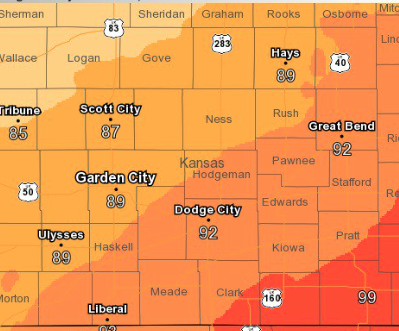
Warm, windy Monday

Today Sunny, with a high near 89. South wind 10 to 18 mph becoming north in the afternoon. Winds could gust as high as 31 mph.

Tonight Mostly clear, with a low around 60. North northeast wind 7 to 13 mph.

Tuesday A 30 percent chance of showers and thunderstorms after 1pm. Sunny, with a high near 90. Northeast wind 7 to 9 mph.

Tuesday Night A 40 percent chance of showers and thunderstorms. Increasing clouds, with a low around 64. East wind 7 to 9 mph.

WednesdayA 20 percent chance of showers and thunderstorms. Mostly sunny, with a high near 91. East wind 7 to 16 mph becoming south southeast in the afternoon.

Wednesday NightA 20 percent chance of showers and thunderstorms before 1am. Partly cloudy, with a low around 70.

ThursdayMostly sunny, with a high near 98. Breezy.

Kan. law will allow bystanders to break into vehicles to save people, pets

By CRISTINA JANNEY
Hays Post

It’s not officially summer, but it’s still hot outside.

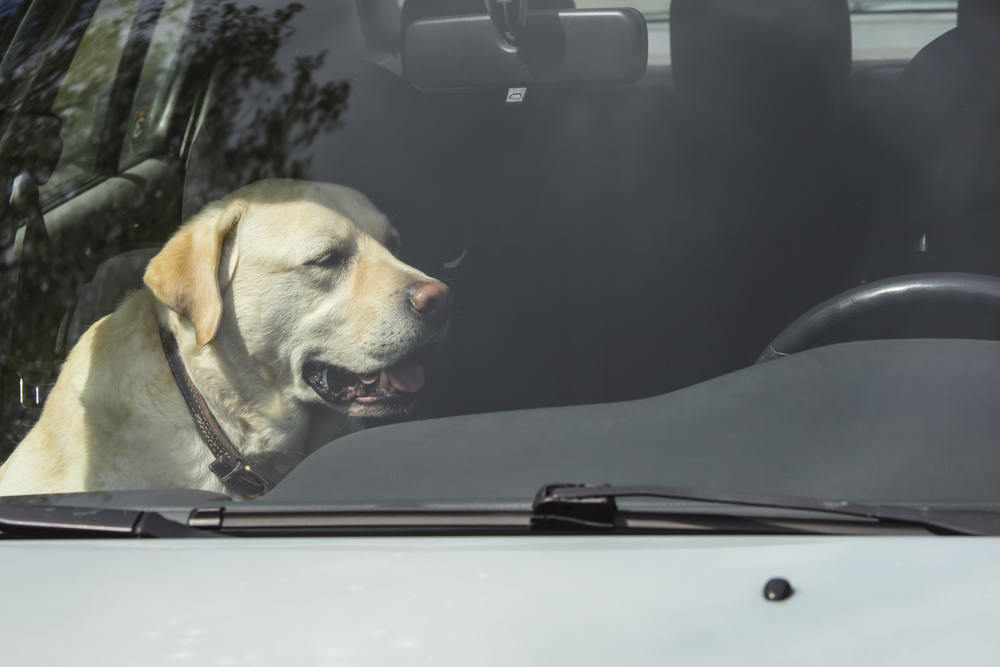
The rising heat puts both small children and pets at risk if they are left in hot vehicles.

A new Kansas law, which will go into effect July 1, protects anyone from civil liability who breaks into a vehicle to rescue an animal or a vulnerable person, including a small child.

However, Hays Police Chief Don Scheibler noted people need to follow certain guidelines when trying to rescue a person or pet.

• The Good Samaritan has to determine the person or animal in the vehicle is in immediate danger.
• The person has to determine there is no other safe way of getting the person or pet out of the vehicle.
• The person also must call 911 right before or after he or she breaks into the vehicle.
• The person also must remain on the scene until law enforcement arrives.

Scheibler said he hopes this new law will serve to educate the public about the dangers of hot vehicles.

“This is a good thing. It allows people to take some sort of action in those situations in which people or animals need their assistance,” Scheibler said. “The important thing is people need to use good judgement, and they should never hesitate to call us in those situations. I think this law has good intentions to try to educate the public and prevent tragedies.”

A number of years ago a child died in a hot car in Hays. The person who was attending to the child did not usually take the child to daycare and forgot the child was in the back seat. Scheibler recommended placing something in or on your vehicle to remind you a child is on board. This could be a ribbon on the door handle or a note on the dash.

Heat stroke is the leading cause of non-crash, vehicle-related deaths in children younger than 15, according to the American Academy of Pediatrics. Heat stroke can happen when the outside temperature is as low as 57 degrees. Organ damage starts in children when their bodies reach 104 degrees. Death can occur at 107 degrees.

Learn more on children and hot vehicles at the healthychildren.org.

There is no Kansas law that prohibits a pet owner from leaving an animal in a vehicle.

However, Scheibler said, in extreme cases, a person could be investigated for animal cruelty in the case of a pet or child endangerment in the case of a child.

Animal control will respond to all reports of endangered pets, although it may take some time for the officer to arrive.

Nikki Hausler, Hays animal control officer, said it is not enough to just see a panting dog in a vehicle. The pet must show signs of heat stroke or heat exhaustion, which can be difficult to identify. Unless it is clear the animal is in immediate risk, it is best to call police to deal with the situation.

Even in cooler temperatures, the temperature inside a vehicle rises quickly and can be a danger to any living creature.

In as little as 10 minutes, the temperature in a vehicle can increase 19 degrees, according to the American Veterinary Medical Association.

Hays Vet Dr. Mark Meier said when a dog’s body temperature reaches more than 106 degrees, its organs start to shut down. Overheating can cause death or permanent organ damage.

“I think the biggest thing is that if you don’t need to have your pets with you, leave them at home,” he said. “Pets are becoming a bigger part of our families, and it is not worth the risk.”

The city is already receiving calls about pets in hot vehicles.

“I have digital thermometer that I can use to measure the inside temperature of a vehicle,” Hausler said. “Luckily, I have not found any pets in heat distress or heat stroke, but I use the app to educate owners. Even if they crack the windows on a day with high humidity and its hot like it has been — 90 degrees — a car can heat up in the matter of minutes.”

She explained people often go into a store and think they will be there for a few minutes. They get delayed in a checkout line or they find more items they initially intended or they stop to talk to a friend — and they end up spending much more time in the store than they anticipated.

“One thing that shocks me is last summer, I was called out to the hospital for pets in vehicles,” Hausler said. “When you go for a medical appointment, it can be so much longer than you anticipate. A hospital parking lot is not the place for your dog either.”

Sharon Thompson of Hays stopped at Walmart on a recent trip to Topeka and discovered bulldogs locked in a car. She call 911 and reported it. She stayed with the vehicle for 22 minutes until the police arrived, and the owner of the pets had still not emerged from the store. She said she was in anguish watching the pets suffer in the heat until someone arrived.

Hausler said her No. 1 recommendation for pets owners is to leave the pets at home, especially during these warm months. They will be much safer.

Because of Hays being located on the interstate, local police also receive calls for people who are traveling and leave their pets in vehicles.

Hausler encouraged travelers to take their pets into to consideration when they stop. Eating at a sit-down dinner may not be the best choice for your pet. Even if you leave the car running, the car could die, the vehicle could overheat or even catch on fire.

“It may be best to get something to grab and go when you are on the road and keep the dog cool in the vehicle,” she said.

Fundraiser to benefit WaKeeney cancer victim

By LINN ANN HUNTINGTON
Contributing Writer

After Audrey Macke of WaKeeney survived breast cancer eight years ago, she hoped the cancer wouldn’t come back. Then in February the disease struck again—this time in the form of stage 4 pancreatic cancer.

Macke recently completed her fifth round of chemotherapy at Cancer Treatment Center of America in Tulsa, where she has stayed since her treatments began, said her daughter-in-law, Jonna Dinkel of Hays.

Dinkel and other family members and friends are holding a fundraiser on Saturday, June 23, to help with Macke’s expenses.

The community flea market, “Bargains for a Benefit,” will take place from 8 a.m. to 2 p.m. in the parking lot of Westview Church, 3000 W. 41st St. in Hays. Macke has been a longtime member of the church.

Community members are encouraged to hold their own garage sales at the event, donate items for the benefit sale, and just come and browse for bargains, Dinkel said.

“All vendors are welcome, and we are accepting any types of donated items,” she added.

Donated items may be dropped off at the church on Thursday and Friday, June 21 and 22. Dinkel is also currently accepting donated items at her home, 2221 Southview Drive, outside of Hays, where she will store them until the sale.

Those holding their own garage sales at the event are asked to donate 20 percent of their proceeds to the fundraiser, Dinkel said. That money will help with Macke’s living expenses while she is getting treatment, Dinkel said.

Those attending the flea market will be able to purchase items from food vendor trucks. Farmer’s market vendors will also be selling items. Dinkel said several local groups have donated nice items that will be raffled off.

Volunteers are needed to sort through and price items prior to the sale, Dinkel said. Those wishing to participate in the sale, volunteer, or make donations are asked to contact her at 785-656-2505 or at [email protected]. In case of rain, the event will be moved inside the church, she said.

KDHE waste grants benefit NW Kansas schools, townships

KDHE

TOPEKA–The Kansas Department of Health and Environment’s Bureau of Waste Management has announced the recipients of waste tire recycling grants. These annual solid waste grants are awarded to municipalities and school districts across the state. The grants total almost $468,000 for 2018.

The waste tire recycling grants go toward funding safe surfacing at playgrounds, running tracks, picnic tables and benches made from waste tires. This year’s 51 individual waste tire recycling grants range from $209 to $61,213. The grants are funded through a 25-cent tax paid on the purchase of new tires.

The list of grantees can be found at https://www.kdheks.gov/waste/grants/SFY18WTGSpreadsheetFinal.pdf.

For more information on KDHE’s waste reduction grant opportunities and application procedures, visit www.kdheks.gov/waste.

 Local grants include:

Plainville Township #11, Plainville, tables purchase five tables, including two ADA tables, for Plainville Township Lake, $1,952.

Rooks County Township #12, Codell, tables/benches, purchase two picnic tables and two benches for Codell Park, $1,118.

St. Mary’s School, Ellis, loose fill rubber mulch, purchase loose fill rubber mulch for a 3,604-square-foot playground at St. Mary’s School, $6,300

USD 432, Victoria, loose fill rubber mulch, purchase loose fill rubber mulch to backfill a previously installed playground at Victoria Elementary School and bring it up to the appropriate depth of 6 inches, $8,925.


STEAM storytime to be offered at Sternberg

Every Friday at 9:30 a.m. through Aug. 10

Come enjoy a science story and activity at the Sternberg Museum. They will explore topics such as shadows, engineering, fossils and flowers. Each week will cover something new and you will have a fun project you can take home. 

🎥 Hays author listed in Kansas Notable Books

KS STATE LIBRARY

TOPEKA  — Acting State Librarian Eric Norris has announced the 13th annual selection of Kansas Notable Books. The fifteen books feature quality titles with wide public appeal, either written by a Kansan or about a Kansas-related topic.

“I am proud to present the 2018 Kansas Notable Book list.  Choosing only 15 books is no easy task,” said Eric Norris, Acting State Librarian. “The selection committee began with a pool of over 100 submitted titles and worked diligently to identify the year’s best works by authors and illustrators from Kansas, as well as those works that highlight our history and heritage. Kansans are encouraged to visit their local public library and celebrate the artists and the artistry of Kansas.”

Kansas Notable Books is a project of the Kansas Center for the Book, a program of the State Library. The Kansas Center for the Book is a state affiliate of the Center for the Book in the Library of Congress. Throughout the award year, the State Library promotes and encourages promotion of all the titles on this year’s list at literary events, and among librarians and booksellers.

An awards ceremony will be held at the Kansas Book Festival, Saturday, September 8, 2018, 9:30 a.m., at the State Capitol to recognize the talented Notable Book authors. The public is invited.

2018 Kansas Notable Books

Bad Kansas: Stories by Becky Mandelbaum (Rockport WA), University of Georgia Press

In this darkly humorous collection, Kansas becomes a state of mind as the characters struggle to define their relationship to home and what it means to stay or leave, to hold on or let go.

Cricket in the Thicket: Poems about Bugs by Carol Murray (Overland Park), illustrations by Melissa Sweet (Portland ME). Henry Holt & Co

Playful poems highlight surprising facts about the world of insects – from familiar ants and exotic dragonflies to cringe-worthy ticks and magnificent fireflies in this picture book for children.

Dodge City: Wyatt Earp, Bat Masterson, and the Wickedest Town in the American West by Tom Clavin (Sag Harbor NY), St. Martin’s Press

Cowpokes, desperadoes, and lawmen: it wasn’t always easy to tell which was which. This rollicking tale of Dodge City brims with colorful characters. From frontier settlement, to cattle drives, to a railroad town, the history of Dodge City is the story of how the West was won.

Feet of the Messenger: Poems by H.C. Palmer (Lenexa), BkMk Press Books

Between the horrors of the Vietnam War and the pacific silences of the Kansas prairie, these poems honor both the beauty of the English language and the ancient powers of poetry to speak experience without diminishing it.

Fireflies in the Gathering Dark: Poems by Maril Crabtree (Mission), Aldrich Press

These poems traverse landscapes, inner and outer: physical landscapes and metaphysical ones; the landscape of relationships; the landscape of age, from childhood to maturity; and the questing landscape that leads to new understandings.

Headlights on the Prairie: Essays on Home by Robert Rebein (Irvington IN), University Press of Kansas

These essays bring a storyteller’s gifts to life’s dramas, large and small. Moments of singular grace and grit encapsulate the lives of feedlot cowboys, long-haul truckers, and farm kids dreaming of basketball glory.

Ike and McCarthy: Dwight Eisenhower’s Secret Campaign Against Joseph McCarthy by David A. Nichols (Winfield), Simon & Schuster

This fast-paced account reveals President Eisenhower’s subtly clever role in the destruction of demagogue Joe McCarthy. Drawn from documents in the Eisenhower Presidential Library, Nichols presents a gripping story of a classic power struggle.

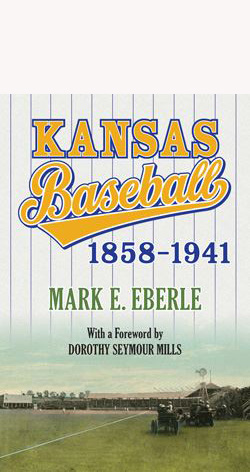
Kansas Baseball, 1858-1941 by Mark E. Eberle (Hays), University Press of Kansas

The early history of baseball in Kansas is the story of towns and the ballparks they built. It was a time when baseball was adopted by early settlers, then taken up by soldiers sent west, and finally by teams formed to express the identity of growing and diverse communities.

Click here to watch an Eagle TV interview with Eberle and Mike Cooper about the book.

Kansas Guidebook 2 for Explorers by Marci Penner (Inman) and WenDee Rowe (Inman), Kansas Sampler Foundation

The ultimate guidebook for all things to see and do in Kansas features 4,500 attractions, 843 eateries, and more than 1,600 color photos. Counties are arranged alphabetically within six geographic regions as are the cities within each county. Entries include directions, hours and contact information.

The Man from the Train: The Solving of a Century-Old Serial Killer Mystery by Bill James (Lawrence) and Rachel McCarthy James (Lawrence), Scribner

A baseball statistician and his daughter deliver a provocative story that aims to solve a 100-year-old mass murder case. The two painstakingly scoured thousands of newspapers and records to discover and reveal the identity of one of the deadliest serial killers in America.

Midnight at the Electric by Jodi Lynn Anderson (Asheville NC), HarperTeen

While the stories of three women span multiple generations and thousands of miles, their lives are intertwined. Before leaving Kansas to go to Mars, Adri discovers Catherine’s journal of the Dust Bowl and Lenore’s letters about World War I. Each story weaves a unifying thread of hope.

The Shape of Ideas: An Illustrated Exploration of Creativity by Grant Snider (Derby), Abrams ComicArts

What do ideas look like? Where do they come from? These one- and two-page comics have been featured in the New Yorker, the New York Times, and the Kansas City Star. They are a colorful look into the creative process.

Stark Mad Abolitionists: Lawrence, Kansas, and the Battle over Slavery in the Civil War Era by Robert K. Sutton (Bethesda MD), Skyhorse Publishing

In 1854, Boston was in an uproar. Businessman Amos Adams Lawrence was inspired to put his efforts and considerable fortune toward keeping slavery out of Kansas. The town that came to bear Lawrence’s name became part of a bigger story of people willing to risk their lives and fortunes for freedom.

That is My Dream! by Langston Hughes and Daniel Miyares (Lenexa), Schwartz & Wade

Langston Hughes’s inspiring and timeless poem “Dream Variation” comes joyously to life in a gorgeously illustrated picture book. Follow one child on a walk through his small segregated town in the 1950s. Then watch his mind take flight as he images a brighter, more inclusive world.

To The Stars Through Difficulties by Romalyn Tilghman (Long Beach CA), She Writes Press

Inspired by the women who built fifty-nine Carnegie libraries in Kansas, the No Guilt Quilters overcome numerous obstacles to build the Cultural Center on the Plains- proving that New Hope is more than just the name of a town.

STRONG TOWNS: How bike lanes benefit businesses

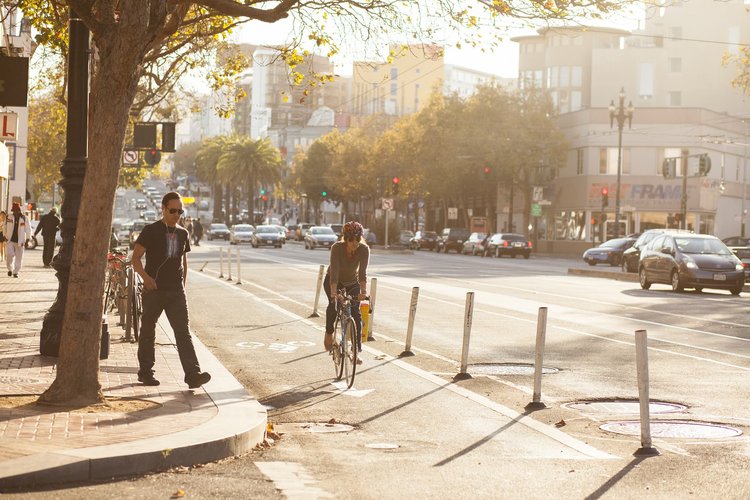
Protected bike lanes create an environment where pedestrians feel safer walking and cars still have easy access to shops along the street. (Source: Green Lane Project)

By RACHEL QUEDNAU
Strong Towns

Kenmore Boulevard in Akron, Ohio is in the process of a street redesign which may involve the loss of some on-street parking spots in order to create protected bike lanes. This sort of transition is happening all over the country as more and more cities recognize the transformative impact that bike lanes can have on their city, as well as the prosperity that impact can create.

But still, there’s no doubt that installing bike lanes can feel like a big change. When you’ve owned a business on the same street for years and suddenly the view outside your window looks different, it makes sense that you might wonder whether the outcome will be positive or negative for your customers and your bottom line.

Today I want to share several reasons why business owners can rest easy about the addition of bike lanes—and, even better, celebrate their new infrastructure. In city after city, business owners are seeing more customers come through their doors and more revenue flowing into cash registers when streets are redesigned to be more walk- and bike-friendly.

CUSTOMERS WILL CONTINUE TO HAVE PLENTY OF PARKING OPTIONS

Concerns about parking are absolutely valid. Business owners who are used to having lots of open parking spaces right outside their door may be concerned when their street is redesigned. It’s natural to feel worried about the impact of that sort of change. But let’s zoom out just a tiny bit to get a fuller picture.

Akron’s Kenmore Blvd, with available street parking marked in orange and off-street parking marked in pink. (Created by Rachel Quednau with Google Maps image)

In the above aerial image of Akron’s Kenmore Blvd (the main street running east/west in the illustration) from approximately 16th to 13th Street, I’ve highlighted all available street parking in orange that will not be removed as a result of the street redesign. As you can see, there are a ton of parking spaces no more than 1-2 blocks (about 150-300 feet) away from each Kenmore Blvd business that will be easily accessible for customers after the redesign.

Compare this to a mall or grocery store parking lot, which is typically much larger and which often requires a customer to walk farther than 150 or 300 feet. These are very standard distances that people have no problem traveling on foot on a daily basis.

Yes, customers may need to slightly adjust their habit of parking directly outside a business’s front door. But we’re talking about a difference of a 30- or 60-second walk when we compare a front door parking spot with parking spot just down the street. What’s more, during that walk customers will pass by other businesses on Kenmore and see them up close instead of viewing them through a fast-moving car window. This benefits everyone.

Just to add some additional perspective, in the above image I’ve also highlighted all of the surface parking lots in the vicinity of this segment of Kenmore Blvd in pink. While most of these are private, they show that most customers of the adjacent businesses will be parking in those lots, leaving even morespace on the street for customers of the businesses that don’t own private lots.

As I examined these streets on Google Maps, I saw hardly any cars parked on them — perhaps one or two at most. Combining this assessment with data from the City of Akron, it’s safe to say there will be dozens, if not hundreds, of vacant spots ready to be occupied by customers of Kenmore Blvd businesses at all times, even after the bike lanes are installed.

A TRANSITION THAT BENEFITS EVERYONE

Business owners can take some very simple steps that will make the transition to a new street design go smoothly, and they can also take heart that this transition is a positive change for Kenmore Blvd and other places like it.

One way to make extra sure that customers aren’t deterred by a slight change in parking is to create signage outside that directs people to nearby side streets and tells customers that these shops are still open for business, even if the street looks slightly different than they’re used to. Posting on a business’s website and/or Facebook page to let people know where they can park can be helpful as well.

The overarching goal of this street redesign is to make Kenmore Blvd a more attractive, welcoming and safe place for everyone, creating a better atmosphere for business to flourish.

Picture the busiest, most successful shopping districts in America. Think Michigan Avenue in downtown Chicago or Pike Place Market in Seattle. Are these areas filled with parking lots and parking spaces? No. They’re filled with people walking around from store to store.

Akron, Ohio is, of course, a very different place from Chicago or Seattle, but that doesn’t mean the same basic concepts won’t apply. When you make an area appealing for people on foot or on a bike — when you slow down the pace of life in that neighborhood just a little — suddenly visitors are lingering longer and stopping in more stores. Suddenly residents are walking or biking over on a regular basis to see what’s new.

This street redesign aims to create more access to Kenmore, not less. As I’ve shown in the illustration above, the decreases in automobile parking will be minimal — but the increases in bike access and walk-friendliness will be huge, and those will bring lots of new customers to the area. In other cities around the country, some business owners have chosen to offer small discounts or incentives for people who bike to their shop, which capitalizes on the change in street design to invite new customers to patronize a store. Other business owners may choose to install a bike rack outside to further encourage people to stop and stay a while.

Extra steps like these are by no means necessary to reap the benefits of a bicycle-friendly street redesign, but they’re small things a business can undertake to enhance the experience even further and supercharge profit potential in the process.

BUSINESSES THRIVE IN OTHER CITIES WITH PROTECTED BIKE LANES

But if this still isn’t enough to convince you, I’ve compiled research from a variety of cities on the impacts of removing parking for the sake of road diets and bike lanes. These perspectives from real business owners across the country prove that bike lanes often have a positive effect on sales and customer traffic.

In San Francisco, after a bike lane was added on Valencia Street “two-thirds of the merchants said bike lanes had been good for business.”

In Seattle, the creation of a new bike lane, which eliminated 12 on-street parking spaces resulted in a serious increase in retail sales along the street.

When a new protected bike lane was installed on Broadway in Salt Lake City, sales on the street rose 8.8%, in spite of the fact that the bike lanes decreased on-street parking by 30%. Surveys of business owners along the street showed that a majority of them felt that the change was positive, and most of the remaining business owners felt neutral about it (see charts on the side, courtesy of People for Bikes).

In 2013, the city of Vancouver installed protected bike lanes on a key street, which involved removing 20 parking spaces. For business owners along this corridor, their initial fears about losing sales did indeed come true. But that was only a short-term result. Soon after the bike lanes were installed, one local restaurant owner happily reported that business was better than ever and stated, “We definitely have benefited from the increased usage of the bike lane.” With a slew of bike riders now streaming by, he was able to reach a range of new customers.

I’ll note that many of the examples I’m sharing here are from large cities, but that’s not because the results won’t apply in smaller communities. It’s just because those are the places where data has been collected, and where bike lanes have grown more prevalent. I hope we can add more examples from smaller cities like Akron to the list very soon.

As an article on the transportation website, Streetsblog, explains, “Streets that accommodate all users — including cyclists, pedestrians, and transit riders — mean less traffic congestion and better quality of life. Not surprisingly, then, they are also linked to higher commercial property values and lower vacancy rates.”

When faced with the prospect of losing some on-street parking outside a local business, it completely makes sense for business owners to be concerned about the impact on their customer base. But the on-the-ground evidence as well as nationwide data paints a very different picture.

Rest assured that, if bike lanes are coming to your street and some parking spaces are disappearing in the process, local businesses shouldn’t see losses in profit. In fact, they’re likely to see gains.

This essay is part of an ongoing engagement with Akron, Ohio, supported by the Knight Foundation. Learn more about it here.


Copyright Eagle Radio | FCC Public Files | EEO Public File