To find out more about The Post Podcast, or subscribe to mobile notifications click here.
Category: Local
Boil order for portion of Smith County rescinded

KDHE
TOPEKA – The Kansas Department of Health and Environment has rescinded a boil water advisory for Smith County RWD 1. The advisory was issued because of a loss of pressure in the system. Failure to maintain adequate pressure may result in a loss of chlorine residuals and bacterial contamination.
Public water suppliers in Kansas take all measures necessary to notify customers quickly after a system failure or shutdown. Regardless of whether it’s the supplier or KDHE that announces a boil water advisory, KDHE will issue the rescind order following testing at a certified laboratory.
Laboratory testing samples collected from Smith County RWD 1 indicate no evidence of bacteriological contamination and all other conditions that placed the system at risk of contamination are deemed by KDHE officials to be resolved.
For consumer questions, please contact the water system or you may call KDHE at 785-296-5514. For consumer information visit KDHE’s PWS Consumer Information webpage.
Hays City Commission, USD 489 board candidates will debate at FHSU
Tiger Media Network
Students at Fort Hays State University understand how important local politics are to the community.
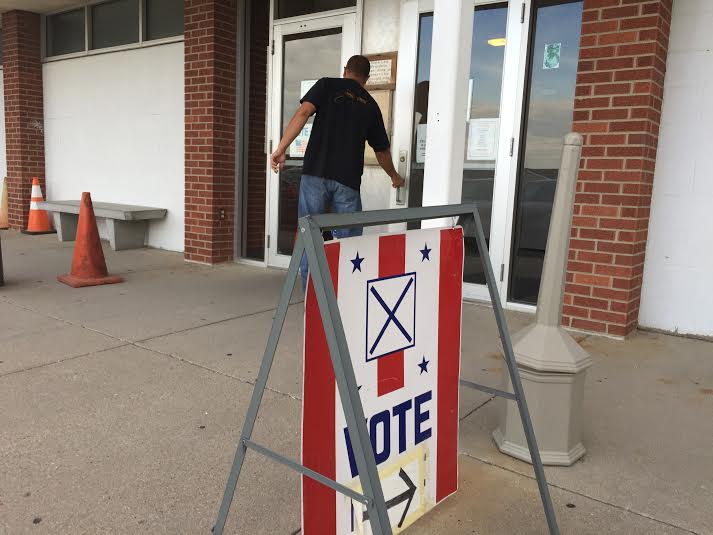
That’s why several groups on campus are partnering with community organizations to deliver live debates for races involving Hays USD 489 Board of Education and Hays City Commission.
The Hays USD 489 BOE debate will take place at 6:30 p.m. Oct. 15 in Beach/Schmidt Performing Arts Center on the FHSU campus. At 6:30 p.m. Oct. 22, it will be time for the Hays City Commission debate in Beach/Schmidt.
Students from the Student Government Association, American Democracy Project, the Department of Political Science and Tiger Media Network will team up with the Hays Area Chamber of Commerce and the Docking Institute of Public Affairs to host the debates.
“We are really excited for the opportunity to host this event on campus to get students excited about local politics, and to give our community members a forum to learn more about the candidates running for these offices,” said Kaytee Wisley, legislative affairs director of SGA and organizer of the event.
The two debates will be livestreamed on Tiger Media Network’s cable stations – Eagle Communications Channel 17 and Nex-Tech Channel 102. There also will be a link for online viewing available at tigermedianet.com.
There are four positions open on the Hays USD 489 board for the Nov. 5 general election. There are nine candidates who have entered the mix for a position on the board: Paul Adams, Jessica Ann Berg Moffitt, Cole Engel, Alex Herman, Lori Ann Hertel, Luke Oborny, Craig Pallister, Allen Park and Tammy Wellbrock.
Adams and Oborny currently serve on the board and are seeking re-election.
Three positions on the Hays City Commission will be open, with five candidates interested in filling the spots. They include Michael Berges, Ron Mellick, Mason Ruder, Ryan Rymer and Henry Schwaller.
Mellick and Schwaller currently serve on the city commission. The top two candidates will serve for four years, while the third-place vote-getter will serve for two years.
“The Hays Area Chamber of Commerce is proud to advocate for our community’s advancement,” said Sarah Wasinger, president/CEO of the chamber. “Providing a platform for our electorate to become engaged and informed on issues impacting the Hays City Commission and local school boards is crucial for the future of Ellis County. The Hays chamber is honored to partner with Tiger Media Network, the Docking Institute, Student Government Association, FHSU Department of Political Science and the American Democracy Project to bring this forum to our community.”
Candidates at both debates will answer questions from the moderators, and audience members also will have a chance to ask questions of their own. Questions also can be posed through social media such as Facebook and Twitter.
The events are free and open to the general public.
For more information about the debates, contact Wisley at (785) 628-5311 or email [email protected].
Program for Norton inmates supported by Thomas County attorney

CCC
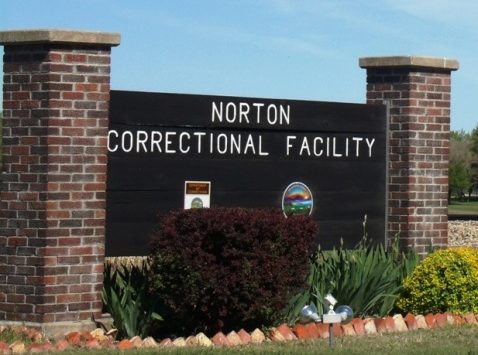
COLBY – The new Colby Community College telecommunications network technician program at the Norton Correctional Facility recently received a financial boost from the Thomas County Attorney’s Office. The donation came after a state grant to help subsidize the program did not materialize.
According to County Attorney Rachel Lamm, her office can provide funding through non-tax payer asset forfeiture funds.
“The state of Kansas has restrictions on how forfeiture funds can be used, but Kansas allows for distribution of funds for law enforcement goals,” she said.
The idea for additional education in the correctional facility began in 2018 when CCC adult education instructor Dian Organ attended a conference and learned how a college in another state implemented a similar program.
“I am pleased that Dian approached the Thomas County Attorney’s Office with this opportunity to lower inmate recidivism,” Lamm said. “An inmate that can immediately enter the job market is essential to their future success. Opportunities like this are few and far between, and I hope they take pride in their work and make every effort to provide for themselves and their families.”
The curriculum teaches skills necessary for entry-level positions in the industry to perform fiber and copper-based network cabling. College and correctional facility officials conduct interviews to select participants, who will earn 15 college credit hours and industry-recognized credentials before their release date. Many of the students will concurrently complete their high school equivalency diplomas.
CCC Executive Vice President Brad Bennett also believes the program can make a difference in many lives.
“This will lead to job placement and a sustainable wage upon release,” he said.” The overall goal is to reduce recidivism and improve the communities we serve.”
The inaugural class begins on September 30. The program lasts 12 weeks.
MARSHALL: Doctor’s Note Sept. 25

Friends,
Last week I hosted a discussion with Cindy McCain, U.S. Senator Martha McSally, and the U.S. Health and Human Services Director of the Office of Trafficking in Persons, Katherine Chon, on human trafficking and the role health care providers play in identifying victims.
Human trafficking is an emergency across the United States, and Kansas is unfortunately no exception.
The event was focused on joining legislators, health care providers, and other leaders on this issue, with the goal of getting every hospital emergency room in the country to establish protocol for identifying and stopping human trafficking.
 I want to thank everyone who came to the event and a special thanks to those who participated on our panel.
I am committed to continuing to fight for the victims of these heinous crimes and bringing an end to human trafficking in the United States and around the world.
Pet Night on Capitol Hill
Pet food manufacturers in the Kansas City Animal Health Corridor account for more than half of all pet-industry sales in the U.S., and these companies provide more than 2,000 jobs in the area. Many of Kansas’ finest commodities go into our domestic pet food production network.
 I spoke at Pet Night on Capitol Hill, which convenes elected officials, industry leaders, veterinary professionals, animal welfare advocates, and research organizations to learn about the importance of pet ownership for human health.
As someone who represents one of the largest agriculture producing districts in the country, there’s a direct link between the bottom line of our farmers, producers, and pet food companies and their employees.
American Association of Pro-Life Obstetricians & Gynecologists
I was proud to receive an updated certificate of my Lifetime Membership with the American Association of Pro-Life Obstetricians & Gynecologists (AAPLOG). AAPLOG is a prolife group made up of OBGYNS across the country that focus on maternal health and protecting the unborn.
We discussed ongoing efforts in the House of Representatives to work with the Food and Drug Administration to swiftly put an end to the illegal sale of mail-order abortion drugs to the US. These illegal websites were purporting to sell these drugs without the involvement of a trained and certified healthcare provider to screen for complications, determine pregnancy term, or monitor the patient for possible adverse events like severe hemorrhaging.
As a physician, and now member of Congress, I’m proud to be able to continue my work on issues such as these to ensure the health of mothers, children, and patients everywhere.
 Securing Trade Agreements
I joined members of Taiwan’s Council of Agriculture for a Letter of Intent signing ceremony to commemorate Taiwan’s commitment to buy $3.6 billion in U.S. corn, wheat, soybeans, beef, and other products over the next two years.
Thanks to the Trump Administration, the United States is securing fair and free trade deals for our great American workers and producers. Commitments from foreign partners to buy U.S. goods are critical to retaining good customers abroad, and growing existing markets and demand for American agriculture products.
Andrew Wheeler EPA
EPA Administrator Wheeler came before the House Science Committee to discuss ongoing initiatives at the agency. Members had the opportunity to hear about ways that Administrator Wheeler is modernizing the agency and taking steps to roll back burdensome regulations, while encouraging innovation and the adoption of new technologies to reduce global emissions and address environmental concerns.
We discussed the recent rollback of the Obama-era Waters of the United States (WOTUS) rule, which represented a massive federal overreach and had a dramatically negative impact on our farmers, ranchers, and landowners across Kansas. I also had the opportunity to ask about policies impacting ethanol production across the state.
Welcoming Prime Minister Morrison to America
I had the opportunity to welcome the Prime Minister of Australia to the United States. Prime Minister Scott Morrison and his wife Jennifer arrived to a 19 gun salute and full military band. Prime Minister Morrison is the second world leader to be hosted for a state dinner by President Trump and I was honored to be there for his arrival.
Australia is an important strategic ally and have historically proven that they are partners that the United States can count on. The strong relationship between Prime Minister Morrison and President Trump is great for both countries and will only strengthen our countries ties.
 Raising Awareness on Childhood Cancer
I had the honor to meet with Pottawatomie County patient advocates representing the Diffuse Intrinsic Pontine Glioma (DIPG) Foundation. DIPG is the second most common form of pediatric brain cancer and is the leading cause of childhood death due to brain tumors. Sadly, the survival rate after diagnosis is less than 1% and there is not currently a consistent standard of care for those diagnosed. I am working to change that. As a supporter of House Resolution 114, I am advocating to raise awareness and encourage research into cures for this and other rare forms of pediatric cancer.
Talking with FCC Chairman Ajit Pai
My office hosted FCC Chairman Ajit Pai at Emporia State University for a conversation on broadband and economic development. We brought together community leaders, telecommunications providers, and regional partnerships working to build out broadband to discuss the challenges and opportunities that come with achieving this goal, and to learn a bit more about how the FCC is working to close the digital divide.
 Chairman Pai discussed the new Rural Digital Opportunity Fund at the FCC, which was announced earlier this year and will provide $20 billion over 10 years to help with deployment in rural areas.
As we move deeper into the digital age, an internet connection is becoming a critical component to the health and growth of our communities. It can help businesses reach new customers, connect rural hospitals with the tools to provide better care for patients, and expand learning opportunities for students.
One of our local farmers was able to share about the new precision agriculture technologies available that help her increase efficiency on her farm. Unfortunately challenges with her current internet connection can keep her from utilizing those tools to grow and modernize her farm.
Ensuring that our rural communities have access to these strong internet connections is vital for their continued success and economic growth.
Dr. Roger Marshall, R-Great Bend, is the First District Kansas Congressman.
Sternberg’s Discovery Room animals get upgraded digs

By CRISTINA JANNEY
Hays Post

The creatures in the Sternberg Museum have new homes thanks to a grant from McDonald’s.
The renovated space opened to the public Saturday.
The tanks were custom built for the animals they are holding.
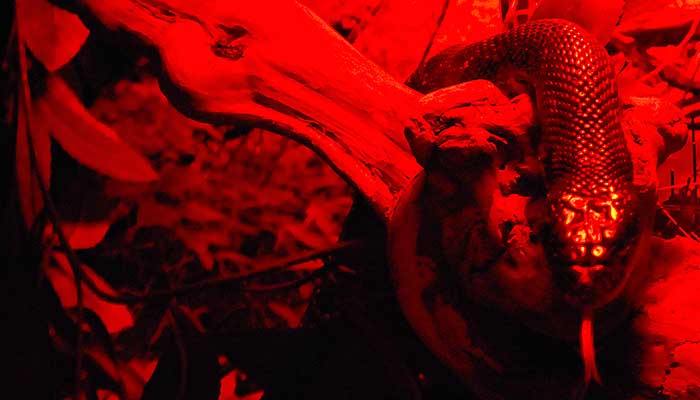
The old tanks lids had to be secured with bricks. All of the new tanks have secure lids, which has allowed the staff to add a venomous copperhead to the main Discovery Room display area. Copperhead venom is used to study and treat breast cancer, Alicia Gaede, Sternberg naturalist, said.
Mice and a big brown bat, Buffy, were added to the Nature at Night exhibit. The main Discovery Room exhibit is focused on animals found on the prairie. Buffy was captured in a motel in Hays and could not be returned to the wild. Buffy has regular opportunities to fly in one of the Sternberg rooms that has no outlets for her to escape, Gaede said.
Gaede said she was hoping to add more small Plains mammals to the exhibit soon.
“It is a nice way for people to see what we have here in Kansas,” Gaede said.

The staff used grant money to add photographs in the backgrounds of the tanks that resemble the native prairie habitats in which the animals live. New faux plants were also added.
New lights were added to the main exhibit areas, so the animals receive the correct UVB light.
New red lighting was added to the Nature at Night exhibit, which is better for the animals. The animals in the Nature at Night exhibit are nocturnal. They can’t see the red light. The crew at the Sternberg turns on the regular lights in that exhibit area at night. This switches the animals’ activity cycle, so they are active during the day when visitors are at the museum and are not active at night.

The most important aspect of the renovation is that the habitats are better for the animals.
“So far, they are loving it,” Gaede said of the animals. “They have been so active. They are rearranging stuff, digging holes and making new hiding spots.”
She added, “I think it is definitely better for the creatures, especially because they are getting bigger cages and good light that is going to keep them warm during the winter. They are also getting proper light to help them grow, which is sometimes an issue for animals in captivity.”
In the new configuration, some of the snakes have “roommates.”
“You wouldn’t really think of them needing social interaction, but it is one of those enrichment things. They smell each other, and it makes them react more, so it doesn’t stress them out as much. … If it is it is the opposite sex as well, they like that even if they are not mating. It is still just the pheromones that help them out to thrive better in captivity.”
Friday night the Discovery Room renovation was unveiled to museum members. Several animals were available for hands-on meet and greets. This included hissing cockroaches; pretzel, a Great Plains rat snake; Oreo, a California king snake; and Red, the American toad.

The American toad and Great Plains rat snake are both native to Kansas.
“I hope people enjoy it,” Gaede said of the renovation. “We put a lot of work into it. It took us about a month to get them done. We did it seeking that our animals had a better life.”
Further renovation of the Discovery Room are planned using the rest of the $10,000 McDonald’s grant. Gaede said she hoped to divide the room into sections based on what lives underground, in a river and in the trees of the Plains.
Future additions may include a tree display, fish tank and ant farm.
P-burg ethanol plant named wKREDA Agricultural Business of the Year
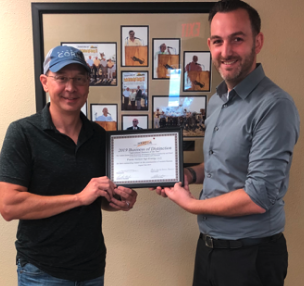

PHILLIPSBURG — The western Kansas Rural Economic Development Alliance (wKREDA) awarded local ethanol plant, Prairie Horizon Agri-Energy, with the Agricultural Business of the Year award early this month. The annual Business of Distinction award program, is an initiative that commends western Kansas businesses of excellence.

Prairie Horizon Agri-Energy, established in 2006, produces over 40 million gallons of ethanol and grinds 14 million bushels of grain annually. In 2018, the ethanol plant added Fiber Separation Technology to the process, producing 38% Hi-Protein dry distillers, wet distillers grain and corn oil for livestock feed. A new 470,000 bushel steel bin was added to the existing two concrete silos allowing for more direct farmer purchases. Prairie Horizon’s USA Clean Fuels on East Highway 36 in Phillipsburg, KS offers higher blends of ethanol with options of E10, E15, E20, E30, and E85 along with clear diesel. “It was a great privilege to receive this award highlighting our role in the ag community,” said CEO, Joe Kreutzer.
wKREDA is a coalition of organizations and individuals across 55 counties in western Kansas who collectively pool their resources to work together for the common good of the region. Originally formed as a grassroots organization in 1994, wKREDA’s members maintain a collaborative affiliation with each other so that they are able to achieve both individual, and collective rural development goals.
Prairie Horizon Agri-Energy is a limited liability corporation, founded in November 2003 in the rural community of Phillipsburg, Kansas. The company is owned by 300 area investors and employs 36.
— Submitted
HAWVER: Kan. agencies coming together on education

There may be something subtle going on here, that first meeting in several years in which the Kansas Board of Regents sat down with the Kansas State Board of Education for, well, just a little chatting.
That meeting brought together the nine Regents, who are appointed by the governor and subject to Senate confirmation, and the 10 members of the State Board of Education, who are elected to their offices.
While the overall responsibility of both groups is to provide a good education for Kansas students, it has generally in the past been sharply divided. The Regents works on everything after high school graduation, the State Board of Education nearly everything before that.
But they have rarely worked closely together on the entire concept of education in Kansas, producing young people who are ready for more education or who are learning job and social skills that will make those students just who we want walking down our streets, competing for parking spaces and living next door.
Last week’s meeting, in which the State Board of Education members were guests, produced some of the most identifiable indications that the two boards are interesting in working together, and some new members of each wondering why the boards haven’t been working more closely together.
That’s something we don’t often see between state agencies, which generally look after their own duties and cooperate only when two agencies find their duties overlap.
One of the more interesting discussions among Regents/Board of Education members was over allowing high school students—for free—to take a few college-level courses while in high school. Big interest in English/literature skills, but the concept generally comes down to letting middle and high school students get a taste of college-level classes to explore possible interests and eventually careers.
That dab of higher education at high school is both a confidence-builder for students who are from families without parents and other relatives with higher education experience and a way for those students who are interested in, say, teaching or construction or working in some other specialized industry a chance to see what is actually involved, and whether that is the way those kids whose drivers licenses are still new can look into their future.
Nothing like early focus, is there?
Oh, that cooperation between the State Board of Education and Regents is going to be a little tricky. Sorta like a first date.
Regent money generally is state aid plus tuition, while public schools are a mix of state aid and local property taxes. That local property tax is a major issue for public schools and casts its shadow on nearly everything that is considered by the State Board of Education and the Legislature that deals with public schools.
But the possibilities? Well, let’s see what would happen if the Regents and State Board of Education could come to a common ground for proposed legislation. We have the groups that oversee multiple school districts in each legislative district binding with Regents and other higher education institutions that aren’t universally present in all districts. That produces a statewide interest group that can appeal and lobby to every legislator in the state.
Pretty good potential political muscle…
Now it’s going to take time and formation of committees and such that education leaders tend to generate like weeds in a garden, but if there becomes an “educational establishment” that can reach out to every lawmaker and every Kansan…well, it’s likely we’ll see more interest in education from kindergarten to college degrees.
Interesting to see whether this cooperation actually takes place and what it yields…
Syndicated by Hawver News Company LLC of Topeka; Martin Hawver is publisher of Hawver’s Capitol Report—to learn more about this nonpartisan statewide political news service, visit the website at www.hawvernews.com
Fly Kansas Air Tour includes three northwest Kansas stops
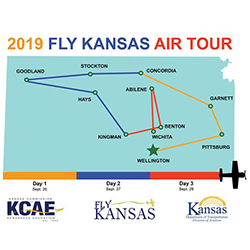

TOPEKA — The Kansas Department of Transportation’s Division of Aviation will host the sixth annual Fly Kansas Air Tour on Thursday through Saturday.
KDOT has partnered with the Kansas Commission on Aerospace Education to promote aviation and economic growth. Over 40 pilots have signed-up to fly the Kansas Air Tour this year. Participants will visit 11 communities across Kansas during the three-day tour, including Hays, Stockton and Goodland.
“Every Air Tour brings heightened enthusiasm as we celebrate the heartbeat of innovation that is so obvious across the aviation industry of Kansas,” said Bob Brock, KDOT Director of Aviation.
The tour focuses on STEM (Science, Technology, Engineering and Math) education. Highlights for this year include opportunities for students to learn from pilots, tour through aviation museums and local business fairs and view historic aircraft participating in the tour and on static display.
“Aviation is a profession we will cherish for a lifetime and we believe there is no higher calling than to share the spark of excitement that inspires hope for a bright future in all our Kansas youth,” said Lindsey Dreiling, President of Kansas Commission on Aerospace Education,
This year’s events take place in Wellington, Pittsburg, Garnett and Concordia on Thursday; Rooks County, Goodland, Hays and Kingman on Friday; and Benton, Abilene and Wichita on Saturday.
“Local airports improve the health of communities around the state of Kansas through vital emergency services and important economic development roles to residents,” said Julie Lorenz, Kansas Secretary of Transportation. “KDOT is pleased to work in tandem with its aviation partners to show the importance as well as the fun side of aviation with this annual air tour.”
For more information, visit the Fly Kansas Air Tour page at https://www.eventbrite.com/e/2019-fly-kansas-air-tour-tickets-63490120660
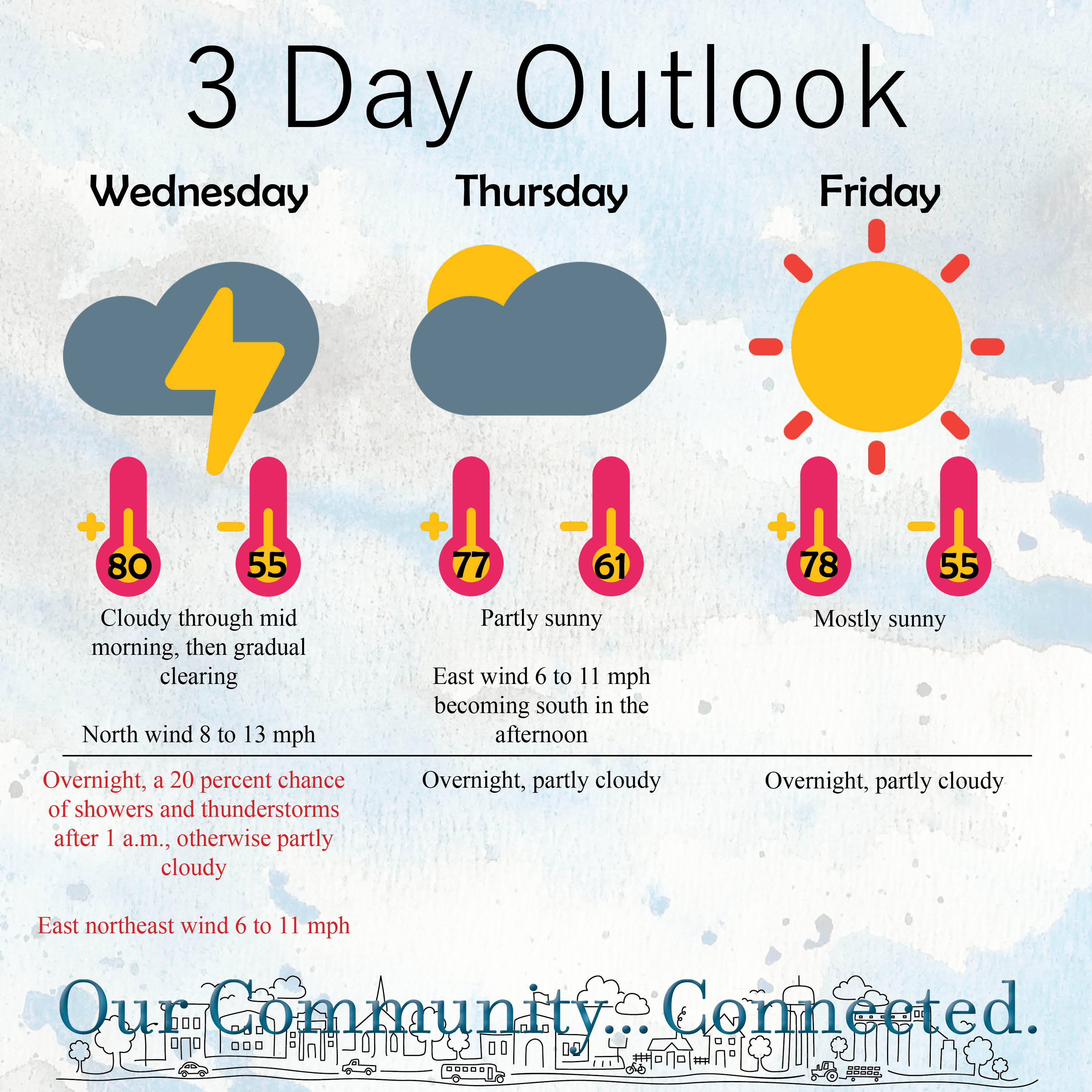
Three-day weather outlook


Exploring Outdoors Kansas: The coming Kansas Raptor Mania


I love watching hawks hunt and I love observing how they’ve learned to interact with farm equipment as it rolls across fields and stirs up rodents and small birds that scurry about and often end up as a snack for the hawk.
Our raised deer blind overlooks a grass waterway that grows up in giant sunflowers and pigweed by summer’s end, becoming a nice secure travel way for deer, but making them hard to spot during hunting season. Today I mowed that area and as I mowed the last standing weeds and sunflowers, fat field mice scurried in every direction. “Man could the hawks be feasting here,” I thought.
A couple years ago I happened by a nearby field of soybeans being cut. What caught my eye was the enormous number of hawks all around the field; I counted to thirty-some then lost count. I rolled into the field and talked with one of the combine drivers about the hawks. He said they had suddenly appeared as if from nowhere when they started cutting and had been there since. The soybean plants were extra tall and thick that year, and as they ripened and dropped their foliage, it left several inches of duff covering the ground between the rows; perfect cover for field mice and rats looking for warm concealment. As the combines lumbered through the field, they forced all those rodents from their cozy quarters and the hawks were feasting.
Soon we will again be seeing an extraordinary number of hawks of all varieties as they migrate south toward warmer climates. The extent of our Kansas winter will largely determine whether they stay here for a spell or move on south, and our milder-than-normal winters of late have been a huge draw to migrating hawks. The hawks I observed hunting the soybean stubble field that year were obviously migrants that were getting a good meal whether they stayed or not. The vast acreages of new wheat fields will be a huge draw too, as mice, voles and insects become vulnerable to the hawk’s keen eyes in the short new wheat. Another plus is the type of air currents and thermals that blow through the plains states. North winds coming down from Canada are utilized by all types of hawks, saving them precious energy by being able to soar. So in summary, the mild winters, the open fields and the beneficial wind currents all make Kansas a popular place to see hawks of many varieties this time of year.
One common hawk we see here every winter is the Northern Harrier. They are large hawks with broad, square tails and are often seen gliding effortlessly mere feet above CRP fields and pastures. We also get an influx of Red Tails from northern states as they come here for our milder winters. Swainson Hawks on their way to Argentina stop in Kansas by the thousands. Rough-Legged Hawks migrate from Canada to the western US, including Kansas. Ferruginous Hawks may be seen here as they travel from Western Kansas to parts of the South Eastern US and to Florida. All these truly make for a kaleidoscope of raptors in our Kansas sky.
This article could not be complete without emphasizing the important role raptors play in our agricultural environment. Raptors get blamed for everything from low pheasant and quail populations to stealing chickens and everything in between. Yes we all know that hawks and especially owls will steal a chicken or two given the chance, but in actuality, hawks prey on mice, rats, snakes and possums that eat quail and pheasant eggs and newly hatched young.(FYI, feral and stray cats are the worst predators alive for killing young game birds and song birds.) Owls are huge rat and mice hunters and also eat skunks that carry rabies. If not for these raptors in our midst, rodent populations would devastate farmer’s crops and our environment as a whole. And for the record, killing a raptor of any kind is illegal in Kansas!
You can’t go afield this time of year without spotting hawks silently hunting low over patches of CRP and milo stalks, waiting patiently atop power poles for prey to reveal themselves or putting on shows of acrobatic excellence as they soar above us on the fall breezes. I once overheard a raptor rehabilitator tell someone “We as humans have encroached on them, so the least we can do is let them live with us.” Continue to Explore Kansas Outdoors!
Steve Gilliland, Inman, can be contacted by email at [email protected]
BOOR: Thistle control in pastures

As October starts to arrive, our thoughts naturally turn towards crop harvest. But don’t forget, it’s also thistle time again. Even if they are hard to see, this is the time to control them.
Timing is everything. That’s particularly true with thistle control. And October to early November is one of the best times to use herbicides.
Did you have thistles this year? If so, walk out in those infected areas this week. Look close. I’ll bet you find many thistle seedlings. Most thistle seedlings this fall will be small, in a flat, rosette growth form, and they are very sensitive now to certain herbicides. So spray this fall and thistles will not be a big problem next year.
Several herbicides are effective and recommended for thistle control. Several newer herbicides like ForeFront, Milestone, and Chaparral work very well. Two other very effective herbicides are Tordon 22K and Grazon. Be careful with all these herbicides, but especially Tordon and Grazon, since they also can kill woody plants, including trees you might want to keep. 2,4-D also works well while it’s warm, but you will get better thistle control by using a little less 2,4-D and adding a small amount of dicamba to the mix.
Other herbicides also can control thistles in pastures – like Redeem, Cimarron, and Curtail. No matter which weed killer you use, though, be sure to read and follow label instructions, and be sure to spray on time.
Next year, avoid overgrazing your pastures so your grass stands get thicker and compete with any new weeds or thistle seedlings.
Give some thought now to thistle control during October and November. Your pastures can be cleaner next spring.
Alicia Boor is the Agriculture and Natural Resources agent for Barton County K-State Research and Extension. You can contact her by e-mail at [email protected] or calling 620-793-1910
Suspect search underway northeast of Hays
UPDATED 8:30 a.m. Thursday: Hays man arrested after incident
HAYS POST
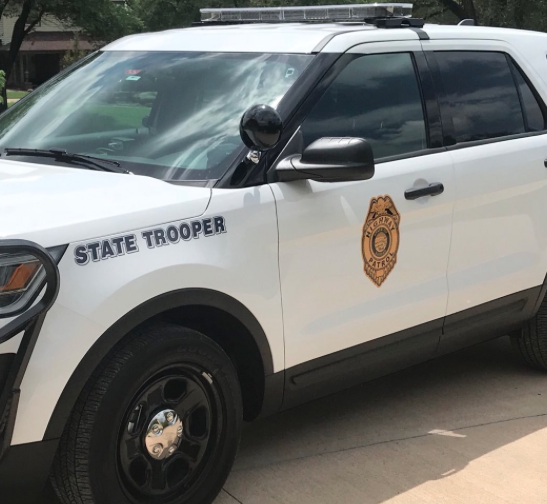
Area law enforcement agencies are working a scene in the area of 310th and Feedlot Road northeast of Hays where a report of possible gunshots was called in at approximately 4:36 p.m.
According to Ellis County law enforcement scanner reports, the Kansas Highway Patrol is flying its airplane to search for a male suspect possibly with a high-powered rifle.
The KHP SWAT team has been requested to respond.
Check Hays Post for more as information becomes available.