The Ellis County Public Works Road & Bridge Division has announced that an asphalt repair project will take place beginning at the intersection of 310th and Catharine Road and commencing east on Catharine Road for 3 miles to the intersection of Cathedral Avenue and Catharine Road.
This will begin at the 2200 block through the 2400 block of Catharine Road. This 3-mile area stretch of Catharine Road will be closed to through traffic beginning at 8:00 a.m. Wednesday and will remain closed until the project is complete. The expected completion date of the first phase of this project will be two to three working days from the start of the project.
Motorists traveling in the affected closure area should use alternate routes of travel until the project is completed.
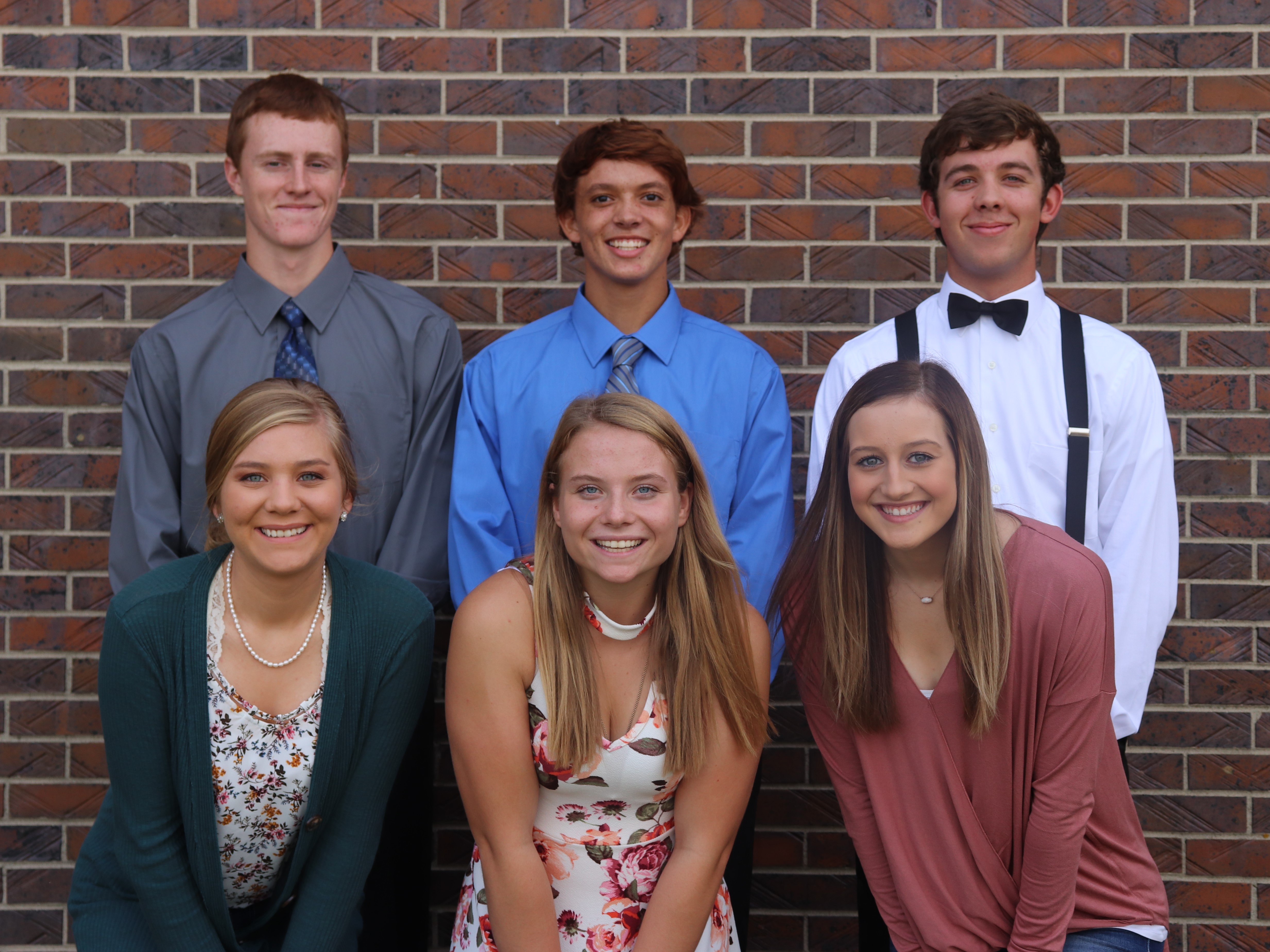
Back Row (L to R): Zachary Eck, son of Mark and Sarah Eck; Jake Eck, son of Geoff and Mindy Eck; Landis Fischer, son of DJ and Julie Fischer. Front Row (L to R): Breonna North, daughter of Travis and Ava North; Clara Crawford, daughter of Kimberly Andries and the late George Crawford; Rylee Werth, daughter of Rodney and Cristi Werth
ELLIS — Ellis High School has announced its 2019 Homecoming candidates.
A volunteer works in the Pay It Forward Store at Big Creek Crossing last year.
By CRISTINA JANNEY Hays Post
The Pay It Forward Store will be back in December for its fifth year — with some changes.
Founder Angela Horn has passed the leadership for the store to volunteers Heather Gray and Vickie Purdy.
The store will still take monetary donations and gifts of new and gently-used items, which families can take home for free to give as Christmas gifts.
In the past, the store has had items for both adults and children, but Gray said this year the store is going to focus on gifts for children and teens. That is what has been most requested and where the store has seen the greatest need.
The store is also hoping to raise $500 in order to apply for its official 501(c)3 nonprofit status. This will allow the group to more easily accept monetary gifts and donations from businesses.
Any money the store receives or raises in excess of the $500 will be used to purchase gifts to be given away at the store.
Gray said the store receives many toys for small children, but receives fewer items appropriate for teenagers, both boys and girls. Cash donations are used to buy gifts for this age group or to address specific needs for families.
The group will have a hot dog feed fundraiser from 3 p.m. until sold out Sunday, Oct. 20, in the parking lot of Professional Cargo Services, 724 E. Seventh. A freewill donation is requested.
The store will begin taking donations Friday, Oct. 4, at Professional Cargo Services, where they will be kept until the store opens in December in Big Creek Crossing.
Donations will be taken at that location from 4 to 7 p.m. Mondays and Thursdays, and 4 to 9 p.m. Fridays until Dec. 15, when setup will begin at the mall.
The store is looking for toys, baby items, gaming systems, electronics, makeup, nail polish, jewelry, hair items and anything else that might be an age-appropriate gift for a child younger than 18.
Last year, the store was open though the month of December, but this year, the hours are being shortened. The store will be open 10:30 a.m. to 9 p.m. Dec. 20 and 21, 12:30 to 5 p.m. Dec. 22, 10:30 a.m. to 9 p.m. Dec. 23 and 10:30 a.m. to 5 p.m. Dec. 24.
All gifts from the store are free. Freewill donations are accepted to help support the store. Those who use the store do not have to fill out any paperwork or meet income guidelines.
Volunteers will be needed to help with the hot dog feed, to accept donations, to set up the store and to assist at the store when it is open in December. A volunteer meeting will be at 6 p.m. Thursday, Oct. 3 at Professional Cargo Services.
The Pay It Forward Store was started by Horn in honor of her brother, Tim, who passed away. Horn was helping individual families, but she saw a need beyond what she could do on her own.
Gray said as a volunteer she has seen many families helped through the store.
During a previous holiday, a grandmother, who had recently been granted custody of her grandchildren, was brought to tears when the store was able to provide her with a keyboard to give to her grandson for Christmas, Gray said.
“The holiday seasons are always so hard for people,” she said. “With our economy the way things are, a lot of people can’t afford to pay their bills. The holidays come around, and the little kids don’t know the difference yet. They don’t know the true meaning of Christmas, so they look forward to all of the toys and gifts.
“It gives the moms and dads and grandparents an opportunity to be able to afford all of these things … to be able to put their mind at ease and come to our store, which has open arms, and be able to make their children’s days for Christmas.”
Gray said those in need also come from surrounding counties for help.
“We don’t turn down anybody,” she said. “Anybody in need, we want them to come.”
Those who want more information about the store, volunteering or need to arrange a special drop off time for donations, can reach Gray at 785-432-3377 or through Facebook.
Faith Lochmann, HR coordinator, reviewed pay scales from a variety of school districts in the state that included step increases for years of experience. The steps maxed out between 20 and 30 years with steps of 15 to 30 cents per year.
The starting wage for a USD 489 school secretary is $9.62 per hour, but the average starting wage for other Hays employers is $12.78. Comparable school districts pay an average of $11.08 and comparable cities pay an average starting wage of $13.45.
The plan that was presented to the board on Monday included a starting wage of $11 per hour for secretaries with 15 cent increases per year of service. The average wage increase would be 72 cents.
The wage increases would cost the district $24,000 annually.
The starting wage for a principal’s secretary would be $12.20 with 30 cent per year steps.
Central office clerical staff would start at a base pay of $12.20 with 25 cent increments.
Lochmann said the wage schedules could take into consideration experience at previous jobs.
Although the board had not intended to make changes this year to the nutrition staff’s pay, Lochmann presented information about a possible nutrition staff pay schedule.
Lochmann noted assistant cook positions had a very high turnover rate. She also noted some employees on the nutrition staff had 20 or more years with the district but were still making $11 to $12 per hour.
Board president Mike Walker said he thought the board needs to move forward with implementing the wage schedules.
“I appreciated the graphs,” Walker told Lochmann. “I felt this really puts it out there in black and white.”
Board member Luke Oborny said, “After someone worked for 20 years, I think they know the kids. They may not have a title, but they become experts. That’s tremendous.”
Oborny asked for a comparison of complete compensation packages.
Hays has higher total compensation than Ellis school district, but lower compensation than Liberal and Garden City school districts when compared to the total current compensation package.
Oborny asked Lochmann to bring back a comparison of total compensation with HaysMed and FHSU.
“Our employees are probably not going to move to Garden City or Liberal, but they might go to HaysMed,” he said.
The board did not vote on the issue Monday. They will consider it again at their meeting in October.
Enrollment
As of the official county day on Friday, USD 489 had a total enrollment of 3,014 students. That is down slightly from the total audited numbers of 3,044 in 2018-19. With the exception of this slight dip this year, enrollment in the district has been growing steadily since 2012-13. The numbers for 2019-20 will not be official until they are audited by the state.
No name for new center
The board failed to approved a new name for the former Oak Park Medical Complex, where the Early Childhood Connections program is now located. Superintendent Ron Wilson proposed the USD 489 Early Childhood Center. That failed on a vote of 3-1, with Sophia Rose Young voting against. Board members Mandy Fox, Greg Schwartz and Paul Adams were absent. The item was tabled for the next meeting.
The move-in day for the early childhood program at Munjor will be Thursday.
In other business, the board heard a report on the Kansas STAR program.
Marie Froelich will retire on Sept. 30 from Golden Belt Bank, the bank announced Tuesday.
She began her career as a part-time teller in 1978. She has served in many capacities over the years, but spent most of her career as a very talented and respected mortgage loan officer.
“Golden Belt Bank is honored that Marie chose to spend the last 40 years serving Golden Belt Bank,” said Golden Belt Bank President/CEO Chris Wente. “During her career, Marie has developed numerous impactful relationships with employees, customers, and colleagues. She is a respected banker in the community and will be greatly missed. On behalf of the Board of Directors and our entire staff, we wish Marie the best in her retirement.”
The public is invited to a come-and-go reception in Froelich’s honor. The reception will be from 1 to 4 p.m. Monday, Sept. 30, at Golden Belt Bank, 1101 E. 27th.
VICTORIA – Victoria High School has announced its 2019 Homecoming candidates.
Victoria’s Homecoming is Friday, with the football team taking on Lincoln at 7 p.m.
Front Row from Left to Right
Haylee Winter : Daughter of Ryan Winter and Bill and Jodi Briney
Kiara Sweat : Daughter of John Sweat and Valari Cappellucci
Lexi Truan : Daughter of Kevin and Amanda Truan
Back Row from Left to Right
Kirk Huser : Son of Kevin and Kathleen Huser
Nick Dreiling: Son of Jim Dreiling and Linda Dreiling
Kail Brungardt : Son of Nick Brungardt and Crystal Brungardt
The Ellis County Public Works Road & Bridge Division is announcing that the 1300 and 1400 blocks of Smoky Hill River Road (West of 240th Avenue to East of 220th Avenue), will be closed on Thursday, Sept. 26.
The road will be closed all day for work to be done in the road right-of-way.
Please direct any questions to the Ellis County Public Works Road and Bridge Division at 785-628-9455. Your cooperation during this project is appreciated.
Water Technology Farm at the Northwest Kansas Technical College, Goodland
KWO
TOPEKA – Water Technology Farms are an action item of the Long-Term Vision for the Future of Water Supply in Kansas to help address Kansas water issues. The Kansas Water Office (KWO) program began four years ago with three farms and currently there are 15 farms, including the Northwest Kansas Technical College in Goodland, on more than 40 fields throughout the state but concentrated overlying the High Plains Aquifer.
The KWO plans to add a limited number of new technology farms and is currently accepting initial notice of interest for the 2020 growing season. The deadline for initial interest is November 15.
These three-year pilot public-private partnerships demonstrate irrigation technology, research and management techniques. They have been valuable in expanding the conversation and education of producers and decision makers on water conservation in areas overlying the depleting Ogallala Aquifer and water quality protection in the Equus Beds Aquifer region.
Water Technology Farms are eligible statewide. Farms in a Water Conservation Area or a Local Enhanced Management Area as well as other documented conservation programs will be prioritized for consideration. Access to land as well as data records are required as part of this effort.
These Water Technology Farms wouldn’t be possible without key public-private partnerships with more than 100 sponsors. Visit www.kwo.ks.gov to learn about the existing farms and past results.
Those interested or wanting more information, contact Armando Zarco, KWO Water Resource Planner at (620) 765-7485.
FHSU’s Science and Mathematics Education Institute will join a national effort to increase the national teaching pool of qualified STEM teachers.
FHSU’s SMEI is transforming the future of rural Kansas and across the country through innovation, ingenuity and radical outcomes.
The state of STEM Education at the end of 2018, 2.4 million STEM jobs were projected to go unfilled according to an article by iD Tech. Among the reasons given for the shortages include access to and qualification for STEM teacher certification, which is a problem especially for women and minorities, and beginner STEM education, which is not readily available early in a child’s life.
SMEI’s specific effort will focus on developing strategies to ensure success in recruiting and retention of STEM teachers in rural areas.
“Partnering with 100Kin10 will allow us to connect with a nationwide network of organizations to share innovative ideas and expertise, which will help build our capacity to advance STEM education and improve our work,” said Earl Legleiter, SMEI director.
“Joining also allows us to make proposals, do research, and find solutions to the national STEM teacher shortage,” he said.
“Our specific interest and contribution is with rural schools,” said Dr. Paul Adams, dean of FHSU’s College of Education. “We will take part in research on what works to recruit and retain STEM teachers in rural settings.”
Adams indicated this is an important extension of SMEI’s ongoing efforts to address the needs of STEM teachers in rural America as part of their two National Science Foundation grants already in progress.
The 100Kin10 network has already shown significant signs of growth and success.
Launched in 2011 as an answer to President Obama’s call during his 2011 State of the Union address to train 100,000 new STEM teachers in a decade, 100Kin10 is on track to exceeding the goal of training 100,000 teachers by 2021, with more than 68,000 teachers currently trained.
Existing partners and an expert panel vetted and selected the 41 new programmatic partners, including Fort Hays State University, and six funding partners that have officially joined the network base.
The new partners are joining a network of more than 280 current partners, including the nation’s top academic institutions, nonprofits, foundations, companies and government agencies. All partners register their commitments to ending the STEM teacher shortage through 100Kin10 and support one another to achieve those commitments by exchanging expertise, learning and resources.
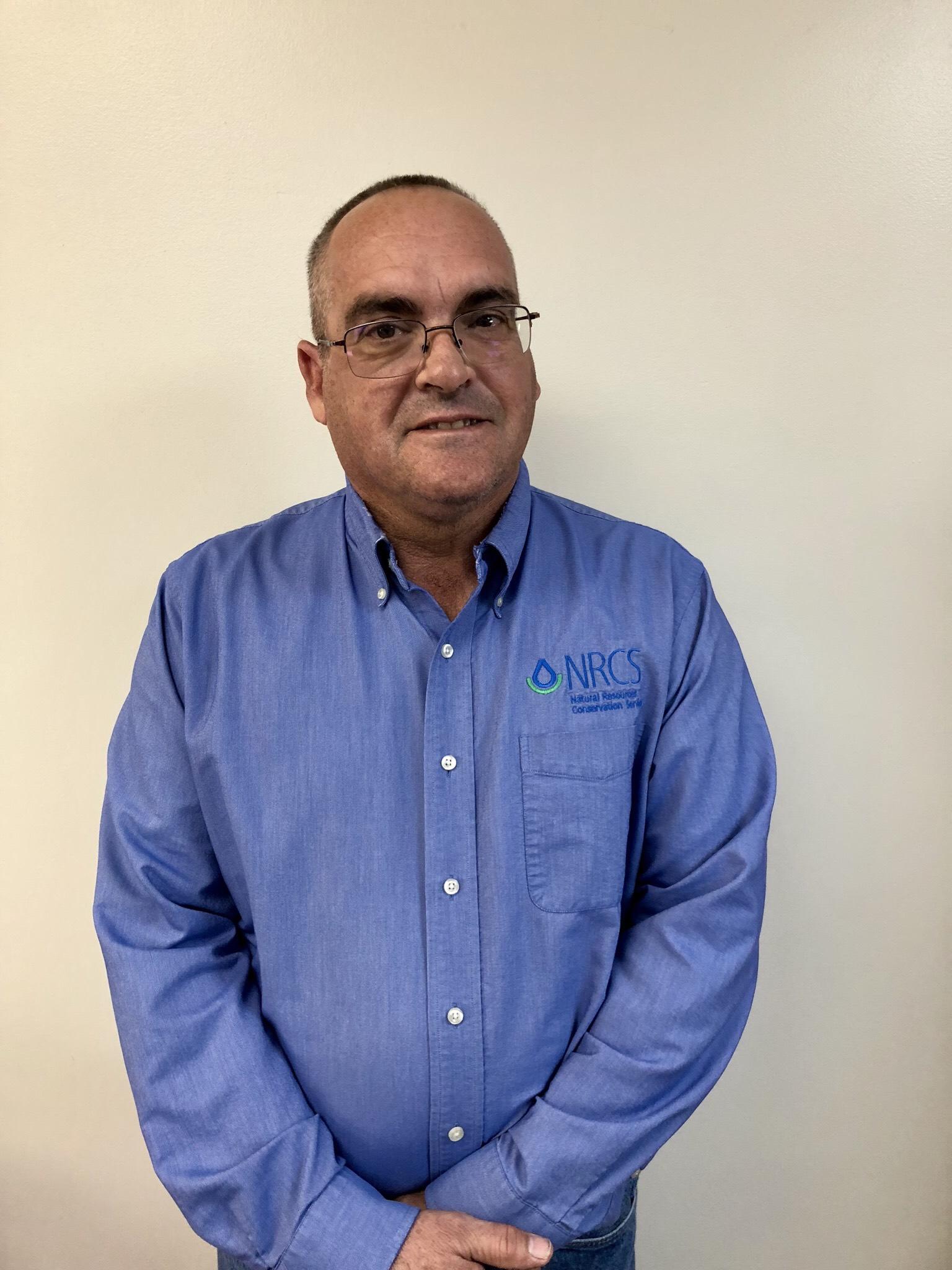
Dale Younker is a Soil Health Specialist with the USDA Natural Resources Conservation Service in Jetmore.
With fall harvest underway in many parts of the state now is the time to think about planting a cover crop after your fall grain crop is harvested. A cover crop can provide many soil health benefits. This includes building organic matter, improving soil porosity, increasing nutrient cycling, and increasing soil water holding capacity. A cover crop can also provide excellent weed suppression and a fair amount of livestock forage through the winter and spring if planted timely.
Putting the right cover crop mix together is essential in having a successful planting. The species you use in the mix will depend on what you are trying to accomplish. If you are wanting to break up some compaction include some deep tap rooted plants like radishes, turnips, rape and other species from the brassica family. If increasing organic matter and water holding capacity is your goal plant a species with a vigorous fibrous root system. Winter cereal grains like triticale, barley, wheat and rye would be good choices.
To increase infiltration a combination of deep-rooted and fibrous rooted plants should be used. Decaying tap roots provide channels for water to directly infiltrate into the soil. Fibrous rooted plant help feed the soil microbes. These bacteria, fungi, and other microorganisms produce the organic glues that help bind the individual soil particles of sand, silt and clay into larger soil aggregates. This provides more pore space in the soil where water can infiltrate when it rains.
For grazing you will want to have a mix that is predominately a winter cereal grain, like wheat, barley, triticale or rye. Mixes that are heavy with these species are also good for weed suppression since they cover and shade the ground quickly and compete well with weeds.
It is best to get the cover crop planted as soon as possible after the cash crop is harvested. This will give the cover crop time to get established and get some growth before it gets to cold. If
the planting ends up being past the end of October, you will want to select species that have a fair amount of cold and frost tolerance. Triticale, rye and cold tolerant brassica plants work well in these situations.
Always consider the economics of planting a cover crop. There is no reason to plant a $30.00 – $40.00 mix when one that cost $15.00 will do the job. Wheat may be a good choice to use as a cover crop given its current price.
For more information about this or other soil health practices you can contact me at [email protected] or any local NRCS office.
Dale Younker is a Soil Health Specialist with the USDA Natural Resources Conservation Service in Jetmore.