We have a brand new updated website! Click here to check it out!

Thunder on the Plains fills Frontier Park with four-wheeled art

On Saturday, classic cars, hot rods and monster machines filled Frontier Park for the third annual Thunder on the Plains car show.

Large crowds throughout the day came to enjoy all the festivities, including craft vendors and local food trucks.

Take a look at the event below. Photos by James Bell / Hays Post

Check out the winners below:

🎥 Specialist: Better brains for babies make smarter kids

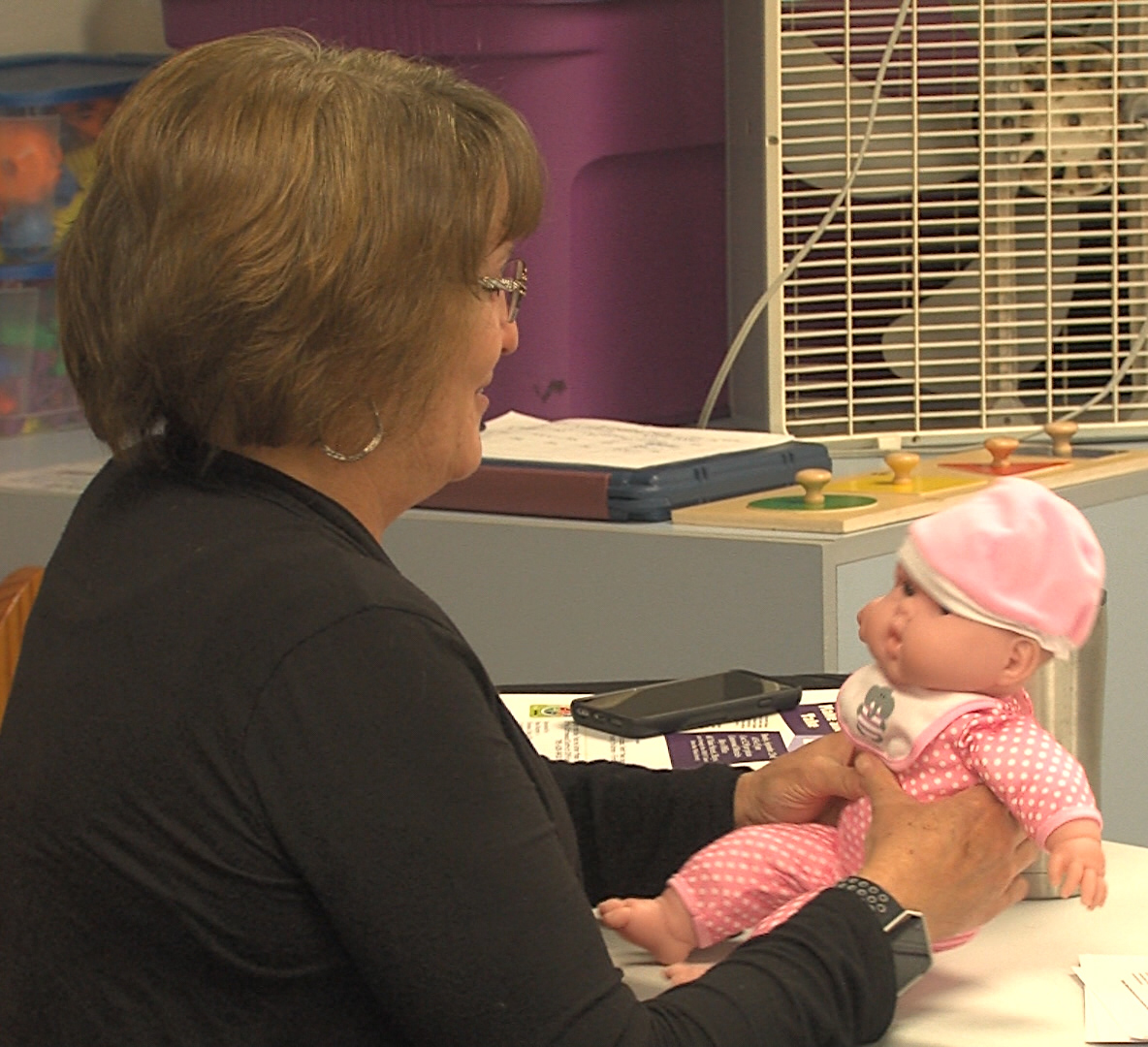
Dr. Bradford Wiles, KSRE Early Childhood Development Specialist, speaks with parent-educators at Early Childhood Connections in Hays Friday.

By BECKY KISER
Hays Post

For years, scientists have known that what happens – or doesn’t happen – during a baby’s first few years makes a big difference in a child’s later life, and babies who do not get enough love and attention in infancy are less likely to be well-adjusted adults.

“I think we all want our kids to be smart and happy,” says Dr. Bradford Wiles, K-State Research and Extension (KSRE), a Manhattan-based specialist in early childhood development. “We aren’t born with the innate ability to be good parents.”

“What we do in these parent education and parent educator classes is essentially teach how to make smart kids.”

Wiles was in Hays last week presenting seminars about the importance of early brain development. Friday he worked with parent educators in the Parent As Teachers program at USD 489 Early Childhood Connections. Parent Educators meet regularly with parents in their home.

“We remove the things that are barriers to kids’ learning and to their social/emotional development. We encourage the things – like play – that are known to facilitate cognitive, social/emotional and physical development.”

Also important to child development is consistency and routine, with wiggle room allowed.

“First, it helps children to know what to expect. For all of us, knowing what to expect is a tremendous benefit. It reduces anxiety. It helps us to plan.

“When children are in an inconsistent environment, they don’t know what to expect. So learning new things becomes a lot more difficult. They tend to be a lot more anxious. They’re unable to focus very well because they have no expectations that they know are going to be met.”

Adults can modify a routine as needed. Children should not be randomly changing their routine, according to Wiles.

“If a parent sets 7:00 p.m. as bedtime and they want to take the child along with them to visit friends and won’t be home until 8:30 p.m., that’s fine. That’s the adult’s choice.

“When it’s the child randomly staying up until 8:30 p.m., that becomes very chaotic and doesn’t provide the structure children need to be able to process and learn things.”

Wiles says most people don’t recognize how important development is from birth to age 5.

“Those foundational years are what set the stage for all learning and development.”

From the moment a baby is born, every experience taken in by the five senses helps strengthen the neural brain connections that guide development.

Talking to a baby face-to-face builds the brain connections needed for both language skills and a healthy emotional bond.

“It would never occur to some parents to give baby a ‘play-by-play of what they’re doing, or use infant-directed speech in that really high-pitched voice… That’s what we’re after, to help people realize there’s simple things they can do that will make their kids smarter.”

Wiles says empathy and compassion are important when working with families and their children.

“Recognizing that all families have unique demands and needs, and tailoring what we can help them with to meet those needs is critical.”

Some parents are ready and able to implement more routines than other parents.

“We need to meet people where they are. Trying to implement everything all at once is going to be very difficult.”

With some parents, implementing micro-routines is a good way to start.

“Maybe it’s teeth brushing that needs the same routine morning and night. Maybe it’s book reading that’s the thing you start with by saying we’re going to do this at this time every other day. It’s a start.

“It’s really helping parents learn new skills and implement them at their own pace that will prove beneficial to the child.”

Wiles bases his presentations on “Better Brains for Babies,” developed by public and private agencies in Georgia.  Created in 1998, the program is dedicated to promoting awareness and education about the importance of early brain development in the healthy growth and development of infants and young children

Additional resources are available in the KSRE book store in the Home and Family section.

Little Jerusalem Badlands State Park to open next month

Photo courtesy KDWPT

KDWPT

TOPEKA – The wait is finally over. The Nature Conservancy and Kansas Department of Wildlife Parks & Tourism announce the much-anticipated Little Jerusalem Badlands State Park will open on Saturday, Oct. 12. Located in southern Logan County, Little Jerusalem is easily accessed from Interstate 70 and U.S. 83.  A grand opening celebration with speeches and a ribbon cutting will take place at 10:00 a.m. The two permanent trails will open after the ceremony and close at sundown, approximately 7:00 p.m. Free snacks and water will be available.

Grand opening activities include free, guided tours departing from the parking lot on Saturday at 11:30 a.m., 12:30 p.m., 1:30 p.m., 2:30 p.m., 3:30 p.m., 4:30 p.m., and 5:30 p.m. Space for the guided tours is limited and advance registration at nature.org/littlejerusalem is required. All visitors may hike the two permanent trails at Little Jerusalem at their own pace. The Overlook Trail extends one-quarter mile along a crushed rock surface to a scenic viewpoint. The Life on the Rocks Trail winds 1.5 miles along the rim of the formations from which visitors can enjoy a variety of views and two scenic overlooks. Visitors are not allowed off-trail unless accompanied by park staff on a guided tour.

The 332-acre area encompasses 220 acres of dramatic chalk rock formations and is owned by The Nature Conservancy, a global non-profit conservation organization. Beyond the impressive scenic views, the area serves as nesting habitat for ferruginous hawks and is home to rare plants. Little Jerusalem Badlands State Park was established by the Kansas Legislature in 2018 after The Nature Conservancy partnered with KDWPT to have the area designated as a state park. Together, the organizations developed two trails, parking and additional infrastructure at the park. A long-term agreement allows KDWPT to manage outdoor recreational activities in a manner that protects the fragile rocks while The Nature Conservancy continues to own the land and manage the natural resources.

Photo courtesy KDWPT

“The Nature Conservancy’s chief purposes for Little Jerusalem are, first, to protect the pristine natural features and, second, to provide opportunities for people to enjoy the natural beauty of the area,” said Conservancy director Rob Manes. “Striking that balance took time and we are confident that the partnership between The Nature Conservancy and KDWPT provides the public with the best possible experience. We can’t wait to share Little Jerusalem with everyone next month.”

“From the start, we’ve envisioned this property as a special kind of state park, where natural resource conservation is the highest priority,” agrees Linda Lanterman, KDWPT state parks director. “That means that public interaction with the landscape will necessarily be limited to only activities that have the least impact. We’ve struck a great balance with the trails that allow visitors to experience a diversity of views.”

After the grand opening, Little Jerusalem Badlands State Park will be open to visitors from sunrise to sunset daily, all year round. Visitors will be required to purchase a daily vehicle permit, currently $5, at the park or have an annual Kansas state parks vehicle pass. Guided tours provided by KDWPT staff will be available by appointment.

For more information, please visit nature.org/littlejerusalem and KSOutdoors.com/Little-Jerusalem.

———-

The Nature Conservancy is a global conservation organization dedicated to conserving the lands and waters on which all life depends. Guided by science, we create innovative, on-the-ground solutions to our world’s toughest challenges so that nature and people can thrive together. We are tackling climate change, conserving lands, waters and oceans at unprecedented scale, providing food and water sustainably and helping make cities more sustainable. Working in 72 countries, we use a collaborative approach that engages local communities, governments, the private sector, and other partners. To learn more, visit www.nature.org or follow @nature_presson Twitter. In Kansas, the Conservancy has protected 140,000 acres of the state’s most ecologically important lands and waters. To learn more, visit www.nature.org/kansas.

The mission of the Kansas Department of Wildlife, Parks and Tourism (KDWPT) is to conserve and enhance Kansas’ natural heritage, its wildlife and its habitats to assure future generations the benefits of the state’s diverse, living resources. The Department also strives to provide opportunities to use and appreciate the state’s natural resources. The Department provides opportunities to promote diverse communities, natural assets, and the State of Kansas as a tourism destination. It is a cabinet-level agency with a Secretary appointed by the Governor of Kansas. A seven-member, bipartisan commission, also appointed by the Governor, advises the Secretary and approves regulations governing outdoor recreation and fish and wildlife resources in Kansas. Visit KSOutdoors.com or TravelKS.com for more information.

Photo courtesy KDWPT

HAWVER: ‘What tax cuts will get us elected or re-elected?’

Martin Hawver

We’re just a week away from the Governor’s Council on Tax Reform meeting in the Statehouse to consider ways to cut taxes. As lofty and nonpartisan as that title is, the real name could be “What Tax Cuts Will Get Us Elected or Re-elected.”

Yes, that’s what tax reform is. Finding the tax cuts that will get votes for you or your party and the way to do that is cutting the right taxes for the right voters and then telling them that you’ve done it in your upcoming campaign.

That’s why the “reforms” proposed by that council essentially turn into decisions on who gets what in the way of tax cuts. Corporations? Individuals? Grocery buyers? Property taxpayers?

That’s the real issue, though “reform” is a word that most of us like and which sounds noble. “Reform” can, in the Statehouse, be defined as finding what tax cuts will elect the most Republicans or Democrats in next year’s election when every Kansas House and Senate seat is up for election.

• • •

Now, it’s a little more complicated for Gov. Laura Kelly, who by executive order established that council. She, of course, has a government to run and that takes money and that means tax cuts…up to a point…but she needs to make sure the council leaves enough money in the State General Fund to keep the state, and its important programs, afloat. Nobody wants to be the governor of a state with no cash on hand.

• • •

So, what do we look for?

Most obvious is a recommendation from the council to the governor to reduce the 6.5% sales tax on groceries. But, remember the state’s sales tax is just the baseline. Local units of government put their own local sales taxes on those groceries, which is the reason that most food (and everything else) carries a sales tax of about 9%. But that council recommending cuts in local sales taxes isn’t a starter in the Legislature. So, the council probably ought to look at just state sales tax on groceries.

And then comes that word “reform” which may have some considering whether cutting the sales tax on bologna that poor people buy might be a little more noble than cutting the sales tax on steak and salmon that higher-income Kansans buy. Is that a “reform?”

Oh, and don’t forget that while cutting income taxes, possibly shuffling the break point between different rates, is also probably “reform” but it doesn’t show up before the election. A cut in rates on individual income taxes may show up as a few bucks a week in lower withholding from your paycheck but it’s not something that voters will see every time they drop into the grocery store for bread or soap or shampoo.

The sales tax? Those cuts could show up as early as…a couple weeks before the Aug. 4, 2020, primary election, and surely before the Nov. 3 general election.

That’s just one of those issues that can sound like “reform.”

Corporate income tax cuts? They can be sold to voters as ways to shore up employment and keep Kansas productive, but it’s not likely those corporate savings will trickle down very quickly to higher wages or more jobs and they can be portrayed in the elections as cuts for the wealthy business owners and executives. Nice crowd, probably good campaign contributors, but not a whole lot of votes in the executive offices…

Property tax cuts? That gets extremely complicated, and usually winds up with city, county and other local government coming to Topeka to battle over “separation of powers.”

Syndicated by Hawver News Company LLC of Topeka; Martin Hawver is publisher of Hawver’s Capitol Report—to learn more about this nonpartisan statewide political news service, visit the website at www.hawvernews.com

Operation Christmas Child craft event is this weekend

Operation Christmas Child volunteers will be making crafts to place in shoebox gifts from 1 to 3 p.m. Sunday at Messiah Lutheran Church, 2000 Main.

Rachel Albin, area coordinator, said participants do not need to have special skills, and youth are welcome to participate.

“If you want to take some of the items you make for your own shoeboxes or for your church’s shoeboxes, that’s absolutely fine,” Albin said. She added that if participants have crafts they are working on for their own shoeboxes, they are welcome to bring them along.

“This will be a fun time when we can gather together as an interdenominational group and work on projects and share ideas.”

Operation Christmas Child is a project of Samaritan’s Purse, an international relief agency headquartered in Boone, N.C., and led by the Rev. Franklin Graham. Every Christmas thousands of individuals prepare shoeboxes filled with small toys, school supplies and hygiene items, which are then delivered to needy children around the world.

Children receiving shoeboxes also receive a booklet titled “The Greatest Gift,” which tells the children about Jesus and how much he loves them. For many of the children, the shoebox is the first gift they have ever received.

Albin said in 2018, individuals in Ellis County donated 2,615 shoeboxes. This year’s shoebox collection week is Nov. 18 to 25.

Donations for craft supplies are always accepted and appreciated, Albin said. More information is available by contacting her at (785) 639-1325 or at [email protected].

— Submitted

Administrator with FHSU ties named AD at Southern Illinois University

Liz Jarnigan

By TOM WEBER
SIUSalukis.com

CARBONDALE, Ill. — Southern Illinois University Director of Athletics Jerry Kill announced on Monday he is leaving his position at SIU to accept a job on the football coaching staff at Virginia Tech, effective immediately. Kill will serve as special assistant to fourth-year head coach Justin Fuente.

Chancellor John M. Dunn has appointed Liz Jarnigan — who has ties to Fort Hays State University — to replace Kill as athletic director. Jarnigan joined the athletics staff in July 2018 as associate director of athletics, overseeing all aspects of the program’s internal operations.

“The opportunity to serve as an administrator at SIU has been one of the most rewarding experiences of my professional career, and it was a difficult decision to leave so many wonderful friends and colleagues at Southern Illinois,” Kill said. “There is an outstanding leadership team in place within Athletics and I’m confident they will continue to build upon the foundation we’ve laid, allowing me to return to my passion, which is coaching football. I’ve tried to get away from football, but I just can’t.”

A three-time national coach-of-the year, Kill is a beloved figure in southern Illinois, where he led the Saluki football program to five-consecutive NCAA playoff appearances from 2003 to 2007. In addition to his many coaching awards, Kill has a long list of civic honors, stemming from his public advocacy for worthy causes, such as the Coach Kill Cancer Fund that he started in southern Illinois while coaching at SIU, and the Epilepsy Chasing Dreams Fund he began while at Minnesota.

“We’re grateful to Jerry for taking on the leadership of Saluki athletics at a critical time, and we respect his decision to return to his passion,” said SIU Chancellor John M. Dunn. He has worked diligently on behalf of the university and the athletics program. In just over a year, he has hired seven head coaches, reorganized the program’s administrative structure and dedicated himself to fundraising efforts. Notably, he was an architect of the 20-year, $10 million agreement with Banterra Bank to rename the SIU Arena the Banterra Center. We are fortunate to have had his energy and enthusiasm focused on SIU and know he will continue to do great things moving forward.

After leaving SIU in 2007, Kill made coaching stops at Northern Illinois and Minnesota, then tried his hand at athletic administration, working as an assistant AD at Kansas State in 2016, before returning to the sidelines as an assistant coach at Rutgers for one year.

Kill returned to SIU in February of 2018 as a special assistant to the chancellor, and two months later took over as AD. During his 16 months on the job, Kill replaced seven of the department’s 11 head coaches. His list of coaching hires includes Bryan Mullins (Men’s Basketball), Grant Williams (Soccer), Rosalind Joseph (Track & Field), Ed Allen (Volleyball), Danielle Kaufman (Women’s Golf), Geoff Hanson (Swimming & Diving) and Lance Rhodes (Baseball).

Kill also restructured the department’s administration, hiring Liz Jarnigan as his Senior Woman Administrator, plus senior-level administrators Jeff Jones (operations), Jimmy Karayiannis (community outreach), Kate Hanson (development), Katie Gerlach (facilities), Hilary Wittenborn (academics) and David Rule (athletic training).


Jarnigan came to SIU after serving for two years as senior women administrator for the Air Force Academy’s athletics program. Prior to that, she worked for eight years at San Jose State University, starting as the director for student-athlete success before being promoted to senior woman administrator. During her tenure at San Jose State, the department’s overall Academic Progress Rate (APR) rose from 925 to 972. The football team’s APR increased from 888 in 2008 to 975 in 2015. The overall student-athlete GPA reached an all-time high in 2016.

Jarnigan has also served as coordinator of student services and an associate athletic director for student services at the University of Tulsa. Her career in athletics administration began at Briar Cliff College, where she was an assistant athletic director and interim director of athletics. The 1987 graduate cum laude of St. Olaf College was a four-year letter-winner in volleyball. She received her master’s degree in athletic administration from Fort Hays State University in 1988.

At the time of Jarnigan’s hire to SIU, Kill said “this is the most important hire I’ve made in a long time.”

“She has the ability to solve complicated issues,” he added. “She’s much more qualified to be an athletic director than I am.”

— Republished with permission

Exploring Outdoors Kansas: Sittin’ pretty

Steve Gilliland

Jim Kammeyer remembers a dove hunt with his dad years ago when he was about fourteen. A small group on a father and son dove hunt had stopped along a pond to determine how to capture a dove someone had shot and dropped into the pond. A breeze was steadily blowing the downed bird out to sea where it would soon be lost if not retrieved.

Jim says his dad Roger strode up to a small willow tree growing near the water’s edge and with a couple shots from his shotgun toppled the tree into the pond near the floating dove. He grasped the tree and raked the dead bird to the bank where it could be added to the harvest. The rest of the group was left thinking “Why didn’t we think of that?” and the other kids turned to Jim and said “Your dad is so cool.”

Roger Kammeyer has always been known as a tinkerer and a problem solver. He grew up near, and never left the small farming community of Concordia, Missouri where he had been a barber, then a sales rep for a food brokerage company and finally a life insurance salesman before retiring in 1999.

In his early days as a barber, Kammeyer could often be found building fishing rods or designing and building his own fishing lures between haircuts. He is thought to have possibly invented the first “buzz-bait” top water lure used to catch bass, though he never pursued a patent. The spinner blade on that lure was fashioned from an old lunch box Kammeyer had found while scrounging for treasures at the dump. Aptly named the Lunch Box, many feel the lure will still out-fish commercial buzz baits available today.

Years back I penned a column called Man’s Best Friend in which I extolled the virtues of the five gallon bucket. To this day I’m convinced that no better and adaptable product than the five gallon bucket has ever been invented. Whether used as a seat for deer hunting, turkey hunting, or ice fishing, or picking vegetables from the garden, most garden projects and outdoor adventures somehow make use of man’s best friend, the five gallon bucket.

Sometime after his retirement, a friend gifted Kammeyer with a wooden stool that sat on top of a five gallon bucket and made it a nice rig to sit on when picking green beans. The seat of the stool was raised just enough higher than the lip of the bucket, leaving a handy opening to toss beans into the bucket below. The problem was it took two hands to carry the thing, one to carry the lid and the other to carry the bucket. Into Kammeyer’s shop it went, emerging later adapted so the stool fit upside down as a lid that snapped into the bucket, and the original Bucket Stool was born. Now made from durable plastic, the bucket stool sits on the bucket in four notches that allow it to spin silently around the bucket. With my 210 pound frame seated on one, it moved effortlessly and quietly around the top of the bucket, allowing me to face any direction I pleased. The Bucket Stool can then be turned upside down and snapped into the bucket to become a lid.

Roger got a patent on this invention, and built them in his garage for over ten years. Today the Kammeyer family’s business, RWK Solutions, LLC is located in Concordia, Missouri where the Kammeyers grew up and where they still live today. The Bucket Stools are manufactured there in Missouri too, in the good ol’ USA. Check out the stools on their website www.bucketsstool.com and find them for sale on Amazon and at other retailers. Kammeyer says that thanks to his Bucket Stool, he can still tinker in his shop, work in his garden and shorten the life of many fish…Continue to Explore Kansas Outdoors!

Steve Gilliland, Inman, can be contacted by email at [email protected].

Ellis Co. Conservation District photo contest opens

ECCD

Local photographers are encouraged to participate in the Ellis County Conservation District plat book cover photo contest. Entry forms may be picked up the ECCD office, 2715 Canterbury Drive, Hays.

The rules are:

ELIGIBILITY: The Ellis County Conservation District Photo Contest is open to amateur photographers who are residents of Ellis County, KS. (An amateur photographer is one whose majority of income does not come from photography.) Persons of any age may compete in this contest. Ellis County Conservation District board of supervisors and employees and family members and employees working in the Hays Field Office are not eligible to enter.

SUBJECT MATTER: Photos should be taken within Ellis County. Photos can be of community events, friends, family, scenic, historical structures, or conservation practices** within the county. Do not use or show any copyrighted material in the photo.

ENTRIES: Should be sent or delivered to Sandi Scott, District Manager, 2715 Canterbury Drive, Hays, KS 67601. Photos may also be digitally transmitted at [email protected]. Photos must be received NO LATER THAN CLOSE OF BUSINESS ON OCTOBER 1, 2019.

AWARDS: 1st place winner will receive a $50 cash prize. The winning picture will be featured on the cover of the 2020 Ellis County Conservation District Plat Book.

PHOTO RULES: Photo must have been taken any time from October 1, 2018 – October 1, 2019. Minor digital enhancements for cropping, red-eye removal, filters and corrective functions are permitted, but images that have been judged to be altered in any significant manner will be disqualified. Contestants are not to place watermarks, dates, signatures or copyright images on photos. Previously published photos are not eligible.

MOUNTING THE PHOTOGRAPH: Please mount on white mount board or paper. Mount the photo on the “whitest” and “smoothest” side of the board. Do not use foam core board or poster board. Remove white border from the enlargement before mounting. All photos must be 8” x 10”. If photos are mounted, leave a top edge of the print 1” below the top of the mount board. The sides of the print must be equal distance from the two sides of the mount. Photograph may use either a horizontal or vertical format. Use only adhesives designed for permanent photography mounting. Do not use rubber cement or other household glues (white glue, etc.).

NAME AND ADDRESS: A completed entry/release form must be submitted with the photo. Include a brief description of the photo, when and where the photo was taken, photographer’s full name and age, parent’s name if under the age of 18, home address, and contact number. Entry forms may be picked up at 2715 Canterbury Drive, Hays.

TERMS: In submitting photos, the photographer gives the Ellis County Conservation District permission to use their photo on the cover of the 2019 Plat Book and in any publications, social media, websites, displays and other places without payment or other consideration. An entry/photo release form is required to be submitted with the entry.

JUDGING STANDARDS: Photos will be judged on technical merit, composition and visual and aesthetic criteria. For technical merit, judges may check to see if the photo is well-framed, properly exposed, sharp and clear. For composition, judges determine if the photo features a recognizable center of interest, action and imagination and creativity. For visual and aesthetic criteria, judges will consider framing and choice of viewpoint, background, design elements and visual impact.

**Examples of conservation practices include Contour Buffer Strips, Contour Farming & Strip cropping, Cover Crop, Critical Area Planting, Crop Residue Management, Crop Rotation, Diversion, Field Borders, Grade Stabilization Structures (dam/embankment), Grass Waterways, Livestock Management, Manure Storage and Runoff Control, Nutrient Management, Pasture Planting, Pest Management, Riparian Buffer, Rotational Grazing, Stream bank & Shoreline Stabilization, Terrace, Tree Planting, Upland Wildlife Habitat, Water & Sediment Control Basin, Wetland Restoration, Wildlife Food Plot, Windbreaks, and Woodlot Management.

Kansas teen hospitalized after crash with semi

SMITH COUNTY — One person was injured in an accident just before 10:30a.m. Monday in Smith County.

The Kansas Highway Patrol reported a 2001 Pontiac Grand Prix driven by Salner, Tharen David Salner, 18, Athol, was southbound on Kansas 8 five miles east of Kensington.

The Pontac had slowed down or stopped just North of 160 Road

A southbound1996 Peterbilt semi driven by Stephen Neal Thompson, 49, Crescent, OK., approached the Pontiac

As the semi moved into the left lane to pass, the Pontiac made a left turn and struck the front axle of the semi’s trailer.

EMS transported Salner to the hospital in Smith Center. Thompson was not injured. Both drivers were properly restrained at the time of the accident, according to the KHP.

KBI: Suspect in Rooks Co. homicide found dead at his home

RICE COUNTY– The Kansas Bureau of Investigation and the Rooks County Sheriff’s Office on Monday released new information related to the murder of 56-year-old Mark Reif at his home near Plainville.

On Wednesday evening and Thursday morning, KBI agents interviewed a suspect who was identified in the case — Jon Flowers, 47, of Inman. Multiple search warrants also were served at Flowers’ residence at 2385 31st Rd. in Inman.

At approximately 7:25 p.m. Saturday, deputies from the Rice County Sheriff’s Office responded to Flowers’ home for a welfare check when he did not show up to work or respond to contact from family. When deputies arrived, they discovered Flowers dead inside the residence. An autopsy was conducted, and the preliminary results indicate Flowers’ manner of death was suicide.

At this time, it is believed that Flowers acted alone in the murder of Reif, and there is no indication that the violence was random.

The investigation remains ongoing.

— KBI

News From the Oil Patch, Sept. 16

By JOHN P. TRETBAR
It’s being labeled the single worst-ever sudden disruption to the international oil market ever, triggering a big spike in both oil prices and Middle East tensions. Coordinated attacks on facilities in Saudi Arabia knocked out roughly five percent of global crude-oil supply. Saudi Aramco lost half of its production in the attacks on two facilities. According to Bloomberg, Saudi Aramco is supplying its customers with stockpiles and is activating idle offshore fields, but it’s not clear how quickly they can make up the difference.

Crude futures prices skyrocketed on Monday, gaining more than ten percent by mid-morning. The Nymex benchmark contract was up $5.53 to $60.38 per barrel. London Brent gained more than six dollars to $66.49.

Kansas Common crude at CHS in McPherson starts the week at $45 per barrel. That price was posted before news broke from the Middle East.

EIA forecasts U.S. crude oil production will average 12.2 million barrels per day this year, an increase of 1.2 million barrels per day from last year’s average. The government now forecasts an increase of another million barrels next year to a predicted annual average of 13.2 million barrels per day in 2020. The agency notes national production growth is slowing down in the oil patch, which the government said was caused by flat crude prices and a slowdown in productivity growth at the well head.

In it’s monthly Short Term Energy Outlook, EIA forecasts West Texas Intermediate prices will lag behind the international benchmark by $5.50 per barrel next year to average about $56.50 a barrel. EIA predicts Brent spot prices will average $62 a barrel next year.

U.S. crude oil production increased slightly last week, to 12.398 million barrels per day, according to the U.S. Energy Information Administration. That’s the second-highest weekly tally ever from EIA and slightly more than 100-thousand barrels per day short of the record set last month.

U.S. crude oil imports averaged 6.7 million barrels per day last week, down by 180,000 barrels per day from the previous week. The four-week average is nearly 12% less than the same four-week period last year.

The government reported a drop in domestic crude oil inventories of nearly seven million barrels. In its weekly summary, EIA said U.S. stockpiles dropped to 416.1 million barrels, or about two percent below the five-year seasonal average.

Total motor gasoline inventories decreased by 0.7 million barrels last week and are about 3% above the five year average for this time of year.

Independent Oil & Gas Service reported a 21% increase in its weekly rig count, with eight active drilling rigs in eastern Kansas, up four, and 27 west of Wichita, which is up two for the week. Operators were about to spud one new well in Stafford County and another in Barton County. Drilling was underway on leases in Barton and Russell counties.

Operators received 27 permits for drilling at new locations last week, 11 in eastern Kansas and 16 in the western half of the state. Barton, Ellis and Stafford counties each report one new permit. There are 691 new drilling permits filed so far this year.

Independent Oil & Gas Service reports 14 new well completions across Kansas for the week, 993 so far this year. There were two newly-completed wells east of Wichita, and 12 in Western Kansas, including dry holes in Barton and Stafford counties.

Texas regulators report a continuing decline in that state’s oil and gas production, the second monthly drop in a row. The Railroad Commission of Texas reports total crude oil production in the Lone Star State dipped to 97.5 million barrels or 3.25 million barrels per day. That’s down nearly 300,000 barrels per day from May’s total, and more than half a million barrels per day below last year’s June production. The state’s production of natural gas and condensate were also lower for the month and year-over-year.

The flaring of natural gas in the Permian Basin of Texas and New Mexico dropped during the first quarter of this year, but will reach an all-time high in the second quarter. The research firm Rystad Energy reports January through March saw the first decline in the natural gas burned off at the well head in the Permian since 2017. Adjusted first-quarter totals show oil producers flared an average of 613 million cubic feet per day of natural gas. But preliminary numbers show another dramatic increase in flaring during the second quarter to about 663 million cubic feet per day.

The top oil producer in New Mexico is selling off nearly one billion dollars worth of non-core assets. Reuters reports Concho Resources plans to use the money to lower its debt and buyback shares. The company said in a statement that the narrow strip of about 100,000 acres lies on the border of Concho’s operations in the Delaware area of the Permian Basin. Spur Energy Partners will shell out $925 million for the package, which officials say produces about 25,000 barrels of oil equivalent per day.

The North Dakota Supreme Court will soon decide a dispute between the state and its largest oil producer in a fight over emissions. Continental Resources is fighting what it calls an overly strict interpretation of regulations by the Department of Environmental Quality. Lawyers for the Oklahoma-based shale producer argue that some “fugitive emissions” are unavoidable. They assert that compliance would require “leakless technology” which does not exist. According to reporting by the Bismarck Tribune, the dispute began a few years ago, when regulators started using optical gas imaging cameras to inspect production facilities. Continental filed the lawsuit in district court a year ago. But a judge rejected the lawsuit saying it belonged in federal court. The company is seeking to reverse the lower court decision and remand the case back for further proceedings.

BP’s decision to divest upstream and midstream assets in Alaska completes the UK super-major’s exit from the region after several divestitures there in recent years. The research firm Rystad Energy calls that part of BP’s strategic shift to tight-oil assets in the U.S. Prior to the sale, BP was the largest operator in Alaska. But, Hilcorp, currently the number-three Alaska operator, will pay $5.6 billion to acquire BP’s stake. The transaction includes BP Exploration’s oil and gas interests in Alaska, and BP Pipelines, which owns part of the Trans Alaska Pipeline System. The deal will make Hilcorp the state’s largest operator, with about sixty percent of the state’s total production. Rystad Energy’s head of upstream research reported significant potential for increased output from Prudhoe Bay, a massive but maturing play that was once once the world’s largest oil field by production.

Copyright Eagle Radio | FCC Public Files | EEO Public File