Women wanting tips on how to dress stylishly on a limited budget won’t want to miss the “Second-Hand Rose Style Show” on Monday, Sept. 9, at the Hays After 5 Christian women’s meeting.
Models will feature the latest in fashions that they purchased for a fraction of the original cost at thrift shops, Goodwill, and garage sales. The fun evening will begin at 7 p.m. at the Rose Garden Banquet Hall, 2350 E. Eighth.
Local journalist Becky Kiser will emcee the style show. Kiser, who works for Eagle Communications, produces news for the Hays Post website and five Hays radio stations. She has also taught broadcast journalism classes at Fort Hays State University.
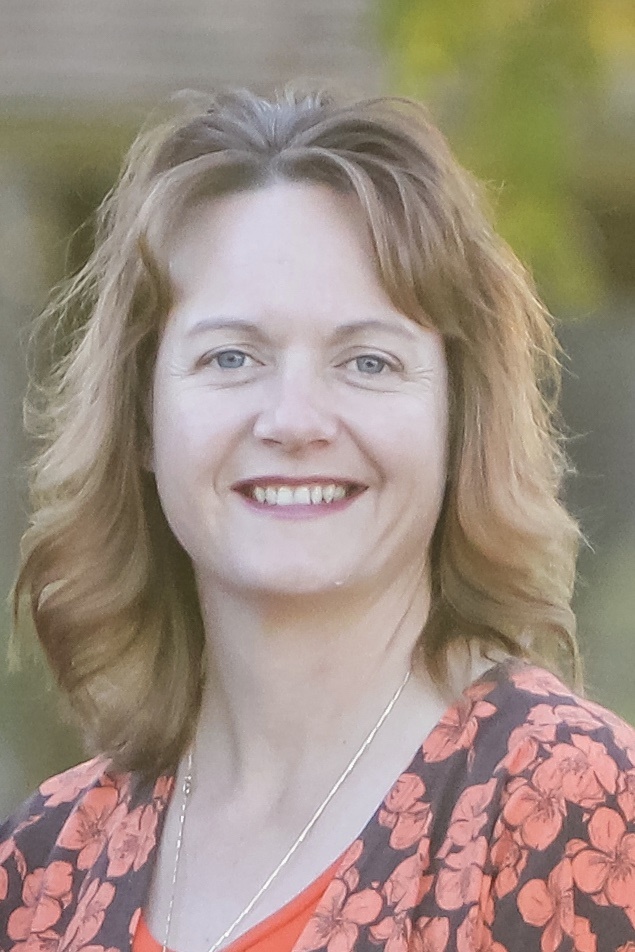
Also on the program will be inspirational speaker Donna Roth Hillis of Wichita. Hillis, a former corporate flight attendant and retired nurse, is now the board chair of the West Wichita YMCA.
In her talk titled “Shattered But Not Broken,” Hillis will share how an ordinary life can be transformed into something extraordinary.
All teachers in attendance at the program will be recognized.
Cost of the dinner program is $12.50. Reservations are required by Thursday, Sept. 5, to [email protected] or to (785) 202-1036. Hays After 5 is affiliated with Stonecroft Ministry of Overland Park.
The TMP-Marian Alumni Association invites the community to share in our Sept. 20, 2019 homecoming celebration with any entries they would like to add to further enhance our parade.
Any groups that are interested in participating in the parade need to contact the Alumni Office at TMP-Marian prior to September 13, 2019 at (785) 625-9434 or [email protected].
As a preventative safety precaution, candy will not be allowed to be thrown from any motor vehicle. All candy that is handed out must be done by participants that are walking along the parade route. This is a requirement by the Hays Police Department and it will be enforced beginning this year. Please comply with their request and help keep our children safe.
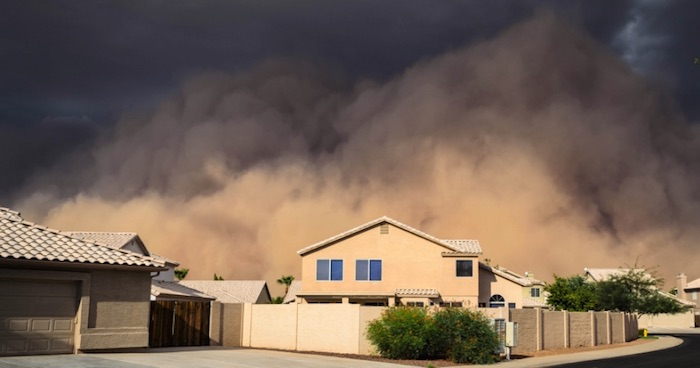
Bing Pu, assistant professor of geography & atmospheric science at KU, has developed a long-range dust-prediction method her team used to accurately predict dustiness in the southwestern and central United States. (Credit: NOAA)
KU News Service
LAWRENCE — Southwestern Kansas in the 1930s saw some of the worst dust storms ever recorded in the U.S., when apocalyptic clouds of heavy dust terrified and even killed people, livestock and wildlife.
Long ago, farmers phased out the kinds of practices that brought about the Dust Bowl, but dust still can harm health, agriculture and transportation while exacerbating environmental problems. Indeed, dust storms may increase as climate change causes drier conditions. (The National Oceanic and Atmospheric Administration asserts windblown dust storms increased 240% from 1990 to 2011 in the southwestern United States.)
Today, a researcher at the University of Kansas has developed an advanced technique for forecasting dusty conditions months before they occur, promising transportation managers, climatologists and people suffering health issues much more time to prepare for dusty conditions. By contrast, common methods of predicting dust in the air only give a few days of advance warning.
Bing Pu
Bing Pu, assistant professor of geography & atmospheric science at KU, is lead author of a new paper in Geophysical Research Letters detailing a long-range dust-prediction method her team used to accurately predict dustiness in the southwestern and central United States.
“We use a statistical model constrained by observational data and the output of a state-of-the-art dynamic seasonal prediction model driven by observational information on Dec. 1,” Pu said. “We found using our method, we actually can give a skillful prediction for the dustiness in springtime, one of the dustiest seasons in the U.S., over the Southwestern and Great Plains regions — two of the dustiest areas in the U.S.”
Pu and her colleagues, Paul Ginoux and Sarah Kapnick of the NOAA Geophysical Fluid Dynamics Laboratory, and Xiaosong Yang of NOAA and the University Corporation for Atmospheric Research, were able to predict “variance,” or days when there was more or less dust in the air than average.
“Over the southwestern U.S., our model captured the variance of the dustiness over the time period from 2004 to 2016 by about 63%,” Pu said. “Over the Great Plans, about 71% of the variance is explained.”
Pu said factors influencing amounts of dust in the air can include surface winds, precipitation and amount of bareness of the landscape. These kinds of data were incorporated as key variables into the prediction model.
According to Pu and her collaborators, high levels of airborne dust can affect individual people, transport systems and agricultural production.
(a) Climatology (2004‐2016) of dust event frequency (%) in March‐April‐May (MAM), and anomaly (with reference to the climatology; %) in 2010 from (b) Moderate Resolution Imaging Spectroradiometer (MODIS), (c) prediction with En1 ensemble, (d) prediction with En2 ensemble, and anomalies averaged between 2011 and 2013 from (e) MODIS, (f) prediction with En1, and (g) prediction with En2. The dotted area indicates that at least eight out of the 12 ensemble members show the same sign as MODIS anomalies. Missing values are shaded in grey. The black boxes denote the averaging areas over the southwestern United States (box 1) and northern (box 2) and southern Great Plains (box 3). Pattern correlations (uncentered) between the predictions and MODIS over the southwestern United States (first) and the Great Plains (second) are shown in bottom left in blue. (Credit: Pu, et al )
“Small dust particles are very easily taken into your breathing system and then could cause lung diseases like asthma — and some studies suggest there might be some connection with lung cancers,” Pu said. “There’s a study finding dust storms are related to valley fever in Arizona as fungi can attach to dust particles. And when there’s a severe dust storm, visibility is reduced so it can increase car accidents on the highways. In 2013, there were severe dust storms in western Kansas that reduced visibility and caused problems for local traffic. In Arizona, when there’s a strong dust storm usually called a ‘haboob,’ the dust wall goes up to a few kilometers high, and this can affect airports —airports have to close due to the dust storms. Fortunately, these storms are moving quickly and dissipate after a few hours.”
Beyond safety for people, Pu’s team detail in their study how high dust levels can sway the environment as a whole.
“Dust particles absorb and scatter both solar and terrestrial radiation, thus affecting the local radiative budget and regional hydroclimate,” they wrote. “For instance, dust is found to amplify severe droughts in the United States by increasing atmospheric stability, to modulate the North American monsoon by heating the lower troposphere, and to accelerate snow melting and perturb runoff over the Upper Colorado River Basin by its deposition on snow.”
Pu said she hopes someday an organization or government agency could run the model she’s developed and issue seasonal dust predictions months in advance, especially if the potential for high levels of dust cause concern.
“Traffic systems and human health would benefit most from this long-term prediction ability about dust and air quality,” she said. “I think it would be great if an institute would try to give regular predictions of dustiness variations that could be helpful for airports or road traffic or transportation managers. Facilities could plan for times when there could be a lot of dust in the local area. It could even affect the plans of local farmers.”
For the time being, Pu aims to continue to refine the dust-prediction model to include atypical weather influences and human activity that could contribute to dust patterns.
“We want to continue to understand what other factors haven’t been explored in the seasonal variation of the dust,” she said. “For instance, those large-scale factors such as the El Niño-Southern Oscillation, and also anthropogenic factors, how people’s influence through agriculture or construction projects, might affect dust emission in the future. Of course, we want to also keep collaborating with people at NOAA GFDL to give dust predictions.”
Due to the observance of the Labor Day on Monday, September 2, 2019, refuse/recycling route collection schedules will be altered as follows:
Monday, September 2, 2019 and Tuesday, September 3, 2019 will be collected on Tuesday, September 3, 2019.
There will be no changes to Wednesday, September 4, Thursday, September 5, and Friday, September 6 routes.
Although collections may not occur on your normal day, collections will be completed by the week’s end. It is anticipated that heavy volumes of refuse/recyclables will be encountered around the holidays. Please make sure your polycarts and recyclables are out by 7:00 a.m., and keep in mind that the trucks have no set time schedule.
Hays customers that may have any questions regarding this notice should contact the Solid Waste Division of the Public Works Department at 628-7350.
Latisha Haag joined the Teaching Innovation and Learning Technologies staff at Fort Hays State University as the new faculty development training specialist.
Haag brings nearly 20 years of experience in professional development from a variety of educational settings and topics, ranging from public to private schools.
Recently she served as a teacher, librarian, and professional development committee chair for Thomas More Prep-Marian High School.
Haag earned her Bachelor of Science in education from Kansas Newman College and her Master of Science in communication studies from FHSU.
She has also taught as an adjunct virtual professor in communication studies for five years.
ELLIS COUNTY — One person died in an accident just after 10a.m. Sunday in Ellis County.
The Kansas Highway Patrol reported a 2017 Chrysler Pacifica driven by Mary D. Stanley, 81, Hurst, TX., was west bound on Interstate 70 near the U.S. 183 Bypass. The vehicle left the roadway and struck the guardrail.
Stanley was pronounced dead at the scene. EMS transported a passenger John R. Stanley, 81, Hurst, TX., to the hospital in Hays and later to Via Christi in Wichita. Both were properly restrained at the time of the accident, according to the KHP.
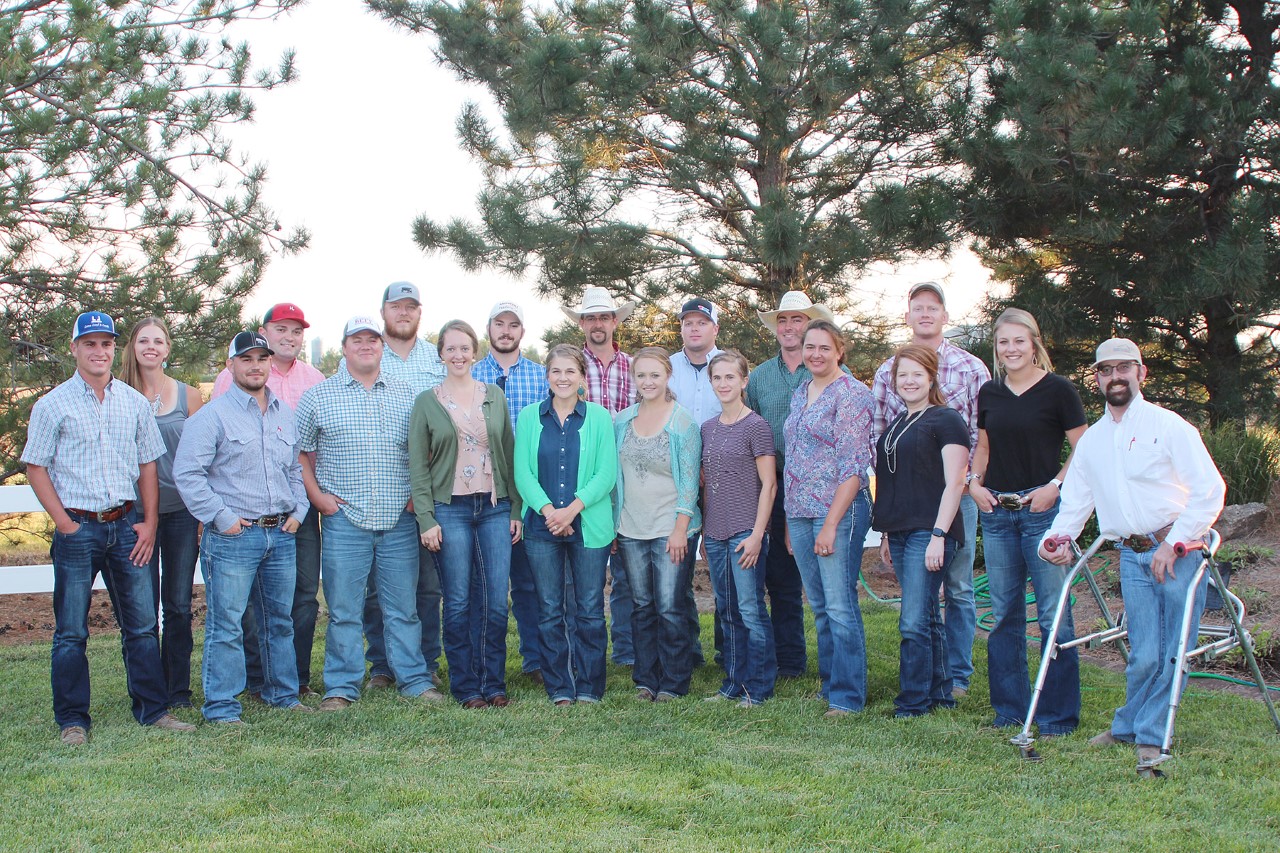
Pictured (Back Row, L to R) are Cami Roth, Sterling; Evan Woodbury, Quenemo; Bryce Barnett, Muscotah; Patrick Turner, Ingalls; Taylor Hughes, Pratt; Garrett McKinney, Walton; Clayton Jarnagin, Protection; Reed Koop, Abilene; (Front Row, L to R) Thomas Thayer, LaCygne; Dalton Rutledge, Plains; Carl Clawson, Ulysses; Hannah Brass, Medicine Lodge; Heather Gibson, Satanta; Grace Hammer, Sharon Springs; Jessalyn Strahm, Sabetha; Jamie Holman, Bronson; Ashley Fitzsimmons, Pratt; Michaela Peterson, Dodge City; and Clinton Laflin, Russell.
KLA
TOPEKA – The third installment of the Kansas Livestock Association (KLA) Young Stockmen’s Academy (YSA) was held September 16-18. The group of 20 young producers spent three days touring various segments of the beef and dairy industries in central and western Kansas. Merck Animal Health is the exclusive sponsor of the YSA program.
El Dorado Livestock Auction was the first tour stop. The group heard from co-owner Josh Mueller about the modern facility, where more than 50,000 head of cattle are sold per year. During a stop near Cottonwood Falls, Trey and Frank Hinkson explained how they use high-accuracy sires and cow families that combine the best of calving ease and performance with maternal efficiency and high-quality carcass traits on their seedstock operation. C.J. and Russell Blew, brothers who make up the Blew Partnership, hosted the group on their ranch near Medicine Lodge. They use artificial insemination, carcass data and DNA testing to enhance the economic traits of their Red Angus-based commercial cowherd. In addition, the Blews focus a great deal of time on environmental stewardship, including implementing more than 100,000 feet of water line on their Barber County ranch, along with numerous stock water sites, several reservoir tanks and miles of cross-fencing to create rotational grazing paddocks.
During a tour of High Plains Ponderosa Dairy near Plains, co-owner and general manager Greg Bethard discussed the protocols used to manage their dairy cow herd and took the class on a tour of the facility, including the new cross-ventilated, free-stall housing barn. Reeve Cattle Company near Garden City also hosted the YSA group. Manager Keith Bryant took the class on a tour of the feeding facility, which also includes an onsite ethanol plant. In addition, the group toured the National Beef packing plant in Dodge City.
Members of the 2019 YSA class are Bryce Barnett, Muscotah, Hannah Brass, Medicine Lodge; Carl Clawson, Ulysses; Ashley Fitzsimmons, Pratt; Heather Gibson, Satanta; Grace Hammer, Sharon Springs; Jamie Holeman, Bronson; Taylor Hughes, Pratt; Clayton Jarnagin, Protection; Reed Koop, Abilene; Clinton Laflin, Russell; Socorro Martinez, Liberal; Garrett McKinney, Walton; Michaela Peterson, Dodge City; Cami Roth, Sterling; Dalton Rutledge, Plains; Jessalyn Strahm, Sabetha; Thomas Thayer, LaCygne; Patrick Turner, Ingalls; and Evan Woodbury, Quenemo.
The 2019 YSA class will gather for their final session at the KLA Convention December 4-6 in Wichita. More information about YSA can be found at www.kla.org.
KLA is a trade organization representing the business interests of members at both the state and federal levels. Voluntary dues dollars paid by producers are used for programs that benefit KLA members in the areas of legislative representation, regulatory assistance, legal troubleshooting, communications and the advancement of youth.
Rarely do the words “brewery,” “dog” and “fundraiser” go together, but a new event next month hopes to combine all three.
From 3 to 7 p.m. Saturday, Sept. 14, the Humane Society of the High Plains and the Hays Public Library will team up to host Paws and Pints at Defiance Brewing Co., 2050 Old U.S. 40.
Humane Society manager Betty Hansen said interest is already high and she hopes will it turn into an annual event.
Paws and Pints will offer “all kinds of new things, and we are hoping to start this year and make this thing bigger and better every year,” she said. “I think it’s going to be great.”
“Bring your dogs out,” she said. “We will have a lot of dog activities.”
Some of the events planned include dog painting, dog toy stations, live music, and a dog talent show, which will be manned by staff and volunteers from the Hays Public Library.
“We are opening it up to the public to help them out,” said Abby Artz, HPL adult services programming coordinator.
Volunteering at the event is a part of the library’s ongoing effort to increase community outreach.
“Every month, we do what we call HPL: Hands-On — a volunteering event with a different organization around town,” Artz said. “We are trying to create more of a sense of togetherness and show that we are a community and it is really fun to work together on different events, especially this one.
“It’s going to be really fun,” she said.
Defiance is also excited to host the event, as co-founder Matthew Bender said working with community organizations is becoming a trend for breweries across the county.
“We are huge, huge animal lovers, so it was a no-brainer for us,” he said. “It felt like a natural fit.”
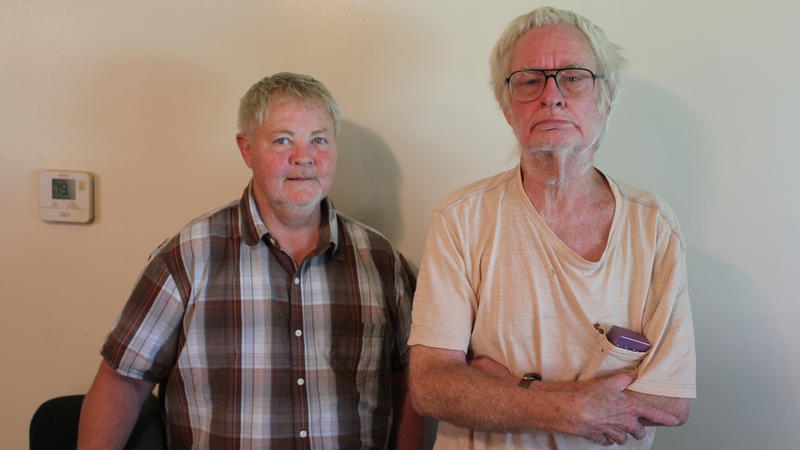
Dennis Ritchey, right, and the attorney who helped him find his way out of a mental health nursing home and on to a life of independent living. (Photos by Stephen Koranda)
VALLEY FALLS — Dennis Ritchey stands in the kitchen of his modest apartment. He calls it efficient, but likes that it has plenty of cabinets.
Most importantly, that kitchen and the rest of the one-bedroom place are his, and his alone. Much like his life more broadly.
His life now stands in sharp contrast to the six years he spent in one of the state’s 10 nursing facilities for mental health. He couldn’t set his own schedule or typically come and go as he pleased.
Now, things are different. He tends to bird feeders outside his apartment window and has freedoms he didn’t enjoy before.
“Eat what I want. Watch what I want on TV. Go to bed when I want to. Get up when I want to,” he said. “I’ve been doing great ever since I left.”
The nursing homes serve as sort of a midpoint between state mental hospitals for people with the most serious problems and community mental health centers for those who need far less help.
Those mid-way outposts in state’s mental health care system — privately owned, taxpayer-funded — have long been a source of concern. That’s partly because the job of looking after people dealing with bipolar disorder, schizophrenia and a range of other problems is inherently difficult. It’s balancing treatment with giving patients a chance to thrive on their own.
A recent report from the Disability Rights Center of Kansas suggests the nursing homes are failing the state’s mentally ill, essentially warehousing people rather than giving them what they need to move on to more independent lives.
The report argues that more people could be living at home and using community-based services. State officials and the nursing home industry see room for improvement but say it will take a more significant remake of the state’s mental health system.
Ritchey isn’t sure what diagnosis sent him to the nursing home in 2011. He’d hit a rough patch and landed in a homeless shelter and mental facility in Lawrence before going to the nursing home. At first, he thought his stay would be short.
“Ninety days went by. Six months. A year. Two years,” he said. “Nobody said nothing to me.”
He got out of the facility in 2017 with the help of Kip Elliot, an attorney with the Disability Rights Center of Kansas. Elliot serves on the board of the local animal shelter, and he helped Ritchey start volunteering and later working there.
Elliot knew that the nursing facility wasn’t the right place for Ritchey.
“When I met Dennis and started seeing him more,” Elliot said, “(there was) absolutely no reason for him to be there.”
Getting Ritchey out wasn’t easy. Elliot said some of that was difficulty working with the facility and the state. But the challenges included lining up the services Ritchey would need, such as an apartment and care for his diabetes.
“That’s one of our biggest issues,” Elliot said. “Community supports, what people need, housing. It’s just not there.”
An attorney for the company that owns the facility where Ritchey lived, Midwest Health, did not respond to a request for comment. The administrator of the Valley Falls facility initially agreed to show the home and comment on the report, but later didn’t respond.
‘Warehouses’
The Disability Rights Center of Kansas published the report calling the nursing homes warehouses. The group surveyed around half of the more than 600 residents of the homes, and 70% wanted to leave and find what support they needed on the outside.
Rocky Nichols
“It’s just a lack of imagination (that) has caused this to happen,” said Rocky Nichols, executive director of the center. “People go to these places. They get stuck in these institutions, and it becomes very difficult for them to get out.”
The report also argues the state is violating the law by institutionalizing people who could live on their own if they received services in the community.
“That’s the textbook definition of unnecessary institutionalization,” Nichols said.
But the head of the advocacy group that represents the mental health nursing homes contends the report doesn’t paint a fair picture.
Cindy Luxem
“These are not warehouses. These are people’s homes,” said Cindy Luxem, president and CEO of the Kansas Health Care Association. “They have no place else to go.”
There simply aren’t enough community-based services right now to take on people in the nursing homes, Luxem said.
She also wasn’t surprised by the survey results, because people often don’t want to live in nursing homes. But she said that doesn’t mean caregivers and family members would always agree that other places offer better results.
“Some of these are tied with not only mental health, but substance abuse issues,” she said. “They don’t have the wherewithal to be safe in the community.”
An alternative
Patrick Schmitz
Patrick Schmitz walks through mural-filled hallways at the Bert Nash Community Mental Health Center in Lawrence, where he’s the chief executive officer. The multi-colored paintings depict grassy rolling hills and colorful night skies. They’re meant to make the section for children more welcoming.
This facility offers a variety of treatments for conditions including depression, anxiety and childhood behavioral issues. They have about 20 spots in a long-term residential program, but most of the 5,000 people they serve annually are on an outpatient basis.
“The vast majority of people we treat are everyday people out in our community who come here for an hour of service,” he said. “(They) go back to work, go back to home.”
Schmitz calls those community-based facilities the front door to the mental health care system. They evaluate people in crisis and help route them to the correct services. They offer treatment as well as assistance with life skills and help navigating government programs.
The Disability Rights Center argues more people should be removed from the nursing homes and instead served at facilities like this one.
Funding for the state’s 26 community mental health centers dropped almost by half over a decade before creeping up in recent years, the report shows.
Even when budgets for those community facilities got cut deeply, funding for nursing homes went up.
“The disparity in how Kansas supports institutions versus community-based services is downright shocking,” the DRC wrote in the report.
A broader approach
There’s a common theme when talking to people about this issue. Community-based mental health services exist, but there’s a lack of availability in certain areas and a persistent shortage of housing needed for people leaving the nursing homes.
“This has to be tackled from a system-wide perspective,” said Shawn Sullivan, a former official in the administration of governors Sam Brownback and Jeff Colyer. Sullivan is now vice president at Mission Health Communities.
Mission Health oversees five of the nursing facilities in Kansas, and he agrees improvements are needed. They need to focus more on discharge planning and preparing residents with life skills so they can leave. But, there must be places for them to go.
“The number one challenge is a lack of affordable housing,” he said. “It’s just not there in a lot of parts of the state. And the places where there is affordable housing, then there may not be the services.”
Tight funding for community mental health centers in recent years has led to longer waits to see patients. It’s also sometimes meant cuts to programs or trouble recruiting and retaining staff.
The centers are ready to take part in a larger change to the mental health system, said Kyle Kessler, executive director of the Association of Community Mental Health Centers of Kansas. However, they can’t take on patients from the nursing homes without additional funding to go with it.
“To do anything within existing resources would mean we were taking from some other need,” Kessler said. “We need to identify additional funding.”
Kessler said expanding Medicaid is one of those steps. It would bolster the budgets of community mental health centers because they’d treat fewer uninsured people. Expansion supporters so far haven’t advanced an expansion bill through the Legislature.
The state is pursuing a waiver that would allow for Medicaid funding to flow to the mental health nursing homes. That could, in turn, jumpstart programs that offer job assistance or other services to help people move out of the facilities. In addition, recent changes mean Medicaid funding could be used for needed housing services.
Laura Howard, the secretary of both the Department for Children and Families and the Kansas Department for Aging and Disability Services, said the state needs to make progress on changes that make it easier for people to live somewhere besides nursing homes.
“The last thing that I would want to do,” she said, “is encourage us to move too quickly and not have the services and supports in place for the individuals.”
Stephen Koranda is Statehouse reporter for Kansas Public Radio and the Kansas News Service, a collaboration of KCUR, Kansas Public Radio, KMUW and High Plains Public Radio covering health, education and politics. Follow him on Twitter@kprkoranda or email [email protected].
The W.R. and Yvonne Robbins College of Business and Entrepreneurship at Fort Hays State University has selected Abbie Schneider, Chappell, Neb., and Avary Huff, Topeka, as the recipients of the 2019-2020 Robbins Ambassador Scholarship awards.
“This is the second time we’ve awarded this scholarship, and it is proving to be a great example of investing in students that pay dividends,” said Dr. Melissa Hunsicker Walburn, interim dean of the Robbins College.
“Prospective students relate to the stories and experiences of current students in powerful ways.”
The scholarships are for any Robbins College of Business and Entrepreneurship undergraduate student exemplifying leadership, academic excellence, extracurricular involvement and a desire to serve FHSU.
Schneider is a junior majoring in human resource management. She is involved in Alpha Kappa Psi, and the Society for Human Resource Management and sits on the executive board of both organizations. Schneider plans to earn a Master of Professional Studies in human resource management. After college, she would like to work in training and development.
Huff is a junior majoring in tourism and hospitality management. She is a member of Delta Zeta sorority and serves as historian and lamp editor. Huff is a student ambassador in the Admissions Office and will be a VIP Ambassador for the 2019-2020 school year.
“FHSU has become my home, giving me opportunities to grow personally and professionally,” said Huff. “I am excited to share about the growth occurring and opportunities available at FHSU.”
Robbins Ambassadors may represent students and the college at events including Tiger Friends and Family Day, student recognition programs, college dinners with alumni and at the annual Robbins College Scholarship Reception.
Ambassadors will attend, participate and network in approximately 12 to 15 events during the academic year.
“The Robbins Ambassadors understand the questions and viewpoints of prospective students, or new FHSU students, because not long ago they were in the same position of evaluating their higher education choices and how to make the most of their educational experiences,” said Hunsicker Walburn.
These awards are possible through the continued support of W.R. and Yvonne Robbins, for whom the Robbins College of Business and Entrepreneurship is named. W.R. Robbins is an alumnus of Fort Hays State.
“I am so excited about our two students selected for these honored scholarships,” said W.R. Robbins. “They will be a positive representation of our university.”
“We congratulate Avary and Abbie in their selection, and we’re excited for their commitment to serve this important role in the upcoming year,” said Hunsicker Walburn.
To learn how to establish a scholarship at Fort Hays State, contact the FHSU Foundation at 785-628-5620 or [email protected]. Learn more about the FHSU Foundation by visiting https://foundation.fhsu.edu.
The Hays Youth Orchestra’s fall season will start up at 10:30 a.m. on Saturday, Sept. 7, in Fort Hays State University’s Malloy Hall for an orientation meeting.
All students between sixth and eighth grade who play the violin, viola, cello or bass are welcome to attend.
Younger students are also welcome to participate with the approval of the director. Older students are invited to participate as assistants and mentors.
Shawn Demuth will serve as this year’s conductor. He is a graduate of the FHSU Department of Music. He plays the violin and piano, composes music and teaches music at USD 388 in Ellis.
“We’re looking at doing fun but challenging music,” said Demuth. “My goal is to bring young musicians together to help build relationships and to increase their passion for music.”
Rehearsals are on Saturday mornings starting in September, with performances scheduled for December and May.
Students interested in playing are should contact Demuth at [email protected] for an application form or additional details.
The Hays Youth Orchestra Program is supported in part by the Hays Symphony Guild, which believes that nurturing the joy of musical performance in today’s youth is critical to developing strong and skilled performers for tomorrow.

 Women wanting tips on how to dress stylishly on a limited budget won’t want to miss the “Second-Hand Rose Style Show” on Monday, Sept. 9, at the Hays After 5 Christian women’s meeting.