To find out more about The Post Podcast, or subscribe to mobile notifications click here.
Category: Local
News from the Oil Patch, Aug. 27


By JOHN P. TRETBAR
U.S. crude prices dropped more than two percent on Friday, after China announced it would impose a five percent tariff on U.S. oil imports.
Kansas Common crude at CHS in McPherson dropped a dollar on Friday to end the week at $44.50 per barrel, down fifty cents from a week ago but up a quarter from the first of the month.
Baker Hughes reported the largest weekly drop since April in its weekly rotary rig report. There were 916 active drilling rigs across the U.S. on Friday, down sixteen oil rigs and three seeking natural gas. The count in Texas was down four, Oklahoma was down three and New Mexico was down two. Colorado was down four rigs, and Pennsylvania reported a drop of six drilling rigs.
Independent Oil & Gas Service reported 26 newly completed wells across the state, eleven east of Wichita and 15 in Western Kansas, including one in Ellis County. So far this year, Kansas operators have completed 950 wells.
Regulators approved 17 permits for drilling at new locations in Kansas last week, all of them in the western half of the state. There are two new permits in Barton County and one in Stafford County. There are 625 new drilling permits across Kansas so far this year.
The Kansas Corporation Commission announced an investigation into a string of earthquakes near Hutchinson. Regulators are collecting data and analyzing recent injection well activity in Reno County in an effort to determine what caused a series of earthquakes earlier this month that knocked down ceiling tiles and broke some windows. The largest of the quakes August 16 was a magnitude 4.2, and was felt as far away as Ponca City, Oklahoma and Kansas City, Missouri.
U.S. producers have been shipping increasing amounts of crude oil by rail over the last decade, as pipeline capacity failed to keep up with booming production. New analysis on the Web site “Freight Waves” suggests some changes on the horizon. Analysts say as long as the cost of production plus the cost of rail shipping is less than the sale price, the trend could continue. But because of the decreasing difference between national and international price benchmarks, those profit margins are decreasing. Analysts say crude-by-rail from the Permian Basin to the Gulf Coast will soon fade out of the picture, as a string of new pipelines come on line. Data from the government show most oil-by-rail travels to the east and west coasts.
Weekly oil-by-rail totals topped year-ago totals by more than ten percent last week. According to the latest tally from the Association of American Railroads, producers shipped petroleum and petroleum products on 12,004 rail tanker cars during the week ending August 17. The cumulative total so far this year is over 421,000 rail cars, an increase of more than 20% over the total a year ago at this time. Canada saw a 22% increase in the weekly total and a 24% increase in the year-to-date total. AAR says total rail traffic for the week was down 5.2 percent compared with the same week last year.
The government reported another near-record for domestic crude-oil production. For the week ending August 16, operators pumped 12.339 million barrels per day, an increase of six thousand barrels per day over the week before and the second-largest weekly tally ever. That total is 39,000 barrels per day below the all-time weekly record set back in May.
The dramatic increase in U.S. crude production has fueled our rise to become the top-producing nation in the world, and has reduced our reliance on imported oil by more than ten percent compared to a year ago. The government reported average imports of 7.2 million barrels per day for the week ending August 16, down about half a million barrels per day from the week before.
The U.S. Energy Information Administration reports a drop in U.S. crude oil inventories. The latest weekly numbers show stockpiles of 437.8 million barrels, down 2.7 million barrels from the last count. Inventories are still about two percent above the five-year seasonal average.
The lobby group that represents Canada’s oil sector has registered for the first time as a political third party, stepping up its advocacy efforts ahead of October’s federal election. According to the Edmonton Journal, changes to the Canada Elections Act mean the group must register if it’s to discuss issues that could be associated with a particular candidate. Election watchers are predicting a surge in lobbying efforts by energy companies as well.
Revenue collections in New Mexico are hundreds of millions of dollars higher than projections, thanks to booming oil production in the Permian Basin. Total state revenue collections were $273 million more than expected through April. The Legislature already approved a $663 million increase in spending in the current budget, including big bucks for education and highways. One lawmaker tells the Albuquerque Journal there could be another big spending increase in the upcoming budget year, while still keeping cash reserves of 20% or more.
The U.S. refining arm of Saudi Aramco is buying a chemical plant adjacent to it’s refinery in Port Arthur, Texas. Reuters reported the purchase as part of the Saudi push into petrochemicals. The Saudis are in the middle of an $18 billion expansion of its operations on the Gulf Coast.
Wilson man sentenced to prison for his role in robbery, jail attack
By JONATHAN ZWEYGARDT
Hays Post
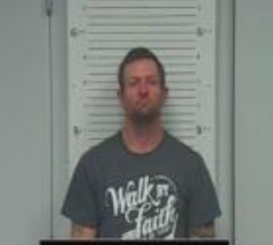
A Wilson man was sentenced to more than 11 years in prison for his role in an armed robbery and assault on a fellow inmate while in the Ellis County jail.
Jeremy Schulmeister, 33, was sentenced to a total of 133 months in prison Monday in Ellis County District Court after he was found guilty of three felony charges earlier this month.
Schulmeister was sentenced to 102 months in prison for aggravated robbery and 12 months for aggravated battery.
In February, Schulmeister and another man offered to give a man a ride near the Fort Hays State campus, but instead of dropping the man off on campus, the two men robbed the man at gun point.
They robbed the man of more than $1,500 cash, an iPhone and clothes.
While in the Ellis County jail, Schlmeister attacked another inmate and broke his nose, authorities said. Schlmeister was sentenced to 19 months in prison for aggravated battery.
At Monday’s sentencing, Schlmeister apologized to the victims, his family and the court. He said he is now being treated for mental health issues.
MARSHALL: Doctor’s Note Aug. 27

Friends,
The Environmental Protection Agency recently announced the exemption of 31 refineries from the Renewable Fuel Standard (RFS) biofuel-blending requirements.
Eight of Kansas’ ten ethanol plants are in the Big First District, and combined produce more than 509 million gallons of renewable fuel using corn and sorghum. Exempting these 31 small refineries from their RFS obligations – especially if they do not reallocate the renewable fuel gallons to other obligated parties – will be devastating to Kansas communities, and rural areas in particular.
 As Co-Chair of the House Biofuels Caucus, I joined several of my Congressional colleagues in sending a letter last week to the Government Accountability Office formally calling for an investigation and asking for transparency into the process of granting these exemptions. We must, at the very least, understand how these exemption determinations were reached and the economic impact they will have on communities and producers in Kansas and across the country.
Children’s Mercy
Throughout my career as an OB-GYN in rural Kansas, I would collaborate with specialists at Children’s Mercy Hospital several times a year. They served as an extension to my work, and I’m grateful to have had this partnership.
 Children’s Mercy recently invited me to meet with their leadership team and tour the hospital, and the construction site for what will be a cutting edge research center. The Children’s Research Institute will pursue answers to pediatric medicine’s most challenging questions.
I’m honored to have played a role last Congress in advancing pediatric medical research through the passage of the Childhood Cancer STAR Act, and advocate for robust funding for NIH. Kansas has the talent and experts to play a key role in medical research and I look forward to seeing, not only the research they will produce, but how they will enhance the Kansas workforce and economy.
YMCA Tour
I received a tour of the fantastic YMCA in Salina and learned about the youth development and childcare programs the facility offers, as well as participate in an exercise class with a group of seniors. Kansas YMCAs serve more than 600,000 people in 30 communities and provide health, fitness, and nutritional programs for people of all ages. I applaud the staff for the excellent work they do for Salinans.
 Closing the Digital Divide
Last Thursday, the Federal Communications Commission authorized nearly $191.2 million in support in Kansas over the next decade to smaller, rural carriers utilizing the Universal Service Fund. This assistance can be used to maintain, improve, and expand access to broadband in these providers service areas. It’s another step toward closing the digital divide in rural America, and I applaud Chairman Pai’s commitment to ensuring that all people, no matter where they live, have access to an affordable and reliable internet connection. For more information, Click Here.
USDA Details Trade Damage Estimate Calculations
USDA’s Office of the Chief Economist has published a detailed accounting of how estimated damage from trade disruptions was calculated for its support package for farmers. The Chief Economist’s office developed an estimate of gross trade damages for commodities with assessed retaliatory tariffs by China, India, the European Union, and Turkey to set commodity payment rates and purchase levels. This is the same approach used by the World Trade Organization is trade dispute cases.
 The full description of the Trade Damage Estimation for the Market Facilitation Program and Food Purchase and Distribution Program is available on the website of USDA’s Office of the Chief Economist.
Investing in Local Health Centers
The Department of Health and Human Services awarded nearly $107 million dollars to enhance efforts of the highest performing and most improved health centers across the county. Funding will go towards enhancing the quality and value of health care they provide to local communities.
Eighteen health centers across Kansas have been awarded a total of $1.25 million in recognition of their achievements as clinical quality improvers, health disparity reducers, and national quality leaders.
Congratulations to Atchison Community Health Clinic, Community Health Center in Cowley County, Community Health Center of Southeast Kansas, First Care Clinic-Hays, Flint Hills Community Center, GraceMed Health Clinic, Health Ministries Clinic, Health Partnership Clinic, HealthCore Clinic, Heart of Kansas Family Health Care, Heartland Medical Clinic, Kansas State Dept. of Health and Environment, Konza Prairie Community Health Center, PrairieStar Health Center, Salina Health Education Foundation, County of Sheridan, the Hunter Health Clinic, and the United Methodist Western Kansas.
 FHL Bank
On Wednesday, I took part in a discussion at Topeka Federal Home Loan Bank, one of 11 Federal Home Loan Banks in the United States. I learned about how Topeka FHLBank’s programs help our community banks continue their investment in our communities. We spoke about the need for skilled labor in Kansas, the impact of international trade on our economy, and the FHLBank’s affordable housing program, which has awarded $12.2 million in grants to first-time homeowners in the Big First District since 2012.
UAS Tech Forum
I was honored to speak at the Unmanned Aircraft Systems (UAS) Tech Forum in Salina on Thursday, an event featuring national speakers and top-notch panel discussions focused on precision agriculture, first responders, and UAS innovations.
 Several Kansas colleges and the Kansas Department of Transportation have become industry leaders in unmanned flight systems. Kansas has always been a leader in aviation, and I will continue to support innovation to allow for more application of drone technology.
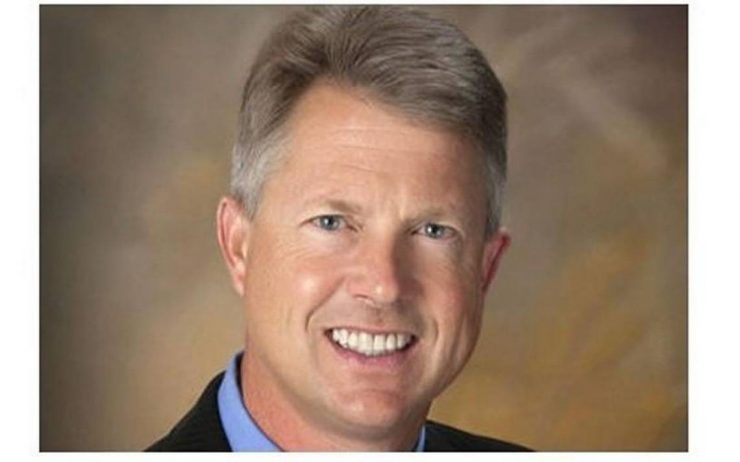
Dr. Roger Marshall, R-Great Bend, is the First District Kansas Congressman.
RC pilot looks to hand off hobby after over 50 years in the air

By CRISTINA JANNEY
Hays Post

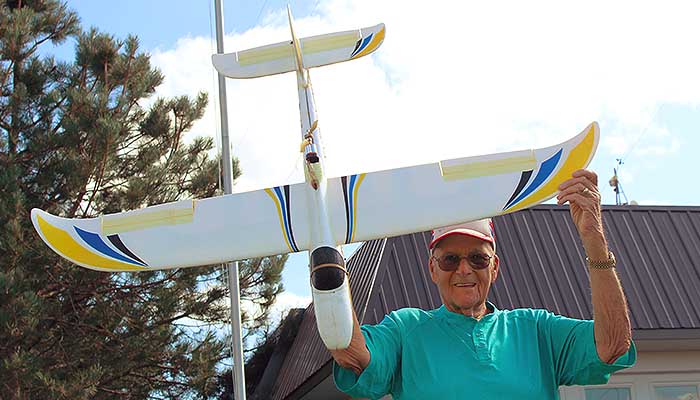
RUSSELL — Sherwin Stielow has flown to great heights without ever leaving the ground.
Stielow, 85, of Russell has been flying RC planes since the late 1960s.
He said the hobby is a combination of the challenge of building the planes, the satisfaction of seeing the something you built fly and the challenge of flying the plane.
Stielow’s love of the skies started when he was a young adult. He and his cousins liked to watch planes at the local airport. They decided to pool their money and buy a World War II military training airplane.
The cousins first took flying lessons from a former World War II pilot and trainer before finishing their lessons with a pilot in Hays. His two cousins went to work as airplane mechanics. Stielow was hired by the Kansas Highway Patrol as a pilot. He flew traffic enforcement in a Cessna Skylane and often aided in searches before damage to his hearing forced him to retire in 1987.
Stielow said one of his most memorable moments on the KHP was not in the air. He received a call from his superintendent one day in 1970 and he was asked to report to Beloit. When he arrived, the superintendent was there with Neil Armstrong, who was in Kansas to go pheasant hunting.

“Guess what I got to do in full blue highway patrol uniform? I was the bird dog that went down in the weeds. I am not 100 percent sure I got to shake his hand. I think I did,” Stielow said.
He had dreams of flying for an airline, but in those days, work for an airline was not very steady and private pilots made less than he was making as a trooper. He had a family to support. He also had a job offer to work for the Alaska State Police, shortly after Alaska achieved statehood.
“I was going to have to report to Fairbanks on Feb. 15, 1959 in the middle of winter with two children. We couldn’t hardly rub two quarters together,” he said. “Everybody talked me out of that one. But I had a good career. I still bleed blue.”
When Stielow became involved in RC planes in the 1970s, he said he enjoyed building the planes more than flying them.
“It is a challenge to put it together, and then once you have it together to see it in the air flying,” he said. “That is something that you did.”
Stielow related it to working in the oil field when he was a young man.

“I got to driving a bulldozer, building oil field locations,” he said. “The challenge was you go out there into this pasture on a hillside and you level this location and get it almost perfectly level and dig the pits and everything an oil derrick has to have. I did that. That was the challenge and the fun of working there. Just like building the airplane, I put this thing together.”
He started with gas engines, and as the technology progressed, he made the transition to electric engines. He has made planes from kits and from his own designs, from Styrofoam and basal wood.
Planes can take hours to build or they can take months. He worked on the planes during the winter when he couldn’t fly. His largest plane has a wing span of 64 inches. The planes’ top speeds can vary anywhere from 30 to 70 mph. The RC speed record was set in 2017 by a jet that was clocked at 465 mph.
The first gas trainer he built was his favorite — a stick-built high wing, which was followed by a low wing, which was faster and more aerobatic.
“It was easy to handle, but it was a challenge. It was faster and you really had to stay on your toes,” he said. “I’ve still got that airplane.”
He once scaled down plans from a life-size plane to an RC plane when a friend who worked at Beechcraft lent him the specs. He has 13 planes in his basement currently, some ready for flight, others not.
Flying an RC plane is not as easy at it might look.
“People want to learn to do this, but they try to do it on their own,” he said. “They will buy an airplane kit like this, and they will go in the backyard or out in the pasture or out in the field and try to learn to fly it themselves. The odds are against them. It is not going to happen. There are enough variables there. It doesn’t take long to learn to fly, but you need a instructor to teach you how to fly. …”
He gave an example. If the plane is moving away from you, then it is like you are sitting in the plane’s cockpit, but if the plane is coming toward you, you have to reverse the controls.
Stielow admits he has spent hours building planes only to crash them.
Flying is not necessarily a solo hobby. Stielow was part of a club based in Russell and often flew with friends before he constructed his own grass RC plane runway (a mowed strip of grass) on his farm north of Russell. He also attended a couple of large RC plane fly-ins over the years.
His favorite moment in the hobby came at one of these fly-ins. There were thousands of hobbyists at the rally. An announcer came over the loud speaker and said, “Ladies and gentlemen, we’re thrilled. We did not know they were going to show up, but the Blue Angels have agreed to a fly by. If you’ll look to your left …”
Over a group of trees came four blue RC jets tethered together doing all sorts of acrobatics.
Stielow said he has tried flying a drone, although he does not own one of his own. He said it is just not the same as flying an RC plane. With a RC plane, you can do loops and flips. RC planes are challenging to fly.
“When a drone runs out of battery, it will come back to where it took off and land itself,” he said. He waved his hand off dismissively.
Stielow has reached a time in his life he realizes it’s time to start letting go of most of his planes. Replacement knees and hip means it is hard for him to balance when he is flying.
He has listed his planes for sale. His own kids never bought into the hobby and now they’re asking dad, what they are going to do with a basement full of planes when he is gone. He said he would like to pass the planes on to Girl Scouts, Boy Scouts or a 4-H group. He hopes a new generation of flyers will get the same joy out of planes as he did.
“I’d just like to see them go to a good home and some young kids learn to fly,” he said.
If you are interested in purchasing any of Stielow’s planes, you can contact him at 785-942-3275.
New art and design building enhances creativity at Fort Hays State

By DIANE GASPER-O’BRIEN
FHSU University Relations and Marketing
Thomas Giebler’s eyes were as bright as the light flooding in from the massive panes of glass as he gave a tour of the new art and design building at Fort Hays State University earlier this week.
He had been waiting all summer for this semester to begin, when he could actually head to class in the new home for his department.
A graphic design major who spends a lot of after-hours on campus, Giebler and fellow classmates became accustomed to working in cramped quarters in a computer lab in Rarick Hall.
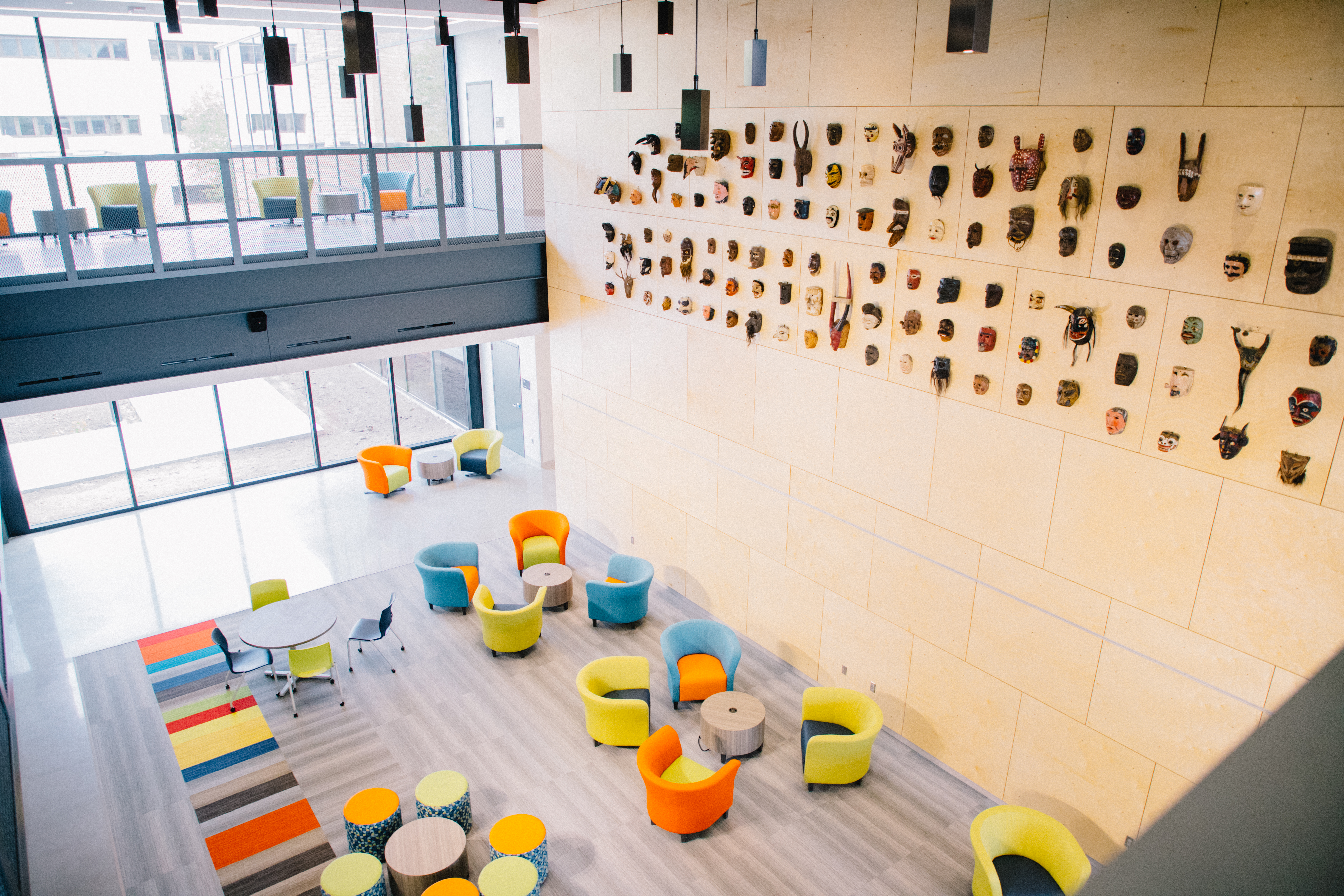
Now, they are able to enjoy the benefits of two large computer labs, along with the rest of the building. The second-floor atrium overlooks a large commons area below where multi-colored chairs invite students to sit and visit with others, rest, work on their laptops or merely take in their surroundings.
“I love the open floor plan,” said Giebler, a senior from Andover. “We will be able to bounce ideas off one another. I think collaboration is going to happen big time in this building.”
Giebler was giddy as he walked the halls, explaining the purpose of the different rooms, including faculty offices whose outside walls are full panes of glass overlooking the campus.
Glass walls inside the building allow passersby in the hallways to look into the classrooms.
“I love all the windows,” Giebler said. “You can see the creativity going on. It’s so encouraging.”
Fort Hays State University has long been known for its renowned art and design programs.
Now, it has another drawing card. The two-story, 43,000-square-foot facility is home to all Department of Art and Design programs, with the exception of sculpture. That program is housed in the adjacent Center for Applied Technology building.
The art building connects to the 5,000-square foot former power plant, which is being renovated for the Moss-Thorns Gallery in honor of former department chairs Joel Moss and John Thorns. A building for gallery storage was constructed west of the gallery.
The art building features two separate wings in an offset H, which are connected by a two-story commons area. The facility will provide numerous lab spaces for the various art and design programs as well as department office space, a multi-purpose lab, classrooms, woodshed, studios, commons area and a ceramics kiln yard.
Maddy Otter, a junior from Great Bend, helped move equipment and supplies from Rarick to the new building this summer but said it didn’t feel “real” yet.
It did this week.
“Being in the actual classroom setting was very, very cool for me,” she said. “It felt like almost a dream. The space is amazing. There is so much connectivity and light in the building.”
Besides knowing about the elite graphic design program, Giebler and Otter both cited affordability as a factor for choosing Fort Hays State.
Tuition costs are approved by the Kansas Board of Regents. FHSU prides itself on a quality education at an affordable cost, and it was the only school in the Regents system to seek no tuition increase for this school year.
Giebler said he also heard a lot about FHSU during high school.
“All my teachers in high school talked up Fort Hays State so much, how awesome the professors were and what a great program it is,” Giebler said.
Now that Giebler has witnessed that for himself, he plans to enroll in graduate school at FHSU after earning his bachelor’s degree next spring.
The thought of the opportunity to spend even more time in the new creative space has Giebler’s head spinning.
“When I first heard rumblings about a new art and design building, I thought it would happen after I am gone,” he said. “To get to spend my senior year in it, and probably two more years after that – it’s surreal.”
HAWVER: Failing KBI fingerprint system becomes funding priority

Just go ahead and put $8 million into next year’s budget for the Kansas Bureau of Investigation, and legislators will figure out Medicaid, taxes, schools, and everything else a little later.
You see, the KBI, the state’s top law enforcement agency, now has a fingerprint identification system that is a dozen years old. If it was a car, it would be out of warranty, and while parts are still available, the mechanics who will replace and upgrade them are quitting in about two years, the amount of time it takes to get a new fingerprint system up and running.
Now…anyone think that Kansas isn’t going to replace that computer system which keeps track of criminals?
That KBI computer system makes sure that criminals aren’t schoolteachers or day-care operators or workers, or maybe just applying for a job to be a law enforcement officer or a banker or your accountant.
The KBI isn’t saying whether freshman Gov. Laura Kelly’s initial one-fiscal year budget which broke the former Gov. Sam Brownback-era two-year budgets while she got her feet on the ground is the reason for the late notice of the computer system which is essentially in hospice care.
Instead, KBI folks say there was this problem getting the Office of Information Technology Services (OITS) to OK the reports that proposed updating the KBI system last year, in another administration…
No telling whether the KBI problem getting its new computer request in the short line for consideration was caused by OITS, but it probably means something that almost no legislators in a position to put that update plan in the budget this year had heard of the problem.
Now…depending on how many lawmakers demand to know who in state government knew what and when and why legislators never heard about it, the governor’s order last week to move OITS under the wing of Secretary of Administration DeAngela Burns-Wallace may find some support.
The governor can just with the stroke of a pen move the OITS management to Administration, but now it appears she has at least the KBI computers as a reason to make the move to make sure that the administration, and not a single agency silo, can delay an important-to-Kansans computer deal.
The computer geek community, of course, is split over moving a very technical piece of state government under the wing of a Democrat governor and her hand-picked secretary of administration. The governor can contend that the skill set at OITS is strong, but important information isn’t getting to the right people.
Kelly, when she announced the movement of OITS management to Administration, said that communication between the agency and its customers—the rest of state government—“has been difficult.”
“This was not the fault of the agency’s previous leadership. It is, however, a direct result of the fact that the previous administration split OITS from the Department of Administration and then failed to properly support the move, convey its mission and get buy-in from the rest of state government,” Kelly said.
So, the OITS move that Kelly ordered now has a new reason for that switch, and one that it is going to be tough for lawmakers to oppose with some line item in the budget bill that it will consider next session.
Not often that the governor gets a strong and vital law enforcement and public safety sales tool to use as she redesigns state government, as Brownback/Jeff Colyer left it, is it?
Nope, not often.
And…of course, we’ll see how it works out…
Syndicated by Hawver News Company LLC of Topeka; Martin Hawver is publisher of Hawver’s Capitol Report—to learn more about this nonpartisan statewide political news service, visit the website at www.hawvernews.com
Exploring Outdoors Kansas: Doves anyone?


When it gets much over 80 degrees outside, I become a vegetable. I absolutely have to force myself to do anything out in the woods or at the lake. So when September looms on the horizon I can feel my cocoon begin to crumble around me with the probability that cool weather is afoot. It won’t be long until the air conditioner can be turned off at night and windows can be opened to cool the house with wonderful fall breezes.
September brings with it a plethora of good things besides cool weather. The Kansas State Fair will be just days away. I love the fair, and I look forward to spending time in the Kansas Fur Harvesters booth at the fair talking to people about the advantages of fur trapping. Early duck seasons will be in the wings as avid water-fowlers prepare for teal season in early October. But first and foremost is the opening day of dove season September 1st.
I enjoy waterfowl hunting, but upland bird hunting is not my favorite experience, partially because I possess the wing shooting skills of a four year old, so I’m not a very good or avid dove hunter. Most dove hunting is done in early morning or late evening by waiting for doves to appear at water holes to drink or by ambushing them as they come to feed along patches of wild marijuana or sunflowers.
Just outside Inman are the McPherson Valley Wetlands owned and managed by the Kansas Dept of Wildlife, Parks and Tourism (KDWPT) where there is usually water and where there are always sunflowers, both wild and domestic, making the area a dove hunters paradise hunted by dozens and possibly hundreds of dove hunters each season. So even if my “old-timers” disease makes me forget the first day of dove season, I will be reminded at first light as that area just out of town will sound like military maneuvers are in progress. The little beggars zoom in-and-out like tiny missiles, and if you can hit them you can hit anything. Believe me there is no finer table fare than dove breast, but harvesting enough doves for a good meal can be a challenge.
This year, youth dove hunts will be sponsored on opening morning by Pheasants Forever, Westar’s Green Team and by the Quail and Upland Wildlife Federation. The Osborne County Pheasants Forever chapter in partnership with the KDWPT will sponsor a youth dove hunt for youth ages 10 – 16 on September 1st and 2nd. Kids must be pre registered by calling the Glen Elder Area Office at 785-545-3345, or Chris Lecuyer at 785-545-3345 or John Cockerham at 785-346-6527.
The Westar Green Team is again hosting its annual youth dove hunt on September 1st and 2nd for youths 16 and under at Jeffrey Energy Center near St. Marys. Hunters are accepted on a first-come first-serve basis, so call Shelly Gomez at 785-575-6355.
The Jayhawk Chapter of the Quail and Upland Wildlife federation will host a dove hunt for youth 15 and under September 1st at Clinton Wildlife Area. To register, contact Dr. John Hill at 785-550-5657.
Dove season is a great time to get yourself and your equipment ready for upland bird and waterfowl seasons while the air is still warm and you can still feel your fingers. Make sure your license and permits are all up-to-date and be sure to have a plentiful supply of shotgun shells, as you’ll most likely take lots of shots to harvest just a few birds.
But like I said, if you can hit a flying dove, you can hit anything! Continue to Explore Kansas Outdoors.
Steve Gilliland, Inman, can be contacted by email at [email protected].
Three-day weather outlook


Kansas teen hospitalized after crash with semi

SCOTT COUNTY— One person was injured in an accident just before 1p.m. Monday in Scott County.
The Kansas Highway Patrol reported a 2016 Peterbilt semi driven by David A. Luetters, 57, Garden. City, was southbound on U.S. 83 and struck a 2010 Chevy passenger vehicle driven by Hope Wiechman, 14, Scott City, who was turning left into a private drive.
Wiechman was transported to Scott County Hospital. Luetters was not injured. Both drivers were properly restrained at the time of the accident, according to the KHP.
Update: Students, driver hospitalized after NW Kansas school bus crash
CHEYENNE COUNTY — Fourteen people were treated for injuries from an accident just after 7:30a.m. Monday in Cheyenne County.
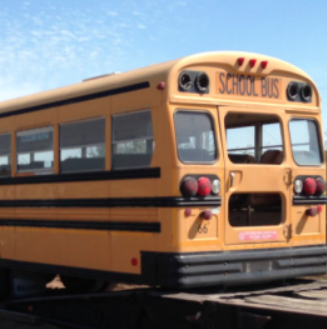
The Kansas Highway Patrol A USD 103 Cheylin School bus driven by Danielle Marie Bailey, 32, St. Francis was southbound on County Road 25 and County Road I five miles south of Bird City.
The driver failed to yield the right of way to an eastbound 2008 GMC Canyon driven by Adam Ray Magley, 20, Bird City.
The pickup collided with the passenger’s side of the bus and the bus overturned onto the driver’s side in the east ditch of County Road 25.
Bailey, Magley and students on the bus Danielle Grogan, 7; Kolbie Leach, 9; Melany Reyes, 12; Amy Diane Yanez, 10; Andres Reyes, 10; Zoe Yanez, 5; Andrew Beiley, 11; Paisley Sowers, 8; William P. Bailey, 9; Paris B. McFarland, 13; Paxton Sowers, 5 and Kaylee Sowers, 6, all of Bird City were transported to treatment.
Magley was wearing a seat belt, according to the KHP.
——————
CHEYENNE COUNTY — Law enforcement authorities are investigating a school bus crash with a pickup.
Just before 8 a.m. Monday, Cheyenne County Emergency Services was alerted to the multiple injury crash at the intersection of Cheyenne County Roads I and 25, according to a media release from Cheyenne County Hospital.
The USD 103 Cheylin school bus was struck on the side and laid over on its drivers side.
Twelve students were on the bus, six of whom were taken to the hospital in St. Francis. The school bus driver and pickup driver were also transported to the hospital for treatment, according to the media release.
Tigers open 2019 season ranked No. 11 in AFCA Top 25 Poll



FHSU Athletics
WACO, Texas – Coming off a second-consecutive MIAA Championship in 2018, Fort Hays State Football enters the 2019 season ranked No. 11 in the AFCA Division II Top 25 Poll, released by the organization on Monday. Fort Hays State finished 9-3 overall in 2018 and seeks a third-straight conference title, as well as a berth in the NCAA Division II Playoffs for a third-straight year.
The Tigers produced their two-highest win totals in program history each of the last two years. The 2017 team won a school record 11 games, finishing at 11-1 overall, while the 2018 team’s nine wins is second most. Over the two-year span, FHSU is 20-4 overall, including a 20-2 mark in MIAA play. Fort Hays State finished at No. 22 in the AFCA Poll last year.
Defending national champion Valdosta State (Ga.) starts the year at No. 1 in the nation. The Blazers went undefeated last year to win the national title, knocking off Ferris State (Mich.) in the national title game. Ferris State starts the year at No. 2.
Fort Hays State is one of two MIAA programs in the Top 25 of the poll, joining Northwest Missouri State. The Bearcats are No. 6 in the nation to start the year. The Tigers are the highest ranked team of any in the poll that finished with less than 10 wins overall last year. FHSU claimed the last two meetings with Northwest Missouri over the past two years, both wins occurring in Maryville. FHSU and NWMSU will meet in Week 10 for the fourth straight year, but this time in Hays on November 9. The perennially strong MIAA looks to end a two-year drought of having a member reach the national championship game after Northwest Missouri won national titles in both 2015 and 2016.
The MIAA looks to be tough once again this year with six teams referenced in the AFCA Poll. FHSU and NWMSU are inside the Top 25, while four other teams are in the receiving votes section. That group includes Pittsburg State (65 pts), Central Missouri (15 pts), Emporia State (11 pts), and Central Oklahoma (9 pts). Five of the six finished with at least eight wins last year.
Fort Hays State will open the season with one of the six referenced in the poll, heading to Central Missouri in Week 1 on Thursday, September 5. The Mules were very close to upsetting the Tigers in the season opener last year in Hays. Down by 10 with five minutes to go in the game, the Tigers rallied for a pair of touchdowns and won 20-16. The Tigers’ home opener is set for September 12 against Missouri Western.
See the AFCA Division II Preseason Top 25 Poll below.
| Rank | School (1st votes) | Record | Pts. | Rank* | Season Opener | Head Coach |
| 1. | Valdosta St. (Ga.) (29) | 14-0 | 792 | 1 | Sept. 7 at Albany St. (Ga.) | Gary Goff |
| 2. | Ferris St. (Mich.) (3) | 15-1 | 768 | 2 | Sept. 5 vs. Findlay (Ohio) | Tony Annese |
| 3. | Minnesota St. | 13-1 | 686 | 3 | Sept. 7 at Southwest Minnesota St. | Todd Hoffner |
| 4. | Notre Dame (Ohio) | 13-1 | 623 | 4 | Sept. 7 vs. Concord (W.Va.) | Mike Jacobs |
| 5. | Ouachita Baptist (Ark.) | 12-1 | 585 | 6 | Sept. 5 vs. No. 18 Harding (Ark.) | Todd Knight |
| 6. | Northwest Missouri St. | 10-3 | 580 | 10 | Sept. 5 at Missouri Western St. | Rich Wright |
| 7. | Tarleton St. (Texas) | 12-1 | 549 | 5 | Sept. 7 at Stephen F. Austin (Texas) | Todd Whitten |
| 8. | Lenoir-Rhyne (N.C.) | 12-2 | 524 | 8 | Sept. 7 vs. St. Augustine’s (N.C.) | Drew Cronic |
| 9. | Colorado St.-Pueblo | 11-2 | 463 | 7 | Sept. 7 at Dixie St. (Utah) | John Wristen |
| 10. | Slippery Rock (Pa.) | 11-3 | 446 | 12 | Sept. 5 at Wayne St. (Mich.) | Shawn Lutz |
| 11. | Fort Hays St. (Kan.) | 9-3 | 419 | 22 | Sept. 5 at Central Missouri | Chris Brown |
| 12. | Grand Valley St. (Mich.) | 10-2 | 418 | 14 | Sept. 7 vs. Edinboro (Pa.) | Matt Mitchell |
| 13. | Texas A&M-Commerce | 10-3 | 385 | 9 | Sept. 7 vs. Seleccion Nuevo Leon (Mexico) | David Bailiff |
| 14. | Minnesota-Duluth | 11-1 | 342 | 13 | Sept. 5 vs. Minot St. (N.D.) | Curt Wiese |
| 15. | West Georgia | 10-2 | 330 | 16 | Sept. 7 at Catawba (N.C.) | David Dean |
| 16. | Indianapolis (Ind.) | 10-2 | 319 | 11 | Sept. 5 at No. 23 Ashland (Ohio) | Chris Keevers |
| 17. | Colorado School of Mines | 10-2 | 288 | 18 | Sept. 7 at Adams St. (Colo.) | Gregg Brandon |
| 18. | Harding (Ark.) | 9-3 | 223 | 20 | Sept. 5 at No. 5 Ouachita Baptist (Ark.) | Paul Simmons |
| 19. | Hillsdale (Mich.) | 10-3 | 220 | 15 | Sept. 7 vs. Michigan Tech | Keith Otterbein |
| 20. | Midwestern St. (Texas) | 8-2 | 214 | 25 | Sept. 7 at Northwestern St. (La.) | Bill Maskill |
| 21. | Wingate (N.C.) | 9-4 | 175 | 24 | Sept. 5 at Johnson C. Smith (N.C.) | Joe Reich |
| 22. | West Chester (Pa.) | 10-1 | 134 | 17 | Sept. 7 vs. Bentley (Mass.) | Bill Zwaan |
| 23. | Ashland (Ohio) | 6-4 | 129 | NR | Sept. 5 vs. No. 16 Indianapolis (Ind.) | Lee Owens |
| 24. | West Alabama | 8-4 | 116 | NR | Sept. 7 vs. Limestone (S.C.) | Brett Gilliland |
| 25. | Fairmont St. (W.Va.) | 9-2 | 78 | NR | Sept. 5 at Charleston (W.Va.) | Jason Woodman |
*Indicates Ranking in 2018 Final AFCA Division II Poll.