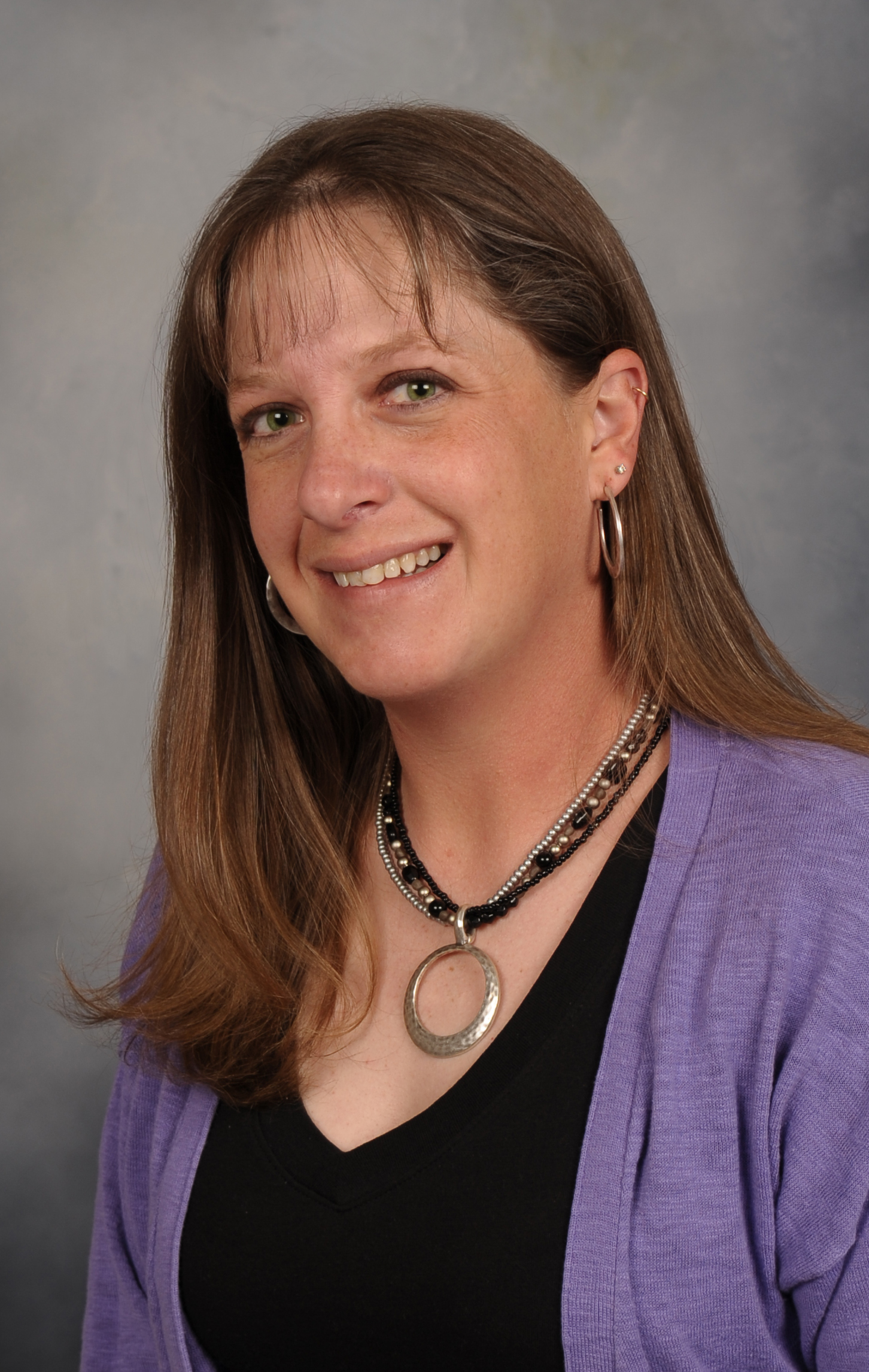
Courtesy photoMcCaffrey will travel the state starting in January to represent the sport of rodeo. Courtesy photo
By CRISTINA JANNEY Hays Post
Your son has a better chance of being an NFL player than your daughter being Miss Rodeo America.
Hays resident and recent FHSU graduate Tiffany McCaffrey, 23, will be one of 30 young women to vie for that title next year, after being elected Miss Rodeo Kansas 2020 on Aug. 3.
The Miss Rodeo Kansas is held in conjunction with the Dodge City Roundup Days. McCaffrey will be a lady in waiting until Jan. 1 when she will assume her full duties as rodeo queen. She will serve a year and will compete for Miss Rodeo America in December 2020.
“I am so excited,” she said. “I have spent so many years watching rodeo queens and following their journeys on Facebook, and now that I get to go do that, I am so awestruck. I have spent so many years imagining, but now I get to go live it.”
McCaffrey grew up on a small farm near Burlington, Colo., participating in 4-H and FFA.
McCaffrey said she looks forward to keeping her Western heritage alive during her reign as Miss Rodeo Kansas. Cristina Janney/Hays Post
She fell in love with rodeo while attending the local county fair, which hosted an annual PRCA rodeo. However, she didn’t learn to ride until she was a senior in high school.
“I always loved horses. From the time I can remember, my favorite animal was a horse,” she said. “Learning how to ride when I was a senior in high school, I was coming late to the game, but one thing I like to say is no matter how old you are or what you want to do, if you have a dream, if you have a passion, you should go ahead and do it no matter how old you are.
“It started at a really young age that I loved horses, so I knew someday my life was going to be involved in rodeo. The fact that I am here now is kind of God’s plan.”
On her road to her current title, she won a local rodeo title and then was named Miss Rodeo Fort Hays State for 2018.
McCaffrey’s degree is in tourism and hospitality management. She just finished an internship with the Hays Convention and Visitor’s Bureau. She said her studies at FHSU and internship were good foundations for the role as Miss Rodeo Kansas.
“My job is to spread awareness of rodeo and teach people what it’s about and keep our Western heritage alive,” she said.
“One great thing I like about rodeo is its rich history. Rodeo is based on agriculture, farming and our ranching background. I grew up on a ranch raising cows and bucket calves, so that really resonated with me. As cowboys, that is where it all really started was with ranching and the competitive side to see who could tie the calf the fastest and stuff like that.”
As Miss Rodeo Kansas, McCaffrey also will fundraise for the Justin Cowboy Crisis Fund, which helps injured professional cowboys financially when they are unable to perform.
McCaffrey said she hopes her year as Miss Rodeo Kansas will help jump-start her career. Her dream job is to be a hospitality director for the PRCA.
She said she thinks the rodeo queen system is a good place for girls and young women to develop leadership skills.
“Having a passion for leadership and helping others is right along with what I believe as a rodeo queen,” she said. “Rodeo queens are servant leaders. You are there to serve your purpose of helping the rodeo committee and teaching others. With that leadership comes responsibility. It teaches you to be the best leader possible.”
Patrick R. Miller is an Associate Professor of Political Science at the University of Kansas.
As policymakers manage the daily reality of Kansas’s prison crisis, let’s understand the core issue and its implications. Kansas has a growing prison population, but lags other states on criminal justice reforms that could curb that growth, ease managing prisons, and reduce budget strain from prisons.
Kansas state prisons have about 10,000 inmates. Per Kansas Sentencing Commission numbers, that population grew 16 percent in the last decade. However, per Census estimates, the Kansas population only grew 2 percent in that time, so we are growing our prison population much faster than our state is growing.
As the Prison Policy Initiative reports, Kansas is at about the national average for prisoners per 100,000 people. Like the nation, Kansas imprisons more people per 100,000 than any Western country. Kansas also has higher imprisonment rates than authoritarian regimes like Iran, Cuba, Russia and China.
The Kansas Sentencing Commission estimates our prison population will grow to over 12,000 by 2028, growing faster than the state’s population and possibly even any growth in crime rates, if recent numbers hold. Plainly, if nothing changes, the prison crisis will worsen.
Kansas is one of just 20 states where prison populations grew in the last decade. Nationally, Bureau of Justice statistics show that violent crime and property crime decreased in that time, though in surveys most Americans incorrectly perceive an increase. Of course, how those rates changed varies by location.
Let’s dissect Kansas statistics from the Kansas Bureau of Investigation. From 2009 to 2014, the number of violent and property crimes committed in Kansas was generally decreasing, including murder, rape, robbery, assault, arson and theft. However, during that five year period of decreasing crime, Kansas’s prison population grew by about 12 percent.
In 2014, the number of violent and property crimes started to increase in Kansas, which overlapped with ongoing growth in our prison population. So, regardless of whether crime increased or decreased in Kansas, prisoner numbers grew. That suggests crime rates and prisoner numbers may not be as cause and effect as many think.
The logic of the incarceration trap is temptingly simple: “tough on crime” means harsh punishments. That same mentality boomed Kansas’s prison population in the 1990s when national trends were building more prisons, enacting new felonies, and increasing sentences.
But, reality is often more complex. Absolutely, many criminals should be in prison. They are not the issue here. The issue is whether our policies grow our prison population no matter what happens with real world crime, and whether the cost benefits public safety.
One advantage to Kansas lagging other states on criminal justice reform is that we can learn from them. Conservative and liberal states alike have adopted numerous reform measures, some even while experiencing increasing crime rates. As policymakers examine this issue, they should study what other states have done on things like alternative sentencing, incentive plans, equitable policing and sentencing, re-entry, parole, and juvenile justice.
If Kansas is not smart about prisons, then we are doubling down on crisis. We are also choosing either more money to build prisons, or continued expensive relationships with sketchy private prison contractors like CoreCivic. Setting Kansas prisons on a different course will take study, experimentation, and political spine, both from policymakers and the public that shoulders the future cost of doing nothing differently.
Patrick R. Miller is an Associate Professor of Political Science at the University of Kansas.
Each semester NCK TECH awards an employee who has gone beyond expectations in their job responsibilities. The premise of the 212 Award is that water is hot at 211 degrees, but that one degree more causes water to boil. Thus, the 212 Award recognizes those who go that extra degree to make a difference in their job with students and co-workers.
Employees are nominated by their peers and chosen by a panel of past 212 Award winners. Mike Cheney, carpentry/cabinetmaking instructor for the Beloit Campus, received the award from President Eric Burks at the recent college in-service.
“Mike is a talented and creative craftsmen dedicated to seeing students succeed. He is always willing to lend a helping hand and respected for the time and effort he invests into the house project each year. I am happy to see Mike’s positive approach to his job recognized through this award, “ Burks said.
Cheney has been with the college since fall 1998 and is only the second carpentry instructor of the program since its start in 1964. Cheney replaced instructor (John Lackey) who taught Mike when he was a student at then NCKAVTS. Cheney holds a BS in Technology Education from FHSU and has experience as a self-employed contractor and other construction projects.
“I encourage my students to work hard to achieve their goals,” Cheney said. “It won’t be handed to you, so you have to go after it. Similar to building a house, the more effort you put into it, the better the house will be.”
For information and to learn more about NCK TECH, visitwww.ncktc.edu.
Alicia BoorStress is cumulative. In other words, trees and shrubs can be affected by stresses that happened up to several years in the past.
Recent stresses in Kansas include winter damage as well as the extremely dry winter of 2017-2018 which often resulted in damaged root systems. This damaged root system may have been further weakened due to too much rain this spring. The excess water harmed root systems due to saturated soils driving out oxygen. Roots need oxygen as much as they need water.
Though the roots were able to keep up with moisture demands during the cooler spring weather, they may not have been able to keep up when the weather turned hot and dry. Such trees and shrubs may suddenly collapse and die or slough off branches they can no longer support. I have never seen lilacs collapse due to stress like they have this year.
This does not mean that all of our plants are doomed. As a matter of fact, plants that have survived thus far into the growing season will likely make it. Also, some plants are just better adapted to our tough Kansas conditions and have suffered little to no harm.
However, it is a good idea to check the overall health of your trees. So how do you tell? One of the most important clues in determining the health of your trees is the amount of new growth that tree has produced. A healthy tree should have a minimum of 4 to 6 inches of new growth each year and usually much more. Check branches with the tips in the open and not shaded by the tree itself. Anything less than 4 inches on the majority of branches suggests the tree is under a great deal of stress.
So, how do you tell where the new growth stops? Look for a color change in the stem. New growth is often greener than that from the previous year. There is also often an area of what looks like compressed growth where growth transitions from one year to the next.
Lastly, look at leaf attachment. Leaves are only produced on current seasons’ growth. Therefore, new growth stops where leaves are no longer attached directly to the twig but to side branches. However, pay attention as leaves may be appear to be attached directly to last year’s growth but are actually borne on short spurs. If you look closely, you can tell the difference.
All this clue tells you is whether a tree is under stress or not. It does not tell you what is causing or has caused poor growth. This year, the most common cause by far is environmental stress caused by the excess rain this spring.
So, what do we do for trees under stress? The most important practice is to water as needed.
Alicia Boor is an Agriculture and Natural Resources agent in the Cottonwood District (which includes Barton and Ellis counties) for K-State Research and Extension. You can contact her by e-mail at [email protected] or calling 620-793-1910
Scroll to the bottom for a map of garage sale locations. Hays Post offers FREE garage sale listings weekly. Having a garage sale next weekend? Click HERE to submit your information.
203 N. Topeka, Ness City
Saturday 8/24 – 8 a.m.-3 p.m.
Multi family garage sale—bedroom furniture, baby crib, bumbo, mattresses, play mat, nursing pillows, strollers, high chair, pack-‘n’-play, toys, women’s clothing and shoes, maternity clothing, scrubs, boy clothes NB-3T, shop equipment, and lots more!
TOPEKA – The Kansas Department of Health and Environment (KDHE), in conjunction with the Kansas Department of Wildlife, Parks and Tourism (KDWPT), has issued public health advisories for Kansas lakes.
Warnings:
Big Eleven Lake, Wyandotte County (unchanged)
Camp Hawk Lake, Harvey County (unchanged)
Gathering Pond near Milford (Hatchery Supply Pond), Geary County (unchanged)
Hiawatha City Lake, Brown County (upgraded from watch 8/22)
Hodgeman County State Fishing Lake, Hodgeman County (upgraded from watch 8/22)
Jerry Ivey Pond, Saline County (unchanged)
Lake Afton, Sedgwick County (unchanged)
Lakewood Park Lake, Saline County (unchanged)
Lebo Kids’ Pond, Coffey County (unchanged))
Marais des Cygnes Wildlife Area (unchanged)
Marion County Lake, Marion County (unchanged)
Melvern Outlet Pond, Osage County (unchanged))
Melvern Swim Pond, Osage County (unchanged))
Neosho State Fishing Lake, Neosho (unchanged)
South Lake, Johnson County (unchanged)
Westlake in Gage Park, Shawnee County (unchanged)
When a warning is issued, KDHE recommends the following precautions be taken:
Lake water is not safe to drink for pets or livestock.
Lake water, regardless of blue-green algae status, should never be consumed by humans.
Water contact should be avoided.
Fish may be eaten if they are rinsed with clean water and only the fillet portion is consumed, while all other parts are discarded.
Do not allow pets to eat dried algae.
If lake water contacts skin, wash with clean water as soon as possible.
Avoid areas of visible algae accumulation.
Watches:
Carousel Lake (Gage Park), Shawnee County (unchanged)
Lake Shawnee, Shawnee County (unchanged)
Lovewell Reservoir, Jewell County (unchanged)
Meadowbrook Park Lake, Johnson County (unchanged)
Mission Lake, Brown County (new 8/22)
Riggs Park Lake, Sedgwick County (new 8/22)
Rock Garden Pond (Gage Park), Shawnee County (unchanged)
A watch means that blue-green algae have been detected and a harmful algal bloom is present or likely to develop. People are encouraged to avoid areas of algae accumulation and keep pets and livestock away from the water.
During the watch status, KDHE recommends the following precautions be taken:
Signage will be posted at all public access locations
Water may be unsafe for humans/animals
Avoid areas of algae accumulation and do not let people/pets eat dried algae or drink contaminated water.
Swimming, wading, skiing, and jet skiing are discouraged near visible blooms
Boating and fishing are safe. However, inhalation of the spray may affect some individuals. Avoid direct contact with water, and wash with clean water after any contact.
Clean fish well with potable water and eat fillet portion only.
KDHE samples publicly-accessible bodies of water for blue-green algae when the agency receives reports of potential algae blooms in Kansas lakes. Based on sampling results, KDHE reports on potentially harmful conditions.
Kansans should be aware that blooms are unpredictable. They can develop rapidly and may float around the lake, requiring visitors to exercise their best judgment. If there is scum, a paint-like surface or the water is bright green, avoid contact and keep pets away. These are indications that a harmful bloom may be present. Pet owners should be aware that animals that swim in or drink water affected by a harmful algal bloom or eat dried algae along the shore may become seriously ill or die.
Last Friday the Hays Police Department arrested three brothers in connection with burglaries in Hays.
The burglaries occurred through August and involved vehicles and an apartment in which a couch, loveseat, entertainment center, television and other miscellaneous items were taken, according to Hays Chief of Police Donald Scheibler.
Jordyn, 22, Jonathan, 23, and Uriah, 20, Steinike were arrested on suspicion of burglary, possession of marijuana and possession of drug paraphernalia, Scheibler said.
“After several reports of vehicle burglaries and an apartment burglary, probable cause was developed and a search warrant was obtained,” he said.
Two apartments in which the brothers lived were searched, leading to the arrest of Jordyn and Uriah.
Jonathan was later arrested at his place of employment.
All three brothers have been convicted of similar crimes in the past. Uriah and Jordyn were sentenced on Sept. 10, 2018 to 24 months probation for charges of criminal threat and burglary of a motor vehicle. Jonathan was sentenced on Oct. 16, 2017 for forgery and criminal use of a financial card. On May 11, 2018, he was also sentenced for theft.
All three are being held in the Ellis County Jail.
“All three are considered innocent until proven guilty in a court of law,” Scheibler said.
He also said this should serve as a reminder to secure valuables in vehicles and homes.
“I will take this opportunity to remind the public we are seeing an increase in vehicle burglaries,” Scheibler said. “It’s important people lock their doors on their vehicles especially…and anything valuable. If they have to leave it in the car, keep it out of plain sight, but if at all possible, take valuables inside.”
The Hays Police Department will participate in the “You Drink. You Drive. You lose.” campaign that began last week until Sept. 2.
The campaign is an effort to identify drivers under the influence of drugs and alcohol and is in conjunction with almost 190 other local and state agencies that are also participating and is underwritten by the Kansas Department of Transportation.
“Hays Police Department will have extra officers out, along with the officers on duty extra officers will be assigned for DUI enforcement,” said Don Scheibler, Hays chief of police. “Our goal is to identify drivers under the influence and get them off of the street.”
“According to KDOT, alcohol and other drugs are implicated in 40 percent of the crash deaths on Kansas roads,” according to a press release from the department. “Every two days someone suffers death followed by a death notification visit to loved ones, all because a decision was made to drive while impaired.”
KDOT attributes 23 percent of fatal car accidents to chemical impairment and accidents involving an impaired driver are ofter more severe.
“The risk of serious injury in an impairment crash is almost five times that of the crash where such impairment is determined to have not been a factor,” the release said. “More striking is the fact that the risk of death is over fifteen times higher in the case of an impairment crash.”
The Hays USD 489 school district received a $41,975 grant from the Kansas Department of Education to hire a mental health liaison for Hays Middle School.
The school district is in the hiring process for that position now.
The liaison will be employed by the school district and refer students who need services to High Plains Mental Health.
Through the Mental Health Intervention Team Program grant the school district will pay for 25 percent of the cost for the liaison’s salary and benefits and the grant pays the rest.
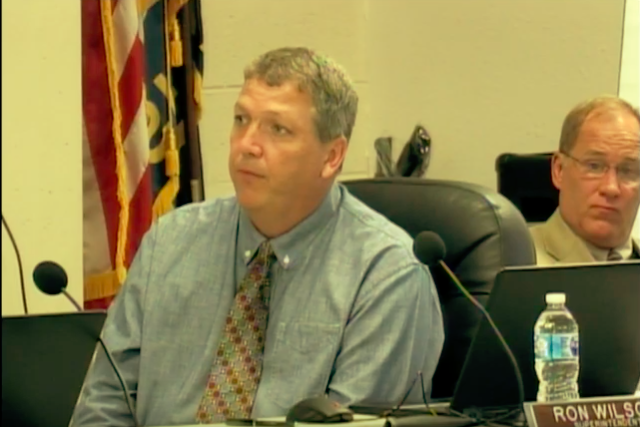
“Sometimes as a staff member, you see a kid a kid is hurting, but you are still trying to teach. This will give another avenue to refer [a student] to services,” Superintendent Ron Wilson said. “It is absolutely awesome.”
Assistant Superintendent Shanna Dinkel helped write the grant application.
“We decided to focus on middle school because we know the transition from elementary to middle school, when we look at the sixth grade and look at our data, we see a little bit of a dip there. That’s tough,” she said.
She said student also tend to struggle as they make the transition from middle school to high school.
The grant will primarily focus on foster children. However, the liaison will also be able to work with other families.
Only 31 districts in the state received this grant.
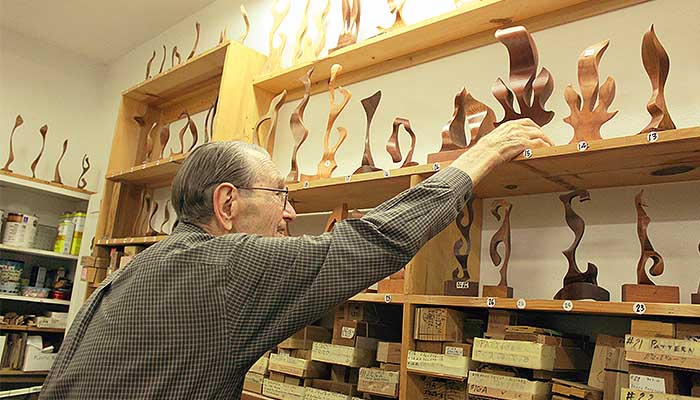
Hays artist Willie Pfeifer reaches for a sculpture in his shop. Pfeifer said that sculpture was inspired by the “March of the Penguins.”
By CRISTINA JANNEY
Hays Post
The walls of Willie Pfeifer’s workshop are covered with squiggles of wood contorted into all sorts of freeform shapes.
Willie says he gets inspiration from all kinds of places — a leaf, a penguin, a strange knot in the wood. He said he has no style.
“Whatever you see, whatever you imagine,” he said of his inspiration.
He says the sculptures are not based on people, but he often refers to them as “he” or “she” as he rotates them in the light and describes how the curves and bends emerged from rectangular blocks of walnut, pine or mahogany.
“Remember the walk of the penguins to the ocean …” he said holding up a sculpture. “This particular penguin here. They usually just lay one egg, but this one has two. You add an egg and then some ice to support the thing. You don’t even see the penguin, but the ‘March of the Penguins’ is what brought this on. Just the way they walk. Dalk, dalk, dalk.”
Pfeifer, 91, will have an exhibit, “Fascinating Forms: Six Decades of Sculpture in Wood & Metal,” from 6 to 9:30 p.m. Friday at the C.A.T.S. Gallery at Fort Hays State University as part of Hays Arts Council Fall Art Walk. The main art walk will be from 6:30 to 9:30 p.m. Friday (See full schedule below), but the C.A.T.S. gallery is opening early for Pfeifer’s show.
Artist Willie Pfeifer holds up a quick sketch of a potential sculpture in his shop in west Hays.
Some of Pfeifer’s pieces just start as doodles. As we were talking, he sat down with a piece of paper and drew an infinity symbol. From there he started subtly changing the curves with a few scratches here and a rub of the eraser there. He talked as he molded the form into shape. Within a few minutes, something akin to one of his sculptures emerged from the page.
“You just run with it,” he said.
His has a file containing several hundred drawing, He has some labeled “pursue when in a good mood” or “pursue when in a bad mood.”
Everyone sees something different in his art. Pfeifer’s wife told him once one of his sculptures was immoral.
“I said, ‘What? It is a duck that fell over.’ She said, ‘What I see is my dad bending over the tub without any shorts on,” he said chuckling as he tuned the sculpture in his work-worn hands.
Pfeifer attributes his longevity to woodworking, which he considers a hobby.
He began working with wood when he was only 4. He picked up the trade from his grandpa Dreiling, who was a carpenter and lived across the street. He said he hated memorizing when he was in school, preferring to work with his hands. He got kicked out of Latin at St. Joseph Military Academy and banished to the industrial arts department. He loved it.
The country was embroiled in World War II and all the abled-bodied young men where off fighting. This left Ed Davis, the head of the Fort Hays Industrial Arts Department with no students, so he started teaching the students at St. Joe. Pfeifer spent his high school years learning from Davis at St. Joe and then another three and half years studying with him at FHSU. However, he never earned his degree.
At that time, Fort Hays was a teacher’s college, and the industrial arts degree required a semester of student teaching. Pfeifer had a good job offer and he wanted to get married, so opted not to complete the program.
“I tell people I am working on a doctorate,” he said. “They say, ‘Oh you are? What kind of doctorate is it?’ Well it’s getting time on a doctorate of hard knocks.”
Pfeifer went to work as a woodworker and eventually bought the Hays Planing Mill in 1957. The mill specialized in handcrafted furniture for churches — pews, pulpits, etc. Pfeifer expanded the mill’s work into architectural mill work, and he often worked as a general contractor. This required Pfeifer to spend hours reviewing architectural plans.
“I would sit so long. I would get up and walk around the shop, grab a piece of would and go cut something,” he said.
The diversion slowly grew into a hobby of making sculptures and 3-D puzzles using a band saw. He sold the pieces on the side. He thought at one point he might make a living out of his hobby. He could make about $500 on a large batch of puzzles, but he needed to earn about 10 times that to pay the bills. His accountant urged him to keep his day job.
“I’ve know too many starving artists,” Pfeifer said.
In 1970 he was asked to do a show along side another artist, but he hasn’t done a major art show since.
Willie Pfeifer displays a sculpture in his shop in Hays. Pfeifer, 91, has been woodworking since he was 4.
Pfeifer sold the Planing Mill in 1993. Although Pfeifer stayed active in his retirement, he said he got bored easily.
He didn’t really like to watch TV. He taught himself to speed read to digest all the architectural specs when he was working, so he reads two newspapers daily plus downs the eight magazines he subscribes to. He is a self-described golf nut, but age ultimately ended that as a regular pastime. He volunteers, managing maintenance at Castillian Gardens where he lives and served as the president of the Ellis County Historical Society multiple times.
He also used to play poker with some buddies, but at 91, he has outlived several of those friends.
“Sitting around the house was driving me and my wife crazy,” he said.
He kept woodworking through everything, about four hours a day, seven days a week. He cleaned out a garage at Castillian Gardens, which he transformed into a small shop.
Pfeifer had never spent any time in the hospital and never taken any regular prescription medication until several years ago when he was diagnosed with cancer. He underwent major surgery. His doctor sent him to Ascension Via Christi in Hays for rehab after the surgery. He had done volunteer work at the nursing center and knew how to get in and out of all the doors, so he wandered the halls at night when he couldn’t sleep.
He was told on a Friday he would be starting physical therapy on the following Monday. Over the weekend, he read up on PT and then practiced going up and down stairs. By Monday, he could go up and down the stairs backward. He was supposed to be in rehab for a month, but they sent him him home after 17 days. He said it was because he was such a trouble maker.
After the surgery, Pfeifer said he threw himself even more into his woodworking. He has also organized and cataloged all his work and patterns. None of his children are woodworkers, so he plans to donate the bulk of his pieces to the Industrial Arts Department at FHSU.
Even at 91, every day is a new day for Pfeifer, a new opportunity to create, to conjure something beautiful from wood that most people see as formless. He said he is inspired by all of his senses — sight, sound, touch, smell and taste.
“A lot of people go through life not stimulated by anything,” he said. “Other people are very aware of their surroundings and they feed on them.”
Pfeifer told the story of a nun he had as a teacher when he was in Catholic school. When she would walk the students to St. Joseph’s church from the school, she would often stop to point out things she saw along the way.
“She would say, ‘Look at that tree. See how it is leafing out. This is what it does in the summer …’ or ‘Stop look at the such and such bird.’ … She would just open up a whole new world for me. … She made me aware of the surroundings.”
Below is a complete schedule for the Fall Art Walk.









 Hays-area garage sales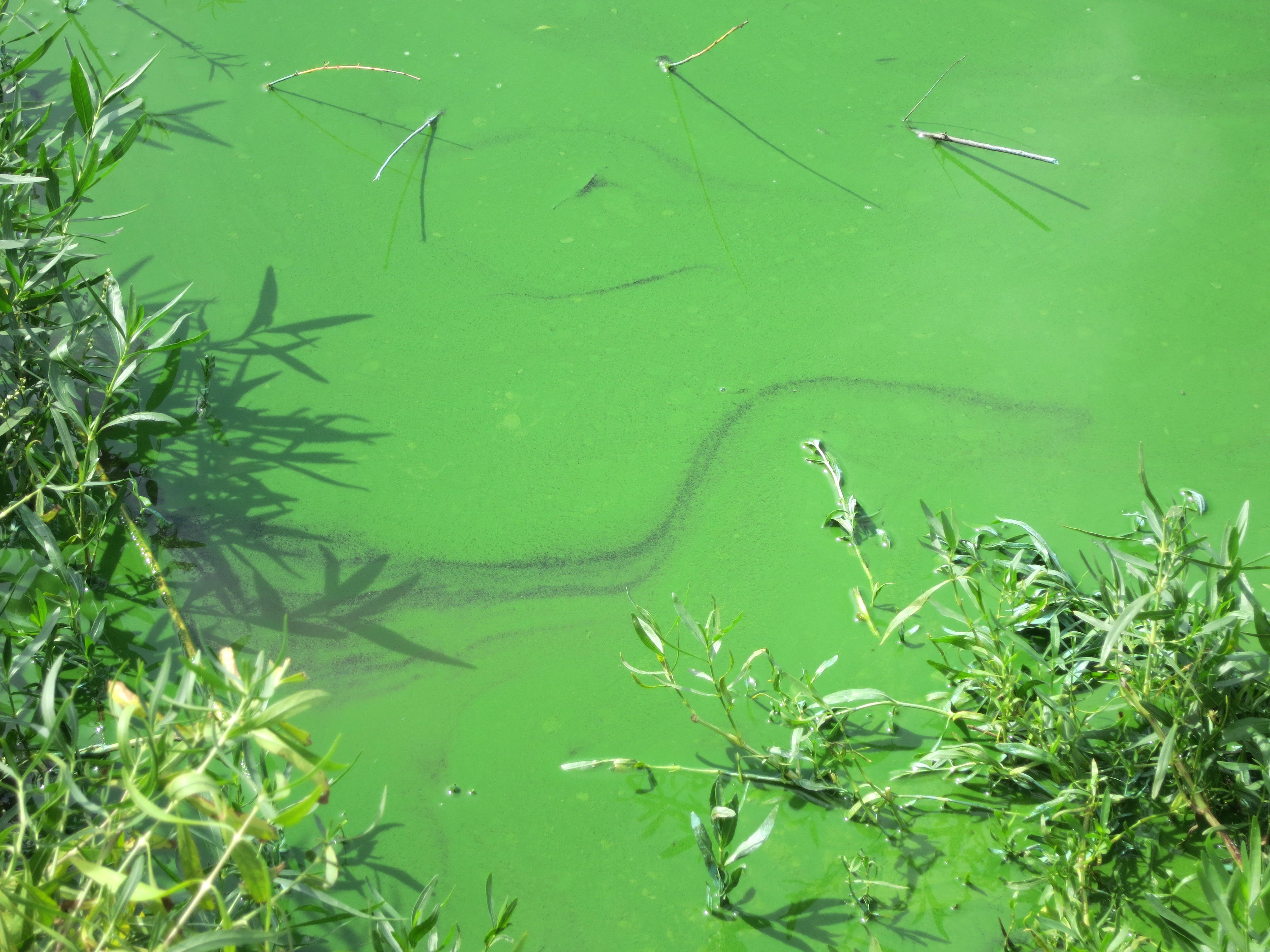



 The Hays Police Department will participate in the “You Drink. You Drive. You lose.” campaign that began last week until Sept. 2.