TOPEKA, Kan. (AP) — Donors have given thousands of dollars this holiday season to pay off school lunch debts for Topeka-area families.
The donors’ combined gifts total more than $6,300 and benefit children at Topeka Unified School District 501, Seaman USD 345, Auburn-Washburn USD 437 and Shawnee Heights USD 450.
The Topeka Capital-Journal reports that one contribution, which was directed at helping children at Randolph Elementary School, totaled more than $3,000.
The generosity may have been inspired by a man who paid off balances at Tecumseh North Elementary last week and then left extra money for children whose families are struggling financially.
BILLINGS, Mont. (AP) — The Latest on an agreement with federal regulators that calls for Union Pacific Railroad to conduct more thorough inspections following hundreds of safety violations and a fiery Oregon derailment. (all times local):
The Transportation Department says it assessed more than $15 million in civil penalties against the U.S. railroad industry this year for safety violations and other infractions, a slight increase over 2015.
Friday’s announcement came as Union Pacific, the nation’s largest freight railroad, agreed to improve safety on lines used to haul crude oil following a fiery June derailment in Oregon.
There have been at least 27 oil train accidents across North America over the past decade. A 2013 wreck and explosion killed 47 people in Quebec.
Of the major railroads, BNSF Railway racked up the most penalties in 2016, totaling $3.4 million. Union Pacific had $3 million in penalties from more than 1,000 violations.
Transportation Secretary Anthony Foxx said in a statement that the Federal Railroad Administration’s enforcement program helps prevent needless accidents and deaths.
___
8:30 a.m.
A spokeswoman says the nation’s largest railroad has addressed more than 800 potential safety violations found by federal railroad inspectors on lines used to haul crude oil and other hazardous materials.
Union Pacific Railroad and the Federal Railroad Administration confirmed Friday that they’d reached an agreement intended to improve track safety by requiring more thorough inspections.
Details were obtained by The Associated Press.
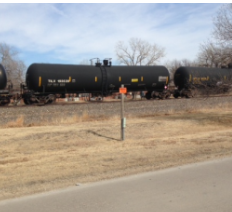
The agreement comes after a Union Pacific train hauling tankers filled with North Dakota crude oil derailed in Oregon’s Columbia River Gorge, sparking a massive fire.
Investigators say the June 3 accident was preventable with better inspections.
Railroad spokeswoman Calli Hite says Union Pacific is committed to making its lines safer. She says it has fixed problems that were identified by the government as potential violations.
___
7:00 a.m.
The nation’s largest railroad has agreed to more thorough inspections and maintenance improvements after a fiery derailment and the discovery of more than 800 potential safety violations across its sprawling network.
Details on the agreement between the Federal Railroad Administration and Union Pacific Railroad were obtained by The Associated Press.
A Union Pacific train hauling crude oil through the Columbia River Gorge derailed in June near Mosier, Oregon, sparking a massive fire that burned for 14 hours.
Investigators concluded routine inspections should have caught a series of broken bolts that allowed the rails near Mosier to widen.
It was one of more than two dozen oil train accidents over the past decade across North America. The worst killed 47 people in Lac-Megantic, Quebec, in 2013.
Representatives of Union Pacific Railroad did not have an immediate comment on the agreement.
WASHINGTON, D.C.–The U.S. Environmental Protection Agency (EPA) finalized a rule Dec. 21 amending its Risk Management Program (RMP) regulations to reduce the likelihood of accidental releases at chemical facilities and improve emergency response activities when those releases occur. This rule is the latest in a series of actions the federal government has taken in consultation with industry, local and state governments, and other stakeholders to improve chemical process safety, assist local emergency authorities in planning for, and responding to, accidents, and improve public awareness of chemical hazards at regulated sources.
“This rule is based on extensive engagement with nearly 1,800 people over the last two and a half years,” said Mathy Stanislaus, EPA’s Assistant Administrator for the Office of Land and Emergency Management. “These changes are intended to protect the lives of emergency responders and the public, while preserving information security.”
This rule will help prevent chemical accidents, such as the explosion in West Texas in 2013, and their devastating effects. While numerous chemical plans are operated safely, in the last 10 years more than 1,500 accidents were reported by RMP facilities. These accidents are responsible for causing nearly 60 deaths; some 17,000 people being injured or seeking medical treatment; almost 500,000 people being evacuated or sheltered-in-place; and more than $2 billion in property damages.
The Accidental Release Prevention regulations under Section 112(r) of the Clean Air Act (CAA) – also known as the EPA RMP regulations – require covered facilities to develop and implement a risk management program. EPA shares RMP information with state and local officials to help them plan for and prevent chemical accidents and releases.
The amendments to EPA’s RMP regulations are a key action item under President Obama’s Executive Order (EO) 13650, Improving Chemical Facility Safety and Security. While developing and finalizing the rule, EPA met with stakeholder groups, solicited public comments, held listening sessions and webinars, and considered extensive comments on the proposed rule.
The amendments are intended to:
Prevent catastrophic accidents by improving accident prevention program requirements
Enhance emergency preparedness to ensure coordination between facilities and local communities
Improve information access to help the public understand the risks at RMP facilities
Kansas and Missouri were among 40 states with rates of vaccination against seasonal influenza beneath 50 percent. CREDIT NIAID
A new report from the nonprofit Trust For America’s Health says Kansas meets six of 10 measures related to public health threats while Missouri meets five.
The “Ready or Not” report says Kansas and Nebraska are among 17 states, along with the District of Columbia, that meet six indicators. Missouri was among four states that meet only five.
Download the Trust for America’s Health Report: Ready or Not
One of the indicators checks whether states have increased — or at least maintained — their spending on public health. Twenty-six states met that standard from fiscal year 2014–2015 to fiscal year 2015–2016. Kansas and North Carolina were the only two states that cut their public health budgets three consecutive years.
Nationally, median public health spending in fiscal year 2016 was $37.20 per person. Kansas spent $12.13 per person for public health. Missouri’s public health budget was only $5.88 per person.
Another measure tracks whether at least half of state residents 6 months and older are vaccinated against seasonal influenza. Kansas fell short, with a 44.4 percent immunization rate, while Missouri fared a little better at 47.4 percent. Only 10 states were at 50 percent or above.
Kansas and Missouri both earned low grades for their preparedness for health and safety threats associated with climate change. Kansas received a grade of D+ and Missouri’s report card was marked F.
Both states also lack formalized plans to get health care workers and supplies into restricted areas during a disaster. The report says many states have disjointed policies for permitting private sector personnel and supplies into disaster sites. This can create delays in health care operations, which can cost lives. Only 10 states met the criteria for this measure.
Kansas met but Missouri failed one other indicator: activities to prevent health care-associated infections. According to the report, about one out of every 25 hospitalized patients will contract an infection at a health care facility. This measure examines whether state health departments have implemented four key activities to prevent these infections.
In all, 26 states and Washington, D.C., scored a six or lower on the 10 indicators. Alaska and Idaho scored lowest at three out of 10, and Massachusetts scored the highest at 10 out of 10, with North Carolina and Washington State scoring nine.
Michelle Ponce, executive director of the Kansas Association of Local Health Departments, said she shares concerns in the report about the loss of funding, workforce reductions and restrictions that get in the way of public health response in Kansas. Still, she sees a bright side in the state’s public health efforts.
“Despite these challenges, it is important to point out that in the report, Kansas received points for exceeding the national average score on the national health security preparedness index and for having at least one accredited local health department,” she said.
Ponce added that efforts are underway to establish a baseline set of skills, programs and activities at public health programs throughout the state.
“We think it is vital that we evolve our public health system, including the legal and funding frameworks, to strengthen the system in order to respond to emerging public health threats to ensure the health and safety of all Kansans,” she said.
Bryan Thompson is a reporter for KHI News Service in Topeka, a partner in the Heartland Health Monitor team.
TOPEKA, Kan. (AP) — The Kansas Supreme Court says a man serving about 54 years in prison after being convicted in a 1999 rape and robbery case in Lawrence may be entitled to a few more days in court.
The high court Friday ordered the Kansas Court of Appeals to reconsider if a case can be made that Terry D. McIntyre had ineffective counsel in an appeal.
The Lawrence Journal reports that he was tried and convicted in Douglas County District Court on multiple charges of robbery, rape, criminal sodomy, aggravated battery and kidnapping and sentenced to 53 years and nine months.
But the Supreme Court said the Court of Appeals must decide if a late appeal claiming ineffective counsel in his previous appeals could be justified.
TOPEKA, Kan. (AP) — Jeff Colyer says his job description as Kansas lieutenant governor requires him to be ready to take over as governor at any time.
Legislative leaders in both parties said they’ve had more contact with Colyer recently than in the past.
Senate President and Wichita Republican Susan Wagle told reporters earlier this month that fellow legislators believe GOP Gov. Sam Brownback is “looking for a ticket to D.C.” and a job with President-elect Donald Trump’s administration.
Brownback isn’t commenting, and there’s no indication he’s talked to Trump or the businessman’s top aides about a job.
Incoming House Majority Leader Don Hineman said legislators see Colyer’s visibility as a sign that Colyer could become governor.
The 56-year-old is a plastic surgeon who still makes time for international medical relief missions.
SALINA, Kan. (AP) — The Kansas Supreme Court has sent back to a district court the case of a Salina man convicted in the 2013 death of his infant son.
Nicholas Corbin and his girlfriend Desirah N. Overturf were convicted of murdering their son by failing to feed him and adequately care for him. Nicholas Corbin was sentenced to life without parole for 25 years.
His lawyer argued that Corbin has an intellectual disability and should not have been subject to mandated sentencing.
In a ruling Friday, the high court sent the case back to the Saline County District Court for further consideration, based on an amended state statute about how a court determines if a defendant has an intellectual disability.
KANSAS CITY, Kan. (AP) — Police are investigating after two people were found shot to death in an SUV on Interstate 70 in Kansas City, Kansas.
The Kansas City Star reports that Kansas City, Kansas, police responded to a car wreck along the highway early Saturday and found a man and a woman dead in the SUV from apparent gunshot wounds.
Police say their SUV struck a bridge before stopping in the middle of the highway and that the driver of a passenger car traveling behind the SUV struck the SUV. That driver was taken to a hospital with injuries that weren’t life threatening.
Police say they believe the victims in the SUV were shot by occupants of a third vehicle that left the scene.
SHAWNEE COUNTY – Law enforcement authorities in Shawnee County are investigating an armed robbery and have made an arrest.
On Friday morning officers responded to a gas station at 2045 North Kansas Avenue, according to a media release.
Two white, male suspects in a brown, single cab pickup with an orange tarp had escaped after one suspect in a camouflage hoodie entered the business with a black handgun.
They suspects were last seen traveling southbound with an undisclosed amount of cash.
Just after 9 a.m., officers located a stolen vehicle in the 600 Block SE Gilmore. Topeka Police and the Kansas Highway Patrol chased the vehicle. The pursuit ended along railroad tracks near NE Grantville Road.
With the help of the KHP helicopter, the driver, identified as Troy M Baker, 24, was located after fleeing the vehicle.
He is was transported to the Department of Corrections for charges related to the pursuit, possession of a stolen vehicle and the Armed Robbery to the gas station.
A federal agency has instructed Kansas to halt a change in how the state reimburses providers of home and community-based support services, or HCBS, for people with disabilities.
But state officials say concerns expressed by the Centers for Medicare and Medicaid Services are based on false information.
“KDHE (the Kansas Department of Health and Environment) and KDADS (the Kansas Department for Aging and Disability Services) have asked CMS to reconsider the letter they sent because the letter is factually inaccurate,” Brandt Haehn, the commissioner of HCBS, said in a phone interview this week.
At stake are Medicaid payments to hundreds of providers across the state who bill under the residential pay policy for services to Kansans with disabilities.
Until this year, they had been averaging payments based on their clients’ assessed needs on a 30-day-per-month schedule, regardless of whether they served the clients each day.
Service providers said the change, which took effect Oct. 1, would cause an unsustainable hit to revenue.
Derek Laney, the CEO of a Johnson County provider called Kansas Focus, said this week in a phone interview that’s still the case.
“It’s a roughly 35 to 40 percent cut in reimbursement,” Laney said.
The policy change was one of two KDADS made to HCBS during the budget-balancing.
James Scott, an associate regional administrator in the Kansas City CMS office, sent a letter to state officials in October, saying they should halt implementation of the other change — known as the “capable person” policy — until CMS has reviewed it.
Megan Buck, another administrator in the Kansas City CMS office, sent a similar letter Nov. 8 to state officials about the residential pay policy change.
Buck wrote that the state must halt the residential pay change until it provides CMS more information about how it will affect “efficiency, economy and quality of care and sufficiency.”
Mike Randol, KDHE’s Medicaid director, responded with a Dec. 12 letter asking Buck to reconsider.
When the HCBS program began in 1991, the payments for residential care were never intended to be averaged over 30 days, Randol wrote.
Therefore, Randol wrote, the state is operating under Medicaid policies already approved by CMS.
Laney disputed that, saying the state had been processing payments on the 30-day average basis for years. He likened it to schools spreading teacher salaries over a calendar year, without regard to breaks.
Laney said CMS officials contacted him last week to ask if he could produce any evidence that the state had used that policy for residential pay.
“I was able to do that with two provider manuals,” Laney said.
Haehn said the state has been in contact with CMS since Randol’s letter went out but has not received an official answer on whether the federal agency will reconsider its order.
Any action by CMS to halt the policy change would be too late for one Johnson County provider. Vickie Vermillion operated Cornerstone Supports in Olathe until last month, providing supports for 19 adults with developmental disabilities.
She decided to close the company rather than try to adjust to the new residential pay policy, because reimbursement rates were already low.
Vermillion said via email this week that even if the state heeds the CMS request, she would not be able to reopen after helping her clients find other providers and her staff find other work.
Chad VonAhnen, executive director of Johnson County Developmental Supports, said his public agency had to request money from county commissioners to hire more staff to absorb some of Vermillion’s clients.
VonAhnen said the state had not told his agency about the Nov. 8 letter from CMS or the back-and-forth state officials are having with federal officials about the residential pay policy change.
He said he received a copy of the Nov. 8 letter last week from the Disability Rights Center, which obtained it through a federal Freedom of Information Act request.
“We haven’t seen any changes either from the state or from the (KanCare) managed care organizations on halting the implementation,” VonAhnen said. “We have a lot of questions.”
DOUGLAS COUNTY – Two people were injured in an accident just after 11:30 p.m. on Friday in Douglas County.
The Kansas Highway Patrol reported a 1998 Mercedes-Benz driven by Trey A. Patterson, 24, Topeka, was westbound on North 175th Road ten miles east of Overbrook during a pursuit by law enforcement for speeding.
The driver lost control of the vehicle. It left the roadway to the south and struck a tree.
Patterson and a passenger Amber J. Heidinger, 24, Scranton, were transported to the hospital in Lawrence.
Both were properly restrained at the time of the accident.
Details on possible charges were not available early Saturday.
WASHINGTON, D.C. – The U.S. Environmental Protection Agency (EPA) is proposing to ban certain uses of the toxic chemical trichloroethylene (TCE) due to health risks when used as a degreaser and a spot removal agent in dry cleaning.
“For the first time in a generation, we are able to restrict chemicals already in commerce that pose risks to public health and the environment,” said Jim Jones, assistant administrator for the Office of Chemical Safety and Pollution Prevention. “Once finalized, today’s action will help protect consumers and workers from cancer and other serious health risks when they are exposed to aerosol degreasing, and when dry cleaners use spotting agents. I am confident that the new authority Congress has given us is exactly what we need to finally address these important issues.”
EPA identified serious risks to workers and consumers associated with TCE uses in a 2014 assessment that concluded that the chemical can cause a range of adverse health effects, including cancer, development and neurotoxicological effects, and toxicity to the liver.
Specifically, EPA is proposing to prohibit manufacture (including import), processing, and distribution in commerce of TCE for use in aerosol degreasing and for use in spot cleaning in dry cleaning facilities. EPA is also proposing to require manufacturers, processors, and distributors to notify retailers and others in their supply chains of the prohibitions
EPA’s assessment also found risks associated with TCE use in vapor degreasing, and the agency is developing a separate proposed regulatory action to address those risks. Last week, EPA announced the inclusion of TCE on the list of the first ten chemicals to be evaluated for risk under TSCA. That action will allow EPA to evaluate the other remaining uses of the chemical. Today’s action only proposes to ban certain uses of the chemical.
Comments on the proposed rule must be received 60 days after date of publication in the Federal Register.
Once published, the proposed rule and supporting documents will be available Federal Register docket at: https://www.regulations.gov/ by searching for HQ-OPPT-2016-0163.



 EPA
EPA