We have a brand new updated website! Click here to check it out!

Record rain in Kan. leads to state working with KU prof to predict flood levels

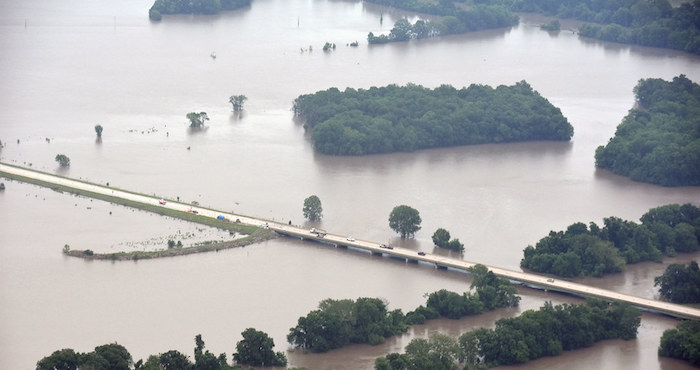
Flooding around the U.S. Highway 169 Neosho River bridge north of Chanute on May 28, 2019. (Photo by Civil Air Patrol – Kansas Wing)

KU NEWS SERVICE

Estimated flood depth grid near the city of Burlington, corresponding to the planned release of 28,600 cubic feet per second from John Redmond Reservoir on May 22, 2019. (Credit: Jude Kastens)

LAWRENCE — When Jude Kastens was developing a new floodplain mapping model more than a decade ago as part of his doctoral dissertation at the University of Kansas, he aimed to address a critical information gap that often hindered officials during major flooding events: the lack of real-time, wide-area predictions for floodwater extent and depth.​

Dependable, detailed inundation estimates are vital for emergency managers to have enough situational awareness to quickly get the right resources and information to flood-impacted communities. In 2007, severe flooding in southeastern Kansas put a spotlight on the lack of timely, reliable projections for floodwater spread.

With heavy rains this spring (May 2019 was the wettest month ever recorded in Kansas), officials at the Kansas Water Office and Kansas Division of Emergency Management worked with Kastens, now a KU associate research professor with the Kansas Applied Remote Sensing Program at the Kansas Biological Survey, to get a more precise read on where floodwaters could rise to, based on his approach to integrating data from elevation maps, stream gauges and National Weather Service river stage forecasts.

“I worked with the Kansas Water Office in May,” Kastens said. “The ground was saturated, and the reservoirs were getting full, and with a lot more rain in the forecast, major flooding across central and eastern Kansas was looking imminent. Some years ago we’d developed this inundation library largely in collaboration with the Water Office and the Kansas GIS Policy Board but had never had the chance to put it through its paces in real time. It was based on the approach that I developed for my dissertation, and we had flood libraries for the greater eastern half of Kansas, based on the gauged stream network. For instance, if you drive south of Lawrence on Highway 59, you’ll see a USGS stream gauge box by the bridge over the Wakarusa River.

There are about 200 gauges in Kansas that collect real-time stream stage information, and in times of flood, the National Weather Service provides stage forecasts several days out for a lot of these. We can take these data and map estimated current or future flooding, between gauges or around one.”

Kastens’ model (called FLDPLN, or “Floodplain”) maps potential inundation as a function of stage height using basic hydrologic principles and gridded elevation data. Because the approach requires so few inputs and little supervision, it has significant advantages for real-time mapping over existing methods such as the more precise but more complicated hydrodynamic models that FEMA uses to map 100-year floodplains.

Working with Kansas officials as historic rainfalls of 2019 threatened several areas of Kansas with flooding, mapping efforts were focused on three critical locations.

“We modeled the Neosho River south of John Redmond Reservoir in Coffey County down to Oklahoma, which is about a 100-mile stretch,” Kastens said. “We also modeled the Neosho and the Cottonwood rivers above John Redmond, centered around Emporia close to where those two rivers come together in Lyon County. The third area was around Salina, where flooding along the Saline River and Mulberry Creek was approaching historic levels.”

When John Redmond Reservoir just above Burlington on the Neosho River was nearly at capacity and the Army Corps of Engineers was planning the release of large volumes of water, Kastens’ efforts helped inform local leaders of the potential flooding extent — and they shared his flood maps with the public.

“Using projected discharge and stage information from the Corps, we modeled Neosho River flooding at Burlington and down through the rest of Coffey County,” Kastens said. “John Redmond was built by the Corps in the early 1960s to provide flood control along the Neosho, but the reservoir flood pool had reached capacity and needed to have some pressure released to avoid compromising the dam. With the Neosho already running high, city managers and commissioners had a lot of concern with how bad it was going to get because the Army Corps was going to have start releasing a very large quantity of water out of the reservoir. I made some maps using Corps projections supplied by the Kansas Water Office and also by the Coffey County GIS coordinator, Cara Mays. It helped greatly that Cara recently completed her master’s thesis at KU using the FLDPLN model to simulate the historic 1951 flood in Burlington, so she was well aware of its capabilities.”

Going forward, Kastens — who did a lot of this work during his free time in the evenings and weekends as a public service — hopes to automate the task of generating flood maps to lessen the workload when streams and rivers threaten to overspill their banks.

“With my other obligations at KBS, a lot of off-the-clock effort was needed to see this through,” he said. “Time is of the essence during major flood events. We need to develop software tools to help automate the mapping process and hand it off to these other agencies so they have the freedom to map whichever scenarios they want. I think our work in May demonstrated the value of our mapping approach, and hopefully we can pull together a project to help us move forward with the automation. So, when that next flood hits, emergency response personnel can just run the models as they see fit. That’s how we always envisioned this thing — we construct the inundation libraries for others to use during flood emergencies or simulations.”

Kastens’ novel approach to flood mapping has proven to be such an improvement, recently he’s worked with a private firm to commercialize the technology and provide services outside of Kansas to emergency management officials and entities with property in flood-prone areas.

“In 2015, we entered an agreement with Riverside Technology Inc. based in Fort Collins, Colorado, working through KU Center for Technology Commercialization to try to commercialize this stuff,” Kastens said. “They did their homework and market research and saw a real opportunity to develop inundation mapping solutions built around our flood libraries. Our contract with Riverside expires next year, so we will just have to see what happens after that. We made sure we carved out Kansas from the agreement, which allows us the freedom to provide direct assistance during flood events like we did in May.”

Kastens likens the projected inundation maps to predicted storm tracks or tornado watch or warning maps.

“They are never perfectly accurate, but then again neither are more sophisticated models. No two floods are the same, and a lot of resources are being expended in the public and private sectors to do what we are already capable of doing cheaply and efficiently right now here in Kansas.”

The Kansas Biological Survey, a KU Designated Research Center, was established at KU in 1911. It houses a diverse group of environmental research and remote sensing/GIS programs. The survey also manages the 3,700-acre KU Field Station, established in 1947; it offers sites for faculty and student study in the sciences, arts, humanities and professional schools.
 

Officials find more dangerous weapons during search of Kan. jail

SEDGWICK COUNTY — Law enforcement authorities are working to prevent inmates from making and hiding dangerous weapons at the Sedgwick County jail.

On Thursday, the Sedgwick County Sheriff’s office conducted a search of all 22 pods in the detention facility, according to Lt. Tim Myers.  One hundred employees of the Sedgwick County Sheriff’s Office searched the entire Detention Facility, which included 1,158 jail beds, and 1,164 jail inmates.  The search was conducted for the safety and security of the employees working in the detention facility and for the inmates housed in the facility. 

During the past 4 months, Sedgwick County Sheriff personnel in the detention facility have seen an increase in the number of dangerous weapons found during routine cell searches.  The safety and security of our employees and the inmates housed in our facility is paramount. 

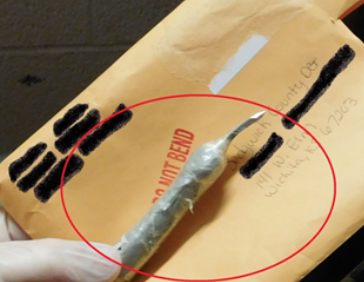
During Thursday’s search, authorities found 3 dangerous weapons in the facility, according to Myers. They also located one metal outlet cover that is commonly fashioned into a weapon. 


Photos courtesy Sedgwick Co. Sheriff

These dangerous weapons are commonly referred to as “shanks.”  The weapons are typically fashioned by inmates out of common materials, such as a door strike plate or an outlet cover. 

Myers said, “We apologize to the citizens of Sedgwick County for the interruption of any of their scheduled visitation time, but the safety and security of our employees and the inmates is our top priority. We are also reviewing preventative ways to combat dangerous weapons being made in the facility.”

For kids affected by domestic violence, Kansas program hopes fun can heal trauma

Through outings and conversation, mentors for the Empower Families Kansas Project teach children ages 8 to 18 how to trust adults again. (Walter/Creative Commons 2.0)


Kansas News Service

TOPEKA — Courtney Train spends her days going to nail salons, the pool and the dog park.

As a paid mentor and advocate for children ages 8 to 18 who’ve seen domestic violence at home or experienced it while dating, Train knows quality time — and fun — with a trusted adult can be in short supply for her clients.

So, she talks to them about safer sex. She analyzes media portrayals of relationships. She’s also taken them to the zoo, on college visits and to a county fair art competition.

“The idea of childhood is stolen from them,” Train said. “For them to just play, not have to think about adult issues, it’s really powerful.”

Domestic violence centers across Kansas are often ill-equipped to serve the needs of older children and teens, instead focusing on shelter for adult survivors and the young children they bring with them.

“It’s easy for us to think, ‘Oh, teens aren’t an issue,’” Train said. “It does not seem like there’s a lot of information and support out there.”

But thanks to a pilot project, Train, based in Salina, is one of six mentors at five domestic violence organizations across Kansas who have worked with older children and teenagers over the past two years.

Funded by a federal grant and coordinated by the Kansas Coalition Against Sexual and Domestic Violence, the Empowered Families Kansas Project is trying to fill that gap in Salina, NewtonIolaPittsburg and Garden City.

The coalition said results from the first two years are hard to quantify, but look to be promising. It plans to expand the pilot to cover more of the state over the next year.

The mentors, like Train, help connect children with therapists. Older children receive guidance on career paths. That kind of long-term, individual attention is rare.

“Our services are crisis-oriented,” said Kathy Ray, director of advocacy education and rural projects at the Kansas Coalition Against Sexual and Domestic Violence. “But it’s often short term.”

In surveys, kids involved in the program and their parents say they’ve seen an improvement in grades, emotional control and communication between family members.

Rebuilding trust in adults is crucial, Ray said, because it helps children trust their parents again.

“Those relationships have often been undermined by the batterer, by the abuser,” she said. “So it’s helping to rebuild that communication and relationship with the non-abusive parent.”

Train has mentored about 15 children since she started her role in December 2017. She said she’s taught them to give compliments, play games and trust family again.

“Usually at first, when I start working with the kids, they do not like their sibling. They’re screaming at each other,” she said. “It’s been over a year, and the mom will tell me, ‘Oh my gosh, they’re getting along and it’s a completely different household.’”

It’s common for domestic violence programs across the country to lack services specifically for older children and teenagers, said Baonam Giang of Break the Cycle, a national organization that specializes in combating teen dating violence. Parents often don’t want to admit their children are dating, so they don’t know if they need to seek help.

“We know that young people are dating whether you choose to believe it or not,” he said. “They’re having relationships in school.”

Abuse among teens often manifests in digital form, through cyberbullying or sharing explicit photos without consent. Violence in relationships is especially common for teens whose own parents have been abusive.

That makes relationships with other adults especially important, Giang said.

“It’s really modeling to them what a healthy relationship is that they can see,” he added.

If those lessons are never taught, it can become a cycle, where a child witness to domestic violence can later become a perpetrator. Or the child can suffer from the effects of trauma well into adulthood.

“It’s such a pivotal time in a person’s life,” Train said. “That’s where they decide the types of behaviors that they’ll have, the types of relationships that they’ll get into.”

Nomin Ujiyediin reports on criminal justice and social welfare for the Kansas News Service. Follow her on Twitter @NominUJ or email [email protected].

The Kansas News Service is a collaboration of KCUR, Kansas Public Radio, KMUW and High Plains Public Radio focused on the health and well-being of Kansans, their communities and civic life. 

Kansas Farmers Pray First Modern Harvest Yields Tame Hemp, Not THC-Heavy Marijuana

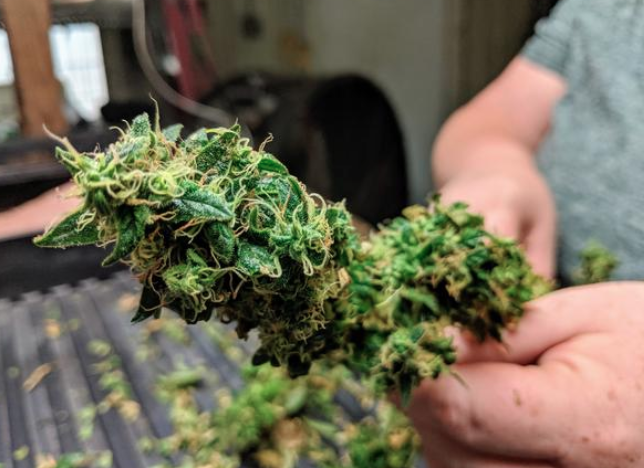
WICHITA Sarah Stephens stands over a brightly lit table in a detached garage-turned-grow shed as she trims away unnecessary leaves from a recently harvested hemp plant.

A harvested industrial hemp plant.
BRIAN GRIMMETT / KANSAS NEWS SERVICE

When she’s finished, only the floral material of the plant will be left. The flowers will eventually be processed into CBD oil.

Their outfit is one of the first growers in Kansas’ fledgling industrial hemp industry to begin harvesting.

While the harvest is a major milestone for the state’s hemp pilot program, the industry still faces many challenges before it’s deemed a profitable alternative to corn, wheat, soybeans and the other crops that dominate Kansas farming.

Most hemp growers who planted outside in fields won’t begin harvesting until early September. Sarah Stephens is harvesting so early because she grew a relatively small number of plants indoors.

Before she could begin her harvest, she had to contact the Kansas Department of Agriculture to schedule a pre-harvest inspection. It’s part of a mountain of red tape required to participate in the program including filing planting and harvest reports.

Industrial hemp plants growing inside of a converted garage.
CREDIT BRIAN GRIMMETT / KANSAS NEWS SERVICE


At the pre-harvest inspection, KDA officials take samples of the hemp plants to send to a state laboratory in Topeka. The lab tests the hemp for its THC levels. THC is a psychoactive chemical that gets you high. If a hemp plant has more than 0.3% THC it is by definition no longer hemp — instead it would be considered marijuana and would have to be destroyed.

Stephens had to wait a week for her results. It was the most nervous she’d been since she’d started growing hemp.

She ultimately got the news she was hoping for. Her sample came back with 0.19% THC.

As part of the industrial hemp research program, each licensee had to come up with some kind of research proposal. Stephens experimented with growing hemp hydroponically — or suspended in water — versus growing it in dirt.

“I did screw them up a little bit,” she said. “I had a whole ’nother container of the hydroponics and I killed them.”

It’s a relatively small operation. She’ll only end up harvesting around 50 plants. But she’s already got plans for growth next year.

Besides growing floral material, she’s also begun “cloning” her plants. That means trimming off stems to create new, genetically identical sprouts for other people interested in growing hemp.

But that kind of growth will cost more money. Stephens said she’ll need to invest in more lights, make changes to the growing space, and set aside money for increased electric bills.

Another challenge, and one that’s more immediate, will be finding a processor willing to purchase the hemp. She said she’d like to sell her hemp to a Kansas processor.

“We’re all kind of a part of this new little group of people trying to make it,” she said.

There are only 34 licensed processors in the program, many of which have never done it before and are learning as they go.

“It’s not a small undertaking at all,” KDA Industrial Hemp Specialist Braden Hoch said. “It takes quite a bit of planning to actually get one of these facilities up and running.”

Stephens said she thinks she’s got a processor lined up, but that it wasn’t quite ready to purchase her hemp just yet.

Another option would be to sell their hemp to processors in states such as Colorado and Kentucky, which have more mature programs.

Brian Grimmett reports on the environment, energy and natural resources for the Kansas News Service. You can follow him on Twitter @briangrimmett or email him at grimmett (at) kmuw (dot) org. 

KDWPT Commission to meet Aug. 15 in Overland Park

KDWPT

PRATT – The Kansas Wildlife, Parks and Tourism (KWPT) Commission will conduct its next public meeting on August 15, 2019 at the University of Kansas Edwards Campus, Best Conference Center, 12600 Quivira Rd. in Overland Park. All are welcome to attend the meeting, which begins at 1:30 p.m., followed by a public hearing at 6:30 p.m. Time will be set aside for public comment on non-agenda items at the beginning of both the afternoon and evening sessions.

During the afternoon session, attendees will hear a report on agency and state fiscal status, and a 2019 legislative session update. Staff will then present information for a general discussion on big game regulations and deer research, outdoor mentors, and microchemistry in fisheries. Then, a series of workshop topics – items that may be voted on at a future commission meeting – will be discussed. Workshop items include electronic licensing, threatened and endangered species regulations, fishing regulations, state park regulations, turkey regulations, and electric bicycles.

Commissioners will recess by 5 p.m. and reconvene at 6:30 p.m. to vote on the following items:

  • Reduction of disabled veteran’s license fees
  • Backcountry access pass
  • Furbearer and coyote management units
  • Otter management units
  • Furbearer season dates and bag limits

If necessary, the Commission will reconvene at 9 a.m. at the same location, August 16, 2019, to complete any unfinished business. Should this occur, time will again be set aside for public comment on non-agenda items.

Information about the Commission, including the August 15, 2019 meeting agenda and briefing book, can be downloaded at ksoutdoors.com/KDWPT-Info/Commission.

If notified in advance, the Commission will have an interpreter available for the hearing impaired. To request an interpreter, call the Kansas Commission for the Deaf and Hard of Hearing at 1-800-432-0698. Any individual with a disability may request other accommodations by contacting the Commission secretary at (620) 672-5911.

The next KWPT Commission meeting is scheduled for Thursday, September 19, 2019 at the Kansas Wetlands Education Center in Great Bend.

Police: 4 Kansas teens jailed for armed robbery

SEDGWICK COUNTY— Law enforcement authorities are investigating an armed robbery and have three suspects in custody.

Bayleigh McMahon photo Sedgwick Co.
Kaedon Greenin photo Sedgwick Co.

Just after 10:30 p.m. on Wednesday, police responded to an armed robbery call at P&S Liquor, 2010 E. Pawnee in Wichita, according to officer Charley Davidson.

Upon arrival, officers contacted three employees who stated three unknown suspects entered the business, and one was armed with a handgun. The suspects demanded money. The employees refused to give them money, and the suspects grabbed several bottles of liquor and fled on foot.

Through the investigation, investigators determined 18-year-old Bayleigh McMahon, 18-year-old Kaedon Greenin and two  17-year-old boys all of Wichita were involved.

Police located and arrested them.

Bayleigh McMahon and Kaedon Greening are being held on requested charges of aggravated robbery. The two 17-year-old were also sent to juvenile detention on requested charges of aggravated robbery.

The Latest: Fire damage will keep SW Kansas Tyson plant closed indefinitely

FINNEY COUNTY — Tyson Foods spokesman Worth Sparkman said in a written statement Saturday that due to Friday evening’s fire,  the plant west of Garden City will be down indefinitely.

Just after 8:30p.m. Friday, Garden City Communications Center received a 911 call from the operations manager at the Tyson Fresh Meats, Inc. 3105 I B P Road west of Garden City, according to police.

He reported there was a fire in the west side of the building where the process begins.

Fire crews, law enforcement and Finney County Emergency Management were also on scene until most of Saturday.

The approximately 1200 employees on scene at the time the fire started were evacuated. Authorities have reported no injuries.

Garden City Police department  worked with USD 457 to send buses out to transport employees from Tyson Fresh Meats to Wiley Elementary in Holcomb.

Red Cross has been working with Wiley to assist those who have been displaced by the fire.

Cause of the fire and additional details have not been released.


——-

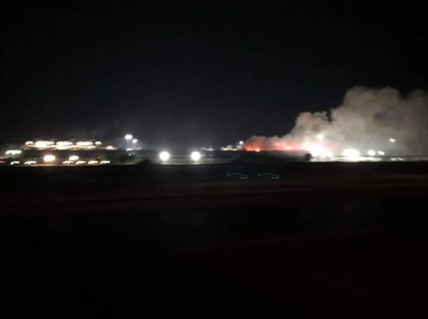
FINNEY COUNTY —As 6:00 a.m. Saturday firefighters were still fighting the fire inside the Tyson plant west of Garden City, according to the Holcomb Fire Department.

Fire at the Tyson plant west of Garden City -photo courtesy Holcomb Community Fire Department

The fire was not under control. Firefighters were being hampered by a collapsed portion of the roof and near zero visibility.

Tyson has their Haz-Mat team deployed on site assisting firefighters.

All available firefighters from Garden City and Holcomb  were on scene and most have been since the first alarm just after 8:00 pm Friday.

There are no injuries reported.

———–

FINNEY COUNTY —Just after 8:30p.m. Friday, Garden City Communications Center received a 911 call from the operations manager at the Tyson Fresh Meats, Inc. 3105 I B P Road west of Garden City, according to police.

He reported there was a fire in the west side of the building where the process begins.

Fire crews, law enforcement and Finney County Emergency Management is also on scene until early Saturday morning.

The approximately 1200 employees on scene at the time the fire started were evacuated. Authorities have reported no injuries.

Garden City Police department  worked with USD 457 to send buses out to transport employees from Tyson Fresh Meats to Wiley Elementary in Holcomb.

Red Cross has been working with Wiley to assist those who have been displaced by the fire.

 Tyson said there would be no “A” shift production for process and harvest on Saturday

Cause of the fire and additional details have not been released.

————

FINNEY COUNTY — Authorities are working a fire on the slaughter side of the Tyson plant, 3105 I B P Road west of Garden City, according to Finney County Sheriff Kevin Bascue.

Officials evacuated the area where the fire is located and everyone is accounted for, according to Bascue. No injuries are being reported.

Check the post for additional details as they become available.

Link between women’s gun ownership and increased political participation shown in KU study

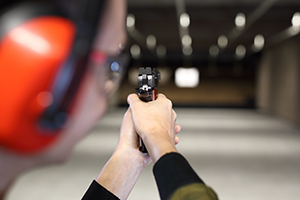
Measuring to a paper target on the shooting range. (Photo credit iStock)

KU NEWS SERVICE

LAWRENCE — Politicians pay close attention to the demands of gun owners. They also pay attention to women voters. But little of their focus is aimed at women who are gun owners.

Apparently, that is a big oversight by those seeking public office.

“I wanted to explore the ‘gun gap’ among women,” Alexandra Middlewood said.

“There’s research out there on the political effects of gun ownership, but the effect on women specifically really hasn’t been looked at — especially not in a quantitative way, using survey analysis and data.”

Alexandra Middlewood

Middlewood, who earned her doctorate in political science at the University of Kansas in May, joins KU professors Mark Joslyn and Don Haider-Markel in crafting an article titled “Intersectionality in Action: Gun Ownership and Women’s Political Participation.” It will be published in a forthcoming issue of Social Science Quarterly (now available online).

The article contends that female gun owners display levels of political involvement in gun policy and a greater willingness to engage in discussions about gun control than those who don’t own weapons. Interestingly, the evidence also suggests greater political participation among gun-owning women in matters not related to policy.

Simply put: A woman who owns a gun is more likely to vote.

“A lot of people in politics right now are talking about gun control versus gun rights. If we know who is participating in politics and why they’re participating, and why guns are getting them to engage, it has pretty substantial effects on actual policymaking,” Middlewood said.

To determine these results, Middlewood and her associates accessed Pew Research Center data examining political participation pertaining to gun policy. They then launched their own national survey of nearly 900 gun owners. Integrating a 2016 American National Election Studies survey about behavioral and cognitive forms of political participation completed the process.

“There has been a strong movement among gun groups and businesses to attract more women, but the evidence seems to suggest those efforts have failed,” said Haider-Markel, professor and chair of political science at KU.

“However, if you examine gun ownership since the 1970s, you can see that male gun ownership has declined while female gun ownership has stayed about the same as a percentage of the adult population.”

Specifically, the ratio of women who possess guns has remained stable at 11 percent since 1980, even though ownership among men has dropped from 50 to 33 percent during that same span.

Middlewood cites several factors for this statistic.

“A lot of the reason women will say they own guns is fear of victimization. They also want to feel empowered. They want to feel like they can protect themselves if needed in certain circumstances,” she said.

“There is some significant research that shows when women feel like they’re going to be the victims of crime, or they live in areas where crime rates are increasing, the number of concealed carry permits that women apply for increases.”

Does Middlewood herself own a firearm?

“I do not,” she said. “However, some of the surveys about gun ownership ask, ‘Is there a gun in the house?’ I personally do not own a firearm. But my partner is a police officer, and he owns several. So in certain surveys, I would be considered a gun owner as well.”

A Michigan native, Middlewood spent the last three years at KU earning her doctorate, and she will relocate to Wichita State University this month as an assistant professor of American politics. Her area of expertise is public opinion and political behavior.

She’s already expanded on the politics of gun ownership and gender for her dissertation. She hopes to soon turn this topic into a book.

“The Me Too Movement is becoming stronger and stronger, and it’s what we think of as being a pretty liberal movement. And we think of gun ownership as being associated with conservatism,” Middlewood said. “But the research shows that when women feel victimized, they’re more likely to own a gun. So there may be some unexplored connection there.”

Adult education classes being offered at Kansas workplaces

TOPEKA, Kan. (AP) — Adult education programs offered by Kansas’ colleges and school districts are increasingly heading to workplaces to help employees with needed skills.

For example, Washburn University will soon offer conflict resolution to staffers at the Ramada Hotel in Topeka. Dodge City Community College will provide customer service lessons at Boot Hill Casino. And several schools are providing English classes, one of the most sought-after skills.

“There’s a major shift taking place in education,” said Karen Ulanski, the director for the Paola school district’s adult education center.

Supporters say the classes help schools, businesses and workers. Schools can offer classes without waiting for students to enroll; businesses attract and retain skilled workers; and workers get free classes without having to go to a new location, Kansas News Service reported .

The trend is partly in reaction to the passage of the federal Workforce Innovation and Opportunity Act in 2014, which encouraged education programs to meet private-sector needs. Educators began providing more specialized training for specific industries, such as financial literacy skills for retail sales, leading more industries to welcome in those classes.

“There’s broader interest from employers in a range of industries then there used to be,” said Neil Ridley, the state initiative director at Georgetown University’s Center on Education and the Workforce.

Walmart recently announced a $460,000 grant for four Kansas adult education centers to offer more classes at retail and service sector workplaces. Six employers are part of the grant, working with centers that serve about a half-dozen employees. More are expected to be added. Several adult education centers are offering classes for the first time this fall.

But even before the grant, adult education centers across the state were offering similar programs: Paola’s school district now offers programs across three counties.

Tyson Foods, which has several meat processing plants in Kansas, has paired with adult education centers to bring in classes since 2016. Tyson expanded that project to Hutchinson last month and plans to add classes to Olathe, Emporia and Kansas City, Kansas, this year.

Employers like the programs because they help attract and retain employees in a tight job market.

“I’m kind of having to get creative in my hiring because everyone else has a position,” said Thea Parks, human research director for the Capitol Plaza Hotel in Topeka. The hotel’s staff will get training from Washburn Institute of Technology, paid for by the Walmart grant.

One drawback is that workers don’t earn credits for a college degree or credential, which makes it harder for workers trying to advance their careers. The Kansas Board of Regents, which oversees the Walmart-funded grant program, does require that the classes give employees skills applicable beyond their current job.

“These programs really should result in industry-recognized credentials that don’t just help them in their current role,” said Lul Tesfai, a senior policy analyst with New America, a left-leaning think tank that studies education.

Prosecutors charge 13-year-old Kansas boy with murder

OLATHE, Kan. (AP) — Prosecutors say they have charged a 13-year-old Kansas boy with second-degree murder in the shooting death of a 14-year-old boy at a townhome in suburban Kansas City.

Police on the scene of the fatal shooting investigation photo courtesy KCTV

Johnson County District Attorney’s office said the Roeland Park teen who was charged Friday is the same boy that Olathe police had arrested a day earlier. Police initially had said he was 14 years old.

The suspect was arrested hours after the 2:15 a.m. shooting. His name has not been released.

Zavier Mendoza of Olathe has been identified as the shooting victim, and police have said the boys knew each other.

Sheriff: 3 captured after man escapes Kan. jail, chase and crash

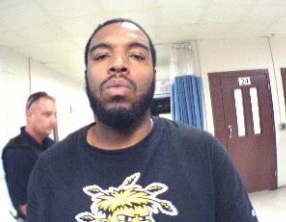
Victor Walker photo Sedgwick Co.

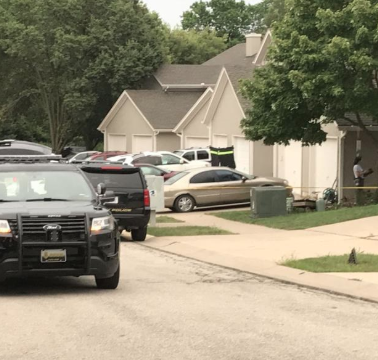
SEDGWICK COUNTY — Law enforcement authorities are investigating three suspects after a man ran from deputies at the Sedgwick County Jail.

Just before 4p.m. Friday, 28-year-old Victor Walker was in the Sedgwick County Jail lobby when deputies discovered he had an active felony warrant for his arrest, according to Lt. Tim Myers.

Walker was handcuffed and placed under arrest for the felony warrant.  As the deputy was collecting Walker’s property from him he fled the lobby.  As he ran out the door, he struck two citizens with the door.  The citizens sustained minor injuries.

Walker ran to a Black Chevy Camaro parked on Water Street.  Walker got into the drivers’ seat and drove away from the jail.  As he drove away, the Camaro struck three parked vehicles and drove over the foot of a 41-year-old Sheriff’s Office Sergeant.  Walker drove north on Water Street, went east on Pine, and then turned south on Topeka Street.  Walker drove south on Topeka to Kellogg, and then drove east on Kellogg to Oliver.  As Walker was driving on the off ramp for Oliver, he struck two additional vehicles at the intersection before the Camaro crashed into the northeast traffic signal.

Hollands photo Sedgwick Co.
Patton photo Sedgwick Co.

Police arrested Walker and booked him in the Sedgwick County Detention Facility on requested charges of Aggravated Battery LEO, 2 counts of Aggravated Assault, Felony Obstruct, Aggravated Escape Custody, Felony Evade and Elude, Possession of Marijuana and the Felony Warrant.

Charles L. Patton II, a 37,  was the front seat passenger in the Camaro.  Patton was booked for Aggravated Battery LEO, 2 counts of Aggravated Assault, Felony Obstruct, Aiding Escape, and Felony Evade and Elude.

Camille L. Hollands, a 38 year old black female, was a rear seat passenger in the Camaro.  Hollands was booked for Possession of Marijuana.

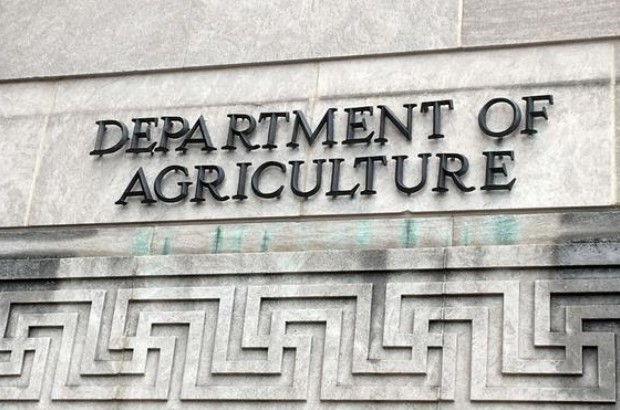
USDA Inspector General: Moving Research Offices From DC To KC Isn’t Quite Legal

  for the Kansas News Service

Critics of the U.S. Department of Agriculture’s decision to move two of its research agencies from Washington, D.C., to the Kansas City area got more ammunition this week.

The most recent development: A report from the USDA’s inspector general that finds some flaws with how the department has executed its plan.

The report found that moving the agencies is within the USDA’s authority, but it failed to meet certain criteria for spending the needed money. The inspector general asked USDA to get an opinion from the legal office, which determined the rules referenced are unconstitutional.

But the inspector general’s report notes that in the past, USDA determined the same rules “are binding upon the Department.”

In response to the report, Norton and Hoyer want USDA to put the brakes on its planned moves.

“We continue to urge Secretary Perdue to halt this misguided relocation process,” the two wrote in a statement.

The offices of Democratic Rep. Sharice Davids, who represents the Kansas side of the Kansas City area, and Missouri Republican Sen. Roy Blunt declined comment on Tuesday after the inspector general’s report became public.

In a guest commentary in The Kansas City Star on Sunday, Blunt wrote that the area makes sense for the agencies for a variety of reasons. Among them: it’s in the animal health research corridor, is close to many land-grant universities in the region that conduct agricultural research and is already home to the USDA’s Farm Service Agency and the Risk Management Agency.

Many groups have criticized the Trump administration and Agriculture Secretary Sonny Perdue for moving the agencies, branding the move as retaliation against ERS and NIFA research that clashes with the administration’s agenda. The left-leaning National Sustainable Agriculture Coalition issued a statement calling on the moves to be stopped.

“We urge Congress to take this information as an opportunity to end once and for all Secretary Perdue’s strong-arm tactics,” the group wrote, and stop all action on the relocations until Congress has given its formal approval — or denial.”

Follow Amy on Twitter: @AgAmyinAmes

One dead, 5 hospitalized after Kansas head-on crash

ELLSWORTH COUNTY —One person died in an accident just after 9p.m. Friday in Ellsworth County.

The Kansas Highway Patrol reported a 2002 Ford F 150 driven by Ethan T. Curnutt, 19, Kanopolis, was westbound on Kansas 156 at the K14 Junction.

The vehicle approached a red Chevy pickup stopped in the westbound lane to make a left turn.

Curnutt swerved to the left and hit an eastbound 2017 Ford 150 driven by Nelson, Justin M. Nelson, 41, Booker, TX., head-on.

Nelson was pronounced dead at the scene and transported to Parson’s Funeral Home. One passenger in the 2017 Ford Chase Nelson, 12, Booker, TX., was transported to Wesley Medical Center.

The other passengers in the 2017 Ford Trisha R. Nelson, 40; Kyndall Nelson, 5;, Tristin Nelson, 12, Booker, TX., were transported to the hospital in Hoisington.

Curnutt was transported to the hospital in Ellsworth. He was not wearing a seat belt, according to the KHP.

Copyright Eagle Radio | FCC Public Files | EEO Public File