MANHATTAN — Authorities at Kansas State University and fire officials are investigating the cause of a chemical spill on campus.
Just after 5:30 p.m. on Tuesday, the Manhattan Fire Department responded to report of a chemical spill at the Biosecurity Research Institute, housed in Pat Roberts Hall on the Manhattan campus, according to a media release.
The spill was determined to be contained in the room where it occurred.
Kansas State University staff continued clean up and no injuries were reported.
This facility provides K-State scientists and their collaborators with a safe and secure location to study high-consequence pathogens affecting plants, animals, and food products, according to the University web site.
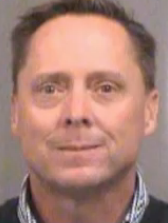
KANSAS CITY –A Kansas man was sentenced Tuesday to five months he already served in jail for harassing former girlfriends and business partners by sending them letters on Internal Revenue Service letterhead.
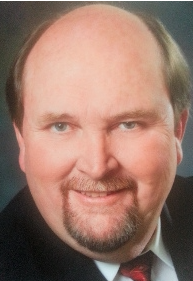
Officials say Jeffrey Nickerson used IRS letterhead and publications brought home by an acquaintance who worked for the agency.
Acting U.S. Attorney Tom Beall said Nickerson, 56, pleaded guilty to one count of impersonating a federal employee. In his plea, Nickerson admitted he was an acquaintance of a woman who worked at the IRS Service Center in Kansas City, Mo. She brought IRS letterhead and IRS publications home.
He admitted he used the information to send letters to former girlfriends and former business partners. The letters said the victims were under investigation as a result of reports being filed to the Internal Revenue Service Fraud Investigations Hotline.
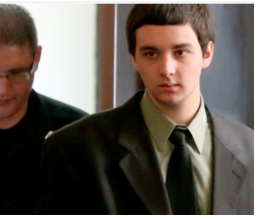
Sam Vanochen in court during his August murder trial- pool photo Hutch News
HUTCHINSON — The Kansas Supreme Court on Tuesday denied the Writ of Mandamus requested by Reno County District Attorney Keith Schroeder against Judge Trish Rose in the Samuel Vonachen murder case.
Schroeder filed the writ to try to stop plans to have a new mental evaluation completed for the teen convicted of setting the fire that killed his mother and sister.
The state had requested that the 17 year old be moved to adult jail after being convicted of two counts of murder, attempted murder and aggravated arson as an adult and also asked the court to block another mental evaluation from being conducted, instead of going ahead and sentencing him for the conviction.
Schroeder stated in the motion that he was never notified of the judge’s attempt to do this.
Because of the high court’s decision, Schroeder says it would appear Vonachen will remain housed in the Reno County Juvenile Detention Facility until further order of the court and be subject to another evaluation by Larned State Security Hospital.
Schroeder, in an email to the media, said, “I stand by my decision to challenge Judge Rose’s decisions, despite the ruling of the Kansas Supreme Court. I believe it was my sworn duty to do everything possible to protect the community.”
A Reno County jury convicted the teen of the two counts of murder for the killing of his mother and sister who died after he set fire to the family home on Sept. 26, 2013. His father was able to escape. But, he was also convicted for attempted first-degree murder for trying to kill his father and aggravated arson for the actual setting of the fire.
TOPEKA, Kan. (AP) — A Kansas legislator has criticized a black performer’s public protest by saying in a Facebook posting that she should go back “home.”
State Rep. Joe Seiwert confirmed the posting Tuesday in interviews with The Topeka Capital-Journal and Wichita Eagle. The Republican defended the posting as a comment on someone showing disrespect to the American flag.
Seiwert’s post said, “Go back to where you claim home.”
Two black legislators and the Democrat opposing Seiwert’s re-election in their Wichita-area district called the posting offensive.
Seiwert confirmed he posted the comment under a meme with vulgar language criticizing singer Denasia Lawrence for kneeling to sing the national anthem before a preseason professional basketball game Friday in Miami. She wore a Black Lives Matter shirt and later called it protest against racial injustice.
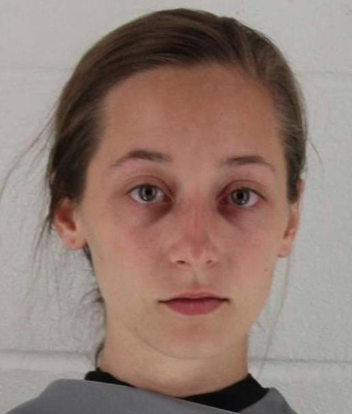
OLATHE, Kan. (AP) — A 21-year-old Kansas woman was sentenced to nearly 15 years in prison for placing her newborn baby in in a trash can and letting her die.
Prosecutors say Marissa Carol Fields gave birth to a nearly full-term baby at her home in Olathe in December 2014. She was sentenced Tuesday to 14 years and 10 months after earlier agreeing to plead no contest to second-degree murder and aggravated abandonment of a child.
The Kansas City Star reports Fields had not told anyone she was pregnant. Her father discovered the baby’s body in the trash and contacted police.
Earlier testimony indicated the baby girl was likely born alive. Fields told investigators the girl was cold and not breathing when she was born.
WICHITA, Kan. (AP) — Kansas has charged a man in connection with a multi-state investigation into Jayhawk Beverage Distributors in Wichita.
The Kansas Alcoholic Beverage Control announced Tuesday that an operation targeting the company’s warehouse in Wichita recovered about $70,000 worth of contraband and evidence. The company had been based in Pittsburg, Kansas, before moving to Wichita.
James “Jimmy” A. Hall was arrested late Friday in Wichita. He faces Shawnee County charges including forgery, identity theft, making false information, obtaining a liquor license by fraud, and purchase and distribution of liquor without a license.
Online records do not indicate whether Hall has an attorney, and the Alcoholic Beverage Control said the agency did not know whether he had a defense attorney.
The investigation involved law enforcement agencies in Kansas, California and Florida.
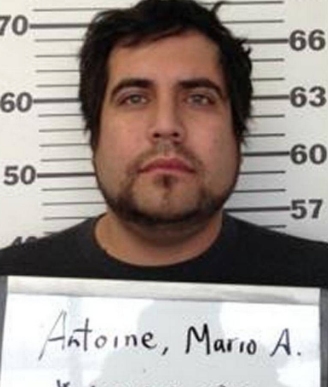
KANSAS CITY – A former wedding photographer has been indicted by a federal grand jury as part of a federal investigation into a fraud scheme to dupe dozens of women into having sex – which he recorded – under the guise they were rehearsing for a pornography movie, according to Tammy Dickinson, United States Attorney for the Western District of Missouri.
Mario Ambrose Antoine, 33, Raymore, MO., was charged in a 21-count indictment returned under seal in the U.S. District Court in Kansas City, Mo., on Oct. 12, 2016. That indictment was unsealed and made public following Antoine’s arrest and initial court appearance today. Antoine remains in federal custody pending a detention hearing on Thursday, Oct. 27, 2016.
The federal indictment alleges that Antoine created a succession of various online aliases in which he posed as a talent manager, photographer and videographer for fictitious companies such as “Playboy Worldwide,” “Playboy Asia,” “Dash Agency,” and other companies that he claimed managed private overseas pornography websites. Beginning in August 2011, Antoine allegedly “auditioned” dozens of victims throughout the greater Kansas City area as models for prospective employment with these fictitious businesses by inducing them to engage in sexual and pornographic activity.
Antoine allegedly promised to pay his victims tens of thousands of dollars for entering into contracts for these modeling shoots and engaging in this sexual activity, which entailed auditions in which the victims performed various sexual activities with Antoine, which he recorded.
Antoine presented his victims with forged and false documents to add an appearance of legitimacy to this scheme, the indictment says, including falsified and forged checks issued to other “models,” IRS tax forms, Department of Homeland Security employment forms and various other documents. Antoine falsely registered several Internet domain names, the indictment says, and created false Facebook profiles.
After many of these victims complained they had not been paid as promised, Antoine allegedly forwarded images of this sexual activity with these victims to their employers and significant others.
On Nov. 12, 2015, Antoine allegedly conducted Google searches for “rape by deception,” “rape by deception kansas,” and “illegal to trick girls into sleeping with you,” and viewed websites and law journals regarding the criminality of committing rape by fraud or deception.
The federal indictment charges Antoine with 12 counts of wire fraud, two counts of cyberstalking, two counts of online enticement, two counts of making false statements to federal law enforcement agents, one count of obstructing justice, one count of extortion and one count of the false registration of a domain name.
The federal indictment cites six victims of the alleged scheme (identified as Victims 1 through 6).
The indictment alleges that Antoine promised to pay Victim 1 $1,000 per shoot and produced numerous images and videos of their sexual activity in 2011 and 2012. However, Victim 1 never received any payment from Antoine. In April 2015, Antoine allegedly told her that, in exchange for not selling or distributing the previously produced images and videos of their sexual activity, Victim 1 could either pay him $9,000 or she could come to Antoine’s house and have sex with him. On April 7, 2015, the indictment says, Victim 1 drove to Antoine’s residence to have sex with him in lieu of the payment of $9,000 to avoid the distribution of the pornographic images and videos.
According to the indictment, Antoine sent approximately 15 photos of Victim 1 to Victim 2 in March 2015. Using the alias “Nikki,” he told Victim 2 that the images instead portrayed “Nikki,” who had been paid $24,000 for three 30-minute photo shoots. “Nikki” also told Victim 2 that the images would be sold overseas “so nobody here even knows about it.” Antoine allegedly promised to pay $2,000 to Victim 2 for an “audition” and she engaged in sexual activity with Antoine, which he recorded.
Victim 3 engaged in sexual activity with Antoine in May 2015, the indictment says, which he recorded by taking photographs and making a video recording. When Victim 3 complained to Antoine in August 2015 that he she had never received the payment for her modeling activity, Antoine allegedly sent some of the nude images of Victim 3 taken during the recorded sexual activity to her employer.
According to the indictment, Antoine promised to pay Victim 4 $2,000 for “auditioning.” On April 24, 2015, Antoine allegedly produced and retained images and video recordings of his sexual activity with Victim 4. Between April and July 2015, Victim 4 contacted Antoine numerous times to receive payment, which never occurred. Beginning in June 2015, the indictment says, Antoine (assuming the online alias as “Nikki”) engaged in flirtatious communications with Victim 4’s ex-boyfriend and informed him that Victim 4 and Antoine were now in a relationship. Antoine also allegedly sent messages through the Facebook alias “Dalton Wayne” to Victim 4, referring to her pornographic photos being released and attaching a nude image of Victim 4 to one of the messages.
On May 26, 2015, Victim 5 traveled to Antoine’s residence for sexual activity, which the indictment says was recorded and retained by Antoine, after communicating with Antoine using the Facebook alias of “Nikki.” On Oct. 30, 2015, Antoine, as “Nikki,” sent a series of messages via Facebook to Victim 5’s boyfriend. Antoine informed Victim 5’s boyfriend “she does porn” and suggested that was how she was able to pay for her car. On the same day, Antoine, as “Nikki,” sent images of Victim 5 engaged in sexual activity with Antoine to Victim 5’s boyfriend.
In June 2015, Antoine communicated with Victim 6 using the Facebook alias of “Nikki.” Antoine allegedly sent Victim 6 some of the pornographic images of Victim 1 and claimed that the images instead depicted “Nikki” and that she received thousands of dollars for the photo shoot. On June 18, 2015, Antoine allegedly promised to pay Victim 6 $2,000 as “base compensation” and $8,000 as “special compensation” for “additional productions.” Antoine allegedly produced and retained images and video recordings of his sexual activity with Victim 6.
According to an affidavit filed in support of the original criminal complaint (also filed under seal and made public today) Antoine was released from state custody in a separate and unrelated criminal matter on Sept. 10, 2016. Since that time, the affidavit says, he has actively worked to obstruct the due administration of justice in the course of this ongoing criminal investigation. The federal indictment charges Antoine with the obstruction of justice related to this conduct.
On Sept. 27, 2016, Antoine contacted a detective with the Raymore Police Department, according to the affidavit. Antoine allegedly told the detective that a federal agent told him he should be able to retrieve the equipment seized by law enforcement because the FBI was not pursuing this matter any further. Antoine also allegedly claimed that his attorney had reviewed the search warrant and told Antoine it was “improper” and Antoine’s equipment should not have been seized. Antoine provided the name of a specific Kansas City criminal defense attorney, who later told investigators that he doesn’t have an attorney-client relationship with Antoine and had not spoken with him in years. The affidavit also states that Antoine may have created and used a fictitious e-mail account to impersonate the attorney.
The investigation is ongoing as authorities are still identifying additional victims. Anyone who believes they have been victimized by Antoine is urged to contact the FBI at 816-512-8200.
Governor Brownback during Tuesday’s press conference
KANSAS CITY, Kan. (AP) — The annual American Royal horse and livestock exhibition in Kansas City is moving to Kansas from Missouri.
Kansas Gov. Sam Brownback and American Royal officials announced the move Tuesday during a news conference at Kansas Speedway in Kansas City, Kansas.
Brownback’s administration has been working for months to lure the full, weeks-long exhibition to the Kansas side.
The 117-year-old American Royal is one of Kansas City’s most fabled cultural institutions, drawing nearly 270,000 people.
The American Royal has made the decision to relocate the American Royal operations to Wyandotte County, KS. The new complex will include two arenas, multi-function exhibit space, increased stalling areas, and a new Agriculture Education Center (proposed design pictured).
American Royal officials have already moved the exhibition’s signature barbecue competition that begins Wednesday to the speedway.
Some Kansas legislators have voiced concern that to lure the American Royal, the state would promise a major development project on the Kansas side and finance it with bonds backed by sales tax revenues.
MANHATTAN, Kan. (AP) — Kansas State University’s economics club says the cost of being a student at the university continues to rise faster than the rate of inflation.
The Manhattan Mercury reports that since 2002, the club has measured the Student Price Index, which is similar to the Bureau of Labor Statistic’s Consumer Price Index.
The student index takes into account the costs that the average student faces like housing, tuition, gas, groceries and textbooks.
The Student Price Index rose by 2 percent this year. The average increase since the club started tracking the index has been 7 percent.
TOPEKA – A Geary County man pleaded guilty Tuesday to taking part in the kidnapping of a Junction City woman who was killed during the abduction, according to acting U.S. Attorney Tom Beall.
Drexel A. Woody, 26, who lived on Fort Riley at the time of the crime, pleaded guilty to one count of kidnapping resulting in death. The body of Amanda Clemons, 24, of Junction City, was found in February 2014 in Geary County, Kan.
In Woody’s plea, he admitted that on Feb. 7, 2014, he and his co-defendants met the victim, who was a prostitute, at a hotel in Junction City and kidnapped her. The defendants beat the victim in retribution for comments she had made on social media. During the beating, the defendants demanded the victim pay $300. They took the victim to another hotel room in an unsuccessful attempt to get the money, after which they transported her to Woody’s residence on Fort Riley.
While at Woody’s residence, the defendants allowed the victim to call her young son and her mother. The victim’s mother realized the victim was in danger and called Junction City Police. When police called the victim’s number to check on her, and the defendants listened to the call on speaker phone. Fearing arrest, the defendants transported the victim to a bridge in a remote part of Geary County, where they resumed the beating and attacked her with a knife. The victim broke free and jumped off the bridge, falling 15 feet and breaking her ankle. The defendants found the victim in the snow and resumed the assault
Shantrell Woody-photo Geary County
during which they cut her throat and killed her.
Woody is set for sentencing Jan. 30. He faces a penalty of up to life in federal prison.
Co-defendants who are awaiting trial include:
Larry L. Anderson, 27, Manhattan, Kan.
Marryssa M. Middleton, 25, Fort Riley, Kan.
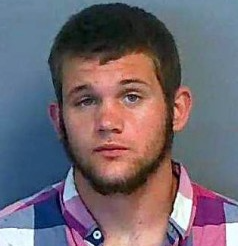
Shantrell D. Woody, 27, Fort Riley, Kan., formerly an active duty service member.
Christopher Pugh, 32, Junction City, Kan.
Beall commended the Junction City Police Department, the Grandview Plaza Police Department, the Geary County Sheriff’s Office, the Riley County Police Department, the Fort Riley Criminal Investigation Division, the FBI, Assistant U.S. Attorney Tony Mattivi, Assistant U.S. Attorney Jared Maag and Geary County Attorney Steven Opat for their work on the case.
Editor’s note: Reporters from KHI News Service and the Topeka Capital-Journal collaborated for a six-month exploration of how the state’s legal system deals with people with mental illness. This is the second in a four-part series, “Mental health on lockdown.”
At first, the man appears drunk.
He’s walking along an on-ramp from Lackman Road onto Interstate 435, a major highway snaking through the Kansas City metro area. At 1 p.m., traffic is heavy.
“He takes a few swings at the officer. They’re obviously not a Mike Tyson swing, but they’re swings nonetheless, where if something happened right there it could very easily spill over from the shoulder onto the highway where somebody would really get hurt,” Lenexa Police Capt. Wade Borchers said, recounting an incident from earlier this year that involved another officer.
But no highway brawl breaks out. Instead, the officer just talks with the man. He calms down and the officer is able to get him off the road. Then he handcuffs him.
The difference between what could have happened and what did happen rests in the officer’s training, Borchers explained. The officer was able to recognize the man was not actually drunk but instead had a developmental disability.
The story Borchers told serves as just one example of countless police interactions throughout Kansas that have been shaped by training focused on situations involving people with mental illness and developmental disabilities. Law enforcement agencies are attempting to pay greater attention to how they interact with people with mental health issues, though what that looks like can differ sharply among departments.
In particular, police approaches to mental illness exist along an urban-rural divide within the state. Large and midsize cities in Kansas have access to greater resources, while law enforcement in small towns and rural areas must grapple with limited resources and simple geography: Vast expanses of land often separate police from mental health professionals.
But police, especially in the eastern part of the state, also face acute challenges stemming from ongoing problems at the state’s psychiatric hospitals. With some individuals waiting days to be admitted to Osawatomie State Hospital, officers have grown increasingly frustrated.
“If they don’t have the ability to pay, they’re going to get quicker service at the jail than they will in the community,” Borchers said.
A push for CIT
At a time when the mental health system is under increasing pressure, police have taken a more active role dealing with people in crisis. They must respond to all situations, no matter how difficult.
“There’s a lot of people who need specialized help that I don’t think we’re providing very well,” said Sedgwick County Sheriff Jeff Easter during a gathering on mental health training for law enforcement and civic officials this fall in Wichita. “We’re trying to do the best we can in law enforcement, and obviously you guys are as well by being here today. But we all know the system right now is broken, in my opinion.”
Many larger police departments in Kansas over the past few years have embraced crisis intervention team training, commonly called CIT. The aim is to equip officers to appropriately respond to situations involving people with mental illness or developmental disabilities.
[ Related story: Washington state takes lead on police mental health training ]
CIT training involves both how officers act in the moment to defuse situations and how they guide people with mental illness to appropriate services.
“Not only learning the things to say, but also definitely focusing on the things not to say and do,” said Lane Mangels, a detective with the Salina Police Department.
“Policing has changed a lot just in my career, and it’s definitely different than it was 25 to 30 years ago,” he said. “We’re trying to get them to recognize when they see these signs and symptoms that if they focus on having a little bit of empathy in understanding where this person is coming from and think outside the box in ways to assist them, maybe they can de-escalate that situation.”
That can range from recognizing that a transient walking the highway may have a mental health problem to being aware of how a mental illness may affect someone in a standoff with police. Research suggests 10 percent of police contacts with the public involve individuals with serious mental illness.
Once an officer stabilizes a situation, CIT training emphasizes attempting to channel the individual with mental health issues to community services rather than jail. In some cases, this involves getting a person on the phone who can speak with the individual and perhaps persuade them to get help.
Other times, it involves deployment of a co-responder to the scene. The co-responder, often a mental health professional, may speak with the individual one-on-one and perhaps even transport that person to treatment if needed.
“I’ve talked to people direct and try to get them to voluntarily go somewhere, and they don’t want anything to do with it, but then I call Johnson County Mental Health and they talk to him for two minutes — ‘OK, I’ll do that,’” Borchers said. “And I’ve been standing here for half an hour trying to get you to do that, and you talk to them for two minutes and now you’re going to go. ‘Well, yeah, but they’re not a cop.’ OK, fair enough.”
A 2012 research paper in the journal Best Practices in Mental Health found only limited data on the number of people police are diverting toward services rather than funneling into the criminal justice system. But the authors suggested that law enforcement’s role as gatekeepers to both the mental health and criminal justice systems is increasing as state budgets are slashed.
The National Alliance on Mental Illness, CIT International and other groups have developed a curriculum for CIT training that typically takes 40 hours for an officer to complete.
Some of Kansas’ biggest police departments have sought training for large numbers of officers.
The Topeka Police Department has trained 149 of its 300 sworn officers, or almost half. Upward of 75 percent of officers on the street are trained, Topeka Police Maj. Bill Cochran said. He said there is a good chance a CIT-trained officer will be responding to any given call, whether they’re specifically requested or not.
The 40-hour training commitment can present a challenge to smaller departments, however.
“It’s very difficult for a small agency to send someone out of town for a week for training like that,” said Ed Klumpp, a former Topeka police chief who now works as a lobbyist for several law enforcement associations in the state.
Klumpp estimates 75 percent of law enforcement agencies in Kansas have fewer than 10 officers. For some agencies, voluntarily giving up an officer for a week represents an unacceptable loss of manpower. A week of hotel and meals for one or more officers also can strain budgets.
To combat that, the Topeka Police Department has developed a training regimen that takes place on nonconsecutive days. Cochran said the department has offered trainings once a month or once a week every other week to make CIT training more accessible for smaller agencies.
But those small agencies often must decide whether to pursue CIT at all. A department with just a handful of officers may not see the return on investment that makes training worth it.
Sgt. John Bryant of the Kansas City, Mo., police helps lead efforts to promote CIT in Missouri, including rural areas.
Bryant said some rural agencies have resisted CIT training. The key, he indicated, is to have law enforcement make the case for the training to other officers. Efforts to persuade smaller departments to adopt CIT have to be driven by law enforcement peers, he said.
“It’s kind of sad,” Bryant said. “Sometimes we’d go out to these smaller agencies and try to convince them they need CIT. ‘Oh, we don’t need that stuff, we know how to talk to people.’ Six months later, we’d see them … getting sued because they did something bad.”
He added soon after: “Hopefully, you guys can get to folks on your side of the state quicker than we did on ours.”
A large component of CIT training is building relationships between police and mental health professionals, not just training an officer how to react in a given situation.
In rural areas, those local mental health resources may simply not exist.
Rural challenges
Photo by Thad Allton/Topeka Capital-Journal Narciso Narvais, a deputy with the Sedgwick County Sheriff’s Department, speaks about the use of force by law enforcement. Narvais said case law outlines elements that must be present to justify force.
The High Plains Mental Health Center in Colby serves 20 counties that cover more than 19,000 square miles. Walt Hill, the facility director, said that while High Plains has good relationships with law enforcement, the CIT approach doesn’t make as much sense in rural northwest Kansas.
Instead, agencies in his corner of the state often turn to mental health first aid.
“Because of the number of small departments and turnover, and just the geography, mental health first aid has made more sense to us and to them because we don’t have really the critical mass that you would have in Topeka or KC metro area,” Hill said.
Mental health first aid is an eight-hour course developed in 2001 in Australia. In the United States, its umbrella organization is Mental Health First Aid USA, overseen by the National Council for Behavioral Health and the Missouri Department of Mental Health.
Mental health first aid carries a broader aim than CIT and can be taken by social workers, clergy and other civic leaders. Because training lasts a single day, it presents an attractive option to small police departments and cash-strapped agencies.
A University of Kansas researcher in 2013 found that mental health first aid had positively affected public mental health in Kansas. The course acted as a useful refresher for those with previous mental health education, the researcher said, and provided a solid base of knowledge for those with a limited mental health background.
Klumpp likened the difference between mental health first aid and CIT to the difference between completing a first aid course and becoming an EMT. Cochran said both programs will help officers identify signs that may point to mental illness, but CIT goes more in depth.
Paying extra attention to the relationship between police and mental health professionals, as well as technology, can present a workable alternative to CIT.
“So for us and law enforcement here, their preference is two things: the training we provide and second, to have this partnership with them if they have situation, we encourage them and they do call us and ask for assistance in dealing with situations,” Hill said.
More than 1,000 people in the 20-county area that High Plains serves have mental health first aid training, Hill said. Those trained often are first responders.
High Plains also uses telemedicine systems that allow an individual with a mental illness to speak with mental health professionals who might be hours away.
Telemedicine and telepsychiatry can be used to overcome some of the challenges found in rural areas, said Steven Leifman, a judge in Miami and chair of the Florida Supreme Court’s task force on substance abuse and mental health issues.
“There’s a horrible shortage of psychiatrists nationally, even for a beautiful, urban community like Miami,” Leifman said. “We can’t get people to come down here. I can’t imagine how hard it is for rural areas. So I think all of us need to start looking at telepsychiatry to improve access, and we need to teach within the community on how to respond to these issues.”
Cochran recognizes mental health first aid is a better fit for some agencies. The key for him, however, is that officers have some sort of mental health training.
No requirement exists in Kansas for officers to receive additional instruction on mental health issues beyond what they do in their initial training. But officers are almost certain to deal with individuals in a mental health crisis daily, Cochran said.
“Yet, there’s a lot of agencies that provide absolutely no additional training on mental health situations,” Cochran said. “If you don’t know how to effectively deal with people in crisis, then you get yourself in trouble.”
Stung by lack of resources
Even extensive officer training can be rendered ineffective by a lack of mental health resources.
Renovations at Osawatomie State Hospital a year ago led to a reduction in the number of beds at the facility. The psychiatric hospital also lost its federal Medicare certification last year after security lapses, causing it to forfeit upward of $1 million a month in federal funds.
Officers are well aware of the hospital’s ongoing troubles.
The reduced number of beds has created a waiting list for admission to the facility. The time to be admitted fluctuates but can last days.
Officers who believe an individual poses a danger to themselves or others can seek to have that person involuntarily committed to a state hospital. Given the current situation at Osawatomie, the process can prove frustrating for police.
Often, because immediate admission to Osawatomie isn’t an option, police may take an individual to the emergency room while he or she is on the waiting list. That frequently drains police resources because an officer may need to watch over the person.
Beyond the issues at Osawatomie, officers also perceive a reduction of resources, especially over the past decade, going toward mental health services.
The combination of those factors — the situation at Osawatomie and a decline in mental health resources — changes the behavior of officers on the street.
“The whole time I’ve been a police officer, the laws have been the same,” said Borchers, the Lenexa police captain.
“But what I’ll tell you is, 10 to 15 years ago, what I would do an involuntary committal (for) won’t even come close to it today,” he said. “It’s nothing that’s changed legislatively, it’s all been procedurally. And we are not getting people the help like we did 10 to 15 years ago. That’s just a bottom-line fact.”
Mental health care in Kansas has essentially become a triage operation, Borchers said. The state hospitals simply try to stabilize patients and get them out so the next person can go in, he said.
“The ones that get left holding the bag, really, are law enforcement,” he said.
Borchers said he doesn’t blame an officer for deciding to arrest a mentally ill person for a minor infraction — perhaps disturbing the peace by cursing — because if they go to jail, they’ll see a doctor within a day. If the officer seeks an involuntary commitment, they may sit in an emergency room for days before going to Osawatomie.
The scenario runs counter to the whole concept behind CIT: to identify people with mental health issues and keep them out of the criminal justice system.
“Of course, that’s where you have to rely on those mental health resources,” Klumpp said. “And unfortunately when those resources are overburdened or nonexistent, people end up getting charged with minor criminal acts because that’s the only way we have to resolve the issues.”
— Jonathan Shorman is a reporter for the Topeka Capital-Journal.
SEDGWICK COUNTY – A Kansas man died in an accident just before 12:30 p.m. on Monday in Sedgwick County during a police pursuit.
The Kansas Highway Patrol reported a 2007 Volkswagen Jetta driven by Alex Davis, 18, Arkansas City, was eastbound on 21st Street at Arkansas Avenue in Wichita.
The driver ran a red light and struck a 2008 Ford Fusion driven by James L. Dexter, 91, Wichita, that was south bound on Arkansas Avenue.
Dexter was transported to St. Francis Medical Center where he died.
Davis was not injured.
No details were released on what prompted the pursuit. Davis was arrested on a requested charge of murder in the second degree; unintentional but reckless, according to Wichita Police booking report.
Both drivers were properly restrained at the time of the accident, according to the KHP.