GITI Tire and Continental Tire have issued recalls affecting about 265,000 vehicles.
GITI is recalling various sizes of its Primewell Valera Touring II, GT Radial Champiro Touring and Dextero Touring DTR1 tires because of a defect that causes cracks in the lower sidewall, causing air to leak out. The potentially dangerous tires will be replaced for free on the more than 250,600 affected vehicles. For more information, call GITI at 877-342-0882. See more on the recall here.
Continental Tire is recalling certain Crosscontact LX20 tires made in May 2015 that were installed on more than 14,500 General Motors trucks and sports utility vehicles. The tires have a problem that could cause excessive tread wear, vibration, noise, or bulging areas. They also will be replaced for free. For more information, call Continental at 888-799-2168. See more on the recall here.
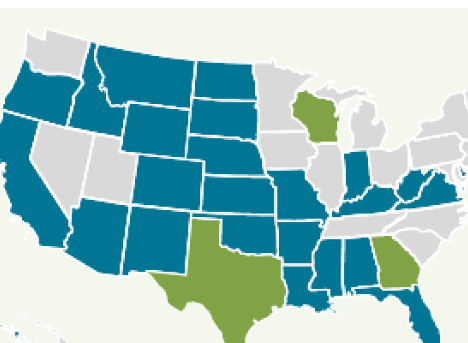
Kansas is among the states participating in a hospital engagement network program to reduce patient harm and hospital readmissions. AMERICAN HOSPITAL ASSOCIATION/HEALTH RESEARCH AND EDUCATIONAL TRUST
By MEGAN WINGERTER
As part of a federal quality improvement effort, Kansas hospitals are reducing the odds that patients will get certain types of infections.
And while that effort provides information on hospital quality throughout the state, finding information about the quality of care at individual hospitals remains a challenge.
The Kansas Healthcare Collaborative runs a hospital engagement network that includes 106 of the state’s 133 hospitals. Through a federally funded program, hospitals in the network are working to reduce patient harm and hospital readmissions by sharing their best practices.
Network hospitals aimed for a 40 percent reduction in instances of patient harm from September 2015 to September of this year, said Michele Clark, the collaborative’s hospital engagement network program director. While hospitals in the network weren’t able to reduce all types of patient harm by that much, infections related to central lines that deliver medication and fluids fell 55 percent and urinary tract infections from catheters were down 28 percent, she said.
Early scheduled births without a medical reason also were down, reducing the odds of infants developing health problems from being born too soon.
Download the Hospital Engagement Network Report
The collaborative estimated that Kansas hospitals avoided about 230 instances of patient harm, along with about $1.6 million in costs related to treating those patients if they had become infected or been harmed in another way.
“Overall it was deemed a great success,” Clark said.
Next round to focus on innovation
The efforts were part of a nationwide push involving 3,700 hospitals, which federal officials estimated prevented about 34,000 instances of harm and saved about $288 million.
The Centers for Disease Control and Prevention estimated that infections patients pick up in hospitals cost anywhere from $28 billion to $45 billion annually. Those amounts vary widely because the CDC must estimate direct costs of treating infections and indirect costs like lost productivity when a patient can’t return to work.
Many hospital engagement network participants, including the Kansas collaborative, also will participate in a hospital improvement innovation network as part of the next round of quality improvement projects.
The goals for the round starting this fall include decreasing instances when patients are harmed by 20 percent over the next two years and reducing hospital readmissions by 12 percent.
Hospitals also will work to reduce their rates of sepsis and C. difficile, Clark said. Sepsis is a life-threatening condition when the body’s attempts to fight an infection can cause organ failure, and C. difficile is a notoriously hard-to-treat intestinal infection.
The hospital engagement network’s emphasis on hospitals working together to reduce harm to patients has led to broad-based improvements, Clark said. She said she expects a few more Kansas hospitals to join the new network, and those that don’t join still can participate in educational activities like webinars.
“The whole purpose of the (network) is to make sure that patients receive the best and safest care wherever they go,” she said. “I think the work we’re doing in each facility is floating the boat of our health care system.”
Still little local hospital data
Despite the promising results from the hospital engagement network, Kansans don’t have an easy time finding out if the quality of care at their local hospital has improved, particularly if they live in rural areas.
Not all hospitals participating in the hospital engagement network reported all measures — primarily because they don’t all perform the same procedures, said Janie Rutherford, spokeswoman for the collaborative. Because 27 Kansas hospitals aren’t participating in the collaborative’s hospital engagement network, they weren’t included in the aggregated data.
The state and federal governments also don’t collect data from all hospitals.
The Kansas Healthcare-Associated Infections Advisory Group, which is made up of Kansas Department of Health and Environment officials and experts from private organizations, receives monthly reports on hospital infections from the CDC, state epidemiologist Charlie Hunt said.
It then uses that data to identify hospitals that need help addressing infections. The advisory group recently succeeded in helping hospitals bring down their rates of C. difficile, he said.
“If we see a significant increase in infections in a particular hospital, we would contact that hospital and see what’s going on,” he said. “It’s a classic principle that you manage what you measure.”
The CDC reports are voluntary, however, and not all Kansas hospitals submit the information. Hunt estimated the advisory group receives data for about 95 percent of the hospital beds in the state. Most hospitals that don’t submit the infection information are small, he said.
Other federal measures also leave out quite a few Kansas hospitals. For example, CMS provides star ratings for 38 Kansas hospitals, but that leaves 95 without quality information.
The star ratings are controversial because it isn’t clear if they adequately account for how sick patients are and whether they can afford follow-up care. Still, the star ratings may give patients a rough idea of how likely they are to suffer harm by comparing a hospital’s safety data to the national average.
The result is that while Kansans may take comfort from knowing that the state’s hospitals as a whole are getting safer, they still have difficulty finding measures of the quality of care for their local hospital.
Meg Wingerter is a reporter for KHI News Service in Topeka, a partner in the Heartland Health Monitor team. You can reach her on Twitter @meganhartMC
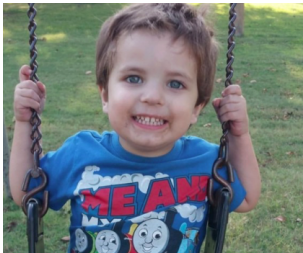
BILL DRAPER, Associated PressKANSAS CITY, Mo. (AP) — Four Kansas children have died in accidental shootings since January 2014, including the 3-year-old son of a sheriff’s deputy who was less than a year into his law enforcement career when tragedy struck.
Data compiled by The Associated Press and the USA TODAY Network over a 2½-year span show three of the Kansas deaths involved children 3 years old or younger. Twelve other people were wounded by accidental shootings involving minors during that time.
Reno County deputy Andrew Nagel says he had secured his firearms away from his son when the child visited two weeks before Christmas last year, but his roommate, who wasn’t used to having children around, had not.
Police on the scene of the Dec. 2015 fatal accident
Sheriff Randy Henderson says Kaden Nagel’s death prompted his department to revive a gun safety program for children.
WICHITA, Kan. (AP) — A recent study from the U.S. Geological Survey says the largest recorded earthquake in Kansas history was likely the result of waste water injected into the ground by one or two nearby wells.
The Wichita Eagle reports that the 4.9 magnitude earthquake happened in November 2014 about 40 miles southwest of Wichita.
The report, which will be published in Seismological Research Letters in November, shows scientists believe the earthquake was caused by waste-water injection for several reasons, including that there hadn’t previously been similar earthquakes in the area and the earthquake activity started after the amount of water injected in the wells increased.
One of the two wells operated by SandRidge Energy is still injecting water at the same level as when the earthquake occurred.
WICHITA— On Friday, Federal prosecutors announced charges related to a planned attack on the Somali immigrant community in Garden City.
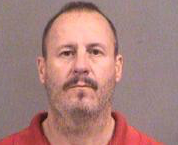
Following an 8-month investigation, three men Curtis Allen 49, Liberal, Gavin Wright, 49, Liberal, and Patrick Stein, 47, Wright, were charged with domestic terrorism, according to acting U.S. Attorney Tom Beall.
During a Friday news conference, Beal reported the government alleges the men conspired to bomb
an apartment complex in the 300 Block of West Mary Street in Garden City.
Stein-photo Sedgwick Co.
Muslim immigrants from Somalia live and worship at the complex.
The government says the suspects conducted survelliance to size up potential targets and stockpiled ammunition, firearms and explosive components.
They also prepared a manifesto describing their beliefs to be published after the bombing.
Gavin Wright-photo Sedgwick Co.
One suspect told investigators “The bombing would wake people up.”
The defendants were members of a small group they called the Crusaders and they formed a plan for a violent attack, according to Beall.
“They considered a variety of targets including churches and public officials who had expressed support for Somalis.
The suspects discussed obtaining four vehicles, filling them with explosives and parking them at the four corners of the apartment complex to create a large explosion.
The targeted apartment complex in Garden City -google image
The men were arrested on Friday morning in Liberal. If convicted they could face life in prison, he said.
SALINE COUNTY – Law enforcement authorities in Saline County are investigating one suspect and continue a search for another in connection with a home invasion robbery.
A Saline County Sheriff’s deputy arrested Thaddeus Hopkins, 28, on a warrant Thursday afternoon, according to
Police Captain Mike Sweeney.
Hopkins was identified as one of two men that entered a home in the 300 block of South College just before 8:30 p.m. on September 23rd.
Police say a resident of the home, a man in his 30’s, answered a knock at the door and allowed Hopkins and an unidentified white male inside.
The man was then pistol whipped and robbed. He suffered several abrasions to the head and face, but did not require treatment.
Sweeney said the two men took a substantial amount of cash and a Samsung cellular phone from the home.
Hopkins was booked into the Saline County Jail on requested charges including aggravated assault, aggravated robbery, battery, felony theft and aggravated burglary.
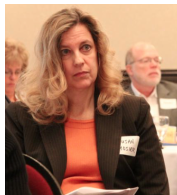
Photo by KHI News Service Susan Mosier, secretary of the Kansas Department of Health and Environment, will speak Saturday at a conference at Harvard University. She is part of a four-person panel on “Catalysts for a Generative Future – How Can Leaders Mobilize an Ecosystem?”
By Meg Wingerter
A Kansas Cabinet secretary will speak about the state’s plans to use technology to improve human services Saturday at a conference at Harvard University.
Susan Mosier, secretary of the Kansas Department of Health and Environment, will discuss the state’s plan to use data systems to find gaps or redundancies in the social services Kansans receive during the Health and Human Services Summit. She is scheduled to take part in a panel with three others during the summit, which was developed by a research initiative in the Technology and Entrepreneurship Center at Harvard.
The ultimate goal of the state’s technology plan is to make it easier to meet a family’s needs by connecting systems such as
Medicaid, under KDHE, with others like the Department of Commerce’s job training programs and educational assistance through the Kansas State Department of Education, Mosier said during an interview earlier this week.
“When you fill those gaps, you can really make a difference in the trajectory of a person’s life,” she said.
Mosier described a potentially 10-year technology plan in Kansas that started with automating enrollment in Medicaid. The process hasn’t been smooth thus far, however.
Technical problems connecting the Kansas Eligibility Enforcement System, or KEES, which processes Medicaid applications, with the system that disburses Medicaid payments produced higher-than-expected levels of errors, though Mosier said the error rate is down to about 1 percent.
Mosier anticipates a smoother process when the next stage of the technology plan rolls out in October 2017, though she said the process could be delayed if bugs come up. A tool purchased from Cerner will help the state to collect data about specific health issues, such as high blood sugar levels, and steer Kansans toward preventive care, she said.
“You need to be able to skinny down that big data and pull out targeted, actionable information,” she said.
New tools also will allow KDHE, the three managed care organizations that administer Medicaid in Kansas and individual doctors to look up what interventions are working, Mosier said. For example, they could find out if the tobacco quit line helps people to stop smoking or if they should put more emphasis on another program, she said.
The next phase of the technology plan isn’t scheduled to come out until spring 2019, assuming whomever replaces term-limited Gov. Sam Brownback decides to continue it.
A new Medicaid management system, the part of the system that disburses payments to providers, will allow beneficiaries to access more information about their medical history, such as immunization records, Mosier said. It also will include health information, such as tips for addressing chronic conditions.
Accenture a summit partner
Mosier’s panel appearance will be her second time speaking at the Health and Human Services Summit, which organizers say focuses on how collaborations involving government and private entities could improve the health of communities as families’ economic well-being.
“We have proven that helping low-income parents increase their educational attainment also positively affects their children’s emotional health and performance in school,” the summit agendasaid. “We have made the connection that families with stable housing and child care subsidies move up the income ladder faster and more sustainably.”
Mosier spoke in 2015 at the summit about using metrics in human services and “empowering team members.” A summary of the summit, compiled by sponsor organization Leadership for a Networked World, also pointed to KEES as a model for reducing employee time spent on tasks that could be automated.
The summit was held in October 2015, four months after the Medicaid portion of KEES went live. By December, a backlog had developed and providers complained that patients waited months for their applications to move forward.
An audit found some of the problems were caused by overly optimistic promises from contractor Accenture, and emails from state officials showed the company had pushed back its deadlines, apparently without notifying their counterparts at the state.
At the time, however, the summary listed praise for Kansas’ partnership with Accenture on its eligibility platform.
“Companies are laboratories for innovation, and collaborative experimentation facilitates progress,” it said.
Accenture was listed as one of four partners putting on this year’s summit. The fourth partner, American Public Human Services Association, lists Accenture as one of its 14 “platinum” level industry partner members.
The other panelists are Nick Macchione, director of the San Diego County Health and Human Services Agency, Susan Dreyfus, president and CEO of the Alliance for Strong Families and Communities, and Sarjoo Shah, CIO for human services and director for technology strategy for Oklahoma.
Meg Wingerter is a reporter for KHI News Service in Topeka, a partner in the Heartland Health Monitor team. You can reach her on Twitter @meganhartMC
JACKSON COUNTY – A Kansas man was injured in an accident just before 8a.m. on Friday in Jackson County.
The Kansas Highway Patrol reported 2009 Nissan Altima driven by Charles H. Enault, 59, Holton, was northbound on U.S. 75 one mile north of Mayetta. The driver fell asleep at the wheel.
The Nissan entered the center grass median and struck a stop sign.
Enault was transported to the hospital in Holton.
He was properly restrained at the time of the accident, according to the KHP.
TOPEKA, Kan. (AP) — Kansas congresswoman Lynn Jenkins and a fellow Republican candidate are not withdrawing previous endorsements of GOP presidential nominee Donald Trump over sexual assault allegations against him.
Jenkins told The Associated Press on Thursday: “I’m not going to come out with a new statement on the presidential race every time a new headline hits the papers.”
The Republican seeking re-election in the 2nd District of eastern Kansas suggested there’s a “double standard” because Democrats aren’t asked whether they continue to support Hillary Clinton amid potentially damaging leaks of campaign emails.
In the 1st District of western and central Kansas, GOP nominee Roger Marshall said the allegations make him sick but he wants to see more evidence.
Marshall said of Trump, “I’m giving him the same grace as I would give anybody.”
Last week, Senator Jerry Moran posted on Twitter a statement believed to be in response to Trump’s recently revealed recorded comments about women.
Disgusting, discouraging and damaging. Everyone is worthy of being treated with dignity and respect.
Traffic map Topeka -KDOT image 9:45 a.m. on Friday
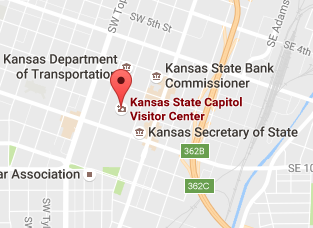
TOPEKA, Kan. (AP) — Authorities have removed a suspicious package with a hazardous material sticker from the grounds of the Kansas Statehouse after determining it wasn’t dangerous.
The Topeka Capital-Journal reports that the Kansas Statehouse remained open but several surrounding streets were closed Friday while authorities investigated the 18-inch tall brown canister. It was placed by a statue of a pioneer woman on the southwest corner of the Statehouse grounds.
The investigation began after a person reported the package to law enforcement around 6:20 a.m. Friday. Kansas Highway Patrol Capitol Police spokesman Patrick Saleh said the person told authorities a friend was responsible.
The person didn’t believe the canister contained explosives and was worried it would cause alarm. A bomb squad robot was used to view the package before it was deemed safe.
——————-
TOPEKA, Kan. (AP) — Some streets around the Kansas Statehouse are closed after a suspicious package was found on the lawn on the southwest side of the building.
Capt. Andy Dean says the Capitol remains open Friday amid the investigation. Dean is the supervisor of the Capitol Police division within the Kansas Highway Patrol.
He says the investigation began after a man walked came into the police department around 6:30 a.m. Friday and reported that another person had left the package on the Capitol grounds. Dean says the package appears to be a barrel with a hazardous material decal.
The Topeka Police Department’s bomb squad has responded and is determining how to proceed.
WASHINGTON (AP) — Medicare is unveiling a far-reaching overhaul of how it pays doctors and other clinicians. Compensation for medical professionals will start taking into account the quality of service — not just quantity.
The massive regulation published Friday is known as MACRA. It’s meant to carry out bipartisan legislation passed by Congress and signed by President Barack Obama last year. See more details here.
MACRA creates two payment systems, or tracks, for clinicians. Medical practices can earn higher reimbursements if they learn new ways of doing business. That includes being willing to accept financial risk and reward for performance, reporting quality measures to the government, and using electronic medical records.
Advocates say the new system will improve quality and help check costs.
But critics say the new requirements are overwhelming and will drive out solo practitioners.
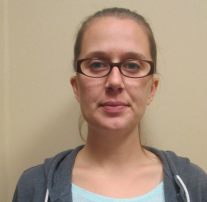
Bridget Martinez -Photo: Kan. Dept. of Corrections
SEDGWICK COUNTY – A Kansas woman was sentenced on Thursday for child sex crimes.
Former foster care worker Bridget Martinez, 32, Bel Aire, was sentenced to three years of probation for having sex with a 16-year-old foster child while a worker-volunteer in authority at a foster home, according to the Kansas Department of Corrections.
The crime occurred in May of 2016. Martinez was employed as a Family Support Worker with Saint Francis Community Services of Salina.
In a statement from the organization on Thursday night, they placed Martinez on administrative leave immediately upon learning of her arrest.
Her employment with Saint Francis Community Services ended July 8, according to the organization.
Prosecutors say Martinez admitted during questioning to having sex with the boy three times. The teen confirmed the relationship.
She could go to prison for two years and eight months if she fails to follow the terms of her release.
In Kansas, the age of consent is 16, but for people in some professions, sexual relations remain illegal beyond that age.
WOODSON COUNTY – A Kansas man died in an accident just before 5p.m. on Thursday in Woodson County.
The Kansas Highway Patrol reported a 1987 Toyota half-ton pickup driven by Joseph E. Rotina, 67, Yates Center, was westbound on 190th Road nine miles northwest of Yates Center.
The vehicle struck a 1995 Dodge Dakota driven by Ira W. Van Arsdale, 69, Yates Center, that was southbound on Hereford Road.
Both vehicles came to rest in the southwest corner of the intersection.
Van Arsdale was pronounced dead at the scene and transported to Frontier Forensics.
Rotina was transported to Coffey County Hospital.
The drivers were not wearing seat belts, according to the KHP.

 GITI Tire and Continental Tire have issued recalls affecting about 265,000 vehicles.