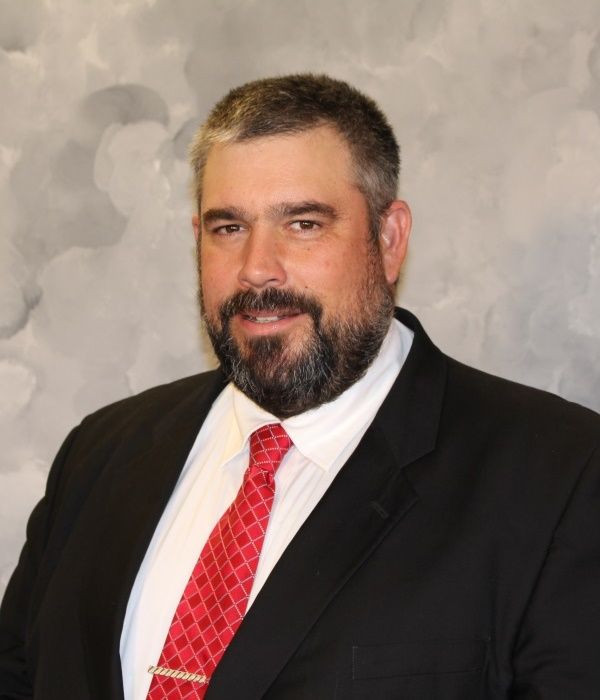
By GLENN BRUNKOW Pottawatomie County farmer and rancher
This week is Kansas Farm Bureau’s Centennial Tour. This event will celebrate Kansas agriculture across the state and highlight its diversity and ingenuity. There will be lots of good food, celebration and, most importantly, great fellowship. Kansas Farm Bureau has a lot to celebrate, and it will be a party from one end of this great state to the other.
While we should reflect on our accomplishments and what we have achieved over the last 100 years, this is also the time to look toward the next 100. What will this organization look like in 2119? Who will our members be? What will agriculture look like, and how will we grow our food in the next century? All are questions we should ask but also all are questions I guarantee we do not have the answers to.
In the next couple of months, we will get a report from our Strategic Planning Committee, which was convened to take a stab at what KFB will look like in the future. Committee members represent a cross section of Kansas Farm Bureau and the diversity of agriculture it represents.
In true grassroots, Farm Bureau style, each individual Farm Bureau member had the opportunity to provide input about the future of our organization and what it should look like. Everything was scrutinized, and every path was explored. No rocks were left unturned. What are we doing right and what could be improved? The committee worked tirelessly, and many hours, much energy and thoughtful contemplation went into the final document.
I cannot wait to see this road map we will be given to start our journey into the next 100 years. More importantly, I am so proud to be part of an organization that has the foresight to plan while celebrating the past. That kind of forward thinking is what has made Farm Bureau the voice of agriculture and a place for everyone involved in the production of food and fiber.
I am sure the next 100 years will bring even more innovation to our industry. I am sure we cannot even begin to imagine what changes will happen. I am also equally sure that Kansas Farm Bureau will be able to adapt, change and continue to be a resource for Kansas farmers and ranchers.
So, this week, lets renew old friendships, celebrate our accomplishments and enjoy the journey of the past 100 years. While we are doing that, we will be looking at the road into the future knowing Kansas Farm Bureau will continue to lead the way and continue to be the most inclusive, general farm organization in Kansas with a place for all producers. Here is to 100 years of accomplishments and to the next 100 years of growth and success.
“Insight” is a weekly column published by Kansas Farm Bureau, the state’s largest farm organization whose mission is to strengthen agriculture and the lives of Kansans through advocacy, education and service.
BARTON COUNTY — Law enforcement authorities are investigating a Kansas man on drug charges after a Tuesday arrest.
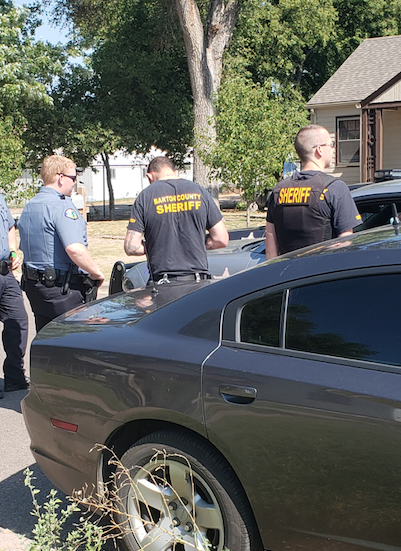
Detectives on the scene of Tuesday’s drug investigation photo Barton Co. SheriffRodriguez photo Barton Co.
Just after 10.m., the Barton County Sheriff’s office executed a search warrant at 1429 9th Street in Great Bend, according to Sheriff Bellendir.
Detectives had obtained a warrant to search for suspected controlled substances. Upon entry detectives located suspected cocaine and drug paraphernalia. There were two juveniles in the residence at the time of the search warrant.
Sheriff’s deputies arrested 45-year-old Misael Rodriguez of Great Bend.
Rodriguez was transported to the Barton County Jail where he was booked on requested charges of possession of cocaine with intent to distribute within 1000 feet of a school, possession of drug paraphernalia and endangerment of a child. Rodriguez is being held in lieu of a $300,000 bond. This is the second time in two days the Sheriff’s Officers have executed search warrants that resulted in finding drugs within 1000 feet of a school.
SEDGWICK COUNTY — Family and friends of a Kansas restaurant owner who was shot and killed during a robbery have established a GoFundMe page in an effort to raise money to help find the killer.
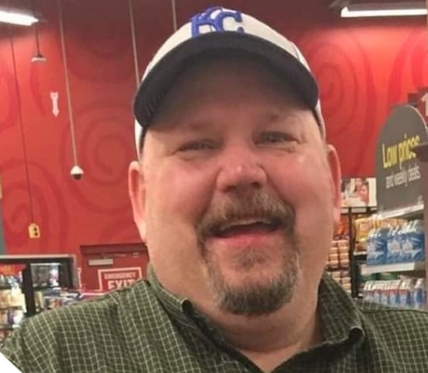
Charles ‘Chuck’ Giles was gun downed, robbed and murdered in his drive way photo GoFundMe
Just before 10:30p.m. July 19, police responded to a shooting in the 2100 Block of West Columbine in Wichita, according to Captain Brent Allred. At the residence, police found Charles Giles, 55, the owner of Neighbors Bar and Grill in Wichita, with multiple gunshot wounds. He died at the scene, according to Allred.
According to the GoFundMe page, family and friends are begging for answers to the senseless crime and asking for donations to go towards the person who successfully reports information to Sedgwick Country Crime Stoppers @ 316-267-2111 and leads to the arrest and conviction of the persons guilty of this heinous crime. Any donations that exceed the original amount will go towards Chuck’s surviving beloved granddaughters ‘College for America’ fund.
————–
SEDGWICK COUNTY — Law enforcement authorities are investigating a fatal shooting and robbery and asking the public for help with information.
Police on the scene of the shooting investigation photo courtesy KWCH
Just before 10:30p.m. Friday, police responded to a shooting in the 2100 Block of West Columbine in Wichita, according to Captain Brent Allred. At the residence, police found 55-year-old Charles Giles of Wichita, with multiple gunshot wounds. He died at the scene, according to Allred.
Investigators determined Mr. Giles left his place of business, Neighbors Bar and Grill, arrived at the residence when the suspect or suspects approached him, fired several rounds from a handgun and took money from him, according to Allred.
Police do not believe the shooting was random. They believe that robbery was the motive, according to Allred.
Anyone with information on the crime that could help investigators is asked to contact police.
KANSAS CITY (AP) — Planned Parenthood and the American Civil Liberties Union filed a federal lawsuit Tuesday seeking to stop a Missouri law that bans abortions beyond the eighth week of pregnancy from taking effect Aug. 28.
Lawyers for the ACLU and Planned Parenthood Reproductive Health Services of St. Louis argued in the lawsuit that the bill signed by Gov. Mike Parson in May is unconstitutional. They want the federal court to issue a preliminary injunction and/or a temporary restraining order to stop enforcement of the law until the lawsuit is decided.
The new law is considered one of the most restrictive in the country because it doesn’t include exceptions for rape or incest, and would allow the state to charge any provider who performs abortions at or after eight weeks with a felony that could bring a sentence of up to 15 years.
The organizations argue that if the court doesn’t stop the law from taking effect their patients will be severely restricted from accessing pre-viability abortions “preventing the vast majority of patients from obtaining the constitutionally protected medical care they seek.”
Parson’s spokeswoman, Kelli Jones, said the office had no immediate comment. Attorney General Eric Schmitt’s spokesman, Chris Nuelle, office didn’t immediately return a phone call seeking comment. Parson and Schmidt are among the defendants named in the lawsuit.
If courts don’t uphold the eight-week ban, the bill includes a series of less-restrictive bans ranging from 14 weeks up to 20 weeks. The bill also bans abortions based solely on race, sex or a diagnosis indicating the potential for Down syndrome.
Federal law allows states to prohibit abortions after fetuses are viable outside the womb, which can be from 24 to 28 weeks.
Missouri’s bill also includes an outright ban on abortions except in cases of medical emergencies, but that would take effect only if Roe v. Wade is overturned.
“We are in the fight of our lives to protect abortion for 1.1 million Missouri women of reproductive age in our state,” Dr. Colleen McNicholas, chief medical officer of Planned Parenthood of the St. Louis Region, said in a statement. “The attacks are relentless, but our commitment to our patients’ rights and freedoms is unwavering.”
Planned Parenthood Reproductive Health Services of St. Louis currently is the only abortion provider in Missouri. The clinic sued state health officials in May, accusing them of using facility licensing rules to close the clinic.
The ACLU also is seeking to collect signatures to put the eight-week ban to a statewide vote in 2020 but Secretary of State Jay Ashcroft has not yet approved the petition. With only a month left until the law takes effect, the organization is running out of time to collect the 100,000 signatures needed to force a referendum.
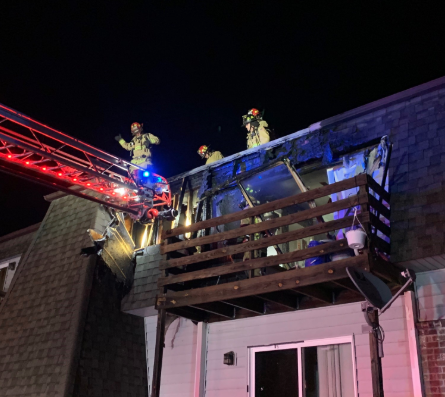
MANHATTAN — Firefighters responded to 711 Allison Avenue at 2:28 a.m. on Tuesday for a report of an apartment fire. Crews found a three-story apartment building with fire showing from a third-floor balcony. according to Deputy Fire Chief Ryan Almes.
photo courtesy Manhattan Fire Dept.
The occupants of the building were notified by police and were able to exit the structure before firefighters arrived.
The fire reached a second alarm before it was contained.
The building is a three-story 12-unit apartment building. and the fire appears to have started on a third-floor balcony and the damage occurred mostly to the exterior and attic areas of the building.
Investigators determined the fire cause to be accidental. The fire is believed to have started due to improper disposal of smoking materials.
The loss is estimated at $30,000 to the structure and $2,000 to the contents. The owner is listed as Francis Properties, with the resident agent being listed as Patrick Lee of St. George.
SEDGWICK COUNTY — A Kansas man with 16 previous convictions is going back to prison.
Haley photo Sedgwick Co.
On Monday, Sedgwick County Judge Stephen Ternes sentenced 37-year-old Samuel Haley to 41 months for the 2017 burglary of a home in Wichita, according to the district attorney’s office.
Haley with a long history of burglary and theft was found guilty of stealing $400,000 in guns and jewelry from the home. Investigators say he took antique jewelry, a Civil War-era revolver and other property.
A detective posed as a potential buyer and arrested Haley at a Wichita hotel. Court records say some of the jewelry was found in Haley’s backpack and more was in a storage facility.
Police returned most of the stolen items to their owners.
The judge also ordered Haley to pay $70,000 in restitution, according to the district attorney.
Haley has five previous convictions for burglary, six for theft, one for criminal damage, one for making a false writing, criminal possession of a firearm and for arson, according to the Kansas Department of Corrections.
TOPEKA — Law enforcement authorities are investigating a shooting, have one suspect in custody and continue to search for a second suspect.
Just after 11 p.m. July 13, officers were dispatched to 1516 SW 16th Street in Topeka on a report of a shooting, according to Lt. Aaron Jones. Upon arrival, officers located a victim suffering from life-threating injuries. The victim was transported to a local hospital for treatment of his injures.
Witnesses reported seeing a dark colored vehicle leaving the area northbound at a high rate of speed
On Sunday, police arrested Jihad Anwar Keys, 20 years old in connection to this investigation on requested charges of Aggravated Battery, Felon in Possession of Firearm, and Aggravated Assault.
Anthony Soto, 21, TopekaKeys photo Shawnee Co.
On Monday, 21-year-old Anthony Soto came to the Law Enforcement Center on his own accord. After speaking with investigators, he was later released. Investigators are still attempting to locate and speak with 19-year-old Larry D. Huggins.
The number of crisis drills for Kansas K-12 schools has dropped from 16 to 9 per year.
OFFICE OF GOV.
TOPEKA – Governor Laura Kelly signed Senate Bill 128 into law on April 10, 2019, changing the number of safety drills K-12 schools in Kansas must perform each year from 16 to nine.
As schools across the state of Kansas know, Senate Bill 109 changed the landscape of how K-12 schools conducted school drills. When Senate Bill 109 passed in 2018, schools were required to change the number and type of drills conducted during the school year. The change required schools to conduct nine crisis drills, four fire drills and three tornado drills during the school year, for a total of sixteen drills per school year. The change was positive in bringing about crisis drills to schools. However, the total number of drills proved to be overwhelming for many school districts.
With that in mind, Senate Bill 128 was introduced to change the number of drills required for schools. The bill changes the total number of drills from 16 to nine. Schools must conduct at least two tornado drills (one in September and one in March), three crisis drills and four fire drills per school year.
Crisis drills should reflect events that have a potential to occur in your school and can include, but are not limited to, things such as a water main break, earthquake, missing student, hazardous spills, intruders, active shooters or medical emergencies.
The new law went into effect July 1, 2019 and will be in effect for the 2019-2020 school year. Updated information and the new K-12 School Drills Form, reflecting the changes in the drill requirements, are posted on our website at https://firemarshal.ks.gov/information-on/schools—usd-k-12.
LAWRENCE, Kan. (AP) — A former University of Kansas football player has pleaded not guilty to allegations that he choked a woman and pointed a shotgun in her face.
Bastida photo Univ. of Kansas Athletiec
Nineteen-year-old Kenny Evel Bastida waived his right to a preliminary hearing Tuesday and pleaded not guilty to aggravated assault and aggravated battery and two misdemeanors, criminal damage to property and possession of marijuana.
A woman told university police that Bastida assaulted her May 15 at Stouffer Place Apartments on campus. She said he then loaded a shell into a shotgun and pointed at her face.
KU Athletics officials say Bastida, a linebacker from Pompano Beach, Florida, was no longer with the football team a month before the alleged attack but didn’t say why.
TOPEKA, Kan. (AP) — The Kansas Department of Commerce has no written guidelines governing a fund designed to promote job creation and sometimes awards money to groups not clearly associated with economic development, according to a new audit.
David Toland visits with Gov. Kelly during a March 21 presentation in Topeka -photo courtesy Kan. Commerce Secretary
The department oversees the Kansas Job Creation Fund, which receives about $3.5 million annually from state income tax payments. It has provided 71 awards totaling $25.6 million during the past five years.
An audit released Monday said the agency sometimes provides awards without requiring an application and requires some companies to produce measurable economic activity to receive funds but doesn’t have the same requirements for other companies.
The commerce secretary and governor control the program.
“This is why there’s a lack of trust in government right now. Because we have $25 million of taxpayer money that is in the hands of two people and it’s been that way for a long time,” said Sen. Julia Lynn, an Olathe Republican who chairs the Senate Commerce Committee.
Democratic Gov. Laura Kelly said Monday that she had not seen the audit but that the state is reviewing all incentive programs.
“There just hasn’t been an evaluation process for each of them to make sure we’re getting our bang for our buck,” Kelly said. “And so the job creation fund is just one more we’ll take a good, close look at.”
The auditors reviewed five awards in detail, including a $90,000 award to the Renwick school district in Sedgwick County to create a Future Farmers of America chapter and agricultural education program and $80,000 for the Kansas Business Hall of Fame in Emporia, which used the funding as matching dollars to build the hall.
Other awards — such as $70,000 given in 2015 to New York-based Genesis Corporation, a technology firm, for construction costs and to help create 200 new jobs — appeared to more closely meet the goals of the fund.
In three of the five cases, the agency awarded money without requiring the organizations to produce jobs or other economic activity.
Auditors said decisions on awarding the funds are largely left to the expertise of Commerce Department staff because the agency doesn’t have a formula or written guidance to determine how much money to give a company.
Commerce Secretary David Toland, appointed by Kelly, said in a letter to auditors that all the projects that were reviewed complied with Kansas law. He said the fund helped create 12,916 jobs and retained 20,196 jobs between 2014 and 2018.
“This program helps attract new business to our state, retain and grow existing business and foster economic development. The program is structured to be flexible which allows us to meet the needs of the businesses we serve,” Toland said.
An agency official acknowledged Monday that some employees questioned the awards to Renwick schools and the Kansas Business Hall of Fame, which were awarded under previous secretaries.
“The reason I mention that is that they were done against the objection of multiple staff members who feel it did not meet the required provisions or intended goal of what JCF was for. They were carried out regardless,” David Soffer, public service executive at the agency, told lawmakers.
PAWNEE COUNTY – A Kansas man made a first appearance in the Pawnee County District Court on Tuesday morning on two counts of felony burglary and two counts of misdemeanor theft, according to Pawnee County Attorney Doug McNett.
The defendant Thomas L. Robison, 20 of Larned, has been charged with the July 20 burglary of the State Theater in Larned, including theft of currency and gift certificates totaling $1,074. He is also charged in the July 25 burglary of a Subway restaurant in Larned and the theft of $405 in cash.
If convicted, the defendant faces a prison sentence between 11 months and 34 months in the custody of the Department of Corrections, depending on his criminal history, according to McNett.
Robison was arrested by the Larned Police Department at his home on July 26 without incident and is being held in the Pawnee County jail in lieu of $15,000 bond.
WASHINGTON (AP) — The Department of Homeland Security issued a security alert Tuesday for small planes, warning that modern flight systems are vulnerable to hacking if someone manages to gain physical access to the aircraft.
photo courtesy Hutchinson Regional Airport
An alert from the DHS critical infrastructure computer emergency response team recommends that plane owners ensure they restrict unauthorized physical access to their aircraft until the industry develops safeguards to address the issue, which was discovered by a Boston-based cybersecurity company and reported to the federal government.
Most airports have security in place to restrict unauthorized access and there is no evidence that anyone has exploited the vulnerability. But a DHS official told The Associated Press that the agency independently confirmed the security flaw with outside partners and a national research laboratory, and decided it was necessary to issue the warning.
The cybersecurity firm, Rapid7, found that an attacker could potentially disrupt electronic messages transmitted across a small plane’s network, for example by attaching a small device to its wiring, that would affect aircraft systems.
Engine readings, compass data, altitude and other readings “could all be manipulated to provide false measurements to the pilot,” according to the DHS alert.
The warning reflects the fact that aircraft systems are increasingly reliant on networked communications systems, much like modern cars. The auto industry has already taken steps to address similar concerns after researchers exposed vulnerabilities.
The Rapid7 report focused only on small aircraft because their systems are easier for researchers to acquire. Large aircraft frequently use more complex systems and must meet additional security requirements. The DHS alert does not apply to older small planes with mechanical control systems.
But Patrick Kiley, Rapid7’s lead researcher on the issue, said an attacker could exploit the vulnerability with access to a plane or by bypassing airport security.
“Someone with five minutes and a set of lock picks can gain access (or) there’s easily access through the engine compartment,” Kiley said.
Jeffrey Troy, president of the Aviation Information Sharing and Analysis Center, an industry organization for cybersecurity information, said there is a need to improve the security in networked operating systems but emphasized that the hack depends on bypassing physical security controls mandated by law.
With access, “you have hundreds of possibilities to disrupt any system or part of an aircraft,” Troy said.
The Federal Aviation Administration said in a statement that a scenario where someone has unrestricted physical access is unlikely, but the report is also “an important reminder to remain vigilant” about physical and cybersecurity aircraft procedures.
Aviation cybersecurity has been an issue of growing concern around the world.
In March, the U.S. Department of Transportation’s inspector general found that the FAA had “not completed a comprehensive, strategy policy framework to identify and mitigate cybersecurity risks.” The FAA agreed and said it would look to have a plan in place by the end of September.
The UN’s body for aviation proposed its first strategy for securing civil aviation from hackers that’s expected to go before the General Assembly in September, said Pete Cooper, an ex-Royal Air Force fast jet pilot and cyber operations officer who advises the aviation industry.
The vulnerability disclosure report is the product of nearly two years of work by Rapid7. After their researchers assessed the flaw, the company alerted DHS. Tuesday’s DHS alert recommends manufacturers review how they implement these open electronics systems known as “the CAN bus” to limit a hacker’s ability to perform such an attack.
The CAN bus functions like a small plane’s central nervous system. Targeting it could allow an attacker to stealthily hijack a pilot’s instrument readings or even take control of the plane, according to the Rapid7 report obtained by The AP.
“CAN bus is completely insecure,” said Chris King, a cybersecurity expert who has worked on vulnerability analysis of large-scale systems. “It was never designed to be in an adversarial environment, (so there’s) no validation” that what the system is being told to do is coming from a legitimate source.
Only a few years ago, most auto manufacturers used the open CAN bus system in their cars. But after researchers publicly demonstrated how they could be hacked, auto manufacturers added on layers of security, like putting critical functions on separate networks that are harder to access externally.
The disclosure highlights issues in the automotive and aviation industries about whether a software vulnerability should be treated like a safety defect — with its potential for costly manufacturer recalls and implied liability — and what responsibility manufacturers should have in ensuring their products are hardened against such attacks. The vulnerability also highlights the reality that it’s becoming increasingly difficult to separate cybersecurity from security overall.
“A lot of aviation folks don’t see the overlap between information security, cybersecurity, of an aircraft, and safety,” said Beau Woods, a cyber safety innovation fellow with the Atlantic Council, a Washington think tank. “They see them as distinct things.”
The CAN bus networking scheme was developed in the 1980s and is extremely popular for use in boats, drones, spacecraft, planes and cars — all areas where there’s more noise interference and it’s advantageous to have less wiring. It’s actually increasingly used in airplanes today due to the ease and cost of implementation, Kiley said.
Given that airplanes have a longer manufacturing cycle, “what we’re trying to do is get out ahead of this.”
The report didn’t name the vendors Rapid7 tested, but the company alerted them over a year ago, the report states.
SALINE COUNTY — Law enforcement authorities are investigating a cold-case murder in Saline County.
On Tuesday, Sheriff Roger Soldan and Lt. Mike Smith shared an update on what has been known as the “Miss Molly” murder case. The body of the unidentified woman was exhumed Monday morning from her grave in Gypsum Hill Cemetery in Salina and the FBI collected DNA evidence before she was reburied .
The woman was found dead in January of 1986 underneath the Mulberry Creek bridge on I-70 west of Salina. Sheriff Soldan said earlier this year the FBI was contacted by Interpol to see if DNA evidence could connect the woman back to a missing person report that had been considered earlier.
Soldan said it will be 6 to 8 months before results of the test will determine if she is the missing woman from Europe.