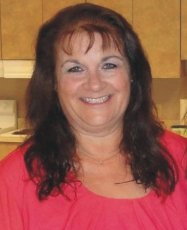
SALINA, Kan. (AP) — A central Kansas family is using bake sales and raffles to increase the reward for information leading to their mother’s killers.
The Salina Journal reports Lori Heimer’s body was found June 25 in her home southeast of Assaria, where she operated a dog-breeding business. The Kansas Bureau of Investigation soon released descriptions of two men in connection with the case and the pickup trucks they were driving, but they haven’t been found.
Joni Alexander, one of Heimer’s four daughters, says KBI agents told her it was essential to raise awareness of her mom’s slaying.
A reward fund contains more than $50,000, and Alexander says the fundraisers help the family stay engaged in the search for anyone responsible for Heimer’s death.
TOPEKA, Kan. (AP) — The state is implementing a system that will make it easier to track the location or release of inmates in county jails.
The Kansas Attorney General’s Office says the system is called Victim Information and Notification Everyday, or VINE. It is already operating in 19 counties and is expected to be in use in the other 86 counties in the next two years. See more details here.
The Wichita Eagle reports the free and anonymous service use the telephone or electronic devices to provide updates about changes in the custody status of a county jail inmate.
Updates are available every day and in several languages. Before VINE, victims had no centralized source of information about offenders held in county jails
Users also can access information about jail inmates housed in other participating states.
WICHITA, Kan. (AP) — An audit has found some Kansas law enforcement agencies are taking advantage of vague state forfeiture laws to use those proceeds to pay for salaries and other apparent operating expenses.
The practice creates an incentive for increased seizures, especially in times when agency budgets are tight.
Kansas is among a few states that do not require a person be convicted of a crime before their property can be forfeited.
The American Civil Liberties Union called the findings of the audit, which was released last month, “deeply, deeply troubling.”
Kansas Association of Chiefs of Police lobbyist Ed Klumpp countered the audit didn’t reveal any misappropriation of funds and said not being able to use the laws would “be a loss in our ability to deter crime in Kansas”
TOPEKA, KAN. – A Kansas man was sentenced Thursday to 35 years in federal prison for drug trafficking, according to Acting U.S. Attorney Tom Beall.
Faustino Soto, 43, Topeka, was convicted on one count of conspiracy to distribute methamphetamine, one count of possession with intent to distribute methamphetamine, one count of unlawful possession of a firearm in furtherance of drug trafficking and one count of unlawful possession of a firearm by a user of controlled substances.
Prosecutors told the court that during an investigation that began in the fall of 2013 Soto was identified as a multi-pound supplier of methamphetamine to a trafficking organization that was operating in Franklin, Shawnee, Anderson, and Douglas counties in Kansas. When investigators served a search warrant at Soto’s residence in the 100 block of SE Rice Road in Topeka they recovered methamphetamine, firearms, and more than $17,000 in cash.
In sentencing Soto, the judge took into account evidence that Soto obstructed justice by intimidating three witnesses prior to trial.
Beall commended the Kansas Bureau of Investigation and Assistant U.S. Attorney Sheri Catania for their work on the case.
SEWARD COUNTY – Law enforcement authorities in Seward County are investigating a shooting death.
Just after 11 a.m. on Saturday emergency responders were called to the 500 block of East Pancake for a reported shooting. Responding officers found two victims, according to a media release.
A 24-year-old male was pronounced dead at the scene. An autopsy will be completed in the coming days to determine the cause of death.
A 20-year-old male received gunshot wounds and was transported to Southwest Medical Center by Seward County EMS. His wounds were not life threatening.
He was treated and released from the hospital.
Investigators learned that a dispute between several people occurred in the parking lot when the shooting occurred.
Witnesses at the scene provided investigators descriptions of vehicles and persons involved.
Just after 5:20 p.m., a 23-year-old male suspect was apprehended at a residence in rural Seward County in connection with the shooting.
He was taken into custody without incident. An affidavit will be submitted to the Seward County Attorney seeking formal charges.
Anyone with information about this incident is encouraged to call the Liberal Police Department at 626-0150 or the Crime Hotline at 624-4000.
A new analysis from the U.S. Department of Health and Human Services says headlines about anticipated premium increases on the Obamacare health insurance marketplace overlook an important point: Most Americans, including two-thirds of Kansans and three-quarters of Missourians, still will be able to find a plan for $75 a month or less.
In an issue brief on the analysis, HHS says almost 90 percent of marketplace consumers qualify for tax credits to offset rising premiums.
Katie Martin, acting assistant secretary for planning and evaluation at HHS, said during a media call Wednesday that the agency examined costs for a hypothetical marketplace consumer facing premium increases of 10 percent, 25 percent or even 50 percent.
HHS found that insurance still would be available for $75 a month or less for 73 percent of consumers shopping on the federal marketplace, at www.healthcare.gov, once the tax credits are included.
“We know there has been speculation about rates in the marketplace, and we want to make sure that everyone understands that headline rate increases do not reflect what consumers actually pay,” Martin said. “Last year, despite headlines projecting double-digit rate increases, the average healthcare.gov premium increased just $4 per month for consumers with tax credits.”
The amount of the tax credit goes up in tandem with premiums for those who are eligible. That’s why the out-of-pocket cost for premiums is projected to remain roughly the same, even if the actual rates were to rise 50 percent instead of 25 percent.
The highest marketplace rate increase requested in Kansas for the coming year was 49 percent, although those rate requests still await approval by the Kansas Insurance Department.
The Missouri Department of Insurance has no information on requested marketplace rate increases for 2017. Governor Jay Nixon recently signed SB865, which will require rate review in Missouri for the first time for plans effective in 2018.
In an email, a representative of the Missouri department says it also has no information on which insurance companies will sell products on the 2017 federal exchange or the products they will offer, stating that Proposition E, passed by Missouri voters in 2012, prevents it from providing assistance with the federal marketplace.
Blue Cross and Blue Shield of Kansas and Minnesota-based Medica have proposed to offer 23 total insurance plans for the 2017 Kansas marketplace. Deputy Kansas Insurance Commissioner Clark Shultz said those numbers won’t be final until Sept. 23.
“They are still able to request changes,” Shultz said. “At this point, a company can still pull out.”
That’s what happened with Aetna’s Coventry division, which had proposed to offer 10 plans in Kansas. In July, Aetna warned the Obama administration that its operations would be financially unsustainable if Aetna was not allowed to merge with Humana. But the administration rejected the merger, prompting Aetna to announce its withdrawal last week from the marketplace in 11 states, including Kansas. Aetna also withdrew from the Kansas marketplace in 2015.
“Why is the company leaving? They’re leaving because they’re not being profitable in this segment. So that becomes an obvious problem if that continues,” Shultz said.
Shultz said there are several possible reasons why premiums are going up. He thinks one of them is because the penalty for not buying insurance is too low to motivate some people to buy until they need it.
“A certain percentage of them are waiting until perhaps they are in need of medical care,” he said. “So it’s a little bit like having an auto accident and then being able to call your insurance agent and buy insurance that would cover you for that accident that you just had yesterday.”
HHS officials say marketplace consumers should check plan costs and coverage networks each year to help reduce the cost of their insurance. Last year 43 percent of marketplace consumers changed plans and saved an average of more than $500, according to the HHS publication.
But HHS spokesman Ben Wakana said health insurance consumers are in a better position since the marketplace was established in 2013 as part of the Affordable Care Act.
“We are confident that the marketplace will continue to bring coverage to millions of Americans next year,” Wakana said. “This is a marketplace that’s serving more than 11 million people right now, and it’s helped this country get to the lowest uninsured rate on record.”
Bryan Thompson is a reporter for KHI News Service in Topeka, a partner in the Heartland Health Monitor team.
PRATT – The opening day of dove season, Sept. 1, is one of the most anticipated opening days of the year because it’s been a long layoff since last year’s hunting seasons closed. Dove season signals the beginning of fall, and it gets hunters back in the field.
The Kansas hunting season for mourning, white-winged, Eurasian collared and ringed turtle doves is Sept. 1-Nov. 29, 2016. This is a change from previous years when there was a split in the regular dove season. The exotic dove season, Eurasian collared and ringed turtle, opens Nov. 30, 2016 and ends Feb. 28, 2017. The daily bag limit during the regular season is 15 mourning and white-winged doves, single species or in combination. There is no daily bag limit on Eurasian collared and ringed turtle doves, but any taken in addition to the daily limit of mourning and white-winged doves during the regular season must have a fully-feathered wing attached during transport. Doves may only be taken while in flight.
Resident hunters age 16 to 74 must have a Kansas hunting license, unless exempt by law, and a HIP permit to hunt doves. Anyone born on or after July 1, 1957 must have completed a certified hunter education course except those 15 and younger hunting under adult supervision or those hunting on their own land.
Kansas typically ranks very high among states for breeding dove populations through the summer, so by September, the Sunflower State is literally teeming with doves. And speaking of sunflowers, doves love to eat sunflower seeds, so sunflower fields are great places to hunt them. In fact, some wildlife area managers plant fields to sunflowers or other grain crops and manage them specifically to attract doves. You can find which areas have these fields at www.ksoutdoors.com by typing “managed dove fields” in the search box. Hunting can be outstanding on these specially managed fields. The 2016 Kansas Hunting Atlas with maps showing all public hunting areas and Walk-in Hunting Access can also be downloaded from ksoutdoors.com by clicking “Hunting,” then “Where To Hunt.”
Pasture ponds can also be great places to hunt doves because the speedy little gray birds will typically fly to water in the evening. They prefer ponds with open, bare dirt shorelines. Pick the right pond, and you might shoot your barrel hot just before sunset.
There isn’t a down side to dove season. The weather is mild, doves are a plentiful and challenging quarry, and grilled bacon-wrapped dove breasts are delectable.
Ortiz- photo courtesy Mike Yoder Lawrence Journal World
LAWRENCE, Kan. (AP) — A Kansas man was sentenced to nearly two years in prison for aiming a loaded shotgun at a police officer.
Zachary James Ortiz, Lawrence, was sentenced Friday for one felony count of aggravated assault of a law enforcement officer. He was arrested in June 2014 after he aimed the shotgun at officer Skyler Richardson.
The Lawrence Journal-World reports that Richardson was responding to a report of shots fired when he encountered Ortiz. He testified Friday that Lawrence should be sentenced to prison.
Ortiz and his attorney asked that he receive probation so he could seek treatment for alcoholism.
Douglas County District Court Judge Peggy Kittel rejected the request and sentenced Ortiz to 19 months in prison. He will register as a violent offender for 15 years after his release.
WICHITA, Kan. (AP) — A judge ruled that a man will go to trial on charges of stealing a clown and other props from a former Wichita amusement park.
Damian Mayes faces four counts of felony theft of Louie the Clown and other items from the now-closed Joyland Amusement Park. The trial is scheduled for Sept. 26.
For decades, nearly life-sized clown played an automated organ near Joyland’s entrance.
The Wichita Eagle reports (https://bit.ly/2bvQxMF ) a judge found Friday that enough evidence exists to try the 41-year-old Mayes on theft charges, although his attorney argued the statute of limitations on the crime had run out.
Mayes is serving a prison sentence for child sex crimes convictions in Harvey County.
General Motors is recalling nearly 368,000 vehicles to fix a defective part that could prevent the windshield wipers from working.
The problem affects the 2013 models of the Chevrolet Equinox and GMC Terrain. GM says those vehicles were built with ball joints that could corrode and wear out to render the windshield wipers inoperable.
A report filed with government regulators says a GM manager in Canada spotted the potential safety hazard last December. The auto manufacturer opened an investigation in March and decided to issue a recall earlier this month.
GM says it will cover the repair costs once it determines when it will be able to fix the problem.
Chevrolet Equinox owners can call 1-800-222-1020 and GMC Terrain can call 1-800-462-8782 for further information.
FINNEY COUNTY – Law enforcement authorities in Finney County are investigating two suspects on drug charges.
Just before 7:30 a.m. on Friday, the Garden City/Finney County Drug Task Force concluded an investigation into the distribution of methamphetamine at the residence of 611 Garden City Avenue, according to a media release.
A search warrant was served at the residence by the Garden City/Finney County SWAT team. Items indicative to the sale and possession of methamphetamine and marijuana were located.
Occupants of the residence Carlos Reyes, 29, and Allison Williams were arrested and face the charges of:
• • Possession of methamphetamine with intent to distribute
• • Possession of drug paraphernalia (F)
• • Possession of drug paraphernalia (M)
• • Possession of marijuana
WASHINGTON (AP) — The government is fining four airlines for failing to have accurate notices explaining compensation for passengers who are bumped from flights or whose baggage is damaged or lost.
The Department of Transportation said Friday that it fined American Airlines $45,000, Southwest Airlines and Alaska Airlines $40,000 each, and United Airlines $35,000.
Under federal rules, airlines must explain potential compensation when they bump passengers from an oversold flight. Rules also generally bar airlines from limiting their liability when they lose, damage or delay a passenger’s bag to less than $3,500.
The department said that during airport inspections, airline agents at gates or ticket counters didn’t have the required notices or had outdated or inaccurate information.
Photo by Wyandot Center Kristen Whitney, left, service coordinator for the Cooperative Agreements to Benefit Homeless Individuals grant at Wyandot Center, and Michael DePriest, a case manager, explain a visual representation of chronically homeless people who have gained housing through their programs since January. Each bird has the initials of a Wyandot Center client who now has housing.
Community mental health centers in Kansas are doing more to get homeless people off the streets and into treatment, but limits on Medicaid coverage and a lack of rental housing have slowed their efforts.
Kristen Whitney is service coordinator for the Cooperative Agreements to Benefit Homeless Individuals grant at Wyandot Center in Kansas City. She said Wyandot Center employees can reach out to people who are homeless, encourage them to accept treatment and emergency shelter, assist them with applying for benefits, help them locate a permanent apartment and meet with them weekly to smooth issues that may arise. But that still isn’t enough to meet everyone’s needs, she said.
Some clients require daily check-ins, particularly if they have lived on the street for years and aren’t accustomed to caring for an apartment, Whitney said, while others need someone to bring them groceries or teach them how to use the bus system. In Kansas, Medicaid doesn’t cover those kinds of supports, she said.
States have some control over which services their Medicaid programs cover. Missouri has more permissive rules, allowing community mental health centers to get paid for having someone on staff at all times in a supported housing building, Whitney said. So far, arrests and emergency room visits are down for people receiving the extra support in Missouri, she said.
In Kansas, Medicaid is a privatized program known as KanCare run by three managed care organizations. One of those managed care organizations has shown an interest in investing in supportive housing, said Tom Page, service coordinator for the homeless outreach team at Wyandot Center.
If clients can become more stable and stop cycling through the emergency room, the savings can far outweigh the cost of the housing, he said.
Angela de Rocha, spokeswoman for the Kansas Department for Aging and Disability Services, said changing what Kansas Medicaid covers would require the state to propose a service expansion, which federal officials would have to approve.
The state has put some funding toward housing for people recovering from mental illnesses. In fiscal year 2016, which ended June 30, Kansas community mental health centers received almost $1.3 million in grants related to homelessness. Some of the grants were federally funded, with KDADS distributing the money.
The state recognizes the importance of providing stable housing for people with mental illnesses, de Rocha said.
“Housing is an issue because often individuals with behavioral health problems are homeless. It is hard to recover without a place to live, let alone be able to recover enough to find employment,” she said in an email.
Meeting basic needs
Sherrie Watkins-Alvey, senior director of Wyandot Center, agreed that it’s vital to meet clients’ basic needs before they can begin to focus on their psychological well-being.
Not all mental health centers can provide those services, however, because they can’t bill Medicaid for staff time spent on outreach or supports, like assistance with budgeting, planning meals or working out disagreements with a landlord.
“The first intervention, the most important intervention for them is housing,” she said. “It’s to combat homelessness, but also to increase recovery.”
Grants for housing have been reasonably stable over the years, though they haven’t kept up with inflation, she said. Centers do have to compete for most grants, so they aren’t guaranteed year to year, she said.
The grant to focus on chronic homelessness, for example, lasts three years, Watkins-Alvey said. Right now, Wyandot Center is trying to get qualifying clients on Medicaid and find other funding sources to cover at least some of the services that clients need, she said.
“When we have the funds, we get in, we work hard, we work fast, we try to make connections to community partnerships,” she said. “At the end of the day, if we don’t do it, there’s no one standing in line saying, ‘We’ll do it for free.’”
Housing isn’t just a matter of a roof over someone’s head, however. People need privacy and stability before they can begin working on their mental health needs, said Theresa Douthart, housing specialist at Valeo Behavioral Health Care in Topeka.
“At the (Topeka) Rescue Mission, they have 200 people,” she said. “It’s hard to get your thoughts together and focus.”
Apartment supply is low
Even if funding is available, however, not all Kansas communities have a stock of open apartments.
Sharon Zehr, who leads the homeless outreach team at Bert Nash Community Mental Health Center in Lawrence, said the center has a case manager who encourages people who are homeless and have mental illnesses to enroll for treatment and helps with basic needs like shoes or sleeping bags to help build a relationship.
People who are homeless don’t have to agree to receive therapy or drug treatment before the case manager will assist them with finding housing, Zehr said.
“We try to have a housing-first outlook in that we’ll help people wherever they’re at,” she said.
Bert Nash Center also runs an eight-bed transitional home for people recently released from jail or an inpatient hospital stay. Employees assist the transitional residents, who pay a small amount of rent, as they search for jobs and apply for benefits like food stamps while they continue to receive therapy, Zehr said.
“Having a little more stability while they’re transitioning is helpful,” she said.
It isn’t as easy to find longer-term housing, however. Lawrence has plenty of apartments, Zehr said, but most of them rent to students who can afford more than people trying to leave homelessness behind. Few apartments rent for less than $450 per month and the wait for federal housing vouchers is more than a year, she said.
“That’s more than half of your monthly income on rent” if you rely on disability payments, she said.
Bert Nash Center has worked with the Salvation Army and the Lawrence-Douglas County Housing Authority to increase the number of vouchers, Zehr said. In a few cases, they even put people up in hotel rooms for few days until they could find a more permanent solution, she said.
Other housing challenges
Lawrence isn’t the only city where finding permanent housing can be a challenge. Douthart said Valeo has eight interim apartments available in Topeka for stays of up to six months and four for people who need housing indefinitely. The city of Topeka also offers some housing vouchers for people who accept case management services, she said.
But about half of the landlords in Topeka aren’t interested in taking those vouchers, and it becomes even more challenging if the client has a criminal record, a history of evictions or a substance use disorder, Douthart said.
Some states have laws that forbid landlords from discriminating based on type of payment, like vouchers, but Kansas doesn’t.
Valeo uses a housing-first model, which doesn’t require people to show they aren’t using substances, but many landlords don’t want to take tenants on those terms. Sometimes, the only housing tenants can find is substandard, and the center doesn’t encourage them to take that, she said.
“The landlords that take (vouchers) only have 10 units, and they fill up quickly,” she said. “It’s very hard, in the community, to house someone with a felony” record.
Marilyn Cook, executive director of COMCARE in Sedgwick County, said Wichita has a more comprehensive care system. COMCARE has 64 apartments available with no requirements except that the client allow weekly visits from a case manager, and other organizations also have housing available, she said. Some churches shelter people during the winter and operate day centers where people can shower and take care of other needs.
Still, Cook said the system isn’t meeting everyone’s needs. The most recent point-in-time count found about 575 homeless people in Sedgwick County, she said, and waits are long for subsidized housing. COMCARE employees were able to convince 214 people to accept assistance transitioning off the street.
Despite the challenges, some people have been able to leave homelessness behind. Whitney said the Wyandot team working with chronically homeless people has found housing for 18 of them. Wyandot still is working with 29 people and another 30 are waiting to be screened, but the center only has one case manager for housing programs, she said.
At Bert Nash Center, the case manager met last year with 86 people and 41 agreed to accept services, including some people who had been homeless for long periods, Zehr said. For example, one man who had been camping at Clinton Lake for more than a year recently moved into an apartment, she said.
“We don’t give up on people,” she said.
Megan Hart is a reporter for KHI News Service in Topeka, a partner in the Heartland Health Monitor team. You can reach her on Twitter @meganhartMC











 KDWPT
KDWPT