KANSAS CITY, Mo. (AP) – Kansas City police are investigating the shooting deaths of two children.
Police said in a statement that officers were called early Saturday to a home on a reported shooting and found three juvenile victims.
The victims were taken to a hospital, where one was declared dead.
The Kansas City Star reports that a second victim suffered critical injuries and died at the hospital. The third victim, who is 16 years old, had non-life-threatening injuries and is expected to recover.
One of the deceased victims was 8 years old, and the other was 9.
WICHITA, Kan. (AP) — Few of the 17,600 Kansas voters at the center of legal fights over the state’s proof of citizenship requirements actually cast ballots in the Aug. 2 primary.
Voting rights advocates won temporary court rulings in federal and state courts affirming the right to vote for people who registered at motor vehicle offices but never submitted citizenship documents.
Overall, statewide turnout for the primary was 23.1 percent. Officials say 9,032 provisional ballots were cast, but don’t yet have a number for how many of those were cast by voters affected by the court decisions.
The Associated Press surveyed the state’s five biggest counties, which accounted for 4,287 of provisional ballots. It found 37 affected voters who cast ballots.
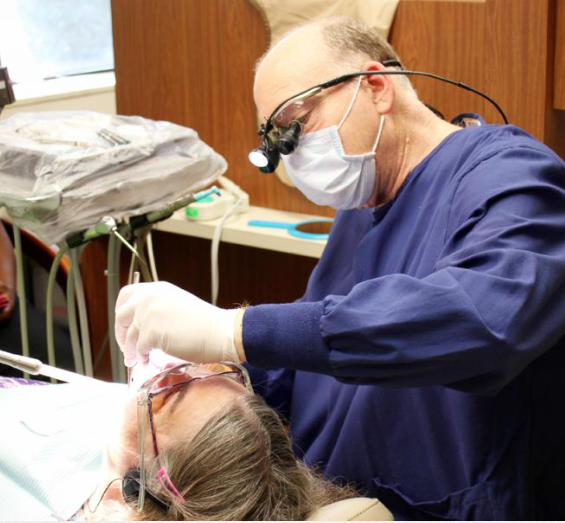
Photo by Andy Marso/KHI News Service Dr. John Fasbinder says it’s challenging to convince his colleagues to treat adult Medicaid patients because of the low reimbursement rate — about 40 cents on the dollar compared to private insurance for dental work.
John Fasbinder’s dental office was busy on a recent Tuesday. Three employees helped in the reception area, answering phones and clicking away at computers. Hygienists tended to patients in three dental chairs in the main clinic. Fasbinder and his associate, Seth Cohen, flitted among those patients and others in private rooms set up for more intensive work.
Most days are like this for Fasbinder. At his Prairie Village office, he takes patients on Medicaid — no matter how old they are, what part of Kansas they come from or how difficult they are to treat.
That’s rare. In fact, Fasbinder thinks he may be the only oral surgeon left in the state who takes all comers.
“I try hard to get dentists to see Medicaid patients, and a lot of them won’t,” he said.
That’s because Kansas Medicaid, or KanCare, pays about 40 cents on the dollar compared to private insurance for dental work. And that was before legislators and Gov. Sam Brownback cut the reimbursements another 4 percent this year to help close persistent budget holes.
Fasbinder said that will make it even harder to convince his colleagues to take Medicaid patients.
“To take money away from a system that’s already compensating so little is not the answer,” he said. “And maybe we do need to be speaking to those representatives … that may be very well-meaning, but whoever’s pulling on their coattails or trouser legs is speaking stronger than we are. We need to let them know — logically, rationally, the best we can — that this is not working.”
Rates trending down
Medicaid reimbursement rates for dental care have dropped steadily in Kansas for years.
In 2003, reimbursements for Kansas children were among the top 10 in the nation, covering almost 70 percent of what private insurance would pay. By 2013 Kansas had dropped to the middle of the pack, with reimbursements around 47 percent of private pay. The reimbursements for treating adults are even less competitive.
Kevin Robertson, executive director of the Kansas Dental Association, said most of the state’s oral surgeons will see Medicaid patients up to age 21. Some take older adults who live in their counties and “a few will treat on a case-by-case basis.”
But he agreed that it is challenging to get any Kansas dentist to treat the thousands of adults covered by Medicaid, including about 7,700 who have intellectual or developmental disabilities.
“The lack of an increase in provider rates for 15 years has created a climate where the number of oral surgeons that accept Medicaid is low,” Robertson said via email. “The upcoming 4 percent decrease in provider rates will not make that any easier.”
John Fales, a pediatric dentist in Olathe and the president of the dental association, submitted written testimony about the reimbursement cuts to federal officials who hosted a Medicaid forum in Salina last month.
Fales said he has provided dental care to children and adults with special needs on Medicaid since 1983 and he has always done so at a loss because the reimbursements didn’t cover expenses. The cuts will increase the losses by thousands of dollars.
“A 4 percent decrease in reimbursement will likely be the death knell for KanCare’s ability to provide local access to dental care for these patients without an adequate number of dental providers,” Fales wrote.
Tight budgets a challenge
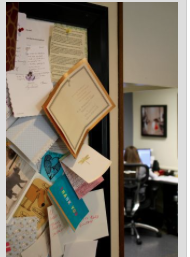
Photo by Andy Marso/KHI News Service A display of thank-you notes reflects the appreciation that patients have for Dr. John Fasbinder, who is one of a few dentists in Kansas who treat adult Medicaid patients.
Kansas legislators have been dealing with tight budgets in the wake of large income tax cuts spearheaded in 2012 by Gov. Sam Brownback and Republican leaders.
Increases to the Medicaid reimbursements aren’t likely without a change in tax policy or a sudden spurt of dramatic economic growth.
But Fasbinder said he’s already doing as much of that as he can, for people who don’t even have Medicaid.
“We get a lot of patients sent to us that don’t have anything,” he said. “From Catholic Charities, from abuse places. The prosecuting attorney’s office has called us about people who have been beat up. And we try to take care of everybody we can.
“There’s not always funding. But you know what? It’s just a ‘gotta do’ thing. I would like to get better funding from the state. I would like to see them better take care of the money that they’re taking taxes out for me and everybody else.”
Fasbinder said that if legislators think all dentists are living large, they’re mistaken. He drives a 2008 Toyota Camry.
That’s his choice, he said. He could be making more money if he shifted his patient mix to serve more patients with private insurance.
But some of Kansas’ most medically fragile people are on Medicaid, and Fasbinder is worried about them not getting care.
“There’s a lot of people whose needs are not getting met, and they’re not paying us just wonderful amounts,” Fasbinder said. “It’s making it hard for us to survive. We have trouble with access to care, and we’ve got trouble with meeting the needs.”
Focus on the patients
Fasbinder said he thinks legislators would make Medicaid reimbursements a higher priority if they just met some of his patients.
Patients like Sarah Matthies.
Matthies has a disability, the result of a serious back injury she suffered while horseback riding. She had another dentist who treated Medicaid patients. Then she was hospitalized for several months. When she got out, she knew she was behind on her dental care, with four cavities and a busted crown.
So she tried to see her dentist.
“Then I get a letter saying he’s retiring and I go, ‘Darn,’” Matthies said, “and the dentist who took over is not taking Medicaid.”
At first Matthies wasn’t sure where she would turn. Eventually she found Fasbinder through a website run by the state Medicaid contractor who handles her case.
“It was real hard to find Dr. Fasbinder, and he’s quite a ways away,” said Matthies, who lives in Olathe.
Matthies has to arrange transportation to her dental appointments at least three but no more than 30 days in advance.
But at least she lives in the same county as Fasbinder’s practice.
Many of his other Medicaid patients travel much farther, and some have far more severe disabilities.
Some are developmentally disabled, or nonverbal, and find routine dental work traumatic.
Parents rave about how Fasbinder treats their special needs children.
“Let me just tell you, I’m probably going to get emotional here,” Jennifer Smith said in a phone interview. “He is extremely compassionate and very patient.”
Smith is executive director of the Autism Society of the Heartland and has two grown children who have autism.
She has witnessed Fasbinder treating nonverbal patients by holding their hands while he works and talking them through what he’s doing because he can tell they are in pain even if they can’t describe the pain for him.
“He is treating that person as a person, an individual,” Smith said. “Not talking over them.”
Smith said she and others also go to Fasbinder because he is a licensed anesthesiologist who will do sedation dentistry even at Medicaid rates.
That’s very rare, and often it’s the only practical way to do dental procedures on patients with intellectual or developmental disabilities.
“(For) so many of our loved ones with disabilities, it’s a sensory issue,” Smith said. “They’re not understanding what’s going on, and having to sit and have someone poke and prod in their mouth — it’s difficult.”
Smith, who lives in Gardner, said she was disappointed to hear that the Medicaid reimbursements are being reduced. Many people in the autism community would struggle to find dental care without Fasbinder, she said.
“He has them come from all over because of what he does,” Smith said. “When you’re a family that has a loved one with a disability and you find a provider that spends the time and, even if there’s an emergency, will schedule something to immediately get them in, you want to stay with them because they get it.”
A matter of life and death
Anne Hull has two adult sons who have developmental disabilities and go to Fasbinder’s clinic.
She knows it’s challenging for providers like Fasbinder to run a business on what Medicaid pays and finds the recent reductions to reimbursements alarming.
Hull wonders if the general public understands how many of their fellow Kansans have developmental disabilities and how dental pain can affect their ability to thrive.
“As a country, we need to make sure that people who truly need the help get it,” Hull said. “And that they’re not suffering in pain.”
Fasbinder said doing the sedation dentistry for his patients with developmental and intellectual disabilities is a moral obligation, but not easy on the bottom line.
“It’s tough when they go to sleep and we’ve got to do everything Medicaid allows me to do on them at the time and make those treatment decisions without a lot of information that I can garner ahead of time because I can’t get near them,” Fasbinder said. “I won’t get in their mouths (before they’re sedated). I can’t get in their mouths — nobody can — to try to figure out the best therapy, the best treatment, for them.”
There are many restrictions on what dental work Medicaid will cover, especially for adults. For example, tooth extractions are only covered when deemed medically necessary.
That makes dentists even more reluctant to take Medicaid patients. Fasbinder said some of the patients he sees have been without dental care so long, extractions aren’t just medically necessary — they’re a matter of life and death.
“The truth is it’s killing people,” Fasbinder said. “The truth is there are more hospital admissions than we’ve had in a long time for dental. Ask the emergency docs what they can do for that. Nothing. Nothing. Because they don’t have a lot of dentists on staff. They can (only) throw antibiotics and pain pills at them, which increases our world resistance to antibiotics, and we’re all going to pay for that eventually.”
Fasbinder is 61. He plans to continue practicing another 10 to 15 years, while handing off ownership of his clinic to Cohen.
Before he retires, Fasbinder would like to see a stronger provider network for Medicaid patients.
Fasbinder wishes his colleagues would take more Medicaid patients with complex medical conditions and developmental and intellectual disabilities. But he doesn’t entirely blame them for not doing so. It’s a shared societal responsibility, he said, and the current Medicaid rates represent a societal failure.
“There’s got to be ways we can take care of these folks,” Fasbinder said. “We’re supposed to. The federal government mandates that we’re supposed to. Our ethical values mandate we’re supposed to take care of these people.”
Andy Marso is a reporter for KHI News Service in Topeka, a partner in the Heartland Health Monitor team. You can reach him on Twitter @andymarso
CLINTON COUNTY – Two people from southwest Kansas were injured in an accident just before 6 p.m. on Friday in Clinton County Missouri.
The Missouri State Highway Patrol reported a 2006 Ford Freestyle driven by Anna M. Brown, 70, Liberal, was southbound on Interstate 35 at Route BB.
The driver swerved to avoid a merging vehicle and the driver overcorrected. The vehicle traveled off the road and struck an embankment.
Brown was transported to Cameron Regional Medical Center in serious condition, according to the MSHP.
A passenger Dan M. Brown, 68, Liberal, was transported to the hospital with minor injuries.
They were not wearing seat belts, according to the MSHP.
BILLINGS, Mont. (AP) — A trade group for the energy industry is accusing federal officials of illegally canceling or postponing the sale of more than two dozen oil and gas leases over the past two years.
The Western Energy Alliance sued the Obama administration in U.S. District Court on Thursday to force it to hold lease sales four times a year.
The group says sales have been called off in Montana, Colorado, New Mexico, North Dakota, Oklahoma, Texas, Utah and Wyoming.
U.S. officials say at least some cancellations stem from companies’ limited interest. Of more than 2.2 million federal acres offered for sale last year, just over a half-million acres received bids.
The government expects low oil and gas prices will reduce drilling on public lands by 40 percent versus historical levels in coming years.
LEAVENWORTH, Kan. (AP) — A preliminary hearing has been delayed for a former physician assistant accused of sexually abusing patients at a Department of Veterans Affairs hospital in Leavenworth.
Mark Wisner’s hearing on a charge of aggravated sexual battery was scheduled for Thursday but it was continued until Sept. 15.
The Leavenworth Times reports Wisner also is charged in a second case. He’s charged with aggravated criminal sodomy and three misdemeanor charges of sexual battery. Those crimes allegedly occurred in 2014 while Wisner worked at the Eisenhower VA Medical Center.
Wisner’s attorney, John Bryant, asked for the continuance for the first case because he is having difficulty meeting with his client.
Wisner surrendered his medical license after at least seven patients accused him of abusing them.
WICHITA, Kan. (AP) — A government report is forecasting record corn and soybean harvests in Kansas.
The National Agricultural Statistics Service reported Friday that it expects corn production in the state of 660 million bushels. That is 14 percent higher than a year ago.
Anticipated soybean production of 164 million bushels will also set a record if realized. That is 11 percent higher than a year ago.
The agency also estimated the sorghum harvest to come in at 244 million bushels, down 13 percent from a year ago.
Production of this year’s winter wheat crop is estimated at 462 million bushels, up 43 percent from last year’s crop. Record yields of 57 bushels per acre help offset the fewer wheat acres planted.
Alfalfa hay production is forecast at 2.58 million tons.
SALINE COUNTY – Private donations have increased the reward for information in the murder of a Saline County woman.
Donations directed to the reward fund in the murder of Lori Heimer near Assaria, have increased the total amount to about $5,000. This includes $1,000 from Crime Stoppers of Salina-Saline County, according to Carrie Pruter, a crime analyst with the Salina Police Department,
Heimer was found brutally murdered in her home at 10525 S. Hopkins Road near Assaria on June 25, where she maintained a dog breeding business called “Lori’s Poodle Patch.”
She sold a variety of dogs and investigators want to speak to anyone that had contact or a business appointment with Heimer between June 20th and June 25th.
Investigators at the home of Lori Heimer on June 26th (Courtesy Photo)
Authorities ask that anyone with information on Heimer’s murder contact the Kansas Bureau of Investigation, 24 hours a day, at 1-800-KSCRIME or the Saline County Sheriff’s Office at 785-826-6500 during business hours, Monday through Friday, 8 a.m. to 5 p.m.
Daisy Tackett’s lawsuit against KU seeks damages under the federal law prohibiting sex discrimination in education. TRISTAN BOWERSOX / CREATIVE COMMONS-FLICKR
LAWRENCE, Kan. (AP) — A former University of Kansas rower who says she was raped by a Jayhawk football player contends in an amended lawsuit that the school’s athletic department requires rowers to attend Kansas football games and encourages rowers to socialize with football recruits.
The Kansas City Star reports an attorney for Daisy Tackett filed the amended federal lawsuit Tuesday.
Tackett and another rower have alleged they were raped a year apart in university housing by the same Kansas football player. They and their parents are also part of a class-action lawsuit claiming that the university misled the public by saying campus housing was safe.
The university has consistently declined to comment on the lawsuits, except to say it takes all reports of sexual assault seriously.
SEDGWICK COUNTY – Law enforcement authorities in Sedgwick County are investigating a suspect in connection with a series of robberies
The robberies this month included Papa Murphy’s at 2110 N. Maize, Stop and Shop at 1826 W. 13th, Phillips 66 at 10723 W. Kellogg and Presto at 2356 S. Seneca, according to a media release.
A citizen was able to provide vehicle tag information from one of the robberies.
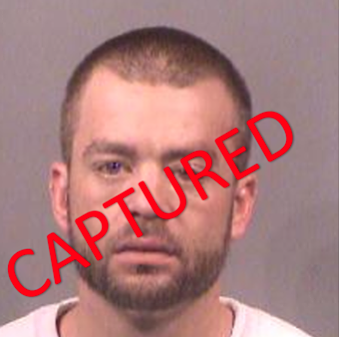
Just after 11:30 a.m. on Thursday, detectives and the FBI Task Force located the suspect Christopher J. McColm, 34, at a residence in the 700 block of south Bonn in Wichita.
He was taken into custody without incident and booked into jail for four counts of aggravated robbery.
AUSTIN, Texas (AP) — Despite the first day of school fast approaching, a federal judge isn’t ruling immediately on 13 states’ request to halt an Obama administration directive on bathroom rights for transgender students in public schools.
U.S. District Judge Reed O’Connor heard arguments in Fort Worth on Friday from Texas and 12 other states seeking an injunction against the policy, and from federal attorneys defending it. He didn’t rule right away.
In May, federal officials told public schools nationwide that transgender students must be allowed to use bathrooms consistent with their chosen gender identity.
State Republican leaders argue that undermines privacy safeguards.
Last week, the U.S. Supreme Court ruled that a Virginia school board can, for now, block a transgender male from using the boys’ restroom once school resumes.
——————-
AUSTIN, Texas (AP) —Twelve states will ask a federal judge Friday to halt an Obama administration directive on bathroom rights for transgender students in U.S. public schools. Here’s what you need to know:
Q: WHAT STARTED ALL THIS?
A: The Obama administration told U.S. public schools in May that transgender students must be allowed to use bathrooms and locker rooms consistent with their chosen gender identity. That announcement came days after the Justice Department sued North Carolina over a state law that requires people to use public bathrooms that correspond with the sex on their birth certificate — which U.S. Attorney General Loretta Lynch had likened to policies of racial segregation. Republicans have argued such laws are commonsense privacy safeguards.
Q: A NEW SCHOOL YEAR IS ABOUT TO START. WHAT IF DISTRICTS DON’T COMPLY?
A: Schools were not explicitly told to comply or lose federal funds. But the Obama administration also didn’t rule out that possibility in court documents filed in July, saying recipients of federal education dollars “are clearly on notice” that antidiscrimination polices must be followed. Texas alone gets roughly $10 billion in federal education funds, and argues along with the 11 other states that they shouldn’t potentially lose money over what they criticize as a “massive social experiment.”
Q: WHAT’S AT STAKE FRIDAY?
A: U.S. District Judge Reed O’Connor in Fort Worth is considering a preliminary injunction that would temporarily halt the directive, meaning schools wouldn’t have to worry about complying for now. He may not rule immediately.
Q: WHAT STATES ARE INVOLVED?
A: The lawsuit was filed in May by Texas, Alabama, Wisconsin, West Virginia, Tennessee, Oklahoma, Louisiana, Utah and Georgia, and the Republican governors of Maine, Mississippi and Kentucky. Two small school districts in Arizona and Texas, which have fewer than 600 students combined and no transgender persons on their campuses, also joined the effort to prevent the directive from being enforced.
Q: AREN’T THERE OTHER ONGOING LEGAL BATTLES OVER TRANSGENDER RIGHTS?
A: Yes. Perhaps most notably was the U.S. Supreme Court ruling this month that a Virginia school board for now can block a transgender male from using the boys’ restroom when school resumes.
Q: HOW MANY TRANSGENDER STUDENTS MIGHT BE AFFECTED BY THE SCHOOL DIRECTIVE?
A: There’s no known number of transgender students in U.S. public schools, but in June, a team of experts estimated that about 1.4 million adults in the country identify as transgender. That’s double the estimate from a decade ago, according to demographer Gary Gates, who worked on the survey with other scholars at the Williams Institute, a think tank at the UCLA School of Law that specializes in research on issues affecting lesbians, gays, bisexuals and transgender people.
HUTCHINSON – A Kansas man who at one time operated a convenience store and entered a plea in the criminal case against him was granted one year of probation on Friday.
Chris Patel, 43, was accused of selling items police believed were stolen from Dillon’s and being in possession of K-2 or synthetic marijuana.
He entered pleas to possession of drug paraphernalia with intent to distribute, possession of stolen property and a misdemeanor count of possession of marijuana.
The state dropped a charge of possession of K-2 with intent to sell within 1,000 feet of a school and no drug tax stamp.
Police say Patel, the owner of the Zip Trip Foods at 200 E. Ave. A in Hutchinson was purchasing what he believed to be stolen goods from a member of Kroger’s organized retail crime unit.
The stolen goods included cases of Red Bull energy drinks, Tide laundry detergent and cigarettes.
Patel had made numerous purchases, then stored the items in another building. The items were secretly marked and eventually showed up on his store shelves. A search warrant of Patel’s home turned up more items as well as 45 bags of K-2.
Police went to the Schlitterbahn Kansas City Water Park on Sunday to investigate the death of a 10-year-old boy photo courtesy KMBC
TOPEKA, Kan. (AP) — Kansas Gov. Sam Brownback says he wants the state to review its regulation of amusement rides following a 10-year-old boy’s death at the Schlitterbahn Waterpark in Kansas City, Kansas.
Brownback told reporters Friday that he’s hoping state legislators spend significant time examining the state’s law on amusement parks.
He said, “I think that all needs to be looked at now in light of this tragedy.”
Kansas requires operators of permanent rides to “self-inspect” their rides at least once a year and maintain records. The state Department of Labor randomly audits those records, but Schlitterbahn’s documents hadn’t been audited for four years.
Caleb Thomas Schwab died Sunday while riding what is billed as the world’s tallest waterslide. He was the son of state Rep. Scott Schwab.