MANHATTAN — Leaders from across the state will focus on the future of agriculture this month as the Kansas Department of Agriculture will host the 2016 Kansas Governor’s Summit on Agricultural Growth on Tuesday, August 30, from 8:30 a.m. to 5:00 p.m. at the Manhattan Conference Center. Agriculture is the state’s largest industry, employer and economic contributor and plays a critical and strategic role in overall statewide economic growth.
The Summit will provide participants the opportunity to connect with other Kansas agriculture leaders and discuss strategies to help ensure agriculture remains a vital foundation of the Kansas economy. Sessions at the Summit will build upon the more than 200 meetings already conducted with industry partners throughout the state to identify key opportunities for future success in agriculture.
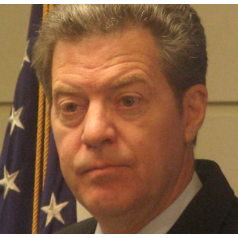
“Kansas farmers and ranchers feed the world and at the same time work hard to preserve our state’s natural resources,” said Kansas Governor Sam Brownback. “This summit will serve a critical role in ensuring the future strength of Kansas agriculture, as we encourage growth and increased opportunity for the farmers, ranchers and agribusinesses of Kansas.”
Topics addressed at the Summit will include nearly all agricultural sectors in Kansas, ranging from beef and wheat to specialty crops and UAS. In addition, discussions will occur on transportation, access to capital, barriers to entry, consumer awareness and community acceptance of agriculture, international trade, water and natural resources, and workforce development. The Summit will be crucial in the prioritization of goals and initiatives to encourage strategic development in agriculture throughout Kansas.
Participation in the Summit is free and open to the public, but registration is requested. Register by August 22 to guarantee lunch. A block of rooms is available at the Hilton Garden Inn; call 785-532-9116 by August 12 to reserve a room.
More information about the Summit, including a link to the registration site, can be found at agriculture.ks.gov/summit. If you have questions about the Summit, call KDA at (785) 564-6700 or e-mail [email protected].
FINNEY COUNTY – Law enforcement authorities in Finney County are investigating a suspect on drug and gun charges.
Just after 5 a.m. on Thursday the Garden City/Finney County Drug Task Force completed a 3-month investigation into the possession and distribution of methamphetamine by service of a search warrant at 2820 Terrace Place in Garden City, according to a media release.
The warrant was served by the Garden City/Finney County SWAT team. The suspect, Willie Jackson, 49, was located at the residence and arrested without incident.
During the investigation it was learned that Jackson may be in possession of a firearm and allegedly made threats with it.
Items of evidence, to include a handgun were located inside the residence. Jackson is being held in the Finney County jail and could face the possible charges of: Distribution of Methamphetamine, Aggravated assault, Criminal Threat, Criminal Possession of a Firearm by a Convicted Felon Possession of Drug Paraphernalia, Possession of Drug Paraphernalia and Possession of Proceeds from the sale of Controlled Substances
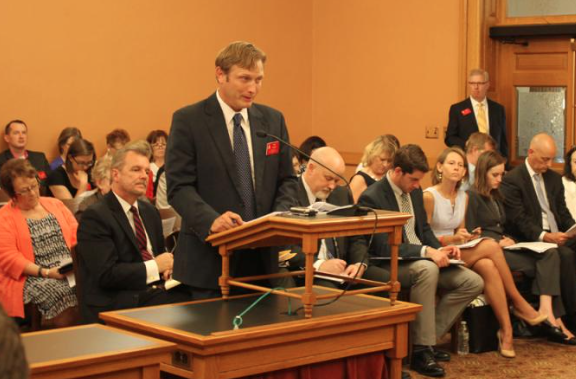
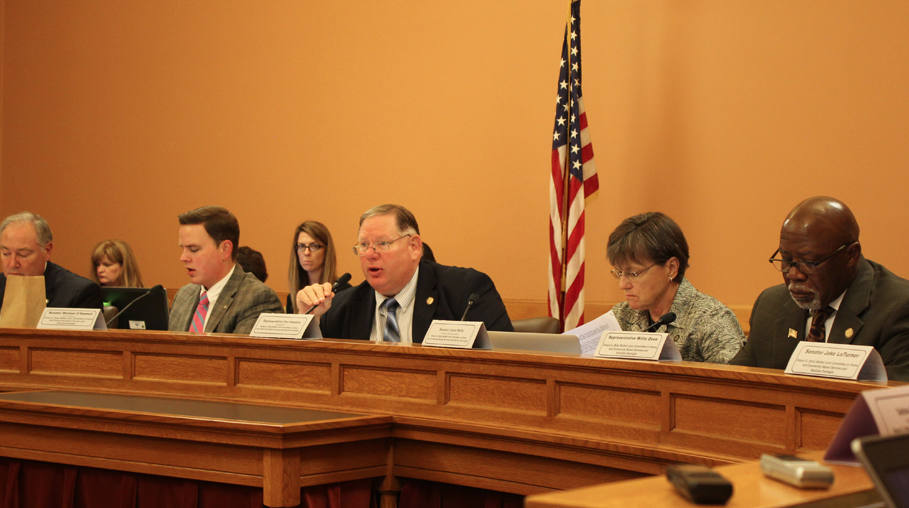
Photo by Andy Marso/KHI News Service Rep. Dan Hawkins, center, and other members of the Robert G. (Bob) Bethell Joint Committee on Home and Community Based Services and KanCare Oversight questioned a state contractor about ongoing backlogs in the Medicaid application process. –
By ANDY MARSO
Legislators grilled a state contractor Thursday about problems with the Medicaid application process and the backlog that has thousands of Kansans waiting for coverage.
Rep. Dan Hawkins, chairman of the Robert G. (Bob) Bethell Joint Committee on Home and Community Based Services and KanCare Oversight, arranged for the committee to tour the KanCare Clearinghouse where Medicaid applications are processed.
Hawkins told leaders of Maximus, the contractor that staffs the Clearinghouse, that he receives calls daily from applicants stuck in the backlog. One family called him on behalf of a loved one who had been waiting since October.
“They’re now dead,” said Hawkins, a Wichita Republican. “They already died, and they’re still not through the system.”
The contractor’s explanations for the backlog were not new: the rocky rollout last summer of a new computer system to process the applications coupled with an ill-timed administrative change that funneled all applications through the Clearinghouse.
But legislators heard more detailed information about how those two challenges caused the backlog to balloon.
In Kansas, Medicaid is a managed care program called KanCare that is administered by three private insurance companies. But those companies don’t handle the application process.
Maximus does that. An international company that does only government contracting, Maximus has 327 employees at the KanCare Clearinghouse at Forbes Field in south Topeka.
They receive KanCare applications there and begin processing them before passing them on to state employees for final approval. Maximus also staffs a customer service call center for KanCare applicants.
Maximus has done that since 1998 for certain types of Medicaid applications: those seeking insurance for low-income pregnant women, children and parents who fall under the jurisdiction of the Kansas Department of Health and Environment.
Administrative change Other applications for elderly and disabled Kansans and those seeking long-term care in nursing homes were processed by the Kansas Department for Children and Families until the administrative change Jan. 1.
On that day, the KanCare Clearinghouse took on 3,800 partially processed applications from DCF. Some of those applications had been pending for months.
Since January, employees at the Clearinghouse have tried to work through those, plus an average of about 4,500 new applications each month that previously would have gone to DCF.
Maximus initially added 20 new employees to handle the increased workload.
“Should we have hired more people sooner?” asked Ilene Baylinson, general manager of U.S. health services for Maximus. “Probably.”
The company eventually brought on another 50.
The applications for Kansans who are elderly, disabled or in need of long-term care are far more complex than the family medical applications. Baylinson said it can take months of training to get new hires up to speed.
Meanwhile, existing employees still were getting accustomed to the new software, the Kansas Eligibility Enforcement System, and the workarounds it requires.
By March the backlog of applications waiting for processing had passed 18,000, including about 7,700 that had been out for more than the 45-day federal limit.
DCF sent about 30 workers to the Clearinghouse to take up the elderly, disabled and long-term care applications that month, after federal officials sent a letter to KDHE expressing concern about the backlog. The number of DCF employees helping has since increased to 50.
Federal government’s role The federal government also received some of the blame Thursday. The open enrollment period for insurance through the Affordable Care Act exacerbated the backlog when the online marketplace directed thousands of Kansans who hadn’t known they were eligible for Medicaid into the application process.
Maximus officials also told legislators that federal rules are the reason the elderly and disabled Medicaid applications are so complex and require hundreds of pages of documents outlining financial assets. Applicants and their family members sometimes struggle to find the right documents, which delays the process.
But committee members questioned whether Maximus employees were sufficiently trained to help.
Hawkins said one family that called him had been asked three times to provide the same document — a document the family had provided each time.
“Why is that happening?” Hawkins asked.
“It should not be happening,” Baylinson said. “Our job is to make sure that doesn’t happen. If those cases are happening, we should know about it. And if there’s an error on our part, we should fix it.”
Rep. Barbara Ballard, a Democrat from Lawrence, told Baylinson she’d received similar calls.
“I’ll just tell you: It is happening,” Ballard said.
Sen. Laura Kelly, a Democrat from Topeka, asked if legislators could contact Maximus directly about constituent concerns. But KDHE official John Monroe said he would field them.
KDHE also acts as the go-between for Maximus and Accenture, a separate state contractor that developed the KEES software.
During Thursday’s tour, a Maximus employee told legislators that the software is an upgrade compared to the previous system, but it still has issues that require workarounds.
Baylinson said KDHE has been great at relaying concerns from Maximus to Accenture. But she said the programmers who developed the technology could have benefited from earlier contact with the people who would have to use it.
“In a perfect world, we would have sat down with Accenture ahead of time,” Baylinson said.
Representatives of Kansas nursing homes and community mental health centers said they remain concerned about the backlog and the length of time it’s taking to get Kansans covered by Medicaid.
But state officials say they should have the backlog resolved by October, and Baylinson said the Clearinghouse experience will continue to improve.
“This is fixable,” Baylinson said. “This is fixable, and we will fix it. You have our commitment.”
Andy Marso is a reporter for KHI News Service in Topeka, a partner in the Heartland Health Monitor team. You can reach him on Twitter @andymarso
KANSAS CITY, Mo. (AP) — Blue Cross and Blue Shield of Kansas City says about 790,000 of its members are being notified that some of their personal information has been compromised in a data breach.
The Kansas City Star reports that the issue occurred at Newkirk Products, which issues health care identification cards. Newkirk discovered the breach July 6.
BlueKC spokeswoman Kelly Cannon says the breach didn’t include Social Security numbers or medical or financial information but did include names, addresses and some plan information.
Newkirk and BlueKC say there’s no evidence so far that the data has been used inappropriately.
People with a BlueKC card issued between Sept. 2, 2012, and July 7, 2016, will get a letter explaining the data breach and offering them two years of free identity protection services.
WICHITA, Kan. (AP) — A new government report shows the value of land and buildings on Kansas farms fell 7 percent last year.
The National Agricultural Statistics Service said Friday farm real estate value in 2016 averaged $1,880 per acre. That is down $150 per acre compared to the previous year.
Cropland values fell 7 percent to $2,050 per acre. Cropland with irrigation averaged $3,000 an acre, down $270 per acre. Cropland without irrigation averaged $1,940, down $150 an acre.
Pastureland was valued at $1,290 per acre, down $100 per acre.
The agency said cash rents paid to landlords for cropland was mixed with irrigated land up to $129 an acre, while dryland cropland was down to $56 per acre. Pasture rented for cash was down to an average $19 an acre.
WICHITA, Kan. (AP) — A bag carried to the moon aboard the Apollo 11 spacecraft and used for the first sample of lunar material is at the center of a legal fight after the government mistakenly sold it during the criminal case against the former director of the Kansas Cosmosphere and Space Center.
The bag was flown on Apollo 11 in June 1969 and has lunar material embedded in its fabric.
The government this week asked a federal judge to rescind its sale. It contends that as result of misidentification the National Aeronautics and Space Administration— which loaned it to the Cosmosphere — was not properly notified.
Cosmosphere founder Max Ary was convicted in 2005 for stealing and selling museum artifacts. The bag was found in his garage during execution of a search warrant.
WICHITA, Kan. (AP) — Two Kansans have been sentenced to prison in the 2015 death of a 66-year-old Wichita woman killed during a home invasion.
The Wichita Eagle reports Jacob Strouse was sentenced to more than 32 years in prison in connection with the September death of Jacquelyn Harvey. Strouse pleaded guilty in June to second-degree murder, aggravated burglary and other charges.
Brittany McDay was sentenced to more than 21 years. She pleaded guilty in April to second-degree murder, aggravated burglary and attempted criminal use of a financial card.
Prosecutors say McDay and Strouse went to the neighborhood to collect a debt but kicked in the door to the wrong house and shot Harvey before realizing their mistake.
Wednesday’s sentences follow plea agreements negotiated by their attorneys and the Sedgwick County prosecutor’s office.
Kansas City, MO — Women’s Foundation conducted an analysis on the state of women candidates for state and federal legislative races in Kansas following Tuesday’s primary election in Kansas. Women’s Foundation reviewed the unofficial election results from the Office of Kansas Secretary of State, looking at the primary election winners who will be on the ballot in November. Our findings include the following:
In November’s general election, of the Kansas federal and state candidates on the ballot combined, 31% of candidates are women.
To break these numbers down further, no women will be on the ballot for the office of U.S. Senate.
Two of seven candidates (29%) for U.S. Representative seats are women.*
Twenty-four (24) of the 78 candidates (31%) running for state senate seats this cycle are women; three of whom are incumbents.
Sixty-five (65) of the 202 candidates (32%) who will be on the ballot competing for a state representative seat are women.
Women’s Foundation promotes equity and opportunity for women of all ages, using research, philanthropy, and policy solutions to make meaningful change. In 2016, they released the Status of Women in Kansas research study, the findings of which included that women are vastly underrepresented in the Kansas legislature. In 2014, their Civic Engagement research highlighted the gender gap on boards and commissions and helped spur the Women’s Foundation Appointments Project to help remove barriers for women to serve.
TOPEKA, Kan. (AP) — Kansas Gov. Sam Brownback’s administration has gotten a preview of what working with a less conservative Legislature could be like.
It came Friday in the form of an oversight committee’s angry, bipartisan scolding over issues within the state’s Medicaid program.
The public dressing-down of Department of Health and Environment officials came only three days after the state’s primary election. Voters showed their unhappiness with Brownback by ousting at least 11 conservative Republican incumbents in the Legislature.
Members of the House-Senate oversight committee were upset about budget-balancing cuts in payments to pharmacies, doctors and hospitals providing services to Medicaid participants.
They also were frustrated with a backlog in Medicaid applications and angry that the state is still pursuing some changes opposed by many advocates and legislators.
JACKSON COUNTY – Law enforcement authorities in Jackson County are investigating two suspects on drug charges.
On Thursday morning, a Jackson County Sheriff’s Deputy responded to a report of an erratic driver on U.S. Hwy 75 south of Holton, according to a media release.
The deputy initiated a car stop on a vehicle driven by James Dana Kilgore, 30, Fresno, CA., for allegedly texting while driving.
Kilgore and Hannah Joy Nolan, 21, Rio Dell, CA., were arrested following the car stop after a search yielded a large quantity of illegal narcotics.
Kilgore was booked into the Jackson County Jail on the following charges: Possession of Xanax, Possession of Xanax with intent to distribute, Possession of Hydrocodone, Possession of Hydrocodone with intent to distribute, Possession of Marijuana, Possession of Marijuana with intent to distribute, Possession of Drug Paraphernalia, Failure to pay Kansas Drug Tax Stamp, Driving while suspended, Using electronic device while driving and Improper driving on roadway.
Nolan was booked into the Jackson County Jail for the following: Possession of Xanax, Conspiracy to Commit Possession of Xanax with intent to distribute, Possession of Hydrocodone, Conspiracy to Commit Possession of Marijuana with intent to distribute, Possession of Drug Paraphernalia, Conspiracy to Possess Drug Paraphernalia and Failure to pay Kansas Drug Tax Stamp. Bond on both subjects was set at $25,000.00.
Photo by Andy Marso/KHI News Service Kyle Kessler, executive director of the Association of Community Mental Health Centers of Kansas, spoke Thursday at a meeting of the Robert G. (Bob) Bethell Joint Committee on Home and Community Based Services and KanCare Oversight. He and others said that some community mental health centers are having trouble getting paid for some Medicaid services they believe their clients need.
By MEGAN HART
The leaders of some Kansas community mental health centers say they are having trouble getting paid for some Medicaid services they believe their clients need.
Brenda Mills, CEO of Family Service and Guidance Center, a Topeka-based community mental health center that serves children, spoke Thursday at a meeting of the Robert G. (Bob) Bethell Joint Committee on Home and Community Based Services and KanCare Oversight.
Mills told committee members that some of the three private insurance companies that run KanCare, the state’s privatized Medicaid program, had raised objections to the center’s psychosocial treatment practices. Psychosocial treatment uses games and activities that are part of daily living to help children learn to manage feelings like frustration and anger in appropriate ways.
The insurance companies, also known as managed care organizations or MCOs, have authority to look for outliers in prescribing patterns, which is appropriate, Mills said. But she said some MCOs flagged a problem when they saw an increase in psychosocial treatment during the summer — which reflects the fact that children aren’t in school and are available for more intensive therapy.
One MCO told the center to cut the amount of psychosocial therapy this summer to half of what it provided last summer, Mills said. She declined to specify the MCO and said the center didn’t comply because of concerns it wouldn’t be meeting children’s needs.
“Upfront, we were told, ‘Don’t provide as much psychosocial (therapy) this year,’” she said.
Mills said she and other center employees have tried to explain why they provided that level of service and sent the MCOs documentation of the sessions. She hasn’t received much communication on the subject, but she said she hopes the center won’t have to repay the reimbursements it has received.
“We’re always going to err on the side of the kids and to provide what’s needed, and not just 50 percent of what was provided last year,” she said.
Kyle Kessler, executive director of the Association of Community Mental Health Centers of Kansas, said during Thursday’s meeting that some other centers have had problems with reimbursements. In some cases, the MCOs decided not to pay for an entire hour of psychotherapy, he said.
Setting limits on reimbursements puts providers in the difficult position of not providing services that patients need or not getting paid for them, Kessler said. It also may run afoul of federal law forbidding greater restrictions on mental health care than on medical care, he said.
Marilyn Cook, executive director of ComCare in Wichita, said her center has been providing some services that it can’t bill for but help keep clients out of the state hospital. For example, ComCare can’t bill for times when a client in a crisis stabilization bed is asleep but requires safety monitoring — and sleep may be helpful to the person’s mental condition, she said.
The center also isn’t reimbursed for the time employees spend trying to provide different types of documentation each MCO wants, Cook said.
“It’s simply difficult to be accountable to three masters and, in the case of the state, maybe a fourth master,” she said.
Not all of the comments on KanCare were negative, however.
Mills said the MCOs have assisted with getting children treatment in another state when they needed a service not available in Kansas, and Cook said they had supported efforts to treat clients’ physical and mental health needs together.
Kessler also pointed to a proposal to start covering grief counseling as a promising sign.
“I would be remiss by not mentioning some of the promise we believe that still exists for KanCare,” he said.
Megan Hart is a reporter for KHI News Service in Topeka, a partner in the Heartland Health Monitor team. You can reach her on Twitter @meganhartMC
MANHATTAN – Law enforcement authorities in Riley County are investigating seven suspects on drug and other charges.
Officers with the Riley County Police Department’s Special Investigations Unit with the assistance of the Junction City, Geary County Drug Task Force made seven arrests following 5 search warrants in Manhattan which were executed on Wednesday.
This investigation was the culmination of 6 weeks of work.
Arrested on the offense of distribution of methamphetamine within 1000 feet of a school was Tyrone Goodridge, 34, Manhattan. He was given a bond of $77,000.00.
Police arrested Julious Goodridge, 55, of Manhattan in the 2000 block of Claflin on the offense of distribution of methamphetamine within 1000 feet of a school. He was given a bond of $80,000.00.
Larry Jones, 45, of Manhattan was arrested in the 3000 block of Sunnyside Drive and given a bond of $25,000.00. He was arrested on the offense of distribution of methamphetamine.
Ann Engert, 33, of Manhattan was arrested on the offense of possession of a controlled substance while in the 3000 block of Sunnyside. She was given a bond of $3,000.00.
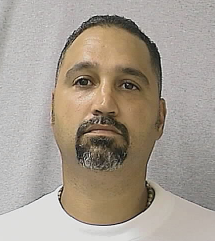
Maldonado- photo Kan. Dept. of Corrections
David Maldonado Jr., 41, of Manhattan was given a bond of $35,000.00 after being arrested on the offense of distribution of methamphetamine.
Officers arrested Ramiro Escamilla, 33, of Manhattan while in the 1100 block of Ratone Street. Escamilla was arrested on the offense of distribution of methamphetamine and given a bond of $40,000.00.
Colton Magnuson, 25, St. George, Kansas was arrested on warrants for the offense of parole violation, probation violation for 2 warrants from Pottawatomie County and a Geary County warrant for failure to appear for a traffic related violation.
Kimberly Brazzle, 28, of St. George, Kansas was arrested on a warrant for the offense of probation violation which originated in Pottawatomie County.
SALINE COUNTY -Law enforcement authorities in Saline County are investigating a shooting in the parking lot of a south Salina retail store.
Just before 10p.m. on Thursday, a man in his 20’s was sitting in his vehicle in the parking lot at Lowe’s, 3035 South 9th, when another vehicle pulled up next to him and an argument began, according to Salina Police Captain Mike Sweeney.
When the man attempted to leave the lot, someone in the second vehicle pulled out a gun and fired multiple shots at the vehicle and it left at least one bullet hole.
Sweeney said no was hurt in the incident and no other damage was found.

 KDA
KDA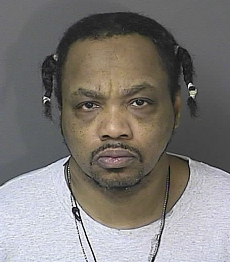








 By MINDY MAZUR
 Women’s Foundation promotes equity and opportunity for women of all ages, using research, philanthropy, and policy solutions to make meaningful change. In 2016, they released the