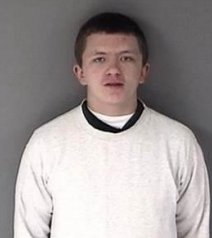
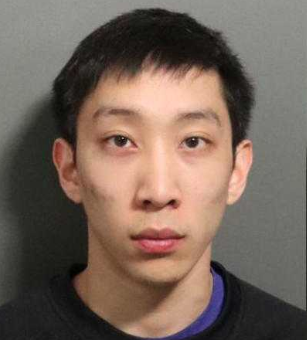
Zachary Jacob McFall is 5-foot-5 and 135 pounds -photo Topeka Police
SHAWNEE COUNTY —Law enforcement authorities are attempting to locate and speak with 16-year-old Zachary Jacob McFall in reference to Thursday’s fatal shooting in the in the 400 block of SE 37th Street, according to Lt. Andrew Beightel.
If you know the location of McFall, do not attempt to apprehend him yourself. Call 911 to report his whereabouts or you can leave an anonymous tip by calling Shawnee County Crime Stoppers at (785) 234-0007 or online at www.p3tips.com/128.
————
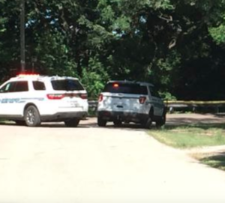
SHAWNEE COUNTY — Law enforcement authorities are investigating a fatal shooting and continue to search for suspects.
Just after 3:30 pm, Thursday, police were dispatched to the report of gunshots in the area of SE Fremont and SE Irvingham in Topeka, according to Lt. Andrew Beightel. While officers were in route to the gunshots call other citizens reported a possible shooting near SE 37th & SE Adams.
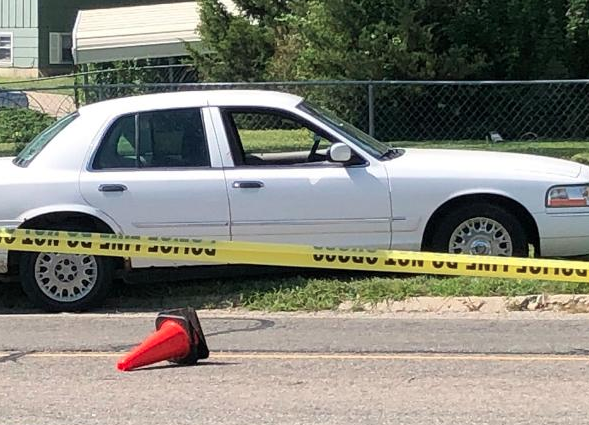
Officers then responded to that area, where at SE 37th and SE Pennsylvania they found a white passenger car with a 16-year-old identified as Joaquin Aj McKinney of Topeka. suffering from life threatening injuries. EMS transported the boy to an area hospital where he died, according to Beightel.
Initial reports from witness state the suspect(s) from the shooting were in a blue 4-door passenger car and they fled the area in an unknown direction of travel.
TOPEKA, Kan. (AP) — Two brothers from Colorado whose contaminated cantaloupe killed 33 people and hospitalized many more in 2011 are facing drug charges in Kansas related to an industrial hemp shipment.
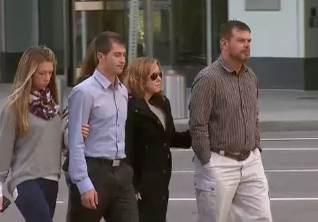
Eric and Ryan Jensen head into the federal courthouse on Oct. 22, 2013 photo courtesy KCNC Denver
Eric and Ryan Jensen grow industrial hemp — a non-intoxicating cannabis plant — at a farm run by Eric’s son in Holly, Colorado, where industrial hemp is legal. They are accused of attempting to ship industrial hemp by FedEx through Kansas, where the crop is illegal.
The Jensens pleaded guilty in 2013 to causing a nationwide outbreak of listeria through infected cantaloupe grown at their farm. They were sentenced to home detention and ordered to pay thousands of dollars in restitution.
“We’re still so far in debt from that deal that I don’t know when we’ll ever come out of it,” Eric Jensen said of the cantaloupe case. “Both our reputation tarnished and everything else. We’ve been trying to dig out of it and was kind of hoping my son’s deal with the hemp would kind of help us both to get out of it and we just keep getting deeper and deeper.”
In January 2017, a Fed Ex truck picked up about 300 pounds of boxed up hemp from the Jensen farm in Holly, about 10 miles from the Kansas border for shipment to California. The shipment went to a FedEx warehouse in Liberal, Kansas, to California. The Kansas Highway Patrol seized the shipment after employees reported that the shipment smelled like marijuana.
That seemed to be the end of it, but in January of this year, the Seward County Attorney’s Office charged the brothers with four drug offenses, including three felonies, that accuse them of distributing marijuana or possession of marijuana with the intent to distribute.
Kade Goodwin, an assistant county attorney prosecuting the case, said he couldn’t explain why two years passed before the charges were filed. Eric Jensen successfully fought an attempt to extradite him to Kansas, and authorities have not tried to extradite Ryan Jensen.
Colorado requires industrial hemp to have less than 0.03% of THC, the chemical that produces a high in marijuana. Eric’s attorney, Dodge City lawyer Van Hampton, is meeting roadblocks in his effort to have the THC concentration tested.
Hampton said Kansas authorities wouldn’t let an independent lab in Denver test a sample. He said the Colorado Bureau of Investigation would conduct a test if Kansas requests it, but Kansas hasn’t asked. And the judge in the case, Seward County District Court Judge Clint Peterson, is refusing to hear a motion to order testing, he said.
The Kansas Department of Agriculture, which has the only lab in the state able to run the test, “”hasn’t been as cooperative as we’d like and we don’t want to ship it off to a third party in another state,” said Goodwin, who said he wants the package tested.
The state Agriculture Department does not test samples in criminal investigations, instead limiting its role to administration and regulation with the Kansas Industrial Hemp Research Program, said spokesman Jason Walker.
Without testing, the case is at a standstill.
Goodwin at first suggested he would likely drop the case if a test showed the THC concentration at 0.3 percent or below. But he later clarified that “the prosecutor’s office will look at it from all angles and make a determination, but we’re not guaranteeing everything will be dismissed.”
LAWRENCE — As American policymakers and health care providers try multiple approaches to reduce the number of deaths related to the opioid epidemic, treatment facilities are commonly recommended. But there’s a major obstacle: Many facilities that serve individuals with opioid-related needs often won’t accept people who have been prescribed medications to combat the addiction.
University of Kansas researchers have written a study examining why treatment facilities decide whether to accept people on medications to fight opioid addiction and how rejections can be avoided and services streamlined.
Doctors increasingly prescribe medications such as methadone, buprenorphine and naltrexone to help individuals diagnosed with opioid use disorder, or OUD. But KU researchers found many Greater Kansas City area treatment facilities have zero or low acceptance rates for such individuals, for a wide range of reasons.
“Forty percent of the service facilities we tracked either are not willing to serve individuals with OUD, express reservations for serving them or impose more severe monitoring and/or restrictions in order to serve them,” said Nancy Kepple, assistant professor of social welfare and lead author of the study. “Of those, they tended to focus on social services or substance use disorder services only. Facilities providing recovery support services were the most likely to have a zero to low acceptance rate.”
Kepple and co-authors surveyed 360 area treatment facilities to determine their acceptance rates of individuals with OUD who have been prescribed medications to treat the disorder. They established four acceptance levels:
Zero acceptance, which would not accept individuals on medications for OUD
Low acceptance, facilities that accept these individuals with reservations/restrictions
Moderate acceptance, in which such individuals are accepted but their medication use is not monitored onsite
High acceptance, which accepts these individuals and administers/monitors their medication use.
Staff at 89 of the treatment facilities provided researchers with their rationale for whether they accept individuals taking medications for OUD. There was a wide range of responses for facilities not being willing/able to accept individuals using medications for OUD, from facilities staff who said they focused on providing a drug- and alcohol-free living environment to some who said they simply did not have the infrastructure to manage medication use. The study, co-written by Amittia Parker, doctoral student in the School of Social Welfare; Susan Whitmore of First Call Alcohol/Drug Prevention & Recovery; and Michelle Comtois of First Call Alcohol/Drug Prevention & Recovery, was published in the Journal of Substance Abuse Treatment.
While a stigma was attached to the medications at some facilities, others simply lacked the resources to serve individuals taking the medications. Respondents at low acceptance facilities reported they had concerns about how allowance of medications of OUD might affect the therapeutic community. Others reported not having the necessary staff or funding to devote to monitoring the medication use of individuals in their care.
The study grew out of a larger partnership between KU and First Call Alcohol/Drug Prevention & Recovery to find out what services are available to people struggling with opioid addiction in the Kansas City area and to prevent others from facing addiction before the opioid crisis worsens. The findings show that increased federal funding to provide such medications to people with OUD is only addressing part of the problem, Kepple said, and that there should be greater focus on recovery and maintaining life free from addiction, not simply stopping the addiction.
“Policymakers should think about funding services across the spectrum of recovery service, not just funding access to medications to address the opioid epidemic,” Kepple said. “We need to rethink what we prioritize in funding and think about how to more effectively address providers’ fears and beliefs about these medications. If you prescribe someone these medications but don’t provide other services, they could still overdose six months down the road. These medications alone are not a magic bullet; the most effective treatment includes complementary recovery-oriented and recovery support services.”
Individuals who receive medications but do not have access to safe housing or mental health services may be more likely to relapse on opioids, the authors argue. The reasons facilities gave for not accepting individuals on OUD medications are addressable, however, and provide an opportunity for funders and policymakers to help improve collaboration between facilities that build a more supportive service infrastructure, such as connecting stand-alone SUD services providers with local psychiatrists approved to administer and monitor the medications.
“These are all facility-level factors that can be addressed and that could increase services for individuals who are increasingly prescribed these medications,” Kepple said. “Medications for OUD are not going away, so improved understanding and tangible supports would help.”
The authors point out federal funding to provide prescriptions to fight OUD has increased in recent years, as fatalities from the opioid epidemic continue to mount. Ensuring recovery past breaking the addiction and fighting stigma of the medications is key.
“Recovery is not only about sobriety,” Kepple said. “These medications help individuals to stop using opioids and initially maintain recovery. However, to best serve these individuals, we need to have a more holistic view of the entire recovery process.”
SEDGWICK COUNTY — Law enforcement authorities are investigating a shooting that left one man dead and three other individuals injured early Saturday.
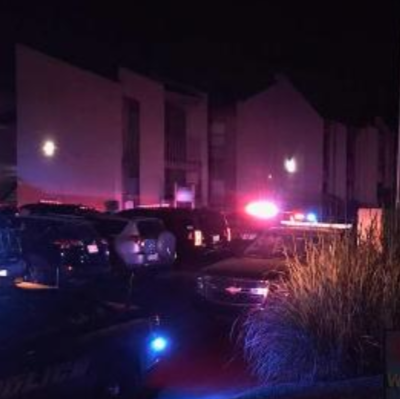
Police on the scene of the shooting investigation early Saturday photo courtesy KWCH
Just after 2 a.m., police responded to a disturbance with shots fired at the Horizons East Apartment complex located in the 500 block of North Rock Road, according to officer Kevin Wheeler.
Upon arrival, officers found a 20-year-old man who was shot and was unresponsive in the parking lot. Officers rendered aid until medical personnel arrived, who continued life-saving measures. The man was shortly after pronounced deceased.
The victim’s name is being withheld pending notification of next of kin. Two of the three other victims include a 21 year-old-male and a 22-year-old male. They were transported to a local hospital where they were treated and released for non-life threatening injuries. A 19-year-old female was also transported by private vehicle to a local hospital with a gunshot wound. Her injury is considered to be serious, but she is expected to survive.
The preliminary investigation revealed that a party was being held at one of the apartment units. There was a disturbance that occurred in the parking lot and shots were fired by an unknown suspect.
Police detectives are interviewing multiple witnesses and have not reported an arrest.
GEARY COUNTY— One person was injured in an accident just after 12:30a.m. Saturday in Geary County.
The Kansas Highway Patrol reported a 2007 Suzuki motorcycle driven by Connor Arthur Amiot, 22, Junction City, was fleeing from law enforcement west bound on Interstate 70. He lost control of the motorcycle and it overturned as he took the Fort Riley exit at a high rate of speed.
EMS transported Amiot to the Irwin Army Community Hospital. He was wearing a helmet, according to the KHP.
TOPEKA – Governor Laura Kelly appointed David Herndon as Bank Commissioner for the state of Kansas.
The commissioner oversees the Office of the State Bank Commissioner, an office that regulates all state-chartered banks, trust companies, mortgage businesses, supervised lenders, credit service organizations, and money transmitters that do business within the state of Kansas.
“I’m pleased to appoint David to serve as Bank Commissioner,” Kelly said. “His extensive banking and leadership experience makes him an unparalleled choice for this position.”
Herndon, a Shawnee resident, has over 30 years of experience in all phases of management. Currently, Herndon is sole proprietor of CMC Professional Services. Previously, he served as senior vice president at VisionBank. Herndon graduated with a master’s degree in banking from the University of Wisconsin, and a bachelor’s degree in business administration from Baker University.
Per K.S.A. 75-1304, the appointed bank commissioner must have at least five years of experience as an executive officer in a state or national bank located in Kansas. While serving as bank commissioner, the commissioner must not be an officer, voting director, employee or paid consultant of any state or national bank or bank holding company, or any affiliate of a state or national bank or bank holding company, or any other entity regulated by the commissioner.
Herndon will serve as Acting Bank Commissioner pending Senate confirmation.
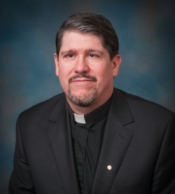
KANSAS CITY, KAN. – A Kansas priest pleaded guilty in federal court Friday to possessing child pornography, according to U.S. Attorney Stephen McAllister.
Christopher Rossman-courtesy photo
In his plea, Christopher Rossman, 46, who formerly served at the Annunciation Catholic Church in Baldwin City, Kan., admitted that investigators found child pornography on his Samsung Galaxy tablet. The crime occurred in September 2016 when monitoring software installed on Rossman’s computer devices reported he had visited adult pornography and child pornography websites. The archdiocese forwarded the report to law enforcement.
When investigators tried to find Rossman in Baldwin City, they learned that his sister had taken possession of the Galaxy tablet and tried to run over it a number of times. A forensics examination found files on the device depicting prepubescent females engaged in sexual activities.
Sentencing will scheduled at a later date. The crime carries a penalty of up to 10 years in federal prison and a fine up to $250,000.
Deputies on the scene of the investigation early Tuesday photo courtesy WIBW TV
SHAWNEE COUNTY — Law enforcement authorities and the Shawnee County Coroner continue the investigation into the death of a child in Shawnee County.
Just after 7a.m. Tuesday, deputies and additional emergency crews responded to the 300 block of South Masche Street in Silver Lake in reference to an unresponsive child, according to Shawnee County Sheriff’s Captain Danny Lotridge.
Upon arrival, first responders triaged her as deceased. On Friday, Shawnee County Deputy Caleb Acre identified the child as 4-year-old Brandy Funk.
Investigators surveyed the scene, spoke to potential witnesses. The Coroner’s Office is looking for a medical cause related to the death of the girl.
Members of the Silver Lake Fire Department, AMR and Silver Lake Police Department also responded to the scene.
Authorities released no additional details on Friday.
—————
SHAWNEE COUNTY — Law enforcement authorities and the Shawnee County Coroner are investigating the death of a child in Shawnee County.
Just after 7a.m. Tuesday, deputies and additional emergency crews responded to the 300 block of South Masche Street in Silver Lake in reference to an unresponsive child, according to Shawnee County Sheriff’s Captain Danny Lotridge. Upon arrival, first responders triaged the child as deceased.
Members of the Silver Lake Fire Department, AMR and Silver Lake Police Department also responded to the scene.
LAWRENCE, Kan. (AP) — A former University of Kansas volunteer assistant volleyball coach has admitted stealing underwear from women on the team.
Skyler Yee photo Douglas Co.
Twenty-four-year-old Skyler Yee pleaded no contest Friday to two felony counts of burglary, in exchange for prosecutors dropping 13 other charges.
Judge Peggy Kittel found Yee’s crimes were sexually motivated. He must register as a sex offender for the next 15 years.
Kittel granted Yee’s request to serve his sentence in Oregon, where he lives. However, Oregon must accept him, which may require him to serve part of his sentence in Kansas.
Yee was charged in February with 15 counts, including four felonies. The charges include burglary, property damage and theft between December 2017 and January 2019.
He was the women’s volleyball assistant coach from August 2016 until resigning in mid-January.
SHAWNEE COUNTY — Law enforcement authorities are investigating a fatal shooting and continue to search for suspects.
Scene of Thursday’s fatal shooting photo courtesy WIBW TV
Just after 3:30 pm, Thursday, police were dispatched to the report of gunshots in the area of SE Fremont and SE Irvingham in Topeka, according to Lt. Andrew Beightel. While officers were in route to the gunshots call other citizens reported a possible shooting near SE 37th & SE Adams.
Officers then responded to that area, where at SE 37th and SE Pennsylvania they found a white passenger car with a 16-year-old identified as Joaquin Aj McKinney of Topeka.suffering from life threatening injuries. EMS transported the boy to an area hospital where he died, according to Beightel.
Initial reports from witness state the suspect(s) from the shooting were in a blue 4-door passenger car and they fled the area in an unknown direction of travel. Up
GREAT BEND — One person died in an accident Friday in Great Bend.
Just after 6 a.m. Friday, officers were called to the 1500 block of Second Street in Great Bend for report of an injury accident, according to a media release.
Eliesel Cartagena, 42, Great Bend, was riding a bicycle westbound on Second Street when he turned in front of a 2011 Dodge pickup driven by Ian Trimmer.
The pickup struck Cartagena knocking him from the bicycle. He was transported to the hospital in Great Bend where he died as a result of his injuries.
Great Bend Police were assisted at the scene by the Great Bend Fire Department and the Barton County Sheriff’s Office.
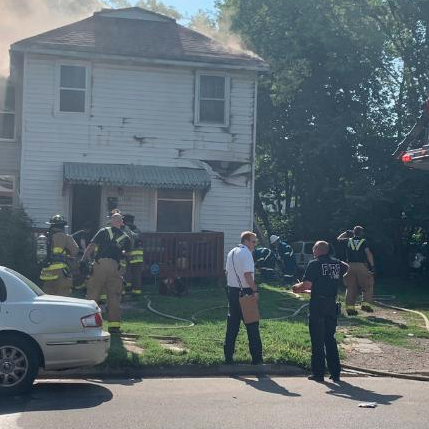
Just before 9a.m. fire crews responded to the report of a fire at a home at 1628 SW Clay Street, according to Fire Chief Michael Martin.
Upon arrival, crews reported fire coming from the 2nd floor; rear of the structure. The fire was extinguished, but not before the structure sustained significant fire damage throughout.
All occupants of the home including five children were able to escape from the dwelling unharmed. A preliminary investigation indicates the cause of the fire as Accidental; discarded smoking materials on the back porch, according to Martin.
Estimated structural dollar loss is $25,000, and $10,000 in contents loss. Working smoke detectors were found within the structure.
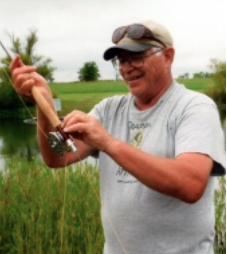
JACKSON, Wyo. (AP) — A 70-year-old Kansas man has died in an accidental drowning while fly-fishing in western Wyoming.
Mark Osmondson photo courtesy Vanarsdalefs Funeral Home
Lincoln County Sheriff Shane Johnson says Mark Osmondson, of Madison, Kansas, was fishing about 12:15 p.m. Tuesday in the Greys River about 16 miles (25.7 kilometers) upriver from Alpine when he slipped and his waders filled with water.
Osmondson’s body was recovered nearly 2 mile down the river.
Johnson says Osmondson’s fishing partner was unable to help him although at one point the partner was able to briefly grab his hand.
The Greys River is a popular destination for anglers.
Johnson says the river can be dangerous and people underestimate the strength of the water and its ability to pull them under.