TOPEKA – The Kansas Department of Health and Environment (KDHE) has issued a high risk warning for West Nile virus infections (WNV) for northwest, south central and southeast Kansas. North central, northeast, and southwest Kansas are at moderate risk for WNV infections. In addition, mosquitoes collected in Sedgwick County have tested positive for WNV and St. Louis Encephalitis virus (SLEV).
KDHE Image
According to a media release from the KDHE, West Nile virus can be spread to people through mosquito bites, but it is not spread from person to person. About 1 in 5 people who are infected develop a fever and other symptoms such as headache, body aches, joint pains, vomiting, diarrhea, or rash. About 1 out of 150 infected people develop a severe illness leading to swelling of the brain or brain tissue that can result in death. There are no vaccines or medications to treat WNV. People who have had WNV before are considered immune.
SLEV is transmitted by the same type of mosquito that spreads WNV. While most people who are infected with SLEV have no symptoms or only mild non-specific flu-like illness, some individuals can experience serious neuroinvasive illness. Symptoms often include fever, headache, stiff neck, disorientation, and altered level of consciousness. Coma, convulsions, and paralysis may also occur. SLEV has a similar incubation period as WNV, 5-15 days.
KDHE recommends knowing your risk of WNV and take action to prevent mosquito bites and protect yourself against WNV and SLEV:
When you are outdoors, use insect repellent containing an EPA-registered active ingredient on skin and clothing, including DEET, picaridin, oil of lemon eucalyptus, or IR3535. Follow the directions on the package.
Many mosquitoes are most active at dusk and dawn. Be sure to use insect repellent and wear long sleeves and pants at these times or consider staying indoors during these hours.
The elderly or those with a weakened immune system should consider limiting their exposure outside during dusk and dawn when the Culex species mosquitos are most active.
Make sure you have good screens on your windows and doors to keep mosquitoes out.
Get rid of mosquito breeding sites by emptying standing water from flower pots, buckets and barrels. Change the water in pet dishes and replace the water in bird baths weekly. Drill holes in tire swings so water drains out. Keep children’s wading pools empty and on their sides when they aren’t being used.
Horses can also be infected with WNV. Talk with your veterinarian about vaccinating your horse to protect them against WNV.
Most WNV infections occur in the late summer and early fall. Although there have been no cases of WNV reported to KDHE in 2019, there have been over 300 cases of the most severe form of WNV and 30 deaths in Kansas from 1999-2018. The last known case of SLEV in Kansas occurred in 2004.
The Centers for Disease Control and Prevention provides this web page with additional information about West Nile virus and preventing mosquito bites:https://www.cdc.gov/features/StopMosquitoes/. More information on SLEV can be found at https://www.cdc.gov/sle/index.html .For questions about West Nile virus or other Arboviral diseases contact the KDHE Epidemiology hotline at 877-427-7317.
TOPEKA – Secretary of Commerce David Toland announced he has reduced the application fee for businesses seeking to participate in the Angel Investor Tax Credit program.
After reducing the application fee from $750 to $500 in February, the Kansas Department of Commerce reduced the fee further to $250, retroactive to July 1, 2019. Applications for companies seeking investment through the Kansas Angel Investor Tax Credit (KAITC) program for 2019 will be accepted through August 31.
The program offers Kansas income tax credits to qualified individuals who provide seed-capital financing for emerging Kansas businesses engaged in development, implementation and commercialization of innovative technologies, products and services.
“The Angel program exists to support small start-up businesses, so it didn’t make sense to charge an application fee that put the program out of reach to the very businesses seeking help,” Toland said. “This is a straightforward, business-friendly move that we hope will encourage more start-ups to apply and make it easier for Kansans to invest in promising new businesses.”
The KAITC Program is designed to bring together accredited “angel” investors with qualified Kansas companies seeking seed and early stage investment. The purpose of the Kansas Angel Investor Tax Credit Act is to help facilitate:
The availability of equity investment in businesses in the early stages of commercial development.
The creation and expansion of Kansas businesses, which are job- and wealth-creating enterprises.
Applications for certification are accepted only for Kansas businesses in the seed and early stage rounds of financing.
Companies must meet the following criteria to be certified as a Qualified Kansas Business:
The business has a reasonable chance of success and potential to create measurable employment within Kansas.
In the most recent tax year of the business, annual gross revenue was less than $5 million
Businesses that are not Bioscience businesses must have been in operation for less than five years; bioscience businesses must have been in operation for less than 10 years.
The business has an innovative and proprietary technology, product, or service.
The existing owners of the business have made a substantial financial and time commitment to the business.
The securities to be issued and purchased are qualified securities.
The company agrees to adequate reporting of business information to the Kansas Department of Commerce.
The ability of investors in the business to receive tax credits for cash investments in qualified securities of the business is beneficial, because funding otherwise available for the business is not available on commercially reasonable terms.
Each applicant must sign a Qualified Company Agreement with the Kansas Department of Commerce.
Certification of companies must meet mandates established by Kansas statute to allow accredited Angel Investors to receive the Kansas Angel Investor Tax Credit.
For more information, visit kansasangels.com or contact:
Rachéll Rowand
(785) 296-3345 Office
(785) 207-4755 Mobile [email protected]
TOPEKA, Kan. (AP) — A fired Kansas prison employee accused of sexual misconduct claims the charges aren’t valid because state law cites consensual touching and he is accused of nonconsensual touching.
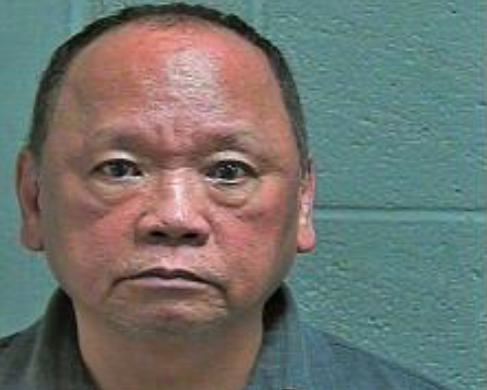
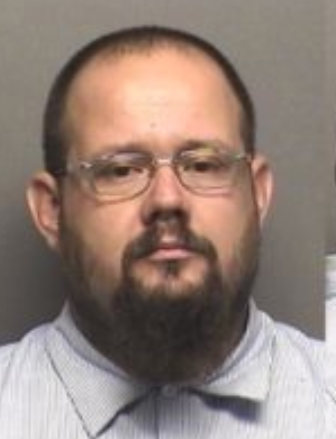
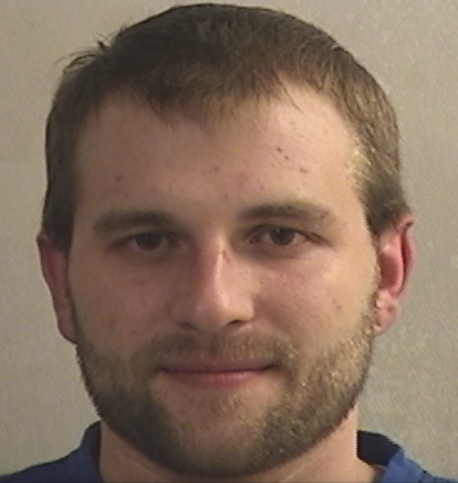
Tomas Co -photo Oklahoma Co. Sheriff
Tomas Co is charged with five felony counts of unlawful sexual relations. The crime is defined as “engaging in consensual sexual intercourse, lewd fondling or touching or sodomy” between a corrections employee and an offender.
Co’s attorney, Christopher Joseph, argues in a brief that the charges don’t fit the statute’s definition because witnesses testified that the incidents weren’t consensual. Joseph adds that he believed that Co would be acquitted at trial regardless of the charge filed.
The Shawnee County District Attorney’s Office disagreed with the defense’s interpretation of the law, saying it “would lead to an absurd result.”
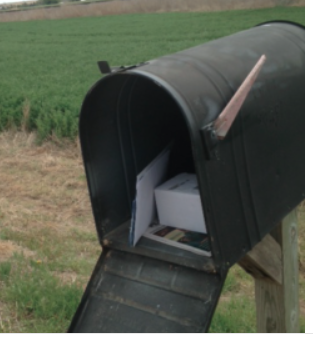
TOPEKA, KAN. – A grand jury Wednesday returned indictments against two Kansas postal employees charged in separate cases with stealing mail, according to U.S. Attorney Stephen McAllister.
Stacy A. Vasko, 31, Salina, was charged with two counts of theft by a postal employee. The indictment alleged she stole gift cards from the mail. The crimes were alleged to have occurred in February and April 2019 in Brookville, Kan.
In a separate case, Timothy J. Pacha, 28, Herkimer, Kan., was charged with one count of stealing mail and one count of destroying or detaining mail. The crimes are alleged to have occurred from January to April 2019 in Marysville, Kan.
If convicted, the defendants face up to five years in federal prison and a fine up to $250,000 on each count.
The Kansas Department of Health and Environment initiated, on July 23, a project to treat the Milford Gathering Pond, located near the outlet of Milford Reservoir in Geary County, with a hydrogen peroxide-based algaecide. This project is part of the KDHE’s efforts to investigate and demonstrate in-lake treatment options to reduce the frequency and duration of Harmful Algal Bloom (HAB) events on public lakes. The Milford Gathering Pond has been on a Public Health Advisory Warning due to HABs since June 27.
The Milford Gathering Pond has a surface area of about 100 acres. The current application is directed at a 75-acre portion of this pond, with a treatment depth of 3 feet, totaling 225 acre-feet of treated lake water. The work is being conducted by a State of Kansas contractor, utilizing an EPA-registered aquatic algaecide and precision application equipment, to complete a targeted treatment for control of cyanobacteria (blue-green algae). Peroxide-based algaecides can provide rapid, targeted in-lake management of HABs. Effects on desirable plants, fish and other aquatic life are negligible, and there are no water use restrictions after its application. Samples are being collected both before and after the application, to evaluate the performance of the treatment. The effectiveness of the treatment will be carefully evaluated as the state continues to pilot affordable and feasible tools to reduce HABs in Kansas.
Because the Milford Gathering Pond remains on Warning at this time, KDHE recommends the following precautions be taken:
Lake water is not safe to drink for pets or livestock.
Lake water, regardless of blue-green algae status, should never be consumed by humans.
Water contact should be avoided.
Fish may be eaten if they are rinsed with clean water and only the fillet portion is consumed, while all other parts are discarded.
Do not allow pets or livestock to eat dried algae.
If lake water contacts skin, wash with clean water as soon as possible.
Avoid areas of visible algae accumulation.
KDHE samples publicly-accessible bodies of water for blue-green algae when the agency receives reports of potential algae blooms in Kansas lakes. Based on sampling results, KDHE reports on potentially harmful conditions.
Kansans should be aware that blooms are unpredictable. They can develop rapidly and may be moved by wind or wave action around the lake, requiring visitors to exercise their best judgment. If there is scum or a paint-like surface or the water is bright green, avoid contact and keep pets away. These are indications that a harmful bloom may be present. Pet owners should be aware that animals that swim in or drink water affected by a harmful algal bloom or eat dried algae along the shore may become seriously ill or die.
ATCHISON —Authorities identified the person recovered from the Missouri River on Sunday as Donald R. Spradling, 53, St. Joseph, Missouri, according to Police Chief Mike Wilson.
Spradling has been a resident of St. Joseph for the past two years. He is originally from south-central Missouri. He had recently been living at a campsite alongside the Missouri River in St. Joseph and was frequently seen fishing in the Missouri River. He had also frequented an emergency shelter in St. Joseph.
Persons who are acquainted with Spradling last saw him last week in the area of his campsite. Officers have located and spoken with Mr. Spradling’s family.The pathologist has ruled the preliminary cause of death as drowning.
Atchison Police detectives have met with St. Joseph Police detectives regarding this investigation that has now evolved to a joint investigation with the two agencies.
——————-
ATCHISON — Authorities have made an identification of the person recovered from the Missouri River on Sunday, according to Atchison Police Chief Mike Wilson.
The department is continuing its investigation which includes notifying family members, conducting interviews of persons who have had contact with the victim recently and consulting with the pathologist.
Authorities received 15 tips related to names of possible victims. Police followed each of those leads which led us to the identification of the victim.
The investigation has a long way to go and the cause of death will be important in determining the direction and steps that are to follow, according to Wilson.
Police have not released the victim’s name.
—————
ATCHISON —Law enforcement authorities continue their effort to identify the person who was recovered from the Missouri River midday on Sunday, according to Police Chief Mike Wilson.
The individual is a white male, age is estimated to be in his 40’s and he has two tattoos.
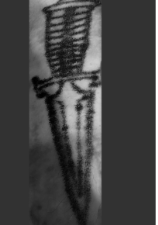
A tattoo of a grim reaper with the name Donald is on his right shoulder/bicep area. A tattoo of a dagger is on his left inner forearm. If someone can help Police identify this person please call Atchison Police detectives at 913-367-5525 during daytime hours or 913-367-4323 during evening and nighttime hours. .
————-
ATCHISON — Law enforcement authorities are trying to identify a man whose body was pulled from the Missouri River near Atchison.
Just after 11:30 a.m. Sunday, a jogger saw the body floating in the water and called police, according to Atchison Police Chief Mike Wilson. A short time later, emergency crews used a boat to recover the body approximately two miles south of Atchison and transported the victim to a pathologist for examination.
The body was in the water for more than a day, according to Wilson. Authorities have notified agencies north of Atchison in case they are attempting to locate anyone. The victim is a white male with tattoos.
Wilson said he hopes to release additional details and photos of the tattoos as they work to identify the victim.
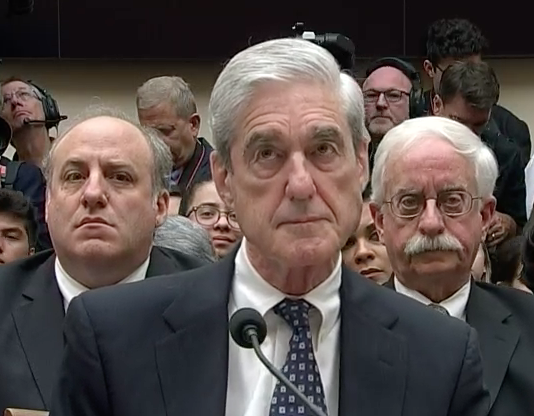
Mueller before the committee Wednesday morning photo courtesy CSPAN
WASHINGTON (AP) — Robert Mueller on Wednesday bluntly dismissed President Donald Trump’s claims of total exoneration in the federal probe of Russia’s 2016 election interference, telling Congress he explicitly did not clear the president of obstructing his investigation. The former special counsel also rejected Trump’s assertions that the probe was a “witch hunt” and hoax.
In hours of sometimes halting and stilted testimony, unfolding at a moment of deep division in the country, Mueller also condemned Trump’s praise of WikiLeaks, which released Democratic emails stolen by Russia. He declared Russian election interference one of the greatest challenges to democracy that he had encountered in his career.
Russia, he said, was “doing it as we sit here.”
Mueller’s reluctance at the televised Capitol Hill hearings to stray beyond his lengthy written report, and his reliance on terse, one-word answers, produced few if any new revelations to move Americans who may be hardened in their opinions about the success of Donald Trump’s presidency and whether impeachment proceedings are necessary. But that didn’t stop Republicans and Democrats from their own divergent paths to question Mueller.
Trump’s GOP allies tried to cast the former special counsel and his prosecutors as politically motivated. They referred repeatedly to what they consider the improper opening of the investigation.
Democrats, meanwhile, sought to emphasize the most incendiary findings of Mueller’s 448-page report and weaken Trump’s reelection prospects in ways that Mueller’s book-length report did not. They hoped that even if his testimony did not inspire impeachment demands — House Speaker Nancy Pelosi has made clear she will not pursue impeachment, for now — Mueller could nonetheless unambiguously spell out questionable, norm-shattering actions by the president.
Yet Mueller appeared unwilling or unable to offer crisp sound bites that could reshape public opinions.
Democrats were hoping for vintage Robert Mueller III, circa 2001 when he was leading the FBI after 9/11. Instead, they saw a less forceful public presence but one still skilled enough in the ways of Washington to not fall for Republicans’ leading questions or read his report aloud in a way that Democrats could exploit.
He frequently gave single-word answers to questions, even when given opportunities to crystallize allegations of obstruction of justice against the president. He referred time again to the wording in his report.
But he was unflinching on the most-critical matters.
In the opening minutes of the hearing, the chairman of the House Judiciary Committee, Rep. Jerrold Nadler, a New York Democrat, asked Mueller about Trump’s claims of vindication in the investigation.
“Did you actually totally exonerate the president?” Nadler asked.
“No,” Mueller replied.
When Rep. Adam Schiff, the Democratic chairman of the House intelligence committee, asked, “Your investigation is not a witch hunt, is it?”
“It is not a witch hunt,” Mueller flatly replied.
He gave Democrats a flicker of hope when he told Rep. Ted Lieu of California that he did not charge Trump because of a Justice Department legal opinion that says sitting presidents cannot be indicted. That statement cheered Democrats who understood him to be suggesting that he would otherwise have recommended prosecution on the strength of the evidence.
But Mueller later walked back that statement, saying, “We did not reach a determination as to whether the president committed a crime.” His team, he said, “never started the process” of evaluating whether to charge the president.
Though Mueller described Russian government’s efforts to interfere in American politics as among the most serious challenges to democracy he had encountered in his decades-long career – which included steering the FBI after the Sept. 11 terrorist attacks – Republicans focused on his conclusion that there was insufficient evidence to establish a criminal conspiracy between the Trump campaign and Russia.
“Those are the facts of the Mueller report. Russia meddled in the 2016 election,” said Rep. Doug Collins, the top Republican on the House Judiciary Committee. “The president did not conspire with Russians. Nothing we hear today will change those facts.”
Mueller, pressed as to why he hadn’t investigated a “dossier” of claims that the Republicans insist helped lead to the start of the probe, he said that was not his charge.
That was “outside my purview,” he said repeatedly.
Mueller mostly brushed aside Republican allegations of bias, but in a moment of apparent agitation, he said he didn’t think lawmakers had ever “reviewed a report that is as thorough, as fair, as consistent as the report that we have in front of us.”
And when he was pressed on the fact that multiple members of his team had made contributions to Democratic candidates, Mueller bristled at the implication that his prosecutors were compromised.
“I have been in this business for almost 25 years, and in those 25 years I have not had the occasion to ask somebody about their political affiliation,” Mueller said. “It is not done. What I care about is the capability of the individual to do the job and do the job quickly and seriously and with integrity.”
Mueller, known for his taciturn nature, warned that he would not stray beyond what had already been revealed in his report. And the Justice Department instructed him to stay strictly within those parameters, giving him a formal directive to point to if he faced questions he did not want to answer.
Trump lashed out ahead of and during the hearings, saying on Twitter that “Democrats and others” were trying to fabricate a crime and pin it on “a very innocent President.” That was a continuation of the past two years during which Trump has made Mueller a regular target in an attempt to undermine his credibility.
Over the past week, Trump had begun to frequently ask confidants how he thought the hearing would go, and while he expressed no worry that Mueller would reveal anything damaging, he was irritated that the former special counsel was being given the national stage, according to two Republicans close to the White House. They were not authorized to speak publicly about private conversations.
Long aware of the power of televised images, Trump seethed to one adviser that he was annoyed Democrats would be given a tool to ramp up their investigations – and that the cable news networks would now have new footage of Mueller to play endlessly.
Publicly, Trump this week feigned indifference to Mueller’s testimony , telling reporters, “I’m not going to be watching – probably – maybe I’ll see a little bit of it.”
Mueller is a former FBI director who spent 12 years parrying questions from lawmakers at oversight hearings, and decades before that as a prosecutor who asked questions of his own. He resisted efforts to goad him into saying anything he did not want to say. He repeatedly told lawmakers to refer to his report for answers to specific questions.
Wednesday’s first hearing before the Judiciary Committee focused on whether the president illegally obstructed justice by attempting to seize control of Mueller’s investigation.
The special counsel examined nearly a dozen episodes, including Trump’s firing of FBI Director James Comey and his efforts to have Mueller himself removed.
The afternoon hearing before the House intelligence committee dove into ties between the Trump campaign and the Kremlin.
On that question, Mueller’s report documented a trail of contacts between Russians and Trump associates – including a Trump Tower meeting at which the president’s eldest son expected to receive dirt on Democrat Hillary Clinton.
___
WASHINGTON (AP) —The former special counsel in the Trump-Russia probe, Robert Mueller, faces congressional interrogators and is testifying in televised hearings.
Democrats hope Mueller’s testimony will weaken President Donald Trump’s reelection prospects in ways that Mueller’s book-length report did not. Republicans are ready to defend Trump and turn their fire on Mueller and his team instead.
The back-to-back Capitol Hill appearances in the morning and at noon are Mueller’s first since wrapping his two-year Russia probe last spring. The hearings carry the extraordinary spectacle of a prosecutor discussing in public a criminal investigation he conducted into a sitting U.S. president.
Mueller is known for his taciturn nature, and he has warned lawmakers that he will not stray beyond what’s already been revealed in his report.
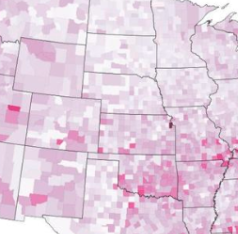
This map shows how much hydrocodone and oxycodone went to individual states and counties. The information comes from a DEA database. The Washington Post and Charleston Gazette-Mail in West Virginia waged a year-long legal battle for its release. THE WASHINGTON POST
A newly released database shows that Leavenworth County, Kansas, had one of the highest concentrations of opioid pills per person in the United States between 2006 and 2012.
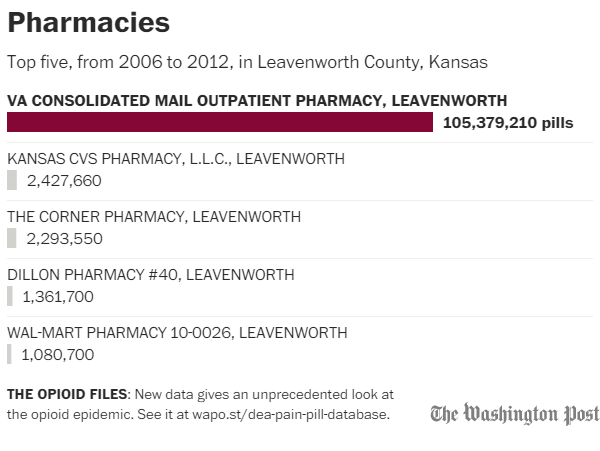
While those numbers might suggest a hidden calamity in eastern Kansas, the vast majority of those pills were actually processed by a Veteran’s Administration fullfillment center, rather than distributed locally, according to the data.
The figures come from a database maintained by the U.S. Drug Enforcement Administration and obtained this week by The Washington Post through a Freedom of Information Act request. The Post analyzed the data and calculated the number of pills distributed per person by county.
The figure for Leavenworth County is significantly higher than those in some of the country’s most hard-hit opioid hotspots, including southern Kentucky, northern Tennessee and West Virginia. At 226.5 opioid pills per person, the county was surpassed only by Charleston County in South Carolina, at 248 pills per person.
But it turns out more than 100 million of the pills were distributed by the Veteran’s Administration Mail Outpatient Pharmacy, accounting for more than 89% percent of the pills supplied to Leavenworth County during the period.
Elaine M. Buehler, a spokeswoman for the U.S. Department of Veterans Affairs, said the pharmacy is a regional fulfillment center that fills prescriptions submitted from multiple VA facilities around the country.
The presence of mail order pharmacies in The Post’s data appears to skew the numbers in other counties as well.
For example, the data show that 166,185,694 opioid pills were distributed in Johnson County, Kansas. But more than 50 million were distributed by OptumRX, a mail order pharmacy company with a large distribution center in Overland Park.
And Charleston County, South Carolina, which was listed as having 248.3 pills per person, is also home to a VA fullfillment center. That pharmacy accounted 85% of the 596,206,074 pills distributed in the county.
CREDIT THE WASHINGTON POST
The rate in Leavenworth County peaked in 2007, followed by a sharp decline in 2009.
Leavenworth County health and law enforcement officials did not immediately return calls seeking comment about the extent of the opioid problem in the county.
But unlike many counties that have been hotspots for opioid abuse, Leavenworth County does not have a high overdose rate, and the county’s rates of premature death are relatively low.
The opioid pill data, which drug manufacturers and distributors were required to provide to the DEA, show that more than 76 billion pills were distributed in the United States over the seven-year period in question. During that time, nearly 100,000 people died of opioid overdoses.
Though the opioid epidemic may not have hit Leavenworth County as hard as other parts of the country, the county recently joined some 2,000 other cities, towns, attorneys general and tribal nations that have sued opioid manufacturers and distributors. The suits allege the companies were complicit in creating the opioid epidemic that has killed an estimated 68,000 Americans in 2018 alone.
The suits have been consolidated in federal court in Cleveland, where The Post and the Charleston Gazette-Mail asked the judge to lift a protective order covering the opioid database, known as ARCOS. After he denied the request, the newspapers appealed and last month a federal appeals court sided with the newspapers. On Monday, the judge lifted the protective order and made the data from 2006 through 2012 available to the public.
Alex Smith is a health reporter in conjunction with the Kansas News Service. You can reach him by email at [email protected]
SALINE COUNTY— Law enforcement authorities are investigating a Kansas man for alleged crimes against a 13-year-old girl.
Shawn Matthew Wynne photo Saline County
Following an investigation by the sheriff’s office, deputies arrested Shawn Matthew Wynne, 33, Salina, on requested charges that include, Aggravated indecent liberties with a child, Aggravated intimidation of a witness, Sexual exploitation of a child, Attempted rape, Aggravated indecent solicitation of a child, Kidnapping and Breach of privacy, according to Saline County Sheriff Roger Soldan.
The alleged incidents occurred between July 2017 and July 2018 at a residence in Salina and in rural Saline County.
HUTCHINSON — Just two days after the celebration of the Apollo 11 moon landing, the man who started it all has died.
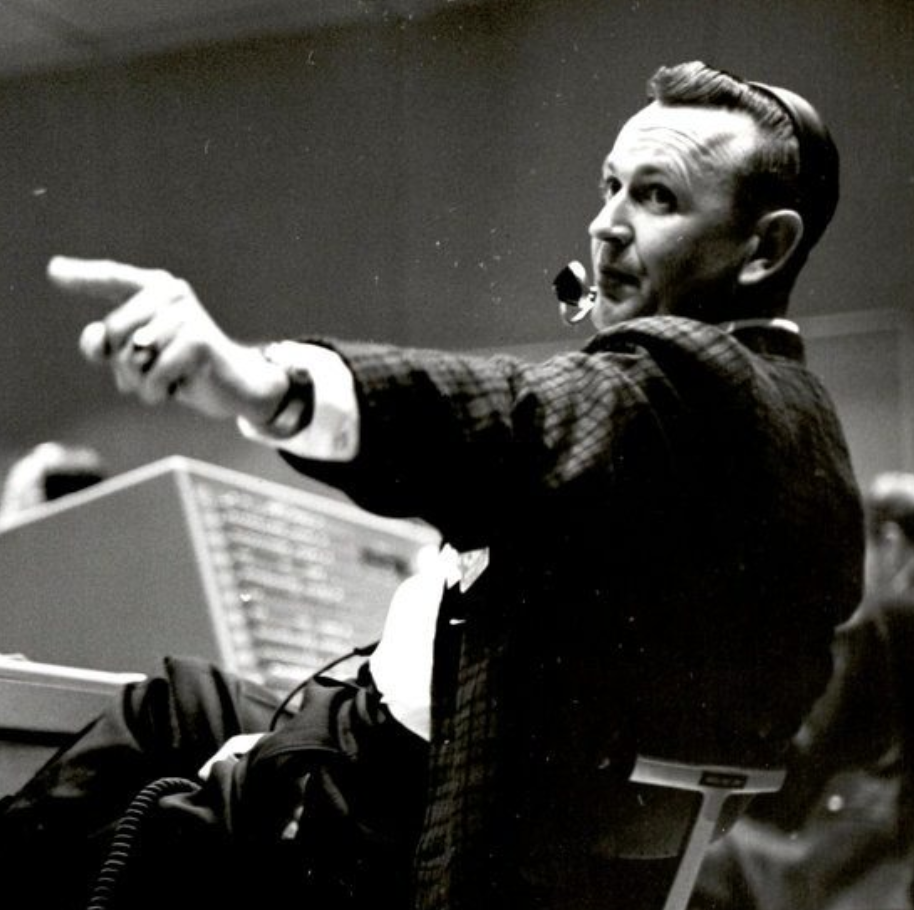
Christopher Kraft passed away on Monday. Kraft started NASA as we know it and was Mission Control’s first flight director leading the space agency through the Apollo moon missions and beyond.
“Chris Kraft is a legend,” Jim Remar, President of the Cosmosphere said. “Without his efforts on the ground, two astronauts who touched down on Tranquility Base 50-years-ago probably don’t get there, at least don’t get there to fulfill (President) Kennedy’s challenge.”
Mission Control was assembled by a group of men who were just out of college and was willing to give it their all for the space program, which included inventing procedures and solutions moment to moment.
“Most of the flight controllers and directors were in their early 20’s so they were really writing the rules and procedures as they went,” Remar said. “As a whole, the team needed a figurehead like Chris Kraft to guide them through.”
Remar said he hopes that more people who grew up after the Apollo program will use Kraft’s legacy in the space program to inspire them.
Christopher Columbus Kraft was 95 years old and will be remembered for his leadership under immense pressure during the space race to the moon, and for great vision to establish the inner workings of Mission Control.
HERINGTON — When a suspect wanted by the Herington Police Department didn’t turn himself in, the police took to Facebook for help in finding him.
“We’ve waited long enough for this guy to turn himself in. Looks like he made the wrong choice. This is a photo of Trenton Svitak, compliments of the Dickinson County Jail. He is wanted for Possession of LSD With Intent to Sell, Possession of Methamphetamine With Intent to Sell and a few other illegal drug related charges.
These charges stem from a search warrant executed at 114 South 13th Street by HPD on June 3, 2019.
Jessica Christyauntie (Sjodahl) was arrested during the search warrant execution. If you know where Trenton Svitak is, give us a call. We’d love to chat with him. Before we forget, if you harbor or aid him in any way, we have a reservation in Abilene for you too. Happy hunting!”
The post garnered at least 128 shares and 35 comments, including one from the suspect.
TOPEKA, Kan. (AP) — Kansas Senate President Susan Wagle has launched a campaign for the U.S. Senate. The Wichita Republican and 65-year-old lawmaker filed paperwork Tuesday evening with the Federal Election Commission forming a campaign committee.
Wagle spoke to republicans in Wichita over the weekend-photo courtesy Susan Wagle
She is seeking the GOP nomination for the seat held by four-term GOP U.S. Sen. Pat Roberts. He is not seeking re-election in 2020.
Wagle has served in the Legislature since 1991 and has been the Kansas Senate’s top leader since 2013. She’s emerged as a vocal opponent of new Democratic Gov. Laura Kelly and helped thwart Kelly’s push for Medicaid expansion.
Wagle launched her campaign the same month as former Kansas Secretary of State Kris Kobach. The race already is crowded, with as many as 19 candidates considering it. Wagle is the only GOP woman running.
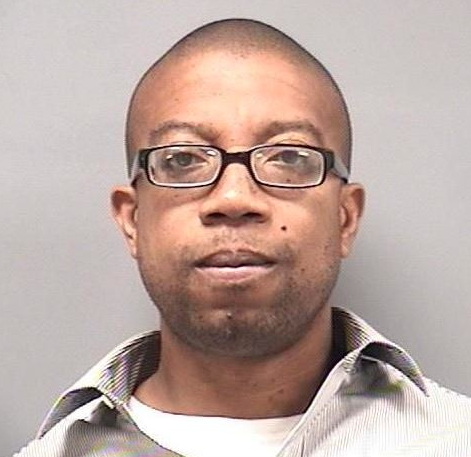
WICHITA, KAN. – A federal jury found a Wichita-area pharmacist guilty Tuesday on charges of unlawfully dispensing opioid prescription drugs, according to U.S. Attorney Stephen McAllister. Ebube Otuonye, 46, Bel Aire, Kan., was convicted on the following counts:Conspiracy to unlawfully distribute prescription drugs (count one).Unlawfully distributing prescription drugs (count two). Health care fraud (counts three and four).
Ebube Otuonye photo Butler County
The crimes occurred while Otuonye owned and operated Neighborhood Pharmacy at 2810 E. 21st in Wichita, where he filled prescriptions for patients of Dr. Steven R. Henson.
In October 2018, Henson was convicted of unlawfully distributing prescription drugs outside the usual course of professional medical practice and without a legitimate medical purpose. In March 2019, Henson was sentenced to life in federal prison.
During trial, prosecutors presented evidence that Henson’s patients had difficulty filling Henson’s prescriptions at pharmacies other than Neighborhood Pharmacy. Otuonye’s pharmacy charged more than other pharmacies and he set up a system requiring Henson’s patients to fill three non-narcotic prescriptions when filling a narcotic prescription.
A sign in the pharmacy said: “You may use another pharmacy if all you want to fill is (a) narcotic prescription.”
Evidence at trial showed Henson’s patients took their prescriptions to Otuonye himself because another pharmacist at Neighborhood Pharmacy refused to fill them. Prosecutors argued that Otuonye failed to perform his professional responsibilities by continuing to fill prescriptions for Henson’s patients despite warning signs including: Large numbers of prescriptions for highly addictive drugs, customers paying cash, multiple patients coming in at once with Henson’s prescriptions and patients from the same family presenting identical prescriptions.
Otuonye filled prescriptions for more than 21,600 tablets of oxycodone, more than 48,600 tablets of methadone, more than 18,000 tablets of hydromorphone and more than7,800 tablets of alprazolam.
Prosecutors also presented evidence that Otuonye submitted claims to Medicare and Medicaid for filling Henson’s prescriptions.
Sentencing is set for Oct. 23. Counts one and two carry a penalty of up to 20 years in federal prison and a fine up to $1 million. Counts three and four carry a penalty of up to 10 years and a fine up to $250,000.