WICHITA, KAN. – A former bookkeeper pleaded guilty Friday to embezzling $247,000 from a Wichita steel company where she worked, according to Acting U.S. Attorney Tom Beall.
Cynthia K. Griffith, 58, Wichita, pleaded guilty to one count of bank fraud. In her plea, she admitted she stole the money from Griffith Steel Erection of Wichita where she worked. She wrote unauthorized checks on the company’s operating account.
Sentencing is set for Sept. 21. She faces a penalty of up to 30 years in federal prison and a fine up to $1 million. Beall commended the Wichita Police Department and Assistant U.S. Attorney Aaron Smith for their work on the case.
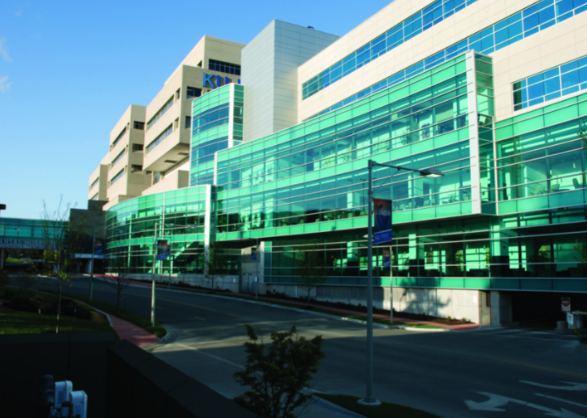
Doctors at the University of Kansas Hospital were among the top 10 recipients of pharmaceutical payments in the metro. CREDIT NIGHTRYDER84 / WIKIMEDIA–CC
By MEGAN HART & DAN MARGOLIES
Physicians associated with Kansas and Missouri hospitals received about $46 million in payments from drug and medical device companies in 2014, with about 9 percent going to providers in the Kansas City area.
It isn’t illegal for doctors to accept meals, speaking fees and other forms of compensation from drug and medical device companies, as long as they don’t receive kickbacks for prescribing certain medications or devices. Some studies have found, however, that doctors who accept payments tend to prescribe more expensive drugs more frequently than generics, at least in certain cases.
Doctors who received more payments were more likely to prescribe the expensive drugs than those who received smaller amounts, though that doesn’t prove the payments caused the prescribing, or that doctors who received payments intentionally did anything differently.
In addition to being geographically concentrated, most of the money went to relatively few physicians. About $2.7 million, or more than a third of the money the industry spent on doctors in Kansas, went to the top 15 recipients – or 0.5 percent of the roughly 2,800 doctors who received some form of payment. Similarly, nearly $20 million, or about half the money the industry spent on doctors in Missouri, went to the top 15 Missouri recipients — out of a total of more than 7,000 who accepted payments.
The Missouri numbers, to be sure, were skewed by one huge outlier – $9million to Roger Jackson, who specializes in orthopedic surgery and invented a surgical table for which he receives royalties. Jackson was far and away the top recipient of industry money in either Kansas or Missouri.
While sorting doctors by the hospital where they work can be instructive, the hospital may not be directly affected by what doctors choose to accept. For example, Steven M. Simon, a physical medicine and rehabilitation specialist, received nearly $542,000 in industry payments – making him one of top recipients of industry money in the Kansas City area. But most of the money was related to his private practice, Mid-America Physiatrists in Overland Park, and not to his affiliation with Shawnee Mission Medical Center.
In a telephone interview, Simon said half or more of the money he received was reimbursement for expenses like air fare and hotels. He said he frequently lectures on medications to other providers, necessitating frequent travel.
“These are FDA-approved programs sponsored by the pharmaceutical company to familiarize physicians with product,” he said.
Similarly, David Michael Wichman, a Wamego, Kansas, psychiatrist who accepted $137,239 in payments, mostly for speaking, said he speaks at continuing education events on his own time and doesn’t consider it related to his affiliation with Wamego Health Center.
Wichman said most of his presentations are to physicians working in rural areas of Kansas and Nebraska. The presentations cover newer psychiatric medications, including antipsychotics and antidepressants, he said.
“A lot of it is going out and talking to family physicians that are struggling to treat psychiatric patients,” he said.
The Food and Drug Administration regulates what information can be included in presentations and requires the speaker to cover how the medication works, side effects and studies the FDA used when deciding whether to approve the drug, Wichman said. Half of the presentation can’t be about a specific drug, but must include general information like how to manage bipolar disorder, for example, he said.
“You can only give that unbiased, this is what the drug is, this is what it does” information, he said.
Wichman said he had done some teaching since he was chief resident at University of Kansas Medical Center in 2008, and gradually been speaking at continuing education events and events discussing pharmaceuticals. He said he supports publishing information about physicians’ finances and prescribing patterns, but thinks concerns about pharmaceutical payments influencing physician behavior may be overblown.
Doctors who attend a presentation about a new drug typically are interested in what it could do for their patients, Wichman said. If that drug offers an advantage, such as reduced metabolic side effects from new antipsychotic drugs, patients benefit, he said.
Doctors “didn’t go to that many years of schooling to be ‘bought’ for a $20 meal,” he said.
The insurance system also limits doctors’ ability to get too eager about a new drug, Wichman said. Most insurers use a form of step therapy, so doctors have to show that their patients aren’t doing well on a cheaper generic before trying a more expensive brand-name drug, he said.
“A lot of these patients that are on the brand-name medications are patients that have failed on two or three non-branded generic medications,” he said.
Megan Hart is a reporter for KHI News Service in Topeka, a partner in the Heartland Health Monitor team. You can reach her on Twitter @meganhartMC
Dan Margolies, editor of the Heartland Health Monitor team, is based at KCUR. You can reach him on Twitter @DanMargolies.
WICHITA, Kan. (AP) — A Wichita woman says she and her dog were out for a morning run when a coyote grabbed the dog and carried it away in its jaws.
Shelley Duncan told The Wichita Eagle she was running near a country club last week with her dog Gwenny, an Italian greyhound, a few feet behind her when the coyote attacked the dog.
The coyote ran off into a brushy area with the dog in its mouth before Duncan could do anything. Duncan says two men helped her look for the dog but couldn’t find it.
Charlie Cope, with the Kansas Department of Wildlife, Parks and Tourism, says he gets up to 15 reports a year of coyotes in Wichita, but this was the first he’d heard of one attacking a dog.
EMPORIA, Kan. (AP) — A 2-mile stretch of the Kansas Turnpike where seven people have died in flooding will soon offer better protection for drivers.
Workers are about halfway through a project to improve drainage on a stretch about 10 miles south of Emporia. Six people, including five members of a Missouri family, died there in 2003. A Texas man drowned last year. All of the deaths were caused by vehicles getting caught in floodwaters.
The Wichita Eagle reports that the $2.7 million project between mile markers 116 and 118 will install massive box culverts that run beneath the highway. The goal is to keep rising water from flash flooding off the turnpike. Turnpike officials said Wednesday that beginning in November, the design should keep water off the road in a 100-year storm.
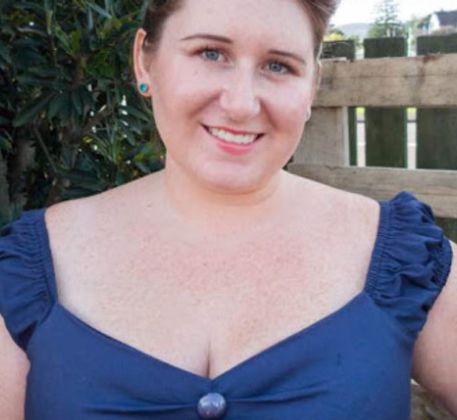
LAWRENCE, Kan. (AP) — A 31-year-old New Zealand woman has been pursuing charges in Kansas against a teenager she believes harassed her online.
Rachel Gronback lives in Auckland, New Zealand, where she blogs about “fashion, online shopping and body positivity.” Gronback said that when she started receiving inappropriate online sexual messages in November, she was able to identify the suspect as a man who was then a Lawrence high school student.
The Lawrence Journal-World reports she notified Lawrence police. Douglas County prosecutors told her they’re prepared to file a harassment charge, but before a charge can be filed, Gronback would have to be willing to appear in court if it goes to trial. Her effort to stop online harassment can be found here.
A Lawrence man, Ron Wilson, has offered to help pay for the trip, but she’s still shy some funds.
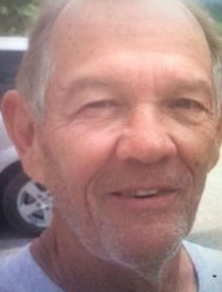
SIKESTON, Mo. (AP) — Southeast Missouri authorities say they have found the body of a missing 66-year-old Kansas man, whose death appears suspicious.
Larry Weaver of Pittsburg, Kansas, was reported missing earlier this week after he failed to check out of a Sikeston motel. Authorities discovered his motorcycle was also missing, but his wallet and other belongings were left in his motel room.
The New Madrid County Sheriff’s Department told the Sikeston Standard-Democrat Weaver’s body was found Saturday in a cotton field.
The department says two people were taken into custody Friday and are being held on charges of tampering with a stolen vehicle and receiving stolen property. Capt. Jim McMillen says another suspect is being sought.
McMillen says Weaver’s death appears suspicious and an autopsy is scheduled to determine how he died.
KANSAS CITY, Kan. (AP) — Two Kansas teens have new jobs after their firing from a pizza restaurant touched off a heated discussion about persistent pay inequality in the American workplace.
The Kansas City Star reports that issues arose earlier this month within hours of Jensen Walcott and Jake Reed finding summer jobs at a Pizza Studio restaurant in Kansas City, Kansas. When Jensen asked why she was going to earn $8 an hour while Reed was set to earn $8.25, a female manager fired both 17-year-olds. The friends from suburban Bonner Springs were told it was against company policy to discuss wages.
The California-based pizza chain has since said the manager has been let go and was wrong about the policy. The National Labor Relations Act allows employees to discuss compensation.
WICHITA, Kan. (AP) — Documents show Kansas Secretary of State Kris Kobach frequently flies in the state-owned executive aircraft to promote voter ID efforts outside of Kansas and to speak at Republican political events across the state. All of that is at state expense.
The Associated Press used open record requests to document thousands of dollars Kobach spent to fly more than 4,350 miles during a 15-month period.
Several flights appeared to either offer no benefit to Kansas or have little connection to Kobach’s official duties. On some trips, the state business coincided with Republican Party functions where he spoke, and his family often flew with him.
Kobach says he visited county election officials and his public appearances did not cost extra.
Kansas has no written guidelines for state agencies traveling on the state plane.
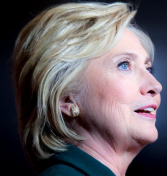
WASHINGTON (AP) — Hillary Clinton has been interviewed Saturday by the FBI about her use of a private email server while she was secretary of state.
Clinton campaign spokesman Nick Merrill says in a statement the voluntary interview with federal agents took place Saturday.
The interview was not unexpected and does not suggest that Clinton or anyone else is likely to face prosecution. Legal experts view criminal prosecution as exceedingly unlikely. The interview may indicate that the Justice Department’s yearlong probe is drawing to a close.
Still, it’s awkward for Democrats to have FBI agents question Clinton mere weeks before their party formally nominates her for president.
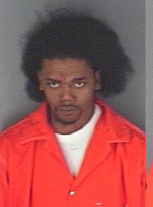
SHAWNEE COUNTY – Law enforcement authorities in Shawnee County located an escaped inmate.
Just after 12:30 p.m. on Thursday, Tremale Serrano, 21, Topeka walked away from a Shawnee County Department of Corrections work crew in the 2200 block of SE Massachusetts in Topeka, according to a media release.
The Violent Crime Initiative Officers received information that he was in the area of 8th and Buchanan in a vehicle. Serrano was located and taken into custody without incident.
Serrano was originally in custody on charges of Domestic Battery, Battery on a Law Enforcement Officer, Criminal Restraint, Protection From Abuse Violation, and Warrant for Parole Violation. He is now facing additional charges of Obstruction and Escape from Custody.
Dr. Lowell L. Tilzer, a former chair of KU Hospital’s pathology department, has filed a whistleblower lawsuit against the hospital. UNIVERSITY OF KANSAS HOSPITAL
An explosive lawsuit filed by a University of Kansas Hospital pathologist charges that the head of the hospital’s pathology department wrongly diagnosed a patient with cancer and then covered up the mistake after an organ of the patient was removed.
The lawsuit says KU Hospital refused to rectify the error and retaliated against the plaintiff after he called the matter to the attention of the Joint Commission, which accredits and certifies hospitals in the United States.
The suit, filed today in Wyandotte County District Court by Dr. Lowell L. Tilzer, says that as far as Tilzer knows, the patient has yet to be informed of the misdiagnosis.
“The form of cancer that was erroneously diagnosed within the patient is commonly known as potentially lethal; and the patient who was misdiagnosed has lived with this unwarranted fear” since the hospital concealed the misdiagnosis, the lawsuit alleges.
KU Hospital issued a statement late Friday afternoon saying it first learned of the lawsuit when KCUR called and asked it to respond.
“We are not in a position to provide detailed feedback at this time,” the statement says. “However, just from a brief review of the allegations made, there is little to nothing in the petition that we believe to be grounded in truth.
“The patient to whom Dr. Tilzer’s petition references was fully informed of the diagnosis and treatment plan after surgery and prior to leaving the hospital, and is pleased with the care and clinical outcome.”
Dr. Lowell L. Tilzer has been on staff at KU Hospital for 25 years and, until last year, was head of its pathology department. CREDIT UNIVERSITY OF KANSAS MEDICAL CENTER
Tilzer, who was chair of the hospital’s pathology department for 6 ½ years until 2015 and has been on staff for 25 years, says that after the hospital refused to acknowledge its mistake and he sent his report to the Joint Commission, he was summoned to meet with KU Hospital President and CEO Bob Page on May 31.
According to Tilzer’s lawsuit, Page asked him if he wanted to resign, berated him for contacting the Joint Commission, accused him of lying to the commission, asked him why he had “done this alone” and described Tilzer’s report to the commission as “pitiful” and “despicable” behavior.
The lawsuit does not name the chair of the pathology department who allegedly misdiagnosed the patient. But the current chair is Meenakshi Singh, who has occupied that position since May 2015, when Tilzer stepped down. In a telephone interview Friday, Tilzer said it was Singh who made the misdiagnosis and then covered it up.
“She finally said in April 2016 ‘I made a mistake.’ It took her eight months,” Tilzer said.
McCulloch, the KU Hospital spokesman, said Singh is aware of the lawsuit but she would not comment.
The lawsuit, filed under the Kansas whistleblower statute, does not seek damages but rather asks the court to prevent KU Hospital from retaliating against Tilzer and from terminating his employment.
“I’m not really afraid of being fired but I am afraid if the administration’s attitude for helping cover up the misdiagnosis will affect other patients and hurt other people. It’s that attitude they’ve got (that) I’m terribly concerned,” he said.
“I’m 66 years old,” Tilzer added. “If they fire me, it’s not the end of the world.”
Asked why he himself did not inform the patient of the misdiagnosis, Tilzer said he wasn’t the patient’s treating physician and therefore it would not have been appropriate to do so.
“I don’t think you can do that without being a direct part of her patient care,” he said.
The lawsuit does not name the patient or give other identifying information such as the date the surgery took place. The lawsuit cites HIPAA, the federal law that protects patient confidentiality.
Asked what action the Joint Commission has taken, Tilzer said the commission was only empowered to examine the hospital’s policies and procedures, not individual cases.
According to Tilzer’s lawsuit:
Dr. Meenakshi Singh is the chair of KU Hospital’s pathology department. Dr. Lowell Tilzer doesn’t name Singh in his lawsuit, but in a telephone interview he said that Singh was the doctor he claims covered up a misdiagnosis. CREDIT UNIVERSITY OF KANSAS MEDICAL CENTER
Tilzer learned in 2015 that the pathology chair had misdiagnosed the patient’s tissue sample as cancerous. An “essential body organ” of the patient, or part of it, was then removed. Afterward, when other hospital pathologists examined tissue samples from the organ, they found it was “essentially normal” and not cancerous.
A re-examination of the pre-surgery tissue sample came to the same conclusion. After the pathology chair was informed of her misdiagnosis, she covered it up “by placing an addendum to her original report stating the original cancer diagnosis and the normal removed organ matched, thereby concealing her original misdiagnosis and perpetuating the patient’s mistaken belief that the patient’s removed organ was cancerous.”
In September, Tilzer informed KU Hospital’s chief medical officer and risk management officer that the hospital needed to conduct a “root cause analysis” of the mistake to make sure it wouldn’t happen again. The chief medical officer responded that the original diagnosis was correct because two other pathologists signed the report. But Tilzer says the two other pathologists did not agree with the original diagnosis, “and the chair simply wrote their names in the electronic medical record.”
The chief medical officer allegedly refused Tilzer’s request to talk to other pathologists and a root cause analysis was not performed, according to the lawsuit.
In early 2016, the chair of the pathology department allegedly “instructed others to alter medical records regarding the Chair’s misdiagnosis,” the lawsuit says, and to remove any reference that a root cause analysis was necessary.
The lawsuit adds that Tilzer had concerns about the chair’s competence that were “further reinforced when continuing mistakes by the Chair and actual or potential harm were brought to Tilzer’s attention.”
In the telephone interview, Tilzer said he had no qualms about Singh’s initial hiring but later became concerned about her competence after she allegedly misdiagnosed other patients. In one case, he said, she diagnosed a breast biopsy as pre-malignant when it was benign.
He said that in that case, Singh changed the report “appropriately.”
Dan Margolies, editor of the Heartland Health Monitor team, is based at KCUR. You can reach him on Twitter @DanMargolies.
TOPEKA, Kan. (AP) — Kansas will be paying schools a week late after withholding the final payment of fiscal year 2016 to keep its budget out of the red.
School districts will receive a total of nearly $260 million in state aid July 7 and mark it as a June 30 payment.
The state has withheld similar payments over the past decade and was planning to do so again this year. But deputy education commissioner Dale Dennis says the amount was $75 million higher than it would have been without the current shortfalls.
Kansas tax revenue receipts were 34.5 million short for June, according to the Kansas Department of Revenue on Friday.
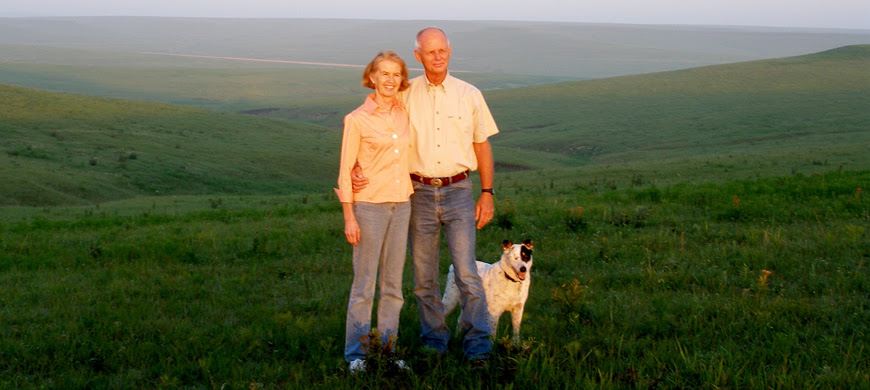
TOPEKA – The Nature Conservancy of Kansas (TNC) has protected 3,285 acres of Flint Hills tallgrass native prairie with a conservation easement in Chase and Lyon counties. The landowners, Bill and Maggie Haw of Shawnee Mission, are firm believers in conservation easements, having previously donated to TNC easements on other land they own and manage in the Flint Hills. This recent easement brings their total land protection contribution to more than 17,000 acres, including 16 scenic miles of highway frontage along the Kansas Turnpike (I-35) and the Flint Hills National Scenic Byway (K-177).
Tallgrass prairie is the most altered major habitat type in North America in terms of acres lost. Yet, in Kansas, a significant swath of tallgrass prairie – the Flint Hills –remains intact. TNC views conservation easements as a golden opportunity to help landowners conserve this intact and fully functioning tallgrass prairie ecosystem.
A conservation easement is a legally recorded agreement between the granting landowner and a land trust. The agreement permanently restricts uses of the property that would damage its conservation values. Conservation easements do not interfere with traditional uses of the land, such as grazing and prescribed fire, but it may restrict incompatible activities, including many types of development. Public access is generally not required by a conservation easement, and, like all other easement provisions, it must be agreed to by the landowner. An eased property may be sold, transferred or inherited, and the easement conditions transfer to each subsequent landowner.
“By placing these acres under the protection of a conservation easement, the property’s ranching legacy, as well as its economic and ecological integrity, will endure,” said Brian Obermeyer, director of the TNC’s Flint Hills Initiative.
“Maggie and I are committed to the idea of preserving not only the pristine views but also the wonderful cattle culture of this area where generations of same-family cowboy caretakers have learned to operate the best yearling grazing operations in the world,” said Bill Haw. “It is the perfect convergence of an important food-producing activity that maintains the ecosystem, which developed with bison grazing over thousands of years. The Nature Conservancy is the perfect partner to recognize and enforce those two compatible goals for many generations to come.”
The recent Haw easement takes TNC over the 100,000-acres-preserved mark in Kansas.
For more information about The Nature Conservancy and conservation easements, contact Shelby Stacy at [email protected] or (785) 233-4400.

 WICHITA, KAN. – A former bookkeeper pleaded guilty Friday to embezzling $247,000 from a Wichita steel company where she worked, according to Acting U.S. Attorney Tom Beall.


 WICHITA, Kan. (AP) — A Wichita woman says she and her dog were out for a morning run when a coyote grabbed the dog and carried it away in its jaws.




 KANSAS CITY, Kan. (AP) — Two Kansas teens have new jobs after their firing from a pizza restaurant touched off a heated discussion about persistent pay inequality in the American workplace.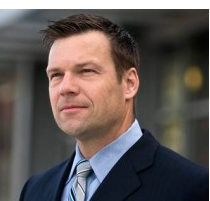





 TOPEKA, Kan. (AP) — Kansas will be paying schools a week late after withholding the final payment of fiscal year 2016 to keep its budget out of the red.