FORD COUNTY —Authorities are investigating a suspect for allegedly impersonating a law enforcement officer.
Just before 2a.m. Saturday, sheriff’s deputies were called to report of a suspicious vehicle that had used emergency lights and pulled over a car, according to a media release.
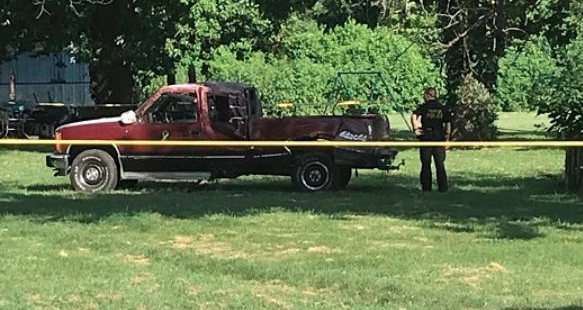
The suspect vehicle identified as a Crown Victoria with a temporary license plate did not match any area law enforcement vehicles.
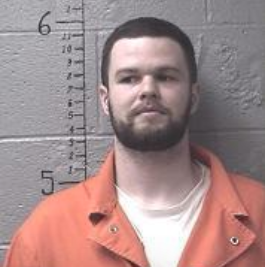
Deputies found the Crown Victoria on U.S. 50 near the Ford-Gray County line, according to the release and arrested an 18-year-old man.
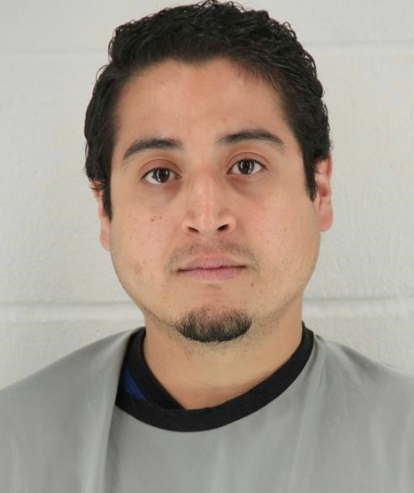
He was booked the teen on requested charges of false impersonation of a law enforcement officer, according to the release. The sheriff’s office has not released the suspect’s name.
SEDGWICK COUNTY — One person died in an accident just after 10:30p.m. Sunday in Sedgwick County.
The Kansas Highway Patrol reported a 2001 Suzuki motorcycle driven by Travis JB Bryson, 29, Wichita, was southbound on Interstate 135 at K-15. The driver lost control of the motorcycle after hitting the wall.
The passenger identified as Christopher L. Monk, 45, Wichita, was ejected from the bike and the driver and the bike slide for about 1/4 mile.
Monk was pronounced dead at the scene. EMS transported Bryson to St. Francis. They were not wearing helmets, according the KHP.
WESTMORELAND – A Kansas woman must repay more than $3,800 to the Kansas Medicaid Program after pleading guilty to Medicaid fraud-related charges, Kansas according to Attorney General Derek Schmidt.
Elizabeth Joyce, 22, Junction City pleaded guilty on May 16 in Pottawatomie County District Court to one felony count of making a false claim to the Medicaid program and one felony count of theft.
District Judge Jeff Elder ordered Joyce to repay $3,870.31 to the Kansas Medicaid Program and sentenced her to 12 months of probation with an underlying sentence of six months in the Kansas Department of Corrections. Convictions such as this one may also result in a period during which the defendant is prohibited from being paid wages through a government health care program.
An investigation by the attorney general’s Medicaid Fraud and Abuse Division revealed that Joyce claimed she was providing personal care attendant home based services to her mother, when in fact she was clocked in and working for other employers.
The pay for the personal care services was placed into a joint checking account accessible to both Joyce and her mother, Terry Sherrick. An analysis of the Medicaid payment data showed 370 hours of overlapping time billed by Sherrick on behalf of Joyce, while Joyce was working for other employers. The crimes occurred between October 2015 and July 2016.
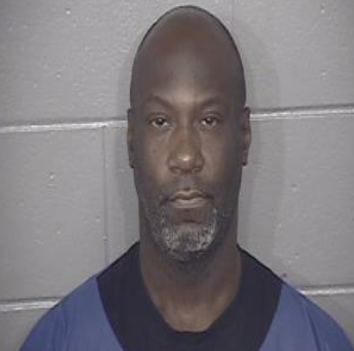
KANSAS CITY (AP) — Officials say a 41-year-old Kansas City man has been charged in the fatal shooting last month of a transgender woman.
Marcus Lewis photo Jackson Co.
Marcus Lewis is charged with second-degree murder, armed criminal action and unlawful possession of a firearm in the June 25 death of 32-year-old Brooklyn Lindsey. Police say she was found dead on the porch of a home in northeast Kansas City. She had been shot several times.
Court records say DNA testing of the shell casings at the scene led detectives to Lewis and that Lewis admitted to shooting Lindsey. Police say Lewis told investigators he and Lindsey were engaged in a physical fight when Lewis pulled out a gun and shot her.
Police say Lewis is a felon and barred from possessing guns.
SHAWNEE, Kan. (AP) — A northeastern Kansas man has been charged with first-degree murder, rape and aggravated criminal sodomy in the death of a woman.
Chavez photo Johnson Co.
Felipe Chavez Jr., 28, Shawnee, was charged Saturday in the death of 30-year-old Lucia Frayre, of Kansas City.
Police say the charges stem from a July 13 incident in which Shawnee police were called to a local hospital for a suspected domestic battery. Frayre was unconscious and receiving medical treatment when officers arrived. She died from her injuries Tuesday. Police say her death is Shawnee’s first homicide this year.
Chavez is being held on $1 million bond. He’s scheduled to appear in court on the charges Monday.
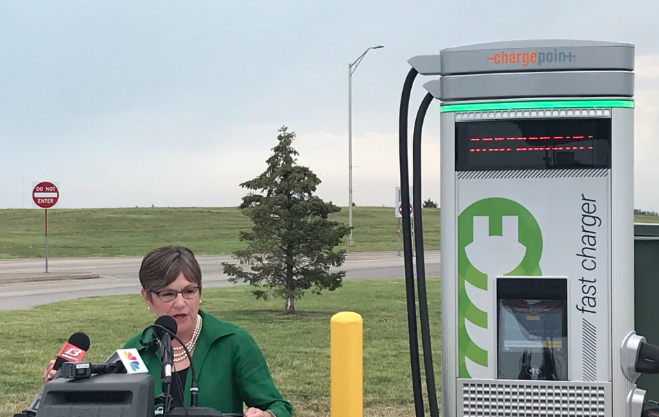
TOPEKA, Kan. (AP) — Electric charging stations have been introduced at the Topeka, Lawrence and Towanda services areas on the Kansas Turnpike.
Photo courtesy Kansas Governor’s office
Kansas Gov. Laura Kelly announced the additions Wednesday, calling the charging stations “a game changer” for electric vehicle drivers.
The Topeka Service Area, similar to the ones in Lawrence and Towanda, has three charging stations.
The charging station additions came as a result of an alliance between the Kansas Turnpike Authority, Westar Energy and Kansas City Power and Light.
Turnpike officials said the charging stations will help to eradicate “range anxiety,” or the concern an electric car battery will run out of power before reaching a destination.
“Electric vehicle charging stations are something we’ve been asked about by customers,” said Kansas Turnpike Authority CEO Steve Hewitt. “We’re excited to make this request a reality for our electric vehicle customers.”
Turnpike officials said each of the three locations will include two DC fast-charging stations and one Level 2 station. Typically, a DC Fast charging station can completely charge most electric vehicles in under 30 minutes.
Officials said those needing to recharge their vehicle’s battery can drive to a charging station, connect the charging cable, then wait inside the service area while their vehicle is being charged.
With a growing number of electric vehicles on the road, the addition of the charging stations “allows us to be ahead of the game,” Hewitt said.
Some electric vehicles can travel up to 200 to 250 miles on a single charge, though many average anywhere between 110 and 130 miles per charge, said Chuck Caisley, Westar Energy’s chief customer officer.
Caisley noted manufacturers are expected to spend around $500 billion over the next seven to eight years on electric car development.
Electric vehicles signify “the next big step in transportation evolution,” he noted.
LAWRENCE — Dec. 7, 1941. The Japanese attack on Pearl Harbor. A date which will live in infamy.
But what few people understand is the attack wasn’t limited to Hawaii, and it didn’t actually end Dec. 7.
That’s the impetus for a new book titled “Beyond Pearl Harbor: A Pacific History,” which brings together 11 renowned scholars who reinterpret the events, politics, strategy and results of that military campaign and why many of its stories have been overlooked. The book is the brainchild of editors Beth Bailey and David Farber, who are both professors of history at the University of Kansas. And they’re married to each other.
“It wasn’t so clear at the moment that Dec. 7 was a date that would live in infamy,” Farber said. “That was Franklin D. Roosevelt’s summation a day later. In those first 24 hours, Americans were trying to understand, ‘Was this a war on us? The homeland? The Pacific empires of European and Asian countries? Was this a war in which we would even participate?’”
The historians claim that what Americans of today believe to be a galvanizing rallying point is based on a skewed received narrative. It ignores the nearly simultaneous attacks on Guam, Wake Island, Philippines, Thailand, Malaya, Singapore and Hong Kong.
“Newspaper headlines that appeared across the nation before FDR spoke portray the event in all sorts of ways,” Bailey said. “Hawaii isn’t always the most important place. Sometimes it’s not even mentioned. Sometimes the focus is on Guam or the Philippines. That this was an attack on Pearl Harbor, a ‘stab in the back’ — that wasn’t Americans’ initial understanding.”
“Beyond Pearl Harbor,” which will be published July 24 by University Press of Kansas, had its origin several years ago during a conference organized by the couple. Bailey runs the Center for Military, War and Society Studies. Every year she organizes an event, and this one sprung from a gathering on the occasion of the raid’s 75th anniversary.
“We tried to find the best-known international scholars on the various nation-states and colonies involved in the Pacific War. And we asked if they wanted to come to Lawrence, Kansas, to have a conversation,” she said of the group, which included participants from Japan, China, England, Australia and the Netherlands.
After short presentations and conversations, the theme of what would become the book emerged.
“That’s why the university is a great spot,” said Farber, a Chicago native. “We didn’t just read papers to each other and then go away. A dozen scholars came together, spent two hard days thinking out loud with one another and, possibly, rewrote how people will think about the origins of World War II in the Pacific.”
Bailey, a native of Atlanta, said one of her favorites of the 10 essays is titled “American Lives: Pearl Harbor and War in the U.S. Empire” by Daniel Immerwahr of Northwestern University. In it he recounts the strikes on the U.S. territories of Midway, Wake Island, Guam and the Philippines, probing the question, “Why have the Japanese attacks of December 7/8 been metonymically reduced in public memory to a single event?”
Indeed, in the American colony of the Philippines, casualties were in the tens of thousands. The war essentially destroyed Manila.
“The United States didn’t come to the rescue of its own colony because its people were not seen as American,” Bailey said.
Farber added, “It was all about whose lives matter. Why did Filipino lives matter less, for example, than the lives of people in Hawaii?”
The chapter “Pearl Harbor and the Asian Cultural Turn” by Ethan Mark of Leiden University in the Netherlands is Farber’s top pick. Here, Mark explores how the population of the Dutch East Indies (modern Indonesia) reacted.
“The scholar who wrote that piece is a brilliant guy, and he was able to capture that sense of uncertainty in the Asian world through the eyes of Indonesians trying to figure out what’s next,” Farber said. “The nationalists weren’t sure which way to turn. Was Japan the future? Was the United States the future? Which represented the way Asia should go?”
In addition to the introduction and prologue, Bailey and Farber contribute a chapter exploring the different strikes on territories that included ones controlled by other nations.
They write: “Within days of the attack, Americans began to distinguish between their need to restore empires and defend allies in the Pacific and their desire to protect ‘America’ — a term open to debate on racial, geopolitical and historical grounds.”
Beth Bailey and David Farber
Bailey and Farber both came to KU four years ago. She’s an expert in U.S. military, war and society as well as history of gender and sexuality. His expertise encompasses modern U.S. history. They’ve been married for 34 years.
“Scholars today talk about the importance of taking transnational and international approaches to better understand how events connect and affect people across national boundaries,” Farber said.
“Exactly what this conference was about: recreating the origins of World War II by looking beyond each nation-state and seeing the Pacific as the geographical realm of importance. So we think it was a kind of disciplinary breakthrough.”
FARMINGTON, Mo. (AP) — The stepson of a slain Missouri Ku Klux Klan leader has been sentenced to a total 59 years in prison for his role in the death. Paul Jinkerson Jr. was sentenced Friday.
Jinkerson photo St. Francois County j
A St. Francois County jury found him guilty in May of involuntary manslaughter, abandonment of a corpse and other crimes in the fatal 2017 shooting of 51-year-old Frank Ancona Jr. Ancona was imperial wizard of the Klan’s Traditionalist American Knights.
Jinkerson’s mother, Malissa Ancona, pleaded guilty in April to second-degree murder, admitting that she fatally shot her husband. She was sentenced to life in prison.
She initially claimed that Jinkerson shot her husband while he was sleeping. But in her guilty plea, she said Jinkerson had no role in the shooting, though he helped clean up the crime scene and dump the body.
DICKINSON COUNTY — Authorities are investigating a reported scam in Abilene.
According to a statement from the Abilene Chamber of Commerce, a local business reported that they were the attempted target of a check cashing scam and that as many as 5 fake checks could potentially have been presented to their bank.
The business owner was tipped off when one of the check recipients called them to verify the legitimacy of a check they had received via UPS from “THE HEALTHY JUICE, CO”.
The check recipient had allegedly received the check in the amount of $2,470 after signing up online for a “work from home” promotion on THE HEALTHY JUICE, CO’s website. However, the printed name and address in the upper left-hand corner of the check they received as payment belonged to a local Abilene business, with no connection to the juice company.. The check was accompanied by a letter from THE HEALTHY JUICE, CO with instructions to take the check to their local bank, cash it, and then deposit the cash to another account. From that point on, the recipient would purportedly receive a similar check each week.
The local business owner did more investigating after receiving that first call, and discovered that at least 4 other fake checks had also been created. The counterfeit checks looked very similar to the local company’s real checks, with only a few small differences. The check numbers on the fake checks matched checks that the business had recently used to pay vendors in multiple geographic locations. There was no obvious pattern indicating where THE HEALTHY JUICE, CO may have obtained the local business’s check information.
Each of the forged checks the local business uncovered in their investigation was for exactly $2,470. The local business owner stated that they had spoken with at least one other Abilene area business that had been the target of this same scam recently.
Experts say that these check cashing scams typically originate overseas, making it very difficult for local law enforcement and banks to track the source. Monitoring your bank account closely and using checks with enhanced security features can help protect you and your business.
If you fear that you or your business have been the target of this or another scam, notify your bank immediately and call the Abilene Police Department at 785-263-1212.
The Chamber reminded consumers, there a number of ways to safeguard yourself against becoming an unwitting pawn in a check cashing scam. For more information on how check cashing scams work, click to read “The Anatomy of a Fake Check Cashing Scam”.
Just after 4p.m. Saturday, the Shawnee County Emergency Communications Center received a call about an injury accident that occurred at 117 NE highway 24, according to Lt. Robert Simmons.
When officers arrived they located what appeared to be a single vehicle accident with an adult male driver who was determined to be the sole occupant.
The man was initially unresponsive at the scene and was transported to an area hospital where he was pronounced deceased.
According to Simmons, it did not appear the man died from the accident.
Police do not believe the death to be suspicious in nature. He did not release the man’s name.
An excerpt from Hardy’s “2000 Dragons” scroll, taken during a 2012 exhibition at Diverse Works in Houston. (Courtesy Sherry Fowler)
KU NEWS SERVICE
LAWRENCE – Tattoo art icon Don Ed Hardy has come full circle more than once. He’s gone from student of East Asian art history to commercial juggernaut and back to fine art. And even within the fashion world, he’s had a recent comeback after his early 2000s success led to overexposure and backlash.
Sherry Fowler
As a friend of nearly 40 years, University of Kansas researcher Sherry Fowler was there for much of it. That’s partly why she, along with her husband, Dale Slusser, was asked to contribute an essay for the catalog that accompanies the forthcoming Hardy exhibition at San Francisco’s de Young Museum.
“Ed Hardy: Deeper Than Skin” (July 13-Oct. 6) is the first museum retrospective of the man known for elevating the tattoo from its subculture status to an important visual art form. The catalog is edited by curator Karin Breuer and published by Fine Arts Museums of San Francisco in association with Rizzoli Electa.
Fowler, KU professor of the history of art, said she met Hardy through his wife, Francesca Passalacqua, who was her Japanese-language classmate in San Francisco around 1980.
“One day she said, ‘I’ll give you a ride home, but I have to leave early because my husband’s going to be on ‘To Tell the Truth.’ That was a TV game show with three guests on it, two of whom were imposters, all who said that they were someone noteworthy or unusual — in this case the most famous tattoo artist in the United States,” Fowler said. “So I went home and watched the show. And I thought, ‘Well, which one is her husband?’ There were two old, salty sailor types, and then there was this young, cute guy, and I thought, ‘I hope it’s him.’ And it was. Panelist Kitty Carlisle got the answer right.”
Like her, Fowler said, Hardy loved and studied Asian art (he earned a Bachelor of Fine Arts with an emphasis in printmaking from the San Francisco Art Institute), and the couples became friends.
Slusser is associate vice president for development with KU Endowment and is an affiliate of the College of Liberal Arts & Sciences’ Center for East Asian Studies.
Just a few months ago, Hardy asked Fowler to write a catalog essay for the de Young show, and, with Slusser’s help, she agreed. The essay is titled “Drawing Embodied: Ed Hardy’s East Asian Art Connections.”
“The amazing thing about working on somebody who’s alive — you can actually email them and ask them questions,” said Fowler, who usually writes about premodern Japanese art. “But I was there for a lot of it, and I remember these things happening. Although I took care not to put myself in the narrative, I was thinking about it as I wrote.”
For instance, Fowler recalled, she served as interpreter for “the legendary Horiyoshi II” during the 1985 National Tattoo Association Convention in Seattle, an event mentioned in the catalog as one of many important milestones in Hardy’s career.
And while tattoo artists like Horiyoshi II, Horiyoshi III and Sailor Jerry Collins influential on Hardy’s tattoo style, so, too, was his training in East Asian art, Fowler argues in the catalog. It’s also apparent in his printmaking.
For instance, Fowler begins her essay by considering Hardy’s 2007 print titled “Our Gang.” It’s based on a bronze plaque dated to the year 1001 and held in the Tokyo National Museum. She said the central figure, known as Zao Gongen, “is a hybrid Shinto-Buddhist deity. And the print is emblematic of his career because it has so many different things going on, mixing very traditional Asian art with goofy stuff and personal things.”
Among the smaller figures surrounding the deity, Hardy has even depicted himself as a rat offering up a valentine heart to his wife, Fowler said. Fowler knew that among all the figures in the print there were portraits of Hardy and his wife, but she had to confirm with him which ones they were.
Fowler’s essay broaches the topic of cultural appropriation but in this specific case dismisses any bad intent on the part of the artist or any harm to his sources.
“I don’t think his work is for everybody,” Fowler said. “And sometimes I don’t like it when he pushes the envelope too far. But that is provoking. That makes us think and change our minds about certain things.”
Ultimately, Fowler said, it is the passion that undergirds Hardy’s style and technique that has made him a cultural force to be reckoned with.
“He loves art,” she said. “He is so passionate. He’s the kind of person who will get up in the morning and say, ‘I’ve been thinking about art all night; I couldn’t sleep.’ When you’re around him, you feel like you just want to make the most of every moment. You want to see everything. You want to do everything and experience as much art as you possibly can. He’s that kind of magnetic personality.”
While the Hardy show is at the de Young, there is a related show, “Tattoos in Japanese Prints,” at the Asian Art Museum in San Francisco.
“For a long time, there was a big stigma about tattooing, and now it’s everywhere,” Fowler said. “I think museums are making a real effort to connect to people, and so if you can have something historical that makes sense and connects to people’s lives, they will want to learn more about it.”
Kansas lawmakers may put the question of abortion rights to a public vote in 2020. CELIA LLOPIS-JEPSEN / KANSAS NEWS SERVICE
That means even if the U.S. Supreme Court overturns its 1973 Roe v. Wade ruling, lawmakers won’t be able to ban abortion in Kansas unless voters amend the state constitution.
But the matter remains far from settled. Here’s where things stand on abortion in Kansas, and some of the developments to keep an eye out for within state lines.
Abortions on the decline
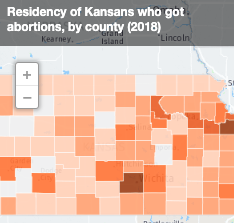
A preliminary report from the state health department shows about 7,000 abortions took place in Kansas last year, about half of which involved patients from other states.
If that seems surprising, remember that the only abortion clinic in neighboring Missouri, for example, lies at the other end of that state in St. Louis (where it’s fighting for survival). The Kansas City metro area’s two abortion clinics both stand on the Kansas side of the border, in Overland Park.)
The annual number of abortions in Kansas has dropped significantly over the past few decades.
Nationally, abortion rates also have dropped, according to data collated by the Guttmacher Institute, a pro-abortion rights research center. Studies suggestsomewhere around a third of women in the U.S. get abortions by their mid-40s.
Who got abortions in 2018?
In Kansas, nearly a third of the women who had last year’s 7,000 abortions were in their early 20s. Nearly nine out of 10 were in their 20s or 30s. About one in six was married.
Though in-state abortions are only available at four clinics in Wichita and Overland Park, last year’s patients came from across the state.
Kansas has passed a slew of limits on abortion, particularly during Sam Brownback’s tenure as governor from 2011 through 2018. That includes a ban on abortions after the 22nd week of pregnancy unless medically necessary to protect the mother’s health.
About 70% of abortions in Kansas last year occurred within the first eight weeks of pregnancy. About 60% involved the “abortion pill,” nearly a third involved suction abortion and about 7% were dilation and evacuation abortions.
A constitutional amendment on the horizon?
Given the Kansas Supreme Court’s ruling, abortion foes may ask the public to tweak the state constitution, perhaps on the November 2020 ballot. That would require getting a bill through the state House and Senate with two-thirds majorities before getting to the public vote. Governors can’t veto constitutional amendment bills.
Supporters of changing the constitution have different ideas about how to do so. Lawmakers could potentially ask the public to ban all abortions, for example, or to bar the state’s courts from undoing abortion limits and bans that pass the Legislature.
Drug abortions by out-of-state doctors
The wheels have started turning again on a few old lawsuits making their way through the Kansas courts. At least one new lawsuit has cropped up this year, and more could be on the way.
The Kansas Supreme Court’s landmark ruling this spring about the right to abortion stemmed from a state ban on dilation and evacuation. (The ban wasn’t actually in effect, because courts had blocked it pending the case’s outcome.) Now the case bounces back to Shawnee County District Court, which will seal the fate of the dilation and evacuation ban based on the high court’s ruling. That could mean a whole new trial, which isn’t likely before 2020.
A Wichita abortion clinic says it can’t find local doctors and instead leans on physicians from other states.
Also at Shawnee County District Court: A Wichita abortion clinic that says it can’t find local doctors and instead leans on physicians from other states. It’s fighting to resume telemedicine abortions. (These are abortions in which the doctors work remotely with the clinic’s patients via video connection. They check whether the patient is eligible to take the abortion pill, and then guide the process.)
That legal battle involves two lawsuits and some very convoluted twists. In the simplest terms: A judge blocked the original 2011 ban on remote abortions years ago. The state, meanwhile, argues that the injunction shouldn’t apply anymore. And though a judge rejected that argument, the clinic is worried state agencies and local prosecutors won’t abide by his conclusions.
So the clinic hasn’t restarted the telemedicine abortions it stopped at the end of 2018 because it fears retaliation. As an example, it cites an ongoing investigation of its operations by the state agency in charge of medical licenses.
Other abortion restrictions on trial
Finally, litigation could undo a slew of other state restrictions related to abortion, including some that were temporarily blocked by the courts and others that were allowed to take effect.
Just a few of the restrictions targeted in ongoing lawsuits from 2011 and 2013:
Faculty from the state’s only school of medicine can’t teach their students how to perform abortions either on or off university property.
Women must wait 24 hours for an abortion even if the delay would kill them, according to the plaintiffs’ reading of a 2013 law. They say lawmakers tweaked the state’s exceptions such that no emergency can pass their test.
Clinics must deliver a number of messages to patients discouraging abortion. They include hanging a message that plaintiffs argued takes 6 square feet to print in the Legislature’s chosen font size.
Under a 2011 law, doctors need another person in the room when giving a pelvic exam to a patient who wants an abortion, even if the patient doesn’t want anyone else present.
Plaintiffs also argue related regulations grant state health workers access to the individual medical records of women who’ve had abortions.
Clinics must do urine tests to check whether a woman’s abortion worked or whether she remains pregnant. Plaintiffs argue urine tests are less accurate than the ultrasounds and physical exams that doctors normally use.
And since Kansas has plenty of other restrictions on the books, too, such as that ban on most abortions after 22 weeks, future lawsuits based on this spring’s Kansas Supreme Court ruling could be in the pipeline.
Celia Llopis-Jepsen reports on consumer health and education for the Kansas News Service. You can follow her on Twitter @Celia_LJ or email her at celia (at) kcur (dot) org.
When the cancer clinic at Mercy Hospital Fort Scott closed in January 2019, cancer patients such as Karen Endicott-Coyan had to continue their treatment in different locations. Endicott-Coyan has a rare form of multiple myeloma and now drives an hour from her farm near Fort Scott to Chanute for weekly chemotherapy injections. (Christopher Smith for KHN)
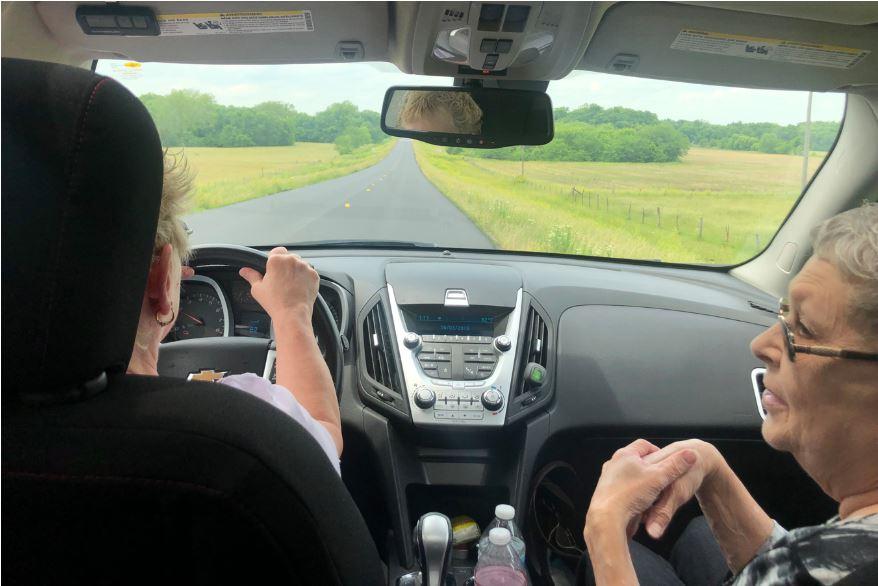
One Monday in February, 65-year-old Karen Endicott-Coyan gripped the wheel of her black 2014 Ford Taurus with both hands as she made the hour-long drive from her farm near Fort Scott to Chanute. With a rare form of multiple myeloma, she requires weekly chemotherapy injections to keep the cancer at bay.
She made the trip in pain, having skipped her morphine for the day to be able to drive safely. Since she sometimes “gets the pukes” after treatment, she had her neighbor and friend Shirley Palmer, 76, come along to drive her back.
Continuity of care is crucial for cancer patients in the midst of treatment, which often requires frequent repeated outpatient visits. So when Mercy Hospital Fort Scott, the rural hospital in Endicott-Coyan’s hometown, was slated to close its doors at the end of 2018, hospital officials had arranged for its cancer clinic — called the “Unit of Hope” — to remain open.
Then “I got the email on Jan. 15,” said Reta Baker, the hospital’s CEO. It informed her that Cancer Center of Kansas, the contractor that operated and staffed the unit, had decided to shut it down too, just two weeks later.
“There are too many changes in that town” to keep the cancer center open, Yoosaf “Abe” Abraham, chief operating officer of the Cancer Center of Kansas, later told KHN. He added that patients would be “OK” because they could get treated at the center’s offices in Chanute and Parsons.
From Fort Scott, those facilities are 50 and 63 miles away, respectively.
For Endicott-Coyan and dozens of other cancer patients, the distance meant new challenges getting lifesaving treatment. “You have a flat tire, and there is nothing out here,” Endicott-Coyan said, waving her arm toward the open sky and the pastures dotted with black Angus and white-faced Hereford cattle on either side of the shoulderless, narrow highway she now must drive to get to her chemo appointment.
Nationwide, more than 100 rural hospitals have closed since 2010. In each case, a unique but familiar loss occurs. Residents, of course, lose health care services as wards are shut and doctors and nurses begin to move away.
But the ripple effect can be equally devastating. The economic vitality of a community takes a blow without the hospital’s high-paying jobs and it becomes more difficult for other industries to attract workers who want to live in a town with a hospital. Whatever remains is at risk of withering without the support of the stabilizing institution.
The 7,800 residents of Fort Scott are reeling from the loss of their 132-year-old community hospital that was closed at the end of December by Mercy, a St. Louis-based nonprofit health system. Founded on the frontier in the 19th century and rebuilt into a 69-bed modern facility in 2002, the hospital had outlived its use, with largely empty inpatient beds, the parent company said. For the next year, Kaiser Health News and NPR will track how its citizens fare after the closure in the hopes of answering pressing national questions: Do citizens in small communities like Fort Scott need a traditional hospital for their health needs? If not a hospital, what then?
Reta Baker, the hospital’s president who grew up on a farm south of Fort Scott, understood that the hospital’s closure was unavoidable. She scrambled to make sure basic health care needs would be met. Mercy agreed to keep the building open and lights on until 2021. And Baker recruited a federally qualified health center to take over four outpatient clinics, including one inside the hospital; former employees were bought out and continue to operate a rehabilitation center; and the nonprofit Ascension Via Christi Hospital in Pittsburg reopened the emergency department in February.
But cancer care in rural areas, which requires specialists and the purchase and storage of a range of oncology drugs, presents unique challenges.
Rural cancer patients typically spend 66% more time traveling each way to treatment than those who live in more urban areas, according to a recent national survey by ASCO, the American Society of Clinical Oncology. Dr. Monica Bertagnolli, a cattle rancher’s daughter who is now chair of ASCO’s board, called this a “tremendous burden.” Cancer care, she explained, is “not just one visit and you’re done.”
ASCO used federal data to find that while about 19% of Americans live in rural areas, only 7% of oncologists practice there.
People in rural America are more likely to die from cancer than those in the country’s metropolitan counties, according to a Centers for Disease Control and Prevention report in 2017. It found 180 cancer deaths per 100,000 people a year in rural counties, compared with 158 deaths per 100,000 in populous metropolitan counties.
The discrepancy is partly because habits like smoking are more common among rural residents, but the risk of dying goes beyond that, said Jane Henley, a CDC epidemiologist and lead author of the report. “We know geography can affect your risk factors, but we don’t expect it to affect mortality.”
From an office inside a former Mercy outpatient clinic, Fort Scott’s cancer support group, Care to Share, continues its efforts to meet some of the community’s needs — which in some ways have increased since the Unit of Hope closed. It provides Ensure nutritional supplements, gas vouchers and emotional support to cancer patients.
Lavetta Simmons, one of the support group’s founders, said she will have to raise more money to help people pay for gas so they can drive farther to treatments. Last year, in this impoverished corner of southeastern Kansas, Care to Share spent more than $17,000 providing gas money to area residents who had to travel to the Mercy hospital or farther away for care.
According to the U.S. Centers for Disease Control and Prevention, cancer kills more people in rural America than in the country’s metropolitan counties — 180 deaths per 100,000 people versus 158 deaths per 100,000 people. (Sara Jane Tribble/KHN)
The group expects to spend more on gas this year, having spent nearly $6,000 during the first four months of 2019.
And the reserves of donated Ensure from Mercy are running out, so Simmons is reaching out to hospitals in nearby counties for help.
With Mercy Hospital Fort Scott closed, the likelihood of residents here dying from their cancer will grow, experts worry, because it’s that much harder to access specialists and treatments.
Krista Postai, who took over the Fort Scott hospital’s four primary care clinics, said it’s not unusual for her staff to “see someone walk in [with] end-stage cancer that they put off because they didn’t have money, they didn’t have insurance, or it’s just the way you are. … We wait too long here.”
‘If they can’t cure me, I’m done’
Art Terry, 71, a farmer and Vietnam veteran, was one of them. Doctors discovered Terry’s cancer after he broke a rib while baling hay. When they found a mass below his armpit, it was already late-stage breast cancer that had metastasized to his bones.
With his twice-weekly chemotherapy treatment available in the “Unit of Hope,” Terry spent hours there with his son and grandchildren telling stories and jokes as if they were in their own living room. The nurses began to feel like family, and Terry brought them fresh eggs from his farm.
“Dad couldn’t have better or more personalized care anywhere,” said his son, Dwight, bleary-eyed after a factory shift.
Art Terry, center, stands for a family photo at the Mercy Hospital Fort Scott cancer unit before its January closure. From left are Terry’s daughter-in-law, Sabrina; granddaughters Aubry and Shaylee; son Dwight; and grandson Blaiton. (Courtesy Dwight Terry)
Terry knew it was difficult to find trustworthy cancer care. The shortage of cancer specialists in southeastern Kansas meant that many, including Mercy Hospital Fort Scott’s patients, counted on traveling oncologists to visit their communities once or twice a week.
Wichita-based Cancer Center of Kansas has nearly two dozen locations statewide. It began leasing space in Fort Scott’s hospital basement in the mid-2000s, the center’s Abraham said. The hospital provided the staff while the Cancer Center of Kansas paid rent and sent roving oncologists to drop in and treat patients.
At its closing, the Unit of Hope served nearly 200 patients, with about 40% of them on chemotherapy treatment.
When Art Terry was diagnosed, his son tried to talk to him about seeking treatment at the bigger hospitals and academic centers in Joplin, Mo., or the Kansas City area. The elder Terry wasn’t interested. “He’s like, ‘Nope,’” Dwight Terry recalled. “I’m going right there to Fort Scott. If they can’t cure me, I’m done. I’m not driving.’”
In the end, as the elder Terry struggled to stay alive, Dwight Terry said he would have driven his father the hour to Chanute for treatment. Gas — already a mounting expense as they traveled the 20 miles from the farm near tiny Prescott, Kan., to Fort Scott — would be even more costly. And the journey would be taxing for his father, who traveled so little over the course of his life that he had visited Kansas City only twice in the past 25 years.
As it turned out, the family never had to make a choice. Art Terry’s cancer advanced to his brain and killed him days before the hospital’s cancer unit closed.
What happens next?
Debbie Endicott, Karen Endicott-Coyan’s sister-in-law, drives to chemotherapy in Chanute. The trip takes an hour on mostly narrow, two-lane highways from Endicott-Coyan’s home south of Fort Scott. ‘You can see there are no gas stations, there is nothing in the way,’ Endicott-Coyan says. ‘There isn’t anything.’ (Sara Jane Tribble/ KHN)
As Endicott-Coyan and her friend Palmer drove to Chanute for treatment, they passed the time chatting about how the hospital’s closure is changing Fort Scott. “People started putting their houses up for sale,” Palmer said.
Like many in Fort Scott, they had both spent their days at the Fort Scott hospital. Endicott-Coyan worked in administration for more than 23 years; Palmer volunteered with the auxiliary for six years.
The hospital grew with the community. But as the town’s fortunes fell, it’s perhaps no surprise that the hospital couldn’t survive. But the intertwined history of Mercy and Fort Scott is also why its loss hit so many residents so hard.
Fort Scott began in 1842 when the U.S. government built a military fort to help with the nation’s westward expansion. Historians say Fort Scott was a boomtown in the years just after the Civil War, with its recorded population rising to more than 10,000 as the town competed with Kansas City to become the largest railroad center west of the Mississippi. The hospital was an integral part of the community after Sisters of Mercy nuns opened a 10-bed hospital in 1886 with a mission to serve the needy and poor. Baker, Mercy Hospital Fort Scott’s president, said the cancer center was an extension of that mission.
The Unit of Hope began operating out of the newest hospital building’s basement, which was “pretty cramped,” Baker said. As cancer treatments improved, it grew so rapidly that Mercy executives moved it to a spacious first-floor location that had previously been the business offices.
“Our whole purpose when we designed it was for it to be a place where somebody who was coming to have something unpleasant done could actually feel pampered and be in a nice environment,” Baker said.
The center, with its muted natural grays and browns, had windows overlooking the front parking lot and forested land beyond. Every patient could look out the windows or watch their personal television terminal, and each treatment chair had plenty of space for family members to pull up chairs.
Karen Endicott-Coyan and her husband, John Coyan, laugh while sitting in their kitchen. John, 74, began showing signs of dementia in 2015. Together, they run a cow-calf operation on 240 acres south of Fort Scott and go to church every Sunday. (Christopher Smith for Kaiser Health News)
When Endicott-Coyan and Palmer arrived at the Cancer Center of Kansas clinic in Chanute in February, things looked starkly different. Patients entered a small room through a rusted back door. Three brown infusion chairs sat on either side of the entry door and two television monitors were mounted high on the walls. A nurse checked Endicott-Coyan’s blood pressure and ushered her back to a private room to get a shot in her stomach. She was ready to leave about 15 minutes later.
The center’s Abraham said the Chanute facility is “good for patients for the time being” and not a “Taj Mahal” like Mercy’s Fort Scott hospital building, which he said was too expensive to maintain. Cancer Center of Kansas plans to open a clinic at a hospital in Girard, which is about 30 miles from Fort Scott, he said.
Some oncology doctors would say driving is not necessary. Indeed, a few health care systems across the country, such as Sanford Health in South Dakota and Thomas Jefferson University Hospitals in Pennsylvania, are administering some chemotherapy in patients’ homes. Oncologist Adam Binder, who practices at Thomas Jefferson in Philadelphia, said “over 50% of chemotherapy would be safe to administer in the home setting if the right infrastructure existed.”
But the infrastructure — that is, the nurses who would travel to treat patients and a reimbursement model to pay for such care within our complex health care system — is not yet in place.
Back in the car, Palmer took the wheel and Endicott-Coyan began planning for future cancer treatments in the void left by Mercy Hospital Fort Scott’s closure. “I put a note on Facebook today and said, ‘OK, I have drivers for the rest of February; I need drivers for March!’”
This is the first installment in KHN’s year-long series, No Mercy, which follows how the closure of one beloved rural hospital disrupts a community’s health care, economy and equilibrium.




 That’s the impetus for a new book titled “Beyond Pearl Harbor: A Pacific History,” which brings together 11 renowned scholars who reinterpret the events, politics, strategy and results of that military campaign and why many of its stories have been overlooked. The book is the brainchild of editors Beth Bailey and David Farber, who are both professors of history at the University of Kansas. And they’re married to each other.