TOPEKA, Kan. (AP) — The Latest on the Kansas Legislature (all times local):
4:20 a.m.
The Kansas Legislature is out of session until June 1, and its leaders hope lawmakers have finished their business for the year.
The House adjourned shortly after 1 a.m. Monday, and the Senate followed at about 3:30 a.m. Their session June 1 is supposed to be only a brief adjournment ceremony.
But the Kansas Supreme Court is reviewing changes lawmakers made in March to how the state distributes more than $4 billion a year in aid to its 286 school districts.
The court said in February that Kansas was shorting poor districts on aid and ordered a fix by June 30. The justices hear arguments about the Legislature’s work on May 10.
Lawmakers have extra time: They’ve been in session only 73 days out of the normal 90 scheduled.
___
3:30 a.m.
Kansas legislators have approved a plan for balancing the state budget that gives Republican Gov. Sam Brownback broad discretion to make spending cuts.
The Senate approved the measure on a 22-18 vote early Monday morning. The measure initially was failing, but several GOP senators switched their votes. The House approved the plan earlier Monday morning, 63-59.
The state faces projected shortfalls totaling more than $290 million in its current budget and in the one for the next fiscal year beginning July 1.
The plan assumes Brownback follows through on plans to cut higher education spending and delay major highway projects.
Brownback also would have to make up to $92 million in as-yet-unspecified spending cuts during the next fiscal year but would be barred from touching aid to public schools.
___
Kansas legislators have approved a bill aimed at changing welfare policies and reducing prescription costs within the state’s Medicaid program.
The Senate approved the measure early Monday morning on a 27-13 vote after the House passed it Sunday night, 79-43. The measure now goes to Republican Gov. Sam Brownback.
GOP leaders saw the measure as crucial to resolving budget issues because it would reduce the state’s costs in providing health coverage to poor and disabled residents by nearly $11 million a year.
It would allow Medicaid to use so-called step therapy with prescriptions and require participants to try a less expensive drug before being allowed to get a more expensive one.
The measure also would reduce the lifetime limit for cash assistance to 24 months from 36 months.
WICHITA, Kan. (AP) — Authorities say a woman has been stabbed to death in Wichita during a parking spot dispute.
KSNW-TV reports that the stabbing happened Saturday night in the parking lot of an apartment complex.
Wichita Police Sgt. Brian Sigman says the 23-year-old victim was sitting in a car with four other women with the driver’s door open. Another driver wanted her to close the door so he could pull into an adjacent parking space and is accused of stabbing her when she refused. She was rushed to a hospital, where she was pronounced dead.
Sgt. Joe Kennedy says another woman received treatment after she was stabbed in the arm.
The suspect has been booked into jail. Kennedy says he had injuries from the fight.
HUTCHINSON -A Kansas man wanted by police and arrested on a warrant but also faces new charges was ordered to prison on Friday.
Jeremy Frischenmeyer, 34, Hutchinson was wanted on the warrant for violating his community corrections on a conviction involving felony drug charges.
Judge Trish Rose ordered the three year and four month sentence served, according to Senior Assistant District Attorney Steve Maxwell.
But, Frischenmeyer has other charges pending.
In one case, he is charged with felony interference with law enforcement. The state alleges that he resisted or opposed officer Dustin Green, who attempted to serve the warrants.
They allege in mid March, he refused to come out of a house and fled from officers.
The other case filed is for a charge of felony flee and elude with five or more moving violations.
The state alleges that on March 14, he fled officers or attempted to elude them when given a visual or audible signal to halt.
Law enforcement authorities located and arrested him at a home in the 500 Block of East C Avenue on April 1, according to Hutchinson Police.
The two cases are pending a preliminary hearing.
Frischenmeyer was also arrested for warrants in Saline and Gray Counties.
TOPEKA, Kan. (AP) — Kansas legislators tackled issued that included abortion and preventing cities and counties from regulating artery-clogging restaurant meals or sugary snacks as the worked on balancing the state’s next budget.
Legislators passed and sent Gov. Sam Brownback multiple other measures Sunday before adjourning early Monday morning.
___
ANTI-ABORTION MEASURES
Two anti-abortion proposals won approval from legislators. They’re likely to become law: Brownback is a strong abortion opponent who has signed every piece of anti-abortion legislation sent to him since he took office in January 2011.
One measure approved Sunday night explicitly prohibits midwives from performing abortions or administering abortion-inducing drugs. The proposal was part of a comprehensive health care regulation bill that included new rules for acupuncture.
The Senate’s vote was 40-0, and the House passed it, 115-7.
The other measure makes permanent an annual budget policy in place since 2011 that prevents the state from providing federal family planning dollars to Planned Parenthood. The funds are used to cover the costs of non-abortion services for poor patients.
The votes on the bill were 87-34 in the House and 32-8 in the House.
___
LOCAL CONTROL?
Kansas legislators are trying to prevent cities in counties from regulating work schedules at private businesses and popular but unhealthy foods.
The votes on a bill limiting local officials’ power were 32-6 in the Senate and 76-45 in the House.
The bill also would block cities and counties from imposing food labeling requirements or limiting the sale of food products.
The measure would prohibit cities and counties from setting regulations that affect the schedules of workers for private employers unless the restrictions are required by federal law. The measure would void existing local rules.
Business groups argued that such policies should be consistent statewide. Critics said lawmakers shouldn’t attack cites’ and counties’ control over local affairs.
___
BIOSCIENCE AUTHORITY
Kansas legislators authorized selling off the assets of the Kansas Bioscience Authority a dozen years after creating it to nurture emerging biotechnology companies.
A bill allowing the sale passed the Senate unanimously and the House, 89-32. Brownback pushed for the sale.
The bill was a key companion to the budget-balancing plan because Brownback believes the sale will raise $25 million.
When lawmakers established the authority in 2004, they viewed its creation as a major economic development initiative.
But Brownback and some lawmakers thought it ultimately had only a mixed record. They also argued its activities could be better handled by private companies.
___
HIGHWAY PATROL HELPED
Kansas legislators approved an increase in vehicle registration fees to provide extra funds for the state Highway Patrol to hire additional troopers.
The votes on the bills were 92-27 in the House and 36-4 in the Senate.
The bill also includes another fee increase to provide additional funds for a center in Hutchinson that trains law enforcement officers.
Vehicle registration fees would increase a total of $3.25. Most vehicle owners now pay $35.
A $2 increase would raise $5.4 million a year for the patrol so it could hire an additional 75 troopers. Thirty-five of the state’s 105 counties have no assigned trooper.
An additional $1.25 fee increase would raise $3.4 million annually for the training center.
Kansas Senate District map Google image via Kansas Bar Association (Click to Enlarge)
TOPEKA, Kan. (AP) — Six years before it has to be done, state and federal officials are already talking about redistricting of congressional and legislative districts.
The new maps for political districts aren’t due in Kansas until 2022. But officials from the U.S. Census Bureau met with the state Legislature’s research department last week to discuss the process they’ll use. They also were getting familiar with data and computer software that will be used for redistricting.
The Lawrence Journal-World reports the next census will be in 2020 and states have two years after that to draw new political maps.
Michael Ratcliff, an official with the census bureau, says the federal government wants to get geographic information and software to states as early as possible to help state officials begin planning.
JEFFERSON COUNTY- A Kansas man was injured in an accident just after 4:30 p.m. on Sunday in Jefferson County.
The Kansas Highway Patrol reported a 2013 Ford passenger car driven by William N. Willits, 46, Lawrence, was northbound on Wellman Road four miles southwest of McLouth.
The vehicle hit a bicycle ridden by Frank L. Dorsey, 46, Lawrence, and left the scene.
Dorsey was transported to Stormont Vail.
Willits was not injured.
No additional details were released. The accident remains under investigation.
NEW YORK (AP) — U.S. Sen. Charles Schumer is asking the Federal Trade Commission to investigate an advertising technique that uses mobile phone data to learn about people who pass by billboards.
An outdoor advertising company, Clear Channel Outdoor Americas, says it works with partner companies to match aggregated location data. It can then cater ads to specific consumers based on the demographics of passers-by and determine if the people eventually end up at the advertiser’s stores.
The company uses aggregated data from partners, including AT&T. It says individual consumers cannot be identified.
Schumer, a New York Democrat, wants the FTC to investigate whether it is a deceptive trade practice because he says most people don’t realize their location data is being monitored.
Neither Clear Channel nor the FTC immediately responded to requests for comment.
LAWRENCE, Kan. (AP) — Lawrence school officials say it’s unlikely the district will ban displays of the Confederate flag.
An advisory committee told students seeking the ban that broadening the district’s existing discrimination and harassment policy to include symbols would accomplish the same goal as banning the flag.
Some students began asking for the ban after a student flew a Confederate flag from his pickup truck on school grounds in January.
The Lawrence Journal World reports the committee members say broadening the current discrimination policy would also reduce the risk of the school district being sued by students claiming their free speech rights were being violated.
The discrimination policy currently bans written, verbal or physical discrimination and harassment.
The advisory committee will meet again Tuesday to begin drafting a new policy.
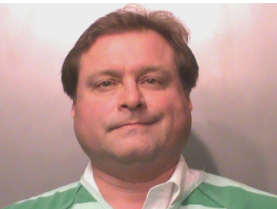
DES MOINES, Iowa (AP) — A Texas man accused of helping a lottery computer manager in Iowa collect jackpots from rigged lottery games has given up an extradition fight to face charges in Iowa.
Assistant Iowa Attorney General Rob Sand says Robert Rhodes, of Sugar Land, Texas, reported to the Polk County jail Thursday to face lottery fraud charges filed last year. Rhodes was booked and released on bond.
He’s a friend of former Multi-State Lottery Association technology manager Eddie Tipton, convicted last year for manipulating Iowa Hot Lotto computers. Prosecutors allege Rhodes helped Tipton attempt to redeem the winning ticket.
Prosecutors say Tipton used his access to random number generators to fix jackpots in Kansas, Colorado, Wisconsin and Oklahoma and worked with associates to play winning numbers and collect prizes.
A message was left Thursday seeking comment from Rhodes’ attorney.
Tipton is scheduled for trial in July on conspiracy charges for allegedly fixing other lottery games, including one in Wisconsin
TOPEKA, Kan. (AP) — The Kansas Court of Appeals says a hospital can deny unemployment benefits to a former employee who objected to receiving a flu vaccine.
The appeals panel affirmed a lower court ruling dismissing the case of Debra Rhodenbaugh, who had been an emergency department clerk at McPherson Hospital. In 2013, she objected to getting vaccinated after the hospital announced employees would be required to receive a flu vaccination.
She was later fired and applied for unemployment benefits, which the hospital fought, saying she wasn’t eligible.
The Topeka Capital-Journal reports the appeals panel said Rhodenbaugh had a duty to the hospital to either get the vaccination or meet the applicable exemptions. The ruling said Rhodenbaugh’s failure to comply amounted to job-related misconduct “and thus disqualified her for unemployment benefits.”
WYANDOTTE COUNTY- Two people were injured in an accident and police pursuit just before 9p.m.on Saturday in Wyandotte County.
The Kansas Highway Patrol reported officers made a traffic stop on a 2009 Toyota Camry driven by Ryan Javon Thompson, 23, Kansas City, that westbound Interstate 70 just west of 57th Street because the Thompson was not wearing a seat belt.
As the officer made contact with the driver, the vehicle fled the scene westbound and exited at Turner Diagonal, struck the left barrier wall, traveled east into the ditch and struck a tree.
Thompson was transported to Providence Medical Center.
A passenger Craig Montez Armstrong, 25, Kansas City, was transported to KU Medical Center.
Another passenger Angel Katrese Phillips, 24, Kansas City, was not injured.
One passenger fled the scene of the accident.
Phillips was the only one properly restrained at the time of the accident, according to the KHP.
A new report ranks Kansas 47th and Missouri 50th for state spending on public health services in the fiscal year 2015. CREDIT C_OSETT / CREATIVE COMMONS-FLICKR
Kansas spends only about $12 per person on public health, making it one of the states putting the least money into preventing chronic and infectious diseases.
According to a recent report from the Trust for America’s Health, Kansas spent about $36 million in fiscal year 2015 on public health programs for its 2.9 million people, or about $12.40 per person. That ranked the state 47th in per capita spending compared to the other 49 states and the District of Columbia.
Missouri ranked even lower, spending $5.90 per person. Only Nevada spent less.
Public health departments in Kansas provide immunizations, prepare for disease outbreaks and track illnesses considered a public health risk, such as Lyme disease, sexually transmitted infections and measles. Most also offer health education and some health care services, such as prenatal care for low-income mothers.
Michelle Ponce, executive director of the Kansas Association of Local Health Departments, said state funding to local health departments in Kansas has been unchanged since 1995. At the same time, costs have gone up and departments have faced new threats like Zika virus, she said.
“While (funding) hasn’t been cut, it also hasn’t increased in 20 years,” she said.
Kansas has a decentralized system, so public health departments are controlled locally and vary in what they can afford to offer, Ponce said. While many receive federal public health funding, she said, those dollars typically can only be used for a narrow purpose.
“We’ve seen quite a few counties make substantial reductions in what they can provide,” she said. “It’s certainly a challenge.”
Comparisons not exact
Nationwide, the report said states spent a median amount of $33.50 per person, meaning half spent more and half spent less. West Virginia spent most, at $220.80 per person.
Albert Lang, spokesman for the Trust for America’s Health, said the state-to-state comparisons may not be exact because states report their spending differently, but the researchers have attempted to include a broad range of public health spending while remaining consistent in what is counted in each state. Medicaid and federally funded health programs aren’t part of the equation, he said.
“We try to include any funding that can be specifically tied to public health in a given state,” he said.
Bert Malone, vice president of the Missouri Public Health Association, said the state’s 115 public health agencies have increased their reliance on local tax dollars or other sources of fundraising. As Missouri reduced state funding, he said, some agencies have cut hours or health education.
“They lack any reliable source of state funds,” he said. “If one county doesn’t pass a mill tax increase, you don’t get those services that another county is able to offer.”
Kansas also ranked in the bottom half when it came to public health grants from federal agencies. The state received $57.8 million from the Centers for Disease Control and Prevention in fiscal year 2015, or about $19.86 per person, and $69.5 million, or $23.88 per person, from the Health Resources and Services Administration, for a combined total of $43.74.
Missouri received slightly more, with $17.33 per person from the CDC and $27.52 per person from the HRSA, for a combined $44.85 per person.
With federal and local spending added, public health spending nationwide averaged $255 per person in 2014 — down from $281 in 2008. That accounted for about 2.4 percent of all health care spending in the United States.
Spending and outcomes
There wasn’t a clear link between public health spending and health outcomes in the states.
West Virginia spent more per person than any other state but fared poorly on the preterm birth rate, percentage of adults who smoked or were obese, on-time vaccinations for children and adults with diabetes. On the other hand, Hawaii came in second in public health spending and its residents have relatively good outcomes.
Public health efforts affect some conditions more than others. A 2011 study in Health Affairs found that when spending by local health departments increased 10 percent, infant mortality fell by 6.9 percent and heart disease deaths dropped by 3.2 percent. There was less impact on deaths from diabetes and cancer, however, and deaths from influenza and Alzheimer’s disease showed almost no change.
The Trust for America’s Health report estimated every $1 spent on programs that succeed in improving nutrition, increasing physical activity or preventing tobacco use would yield about $5.60 in savings on future health care.
But Malone said Missouri policymakers haven’t recognized the value of investing in public health.
“Legislators simply don’t like people telling them how to live their lives, so chronic disease prevention has been a low priority,” he said.
Officials with the Kansas Department of Health and Environment and Missouri Department of Health and Senior Services did not respond to requests for comment on the public health spending report.
Megan Hart is a reporter for KHI News Service in Topeka, a partner in the Heartland Health Monitor team. You can reach her on Twitter @meganhartMC

 TOPEKA, Kan. (AP) — The Latest on the Kansas Legislature (all times local):