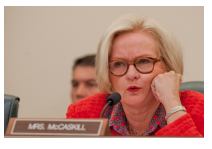
WICHITA, Kan. (AP) — U.S. Sen. Claire McCaskill says an election official had no authority to unilaterally modify a federal voter registration form to require proof-of-citizenship documents to register to vote in Kansas, Alabama and Georgia.
The Missouri Democrat released on Friday a letter sent to the U.S. Election Assistance Commission saying the actions of its executive director, Brian Newby, could cause irreparable harm to the commission. Worse yet, she says, it could deprive tens of thousands of American citizens of their rights to cast a ballot.
McCaskill asks commissioners to ignore Newby’s illegitimate actions and revert to its prior policies. She says the changes requested by the three states are policy changes that must be publically considered by the full commission.
The EAC did not immediately comment on her letter.
MCPHERSON COUNTY- A Kansas woman was injured in an accident just after 11:45a.m. on Saturday in McPherson County.
The Kansas Highway Patrol reported a 2010 Harley Davidson Motorcycle driven by Liana J Ward, 60, Arkansas City, was northbound on Kansas 153 just south of Iron Horse Road.
The vehicle went around a curve, hit gravel on the shoulder and struck a guardrail.
The driver lost control and was thrown from the motorcycle.
Ward was transported to the hospital in McPherson and then flown to Via Christi-St. Francis in Wichita.
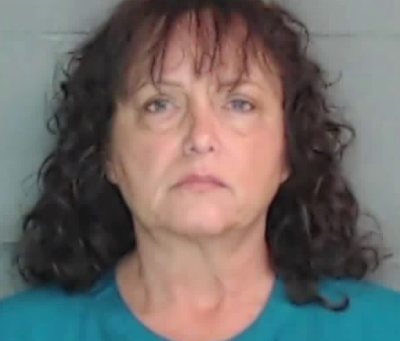
LANSING, Kan. (AP) — A former Kansas prison worker accused of smuggling methamphetamine into the Lansing Correctional Center has been sentenced to 13 months in prison.
The Kansas City Star reports that 60-year-old Jacqueline Doty of Fort Scott was sentenced Friday. She had pleaded no contest to possession with the intent to distribute methamphetamine.
Court documents say Doty was arrested in June 2014 after she was searched at the prison and found to be carrying about 14 bags containing meth.
Prosecutors said the bags were hidden in a “girdle-type undergarment” Doty was wearing, with large bandages wrapped around her midsection to hide them. One of the bags held about 14 grams of meth.
GRAY COUNTY A Kansas man was injured in an accident just before 10a.m. on Saturday in Gray County.
The Kansas Highway Patrol reported a 2016 Victory motorcycle driven by Richard D Gonzales, 29, Garden City, was northbound on Kansas 23 one mile north of Cimarron.
The rider witnessed another motorcycle go down in front of him, lost control and went down in the east ditch.
Gonzales was transported to Western Plains Medical Center.
SHAWNEE COUNTY – Law enforcement authorities in Northeast Kansas are investigating an armed robbery and searching for a most wanted suspect.
Just before12:30 p.m. on Friday hours, officers responded to 101 SW 37th in Topeka to investigate an Armed Robbery that had just occurred, according to a media release.
The suspect, who was armed with a firearm, robbed not only the business, but stole a silver 2011 Nissan Sentra and fled the scene in the vehicle.
Just after 12:41 p.m., the vehicle was located in the 1000 Block Southeast Vine and had been set on fire.
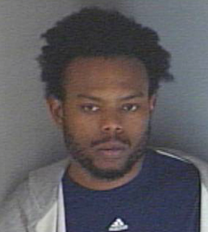
A person of interest has been identified as Orlando Collins.
He is currently listed as Northeast Kansas Most Wanted and is being sought by the Shawnee County Sheriff’s Office on the following charges: Attempted Aggravated Robbery 2 counts of Criminal Discharge of a Weapon at an Occupied Dwelling or Vehicle. Any information related to this investigation please forward to DET Lance Green ([email protected]) 785-368-9569 or Crime Stoppers at 234-0007.
Gene Policinski is senior vice president of the First Amendment Center.
Have you ever been SLAPP’d?
SLAPP stands for “Strategic Lawsuit Against Public Participation,” and it’s a technique as old as lawsuits to stifle competition brought by the rapacious moguls of the early Industrial Age, and as modern as lawsuits against online critics.
A section of the Communications Decency Act shields online sites from defamation suits and other kinds of civil actions over content posted by third parties — but not the people who post the material. Nearly one-half of states provide some protection against SLAPP lawsuits — some limited only to communication with the government — but a new U.S. House proposal, HR 2304, would add to those defenses, proponents say.
Rep. Blake Farenthold, R-Texas, introduced the “Speak Free Act” last June, co-sponsored by Rep. Anna G. Eshoo, D-Calif. In an interview Tuesday, Farenthold said the legislation is needed to protect people “who don’t have $50,000” to spend on legal fees to, for example, defend against a lawsuit over a negative review posted on social media.
The “Speak Free” proposal tentatively is set for a hearing in the House Judiciary subcommittee in late May.
In response to a threat of legal action, many people simply take down the negative review or comment — which Farenthold sees as counter to the point of free speech. A broadcaster who also has worked in the computer field, Farenthold said he supports the First Amendment concept that “a review is, by definition, an opinion and there’s no defamation in opinion.”
Farenthold and others see increased concern over SLAPP actions — which, while expanding in recent years, still represent a small number within the total number of lawsuits annually — as reflective of the rise of “peer-to-peer” sites where people looking for specific services can find reviews and comments.
The proposed law would allow defendants to transfer lawsuits from state to federal courts, particularly valuable in 22 states that do not have an anti-SLAPP law or in those with weak protection. Farenthold said the law also will provide a means in federal court to quickly resolve a SLAPP lawsuit “before the legal fees run up.”
The combination of breadth and speed has appeal on both Democratic and Republican sides of the aisle, and to conservatives seeking “tort reform” to reduce lawsuits and liberals aiming to protect civic activists. Farenthold said he has not seen significant push-back from companies, which might have been expected to oppose the act. “Overall, I think more people in business have the view that you don’t need to worry … if you are providing good service.”
Bipartisan support encourages Evan Mascagni, policy director for the Public Participation Project, a nonprofit group supporting such legislation — who noted two earlier Congressional attempts failed to gain such backing. In an interview, Mascagni said, “The First Amendment is not a partisan issue. Americans understand the importance of free speech and petition activity in our society.”
Another possible factor in increased attention to the bill is the attention paid this year to lawsuits and counterlitigation actions by GOP presidential front-runner Donald Trump, who also has called for weakening protections in existing defamation law that limit retaliatory lawsuits by public figures.
Anti-SLAPP supporters also note that the range of SLAPP actions is wide: From a lawsuit brought by a California nursing home lawsuit against two women involving an email sent to a legal aid lawyer, to actions against consumers complaining about a tax advice service, to news outlets for reporting unflattering personal details about a public figure. And some warn that even the potential for a lawsuit, despite speedy resolution, will deter some private citizens from even contacting government officials about a complaint.
Retaliatory lawsuits that seek mainly to punish are a misuse of legal remedies intended to repair the reputations of those wrongly damaged, produce truthful information or spur government response — not to be a tactic to punish public participation.
A longstanding thesis about the First Amendment is that “the antidote to speech you don’t like is more speech, not less.” Nary a mention of legal threats, expensive fees and drawn-out court battles in the 45 words that define our core freedoms.
Gene Policinski is chief operating officer of the Newseum Institute and senior vice president of the Institute’s First Amendment Center. [email protected]
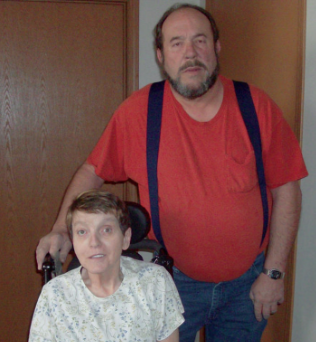
Bill Stovall of Topeka says it has been challenging to find qualified, reliable personal care workers for his sister, Carol Miller. Stovall has directed Miller’s care services under Medicaid for about 10 years. CREDIT COURTESY BILL STOVALL
A statewide registry is in the works to make it easier for Medicaid patients to find qualified, reliable personal care workers.
That’s good news for Bill Stovall of Topeka and others like him who help direct care for their family members.
Stovall has a long list of complaints against personal care workers who have cared for his sister in recent years, including punctuality problems and a lack of training.
Stovall has directed care services under Medicaid for his sister Carol Miller, 58, for about 10 years. Miller has needed 24-hour care since she had a brain hemorrhage in August 2013, he said, and he has struggled to find people who are willing and able to provide the level of care she needs.
For example, some haven’t arrived on time to relieve the person caring for Miller on the previous shift, and one came with alcohol on her breath, Stovall said. Another care worker apparently didn’t know much about wheelchairs and called him to ask how fast his sister’s non-motorized chair could go, he said.
“I said, ‘It goes as fast as you want to push it,’” he said.
Several Kansas nonprofits are working on the central registry for personal care workers. The Arc of Douglas County, the Kansas Lifespan Respite Coalition and Rewarding Work, a nonprofit based in Massachusetts, hope the website will go live within a year, said Gina Ervay, chair of the Kansas Lifespan Respite Coalition.
Rewarding Work operates similar registries in seven states. People who are looking for work or Medicaid patients who need to hire a personal care worker can create profiles and search for matches.
The system will send regular reminders to workers on the registry to update their information, Ervay said. Those who do will appear at the top when Medicaid patients search for workers, she said, and those who don’t will be removed from the list after a year of inactivity.
A working relationship
According to the Kansas Department of Labor, about 18,190 people were employed in 2014 as personal care workers who care for the elderly and people with disabilities in Kansas.
Their median annual wages ranged from a high of $23,068 in Atchison County to a low of $17,711 in Labette County — meaning median hourly wages would range from about $8.50 to $11 if the person works full-time.
Mike Oxford, director of the Topeka Independent Living Resource Center, said the average hourly wage statewide for personal care services under Medicaid is $9.60, which makes it difficult to find people willing to do the work.
“We’re asking people to do some pretty icky things for about the same amount as delivering pizzas,” he said.
Groups like the Topeka Independent Living Resource Center have lists of people who report they are interested in providing home care services, but the groups don’t have the resources to regularly update them, Oxford said. The result is that a Medicaid patient may have to call quite a few numbers before finding someone who still is available and interested in doing the work, he said.
The statewide registry will better match workers and patients based on services offered, training the employee has or even whether they smoke or have similar interests, Oxford said.
“There’s a lot of social interaction between personal care attendants and people who direct their own care. It’s a relationship,” he said.
Assessed for services
Medicaid, which in Kansas is a privatized program known as KanCare, pays for home and community-based services through various waiver programs that serve people with specific types of disabilities. The three managed care organizations that administer KanCare spent a combined $188 million on home and community-based services in 2013, but their reports don’t specify how much of that spending goes toward personal care services.
For Kansans with disabilities who might need personal care services, the Kansas Department for Aging and Disability Services first assesses their needs, then the Kansas Department of Health and Environment determines if they meet income qualifications, KDADS spokeswoman Angela de Rocha said.
The MCO then assigns a caseworker to work on a plan spelling out what services the patient is eligible for and how many hours a month he or she will receive, she said.
The patient can choose to have a local home health agency make the arrangements or can self-direct care, de Rocha said. When a patient self-directs, the person receiving the services or his or her representative decides whom to hire and is responsible for making sure the worker performs the right tasks within the authorized hours, she said. A financial management services provider handles background checks and tax withholding.
Ervay said the groups behind the registry anticipate about $55,000 in costs to build and market the website, plus $60,000 in annual maintenance costs. They hope that the MCOs will agree to contribute toward the maintenance costs in the future if they can show improved outcomes from quickly matching patients with workers, she said.
“We’re hoping that families are going to more readily find the workers they need to help them continue living in the community,” she said. “If they can’t find the people, that can be a barrier to them living independently.”
Megan Hart is a reporter for KHI News Service in Topeka, a partner in the Heartland Health Monitor team. You can reach her on Twitter @meganhartMC
PRATT – The Kansas Spring Turkey Season opened April 12 and is in full swing through May 31. Reports from the field indicate that birds are plentiful and responding to hunters’ calls. However, the tradition of spring turkey hunting, where the hunter hides in full camouflage while imitating the call of a hen, requires special safety consideration.
Turkey hunting can be excellent on state wildlife areas, as well as the nearly 250,000 acres of private land enrolled in the Spring Walk-In Hunting Access Program. Hunters on public land must always assume other hunters are there, too. Although hunting in Kansas is safer than playing golf, when you consider injuries per 100,000 participants, one tragic hunting-related accident is too many. A few simple precautions can help ensure you or another hunter don’t become a statistic.
First, never wear the colors black, blue or red, the colors prominent on a tom turkey as it displays for a hen. Set up to call with a good view in front and a tree wider than your shoulders at your back. A shoulder-width tree to lean against will protect you if another hunter stalks in from behind. If you see another hunter, whistle or call out; never wave or move, which could draw fire. Always assume a sound you hear is another hunter, and act accordingly. Many hunters will wear a fluorescent orange hat or vest when they walk out after hunting, or if they are successful, they may wrap an orange vest around their bird as they carry it out. Hunting-related accidents during the spring turkey season are rare, but let’s keep it that way.
Another kind of hunter in the woods this time of year is hunting morel mushrooms, and reports from the field indicate that hunters are finding them now. It is legal to pick morels on state and federal public hunting land as long as they are kept for personal consumption. Mushrooms collected on state and federal lands may not be sold commercially. Spring Walk-In Hunting Access land is leased for hunting access only. Morels found incidentally by turkey hunters on WIHA lands may be collected for personal use. Mushroom hunters should assume they will encounter turkey hunters on public lands, but potential conflict can be minimized by hunting mushrooms mid-day. Most turkey hunters prefer to be in the woods at daybreak and are often calling it a day by mid-morning.
FINNEY COUNTY -Law enforcement authorities in Finney County are investigating a shooting.
Just after 4:30 on Thursday, officers of the Garden City Police Department were dispatched to the 800 block of Ida Street for a reported shooting, according to a media release.
When Officers arrived on scene they located Victor Irigoyen, 19, 4170 E Hwy 50 in the rear of the residence with multiple gunshot wounds.
Irigoyen was transported to St Catherine Hospital and then flown to Via Christi in Wichita for additional treatment.
A person of interest in the case has been identified, according to police.
If anybody has any information related to this incident you should call the Garden City Police Department (620) 276-1300, Crime Stoppers (620) 275-7807, or text your tip to Garden City PD, text GCTIP and your tip to Tip411 (847411).
WICHITA, Kan. (AP) — A divided Kansas Supreme Court has ruled that the lifetime registration for sex offenders does not constitute cruel and unusual punishment.
The ruling Friday comes in the case of Henry Petersen-Beard, who was convicted at age 19 of raping a 13-year-old girl. He had challenged the lifetime registration requirement as unconstitutional under the Kansas Bill of Rights and the Eighth Amendment to the U.S. Constitution.
In an opinion written by Judge Caleb Stegall the court found the registration requirement was not a form of punishment.
But three other cases released on Friday — that had decided before Stegall took office — found the requirement constituted punishment and therefore a 2011 amendment to the law couldn’t be applied retroactively. However, those rulings applied only to the three defendants in those cases.
NEW YORK (AP) — Life expectancy for white women has fallen a bit.
That’s according to a new government report that finds that in 2014, the predicted life span for white women was about five weeks shorter than it was a year earlier.
It held steady for black women and white men, and it increased for black men, Hispanic men and Hispanic women.
The Centers for Disease Control and Prevention had previously reported that life expectancy for all Americans born in 2014 was 78 years and nine and a-half months. That’s the same prediction made for the previous two years.
The new report gives a breakdown by race and gender. It predicts that a white girl born in 2014 could expect to live about 81 years and one month.
The last time there was a decline in life expectancy for white women was in 2008. A CDC official says that was considered a statistical blip. He says the same could be true this time, or it could be “a harbinger of things to come.”
Some recent reports have shown rising suicide and drug overdose death rates for white women, particularly middle-aged women.
TOPEKA, Kan. (AP) — Kansas Gov. Sam Brownback is facing strong bipartisan criticism over his proposal to use bonds backed by tobacco settlement funds to help plug short-term budget gaps.
The Republican governor wants to sell off the rights to collect part of Kansas’ annual payments from a national legal settlement in the 1990s between states and tobacco companies.
Such a deal would generate a one-time cash payment of $158 million to the state.
The governor outlined the plan this week as one of several alternatives for closing budget gaps totaling more than $290 million. Budget Director Shawn Sullivan said the governor believes the proposal would do less harm to state programs than other proposals.
But legislators in both parties see the plan as using long-term debt to fix budget problems over two fiscal years.
DETROIT (AP) — Fiat Chrysler is recalling more than 1.1 million cars and midsize SUVs worldwide because their gear shifters may confuse drivers and allow them to exit their vehicles without placing them in “park.”
The recall covers the 2012-2014 Dodge Charger and Chrysler 300 sedans and the 2014-2015 Jeep Grand Cherokee SUV. FCA is recalling 811,586 vehicles in the U.S. and 317,616 elsewhere.
An investigation by FCA and the U.S. government found that the electronic gear shifters in the vehicles were confusing and might lead people to believe that they were parked even if they weren’t. FCA is aware of 41 injuries potentially related to the problem.
Owners will be notified. Dealers will update the transmissions so they won’t move once the driver has exited. They will also add enhanced warning signals.









 KDWPT
KDWPT