TOPEKA, Kan. (AP) — Topeka police say an officer who was assaulted by a driver during a traffic stop shot and wounded the motorist after that person tried to flee.
Authorities say the shooting happened shortly after 1 p.m. Thursday. The driver fled the scene but was later arrested.
Police Lt. Chris Heaven tells the Topeka Capital-Journal that the female officer may have been dragged as the driver attempted to flee. Police Lt. Colleen Stuart says the officer fired once, wounding the driver.
The officer sustained injuries to a hand and arm.
The officer and the driver were taken to hospitals for treatment of injuries police said were not life-threatening.
DODGE CITY, Kan. (AP) — A western Kansas attorney has been charged with sexual battery against a client.
The misdemeanor charge was filed this week in Ford County against Daniel Arkell-Roca.
The Dodge City attorney said in an email to The Associated Press that he is “innocent” and that his wife and 10 children are “confident” that he will be vindicated. He blamed politics and said the alleged victim is a former client who was charged in a drive by gang-related shooting.
The Ford County attorney’s office said in a Facebook post that Arkell-Roca would appear in court on the charge later this month. A secretary in the prosecutor’s office said there would be no further comment.
The charge carries a possible penalty of up to one year in jail and a fine of $2,500.
MCPHERSON COUNTY -Multiple law enforcement agencies, including troopers from th Kansas Highway Patrol, are at the scene of an officer-involved shooting in McPherson County near the intersection of 19th Avenue and Highway 56.
The McPherson County Sheriff’s Office has confirmed the shooting involved a McPherson County Sheriff’s deputy.
GRAY COUNTY –Four people were injured in an accident just after 11:30 a.m. on Thursday in Gray County.
The Kansas Highway Patrol reported a 2013 Dodge Grand Caravan driven by Matungulu Nsegiyumva Bavuna, 47, Wichita, was stopped at stop sign on Kansas 23 and U.S. 56 six miles east of Montezuma.
The van failed to yield to on coming traffic and struck a 2015 Chevy Impala driven by Harry Steven Turner, Jr., 40, Cimarron, which was west bound on U.S. 56.
Bavuna, Turner and passengers in the van Nzitukuze Bigigi, 38, and Derifina Uwinama, 36, both of Wichita, were transported to Western Plains Regional Medical Center.
All were properly restrained at the time of the accident, according to the KHP.
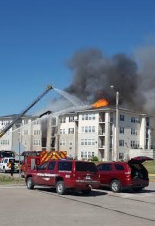
Tuesday fire in Junction City-photo Geary Co. Sheriff
GEARY COUNTY- Fire officials have completed an investigation
of Tuesday’s fire at the Bluffs Apartment complex, 1810 Caroline Ave. Building F in Junction City.
The origin of the fire has been determined to have started on an outside deck which spread rapidly to other exposed areas above, eventually spreading to the attic area which ultimately involved the entire roof area, resulting in structural collapse of the roof and involving the entire third floor, according to acting Junction City Fire Chief Rick Rook.
The cause of the fire has been ruled undetermined. A dollar loss amount is also unknown at this time as it will be some time before a complete evaluation of the structure can be made as well as the total loss of all the occupants can be determined.
No foul play is suspected, according to Rook.
This was a 28 unit complex with 26 units occupied and displaced a total of 51 people. There were no injuries to either occupants or firefighters.
Members of the community have been donating a steady stream of supplies for the victims of the fire
Many of the items have been deposited in a second floor room at the Bluffs Clubhouse where the fire victims can pick them up.
Fire Investigators with the Junction City Fire Department, Kansas State Fire Marshalls Office, Bureau of Alcohol Tobacco and Firearms (ATF), Fort Riley Fire Department and Geary County Rural Fire Department all assisted in investigating this fire.
Charles C. Haynes is director of the Religious Freedom Center of the Newseum Institute.
This week Gov. Pat McCrory of North Carolina scrambled to contain the damage caused by passage of a state law limiting bathroom access for transgender people and eliminating local anti-discrimination ordinances based on sexual orientation.
Under mounting pressure from civil liberties advocates and business interests, McCrory made what critics called cosmetic changes, notably issuing an executive order expanding the state’s employment policy for state workers to cover sexual orientation and gender identity.
Opponents of the law say McCrory’s actions are too little, too late. Absent repeal of the legislation, North Carolina will likely face more boycotts, protests and pushback from businesses threatening to cancel investments in the state.
The North Carolina legislation does not explicitly address religious freedom, but the media bundle it with the rash of religious freedom and anti-LGBT bills being introduced in state legislatures throughout the nation — more than 200 this year alone, according to the Human Rights Campaign Fund.
Although different in content and approach, these laws are all part of a national effort by religious conservatives to contain the advance of LGBT rights in the wake of the U.S. Supreme Court’s decision affirming the constitutionality of same-sex marriage.
Last month, Mississippi’s governor signed into law the most draconian of all the religious freedom bills, allowing religious objectors, including private business owners, to refuse a wide range of products and services to LGBT people. Mississippi now faces a growing backlash from the state’s largest employers, spelling big trouble for the already troubled Mississippi economy. Georgia recently avoided this fate when Gov. Nathan Deal vetoed a religious freedom bill passed by the state legislature earlier this year.
North Carolina, Mississippi, Georgia and other states with bitter, divisive and destructive battles over LGBT and religious freedom legislation are all states with no statewide civil rights laws that include sexual orientation and gender identity.
In other words, majorities of state legislators in these states want religious freedom for themselves, but are unwilling to ensure equality for LGBT people. A same-sex couple in Mississippi or North Carolina can get married today but get fired or evicted tomorrow.
This lack of reciprocity makes reasonable and balanced deliberations about bathroom privacy, religious accommodations for religiously affiliated groups or narrowly tailored opt-outs for county clerks virtually impossible in states where LGBT people have no rights — and thus no real place at the bargaining table.
Last year, Indiana learned the hard way that without first protecting LGBT people, religious freedom laws backfire. After the governor signed a religious freedom law, the nationwide backlash was swift and overwhelming. This year, faced with the loss of conferences, business investment, sports events and more, the legislature is considering a nondiscrimination bill protecting LGBT people and providing some religious exemptions.
Religious conservatives in Utah took a very different approach by joining with people from all sides to find common ground. Last March, after months of negotiation, Utah Gov. Gary Herbert signed into law compromise legislation protecting LGBT people from discrimination in housing and employment while also providing exemptions for religious institutions and protections for religious speech.
Although Utah’s law can’t be replicated everywhere since laws and conditions vary widely from state to state, Utah’s spirit of compromise — the willingness to seek a balance between LGBT rights and religious accommodations — is a model for how every state can find a shared solution if there is political will to do so.
Despite the harm opposition to LGBT protections does to the cause of religious freedom in states like North Carolina and Mississippi, many religious conservatives continue to adamantly oppose nondiscrimination laws for LGBT people. Out of religious conviction, they remain convinced that such laws would signal societal acceptance of what they consider a “lifestyle choice” that is sinful, wrong and dangerous.
But it escapes me why people of faith would countenance discrimination against any person, however much they disagree with who they are or who they love.
In a pluralistic democracy, people can and should debate differences about religion, sexual orientation and gender identity. But our common goal must be public policies that uphold both religious freedom and equality — two constitutional principles grounded in the inviolable dignity of every human being.
Charles C. Haynes is vice president of the Newseum Institute and founding director of the Religious Freedom Center. [email protected]
BARTON COUNTY -Law enforcement authorities in Barton County are investigating a suspect in connection with a series of ten burglaries.
Just after 8 a.m. on Wednesday sheriff’s deputies were dispatched to 34 Northeast 20 Road just north of the city of Great Bend after a report of particular a vehicle seen at a vacant residence.
The suspect vehicle had already left the area when deputies arrived, but they were able to locate it a short time later in Great Bend.
Officers executed a traffic stop and contacted the driver.
He did not have a valid Kansas driver’s license and was placed under arrest.
Through investigation, the officers found suspected stolen items in the vehicle and storage shed in Great Bend.
The driver of the vehicle identified as Alex Wise, 29, Great Bend, was booked into the Barton County Jail on charges of burglary, theft, driving while suspended and failing to comply with restrictions (no interlock device).
HUTCHINSON– The Kansas man accused of fatally stabbing his wife’s pit bull may face a felony charge when he makes a first appearance in court Friday.
Hutchinson police Lt. Marty Robertson said John Oathout, 59, Hutchinson, was trying to sleep and the dog was being loud. According to Robertson, the man put the dog outside, but it kept barking and he told his wife that if the dog did not stop, he would kill it.
Police say the man’s wife told officers that she heard a loud yelp from the dog and ran outside to find her husband with a bloody knife.
She took the dog to a veterinarian, but the dog did not survive.
Oathout was arrested on suspicion of animal cruelty and disorderly conduct.
Authorities say he may be charged with an unclassified felony charge and could face some jail time if convicted.
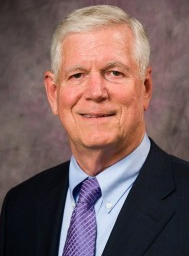
Topeka – The Kansas Board of Regents announced the appointment of Richard B. Myers as Interim President at Kansas State University, according to a media release.
“It is such an honor to have Retired Gen. Myers serve in this capacity,” stated Shane Bangerter, Chair of the Kansas Board of Regents. “I am confident, given the tremendous leadership experience he has gained throughout his career, that Retired Gen. Myers will successfully oversee K-State while we search for the university’s next president.”
Retired U.S. Air Force General Richard B. Myers served as the 15th Chairman of the Joint Chiefs of Staff from 2001 to 2005. As the nation’s highest ranking military officer, Myers served as the principal military advisor to the President, the Secretary of Defense, and the National Security Council. Prior to becoming Chairman, Myers served as Vice Chairman of the Joint Chiefs of Staff. Myers has commanded at all levels and served in significant staff positions throughout the Air Force. His largest commands included U.S. Forces Japan and 5th Air Force at Yokota Air Base, Japan; Pacific Air Forces at Hickam Air Force Base, Hawaii; and the North American Aerospace Defense Command, U.S. Space Command and Air Force Space Command at Peterson Air Force Base in Colorado.
Born and raised in Merriam, Kansas, retired Gen. Myers is a graduate of Kansas State University, where he earned a Bachelor of Science in Mechanical Engineering (1965); Auburn University, where he earned a Master’s degree in Business Administration (1977); Air Command and Staff College at Maxwell Air Force Base (1977); U.S. Army War College at Carlisle Barracks (1981); and John F. Kennedy School of Government at Harvard University, where he completed a program for Senior Executives in National and International Security (1991). He holds a part-time appointment at K-State as a Foundation professor of military history and leadership, is chairman of the KSU Foundation’s Board of Trustees, an ex officio member of the KSU Foundation Board of Directors, and he and his wife serve as co-chairs of the Foundation’s Innovation & Inspiration campaign. Retired Gen. Myers will begin as Interim President in late-April.
A press conference will be held on the morning of Wednesday, April 20, 2016. Retired Gen. Myers will be in attendance to make a public statement and take questions. Additional details will be forthcoming.
Retired Gen. Myers joined the Air Force in 1965 through the ROTC program at Kansas State University, after which he entered pilot training at Vance Air Force Base. A command pilot, he has more than 4,100 flying hours, primarily in the F-4, F-15 and F-16, including 600 combat hours in the F-4. He received the Presidential Medal of Freedom on November 9, 2005.
KANSAS CITY, Kan. (AP) — A federal judge is considering whether to temporarily block Kansas from enforcing its proof of citizenship requirement for people who register to vote at state motor vehicle offices.
U.S. District Judge Julie Robinson on Thursday took the case under advisement after hearing four hours of arguments in Kansas City, Kansas.
The American Civil Liberties Union says the state’s proof-of-citizenship law violates the National Voter Registration Act. The federal law, also known as the “motor-voter law,” is aimed at increasing voter participation by requiring states to allow voters to register when they get a driver’s license.
Secretary of State Kris Kobach argued Thursday that the NVRA applies only to federal elections, and a temporary injunction would force the state to create a separate voting tier for those registering at the DMV.
————
KANSAS CITY, Kan. (AP) — The American Civil Liberties Union is in court challenging a Kansas law requiring proof of citizenship when people register to vote at state motor vehicle offices.
U.S. District Judge Julie Robinson is hearing arguments Thursday in Kansas City, Kansas, on whether to temporarily block the state from requiring the citizenship documentation until the case goes to trial.
The ACLU contends the requirement violates the National Voter Registration Act, a federal law that aims to increase voter participation by eligible citizens. That law is sometimes called the “motor-voter law” because of a provision requiring states to provide voter registration services in conjunction with drivers’ license applications.
Secretary of State Kris Kobach has championed documentation requirements to prevent voter fraud. Critics contend it deprives eligible voters of the right to vote.
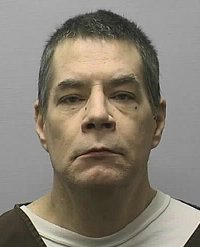
At approximately 4:30 p.m., on Wednesday, Douglas Belt, an inmate at the El Dorado Correctional Facility, was pronounced deceased by facility medical staff, according to the Kansas Department of Corrections.
Belt, 54, was sentenced to death in Sedgwick County after a 2004 conviction for Capital Murder, intentional and premeditated killing in the commission of, or subsequent to rape.
As is the case with all inmate deaths, the Kansas Bureau of Investigation was notified in accordance with K.S.A. 75-52,147. No further information is available at this time.
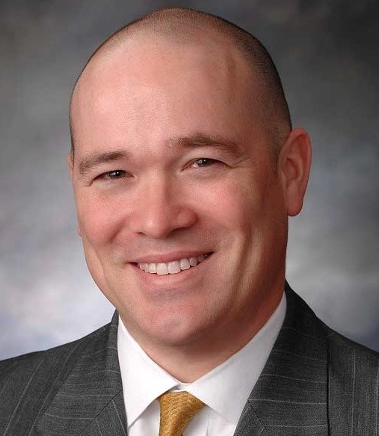
TOPEKA. – Tom Beall will serve as Acting U.S. Attorney for the District of Kansas, according to a media release
Beall takes over after U.S. Attorney Barry Grissom steps down on April 15 to re-enter private practice. As Acting U.S. Attorney, Beall will be in charge of the U.S. Attorney’s Office for the District of Kansas, which comprises approximately 50 Assistant U.S. Attorneys and 50 support staff members working in offices in Topeka, Kansas City, Kan., and Wichita. Beall will work mainly out of the office in Topeka.
“It makes it easier for me to go knowing the U.S. Attorney’s Office is in Tom’s capable hands,” Grissom said. “It has been a pleasure working with him.”
Since November 2013, Beall served as First Assistant U.S. Attorney, making him the second in command of the U.S. Attorney’s Office. He joined the office as an Assistant U.S. Attorney in April 2011.
Beall is a native of Leavenworth, Kan. He served as Chief Deputy in the office of Kansas Attorney General Steve Six from March 2008 to January 2011. He was an adjunct instructor at Washburn University School of Law from August 2013 to January 2015. He was in private practice from 2000 to 2008.
Beall graduated in 2000 from the Washburn University School of Law after earning a master’s degree in public administration from Kansas State University and a bachelor’s degree from Baker University.
photo courtesy Michael Stavola, Pittsburg Morning Sun
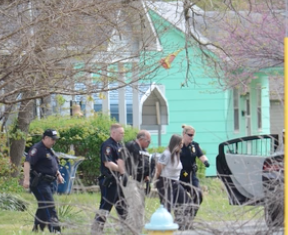
PITTSBURG, Kan. (AP) — A southeast Kansas standoff has ended with an officer using a stun gun on a suspect.
The Pittsburg Morning Sun reports that the 53-year-old female suspect is accused of threatening a relative with a gun before calling police around noon Wednesday. Pittsburg Police Department Major Brent Narges says she told police responding to the disturbance that she was armed.
Narges said the woman was alone in the home when officers arrived and surrounded the area. She was persuaded to exit the home around 3 p.m. The woman put her hands up to show she was unarmed and then sat on the front porch. Within a couple minutes, an officer shot the woman with the stun gun.
She was taken to a hospital for a pre-existing medical condition.

 TOPEKA, Kan. (AP) — Topeka police say an officer who was assaulted by a driver during a traffic stop shot and wounded the motorist after that person tried to flee.