The Kansas Court of Appeals ruled that the Kansas Constitution’s Bill of Rights provides a right to abortion. JENNIFER MORROW / FLICKR–CC
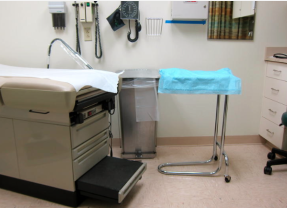
NEW YORK (AP) — The National Abortion Federation says threats and violence directed at U.S. abortion clinics increased sharply in 2015. It attributed the surge to the release of undercover videos intended to discredit Planned Parenthood.
According to the federation, death threats targeting abortion providers increased from one in 2014 to 94 in 2015, while incidents of vandalism at clinics rose from 12 to 67.
The most violent occurred in November, when a gunman opened fire at a Planned Parenthood abortion clinic in Colorado Springs, Colorado, killing three people and wounding nine. The man accused in the attack, Robert Dear, has described himself as a “warrior for the babies.”
The abortion federation is alarmed by the heightened hostility and has hired an outside security firm to track online threats.
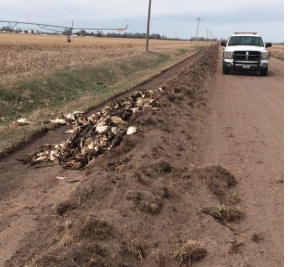
GRAND ISLAND, Neb. (AP) — Two Wood River men have pleaded guilty and been fined in Hall County Court for killing sandhill cranes and abandoning scores of dead snow geese last month in east-central Nebraska.
The Grand Island Independent reports that 20-year-old Marco Zarraga was fined $525 and 24-year-old Adam Wagner was fined $300.
On March 14, 150 to 200 dead snow geese were found in Merrick County. Days later, 10 dead snow geese and three sandhill cranes were left near Grand Island.
Authorities say Zarraga killed the three cranes.
It’s illegal to hunt sandhill cranes in Nebraska. Shooting snow geese is not a crime this time of year, but authorities say dumping the geese and shooting them from a roadway and from a vehicle was illegal.
TOPEKA, Kan. (AP) — One of the first voter fraud cases Kansas Secretary of State Kris Kobach filed after being given prosecutorial authority has been dismissed days before it was scheduled to go to trial.
The Kansas City Star reports the charge against Olathe resident Betty Gaedtke was dropped on Friday. A jury trial was slated to begin Monday.
Gaedtke and her husband, Steven, who are in their 60s, were accused of casting 2010 general election ballots in both Kansas and Arkansas. Some of the counts involved advance voting ballots.
Steven Gaedtke pleaded guilty in December to one misdemeanor count and paid the maximum $500 fine. Two other counts were dismissed.
Kobach says Steven Gaedtke signed the couple’s absentee ballots, but his wife had not.
KANSAS CITY, Kan. (AP) — A Kansas City, Missouri, man faces sentencing later this month after pleading no contest to charges linked to a man’s shooting death and the wounding of that victim’s father.
Twenty-six-year-old Antonio McGee entered the plea Thursday in Kansas’ Wyandotte County to counts of second-degree murder and felony aggravated battery. A judge then found McGee guilty of both counts.
The charges stem from the March 2015 shooting death of 21-year-old Len Mitchell Jr. and the wounding of Len Mitchell Sr. during a gathering of their friends at a Kansas City, Kansas, home.
LAWRENCE, Kan. (AP) — A Kansas lawmaker says some state courts have failed to comply with a new state law on public requests for probable cause statements.
Republican Rep. John Rubin of Shawnee said when he introduced the bill, Kansas was the only state that sealed all probable cause affidavits supporting arrests and warrants.
Under the measure signed into law in 2014, Kansas courts have 10 business days to either release the probable cause statement sought or deny the request.
Rubin told the Lawrence Journal-World some Kansas districts are either delaying beyond the allowed 10-day period or are requiring each individual to file a separate request, even if the request is for an affidavit that’s already been released to a different person.
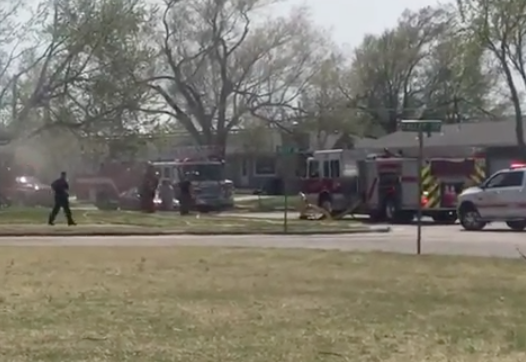
SALINE COUNTY – Fire officials are investigating the cause of a Saturday afternoon house fire at a home in the 2000 Block of Harold Avenue in Salina.
One person was pulled from the garage of the residence and transported to Salina Regional Medical Center, according to acting Battalion Chief Kirk Stover.
Fire crews reported that flames were visible when they arrived at the home just after 2:30 p.m. The fire is believed to have started near or in the garage.
HARVEY COUNTY – After a homeowner threatened employees during meter replacement work recently in Reno County, law enforcement authorities in Harvey County are alerting residents that starting Monday, Westar Energy will be replacing more electric meters.
Workers will begin work in the southwest part of the county and the northeast part of the city of Newton, according to a social media report.
Everyone’s meter will get changed out. The changing of the meters will just take a few minutes, but there will be a short period of time when you will not have electric power to your house. The installers will knock on your door to let you know they are there to change the meter out.
They will be wearing vests and hard hats with identification of “Oasis working for Westar”
Their work trucks will have signs on them saying the same thing. They will provide you with information about the meter being changed out and recommend that you shut off electronic appliances when they change out the meters.
They will be informing the Sheriff’s Office each day to let us know where they will be working.
Kerry Getz, 62, Hutchinson, was charged by the state with aggravated assault with a deadly weapon, aggravated battery causing reckless bodily harm and criminal damage to property for an incident on March 17 involving the switching of an electric meter.
WICHITA, Kan. (AP) — A southern Kansas prosecutor says he’ll seek the death penalty against a man accused of killing his girlfriend and two of her relatives in 2014.
The Wichita Eagle reports Sedgwick County District Attorney Marc Bennett announced during Vinh Van Nguyen’s arraignment Friday that he’ll ask jurors to consider execution as punishment if Nguyen is convicted.
Nguyen is charged in the slayings of 45-year-old Tuyet Huynh, her 20-year-old daughter, Trinh Pham, and 21-year-old Sean Pham.
An attorney for 42-year-old Nguyen waived his client’s right to have the charges read aloud in court, and a plea of not guilty was entered on Nguyen’s behalf.
Nguyen has been found mentally competent to stand trial.
Nguyen immigrated to the U.S. less than 10 years ago.
Photo by iStock The Centers for Medicare and Medicaid Services recently announced a program that would require participating hospitals to repay some money for knee and hip replacements if the average cost of a procedure is too expensive due to complications. The Kansas City area, Topeka and Wichita are on the list of participating metropolitan areas.
By MEGAN HART
Medicare patients likely won’t notice the difference, but their doctor may have more skin in the game when it comes to their outcomes if they get joint replacement surgery at many of Kansas’ largest hospitals.
The Centers for Medicare and Medicaid Services recently announced a program that would require participating hospitals to repay some money for knee and hip replacements if the average cost of a procedure is too expensive due to complications.
Knee and hip replacements are the most common inpatient surgery procedure for patients covered by Medicare, the government’s health insurance program primarily for people 65 and older.
The replacement program covers 67 metropolitan areas and about 800 hospitals nationwide, according to CMS. The Kansas City area, Topeka and Wichita are on the list, with almost all hospitals in those areas participating.
In Missouri, Cape Girardeau, Columbia and the Kansas City and St. Louis metropolitan areas are listed.
Patients still can choose their hospital and where they receive rehabilitation care after the surgery, said Kim King, administrative director of care coordination for Shawnee Mission Health.
The only difference will be that starting in 2017, patients who select a “high-quality” rehabilitation facility won’t have to stay in the hospital for three nights, as Medicare usually requires, she said. In 2014, Medicare spent more than $7 billion for about 400,000 joint replacements — or an average of about $17,500 per procedure.
The cost and quality of joint replacements varies widely across the country, however.
Medicare can pay an average of anywhere from $16,500 to $33,000 for a knee or hip replacement, depending on where it is performed, and some hospitals have three times as many complications as others, according to CMS.
Hospitals won’t be penalized in the first year, according to CMS, but after that, they will need to repay some of their reimbursements if complication rates for joint replacements are too high.
The penalties will rise from 5 percent in the second year to 20 percent in the fifth year.
Hospitals with low complication rates will be eligible for increases in their payments, with the amount rising over the five years of the program.
The target rates differ depending on whether the patient has other chronic conditions that would make significant complications more likely. Patrick Conway, CMS principal deputy administrator and chief medical officer, said the payment plan is designed to encourage hospitals and facilities such as rehabilitation centers to better coordinate their care, improve patient outcomes and limit costs.
“One beneficiary said it best when she described that what she cared about for her hip replacement was getting out of the hospital as quickly as possible without an infection or complication and then being able to go back to playing with her grandkids and gardening,” he said in a news release.
“The model incentivizes a system that aligns with her goals and the goals of so many beneficiaries.”
King said Shawnee Mission Health’s two hospitals are well-prepared for the new system.
Staff members currently work with rehabilitation facilities, home health agencies and patients to clarify treatment goals and recovery procedures, she said.
“We were already working on this, so for us, this doesn’t present any major challenges,” she said. “When the patient leaves here, those expectations are set.”
Providing additional coordination and follow-up can improve outcomes, King said.
Since 2011, Shawnee Mission Health has provided “transition coaches” for patients with conditions like heart failure and found readmissions went down when they checked on patients after sending them home, she said.
The coaches began following up with joint replacement patients last year, she said.
Brenda Dykstra, vice president of business and strategic development at University of Kansas Hospital, said the CMS initiative is “consistent” with current efforts to improve coordination when a patient leaves the Kansas City, Kan., hospital.
Most joint replacement patients receive care from a rehabilitation hospital, a skilled nursing facility or a home health agency after the surgery, she said, and some use multiple services.
“This work will continue so we can enhance the coordination of care when a patient leaves the acute care hospital following their surgery,” she said in an email.
Gaylee Dolloff, president of Health Partners of Kansas, which is part of Wesley Medical Center in Wichita, said the hospital has a successful knee and hip replacement program but will continue to look for any changes it could make as it collects data for CMS. CMS has been working with hospitals to prepare for the new model,
Conway said. Ideally, the result will be fewer complications and less health care spending, he said. “We want hospitals to be successful under this model because success means that Medicare’s beneficiaries will receive better-quality care,” he said.
KANSAS CITY, Kan. (AP) — A 37-year-old Kansas man has pleaded guilty to charges connected to a 1999 sexual attack and stabbing.
Thirty-seven-year-old Jibri Liu-Kinte Burnett of Olathe pleaded guilty Friday in Wyandotte County to attempted first-degree murder and rape.
Authorities say that in August 1999, an unidentified victim found repeatedly stabbed was rushed to a hospital. Doctors recovered the attacker’s semen from the victim and entered it into a federal criminal database.
Wyandotte County prosecutors say years passed before the semen sample was proven to be a genetic match to Burnett. He was arrested last May and will be sentenced next month.
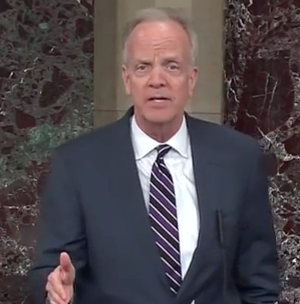
Senator Moran during Wednesday’s debate in the Senate
Submitted by the office of Sen. Moran
WASHINGTON-Senator Moran spoke on the Senate Floor this week about reauthorization of the Federal Aviation Administration (FAA) in order to highlight the significant impact this legislation would have on the aviation industry in Kansas.
“Kansas is an aviation state and long-term investment in the health and safety of the industry benefits our state on every level: from air travelers in rural communities to aircraft manufacturers in the “Air Capital of the World,” Senator Moran wrote on social media.
He applauded Sens. Thune and Nelson for their leadership advancing this bipartisan legislation and looks forward to its passage in the Senate.
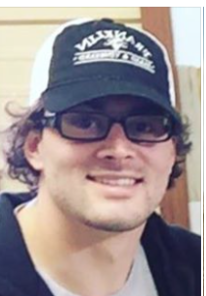
MARIES COUNTY, Mo- The search for a missing University of Kansas football player is over.
The body of Brandon Kyle Bourbon 24, Potosi, Missouri has been found, the Maries County Sheriff’s Department reported on Friday.
Bourbon was located on a secluded river front property off Route AA near Vienna just before 2:00 pm Friday, according to a social media from the sheriff’s department.
After a detailed investigation it was apparent that Bourbon committed suicide the sheriff’s department reported.
He had been missing since April 2, from Washington County Missouri.
Bourbon played football for Kansas until 2014, and transferred to Washburn for the 2015 season.
He led Washburn in rushing with 937 yards on 219 carries with four touchdowns averaging 4.3 yards per rush playing in 11 games. He had a season-high 143 yards on 18 carries at Pittsburg State in a 21-14 win over the Gorillas. He also had 15 catches for 71 yards, according to a media release from the school.
After his season season at Washburn he was named second team all-MIAA after finishing fifth in the league in rushing. At the Ichabod football banquet he was named Washburn’s co-offensive player of the year.
Since leaving college, Bourbon had been living in the Potosi area.
PRATT – On March 31, 2016, the Western Association of Fish and Wildlife Agencies (WAFWA) submitted to the U.S. Fish and Wildlife Service (USFWS) its second annual report, detailing achievements of the Lesser Prairie-Chicken Range-wide Conservation Plan (LPRCP). Highlights include the estimated 25 percent increase in the range-wide lesser prairie chicken population to just over 29,000 birds, the nearly $51 million in fees committed by industry partners to pay for mitigation actions, and the more than 67,000 acres of habitat landowners across the range have agreed to conserve.
The range-wide plan is a collaborative effort of WAFWA and the state wildlife agencies of Texas, New Mexico, Oklahoma, Kansas and Colorado. It was developed to ensure conservation of the lesser prairie chicken with voluntary cooperation from landowners and industry. This plan allows agriculture producers and industry to continue operations while reducing impacts to the bird and its grassland habitat.
“Conservation of the lesser prairie-chicken is a long-haul proposition,” said Alexa Sandoval, director of the New Mexico Department of Game and Fish and chairman of the Lesser Prairie-Chicken Initiative (LCPI) Council. “We’re encouraged that after just two years of implementation, we have so many positive indicators that the range-wide plan is working. We commend all of our partners for their commitment to conservation of this iconic grassland species.”
The plan was endorsed by the USFWS, and as part of the conservation agreement, the states agreed to report progress annually. The findings for 2015 are summarized below.
Lesser Prairie Chicken Population Up
The 2015 range-wide aerial survey documented a 25 percent increase in the lesser prairie chicken population to an estimated total of 29,162 birds. This increase is attributed to an abundance of rainfall in spring 2015, along with ongoing range-wide plan conservation initiatives. Aerial surveys for 2016 are underway and will run through mid-May. Results are anticipated in early July.
Land Conservation Efforts Increasing
Substantial progress was made on private land conservation across the lesser prairie chicken’s range. Eight landowner contracts were finalized, encompassing 67,512 acres. Conservation measures are being implemented range-wide, including habitat restoration on 8,214 of 15,911 prescribed acres. And a total of $1,821,737 was paid to landowners managing their lands to generate credits for lesser prairie chicken conservation. In addition, WAFWA acquired title to a 1,604-acre tract of native rangeland in west Texas, near the Yoakum Dunes Wildlife Management Area last June.
Technology Enhances Conservation Decision Making
Scientists are using the latest technology to designate where and how conservation actions should be implemented for the greatest benefit. The Southern Great Plains Crucial Habitat Assessment Tool enhances the existing Crucial Habitat Assessment Tool (CHAT) program administered by WAFWA. It identifies focal areas and connectivity zones where lesser prairie chicken conservation actions will be emphasized. A project estimator tool unique to CHAT was designed to encourage companies to implement more effective pre-planning development efforts and it worked. These enhancements have resulted in 5,066 instances of access to CHAT, with an average of 145 users per week.
Cooperative Efforts Enhancing Conservation
Working with conservation partners, programs and cooperative efforts are expanding voluntary landowner incentives and practices to benefit the birds. For example, the Natural Resource Conservation Service has incorporated CHAT elements into the ranking criteria for projects being considered under the Lesser Prairie Chicken Initiative. Using CHAT, prescribed grazing practices were applied on 179,805 acres through the Lesser Prairie Chicken Initiative in 2015. These combined efforts have resulted in nearly 250,000 acres being conserved for the benefit of the lesser prairie chicken.
Mitigation Efforts Positively Impact Development Decisions
One of the major components of the range-wide plan involves working with industry to avoid and minimize impacts of development activities. The WAFWA mitigation framework can be used by any entity. In 2015, there were several industries participating, including oil and gas, pipeline, electric, wind energy and telecommunications. During this past year, 177 companies enrolled in WAFWA conservation agreements. WAFWA collected $11,843,403 in fees in 2015, bringing the program total to $50,800,884, which will offset unavoidable impacts at off-site mitigation locations. In 2015, 409 project agreements were authorized, assessing development costs tied to the quality of habitat being impacted. After two years of implementation, a review of all the projects assessed shows that the mean cost was $11,936 per project, varying by ecoregion. WAFWA has documented that these mitigation costs are positively impacting development decisions and participants are actively selecting areas with low quality habitat.
Listening and Learning Informs All Conservation Decisions
Successful collaborative efforts require vigilance and commitment to considering all input. Through the Lesser Prairie Chicken Advisory Committee, WAFWA has been receptive to input from all stakeholders, including industry, non-governmental organizations, state and federal agencies, landowners and the general public. The LPCI Council has developed an adaptive management framework incorporating monitoring and new information to make adjustments as needed, maximizing conservation benefits to the lesser prairie-chicken.
Full details are available in the WAFWA annual report at www.wafwa.org
















 KDWPT
KDWPT