We have a brand new updated website! Click here to check it out!

Overtime lawsuit against giant, Kansas health care firm moves ahead

By DAN MARGOILES

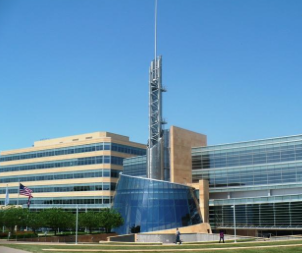
A lawsuit against Cerner Corp. charges the North Kansas City-based company miscalculated overtime pay for hundreds of employees. CREDIT ELANA GORDON / KCUR
A lawsuit against Cerner Corp. charges the North Kansas City-based company miscalculated overtime pay for hundreds of employees.
CREDIT ELANA GORDON / KCUR

Cerner Corp. employees who claim the health care information giant improperly calculated their overtime payments overcame a legal hurdle this week, allowing their two-year-old lawsuit to move ahead.

A federal judge conditionally certified the workers as a class, grouping them together after finding that they were “similarly situated” under the Fair Labor Standards Act (FLSA). That will allow them to proceed collectively, increasing the possibility of a large damage award if the case goes to trial.

The 21-page order by U.S. District Court Judge Fernando Gaitan Jr. is not a ruling on the merits of the employees’ claims, but it sets the stage for a possible legal showdown over Cerner’s overtime practices.

According to the lawsuit, the Kansas City-based company pays nonexempt employees – employees who must be paid overtime for any hours worked beyond 40 each week – a full pay period late and fails to include all additional compensation in their regular rate of pay.

The case is a so-called collective action under the FLSA, similar to a class action with a couple of major differences. Unlike a class action, where plaintiffs who meet the class definition are automatically included in the class unless they opt out, in collective actions plaintiffs must actively opt in.

In addition, the legal standard for certifying a class in a collective action is much more lenient than the one employed in a class action. As such, Gaitan’s ruling did not come as a big surprise. But a lawyer for the employees said it was a step forward.

“I think this order is significant in that it might get Cerner to actually take some responsibility, but it’s not a surprising ruling,” said the lawyer, Tracey George.

“It’s 100 percent consistent with the law; it’s what we expected and the court got it right. It’s more significant to us in getting Cerner to come around and realize that there are consequences for trying to save money and take that from your employees’ pocket.”

Cerner did not respond to a request for comment.

Gaitan issued his ruling several months after Cerner asked its nearly 17,000 workers in the United States to agree to submit labor disputes to arbitration rather than sue it in court. Workers who didn’t agree are not eligible for performance-based raises. The vast majority of employees, faced with that prospect, signed the agreement.

The agreement, however, won’t affect the lawsuit, since it was filed before workers signed the agreement.

In his ruling, Gaitan said that between 650 and 850 Cerner employees had been paid as salary nonexempt workers over the period covered by the case. George, however, said that, taking into account employee turnover and additional information discovered in the case, the figure is probably closer to 3,000 workers.

Gaitan’s ruling stands in contrast to one handed down in another overtime case against Cerner in 2007. The plaintiffs in that case sought to recover overtime on behalf of 4,500 “staff associates” who were treated by Cerner as exempt from overtime pay.

Gaitan’s colleague, U.S. District Judge Nanette Laughrey, found that the plaintiffs had failed to meet “even their lenient burden to establish that these fellow employees are similarly situated to their own jobs as business analysts and software engineers.”

Another overtime suit against Cerner in federal court was settled last year on undisclosed terms. The settlement agreement was sealed.

Two other cases, both class actions alleging overtime violations, are pending in Jackson County and Cass County circuit courts. Both allege that Cerner improperly classified workers as exempt.

Dan Margolies, editor of the Heartland Health Monitor team, is based at KCUR. You can reach him on Twitter @DanMargolies.

Suspect arrested after camera places him at scene of a Kan. burglary

White
White

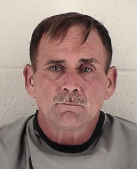
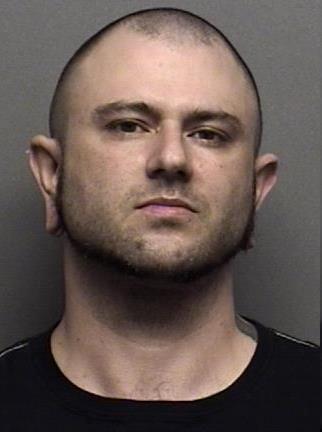
SALINE COUNTY – A Kansas who reported his pickup stolen on Sunday was arrested for a burglary of a rural property after a trail camera showed him at the scene of a burglary on Saturday.

Just after 6:30 on Saturday, a Saline County farmer noticed an older pickup pulling out from the drive of an unoccupied farm residence he owns in the 4000 Block of Mariposa Road, according to Saline County Undersheriff Roger Soldan.

Hahn followed the pickup into town where the driver pulled into a yard in the 100 block of Overhill Road and ran from the scene.

On Sunday, Caleb White, 36, Salina, reported to police that his pickup had been stolen.

An investigator with the Sheriff’s Office had a picture of White with his pickup on the property where he had allegedly stolen about $1,000 worth of items.

White was booked into the Saline County Jail on requested charges of burglary, theft, and criminal trespassing.

Ex-husband of a Kansas lawmaker sues over family business

Kasha Kelley
Kasha Kelley

ARKANSAS CITY, Kan. (AP) — The ex-husband of state Rep. Kasha Kelley alleges in a lawsuit that a family business owes him money.

The Arkansas City Traveler reports that Scott Margolius filed the lawsuit against his former spouse, Rep. Kasha Kelley, and her mother, Diana Williams, in Cowley County. Williams is the owner of First Intermark Corp. and Kelley is the chief executive officer. The retail consulting company follows up on sales, mainly of motorcycle dealers.

The suit claims that Kelley and Williams knowingly withheld more than $60,000 from Margolius, a former employee. Williams and Kelley claim in a court filing that that Margolius was using company resources to operate his own business.

Margolius is seeking $225,000 in the lawsuit.

Supreme Court sides with Kan. sex offender in dispute over registry

Lester Nichols -photo KBI

WASHINGTON (AP) — The Supreme Court says a convicted sex offender did not have to update his status on the federal sex offender registry after moving to a foreign country.

The justices on Monday ruled unanimously in favor of Lester Nichols, a Kansas man who moved to the Philippines after his release from prison in 2012. Nichols moved without notifying authorities.

He was convicted of failing to update his sex-offender registration. A federal appeals court upheld his conviction.

Justice Samuel Alito said a straightforward reading of the law at the time did not require registry updates after moving out of the United States. He noted that Congress has since criminalized the failure of sex offenders to offer information about foreign travel.

Producers battle herd health issues following Kansas wildfire

photo KSU
photo KSU

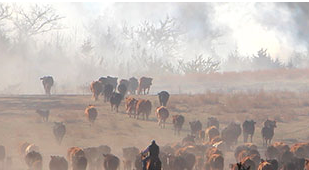
MEDICINE LODGE – A long road ahead is probably the best way to describe the aftermath of the Anderson Creek wildfire in south-central Kansas, particularly for cattle producers who have relied heavily on grazing as the main source of herd nutrition. Not only are many pastures burned in Comanche and Barber counties, but the cattle are facing a variety of other health-related problems following the fire, according to Kansas State University veterinarian Dave Rethorst.

Rethorst, who works in the K-State Veterinary Diagnostic Laboratory, has been in contact with cattle producers and local agricultural leaders, including K-State Research and Extension agriculture agent Tim Marshall of Barber County, about the wildfire’s repercussions. The wildfire burned approximately 400,000 acres March 22-25, according to the Kansas Department of Agriculture.

Following the wildfire, Rethorst said good animal husbandry practices are key. Producers are working hard to provide adequate nutrition to their herds and take care of ailments that range from burns to respiratory issues.

“There are ranchers out there asking, ‘Do we have cows alive and just haven’t found them? How many cows have I lost?’” said Rethorst. “Things we’re seeing short term are cows with burned feet. Their (hoof) coronary bands are burned to the point that some of those cows are starting to lose their hoof wall.”

Many of the cows directly involved in the wildfire also experienced burned udders, he said. Some of those cows are still producing enough milk to keep their calves alive, but many producers are having to bottle feed their spring-born calves using milk replacer instead. Producers downwind from the fire are witnessing most of the respiratory problems currently.

“They weren’t in the fire, but they got the heavy smoke,” Rethorst said. “Those calves are seeing runny eyes and respiratory problems. Many of the ones in the fire haven’t started seeing the respiratory problems yet, but I’m not sure producers are looking for that. They’re still trying to regroup and figure out what (cattle) they have left.”

Tips for producers

Many producers in Comanche and Barber counties primarily graze their herds year-round, Rethorst said, and are now having to provide hay to their cattle—a foreign concept to some.

“We need to remember that those cows will eat about 3 percent of their bodyweight on a dry matter basis,” he said. “For example, if we have a 1,200-pound cow, she will eat 36 pounds of dry matter a day.”

As they heal, he added, they will need more than hay for adequate nutrition. They also need energy and protein supplementation daily until green grass begins to return.

“My recommendation is to back off what many producers are used to feeding, 40 percent protein cake formulations, and feed a 20 percent cake that has some energy in it,” Rethorst said.

On the treatment side, Rethorst said he realizes that producers might be overwhelmed by having to continuously treat a single animal, and some cattle have been sold. For the ones that remain, producers should monitor burned feet, burned udders and signs of respiratory infections.

Consider using antibiotic ointment on burned feet and udders to keep a secondary infection from occurring, he said. Death loss will likely happen due to respiratory problems from smoke inhalation, particularly in calves under a year old, just because their immune system might not be able to fight infection.

“In some of these young cows, it will probably affect their lungs for life. There’s little that can be done for that. Pull and treat the individuals. Get the calves on a good vaccination program,” Rethorst said.

Another anxiety following the wildfire is the co-mingling of cattle due to burned fences. Herds have mixed with other herds, which means diseases such as bovine viral diarrhea could potentially spread in herds that have never experienced it before, he said. BVD could come secondary to the onset of respiratory disease.

“Treat respiratory disease as you typically would: get an antibiotic in them, and make sure they have plenty to eat and drink,” Rethorst said. “Take care of them, and let their immune systems work.”

Other wildfire effects

In addition to domestic livestock, wildlife were also affected by the Anderson Creek wildfire, he said, which is not talked about as much.

“The effect of the fire has been devastating on wildlife—the number of deer, coyotes and turkeys that have been killed,” Rethorst said. “The quail population had been coming back in that part of the state in the last two or three years. I doubt if there are any quail left.”

The emotional toll on producers is not talked about much, either. Rethorst said many producers are taking losses hard, because the fire got out of control quickly.

“They did their best,” he said of those producers. “Let’s not forget the people in that part of the state. When it’s in the news, we want to do all we can, but typically in three or four weeks when it’s not in the news, we tend to forget. We need to be prepared to support those people.”

Kansas teen hospitalized after ATV accident

Screen Shot 2013-12-13 at 8.39.21 PMTANEY COUNTY – A Kansas teen was seriously injured in an accident just before 7:30p.m. on Sunday in Taney County Missouri.

The Missouri State Highway Patrol reported a 2014 Arctic Cat ATV driven by Alison R. Findley, 19, Pomona, was traveling around a curve and into a drive on Casey Road just north of Forsyth.

The ATV overturned and Findley was ejected. She was flown to Cox South Hospital in Springfield.

She was not wearing a helmet, according to the MSHP.

Ruling clears way for construction of another Kansas casino

Courtesy image
Courtesy image

PITTSBURG, Kan. (AP) — Developers of a southeast Kansas casino say a Shawnee County judge’s ruling clears the way for construction of the state’s fourth nontribal casino to begin.

Judge Larry Hendricks last week rejected arguments made in a challenge to a decision by the state to award the southeast Kansas project to Kansas Crossing Casino and Hotel.

The Pittsburg Morning Sun reports the $70 million proposal in Crawford County was the smallest of three submitted to the state Gaming Facility Review Board.

Cherokee County and Castle Rock Casino filed a lawsuit. Its $145 million proposal was the largest submitted, and it claimed the board didn’t follow state law when it picked the smaller project.

Kansas Crossing’s chief operating officer says the new casino should be open within a year.

Kansas man dies after motorcycle overturns

CVhZz7iU8AEFKcgPOTTAWATOMIE COUNTY- A Kansas man died in an accident just before 5:30 p.m. on Sunday in Pottawatomie County.

The Kansas Highway Patrol reported a 1992 Harley Davidson Motorcycle driven by Michael Anthony Folk, 38, Iola, was westbound on U.S. 24 just east of Belvue.

The motorcycle left the roadway and overturned.

Folk was pronounced dead at the scene and transported to Piper Funeral Home.

He was not wearing a helmet, according to the KHP.

State launches new consumer financial education website

 Timothy Hagan-Wichita State University Student Money Management Center, Shannon Stone-Office of the Kansas Securities Commissioner, Anna Barger-Communities in Schools of Mid-America, Kathy Clark-Capital City Bank, Deryl Schuester-Kansas Bank Commissioner's office, Terry Leatherman-Housing and Credit Counseling, Inc., Governor Sam Brownback, Lloyd Rainge-Capitol Federal Savings Bank, Kathie Harris-Kansas Department of Commerce, Trisha Thomas-Kansas Department for Children and Families, Kenya Cox-Kansas African American Affairs Commission and Wichita NAACP, Gigi Wolf-Federal Reserve Bank of Kansas City
(L to R): Timothy Hagan-Wichita State University Student Money Management Center, Shannon Stone-Office of the Kansas Securities Commissioner, Anna Barger-Communities in Schools of Mid-America, Kathy Clark-Capital City Bank, Deryl Schuester-Kansas Bank Commissioner’s office, Terry Leatherman-Housing and Credit Counseling, Inc., Governor Sam Brownback, Lloyd Rainge-Capitol Federal Savings Bank, Kathie Harris-Kansas Department of Commerce, Trisha Thomas-Kansas Department for Children and Families, Kenya Cox-Kansas African American Affairs Commission and Wichita NAACP, Gigi Wolf-Federal Reserve Bank of Kansas City

Office of the Governor

TOPEKA–Governor Sam Brownback has signed a proclamation declaring the month of April as Financial Literacy Month in Kansas. The proclamation highlights the need to ensure that Kansans are well prepared to manage money, credit, investments, and debt. Attending the signing were members of the Money Smart Month Kansas committee, an annual community outreach initiative that promotes financial awareness for people of all ages.

In connection with Financial Literacy Month, several state agencies, including the Kansas Securities Commissioner’s office, have collaborated to launch a new consumer financial education website, KansasMoney.gov. The multi-agency website provides Kansans easy access to essential financial resources from the State of Kansas.

An interactive learning course is a key feature of the site. The Kansas Financial Learning Center provides a flexible financial learning platform for busy adults, and it is free for all Kansans.

The course consists of “bite-sized” educational content on topics from auto loans to identity protection to social security. Most modules within the course can be completed in 3-7 minutes. Throughout the month of April, the State Treasurer’s Office, a partner of KansasMoney.gov, is providing an incentive for those who sign up to participate in the program. At the end of the month, Kansans who have completed at least 5 modules will be eligible to win an iPad. To learn more about this opportunity, visit the Treasurer’s website at www.kansasstatetreasurer.com.

Other KansasMoney.gov agency partners are: the Office of the Attorney General, the Office of the State Bank Commissioner of Kansas, Kansas Department of Credit Unions, Kansas Department of Revenue, and the Kansas Insurance Department.

Kansas’ celebration of Financial Literacy Month joins a national effort of businesses, agencies and non-profit organizations to promote personal finance education through a wide variety of programming. To learn more about these and other opportunities, visit kansasmoney.gov or www.moneysmartkansas.org.

Elder Justice Task Force formed in Kansas

KANSAS CITY–U.S. Attorney Barry Grissom has announced today he is launching an Elder Justice Task Force in Kansas. The task force in Kansas – one of 10 across the country — will bring federal prosecutors and law enforcement agencies together with state and local agencies to target nursing homes that provide grossly substandard care to residents.

“We already have one investigation open,” Grissom said. “We’re not wasting time.”

Grissom said the members of the task force at this time include the Department of Justice Civil Fraud Section, Health and Human Services – Office of Inspector General and the Kansas Medicaid Fraud Control Unit. Later, he said, he expects to invite state agencies that work with long term care, public health and aging to join.

Steve Hanson, Special Agent in Charge of the Kansas City Regional Office of U.S. Department of Health and Human Services, Office of Inspector General, stated, “Our office is excited to join forces with our federal, state, and local partners to identify nursing homes that are providing substandard quality of care to our elderly beneficiaries.”

In Washington, D.C., Acting Associate Attorney General Stuart F. Delery said, “Millions of seniors count on nursing homes to provide them with quality care and to treat them with dignity and respect when they are most vulnerable. Yet, all too often we have found nursing home owners or operators who put their own economic gain before the needs of their residents. These task forces will help ensure that we are working closely with all relevant parties to protect the elderly.”

Elder Justice Task Forces also are being launched by U.S. Attorneys in the following districts: Northern District of California, Northern District of Georgia, Western District of Kentucky, Northern District of Iowa, District of Maryland, Southern District of Ohio, Eastern District of Pennsylvania, Middle District of Tennessee and the Western District of Washington.

Kansas was chosen, Grissom said, because we have expertise in investigations and prosecutions of nursing homes and we made a commitment to working together with stand and local agencies.

The Elder Justice Task Forces reflect the Justice Department’s larger strategy and commitment to protecting our nation’s seniors, spearheaded by the Department’s Elder Justice Initiative. The Elder Justice Initiative coordinates and supports the Department’s law enforcement efforts and policy activities on elder justice issues. It plays an integral role in the Department’s investigative and enforcement efforts against nursing homes and other long-term care entities that deliver grossly substandard care to Medicare and Medicaid beneficiaries. The Elder Justice Initiative will be providing litigation support and training to the Elder Justice Task Forces.

Learn more about the Justice Department’s Elder Justice Initiative at https://www.justice.gov/elderjustice/.

Dr. Jill Biden will visit soldiers, families in Kansas

photo courtesy Whitehouse
photo courtesy White house

FORT RILEY  -In April, to celebrate the Month of the Military Child and as part of her Joining Forces initiative, Dr. Jill Biden, a lifelong educator and military mom, will participate in several events in support of military children’s education.

On Tuesday, April 5 and Wednesday, April 6, Dr. Biden will visit Fort Riley, Kansas to meet with active duty service members, military spouses and military-connected students and their teachers. During the visit, Dr. Biden will highlight the educational partnership between Fort Riley and Kansas State University as part of Operation Educate the Educators—an effort Dr. Biden launched through her Joining Forces initiative to train teachers to recognize the unique needs of military-connected students in their classrooms.

On Monday, April 11 at 1:30 p.m. (ET), Dr. Biden will deliver remarks at the American Association of Education Researchers Annual Meeting in Washington, D.C.—the largest gathering of education researchers in the world—on the importance of recognizing and supporting military-connected students in the classroom.

On Wednesday, April 13, Dr. Biden, in collaboration with the Military Child Education Coalition and the University of Southern California, will convene educators, stakeholders and influencers at the White House to discuss the progress of Operation Educate the Educators, and to lay out the next steps to sustain and grow this important initiative on behalf of military families. At 10 a.m. (CT), Dr. Biden will be joined by Secretary of Education John King to deliver closing remarks at the convening in the South Court Auditorium at the Eisenhower Executive Office Building.

Man awaiting Kan. rape, attempted murder trial found dead in cell

McCormick -photo Johnson Co. Sheriff

OLATHE, Kan. (AP) — A Kansas inmate accused of raping and trying to kill a woman last summer has been found dead in his cell.

The Johnson County Sheriff’s Office says 59-year-old Gary McCormick was found unresponsive in his cell at 4:51 a.m. Sunday while detention staff was conducting a routine welfare check of inmates.

Detention center staff and in-house medical workers tried to save his life but were unsuccessful.

McCormick was housed alone and had been in custody since July awaiting trial for attempted first-degree murder, rape, aggravated criminal sodomy, aggravated battery and felony fleeing and eluding.

He was being held on $1 million bond.

The Sheriff’s Office is investigating his death.

Kansas woman dies after car rolls, hits cement culvert

GEARY COUNTY- A Kansas woman died from injuries in an accident just before 3p.m. on Sunday in Geary County.

The Kansas Highway Patrol reported a 2004 Pontiac Grand Prix driven by Caitlyn Head, 22, Junction City, was northbound in the 12000 Block of Clarks Creek Road two miles south of Interstate 70.

The vehicle left the roadway, entered the east ditch, rolled and struck a cement culvert.

Head was transported to Stormont Vail in Topeka where she died. She was properly restrained at the time of the accident, according to the KHP.

Copyright Eagle Radio | FCC Public Files | EEO Public File