We have a brand new updated website! Click here to check it out!

Entrenched stereotypes keeping military women from front lines, say KU profs

Two members of a U.S. Marine Corps Female Engagement Team patrol a town in Afghanistan during 2010.

LAWRENCE — For more than a century, it was culturally unacceptable for women to join men in the front lines of combat in the U.S. military. Even though the policy banning women from combat roles has been rescinded, their integration into the front line and special operations has been slow and met with resistance.

Two University of Kansas researchers have published a book on factors that have slowed the integration, citing “organizational obliviousness,” or entrenched stereotypes as the primary culprit.

Even when military members are supportive of women taking increased combat roles, ingrained gender stereotypes of both men and women at several levels have held back progress, wrote Alesha Doan and Shannon Portillo in “Organizational Obliviousness: Entrenched Resistance to Gender Integration in the Military,” published by Cambridge University Press. Stereotypes are then normalized by organizational policies and practices, and their subtlety can render them invisible.

Doan, associate professor in KU’s School of Public Affairs & Administration and in the Department of Women, Gender & Sexuality Studies, and Portillo, associate professor of public affairs & administration and assistant vice chancellor of undergraduate programs at KU’s Edwards Campus, conducted focus groups and surveys with men and women — both enlisted and officers — in the U.S. Army for the brief book.

“We’re public administration scholars and the military is the largest public organization in the country, but it is incredibly understudied,” Portillo said. “The fall of 2013 was a very special time in the military as the combat ban policy was lifted, but it wasn’t clear how it would be implemented, from a task standpoint, if women would be able to do the same work men in special forces do and how it would work practically.”

The authors write that resistance to gender integration exists in the organization at three levels: individual, cultural and institutional.

Alesha Doan, assoc. professor, KU School of Public Affairs & Administration

“Gender stereotypes are ingrained in organizational society writ large, so individuals easily — and often unconsciously — draw on them,” Doan said. “Our research findings illuminate how gender stereotypes are frequently used to oppose and resist changes, particularly when the changes have the potential to disrupt an organization’s culture and standard operating procedures.”

Although some of the respondents were supportive of integrating women into combat roles and Special Forces, they had numerous concerns that were shared by those who opposed gender integration.

For example, physical strength was a concern of some soldiers. Many respondents repeated common stereotypes that men are rational thinkers and physically strong while women are emotional and physically weak. Male participants often rationalized that their own wives or girlfriends would not be able to handle the physical demands of special forces; therefore, no women could. Others pointed to a well-known example of four female trainees who were unable to pass a qualification obstacle course as evidence that women couldn’t physically pass muster. What they didn’t cite was that 75 of 100 men were also unable to pass the course.

Leadership was another common obstacle, the authors found. While men routinely pursue leadership roles, women often put off starting a family until they can reach such roles. However, once they are in a position to advance, they are expected to have families as part of fitting the leadership ideal, creating a catch-22. Mentorship in the Army was also important, as respondents and separate research have indicated quality mentorship especially helps women in the military.

Shannon Portillo, asst. professor, KU School of Public Affairs

“That parallels what we know about teaching,” Portillo said. “Everyone benefits from good teaching, but those from disadvantaged backgrounds benefit even more.”

Many men reported wanting to mentor women, but they were afraid to do so for several reasons. Some men said they felt they needed witnesses present when working with women to fend off accusations of impropriety or favoritism, while others said they worried they would be falsely accused of sexual harassment if they tried mentoring women.

Both men and women in the study reported the mandatory sexual harassment training was not helpful, as men said it scared them away from working with women and women reporting it reinforced the idea of their gender as victims. That’s despite the fact that men are much more likely to be victims of sexual assault in the military due to sheer numbers.

That those stereotypes existed widely at the individual level was reflected in the cultural level of the organization and was thus represented in policies and practices, the authors wrote. Therefore, even if there is not malice or actions taken to actively exclude or harm others, in the end both happen. Progress is being made in becoming gender-neutral and integrating women into combat roles, say the authors who have previously written about gender stereotypes and combat, but room for improvement remains.

“We argue that obliviousness is not just on a person-to-person basis,” Portillo said. “We focus here on gender and how resistance to changes regarding gender happen throughout the organization, but the concept could be applied to other identities as well. One of the biggest takeaways in the book is entrenched organizational resistance is not just about policy change. It’s about the individual and structural practices of the organization. Stereotypes and attitudes are so ingrained in the culture it takes time to change.”

 

Teen charged in shooting that killed Washburn player, wounded teammate

TOPEKA, Kan. (AP) — Authorities have charged an 18-year-old man in an April shooting that wounded New York Giants draft pick Corey Ballentine and killed one of his Washburn University teammates.

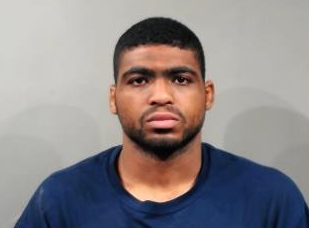
Francisco Mendez photo Shawnee Co.

The Shawnee County district attorney’s office says in a news release that Francisco Alejandro Mendez was charged Friday with first-degree murder, attempted first-degree murder and five counts of aggravated battery in the April 28 attack.

Authorities say Ballentine and teammate Dwane Simmons were outside of an off-campus party in Topeka hours after the Giants picked Ballentine in the sixth round of the draft when someone opened fire on them from a vehicle. Simmons was killed and Ballentine was shot but has since recovered.

Mendez is being held on a $1 million bond. His case doesn’t appear yet in online court records and his attorney, Victoria Chundak-Gallaway, didn’t immediately reply to a phone message left Saturday at her office.

Kansas man dies in Wyoming highway construction zone crash

RAWLINS, Wyo. (AP) — Authorities say a Kansas man has been killed after his pickup truck rolled over in a construction zone on a Wyoming interstate.

Photo courtesy Wyoming Dept. of Transportation

The Wyoming Highway Patrol identified the victim as 38-year-old Christopher Otto of Mound City, Kansas.

The patrol said in a press release that Otto’s Ford F-150 was traveling westbound on Interstate 80 east of Rawlins Thursday night when it exited the highway at a construction zone crossover and overturned.

Otto was not wearing a seatbelt and died at the scene.

Fatigue, speed and inattention were being investigated as possible factors in the crash.

No other vehicles were involved.

The death marks the 85th fataility on Wyoming roads so far in 2019, an increase over the past three years.

CBD Oil With THC Is Now In Kansas Stores, But Good Luck Figuring Out If It’s Legal

TOPEKA — They’re here in Kansas. CBD products with a bit of that oh-so-taboo THC in them. To vape, to put under your tongue.

THE VAPE GUIDE / FLICKR – CC

Some retailers argue those products became legal on July 1 because of tweaks to state regulation of cannabis-related substances in a bill supporting the state’s fledgling industrial hemp program.

Related: Why Kansas Cops Don’t Want to Legalize Marijuana — Medical Or Otherwise

Other vendors who also believe small amounts of THC became legal in Kansas on July 1 geared up to sell, then got cold feet after a hemp advocacy group posted a warning from a high-level Kansas Bureau of Investigation official on its Facebook page.

“Full spectrum is not legal,” says the statement, which Kansans for Hemp organizer Kelly Rippel says he received from KBI executive officer Katie Whisman. “CBD isolate or CBD containing no other controlled substance is what was carved out as legal.”

Full spectrum commonly refers to CBD products that include THC. (Although, buyer beware: Sometimes products labeled “full spectrum” don’t actually contain THC, and sometimes those labeled “THC-free” actually do have it.)

Multiple people who work in the CBD industry said sales of CBD with THC in it are now common across Kansas. The Kansans News Service easily found it for purchase within state lines.

National retailer CBD American Shaman prepped its website to start selling full spectrum to Kansans starting July 1, but postponed that plan when Whisman’s quote surfaced in late June. It remains hopeful the KBI is wrong.

“We’re just not gonna take the chance until it’s really clear,” CEO Vince Sanders said. “It’s all crazy … It is what it is, which is what we deal with in the world that we live.”

His Kansas City-based company sells CBD across the country and has become accustomed to an ever-shifting maze of state-by-state regulations.

“We know the legislators’ intent was to have full-spec oil,” he said. “The revisors (lawyers at the Kansas Statehouse who draw up bills for lawmakers) are writing exactly what the intent was. … We expected to have (a letter of legislative intent) by last Friday. We still don’t have it. So again, we expect it any time.”

A KBI spokeswoman told the Kansas News Service Friday it knows vendors are confused, and that clarification is needed.

“We are currently reviewing the issue, but don’t have specific guidance to offer at this time,” she wrote.

Sen. Mary Ware, who owns two CBD American Shaman stores in Wichita, says she understood the law to legalize full-spectrum products. A revisor and a Department of Agriculture attorney both assured her that was the case, she said, and she has requested clarification from Attorney General Derek Schmidt’s Office.

But a Department of Agriculture spokeswoman said in an email that agency doesn’t directly regulate CBD oil or how it’s used or manufactured, “including determining what the legal level of THC may be.”

“As we read the bill, [full-spectrum CBD] is not directly addressed,” she said.

The bill, she said, “does not regulate end products (other than to prohibit by criminal penalty the production of some specific products) created from hemp.”

“Our intent [was to allow] the growth of industrial hemp and the production of CBD oil,” she continued, “but that all products must meet whatever legal requirement[s] that were already in place.”

The legal requirement already in place for CBD bans THC.

She ultimately referred questions on THC’s legal status in CBD products to the attorney general.

Contacted by the Kansas News Service, Schmidt’s office would not answer the question.

“We have not yet received a request for a legal opinion on this issue,” a spokesman said, and did not answer follow-up questions about whether Schmidt had received an inquiry from Ware.

The Statehouse revisor who worked on the hemp bill wouldn’t comment on whether he had told the senator that full-spectrum products would become legal. He said he had not been approached by anyone seeking a letter clarifying legislative intent.

Revisors can’t answer questions from the public about legal analysis, he said. That includes the Kansas News Service’s question about whether HB 2167 legalized full spectrum CBD products.

How we got here

In 2018, Kansas legalized CBD, or cannabidiol. Vendors could only sell CBD without THC, or tetrahydrocannabinol.

Both substances come from cannabis ⁠— the plant with high-THC varieties used for medical and recreational pot, and low-THC varieties used for CBD and hemp products.

            View the NCSL’s latest map of state-by-state cannabis-related laws.

CBD legalization led to a flourishing market for the stuff in everything from tinctures and slow-release skin patches to soda drinks and gummy bears.

Ideally, though, vendors want to offer the full-spectrum, THC-laced options, too. Those proved popular in other states. Some sellers say they come with additional health benefits. (The vast majority of claims regarding health benefits of CBD with or without THC have not passed federal vetting.)

This yearKansas lawmakers passed two laws that relate to cannabis or its extracts.

One was the industrial hemp bill that some vendors believe now allows them to sell full-spectrum CBD with some THC.

The other was Claire and Lola’s law, a narrow bill that may assist certain people if they ever find themselves facing prosecution for possessing some products currently illegal in the state of Kansas.

But do bottles of CBD with small amounts of THC (up to 0.3%, a definition related to federal law) that some vendors now consider fair game even get anyone high?

“You could drink a gallon of the oil in order to get enough THC to get high. You’d be so sick to your stomach and still not be high,” said Ware, the senator who owns CBD shops.

Mallory Loflin, a psychiatry professor at the University of California-San Diego who researches medical cannabis and CBD, had a different take. For some people, a bottle would do it.

“Especially a novice user without much experience with the plant,” she said. “They’re definitely going to be feeling intoxicated.”

But if they chug that much fatty oil, Loflin says, diarrhea is the other effect that likely awaits them.

Celia Llopis-Jepsen reports on consumer health and education for the Kansas News Service. You can follow her on Twitter @Celia_LJ or email her at celia (at) kcur (dot) org. 

KBI: Statewide Silver Alert issued for missing McPherson woman

Schoen photo KBI

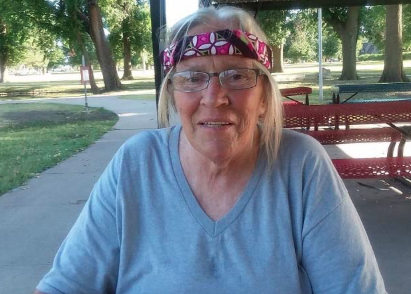
MCPHERSON COUNTY – The McPherson Police Department requested that the Kansas Bureau of Investigation (KBI) issue a statewide Silver Alert for a missing McPherson woman.

The whereabouts of Sharoll Joy Schoen, 65, are unknown, and the public’s assistance is requested to help locate her. Sharoll was last seen on July 11, 2019 at approximately 5:30 p.m. leaving the VFW, 120 S. Taft St, in McPherson, Ks.

Sharoll is 5 feet 4 inches tall and weighs 150 pounds. Sharoll has grey hair, brown eyes and glasses. She was last seen wearing light blue jeans, bright green shirt, and glasses. Sharoll is prescribed medication, which she is required to take, and she does not have with her. Please see attached photograph.

If located, please contact the McPherson Police Department at (620)245‐1266 or call 911.

Kansas companies participate in STEP grant trade missions

Mike Bergmeier, left, of Shield Ag in Hutchinson, speaks with potential customers at the AGRO 2019 ag equipment show in Ukraine.

KDA

MANHATTAN — The Kansas Department of Agriculture recently hosted two State Trade Expansion Program (STEP) Grant trade missions to Foro Mascotas Pet Food International in Guadalajara, Mexico, and AGRO 2019 in Kyiv, Ukraine. The trade missions provided Kansas companies an opportunity to showcase and offer their products to an international audience. Companies participating in the trade mission to Mexico included: Engineered Systems and Equipment (E.S.E), Caney, and NorthWind Technical Services, Sabetha. Companies participating in the trade mission to Ukraine included: Moridge Manufacturing Inc. (Grasshopper Company), Moundridge, ShieldAg Equipment, Hutchinson, and USC, Sabetha.

“The STEP Grant was designed to help small businesses expand their exports. We’ve been fortunate in Kansas to have received the STEP grant to help Kansas farmers, ranchers and agribusinesses to explore new markets or increase the value of export sales in existing markets,” said Suzanne Ryan-Numrich, international trade director at KDA.

Exports are important to the Kansas economy. In 2018, over $3.8 billion of agricultural goods were shipped around the globe to 74 different countries.

The trade missions were sponsored by KDA and funded in part through a cooperative agreement with the U.S. Small Business Administration using a STEP grant in cooperation with the Kansas Department of Commerce.

Ray Garvey, export manager at the Grasshopper Company, was among those who traveled to AGRO 2019. “From my point of view, there are several aspects of the AGRO show that were a success,” he said. “I want to thank the state of Kansas and the SBA for this opportunity to discover a new market in Ukraine. I’m looking forward to further exploring this market for my company.”

The Kansas Department of Agriculture is dedicated to providing an environment that enhances and encourages economic growth of the agriculture industry and the Kansas economy including the further development and expansion of marketing opportunities for agricultural goods and services around the globe.

The KDA is offering an upcoming opportunity for Kansas farmers, ranchers and agribusinesses to participate in a livestock genetic trade mission to Uruguay this fall, from September 10-16. Additionally, two STEP Grant trade missions are planned for 2020: VICTAM Asia/Petfood Forum Asia, Bangkok, Thailand, March 24-26; and NAMPO Harvest Day, Bothaville, South Africa, May 12-15. Interested persons should contact Ryan-Numrich at [email protected] or 785-564-6704.

Police: Kan. man jailed for alleged home invasion, sex assault

SEDGWICK COUNTY — Law enforcement authorities are investigating an alleged home-invasion sex crime and have made an arrest.

Johnson photo Sedgwick County

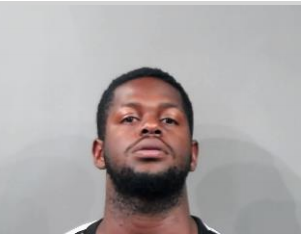
Just after 2a.m. June 16, a suspect later identified as 23-year-old Marquel L. Johnson entered, without permission, the apartment of a 64-year-old woman in the 9200 Block of East Harry in Wichita, according to officer Kevin Wheeler.

Johnson allegedly exposed his genitals and touched her in appropriately, according to Wheeler.

On Thursday, police arrested Johnson for trespassing and for a warrant in connection with the alleged behavior.

He is being held on a $25,000 bond for Aggravated Sexual Battery and Lewd and Lascivious Behavior, according to online booking records.

Governor appoints 3 members to Kansas Board of Regents

TOPEKA, Kan. (AP) — Gov. Laura Kelly has appointed three members to the Kansas Board of Regents.

The governor’s office announced in a news release Friday her picks for the governing body of the state’s six Regents universities and other educational institutions.

Her three appointees are Cheryl Harrison-Lee, Jon Rolph and Shellaine “Shelly” Kiblinger.

Harrison-Lee of Gardner recently served as city administrator for the city of Gardner, Kansas.

Rolph of Wichita is president and CEO of Thrive Restaurant Group, which owns and operates restaurants in 10 states.

Kiblinger of Cherryvale is superintendent of Cherryvale Public Schools.

The bipartisan board is made up of nine members who serve staggered terms of four years. Each is appointed by the governor and subject to confirmation by the state Senate.

Police identify woman shot at Kansas deli who has died

KANSAS CITY, Kan. (AP) — Police say a woman who was critically wounded in a double shooting at a Kansas City, Kansas, deli has died from her injuries.

Police on the scene of the shooting investigation photo courtesy KCTV

The Kansas City, Kansas, Police Department identified her in a news release as 42-year-old Lachell Day of Kansas City, Kansas.

The shooting Wednesday at the Edwards Original Corner Market & Deli also killed market owner Dennis Edwards. Police arrested a suspect after a standoff at the deli and took him to a hospital with a gunshot wound.

Ellis Nave told The Kansas City Star that Day was his niece and she had been dating the suspect. Police say she died Thursday night.

Midwest to Congress: Flood threat persists


By BRENT MARTIN

St. Joseph Post

ST. JOSEPH, Mo. — Members of Congress have been put on notice: the threat of flooding continues in the Midwest.

A Congressional subcommittee hearing held by Northern Missouri Congressman Sam Graves has discussed the continuing threat and suggested management of the Missouri River needs to change. Graves says Midwesterners keep hammering the same point home every time they have the opportunity.

“We talk about this time, after time, after time and the Corps doesn’t seem to understand or doesn’t get it. That system was designed for flood control and it needs to be managed for flood control otherwise it does not work,” Graves tells St. Joseph Post.

Graves says the Army Corps of Engineers has too many priorities as it tries to manage the Missouri River, including wildlife habitat and upstream recreation.

Graves

Graves has sponsored a resolution that would keep the Corps and Fish and Wildlife from spending money trying to improve the breeding habitat of the pallid sturgeon in the Missouri River.

“We’ve spent millions and millions of dollars trying to do these experiments, but yet the Corps of Engineers, Fish and Wildlife they can’t show any progress whatsoever,” according to Graves. “So, we’re trying to say, quit spending money on this when you can’t even show if it’s working or not.”

Graves says Congressional spending habits display the misplaced priorities. He says $12 billion will be spent to repair levees with $31 billion will be spent on habitat reclamation.

Graves says the Midwest is strong, but it could use a little help from Washington.

“Those of us in north Missouri are pretty resilient when it comes to this, but the Corps of Engineers isn’t helping any, that’s for sure, when it comes to the management of the river,” Graves says. “Now, with the recovery, hopefully they’re going to do a much better job of that and getting these levees fixed.”

Graves says he and other Midwestern members of Congress will continue to push the Corps of Engineers pretty hard on repairing the more than 100 levees damaged by this year’s flooding.

Meanwhile, the Army Corps of Engineers in Omaha has awarded a nearly $2.8 million contract to repair a levee in southwestern Iowa.

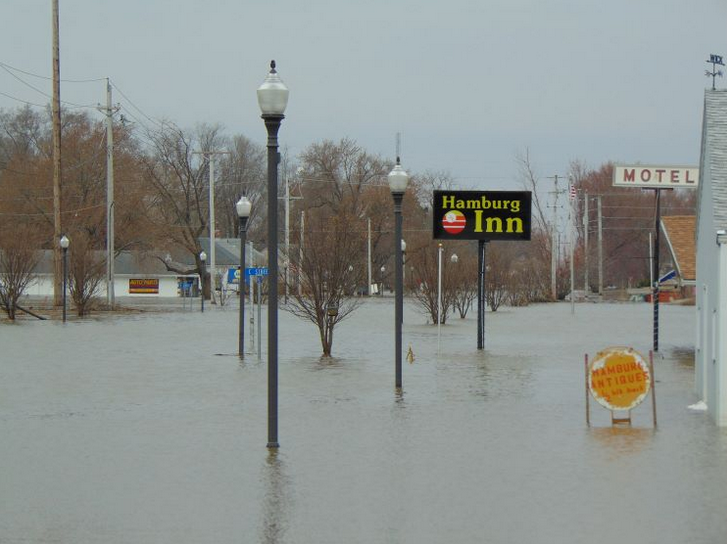
The contract calls for the elevation of the levee breached near Percival and Hamburg during historic flooding in March to be raised from 2 to 4.5 feet. The breach near Percival was closed last month and work to close the one at Hamburg is nearly done.

That levee breach sent floodwaters from the Missouri River bluff to Hamburg, shutting down I-29 for months.

Kan. police find 75 pounds of meth during I-70 traffic stop

LEAVENWORTH COUNTY — Law enforcement authorities are investigating a suspect on drug charges after a traffic stop.

Photo courtesy Bonner Springs police

On Thursday, an officer from the Bonner Springs Police Department’s Traffic Unit stopped a vehicle on eastbound Interstate 70, according to a media release.

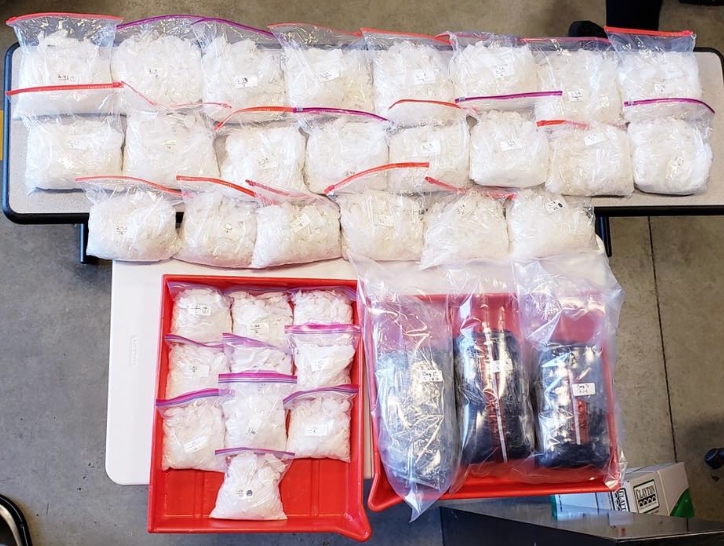
During the investigation, the officer discovered that the vehicle was carrying a substantial amount of methamphetamine. Officers from the Bonner Springs Police Department’s Community Action Team and Investigations Bureau were called to assist. They located more methamphetamine within the vehicle.

Authorities arrested the driver and seized 75 pounds of methamphetamine. They did not release the suspect’s name or all the possible charges.

U.S. Marshals help find Kan. drive-by murder suspect in Texas

SEDGWICK COUNTY — Law enforcement authorities are investigating a homicide and have made an arrest.

Norris photo Sedgwick Co.

Just after 8:30p.m. April 1, police responded to a drive-by shooting call in the 1200 Block of North Minnesota, according to officer Charley Davidson.  A citizen contact police after hearing gunshots in the neighborhood.

Upon arrival, officers located Marquez Hutton, 23, of Wichita, outside a residence with a gunshot wound. He died at the scene, according to Davidson.

With the assistance of the U.S. Marshal’s service, authorities located Malcolm Norris, 27, Valley Center, at a residence in Texas. He was arrested, extradited back to Kansas and is being held on requested charges of first-degree murder and a bond of $250,000, according to online booking records.

Fans may soon be able to buy used Arrowhead Stadium seats

KANSAS CITY (AP) — Fans may soon be able to buy used Arrowhead Stadium seats, possibly before the end of the Kansas City Chief’s preseason next month.  Jackson County is set to approve a contract that would allow those sales.

photo courtesy KC Chiefs

Under the proposal, seats with Arrowhead logos on their metal end caps would sell for $399 a pair. Double seats with no logo would go for $299 and singles for $199.

Customers could request specific seat numbers for an additional $20 charge. Jackson County residents will have the first crack at the seats.

The proposed contract would guarantee the county $75,000 up front to cover the hauling and storage charges on 30,000 seats. The county and its vendor would then split net proceeds for the seat sales evenly.

Copyright Eagle Radio | FCC Public Files | EEO Public File