KANSAS CITY, Mo. (AP) — A Missouri and Kansas man have been indicted in two armed bank robberies.
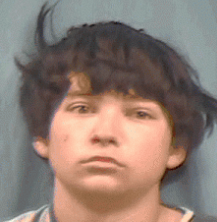
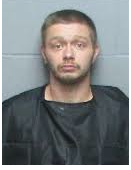
The U.S. attorney’s office says 46-year-old Terry Jacobs, of Kansas City, Missouri, and 26-year-old Jayme Wilson, of Basehor, Kansas, were charged in a seven-count superseding indictment returned Wednesday. It replaces an earlier indictment, adds Wilson as a co-defendant and includes additional charges.
Jacobs and Wilson are accused of robbing UMB Bank branches in Independence and Kansas City at gunpoint in December.
Besides the bank robberies, Jacobs is charged with robbing a Burger King restaurant, a Family Dollar Store and a Taco Bell restaurant. The three armed robberies happened in December in Kansas City.
Prosecutors say a total of about $8,100 was stolen.
WICHITA, Kan. (AP) — A government report shows Kansas farmers are planning to plant a whole lot more corn this year.
The National Agricultural Statistics Service reported Thursday that Kansas growers intend to plant 4.8 million acres of corn. That is a 16 percent jump from a year ago.
Its prospective plantings report shows farmers are seeding fewer acres of the state’s other major crops.
The 8.5 million acres of winter wheat planted last fall for harvest later this year are down 8 percent from the previous season.
Soybean planted acres are down just 1 percent to 3.85 million acres compared to a year ago in Kansas. Anticipated sorghum acres are down 7 percent to 3.15 million acres.
Sunflowers and hay acreages in the state are also expected to be down this season.
Photo by KHI News Service File Photo Amy Campbell of the Kansas Mental Health Coalition says many Kansans don’t get treatment until their mental health concerns become a crisis.
By BRYAN THOMPSON
A new report from the U.S. Department of Health and Human Services estimates Medicaid expansion would help 34,000 uninsured Kansans with mental illness or substance use disorders gain access to behavioral health services.
The figure represents the number of Kansans with behavioral disorders whose incomes would have qualified them for Medicaid — had the state expanded its privatized program known as KanCare — in 2014. That’s the most recent year for which figures are available.
Kansas is one of 19 states that have opted not to expand Medicaid under the Affordable Care Act. Expansion would extend health coverage to an estimated 150,000 Kansans, most of whom are low-income, non-disabled adults.
The HHS report said almost a third of low-income uninsured Kansans have behavioral health needs. That compares to a fourth of the state’s overall adult population age 18 to 64.
Amy Campbell, a lobbyist for the Kansas Mental Health Coalition, said one reason there’s so much pressure on the state’s mental health hospitals is because many Kansans don’t get treatment until their mental health concerns become a crisis.
“Slightly more than half of the people who are screened for inpatient hospitalization have never received any treatment for their mental health situation,” she said.
Campbell said the Kansas mental health system faces chronic funding issues, causing some people to go without timely access to behavioral health services.
“We are already, in some areas, triaging people at the community level for mental health treatment and substance use services,” she said. “If more people who were seeking those services had coverage, that could only improve the situation.”
Kyle Kessler, who represents the Association of Community Mental Health Centers of Kansas, said Medicaid expansion would offer low-income Kansans a way to pay for the services they need and help shore up those community programs.
“We’ll be able to retain high-quality professionals, and build upon their skills, and embrace some of the newest treatments and services, and keep people out of the community hospitals as well as the state mental hospitals,” he said.
Kessler said the 26 community mental health centers in Kansas served approximately 125,000 people last year. They expect to serve at least that many this year.
Three of the community mental health centers are county agencies and the other 23 are not-for-profit, he said.
“But we’re not for-loss either,” Kessler said. “You have to be able to pay staff to retain them, and to make the services available.”
Kessler cited the Wyandot Center, in Kansas City, Kan., as a prime example of a place where damaging cuts have been made because of a lack of funding.
“They cut dozens of staff, and some of those are prevention-oriented programs to prevent people from going into hospitals or losing employment,” Kessler said.
According to Kessler, expanding Medicaid to help uninsured patients pay for their care would help maintain a more robust mental health system in Kansas — and reduce the pressure on state and local governments to subsidize the community mental health system.
The health reform law provides 100 percent federal funding of health care costs for people made newly eligible through the Medicaid expansion for the first three years of the program, ending this year. Federal funding will cover 95 percent of the costs starting next year through 2019. From the year 2020 and beyond, the federal government will cover 90 percent of the cost.
Gov. Sam Brownback has argued that the federal government can’t afford to maintain those funding levels long-term.
Other key findings from the HHS report:
Among low-income adults, Medicaid expansion is associated with a reduction in unmet need for mental health and substance use disorder treatment. For example, one study estimates that low-income adults with serious mental illness are 30 percent more likely to receive treatment if they have Medicaid coverage. This will be especially important to states as they work to address opioid use disorder and serious mental illness.
Access to appropriate treatment results in better health outcomes. For example, projections on the effects of expanded Medicaid coverage suggest that if the remaining states expanded Medicaid, 371,000 fewer people would experience symptoms of depression.
States that expand Medicaid may achieve significant improvement in their behavioral health programs without incurring new costs. State funds that currently directly support behavioral health care treatment for people who are uninsured but would gain coverage under expansion could be used for other behavioral health investments.
Medicaid expansion also reduces costs that state and local governments and state economies incur for behavioral health problems. Treating behavioral health conditions has been shown to reduce disability rates, increase employment productivity and decrease criminal justice costs.
Bryan Thompson is a reporter for KHI News Service in Topeka, a partner in the Heartland Health Monitor team.
Bill D. Raymond, 53, Andover, will appear in federal court for a jury trial in Wichita in front of Chief Judge J. Thomas Marten.
According to Jim Cross, Public Information Officer for U.S. Attorney Barry Grissom, the trial is scheduled for May 3, 2016 at 9 a.m.
Raymond, former city attorney of Manhattan, was charged with three counts of distributing child pornography and one count of possessing child pornography following an investigation by the FBI.
The crimes are alleged to have occurred in November 2014, February 2015 and May 2015 in Butler and Riley counties.
A federal grand jury indicted Raymond on Sept. 30, 2015.
If convicted, he faces a penalty of not less than five years and not more than 20 years on each distribution count, and a maximum penalty of 10 years and a fine up to $250,000 on the possession charge.
Assistant U.S. Attorney Jason Hart is prosecuting Raymond.
WESTMORELAND, Kan. (AP) — Sentencing is scheduled for May for a northeastern Kansas 18-year-old who has pleaded no contest to charges that he tried to kill a man during a shooting last December.
Dakota Fair entered the pleas Thursday in Pottawatomie County to charges of attempted second-degree murder, as well as two gun-related charges.
Authorities allege that Fair shot at another vehicle and wounded driver 23-year-old Tyrel Britton in rural St. George. Britton, of Westmoreland, survived.
SALINA – Law enforcement authorities in Saline County are investigating a convenience store robbery.
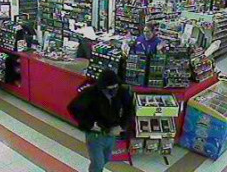
On Thursday, police released store surveillance photos from the robbery of Kwik Shop, 657 Fairdale that occurred early
Tuesday morning.
Just after 1:12 a.m., on Tuesday, a white male entered the store, and robbed the clerk using a handgun.
He was wearing a black hoodie, blue jeans, white tennis shoes and a blue bandana on the lower portion of his face.
Police asked the pubic with information concerning this robbery to call them at 785-826-7210 or if you want to remain anonymous, call Crime Stoppers at 785-825-TIPS.
You may receive a reward of up to $1,000 if your information leads to an arrest.
OTTAWA, Kan. (AP) — Jurors have recommended the death penalty for an eastern Kansas man convicted of killing four people, including a toddler.
The Franklin County jury recommended the sentence Thursday for 30-year-old Kyle Flack, who was convicted last week of capital murder in the deaths of 21-year-old Kaylie Bailey and her 18-month-old daughter, Lana.
He also was convicted of premeditated first-degree murder for killing 31-year-old Steven White and second-degree murder for killing 30-year-old Andrew Stout.
They were killed on separate days in the spring of 2013 near a rural farmhouse where Flack sometimes stayed in Ottawa, about 50 miles southwest of Kansas City.
Prosecutors say it’s unclear what led to the shootings. The adults’ bodies were found at the farm, while the child’s body was found in a suitcase floating in a creek.
Charles C. Haynes is director of the Religious Freedom Center of the Newseum Institute.
When chalked graffiti promoting Donald Trump and his controversial wall appeared overnight on buildings, steps, and other surfaces at Emory University in Atlanta, Ga., last week, student reaction ranged from amusement to outrage.
A small band of some 40 students decided to protest what they viewed as messages designed to stir anger and promote intolerance on their campus.
As if to prove the students right, social media immediately lit up with vicious attacks on the protesters — some of whom were Latino — calling them names, and in some cases, issuing threats of violence.
Fox Sports and other media outlets piled on, characterizing the “offended” students as yet another example of “political correctness” gone wild. Some news stories falsely reported that the Emory administration was offering “emergency counseling” to the students in pain over the Trump graffiti.
In truth, protesting students were answering speech they found offensive with more speech, which is exactly what people are supposed to do in a society committed to freedom of expression. Rather than calling for censorship, the students were calling on the Emory community to stand with them against campaign rhetoric they viewed as harmful and dangerous.
“We are not scared of the chalk,” the students said in a statement responding to the social media backlash against them. “We are not mad about being politically challenged. We are rightfully angry because we also exercise our First Amendment right to freedom of speech and there are people on this campus, and in this country, who as a result choose to threaten us and twist the truth to protect their own bigotry.”
Freedom of speech is challenged and chilled when people speak out, only to be labeled “PC” by media and threatened by those who disagree with the content of their speech.
Freedom of speech is also harmed — it must be said — when anti-Trump protesters attempt to shout down Trump during his rallies, something that happens with disturbing regularity.
We all need, in our various ways, “safe spaces” — homes, houses of worship, gathering places on campuses — where we can openly and freely be who we are with people we know and trust. But in the larger public square of America, including common places we share on university campuses, we must have safe spaces for free speech.
When I was an Emory student back in the day, I helped organize peaceful protests on the same quadrangle where students gathered this month to protest the Trump graffiti. During one of those rallies, a groundskeeper who didn’t like our anti-war message drove his lawnmower back and forth between the microphone and the crowd to drown out the speakers.
I didn’t like the assault on my free speech then — and I don’t like the assault on Donald Trump’s free speech now.
No one has a “First Amendment right” to prevent crowds from hearing speakers at Trump events organized and paid for by the Trump campaign. And no one has a “First Amendment right” to threaten people who protest messages conveyed by pro-Trump graffiti.
Safe space for free speech requires reasonable restrictions preventing disruption, keeping the peace and protecting people from threats of violence.
More deeply, safe space for free speech requires a shared commitment to a modicum of civility. Speech that demonizes, ridicules and stirs hate may be protected speech — but it turns the public square into a hostile, sometimes violent arena.
The First Amendment, of course, does not mandate civility. But civil discourse — robust, but respectful exchange of ideas — is critical to sustain a free society that would remain free.
Charles C. Haynes is vice president of the Newseum Institute and founding director of the Religious Freedom Center. [email protected]
Schwab during Wednesday press conference- photo courtesy KSNT
BILL DRAPER, Associated Press
MELISSA HELLMANN, Associated Press
TOPEKA, Kan. (AP) — A Navy veteran seeking to get five of his children back from state custody in Kansas says his use of medical marijuana to treat PTSD — not the family’s past scrapes with the law in Riley County — prompted the state’s action.
Raymond Schwab has campaigned on the Statehouse steps to get his children back, and drawn national attention as medical marijuana proponents describe the case as an example of government overreach.
Schwab ended a hunger strike protest Wednesday after a lawsuit was filed against the state of Kansas in the ongoing dispute.
State officials have declined to specify why the children were removed, but say Schwab isn’t telling the truth about it being because of marijuana.
Protesters supporting the Schwab family in Manhattan on March 10
Police and court documents show that in the five months before it occurred, Schwab’s wife was arrested for domestic battery and hospitalized for mental health issues, and police were called to their home for a domestic disturbance.
LINCOLN, Neb. (AP) — One of the four finalists to become chancellor of the University of Nebraska-Lincoln has withdrawn his name.
Several Washington state media outlets have reported that Sabah Randhawa has been selected to become president at Western Washington University in Bellingham, Washington. University of Nebraska spokeswoman Melissa Lee says Randhawa told University of Nebraska President Hank Bounds about his decision Wednesday.
Randhawa is Oregon State University provost. His withdrawal leaves three candidates to replace Lincoln’s chancellor, Harvey Perlman: Ronnie Green, University of Nebraska interim senior vice chancellor for academic affairs; April Mason, Kansas State University provost; and Daniel Reed, University of Iowa vice president for research and economic development.
Lee says Bounds doesn’t plan to name Perlman’s successor this week. Bounds’ selection is subject to a Board of Regents confirmation vote.
OLATHE, Kan. (AP) — Authorities have arrested a suspect in a fatal shooting outside a bar in the Kansas City suburb of Olathe.
Police said in a news release that 38-year-old man William Ray Schutkesting, of Olathe, was shot late Wednesday at the Double Nickel Bar & Grill and died at the scene.
Police say a 28-year-old male suspect from Augusta was taken into custody near the area. Authorities are urging anyone with information to come forward.
———–
OLATHE, Kan. (AP) — Authorities have arrested a suspect in a fatal shooting outside a bar in the Kansas City suburb of Olathe.
Police said in a news release that a 38-year-old man was shot late Wednesday at the Double Nickel Bar & Grill and died at the scene. The man’s name wasn’t immediately released.
Police say the 28-year-old male suspect was taken into custody near the area. Authorities are urging anyone with information to come forward.
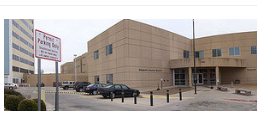
WICHITA, Kan. (AP) — The Sedgwick County Sheriff’s office says that a detention corporal has been arrested on multiple
photo Sedgwick County
counts of unlawful sexual relations with an inmate.
Sheriff Jeff Easter said Wednesday that authorities received a complaint from a third party on March 25 that a corporal at the Sedgwick County Jail and a female inmate had sexual contact.
Easter said that the corporal, who has not been identified, was arrested Wednesday on two counts of unlawful sexual relations and one count of attempted unlawful sexual relations.
The corporal, who is no longer with the sheriff’s office, had been an employee since October 2008. The woman is no longer in the custody of the Sedgwick County Jail.
The case will be handed over to Sedgwick County District Attorney Marc Bennett’s office for review.

 KANSAS CITY, Mo. (AP) — A Missouri and Kansas man have been indicted in two armed bank robberies.