We have a brand new updated website! Click here to check it out!

Obama in Cuba: Historic Castro summit

JOSH LEDERMAN, Associated Press
MICHAEL WEISSENSTEIN, Associated Press

HAVANA (AP) — Brushing past profound differences, President Barack Obama and Cuban President Raul Castro will sit down at Havana’s Palace of the Revolution. Their historic meeting Monday will offer critical clues about whether Obama’s sharp U-turn in policy will be fully reciprocated.

For Obama, there’s no better place than Havana to show engagement can do more than isolation to bring about tangible change in Cuba. Yet for Cubans, the glaring question is whether their own government is ready to prove the ambitious diplomatic opening is more than just talk.

Obama opened the first presidential visit to Cuba in nearly 90 years on Sunday when he landed in Havana. Strolling through grand cobblestoned plazas with his wife and daughters, Obama created an indelible image of the peacemaking that he and Castro are pursuing.

Specialty crop grant opportunity available from KDA

vegetable cropKDA

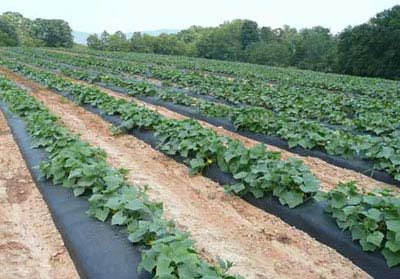
MANHATTAN–The Kansas Department of Agriculture (KDA) is accepting applications for the 2016 Specialty Crop Block Grant program. Funds for the program are awarded to the agency by the U.S. Department of Agriculture (USDA) Agricultural Marketing Service. The funds are in turn granted to projects and organizations that promote the competitiveness of specialty crops.

The purpose of the specialty crop program is to enhance the competitiveness of specialty crops. Specialty crops are defined by the USDA as “fruits, vegetables, tree nuts, dried fruits, horticulture, and nursery crops (including floriculture).” This opportunity supports the KDA’s mission of providing an environment that enhances and encourages economic growth of the agriculture industry in Kansas.

In 2015, Kansas received $319,420 for the grant program. Kansas is expected to receive approximately $284,000 in 2016.

Applications will be evaluated by a team of external reviewers. The team will rate proposals on their ability to successfully promote specialty crops in Kansas and to make a positive impact on the Kansas economy. Those recommendations will be submitted to the Kansas Secretary of Agriculture, who will make the final awards.

Applications are due to KDA no later than 5 p.m. on May 16, 2016. For more information and to download the 2016 application, go to bit.ly/KDAspecialtycropgrant.

Lawmakers worry Kansas can’t hit fairness target for school aid

school fundingJOHN HANNA, AP Political Writer

TOPEKA, Kan. (AP) — Republican lawmakers argue they may never be able to meet the Kansas Supreme Court’s demands for fairness in education funding.

They worry about creating yearly budget chaos as they constantly reshuffle dollars among local school districts.

The Senate could debate a bill this week that would redistribute a small part of the state’s annual aid to its 286 school districts to help the poorer ones at the expense of wealthier ones. It’s a response to a Supreme Court ruling last month that Kansas has shorted poor districts and schools must shut down in July unless lawmakers fix the problem.

GOP lawmakers said last week that they found it galling that the court rejected key parts of a law they enacted last year to make education funding more predictable year-to-year.

Woman dies after attempting u-turn in front of a semi

FatalAccident3COWLEY COUNTY- One person died in an accident just after 11:45a.m. on Sunday in Cowley County.

The Kansas Highway Patrol reported a 1999 Toyota Camry driven by Janice A. Tandarich, 79, Oologah, OK., was attempting to do a U-Turn on U.S.166 at 211th Road.

The driver made the turn in front of a semi.

The semi driver Thomas D. Walker, 50, Levaca, AR., was unable to avoid the collision with the Camry.

Tandarich was pronounced dead at the scene and transported to Rentz Mortuary.

Walker was not injured.
Both drivers were properly restrained at the time of the accident, according to the KHP.

Efforts underway in Kansas to protect nesting eagles, their babies

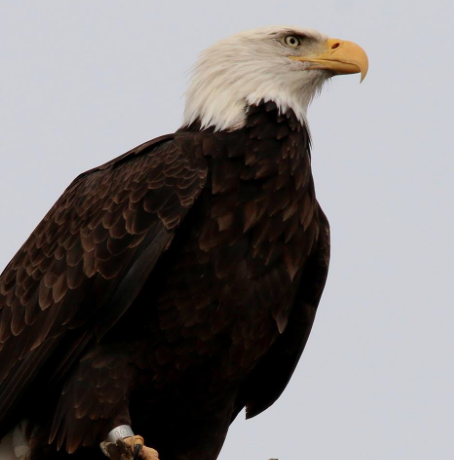
photo U.S. Army Corp of Engineers

TOPEKA, Kan. (AP) — Parks officials are taking steps to protect a pair of eagles and their babies who are nesting at a lake just east of Topeka.

Shawnee County workers — with the help of the Kansas Department of Wildlife, Parks and Tourism — placed two buoys this week in Lake Shawnee. The Topeka Capital-Journal reports that the goal is to keep boaters a safe distance from the shore near the tree where the birds are nesting.

Mike McLaughlin, of the Shawnee County Parks and Recreation Department, says people in boats and kayaks had been getting close to the birds trying to get photos. McLaughlin says the nest is still visible, especially with a good camera lens.

A parks police officer reported seeing at least two eaglets in the nest.

Kansas Lawmaker Consider Rainy-day Fund

By Miranda Davis

Rep. Helgerson
Rep. Helgerson

KU Statehouse Wire Service

TOPEKA – Organizations this week advocated for a bill that would create a rainy-day fund to provide a financial cushion for state budget shortfalls.

The budget stabilization fund could be used during times of economic downturn, advocates said. Money from the fund, which would be created by July 1, 2017, could only be allocated with approval of the legislature or the state finance council.

The bill, which was discussed Friday in the House Appropriations Committee, does not specify where the money would come from but mandates that the budget committee determine that before the fund is created.

The Kansas Chamber United for Business, the Pew Charitable Trusts, and the Kansas Center for Economic Growth (KCEG) all support the creation of a rainy day fund, but KCEG doesn’t think creating the fund is feasible right now.

“It is simply not realistic, given the fiscal crisis we are facing, to divert state revenue to a rainy day fund before we address the ongoing structural imbalance with our budget and achieve the statutorily required ending balance,” said Annie McKay, KCEG executive director.

Stephen Bailey, senior associate for the Pew Trust, said the fund is considered a best practice, and if Kansas creates one, it would join 46 other states that already have such funds.

“Just as families create rules for how and when to use their savings account versus their checking account, a rainy day fund will allow Kansas to be clear, in law, about the purpose and objectives you’re trying to achieve through saving,” Bailey said.

The legislation not only would mandate the creation of the fund but would also require the budget committee review and make recommendations on the fund during the 2016 fiscal year.

Rep. Henry Helgerson, D-Wichita, supported the fund, and said it can benefit both Democrats and Republicans.

“The reason you want to have that money there is because it protects the programs from the downturns,” Helgerson said. “You don’t go immediately in and start slashing programs for the needy. You have some cushion. The other side of it is, with the conservatives or the Republicans, you don’t want to put the state in a situation where you have to raise taxes.”

Missing Kansas inmate captured

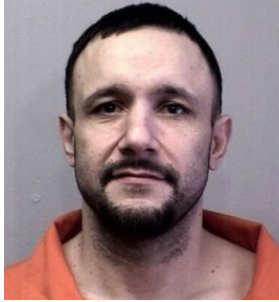
Struble - photo Kan. Dept. of Corrections
Struble – photo Kan. Dept. of Corrections

COWLEY COUNTY – A Kansas inmate missing since Wednesday is back in custody, according to prison officials in Winfield.

A tip led Correction’s Special Enforcement Officers to believe Bradley Wayne Storable, 37, was  at a family member’s home, according to a media release.

Struble was seen about midnight Wednesday during the prison’s inmate count. The Winfield Correctional Facility is a minimum-security facility where inmates are supervised, but the grounds are not fenced in.

Struble has been convicted of robbery, burglary and theft, according to the Kansas Department of Corrections.

He was sent to Winfield in February and was due to be released in October.

Kansas man sentenced for home invasion burglary, kidnapping

Anderson
Anderson

HUTCHINSON — One of the four suspects in two Kansas home invasion cases was found guilty of all charges Thursday by a jury in Reno County.

Dakota Anderson, 19, Hutchinson, was convicted of aggravated kidnapping; two counts of aggravated robbery, one count of aggravated battery and two counts of aggravated burglary for two home invasions in May of 2014.

One of the victims, a 92-year-old World War II veteran testified during the trial that he was awakened by three men who hit him in the head with a gun and then forced face down on his bed with a gun to the back of his head.
He says he was then robbed of a number of items including his war medals including his purple heart and gold and silver stars, $450.00 in cash, his van and some of his late wife’s jewelry.

Sentencing is scheduled for May 6.

KHP: Semi accident slows traffic on I-70

KHP photo of Sunday semi accident

GEARY COUNTY -A semi overturned on Interstate 70 Westbound near McDowell Creek Road just after 9 a.m. on Sunday..

The Kansas Highway Patrol reported the westbound lane was reduced to one lane, and will be for several hours until KDOT officials get the truck flipped over.

The KHP reported they had multiple vehicles drive by those working the accident at a high rate of speed.

KDOT is on scene directing traffic.

No injuries are reported

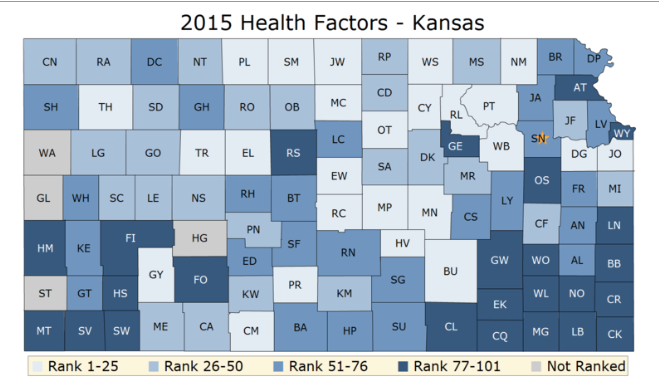
Annual Rankings Show Health Disparities Remain Among Kansas Counties

Click image to EXPAND

BY BRYAN THOMPSON
New county health rankings tell the same old story in Kansas.

The southeastern corner of Kansas remains the state’s least healthy region, according to the rankings released Wednesday by the Robert Wood Johnson Foundation and the University of Wisconsin Population Health Institute.

However, the Kansas county at the bottom of the list — Wyandotte — is next door to Johnson County, the state’s top performer.

Gianfranco Pezzino, senior fellow and strategy team leader at the Kansas Health Institute, says the big story in the annual rankings is the disparity from county to county.

“We have deep, deep differences among the poorest and the richest counties, and so as a consequence also among the healthiest and the least healthy counties,” Pezzino says.

He sees two main factors causing the variation among counties.

“The two best predictors of good or poor health are economic situation and education, and those two are very much linked to each other,” Pezzino says.

People with less education are more likely to have jobs that don’t provide economic security, he says, and that leads to what some researchers call “toxic stress.” As a result, they’re more likely to make lifestyle choices — smoking, for example — that are less healthy.

click image to EXPAND

“The cumulative effect of living a stressful life really takes a toll on people,” Pezzino says. “And when you are poor, that toll is even bigger. You are under continuous stress. Once again, you don’t know what you’re going to feed to your children this evening for dinner. And you don’t know if you’re going to have any kind of job that will allow you to pay rent next month. So the level of stress becomes really high. Every smoker will tell you, the first thing they do when they feel stress is reaching out for a cigarette.”

Pezzino says Wyandotte County has the highest smoking rate in Kansas and poor performance on a host of other measures. While officials and community leaders in Wyandotte County are working to address those issues, it takes time to see a change in the ranking.

“We call these the 2016 rankings. In reality, the data that’s based on spans from 2007 to 2014 — and that’s just for a few measures in 2014,” Pezzino says. “Recent efforts, even if they have produced results, those results are not captured in this report. It may take a full generation before they can really see the results of their investment. But they’re doing wonderful things, and they’re really addressing the right factors.”

Bryan Thompson is a reporter for KHI News Service in Topeka, a partner in the Heartland Health Monitor team.

Kansas man dies after eject in rollover accident

FatalAccident3WYANDOTTE COUNTY – A Kansas man died in an accident just after 7p.m. on Saturday in Wyandotte County.

The Kansas Highway Patrol reported a 1996 Toyota 4-Runner driven by Brayan Josue Valladres Varela, 24, Kansas City, was eastbound on Interstate 70 in the left exit only lane to 5th street.

The driver made a lane change to the right to continue eastbound on on the Interstate and the SUV went off the roadway and overturned multiple times ejecting the driver out of the sunroof.

Valladres Varela was pronounced dead at the scene and transported to Frontier Forensics.

He was not wearing a seat belt, according to the KHP.

Artificial walleye spawning producing results

artificial walleye spawningKDWPT

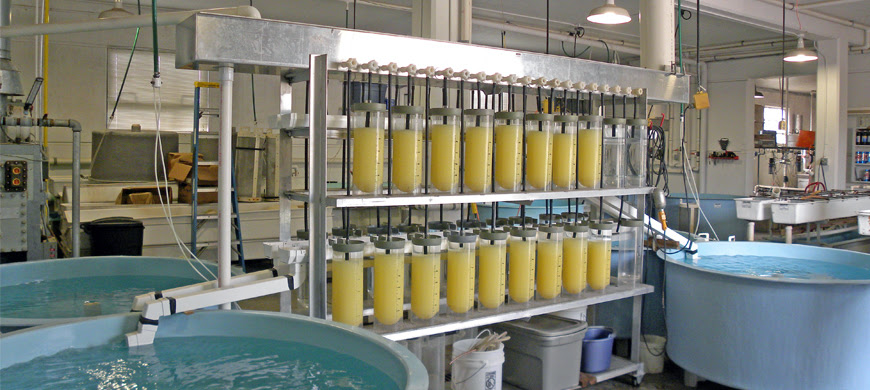
PRATT – Maintaining healthy fish populations across the state that meet the desires of today’s anglers and fit within budget restraints is no easy feat, but Kansas Department of Wildlife, Parks and Tourism (KDWPT) Fisheries Division staff thrive in the face of this challenge. Walleye are popular with anglers, but few lakes in Kansas provide the necessary elements for adequate natural reproduction. The answer? Artificial spawning.

Every year about this time, fisheries biologists can be seen working tirelessly at select Kansas lakes, setting nets to capture spawning walleye. Eggs of ripe females are collected, and then taken to a station where they are fertilized with milt, or sperm, taken from male walleyes caught from the same body of water. After fertilization, the eggs are immediately delivered to the Pratt and Milford fish hatcheries where fish culturists work around the clock to ensure high hatch and survival rates of young walleye, which are then stocked into Kansas lakes as fry, or raised to a larger size for stocking. Sauger are also produced to ensure a supply of sauger males. Some walleye eggs are fertilized with sauger milt to create the saugeye, a popular hybrid.

Last year, the KDWPT Walleye Culture Program harvested nearly 100 million walleye eggs and produced the following for Kansas waters:

WALLEYE

-38 million walleye fry

-580,000 walleye fingerlings

-6,500 walleye intermediates

SAUGER

-2.7 million sauger fry

-More than 20,000 sauger fingerlings

SAUGEYE

-More than 6 million saugeye fry

-Approximately 310,000 fingerlings

This year, staff hope to harvest more than 100 million eggs and increase walleye production to stock 48 million walleye fry, and 1.2 million walleye fingerlings.

It’s hard to believe walleye would need any assistance in producing young of their own, especially since large females can produce upwards of 300,000 eggs, but research has shown less than 10 percent of naturally-spawned walleye eggs will successfully hatch. Thanks to the efforts of KDWPT’s hatchery staff, hatch rates can be as high as 70 percent in a controlled setting.

In addition to walleye, KDWPT hatcheries also produce bluegill, channel catfish, crappie, largemouth bass, redear sunfish, sauger, saugeye, smallmouth bass, striped bass, and wipers.

For more information on KDWPT hatcheries and the fish they produce, visit www.ksoutdoors.com and click “Fishing/Hatcheries.”

EPA announces applications for Presidential Innovation Award for Environmental Educators

epaEPA

LENEXA–Applications are now being accepted for the 2015-2016 Presidential Innovation Award for Environmental Educators (PIAEE). The U.S. Environmental Protection Agency (EPA), in partnership with the White House Council on Environmental Quality (CEQ), administers this award to honor, support and encourage educators who incorporate environmental education in their classrooms and teaching methods.

michael hotz
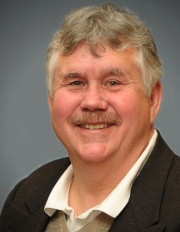
Michael Hotz

Last year’s winner in the EPA Region 7 was Michael Hotz, of Wyandotte High School.

Applications for the 2015-2016 PIAEE program are due May 16, 2016. This program recognizes outstanding K-12 teachers who employ innovative approaches to environmental education and use the environment as a context for learning for their students.

Up to two teachers from each of EPA’s 10 regions, from different states, will be selected to receive this award. Applicants will be evaluated based on five primary factors: innovation, achievement, service to the community and underserved populations, leadership, and integration of environmental education.

Last year, Dr. Michael Hotz, of Smithville, Mo., a 31-year veteran science educator at Wyandotte High School in Kansas City, Kan., was among 27 PIAEE honorees nationwide. Hotz was the sole winner for 2014-2015 from EPA Region 7, which includes Iowa, Kansas, Missouri, Nebraska, and nine tribal nations.

For more information, and details on how to apply for the PIAEE awards, visit: https://www.epa.gov/education/presidential-innovation-award-environmental-educators.

Copyright Eagle Radio | FCC Public Files | EEO Public File