We have a brand new updated website! Click here to check it out!

MORAN’S MEMO: After visiting GITMO, I remain opposed to closure

Sens. Moran, Gardner and Daines meet Feb. 29 with Joint Task Force Guantanamo Commander Rear Adm. Peter J. Clarke, and Deputy Commander Brig. Gen. Jeffrey W. Burkett.

The headlines are hard to ignore: “Freed Guantanamo Bay Detainee Promotes Jihad in Somalia,” states a Feb. 26 ABC News report; “Several More Ex-Guantánamo Detainees Suspected of Militancy,” shouts a March 7 New York Times piece; and “Ex-Gitmo Detainees Returning to Terrorism Double Under Obama,” reads a March 8 article from The Hill.

Yet, for President Obama, these realities are simply an inconvenience. Shortly after taking office, he ordered the closure of the detention facility at Guantanamo Bay (GITMO) within one year.

Now, more than seven years later, Republicans and Democrats, the American people and military leaders stand in staunch opposition to his proposal to close GITMO and move detainees to American soil. With threats from Iran, the rise of the Islamic State of Iraq and the Levant (ISIL), a resurgent Russia, the military build-up by China and an unpredictable North Korea, the president should focus on enhancing our national security and protecting the American people rather than putting time and attention toward closing GITMO.

Yet, the president’s desperate push continues as the administration releases GITMO detainees at a frightening rate – creating an unnecessary risk to America. In fact, just this week the Office of the Director of National Intelligence reported that nearly a third of detainees released from GITMO have re-engaged in terrorism. And, in just one year, 12 detainees released by the president have re-engaged with terror networks.

President Obama recently submitted a “plan” to Congress in a last-ditch effort to close GITMO. The flawed plan confirms what we already know: This administration is incapable of presenting a comprehensive, legally justifiable closure and relocation strategy that maintains the safety and security of Americans. The Secretary of Defense Department has confirmed it is against the law, and U.S. Attorney General Loretta Lynch has affirmed on multiple occasions that, “the law currently prohibits a transfer to U.S. soil.”

Unfortunately, the president’s track record of executive overreach shows he has little regard for the rule of law.

This is something that is of particular concern to Kansans, as one of the U.S. facilities being considered by the president to detain GITMO terrorist detainees is the U.S. Disciplinary Barracks at Fort Leavenworth. Fort Leavenworth’s 14,000 soldiers and families and the greater Kansas City-region should not be forced to unfairly bear the burden and consequences that accompany detaining terrorists. Additionally, the critical mission of the Command and General Staff College in educating military members from ally nations across the world would be compromised. Foreign military partners will take into consideration the proximity of detainee terrorists whose allegiance to terror organizations brought devastation and terror to their home countries.

To confirm my belief that detainees should remain at GITMO, I led a congressional visit this month with Senators Cory Gardner of Colorado and Steve Daines of Montana. We spoke with military leaders including Joint Task Force Guantanamo (JTF-GITMO) Commander Rear Admiral Peter J. Clarke. His team oversees the detainees firsthand, and they provided unfiltered insights and details regarding their 24/7 mission.

The mission of JTF-GITMO is difficult as they safeguard our nation from those who wish to do us harm. However, the service members we met on the ground – including several Kansans – are fully committed to carrying out their duties. The facilities themselves are among the best in the world. They are secure, isolated and our military standing guard executes their responsibilities with the highest degree of professionalism.

As the United States continues to face threats of terrorism and conducts combat operations against ISIL, I believe captured militants should be held at Guantanamo Bay. I introduced a Senate Resolution this week with Sen. Daines and several of my Senate colleagues to push to have ISIL captives detained at GITMO. I also joined Sen. Roberts in introducing a Senate Resolution that once again reiterates Congress’ strong opposition to the administration’s unlawful plan to move detainees to the United States.

I remain committed to blocking the transfer of Guantanamo detainees anywhere in the United States, but especially to Fort Leavenworth. The president should shift his priorities to focus on threats to our nation across the globe, and away from fulfilling a flawed campaign promise.

Jerry Moran, R-KS, is a U.S Senator.

Anti-violence group opens rare center for LGBTQ in Kansas

KANSAS CITY, Mo. (AP) — A quiet office in a Kansas City entertainment district offers a rare space for LGBTQ people to find help in times of crisis and several other social services.

The Kansas City Anti-Violence Project recently opened the only domestic violence and sexual assault services center for lesbian, gay, bisexual and transgender people in Missouri, Kansas, Nebraska and Iowa. Advocates say such centers are helpful to populations who are still misunderstood.

While the project does not provide overnight shelter for domestic violence victims, it will find hotels or other safe housing. It also provides a 24-hour crisis line and services such as clothing, food, job counseling and group meetings.

Executive Director Justin Shaw says project is a step forward in helping LGBTQ people but much more needs to be done.

Kan. constitutional amendment to protect your right to hunt, fish expensive

courtesy photo
courtesy photo

By Johanna Hecht

KU Statehouse Wire Service

TOPEKA – Lawmakers are discussing a state constitutional amendment to protect Kansans’ right to hunt, fish and trap wildlife, with the hope the issue can be put on the ballot in November.

The Senate Federal and State Affairs Committee held a hearing Wednesday on House Concurrent Resolution 5008, which passed the House 117-7 on Feb. 22. If approved, the amendment would help ensure the protection of hunting, fishing, and trapping rights for generations to come, supporters say. The Committee Report recommended the resolution be adopted by Committee on Federal and State Affairs

The Kansas Bill of Rights currently states: “A person has the right to keep and bear arms for the defense of self, family, home and state, for lawful hunting and recreational use, and for any other lawful purpose.”

The proposed amendment gives people the constitutional right to hunt, fish and trap “including by the use of traditional methods, subject to reasonable laws and regulations,” and it says that “public hunting and fishing shall be the preferred means of managing and controlling wildlife.” The bill does not define traditional methods.

Travis Couture-Lovelady, state liaison for the National Rifle Association (NRA), says the bill would ensure future wildlife conservation and management decisions are based on scientific research in order to preserve Kansas’ hunting heritage.

“I don’t care about tomorrow. I want to do things for the benefit of Kansans 50 and 100 years from now, and I think that is what this (amendment) will do,” said Christopher J. Tymeson, the chief legal counsel for the Kansas Department of Wildlife, Parks and Tourism.

Currently, 19 states have adopted some form of hunting, fishing and trapping rights, the National Conference on State Legislatures (NCSL) reports. Proponents of such amendments believe they are necessary because of “increasing urbanization, decreased habitat, declining numbers of sportsmen, and more restrictions on hunting,” NCSL reported.

States that have not adopted constitutional protection for hunting are beginning to see the negative effects, supporters said.

Couture-Lovelady explained that he works with Colorado government leaders who wish the state had put similar provisions in its constitution before the state became urbanized. This urban population doesn’t understand or value hunting traditions, he said, and a recent surge in wildlife population is causing Colorado legislators to revisit current trapping bans.

However, Tymeson told legislators a constitutional amendment may face opposition.

“There is a potential that this issue could serve as a rallying cry for anti-hunting, fishing, and trapping groups, where none currently exist in Kansas,” Tymeson said.

He also warned that opposition might come from individuals who view this as a firearms issue.

Rep. Sydney Carlin, D-Manhattan, who voted in opposition of the bill on Feb. 22, said it is rare for a constitutional amendment to pass, mainly because it’s costly. She says she doesn’t understand the purpose of the bill since Kansans already have the right to hunt and fish.

“I just didn’t think it raised itself to the level of necessary constitutional change,” Carlin said.

Sen. Oletha Faust-Goudeau, D-Wichita, has raised concerns about how the amendment would be placed on the ballot.

“It’s a presidential election (year), and you’re going to have a lot of names on that ballot, and we have talked about voters having fatigue voting where they don’t go all the way down (on the ballot),” Faust-Goudeau said.

She feels it is important to include the necessary critical language but that “less is best” in this case.

Secretary of State Kris Kobach estimates that HCR 5008 would require approximately $30,000 from the state’s general fund. Additionally, counties would be required to spend a total of $76,000 for ballot programming costs.

The bill will move to the full Senate and must pass by a two-thirds majority vote. If approved by the legislature, the amendment would be placed on the Nov. 8 ballot for approval by voters.


Edited by Leah Sitz


2 arrested in Kansas after baby, explosive found in van

Dollen- photo Jackson Co. Sheriff

HOYT, Kan. (AP) — A Kansas man and woman are charged after authorities say sheriff’s deputies found a 1-year-old baby and an improvised explosive device in a stolen van.

The Topeka Capital-Journal reports that Jackson County authorities arrested 34-year-old Christopher Dollen of Valley Falls and 28-year-old Cassandra Reveles of Denison on Friday.

Sheriff Tim Morse says deputies made the arrests after responding to a report Friday night of a suspicious vehicle parked near a pasture in Hoyt.

Reveles- photo Jackson Co. Sheriff

Morse says authorities found the baby, the explosive device, methamphetamine, marijuana and drug paraphernalia inside the van, which had been reported stolen in Shawnee County.

Dollen and Reveles are charged with various felonies including drug counts, child endangerment and trespassing. It’s unclear if they have attorneys.

1 dead after 6-vehicle Kansas hit and run crash

khi emergency policeSHAWNEE COUNTY – Law enforcement authorities in Shawnee County are investigating a fatality accident involving 6 vehicles.

Just before 10:30 p.m. on Saturday, police responded to report of a collision involving a Capital City Cab and a Nissan Altima at 5322 Southwest 22nd Place in Topeka, according to a media release from police.

The male driver of the Altima and a female passenger drove away before officers arrived. As they drove away, the Nissan hit two parked vehicles, according to police. The driver of the cab was transported to a local hospital.

Just before 10:40 p.m. officer received another report that the Nissan had been involved in another collision on Southwest 6th between Fairlawn and Gage.

The driver of the other vehicle followed the Nissan and relayed information on the direction of travel to police.

The Nissan hit a fourth vehicle at 6th Street and MacVicar and a 5th vehicle, a Chevy Trailblazer, at 29th and Topeka Boulevard.

The driver of the Nissan was transported to a hospital with life-threatening injuries. The passenger was pronounced dead at the scene. The woman driver of the Trailblazer was also transported for treatment.

Names of the victims have not been released as the investigation continues, according to police.

Shoplifting bottled water leads to Kansas drug arrest

Myers-photo Kan. Dept of Corrections

HUTCHINSON – A Kansas man was taken to jail on Wednesday after police responded to a grocery store after report of a person shoplifting.

When police made contact with William Meyers III, 27, Hutchinson, they discovered that he had what they believe was in possession of a distribution amount of marijuana as well as methamphetamine and related drug paraphernalia.

He is alleged to have stolen a bottle of water from the store.

When police attempted to arrest him for shoplifting he allegedly tried to run from officers, but was quickly apprehended.

He then pulled a black case from his pants and threw it.

Inside the bag, officers reported they found five small baggies of suspected marijuana, as well as another bag they believe was methamphetamine.

Myers is being on suspicion of possession of marijuana with intent to distribute, possession of meth, possession of drug paraphernalia, felony interference with law enforcement and a misdemeanor count of theft.

In court Thursday, Myers alleges that officers used unreasonable force when they apprehended him.

His bond is set at $12,500.

It’s Severe Weather Awareness Week in Kansas

severe wx awareness weekKDEM

TOPEKA–Old Man Winter may be heading for the door – although he may decide to hang around for a while longer; after all, this is Kansas. But even when he is gone, Kansans will still have to contend with Mother Nature and her annual “In like a lion” arrival that heralds severe weather season, bringing with it the potential for tornadoes, severe thunderstorms, high winds, hail, and flooding.

To remind Kansans to be prepared, Gov. Sam Brownback has signed a proclamation designating March 14-18 as Severe Weather Awareness Week in Kansas.

During the week, the Kansas Division of Emergency Management will urge Kansans to check their emergency kit supplies for their home, office and vehicle, and review their emergency plans to make sure they are prepared for whatever severe weather is thrown our way.

“It doesn’t take a lot of time or a lot of money to ensure you and your family are prepared,” said Angee Morgan, KDEM deputy director. “If you don’t already have an emergency kit, start now by buying a few extra batteries and high-energy snacks during your weekly shopping. Throw a change of clothes, an old pair of glasses and a pair of shoes in your kit.

“Check your first aid kit and make sure it’s complete and up-to-date,” said Morgan. “Doing a little bit each week makes it easier to prepare for unexpected events, particularly when you get the entire family involved in gathering the supplies and making an emergency plan.

“If you don’t have a specially-constructed storm shelter or a basement, do you know where the safest place in your home is? Do you know how to safely shut off the gas or electricity? If you become separated, do you have a meeting area? How will you communicate with family members who may not be at home when a disaster hits or your loved ones who will be wondering about your safety? These are the things you will need to think about when making your plan.”

Morgan said more information on emergency preparedness and building an emergency kit can be found online at www.ksready.gov.

Kansans are also urged to take part in the statewide tornado safety drill Tuesday, March 15, at 6:30 p.m. across most of the state. If severe weather is imminent for a community, the tornado drill will be cancelled for that community.

According to the National Weather Service, the first tornado of 2015 occurred April 2 in Labette County and the last tornado was on Nov. 16. Last year, there were 33 days with more than one tornado reported. The most tornadoes reported in one day was 22.

In all, there were 126 confirmed tornadoes in the state last year, 85 more than hit the state in 2014. On average, Kansas experiences 96 tornadoes a year.

Relocating elephants from Africa to Kansas a huge job

Two of the elephants that made the journey.- courtesy photo

WICHITA -With all the activity involved in transporting the new elephants to the Sedgwick County Zoo on Friday, the Sheriff’s Department, who helped escort the elephants into town, shared the Omaha Zoo’s statement on why these elephants had to be rescued and relocated.

Seventeen African elephants were en route from drought-stricken Swaziland to the United States as part of an ongoing rescue mission to provide safe haven and a more secure future at three accredited zoos in Wichita, Omaha, and Dallas

“The elephants are doing well, and we’ve just received word from the veterinarians with them on the flight that they are eating, drinking and resting,” said Dennis Pate, executive director and CEO of Omaha’s Henry Doorly Zoo and Aquarium. “We are ready to welcome them to their new homes.”

Relocating elephants from Swaziland is an extremely complex logistical process undertaken with great care and attention to detail. No aspect of the process can be rushed. The three partner zoos and wildlife officials in Swaziland have been carefully planning for months and have been coordinating details since the U.S. Fish and Wildlife Service issued the permit to move these animals. The intricacy of such a move has required coordination with multiple governmental agencies, all of whom have been kept apprised of plans along the way.

“There has been a lot of false, misleading information spread by activists about this rescue mission, but the permit to relocate these elephants is legal and was issued after an intense review and approval by the U.S. Fish and Wildlife Service. The zoos were legally entitled to transport the elephants, and we knew we needed to act without further delay because the situation in Swaziland is deteriorating,” said Gregg Hudson, president/CEO of the Dallas Zoo. “Here in Dallas, and in Omaha and Wichita as well, our communities can take pride in helping save these elephants from certain death and giving them a healthy future at our zoos.”

Elephants in the crates arrive in Wichita

The drought is causing one of the most significant health threats to the people and wildlife in the region, and Swaziland has declared a national state of emergency. The United Nations is providing food assistance to more than 200,000 people in the country.

Swaziland’s conservation management plan called for removal of 18 elephants from the parks to ease overpopulation of elephants and provide additional space and resources for critically endangered black rhinos.

The urgency of the situation increased in December when the three zoos were notified by wildlife managers in Swaziland of the death of one of those elephants that was awaiting relocation to the U.S. The death resulted from an acute gastrointestinal medical condition, which was impossible to treat. The zoos recognized it was their duty to act promptly on behalf of the remaining 17 elephants, by relocating them quickly so they could receive the veterinary care the zoos can provide. They are now en route to the U.S.

“In addition to the well-being of these elephants, we are resolute in our commitment to Swaziland’s conservation efforts, and are continuing to contribute funds for food being trucked in for the animals living in the national parks that desperately need it,” said Hudson. “We have a long-term commitment to the conservation of elephants and critically endangered rhinos in Africa that are facing extreme threats to their survival from poaching, drought, loss of habitat and human conflict. We are proud of our ongoing conservation partnership with the people of Swaziland.”

For more information about this relocation project and the drought conditions threatening Swaziland’s people and wildlife, please visit: www.RoomForRhinos.org.

Poll Shows Strong Support For Medicaid Expansion in Kansas

Poll results released Monday by the Kansas Hospital Association show a majority of Kansans continue to favor expanding Medicaid to cover more low-income adults. PUBLIC OPINION STRATEGIES
Poll results released Monday by the Kansas Hospital Association show a majority of Kansans continue to favor expanding Medicaid to cover more low-income adults.
PUBLIC OPINION STRATEGIES

By JIM MCLEAN

Poll results released this month by the Kansas Hospital Association show a majority of Kansans continue to favor expanding Medicaid to cover more low-income adults.

The statewide poll conducted in mid-February found that 62 percent of Kansas voters supported expanding KanCare, the state’s privatized Medicaid program, to cover approximately 150,000 non-disabled adults earning up to 138 percent of the federal poverty level, or $16,243 for an individual and $33,465 for a family of four in 2015.

Support increased to 76 percent when respondents were told that an expansion bill introduced by the hospital association was “budget neutral” and would provide coverage only to U.S. citizens who helped pay for their care.

“These are things that we’ve heard from the (Brownback) administration, from legislators and from Kansans that are really important,” said Cindy Samuelson, a KHA spokesperson.

The KHA bill, called The Bridge to a Healthy Kansas, was modeled after a so-called red state expansion plan implemented by Republican Gov. Mike Pence in Indiana.

The poll of 500 likely voters, which had a margin of error of plus or minus 4.38 percent, found majority support for KanCare expansion among Republicans, Democrats and independent voters. When “base” Republicans were given a description of the KHA bill, 74 percent said they supported it.

Previous KHA polls also have found strong support for expansion . But public opinion on the issue hasn’t reduced opposition among Republican legislative leaders, who have expressed doubt that the federal government would cover no less than 90 percent of expansion costs as the ACA requires it to do.

More recently Gov. Sam Brownback and GOP leaders have said they don’t want to expand basic health coverage to non-disabled adults until all Kansans with developmental and physical disabilities are getting the support services they need. Currently, thousands are on waiting lists for such services.

Like other recent polls, the KHA survey found that a large majority of Kansans believe the state generally is headed in the wrong direction. When asked, “Would you say that things in Kansas are going in the right direction, or have they pretty seriously gotten off on the wrong track?” 67 percent answered “wrong track.” That’s up from 63 percent in the KHA poll conducted in April of last year.

Download the Kansas Statewide Survey Questions and Results

Several issues — from the state’s ongoing budget problems to its rejection of expansion — are combining to make Kansans pessimistic, Samuelson said.

“That could mean lots of different things, but we believe the fact that the state has not made a decision to try a Kansas solution for expanding the KanCare program is one of the factors,” she said.

No hearings have been held on the KHA expansion bill in the House or Senate and none are scheduled.

Jim McLean is executive editor of KHI News Service in Topeka, a partner in the Heartland Health Monitor team.

How competitive is the Kansas insurance market under the ACA?

khi logoBy LISA JONES
KHI

TOPEKA–The Brookings Institution has released a report on six states—including Kansas—which evaluated the competitiveness of the health insurance marketplaces created by the Affordable Care Act (ACA). Kansas was chosen for the study because it managed to attract four insurance companies in 2014 to compete in the marketplace, even though it is a mostly rural state.

The Kansas Health Institute (KHI) conducted the field research for the Kansas portion of the study, which included interviewing stakeholders involved in the ACA marketplace in Kansas, including health care providers, health insurance agents and former insurance regulators. KHI is a member of a network of health policy and public management experts coordinated by the Rockefeller Institute of Government and the Brookings Institution to study the ongoing implementation of the ACA at the state level. A previous report by KHI described the early implementation process in Kansas.

The report was requested by the Office of the Assistant Secretary for Planning and Evaluation (ASPE) of the U.S. Department of Health and Human Services (HHS). The purpose of the study was to focus on states that had one or more potential indicators of “insufficient competition”—such as few insurers offering plans, low enrollment, high premiums, inadequately informed consumers or sparsely populated rural areas—and to understand how competition was working in these markets and what might make it work better.

Although the insurance markets vary among the six states (Alaska, Florida, Kansas, North Carolina, Ohio and Texas), some common themes emerged, including:

  • Despite education and outreach efforts by insurance agents, navigators and health policy experts, many consumers lack a good understanding of health insurance and how plan provider networks and premiums are related to out-of-pocket costs such as deductibles, co-payments and co-insurance.
  • The size of the population in a state’s insurance market is an important determinant of insurer participation.
    The ability of insurers to negotiate favorable contracts with health care providers is key to their success and interest in participating in an insurance market.
  • Enrollment in marketplace plans is generally driven by low premiums, which has implications for consumers who purchase lower-cost plans that may not meet their health care or financial needs.

The report includes recommendations to improve competition, including:

  • Encourage insurers to co-brand and risk-share with established health care provider systems as a way to obtain price concessions for their marketplace plans.
  • Have navigator/assistor organizations provide culturally and linguistically sensitive, simple explanations of health insurance that also remind people of the need to have coverage to protect themselves and their families.
  • Stress the emphasis on available subsidies and rising penalties.
  • Provide larger fees or commissions for agents/brokers to motivate them to assist and enroll eligible participants through the marketplace.

Download the Report: Early Assessment of Competition in the Health Insurance Marketplace.

The Kansas Health Institute delivers credible information and research enabling policy leaders to make informed health policy decisions that enhance their effectiveness as champions for a healthier Kansas. The Kansas Health Institute is a nonprofit, nonpartisan health policy and research organization based in Topeka, established in 1995 with a multi-year grant from the Kansas Health Foundation.

After third trial, jury finds Kansas man guilty of murder

Walker-photo Kan. Dept. of Corrections

LAWRENCE, Kan. (AP) — A jury has convicted a 31-year-old man in the 2014 death of another man.

The Lawrence Journal World reports that Dustin Walker was found guilty Friday of first-degree felony murder in the March 2014 death of 39-year-old Patrick Roberts. It was Walker’s third trial in connection with Roberts’ death after two previous juries failed to reach decisions on the murder charge.

Walker was accused of breaking into Roberts’ duplex to steal marijuana and money. During the incident, police say, Walker shot and killed Roberts.

Another defendant, Archie Robinson, was found guilty earlier of first-degree murder and aggravated burglary in Roberts’ death. He was sentenced to life in prison without the possibility of parole for 20 years.

Sentencing for Walker is April 29.

Growing effort to repeal Common Core education standards in Kansas

Courtesy photo
Courtesy photo

MELISSA HELLMANN, Associated Press

TOPEKA, Kan. (AP) — An effort to repeal national educational standards in math and reading is moving forward in the Kansas Legislature.

The House Education Committee approved a bill last month that would prohibit school districts from using Common Core standards. The Kansas Department of Education says the standards will better prepare students for college and life, but critics say they set a national curriculum instead of letting local leaders decide what’s best for students.

House Speaker Ray Merrick’s spokeswoman Rachel Whitten said the bill was sent back to committee to remove the most-opposed provisions. Common Core supporters say they worry that signals the bill could pass this year.

The standards call for a classroom focus on analytical skills instead of rote memorization.

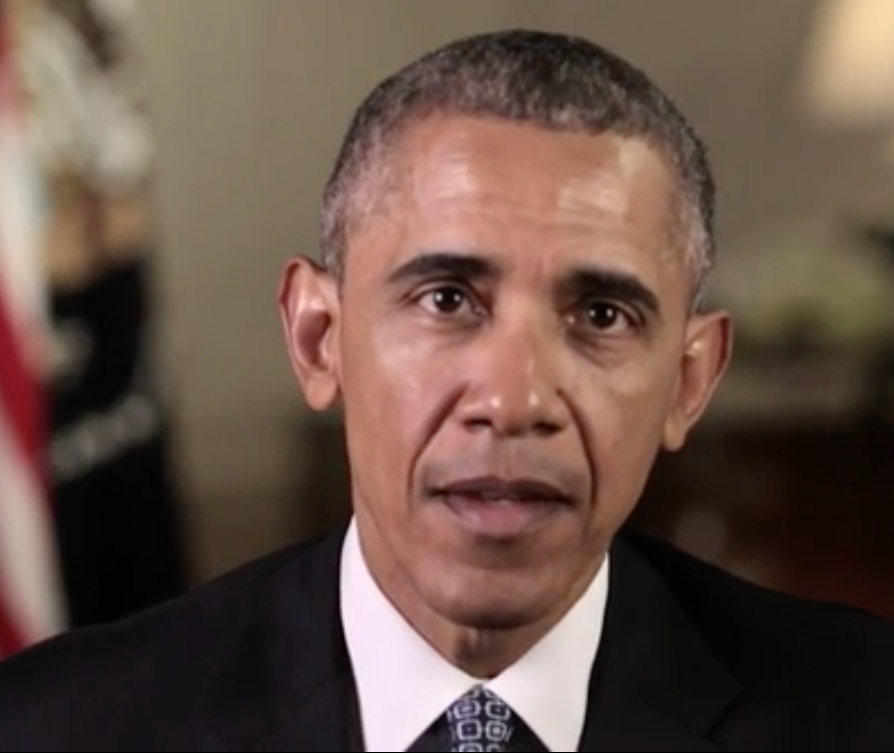
Obama: Politicians should unite, not divide US

Screen Shot 2016-03-12 at 12.11.24 PMDARLENE SUPERVILLE, Associated Press

DALLAS (AP) — President Barack Obama says politicians who aspire to lead the country should try to bring Americans together, not divide them.

Obama says candidates who won’t do that don’t deserve the public’s support and votes.

He says the best leaders remind Americans that what they have common is more important than their differences.

The president spoke a day after protesters forced Republican presidential candidate Donald Trump to cancel a campaign event in Chicago on Friday.

Trump’s political rivals and others blame him for using language they say is sowing division across the country rather than unity.

Obama commented at a Democratic Party fundraiser Saturday in Dallas.

Party officials say about 750 supporters paid up to $33,400 per person to attend the event at Gilley’s saloon.

Copyright Eagle Radio | FCC Public Files | EEO Public File