TOPEKA – If you’re a water rights owner, get ready to pay higher fines if you don’t report your water usage on time.
The House Committee on Agriculture and Natural Resource on Monday discussed Senate Bill 337, which will place tougher penalties on water right owners who do not report usage to Kansas Department of Water Resources.
Currently, the state can impose a $250 fine. SB 337 proposes to implement a $250 fine if water usage is not reported once but increases the fine to $1,000 if water usage is not reported two consecutive times.
Supporters say the bill is needed because some water rights owners are ignoring reporting requirements. The bill applies to people and establishments that use water for agricultural, industrial or municipal purposes. It includes farmers, city governments, businesses and irrigators, said committee chair Rep. Sharon Schwartz, R-Washington.
“This bill is for people to comply (with) current law. Sometimes, we have to find ways to make them fall in line just like a lot of other issues that are out there,” said Schwartz.
Kent Askren, director of public policy for the Kansas Farm Bureau, spoke in favor of Senate Bill 337. Askren believes the greatest tool for getting people to report water use is to increase the penalties for those who fail to do so.
“This bill is important because it will help encourage uniform water usage reporting all across our state,” Askren said. “It has reasonable guidelines for penalties, and . . . the main stimulus for the bill would be the … threat for possible suspension of water rights if water usage is not submitted.”
Askren said, however, that only a small percentage of water owners do not report on time.
LAWRENCE, Kan. (AP) — Parents of a former University of Kansas student who says she was raped in university housing are suing the university, claiming its housing is unsafe.
The university, however, says its campus and housing are safe and that it works hard to ensure student safety.
In the lawsuit filed Friday in Douglas County, James and Amanda Tackett’s daughter, Daisy Tackett, says she was a freshman at the University of Kansas when she was raped in a university apartment by another student-athlete in 2014.
The lawsuit, which seeks class-action status, claims the university has misled the public by representing campus housing as safe.
The Associated Press doesn’t normally name rape victims, but Daisy Tackett, a former varsity rower, told The Lawrence Journal-World and The Dallas Morning News she wanted her name used.
HARVEY COUNTY – Law enforcement authorities in Harvey continue to search for a suspect involved in the chase of a stolen car that left two officers with injuries.
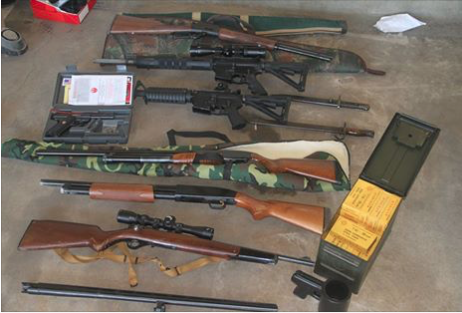
On Friday, the Harvey County Sheriff released a photo of some of the weapons and ammunition recovered from the stolen car.
Authorities reported they have a suspect of interest developed who they know through past history has a habit of doing drugs and drinking.
Those combinations of drug use, alcohol consumption and firearms are never a good thing, according to Harvey County Sheriff T. Walton
Just after 10p.m. on Tuesday, two law enforcement officers were injured in the accident during a pursuit.
The Kansas Highway Patrol reported a Harvey County Sheriff 2015 Chevy Tahoe driven by Deputy James Slickers, 43, Halstead, followed by a Kansas Highway Patrol 2015 Dodge Charger driven by Trooper Joseph Owen, 33, Newton, were southbound on Hertzler Road four miles west of Sedgwick attempting to stop a fleeing vehicle.
Stolen vehicle from Tuesday’s chase -photo Harvey County Sheriff
Sheriff Deputies had responded to multiple vehicle burglaries in the 2300 block of N. Oliver Road. While speaking with the victims of the burglaries a call came out of another burglary occurring at the Newton City/County Airport.
Deputies approaching the area observed a vehicle traveling at a high rate of speed away from the airport. Deputies pursued the vehicle, a Ford Escape stolen from Butler County.
During the course of the chase, the driver threw numerous objects from the vehicle including a shot gun, rifle, and paperwork belonging to the earlier reported vehicle burglaries. The driver avoided three sets of spike sticks placed at various locations in Harvey County. Speeds reached 100 mph.
When the suspect’s vehicle slowed to turn onto Southwest 84th, the Charger rear-ended the Tahoe.
The collision caused the Deputy’s vehicle to spin into a ditch and hit a telephone pole. The Trooper’s vehicle was disabled on the roadway.
Slickers and Owen were transported to Newton Medical Center with minor injuries.
The chase continued into Sedgwick County where Deputies lost sight of the suspect vehicle in the area of Tyler and 77th.
A citizen called to report a vehicle in a field at 73rd and Ridge road. The vehicle was the Ford Escape that had been in the chase. The driver of the vehicle was not located. Inside the Ford Escape were numerous weapons and stolen property, including a $14,000 airplane prop from the earlier burglaries.
The case has been turned over to the Harvey County Sheriff Investigators for follow up and documentation of all stolen property.
————–
HARVEY COUNTY – Two law enforcement officers were injured in an accident during a pursuit just after 10p.m. on Tuesday in Harvey County.
The Kansas Highway Patrol reported a Harvey County Sheriff 2015 Chevy Tahoe driven by Deputy James Slickers, 43, Halstead, followed by a Kansas Highway Patrol 2015 Dodge Charger driven by Trooper Joseph Owen, 33, Newton, were southbound on Hertzler Road four miles west of Sedgwick attempting to stop a fleeing vehicle.
When the suspect’s vehicle slowed to turn onto Southwest 84th, the Charge rear-ended the Tahoe.
Slickers and Owen were transported to Newton Medical Center with minor injuries. Both drivers were properly restrained at the time of the accident, according to the KHP.
WICHITA,- A Wichita woman pleaded guilty Wednesday in a sex trafficking case in which a 17-year-old girl was the victim, according to U.S. Attorney Barry Grissom.
Natasha L. Harper, 33, Wichita, Kan., pleaded guilty to one count of transporting the girl across state lines for the purpose of prostitution.
In her plea, Harper admitted she transported the girl from Kansas to Michigan, Illinois and Iowa and back to Kansas so the girl could engage in sex acts for money. Harper, who placed ads on an adult Web site offering the girl’s services, received part of the money.
Sentencing is set for July 7, 2016. The parties have agreed to recommend a sentence of 90 months in federal prison followed by 10 years on supervised release. Grissom commended the Wichita Police Department and Assistant U.S. Attorney Jason Hart for his work on the case.
HPV vaccination rates in Missouri and Kansas lag behind the nation as a whole. CREDIT MIKE SHERRY / HEARTLAND HEALTHMONITOR
Human papillomavirus (HPV) is the most common of all sexually transmitted infections, with more than 100 different types. It causes almost all cases of cervical cancer, and to a lesser extent is to blame for several other cancers, including mouth and throat.
A three-dose vaccine significantly reduces the chances of contracting an HPV-related cancer, especially when it’s given to adolescent boys and girls before they become sexually active.
But because some parents worry that the HPV vaccination will give their kids the green light to have sex, public health professionals are focusing less on how the virus is transmitted and more on the cancer-prevention aspect of the vaccine.
A Wednesday afternoon panel discussion in Kansas City, sponsored by the Mid America Immunization Coalition, highlighted many of the efforts underway to boost HPV vaccination rates in Missouri and Kansas, both of which lag behind the nation as a whole when it comes to fully vaccinating adolescent males and females.
According survey data the Centers for Disease Control and Prevention published in July, only about a quarter of adolescent females in Kansas and Missouri had completed the full regimen. The national average was 40 percent, although that was still well below the rate sought by public health advocates.
There are dollars flowing into Missouri and Kansas to help increase HPV vaccination rates, said Regina Weir, an official with the immunization coalition. She said the community must think beyond grant cycles.
“As we all know, with funding, it will last for 15 months, two years, and then it’s gone, and then we are kind of back to where we were,” Weir said. “That was one of the reasons for bringing everybody together and sharing all of what we are doing right now, and stressing the important piece of where are we going from here.”
One positive indicator, reported by Stephanie Lambert-Barth of the Kansas HPV Vaccination Project: She said that orders for HPV vaccines through a federal program that helps low-income families get vaccinations increased 15 percent last year in Kansas, whereas orders nationally increased by less than 1 percent.
Other initiatives underway:
A two-day meeting scheduled for later this month in Kansas City, convened by the Jackson County Health Department through a $35,000 grant it received late last year to help boost HPV vaccination rates. Project coordinator Carol Roberson said the meeting will bring together about 25 representatives from different organizations to help develop an action plan.
Efforts by the Kansas City Infectious Diseases Community Coalition Board, a partnership that includes academic researchers, patients, parents, and health care providers. One idea is to catch high school students on their way to college when they no longer need parental permission for the vaccine, said coalition member Andrea Bradley-Ewing of Children’s Mercy Hospital. “A late vaccination is better than no vaccination at all,” she said.
An HPV vaccination summit the Missouri Department of Health and Senior Services hopes to convene this summer.
Mike Sherry is a reporter for KCPT television in Kansas City, Mo., a partner in the Heartland Health Monitor team.
TOPEKA–State Fire Marshal Doug Jorgensen and his staff remind all Kansans this Sunday, March 13, is the day to “Change Your Clocks, Change Your Batteries.”
By routinely changing the batteries in smoke detectors at the same time they adjust their clocks for daylight savings time, Kansans can safeguard the lives of their loved ones. To be even safer, the Office of the State Fire Marshal recommends installing smoke alarms powered by long-life sealed lithium batteries.
“Your risk of dying in a fire is greatly reduced when your home is equipped with working smoke alarms,” said Jorgensen. “Having smoke detectors with dead batteries is no different than having no smoke detectors at all. When you change your clocks, take the time to protect your family by changing the batteries on your smoke detectors and testing them to make sure they are in proper working order.”
According to data collected through the Kansas Fire Incident Reporting System (KFIRS), over the past five years 39% of structure fire deaths resulted from fires in properties without working smoke alarms. A working smoke alarm significantly OKincreases your chances of surviving a deadly home fire.
To protect your home, follow these smoke alarm safety tips:
Install smoke alarms in every bedroom, outside each sleeping area and on every level of your home, including in the basement.
Smoke alarms with non-replaceable (long-life) batteries are designed to remain effective for up to 10 years. If the alarm chirps, warning that the battery is low, replace the entire smoke alarm right away.
For smoke alarms with any other type of battery, replace batteries at least once a year. If that alarm chirps, replace only the battery. Date each unit when they are installed and replace them after ten years – or sooner if they don’t successfully pass the test by sounding the alarm when the Test button is pressed.
In addition to changing smoke alarm batteries, it is also a good idea to practice a family escape plan:
Plan and practice two escape routes out of every room in your house.
Designate an outside meeting place.
In case of fire, call 9-1-1 once you are safely outside your home.
Once outside, stay outside and don’t return for anything – not even a pet.
HOUSTON (AP) — The number of rigs exploring for oil and natural gas in the U.S. dropped 9 this week to 480, a record low and another sign of continuing price woes in the oil and gas industry.
Houston-based oilfield services company Baker Hughes Inc. said Friday that 386 rigs sought oil and 94 explored for natural gas. A year ago, 1,125 rigs were active.
Among major oil- and gas-producing states, Texas lost 12 rigs, Oklahoma lost three, New Mexico lost two and North Dakota and Ohio lost one.
Louisiana and Pennsylvania each gained three rigs, Kansas gained two and California and Utah each gained one.
Alaska, Arkansas, Colorado, West Virginia and Wyoming all were unchanged.
The U.S. rig count peaked at 4,530 in 1981. It previously bottomed out at 488 in 1999.
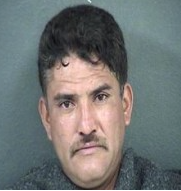
Pablo Antonio Serrano-Vitorino- photo Kansas City Police
KANSAS CITY, Mo. (AP) — Federal authorities say they’ve found no indications that a rifle used in the shooting deaths of four Kansas men and one in Missouri was stolen.
Pablo Antonio Serrano-Vitorino was captured just after midnight Wednesday a few miles from where authorities say he gunned down 49-year-old Randy Nordman at the man’s home in Montgomery County, Missouri.
Police say a rifle he had when he was captured was similar to one used to kill four men in Kansas City, Kansas, on Monday night.
John Ham, a spokesman for the Bureau of Alcohol, Tobacco, Firearms and Explosives, says investigators don’t think the gun was stolen but are still trying to figure out who last legitimately purchased the weapon.
He says Serrano-Vitorino likely obtained the weapon in the Kansas City area, where he lived.
NEW YORK (AP) — Nearly three million boxes of frozen DiGiorno pizzas, Stouffer’s lasagnas and Lean Cuisine meals are being recalled after customers said they found pieces of glass in their food.
Nestle USA, the company behind the brands, said no injuries have been reported.
The food maker said the glass may have come from the spinach used in the recalled products. It said an investigation is ongoing.
The recall covers about 2.98 million individual boxes, including four varieties of DiGiorno pizzas, five types of Lean Cuisine meals, four Stouffer’s lasagnas and one Stouffer’s spinach souffle.
DiGiorno Thin & Crispy Spinach and Garlic Pizza
DiGiorno Rising Crust Spinach and Mushroom Pizza
DiGiorno pizzeria Thin Crust Spinach and Mushroom Pizza
DiGiorno pizzeria Tuscan-style Chicken Pizza
Lean Cuisine Spinach and Mushroom Pizza
Lean Cuisine Spinach Artichoke Ravioli
Lean Cuisine Ricotta and Spinach Ravioli
Lean Cuisine Spinach, Artichoke & Chicken Panini
Lean Cuisine Mushroom Mezzaluna Ravioli
Stouffer’s Vegetable Lasagna (10 oz., 37 oz. and 96 oz. sizes)
In addition , pistachios sold under the brands of Wonderful, Paramount Farms and Trader Joe’s are being recalled nationwide because they may be contaminated with salmonella.
Health officials in nine states are investigating 11 cases of salmonella linked to pistachios from Wonderful Pistachios of Lost Hills, California. The nuts are sold nationwide and in Canada.
The recalled pistachios can be identified by a lot code number on the lower back or bottom panel of the package. A list of those numbers is available on the website of the Centers for Disease Control and Prevention.
Wonderful Pistachios says on its website that it takes food safety seriously and is working with health officials to find the source of the problem.
The company asks people to return the nuts where they bought them for a refund.
TOPEKA, Kan. (AP) — A major U.S. bank has given a presentation to Kansas finance officials on securitizing the state’s future tobacco settlement money.
The presentation by Citigroup has raised concerns among child advocates who say selling the future settlement payments to raise cash for the budget deficit would hurt the state’s early childhood system.
A copy of the 26-page Citigroup presentation, provided to The Topeka Capital-Journal by Kansas Action for Children, said Citigroup, “pioneered the tobacco bond market” and shows which states have securitized.
Brownback spokeswoman Eileen Hawley on Thursday said the meeting with Citigroup last October was attended by officials with the Kansas Development Finance Authority and Brownback’s budget director. She says there’s no deal or pending legislation to sell tobacco settlement money.
TOPEKA, Kan. (AP) — An investment banking company has briefed Kansas officials on its expertise in tobacco settlement payments as child advocates say the state is pursuing a future sale to help close the budget deficit.
The Topeka (Kan.) Capital-Journal reports that Kansas Action for Children alleged during a Tuesday hearing that Gov. Sam Brownback’s administration was contemplating selling future tobacco settlement payments to generate more than $400 million in one-time cash.
Administration officials say there’s no deal but that discussions have taken place.
The nonprofit group provided a copy of the 26-page presentation Citigroup Inc. gave in October, highlighting the benefits of using the company to securitize. The document says that bond proceeds have been used for capital projects, endowments, pension funding and working capital.
WICHITA, Kan. (AP) — A law enforcement officer shot and killed a man after he got out of a vehicle and raised a firearm along an interstate in Kansas.
Butler County Sheriff Kelly Herzet says officers received a report Friday afternoon of a man sitting in a pickup with a gun sticking out the window.
Herzet told The Wichita Eagle (https://bit.ly/1U7m3Cm ) the weapon appeared to be a rifle with a scope. He says officers blocked traffic along U.S. 54 near Rosalia and used a public address system to communicate with the man from a distance.
Herzet says the man got out of the vehicle and raised the weapon, which is when an officer shot and killed him.
Herzet wouldn’t provide the man’s name or age but said he had lived in the county previously.

 DOUGLAS COUNTY- A Kansas woman was injured in an accident just before 1p.m. on Saturday in Douglas County.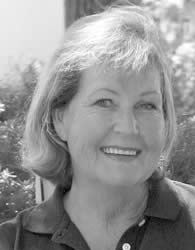










 OSFM
OSFM