WICHITA, Kan. (AP) — A teenager who pleaded guilty in the fatal Christmas Eve 2014 stabbing of a Wichita man has been sentenced to five years in a juvenile correctional facility.
The Wichita Eagle reported Monday that the male teenager was sentenced Friday. He pleaded guilty to voluntary manslaughter last year in connection with the death of 32-year-old Steven D. Manuel.
Sedgwick County District Attorney’s Office spokesman Dan Dillon said that the teen, who was 16 at the time of the stabbing, will be subject to two years of “aftercare” once he is released.
Manuel died early Christmas Day after he was stabbed several times during a fight at his home on Dec. 24, 2014.
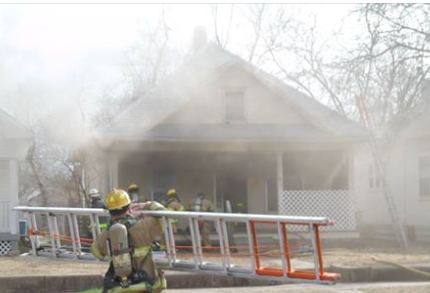
HUTCHINSON – Investigators are working to determine the cause of a fire at a home in Hutchinson, according to a media release.
Just after 3 p.m. on Monday, fire crews in Hutchinson responded to the 800 block of East 3rd for a reported structure fire.
Arriving units found a one-story structure with visible smoke from the roofline.
Crews had the fire under control in approximately 15 minutes. The home was unoccupied at the time of the call but had recently been vacated due to code violations.
Property and content damage value estimated at $11,000.
Hutchinson Fire responded 7 units with no injuries reported.
USGS map of 5.1 magnitude quake on Feb. 3 that was felt in Kansas and6 other states
TULSA, Okla. (AP) — State regulators are asking oil and gas producers in central Oklahoma to restrict wastewater disposal operations to help temper a sharp increase in the number and severity of earthquakes.
Monday’s request from the Oklahoma Corporation Commission covers more than 400 wells across 6,000 square miles.
Commission spokesman Matt Skinner says disposal volumes are about 970,160 barrels a day in the region, and regulators’ goal is 724,000 barrels a day, or about a 25 percent decrease. A barrel equals 42 gallons.
The number of earthquakes with a magnitude 3.0 or greater has skyrocketed in Oklahoma, from a few dozen in 2012 to more than 900 last year.
A 5.1-magnitude quake hit northwestern Oklahoma Feb. 13, days before the commission’s earlier directive, which had been in the works since October.
February’s disappointing revenue numbers have Kansas lawmakers once again scrambling to balance the state budget.
Photo by Jim McLean/KHI News Service Marvin Kleeb, an Overland Park Republican who chairs the House Taxation Committee, doesn’t anticipate any movement on tax increases. “The governor has made it clear that he doesn’t want to look at any tax increases, and I think the Legislature isn’t going in that direction either,” Kleeb said.
The spending blueprints for the remainder of the current fiscal year and fiscal year 2017, which begins July 1, were balanced on paper when lawmakers left for a brief mid-session break, thanks to a series of one-time revenue transfers and some spending reductions.
But both were undone when the Kansas Department of Revenue reported last week that February tax receipts had come in $54 million short of projections. Minutes after the February numbers were made public, Gov. Sam Brownback issued a statement countering assertions from Democrats and moderate Republicans that the income tax cuts he championed in 2012 were to blame for the state’s ongoing budget problems.
“This is an economic problem, not a tax policy problem,” Brownback said. Ruling out a tax increase, Brownback said he intended to rebalance the budget by “managing spending” and ordered an immediate $17 million cut in state university budgets. GOP leaders don’t want repeat of last year Like Brownback, GOP legislative leaders appear determined to avoid a tax increase.
Last year, they were forced to put their members on the line to pass the largest tax increase in state history — a combination of sales and tobacco tax increases — to close a $400 million budget gap.
But this is an election year.
“There is certainly going to be no movement of tax increases until we start to see March and April figures, and I don’t think we’ll see any movement then,” said Marvin Kleeb, the Overland Park Republican who chairs the House Taxation Committee.
“The governor has made it clear that he doesn’t want to look at any tax increases, and I think the Legislature isn’t going in that direction either.”
However, despite veto threats from Brownback, several legislators, including some conservative Republicans, want to repeal or adjust the 2012 income tax cuts. Rep. Mark Hutton, a Wichita Republican, failed last year in an attempt to repeal a provision that exempted more than 300,000 Kansas business owners from state income taxes.
But he’s back this year with a new bill. He said while the exemption may have motivated some owners to base their businesses in Kansas, there’s little evidence that it has achieved Brownback’s goal of creating new jobs.
Photo by Jim McLean/KHI News Service Rep. Mark Hutton, R-Wichita, plans to introduce a bill to repeal a state income tax exemption for some Kansas businesses and use that revenue to slash the statewide sales tax on food from 6.5 percent to 2.6 percent.
“So far the state has spent well over $700 million on what essentially is an economic incentive program for LLCs (limited liability companies) and sole proprietorships and partnerships,” Hutton said.
“I believe that has not yielded a very good return.”
Hutton hopes that a change in this year’s bill will garner more support from Democrats and moderate Republicans. Instead of using the revenue generated by restoring the business tax to plug holes in the budget, the bill would use the money to slash the statewide sales tax on food from 6.5 percent to 2.6 percent.
The House Taxation Committee is expected to have hearings on Hutton’s bill next week. And he said he won’t be surprised if there are attempts to redirect the money.
“Whether or not this ends up actually reducing the sales tax or not on food, I don’t know,” he said. “I mean it could get hijacked for (the) state general fund.”
State fire sale
With a tax increase seemingly off the table, lawmakers are looking for cash wherever they can find it. Proposals to implement various recommendations from an efficiency study done by a national consulting firm surfaced last week in several House and Senate committees.
The study, done prior to the session, contained dozens of recommendations that the consultants said could save approximately $2 billion over five years.
Legislators also are considering a spate of bills that would generate additional cash without raising taxes. One of the proposals would require cities to share more of the traffic fines they collect with the state.
Another would sweep approximately $250,000 into the state general fund by abolishing the Kansas Electric Transmission Authority, an agency established about 10 years ago to help coordinate the construction of transmission lines from wind farms. Still another would facilitate the sale of the Kansas Bioscience Authority and its investment holdings for an anticipated $25 million.
Sen. Laura Kelly of Topeka, the top Democrat on the Senate Ways and Means Committee, said it’s like the state is conducting a fire sale. “There is real desperation to get through the session and get through the election without having to raise taxes,” Kelly said, referring to the strategy of the Legislature’s Republican majority.
“It’s absolutely sad because these are the kinds of things that can’t be undone. Once we sell the bioscience authority, it’s gone. It’s somebody else’s baby.”
Jim McLean is executive editor of KHI News Service in Topeka, a partner in the Heartland Health Monitor team.
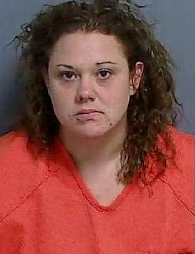
HUTCHINSON – Kansas woman charged with first-degree murder, conspiracy to commit first-degree murder and aggravated intimidation of a witness was bound over for trial after a preliminary hearing.
Jamie Hatfield, 27, is accused in the death of 38-year-old Mary Ann Arnett, whose body was found in a creek bed near Nickerson on June 22.
On the stand Monday afternoon a woman, identified as HJ, who was present at the home the day of the crime.
She wasn’t inside when the initial fight between Jonathan Wilson and the victim occurred, but did come inside and said she could hear the victim trying to breathe.
She also testified to an earlier conversation when there was discussion of getting rid of the victim. There was even talk of getting a 243 pistol with Wilson stating that he needed to take care of a problem.
According to H.J., Hatfield had apparently sent a text to the victim asking her to come over to help with her kids. But, the kids had been put to bed prior to Arnett even arriving.
H.J. also testified that after they removed the body from the home, she was ordered by Hatfield to clean up the blood or she might be next.
She testified that she didn’t call for help for the victim because she didn’t have her phone, but in other testimony stated she was texting and had put a couple of posts on Facebook.
She also testified she talked to Hatfield after they got rid of the body where she stated that the victim wasn’t dead, so they had to strangle her some more at the creek near Nickerson.
Earlier in the day, Reno County Sheriff Detective Diana Skomal testified about the finding of the body in the creek near 43rd & Riverton.
She testified the body was face down in the water and appeared to have two cords wrapped around her neck.
Arnett died of strangulation, but also had a stab wound to her left eye.
As to how they connected the death to the home at 811 N. Van Buren, she says they received a Crime Stoppers tip that they should talk with individuals at that location.
This case also led to the police shooting of 22-year-old Jonathan P. Wilson.
On June 23, police shot him to death after reportedly admitting that he murdered someone.
TOPEKA–Life insurance protection is one of the most considerate acts that a person can do for his family, according to Ken Selzer, CPA, Kansas Commissioner of Insurance. Over the course of a lifetime, it can have great significance.
“Knowing what a life policy can do for your loved ones, and how to protect it for their future use, can be two important factors in your financial planning,” Commissioner Selzer said. “Talking over your life insurance needs with qualified insurance professionals is a good first step toward assuring your assets are used by your family.”
Commissioner Selzer emphasizes these life policy considerations.
• What kind of life insurance do you need? Term and whole life insurance are the two most common types of plans. However, there are many variations of each type, and there are a number of special-purpose policies that combine the basic policies with other elements. Talk to your insurance agent about what type works for you.
• Who is your beneficiary going to be? If you die without naming a beneficiary or beneficiaries of your policy, the benefits would be paid into your estate and then paid out according to your will or through state laws. This delays payment and could create a financial hardship for your heirs.
• How much coverage do you need? You and your agent should do a careful evaluation of your coverage needs, but a general rule of thumb is to buy life insurance that is equal to 5-7 times your annual take-home pay.
• Will I have any tax consequences? Your beneficiary(ies) will receive your insurance benefits tax free. With named beneficiary(ies), life insurance benefits do not have to go through probate or other legal delays involved in the settlement of an estate.
• Where should I keep my policy? Keep your policy in a safe place. However, do not use any place where the policy might not be readily available. Record the basic information — such as company, policy type, policy number, insured’s and beneficiaries’ names — in a separate place. Let your beneficiary(ies) know the kind of insurance policy you have, any changes you make, and where you keep the policy.
• What happens if I lose my policy? Loss of a life insurance policy will not affect your protection in any way. If a policy is lost, accidentally destroyed or stolen, ask your agent or write the company directly to obtain a duplicate.
• Do life insurance proceeds affect my family’s Social Security benefits? According to law, monthly life insurance payments will not disqualify the beneficiary from receiving full Social Security payments. Monthly life insurance benefits do not count as earned income, regardless of how much is paid each month through a policy.
• What happens when my family needs to file a claim? Family members, preferably with policy in hand, will need to notify the life insurance company in the event of a death of an insured person. Your local insurance agent should be able to discuss the steps needed to make sure the policy is paid out as quickly as possible.
• Filing a life claim. Your beneficiary will need to notify the life insurance company of your death. Again, that’s why it is important for your beneficiary to be able to locate your policy. Companies require a certified death certificate or other legal proof of death, and they may ask for the policy. The life insurance company will pay the proceeds of the policy to your beneficiary(ies) after receiving proper notification of death.
The Kansas Insurance Department now has a Life Insurance Locator Service in place for those who need assistance in locating life insurance and annuity benefits they may be owed. Those submitting a request will need to do the following:
• Complete a form you can download off our website, https://www.ksinsurance.org/healthlife/life/life-policy-search.php .
• Have the form notarized.
• Attach a copy of the certified death certificate of the policyholder.
• Send all information to the insurance department address listed on the form.
WICHITA, Kan. (AP) — An Arizona man who sent text messages to a Wichita police officer about a large amount of drugs he was bringing to Kansas has pleaded guilty to drug trafficking.
U.S. Attorney Barry Grissom says 31-year-old Mark McFarland of Phoenix thought text messages he received while planning his Kansas trip were coming from his former girlfriend. Instead, she had been arrested in a different case and a Wichita police officer had seized her cellphone.
Grissom says McFarland sent a text to the girlfriend’s number saying “hi,” and the officer texted back. The two arranged for McFarland to drive to Wichita to visit the woman and deliver five pounds of methamphetamine.
He was arrested when he arrived with the drugs.
He faces up to five years in prison and a $250,000 fine.
LAWRENCE, Kan. (AP) — Lawrence will spend nearly $240,000 to deal with beetles that are expected to kill the city’s ash trees over the next decade.
The Lawrence Journal-World reports that the city commission unanimously approved the spending last week. The money will go toward treating, removing and replacing ash trees infected with emerald ash borers.
The Kansas Department of Agriculture confirmed in October that the insect, a small beetle that’s been spreading from Michigan since 2002, was present in Douglas County.
The female emerald ash borers are expected to emerge in April and lay their eggs onto ash trees through the summer months. The larvae feed under the bark, making S-shaped channels that stop the flow of nutrients.
Lawrence’s horticulture and forestry manager, Crystal Miles, calls the situation “catastrophic.”
(Photos by Amanda Kim Stairrett, 1st Inf. Div. Public Affairs Office)
FORT RILEY -Early Monday morning more than 100 Soldiers of the 1st Infantry Division Sustainment Brigade returned to Kansas from a nine-month deployment to Kuwait. The unit departed Fort Riley in June 2015.
While deployed, the brigade’s Soldiers were responsible for planning, oversight and resources for troops in five countries and 13 locations, according to a social media report.
The brigade supported Operation Inherent Resolve and provided sustainment support to U.S. Central Command across its area of responsibility.
The first group of 1st Inf. Div. Sustainment Brigade Soldiers returned to Fort Riley on Feb. 22 and all are expected to be home by the end of this month.
TOPEKA, Kan. (AP) — The Kansas House is expected to debate a bill later this month that would require parents’ consent before students attend sex education class.
The so-called “opt-in” bill that was approved by the House Education Committee last month also would allow parents to review the curriculum before enrolling their children in classes.
Most of the 286 school districts have “opt-out” policies in which students are enrolled in sex education courses unless parents sign a form to exempt them.
Critics say the bill tampers with the proven success of sexual education. Teen births in Kansas are down 50 percent since peaking in the early 1990s.
Education Committee Chairman Rep. Ron Highland, a Republican from Wamego, said the bill will likely pass when it comes to a floor vote.
MANHATTAN – A Kansas man was sentenced in Riley County Court on Monday in connection with a May 2015 shooting in Manhattan’s Aggieville.
A Jury found Mark Self Jr., 31, Manhattan, guilty of attempted voluntary manslaughter and an aggravated weapons violation.
He was sentenced to 52 months in the Kansas Department of Corrections for the charge of attempted voluntary manslaughter and six months for the aggravated weapons charge. The counts will be served consecutively, according to
Bethany Fields, Deputy Riley County Attorney
Riley County Police found an emptied Glock .40 handgun in Self’s boxer shorts. The weapon is believed to have been used during the shooting.
Both Kevin Green, of Manhattan, and Jeremy Caudill, of Ft. Riley, were wounded from ricochet’s, according to testimony.
LINCOLN COUNTY – Law enforcement authorities in Lincoln County are investigating a fatal weekend shooting.
Sheriff’s deputies and EMS responded to a home in the 2500 Block of Deer Drive in Beverly just before 2a.m. on Saturday, according to Sheriff Michael Weigel.
There was an altercation and a 33 year-old man died at the scene, according to Weigel.
Joseph Alan Schultz, 36, was arrested in connection with the shooting.
“He is being held for murder in the 2nd degree on an $800K bond and is expected to make a first court appearance on Tuesday afternoon,” said Weigel.

 WICHITA, Kan. (AP) — A teenager who pleaded guilty in the fatal Christmas Eve 2014 stabbing of a Wichita man has been sentenced to five years in a juvenile correctional facility.