HUTCHINSON- One of two Kansas Department of Corrections inmates charged with attempted capital murder, or in the alternative, aggravated battery will face trial on May 24.
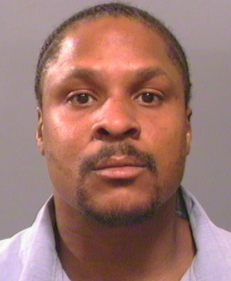
Thirty-one-year-old Juan Garza is accused in a case where the victim was beaten in the recreation yard of the central unit. Miguel Garcia was first taken to Hutchinson Regional Medical Center then transported to Wesley Medical Center in Wichita for treatment. The incident occurred back in June of 2014.
During a pretrial hearing Friday, Judge Trish Rose set the trial date as well as a motion deadline of April 22. That means both sides have until that date to file any motions they want heard prior to trial.
The other defendant in this case, 22-year-old Jerrod Green entered a plea to two counts of aggravated battery, one for this case and the other for an incident inside the old Reno County Jail where he battered another inmate, Ross Chaney.
He was sentenced on December 18, and was given eight years and five months in prison added to his sentence.
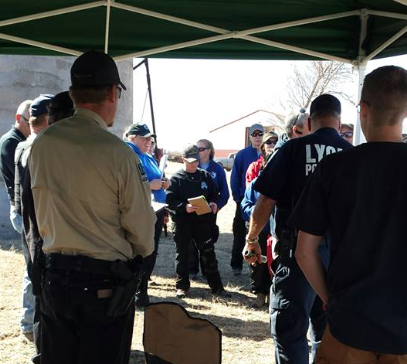
RICE COUNTY – Law enforcement authorities spent Saturday searching for a missing Rice County woman, according to a social media report from Kansas Game Wardens.
The Wardens partnered with a number of other agencies to search along the Arkansas River for Megan Foglesong, 23, Alden, reported missing since November.
“We had planned this search based on a tip we received,” said Rice County Under Sheriff Brian Treaster.
Other agencies included Reno, and Barton County Sheriff’s Offices, Lyons Police Department, Kansas Search and Rescue Dog Association.
photos Kan. Dpt. of Wildlife, Parks and Tourism
The search is to continue on Sunday. No additional details have been released.
TOPEKA – The Senate Education Committee on Thursday debated a bill that would change the high school size classification system for sporting events.
Senate Bill 464 would strike the portion of current law that requires the Kansas State High School Activities Association (KSHSAA) to classify schools based on student attendance.
Jeff Hines, athletic director at Paola High School and proponent of the bill, said the change would allow KSHSAA to create a more flexible system. Hines said that the current system is too rigid and doesn’t allow for a competitive athletic postseason for many schools. The bill does not offer a replacement to the current system.
“A large school with a high percentage of low socioeconomic status students cannot move down a division to face more appropriate competition,” Hines said. “Likewise, a school that excels cannot be forced to move up into a higher division, nor can they appeal to move up a classification.”
The bill was introduced Wednesday and referred to the Education Committee.
KSHSAA, the nonprofit organization that administers interscholastic programs for school members, including sporting and nonsporting activities, such as debate, remained neutral toward the legislation. The association has organized its own committee to study the classification system in use.
Sen. Vicki Schmidt, R-Topeka, expressed concerns about the lack of KSHSAA support for the bill.
“KSHSAA has certainly come before this body, and certainly this committee, multiple times and asked for tweaks and changes,” Schmidt said. “Certainly they’re not foreign to this process. So why didn’t they go the next step and say: ‘This is an impediment, we would like to consider some other things and here’s maybe a few things we should ask for?’”
Hines said he believed that it would be redundant for KSHSAA to endorse a plan at this stage because if approved by the legislature, member schools would still have to vote. Hines said SB 464 would allow KSHSAA to come up with a system and let member schools approve it, instead of the legislature.
“Simply put, I’m asking for less oversight from the legislature,” Hines said.
Sen. Molly Baumgardner, R-Louisburg, asked Hines if he would be willing to relinquish state funding if the legislature agreed to relinquish oversight of how the KSHSAA classifies school.
“If we relinquished the funding behind it, (high school activities) would disappear,” Hines said.
Fifty-two Kansas hospitals are participating in a quality improvement network to reduce early elective births to fewer than 2 percent of all deliveries. CREATIVE COMMONS-PIXABAY
By MEGAN HART
The practice of delivering babies a few days early for the convenience of mothers and doctors has been a common one for years at hospitals across the country and in Kansas.
But when research established that deliveries done even a little ahead of schedule can threaten the health of newborns, Kansas health care providers decided it was time to end the practice.
A quality improvement initiative launched in mid-2012 hasn’t accomplished that goal but it has reduced the rate of “early elective births” at participating Kansas hospitals by 70 percent, according to officials at the Kansas Healthcare Collaborative, which spearheaded the effort with the Kansas Hospital Association and March of Dimes.
“We want to change the culture in this state toward one of constant improvement, and one of safety, more importantly,” says Kendra Tinsley, executive director of the Kansas Healthcare Collaborative, a nonprofit formed in 2008 by the hospital association and the Kansas Medical Society.
The goal of the initiative is to reduce early elective births at 52 Kansas hospitals participating in a quality improvement to less than 2 percent of all deliveries. The partnership focused on convincing hospital administrators to adopt “hard stop” policies, which essentially prohibit doctors from delivering babies before the 39th week of pregnancy unless deemed medically necessary.
The American College of Obstetricians and Gynecologists revised its recommendations in 2013 to define full term as a birth occurring at the 39th week or later. Until then, OB-GYNs viewed outcomes as roughly the same for babies born at the 37th week of pregnancy or later, and some performed cesarean sections or induced labor in the last weeks of pregnancy when mothers requested, even if there was no medical risk in continuing the pregnancy.
However, research showed that babies had the best outcomes when they were born during at least the 39th week of pregnancy, mostly because their lungs and brains weren’t fully developed before then.
But Tinsley says front-line practitioners may not always be aware of developments in research and changes in recommendations. Even if they are, a patient’s desire for the convenience of a scheduled birth can push the physician to perform one, or the patient may change doctors to find someone who will accommodate her preference, she says.
Some early births can’t be avoided because labor begins spontaneously or because the mother or baby has a medical problem that makes continuing the pregnancy a greater risk than delivering the baby early. The goal is to target early births that don’t fall into either of those categories, Tinsley says.
‘Goal of perfection’
Early indications show the changes are having an effect. As of December 2014, the number of early elective deliveries had fallen 70.5 percent at participating hospitals since June 2012, Tinsley says.
However, when deliveries at all 67 of the Kansas hospitals that provide obstetric services are included, the overall rate of early elective births still totaled 4.4 percent in 2014.
That, Tinsley says, means the collaborative still has work to do educating doctors and hospital administrators.
“We always strive for zero,” Tinsley says. “We always have the goal of perfection.”
Keeping the message at the forefront of providers’ minds is particularly important because quality improvement sometimes stalls or even slides back when a hospital’s leaders who pushed for change go to work somewhere else or move on to other priorities, she says.
The Kansas Healthcare Collaborative doesn’t have data on home-based births or those at birthing centers.
Insurer offers incentive
BlueCross and BlueShield of Kansas joined the effort in 2013. The insurer offers incentives for hospitals where the early elective delivery rate doesn’t exceed 3 percent, spokeswoman Mary Beth Chambers says. That includes elective cesarean sections and induced vaginal births before the 39th week, if they aren’t medically necessary, she says.
Hospitals participating in the Blue Cross and Blue Shield quality program continued to reduce their early elective birth rates in 2015, Chambers says. The rate for participating Kansas hospitals fell from 2.7 percent of births in 2014 to 1.1 percent in 2015, she says.
The idea is that doctors will respond to financial incentives, benefiting the families under their care and the system as a whole, Chambers says. She declined to say how much Blue Cross and Blue Shield offered Kansas hospitals that met the 3 percent threshold.
“From a medical perspective, we know that babies born full-term have the greatest opportunity to reach their full potential in life; from an insurance perspective, we know that babies born early for the convenience of the physician or mother can end up in the neonatal intensive care unit for a period of time, which unnecessarily adds to the cost of health care claims,” she said in an email.
Megan Hart is a reporter for KHI News Service in Topeka, a partner in the Heartland Health Monitor team. You can reach her on Twitter @meganhartMC
Big crowds turned out for Democrats across Kanas. Even small children were campaigning for Sanders
TOPEKA, Kan. (AP) — The Latest on the 2016 presidential caucuses in Kansas.
The Kansas Democratic Party says Bernie Sanders has won its presidential caucuses.
The party made the announcement Saturday night, but did not release any vote count or results. The Associated Press has not called the race in Kansas as it waits for those results.
Large crowd turns out to the Democratic Caucus at Salina South High School.
A pre-caucus rally Thursday for the Vermont senator in the liberal bastion of Lawrence drew several thousand people.
His backers overcame support for rival Hillary Clinton from former Gov. Kathleen Sebelius and other Democratic establishment figures in the state. The Kansas Democratic Party says that Bernie Sanders has won its presidential caucuses.
The party said the declaration is based on 90 percent of districts reporting results.
KANSAS CITY, Mo. (AP) — A Kansas City man whose forced removal from a hospital in the 1980s led to a sheriff’s downfall is back in jail.
The Missouri State Highway Patrol says a trooper arrested 49-year-old Damone L. Cribbs this week after stopping him for speeding. Federal court documents say suspected marijuana and a gun were found in Cribbs’ vehicle.
The Kansas City Star reports Cribbs criminal history stretches back more than 30 years.
In 1986, Cribbs was being treated for asthma when Wyandotte County Sheriff John Quinn and several deputies ignored doctors’ protests and took him from the hospital so he could go to court. Doctors said Cribbs nearly died after being returned to the hospital.
Quinn later pleaded guilty to violating Cribbs’ civil rights and lost a re-election bid.
Big lines of republican voters in Hutchinson on Saturday
TOPEKA, Kan. (AP) — The Latest on the 2016 presidential caucuses in Kansas. (all times Central Standard Time):
4:40 p.m.
Ted Cruz has won the Republican presidential caucuses in Kansas. The Texas senator went into Saturday’s voting looking to cement his status as the only realistic alternative to billionaire businessman Donald Trump in the race for the GOP nomination.
Forty delegates to the GOP national convention were at stake.
Both Cruz and Florida Sen. Marco Rubio battled to be seen as Trump’s main rival.
Cruz won even through Rubio had endorsements from Kansas Gov. Sam Brownback and U.S. Sen. Pat Roberts.
Cruz’s top endorsement came from tea party favorite and Congressman Tim Huelskamp in the 1st District of central and western Kansas. But many rank-and-file conservatives also backed him.
Trump had the support of Kansas Secretary of State Kris Kobach.
___
4:30 p.m.
Turnout was heavy at many sites for the Kansas Democratic caucuses Saturday.
Supporters of Vermont Sen. Bernie Sanders lined the streets outside Liberty Memorial Central Middle School in Lawrence, a crowd much larger than had turned out for former Secretary of State Hillary Clinton there. Though Clinton is the choice of former Gov. Kathleen Sebelius and other state party establishment figures, Clinton faced a surge of new voters and energized progressives supporting Sanders.
In Wichita, Democrats lined up down the block outside the machinists’ union headquarters to get in to caucus. In the end, there were too many people to fit into the union hall so the caucus was held outside.
WICHITA, Kan. (AP) — Data from the Kansas Department of Education indicates reverting to an old public education funding system that would be acceptable to the Kansas Supreme Court would hurt schools in suburban Kansas City.
The Kansas Supreme Court told lawmakers in February that restoring the state’s old funding formula would address the inequities between school districts. But the court left lawmakers room to explore other options.
The Wichita Eagle reports the old formula would help Wichita and other Sedgwick County school districts but several Johnson County districts stand to lose money. Lawmakers from the large Johnson County delegation are voicing opposition.
The old formula also would require the cash-strapped state to spend $35.6 million more for the 2016-2017 school year.
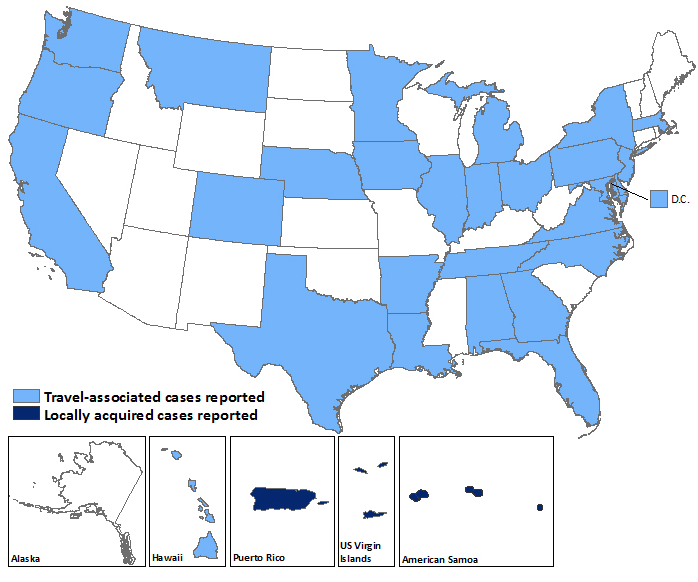
CDC image Laboratory-confirmed Zika virus disease cases reported to ArboNET by state or territory — United States, 2015–2016 (as of March 2, 2016) CLICK TO ENLARGE
WASHINGTON (AP) — Researchers say the Zika virus may be linked to a wider variety of “grave outcomes” for developing babies than previously reported and that threats can come at any stage of pregnancy.
Friday’s findings are preliminary results from the first study tracking pregnant women in Brazil from the time they were infected, and do not prove that Zika is responsible. Dr. Karin Nielsen of the University of California, Los Angeles says the study suggests Zika can act on multiple fronts.
The mosquito-borne virus is spreading in Latin America and the Caribbean. It normally causes only mild symptoms, if any, in adults. But it has been linked to babies in hard-hit Brazil being born with abnormally small heads.
Separate laboratory research strengthens that case by showing the virus targets fetal brain cells.
Trump addresses a large crowd on Saturday in Wichita. photo courtesy Mark Cowin
WICHITA- Republican presidential candidate Donald Trump brought his campaign to Wichita on Saturday.
A large crowd gathered outside Century II Auditorium, site of the Sedgwick County caucus, early Saturday morning. The event started at 9 a.m.
A large line of supporters waits for Trump on Saturday in Wichita- photo courtesy Mark Cowin
Trump was originally scheduled to speak at the Conservative Political Action Conference in Maryland Saturday alongside fellow candidate Marco Rubio, but canceled on Friday with the announcement of plans for the Kansas rally instead.
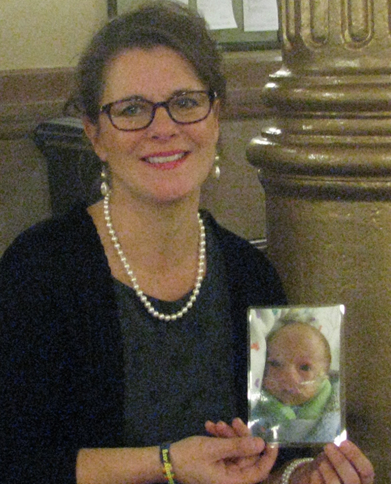
Photo by Megan Hart/KHI News Service Sheryl Crosier spoke Thursday at the Kansas Statehouse in favor of a bill named for her son Simon, who died with a “do not resuscitate” order in place that she and her husband did not know about.
By MEGAN HART
Sheryl Crosier only found out after her infant son had died that he had a “do not resuscitate” order — a measure she said she and her husband never would have agreed to. Crosier, who is from the St. Louis area, spoke Thursday to the Senate Public Health and Welfare Committee in support of Senate Bill 437, also known as Simon’s Law.
It would forbid health care facilities or providers from withholding “life-sustaining procedures, food, medication or nutrition” from any patient younger than 18 without written permission from one of the patient’s parents or a legal guardian.
“When Simon’s oxygen levels began to fall, we were told it was the end and we could do nothing,” she said. “If somebody in this audience was struggling to breathe, how many of you would stand here and do nothing?”
A similar bill was introduced in Missouri but has yet to receive a hearing.
Crosier said she and her husband wanted to do everything medically possible for their son Simon, who was born in September 2010 and diagnosed with Trisomy 18 after three days.
Trisomy 18 often causes problems with the heart and other organs, as well as developmental delays, though the effects can vary widely. According to the Trisomy 18 Foundation, about 10 percent of children with the condition survive their first year of life. Some live into adulthood, however.
After Simon was diagnosed, the hospital turned off his heart monitor and only provided “comfort feedings”— minimal nutrition typically used with dementia patients — which the Crosiers didn’t find out about until after his death. “Someone decided our son’s life didn’t have any value,” she said.
The one-page bill would require doctors and facilities to provide patients with a copy of any policies they have regarding life-sustaining treatment or treatments not deemed to be beneficial.
A physician also couldn’t institute a do-not-resuscitate order without permission from at least one of the patient’s parents or a guardian.
Kathy Ostrowski, legislative director of Kansans for Life, testified in favor of the bill but suggested some amendments. The amended language would allow providers to withhold treatments if “reasonable medical judgment” dictated withholding the treatment wouldn’t hasten the patient’s death or if providing the treatment would create a greater risk to the patient than withholding it.
Ostrowski said children with disabilities were more likely to be denied medical interventions, even if their parents wanted them, and the bill would prevent doctors from making “value judgments” about treatment. No one testified in opposition to the bill.
The American Medical Association’s Code of Ethics says that physicians should consult with the patient, or his or her representative, before making decisions regarding life-sustaining treatment.
Megan Hart is a reporter for KHI News Service in Topeka, a partner in the Heartland Health Monitor team. You can reach her on Twitter @meganhartMC
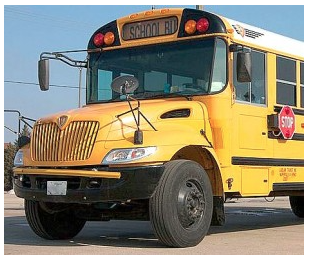
RENO COUNTY- Law enforcement authorities in Reno County are investigating a school bus accident.
Reno County Sheriff’s Department reported a 2005 GMC pickup driven by Shelby Spence, 57, Hutchinson, was eastbound on 6th Avenue just after 7:15 a.m. on Friday.
The pickup rear-ended a Nickerson School District Bus driven by Elizabeth Martin, 56, Hutchinson, with 23 children on board.
The bus was stopped with all lights and warning lights on and signs out after picking up a student at 6th Avenue and Town and Country.
No injuries were reported. USD 309 was already in the process of informing the parents of the students on board when deputies arrived.
Spence was cited for following too closely, according to Deputy David Radke.
Both drivers were properly restrained at the time of the accident, according to the Reno County Sheriff’s office.
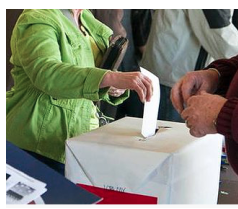
The Kansas Republican Party is preparing for a larger-than-usual turnout at the state’s GOP presidential caucus Saturday.
“We’ve already had to double the normal amount of ballots to around 60,000,” said Clayton Barker, Kansas GOP executive director. “We’re even making more (ballots) in case more people decide to attend.”
The increased number of attendees means more education is necessary to explain the process to voters, Barker said.
“We’re trying to combat the low knowledge about how the system works,” he said.
Barker explained that a caucus is a meeting where all registered Kansas Republicans can discuss and vote on which candidate they believe should be the party’s nominee for president.
After voting has occurred, the 40 delegates and 37 alternative delegates allotted to Kansas by the National Republican Convention are divided among the candidates.
“Kansas proportionally allocates our delegates, instead of using a winner- take-all system,” Barker said. “This gives candidates a more accurate delegate representation.”
The Republican nominee needs a total of 1,237 delegates to secure the party’s nomination and face the Democratic challenger in the November election.
What many people don’t know is that any eligible citizen can, and is encouraged to, participate in the caucus.
Shelby Clothier, a University of Kansas student and registered Republican from Wichita, said she plans to vote in the caucus, and she’s pleased the GOP is working to keep voters informed.
“You have to go out and seek the knowledge to know how a caucus or a voting system works,” she said. “I’m happy to see the Kansas GOP is taking that initiative to help.”
For Clothier and other Kansans participating the caucuses, the stakes are high.
“Caucuses are hugely important,” she said. “You’re literally deciding the candidate who is going to potentially change you and your children’s futures.”
Barker agreed.
“Because the turnout at caucuses is smaller than a national vote, every individual has a higher effect,” he said.
Barker said that college students need to know that they can participate in the caucuses near their university campuses, even if they originally registered in a different county.
“It makes it easier for college kids who’ve traveled across the state to participate,” he said.
For Clothier, this makes all the difference.
“I really want to participate,” she said. “And instead of having to drive around three hours home, I can just drive five minutes to the Lawrence location.”
Marco Rubio was in Topeka on Friday and was planning to stop in Wichita. GOP front-runner Donald Trump is also planning a Saturday stop in Wichita.
Cruz was in Overland Park Wednesday for a campaign rally at Johnson County Community College.
Caucuses are March 5 in 126 counties throughout the state from 10 a.m. to 2 p.m.
The Kansas Republic caucuses will be held in at these locations.



 No additional details have been released.