We have a brand new updated website! Click here to check it out!

2 Kansas men found guilty of trying to kill deputy

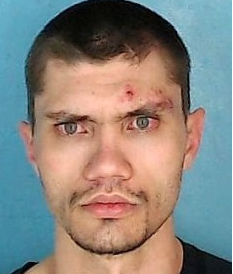
King-photo Wyandotte Co.

KANSAS CITY, Kan. (AP) — Two Kansas City, Kansas, men have been found guilty of attempted capital murder for shooting a Wyandotte County deputy multiple times while he was face down on a convenience store floor.

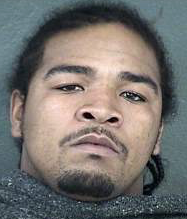
The Kansas City Star reports 25-year-old Dyron King and 36-year-old Cecil Meggerson also were convicted Friday of multiple counts of aggravated robbery, aggravated battery and illegally possessing firearms.

Meggerson-photo Wyandotte Co.

Deputy Scott Wood was inside the convenience store in Kansas City, Kansas, on March 4 when three armed robbers jumped him and took his gun. He was shot multiple times but was able to radio for help before being shot in the face. He survived.

Prosecutors say King, Meggerson and a third man committed a string of robberies in Kansas and Missouri before the attack on Wood.

Police search for Kansas burglary suspects UPDATE

photos Newton police

NEWTON – Nine burglaries and a stolen car are now among the crimes committed in Newton on Friday night, according to a social media report from Newton Police. The car has been recovered after a member of the community saw the report on social media and called it in.

———–

NEWTON – Law enforcement authorities in Harvey County are investigating a series of burglaries and searching for a suspect.

Police in Newton say the crimes were reported the area around 8th and Logan Streets where at least 5 houses and 2 vehicles were broken into and property stolen.

Witnesses describe a silver, gold Dodge truck and a 2-door passenger car involved.

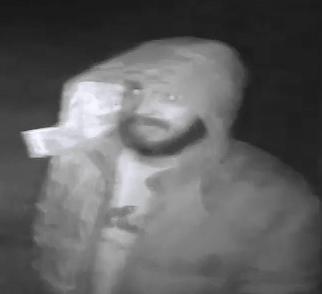
According to a social media report by police, the offenders were kind enough to pose for surveillance video. They stole the cameras but didn’t understand the information is recorded in another location.

Screen Shot 2016-02-06 at 1.37.18 PMThe first suspect with beard and short hair is in the light jacket with the hood and the second suspect is in the black jacket.

Police asked the public for their help to identify the suspects.

K-State liaison outlines NBAF’s public health role

Photo by U.S. Department of Homeland Security Research at the National Bio and Agro-Defense Facility, under construction in Manhattan, will include studies of zoonotic diseases that can spread from animals to humans. -
Photo by U.S. Department of Homeland Security Research at the National Bio and Agro-Defense Facility, under construction in Manhattan, will include studies of zoonotic diseases that can spread from animals to humans. –

By ANDY MARSO

An official from Kansas State University outlined for legislators Thursday how a $1 billion federal facility to study animal disease also will work to preserve human health.

Ron Trewyn, K-State’s liaison to the National Bio and Agro-Defense Facility, or NBAF, said the facility under construction in Manhattan also will focus on zoonotic diseases that can spread from animals to humans if left unchecked. “So it has an animal health perspective and a public health perspective,” Trewyn told members of the House Commerce, Labor and Economic Development Committee.

Trewyn provided several examples of zoonotic diseases that NBAF researchers will study: Rift Valley fever, Japanese encephalitis, Nipah virus and Hendra virus. Rift Valley fever and Japanese encephalitis are spread by mosquitoes. Nipah virus and Hendra virus can spread to humans who consume produce contaminated by fruit bats.

Trewyn said when construction is finished, NBAF will allow domestic research on zoonotic diseases that have no known treatment — research that requires airtight containment and full biohazard suits. “There’s no facility in the United States that can do that kind of work,” he said.

That includes the 60-year-old Plum Island Animal Disease Center of New York that NBAF will replace. Trewyn said the closest facility capable of supporting that level of research is in Winnipeg, Manitoba, in Canada. Rift Valley fever has spread from East Africa to the Middle East since it was first identified in 1931, and the World Health Organization has warned it could spread to other parts of Europe and Asia. Japanese encephalitis, which is fatal for about 25 percent of humans who contract it, has spread throughout Southeast Asia.

There is no treatment for it. Nipah virus has been found in India and Bangladesh. Hendra virus, first identified in Australia, also is spreading to Southeast Asia.

Though the United States has not seen the diseases, Trewyn said it could be something the nation has to face in the future. He said U.S. soldiers in Afghanistan uncovered plots by terrorist groups to bring them overseas. “Many of these diseases will get here just due to the movement of people and goods,” Trewyn said.

“Others could be brought here intentionally.” NBAF is scheduled to open in 2022.

Andy Marso is a reporter for KHI News Service in Topeka, a partner in the Heartland Health Monitor team. You can reach him on Twitter @andymarso

Police arrest 4 in alleged Kan. convenience store armed robbery, attack

HUTCHINSON – Four men have been arrested in association with the Kwik Shop armed robbery in Hutchinson on January 27.

Police identified the four as 18-year-old Dakota Sean Michael Dakota, 19-year-old Karl Ray Koenig, 20-year-old Kurt Koenig and 19-year-old Drake Ryan Lindsay.

Charges included aggravated robbery, aggravated battery, burglary, theft and criminal damage to property.

Three of the arrest were made mid-afternoon on Friday and the fourth on Friday evening, according to police.

A female clerk was compliant during the robbery however was still severely beaten by the suspects who also took an undetermined amount of money and tobacco products then fled the store on foot.

The four are also suspected of a burglary case out of South Hutchinson.

Bonds in the case were set at $125,000 for each defendant and unless they post the bonds, they should make a first appearance in court

Enjoy prime land access for spring turkey through special hunt

wild turkeys 2KDWPT

PRATT– It’s hard to beat hunting turkeys during the spring season in Kansas. Weather has warmed up, birds are active and on the move, and it’s the start of a new hunting season.

But what if there was a way to top this? There is.

Try adding special access to quality lands not normally open to hunting, and it wouldn’t cost you a penny.

If you think this sounds like a pipe dream, chances are, you aren’t familiar with the Kansas Department of Wildlife, Parks and Tourism’s Special Hunts Program. Special Hunts provide access to public and private lands that are not open to unrestricted public access. There’s no fee to apply, the draw is open to residents and nonresidents, and opportunities abound, with 160 individual permits and 79 special hunts available for spring turkey this year. Applications are being accepted through 9 a.m. on Feb. 29. To apply, and to obtain detailed information on all available hunts, visit ksoutdoors.com/Hunting/Special-Hunts-Information.

Out of the 79 hunts available, 29 are open hunts (open to all), 19 are mentor hunts (both beginner and mentor may hunt), and 31 are youth hunts (youth hunt only). These hunts will occur on nine separate land parcels spanning five counties, five wildlife areas, two city and county properties, one state park, and one national wildlife refuge.

Successful applicants will be notified shortly after the random drawing has occurred. Special Hunts only provides access, so hunters must still purchase all licenses and permits required by law.

For information on other spring turkey hunting opportunities, visit ksoutdoors.com and click “Hunting” and “Turkey Information.”

Kan. Creative Arts Industries Commission grant deadline is Feb. 19

creative arts ksKS Dept. of Commerce

TOPEKA–The Kansas Creative Arts Industries Commission has released the final deadline to submit applications for its two main grant categories. The final application deadline for 2016 is Feb. 19, 2016. This round will allow for a grant activity period for projects that begin Mar. 29, 2016 and conclude by Dec. 31, 2016. Approved projects that end June 30, 2016 may be given priority based on available funds. The programs and their sub-categories are as follows:

STRATEGIC INVESTMENT PROGRAM

The Strategic Investment Program recognizes the important role creative organizations play in building and sustaining cultural and economic vibrancy in Kansas. By funding a variety of professional and organizational development opportunities that impact cultural programming, these grants support initiatives that use the arts to enhance community vitality, revitalize neighborhoods, generate local business, create and preserve job opportunities and impact tourism. Applicants must make a compelling case as to why this particular self-identified activity or opportunity was selected, how it will have a substantial impact on their work and community, and how it will enhance the national reputation of Kansas.

Strategic Investment Program grants are awarded in three categories:

· Organizational Development: This category provides funding for professional development opportunities for Kansas based arts organizations that help strengthen business practices, increase organizational viability and promote long term sustainability.

· New and Expanded Works: This program provides funding for new or significantly expanded productions, exhibitions, programs or events by Kansas-based nonprofit arts organizations. Projects should either be an entirely new type of program for the organization designed to diversify its services or an expansion of an existing program designed to significantly enhance the quality of current offerings.

· Equipment and Technology: This program provides funding to purchase equipment, materials, and/or technology upgrades to expand or improve an applicant’s organization.

ARTS INTEGRATION PROGRAM

Arts Integration Programs support the role the arts play in all levels of education, community service, and workforce development. This program provides funding for educational institutions, arts organizations, and community service non-profits to use the arts to increase student success, foster creative thinking, develop critical job skills, and enhance community development.

Arts Integration Programs are awarded in three categories:

· Visiting Artists: This category provides funding for eligible organizations to engage and deepen the impact of arts programming on local and underserved audiences through exposure to and interaction with professional visiting arts. Presenters may book artists in any discipline, not just in performing arts. Projects should strive to integrate an arts discipline into non-arts content areas; help interpret an exhibition, performance, or presentation; and support community development goals and objectives.

· Integrated Arts Education: This category supports new or expanded educational programming that integrates arts learning into non-arts curriculum and content areas to address emerging technologies, areas of skills shortages, STEM curricula, workforce readiness, and increase student performance.

· Innovative Partnerships: This category supports innovative programming between arts organizations and non-arts organizations to impact a variety of community and/or economic development goals. Arts organizations are encouraged to partner with other community entities (hospitals, prisons, etc.) to develop arts-centered programs that address community needs such as public health, transportation, tourism, unemployment, aging, corrections, etc.

To review the application process, as well as program and category specific policies and guidelines visit KansasCommerce.com/CAIC. Applications can be submitted online at https://kansascaic.submittable.com.

Grants will be reviewed by peer panel and awarded at the quarterly commission meeting on Mar. 10, 2016.
Kan. man sentenced after selling drugs to confidential informant

Reck
Reck

HUTCHINSON. — A Kansas man who allegedly sold drugs to a confidential informant was sentenced Friday to nine years in prison.

Alex Nathan Reck, 26, was convicted for the sale of methamphetamine within a thousand feet of a school and other various drug charges as well as criminal possession of a firearm by a felon and interference with law enforcement.

On April 1, the informant was supplied with approximately one ounce of meth by Reck at the Trails West Motel in South Hutchinson.

Later in the day, Drug Enforcement officers attempted to place Reck under arrest and he allegedly ran, but was quickly captured.

Officers then did a search of his motel room and allegedly found numerous new syringes, new and used baggies and one loaded syringe.

They also found a .38 caliber handgun and learned he has felony convictions within the past 10 years.

Reck admitted in court that what he did was wrong and understands he will be in prison.

He told the court he wants to do everything he can while in prison to do positive things so when he gets out, he can start a new life. He also wants to inform young people of his story saying drugs ruined his life.

In addition to the sentence, he will also have to pay a $2,000 KBI lab fee.

Lower prices at the gas pump not necessarily great for the Kan. economy

By Minami Levonowich

gas pumpKU Statehouse Wire Service

TOPEKA – Kansans may be paying less at the pumps, but those low gas prices aren’t necessary good news for the state’s economy.

Edward Cross, president of the Kansas Independent Oil and Gas Association (KIOGA), fears that continued lower oil prices over the next few months will accelerate declines in oil production. Speaking Monday, Cross told members of the Kansas House Energy and Environment Committee that price declines at the gas pump have a downside.

“I think most people would rather pay $1.50 for gas than they would $4 per gallon for gas, but in order to fill up a vehicle, you have to have an income first,” Cross said. “So while we may enjoy lower gasoline prices, it does not compensate for the collapse in capital and the rising unemployment in the U.S. economy.”

Last year, many companies in Kansas cut their capital expenditures – the funds oil and gas companies use to maintain or increase their operations – by 75 to 80 percent. These cuts hurt both the state and the federal economy since capital expenditures help build infrastructure, create jobs, and strengthen investment in futures. Companies had to defer well completions – meaning no new oil wells were working. As a result, some wells are temporarily shut down, and producers have laid off 20 to 30 percent of their workforce. Nationwide, 240,000 direct industry layoffs and about a million indirect industry layoffs have occurred, Cross said.

Cross said the public tends to think of oil as the primary source for many fuels. But oil also is a critical component in lubricants, chemicals, fibers, pharmaceuticals, plastics, and other items.

When oil reached record high prices from 2007 to 2014, topping out at more than $100 a barrel, 1.36 million jobs were created in oil-producing states, including Kansas, Cross said. Without the growth of the oil and gas industry in the last decade, unemployment in this country would have been far greater, he said.

In December 2015, the U.S. Department of Commerce passed a bill that repealed the ban on crude oil exports, which can help with recovery for crude oil over the next year and strengthen the U.S. economy. Crude oil exports could generate up to $15 billion a year in revenue in the United States by 2017, Cross said.

“The longer the oil prices remain low, the more the oil and gas industry will continue to constrict,” Cross said. “Considering the economic impact of oil and gas industry in Kansas and . . . nationwide, that could be detrimental to our economy as a whole.”

In other news from the meeting, Wind Coalition lobbyist Kimberly Svaty predicted this will be an exciting year for the wind industry in Kansas as more projects are opening up around the state. This could increase in-state electricity by more than 21 percent, she said. Also, officials from Renew Kansas gave an update on ethanol, noting that Kansas’ 12 ethanol plants produce about half billion gallons a year and employ more than 325 people.

Kansas man hospitalized after vehicle hits tree row

emergency   crash KHP policeRENO COUNTY — A Kansas man was injured in an accident just after 1 a.m. on Saturday in Reno County.

Robert K. Brown, 77, Hutchinson, was traveling in the 1900 Block of Nickerson Boulevard, lost control of the vehicle and struck a tree row, according to police.

He was transported to Hutchinson Regional Medical center.

It’s unknown whether he was wearing a seat belt at the time of the accident.

Obamacare Enrollment Climbs In Kansas, Missouri

By BRYAN THOMPSON

Screen Shot 2016-02-05 at 10.10.06 AMThe enrollment period for the federal health insurance marketplace closed Monday night, with higher enrollment than last year in Kansas and Missouri.

The U.S. Department of Health and Human Services said 101,555 Kansans enrolled before the deadline. That’s about 5,000 more than the 96,197 Kansans who enrolled before last year’s deadline.

HHS provided numbers for several population centers:

110,572 consumers in the Kansas City area — which includes Kansas and Missouri — selected or were automatically enrolled in a plan.
39,120 consumers in the Wichita-Hutchinson area selected or were automatically enrolled in a plan.
12,677 consumers in the Topeka area selected or were automatically enrolled in a plan.

HHS Secretary Sylvia Burwell said 12.7 million Americans signed up for 2016 coverage, including 4 million new people in the 38 states like Kansas and Missouri that rely on the federal marketplace, healthcare.gov.

“Signing up 12.7 million people is an incredible undertaking, especially considering the progress we’ve made to bring down the number of uninsured in years past,” she said.

Before the marketplace opened in 2013 as part of the Affordable Care Act, the rate of Americans without health insurance ranged from about 15 to 18 percent. The figure now is below 10 percent.

“More than 90 percent of Americans are insured, and that’s the first time that this has ever been true,” Burwell said.

But progress in Kansas has been slower than the nation as a whole, according to Health Reform Resource Project Director Sheldon Weisgrau. He said the most recent figure he has seen for the number of uninsured Kansans was about 11 percent, compared with about 13 percent before the Affordable Care Act went into effect.

“It has dropped, but it has not dropped as rapidly as it has in all the states that have expanded their Medicaid programs,” Weisgrau said. “And so Kansas may well now be above the national average in uninsurance, which would be a historical turnaround for us.”

Weisgrau said Kansas’ uninsured rate always was below the national average, but that is no longer the case.

“Because we have not expanded our Medicaid program, at best we’re going to be at the national average,” he said. “My guess is that this year we’re actually going to be above the national average.”

“Missouri’s numbers were spectacular this year,” Weisgrau said. “The Missouri Foundation for Health poured, I think, literally millions of dollars into outreach efforts this year, and it really paid off. But, you know, it was not only the money. It was a really well-organized, well-thought-out effort. It makes a difference.”

Bryan Thompson is a reporter for KHI News Service in Topeka, a partner in the Heartland Health Monitor team.

Mined Land Reclamation Award presented to Alsop Sand Co.

alsop sandKS Dept. of Agriculture

CONCORDIA–Alsop Sand Co. Inc. of Concordia, has been awarded the 2015 Governor’s Mined Land Reclamation Award for their reclamation work at their Salina quarry. This award is presented to a company that demonstrated excellence in implementing mined land reclamation and conveying a positive image of mining in Kansas. The award was presented at the Kansas Aggregate Producers Association meeting in Overland Park on Jan. 15, 2016.

stone lake logoThe reclaimed area covers 160 acres on the southeast edge of Salina. A 34-acre lake is the centerpiece for the reclaimed sand dredge operation. Alsop Sand sloped and seeded the contoured shoreline to prepare it for housing development. The Stone Lake development will include a total of 134 lots, with many having a lake view.

“The greatest value is the pleasure felt by generations of people living on or near the lake,” said Dane Barkley, owner of Alsop Sand Co. Inc.

Alsop Sand Co. Inc. operates sand quarry locations in Scandia, Concordia, Abilene, Salina and several other locations in central Kansas. The extraction of aggregate material from the earth is processed and then sold to the local construction industry, and city and county municipalities.

For more information about this award, contact Scott Carlson with the Kansas Department of Agriculture Division of Conservation at (785) 564-6618 or [email protected].

HSBC finally reaches deal with US, states over banking abuses

existing-home-sales-upERIC TUCKER, Associated Press

WASHINGTON (AP) — Banking giant HSBC has reached a $470 million settlement with the federal government and nearly all states over mortgage lending and foreclosure abuses that officials say contributed to the financial crisis.

The agreement announced Friday requires the bank to pay $100 million and to provide an additional $370 million in consumer relief to borrowers and homeowners. That includes reducing the principal on mortgages for homeowners who are at risk of default.

The deal also requires the bank to improve standards for how it services loans and handles foreclosures.

The settlement involves the departments of Justice and Housing and Urban Development and the Consumer Financial Protection Bureau.

Attorneys general from 49 states plus the District of Columbia signed on.

Ugly end for beauty school; four campuses close in Kansas

Marinello Schools of Beauty in Kansas

BEVERLY HILLS, Calif. (AP) — A Beverly Hills-based beauty school says it’s closing all 56 of its campuses in five states after losing federal funding over allegations of misconduct.

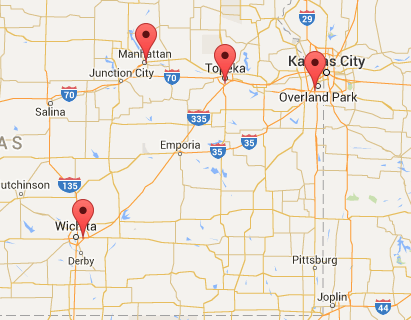
Marinello Schools of Beauty has been in business for over a century. It shut facilities this week in Manhattan, Wichita, Topeka, Overland Park and also in California, Nevada, Utah, and Connecticut.

School officials told the San Gabriel Valley Tribune that about 5,000 students and employees will receive transcripts and information about transfers next week.

The federal Department of Education announced this week that it’s stopping student financial aid programs at some two dozen campuses.

The agency alleges Marinello knowingly sought aid for students based on invalid high school diplomas, under-awarded some aid and charged students for excessive overtime.

Marinello spokesman Joe Hixon discounts the allegations and says they were based on flawed information.


Copyright Eagle Radio | FCC Public Files | EEO Public File