SAN ANTONIO (AP) — A U.S. Air Force officer from Kansas has died in a non-combat related incident while serving in Qatar.
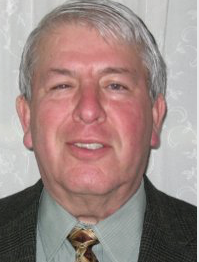
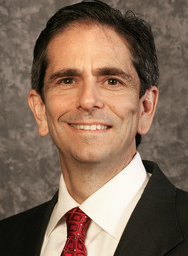
The Department of Defense says 42-year-old Maj. John D. Gerrie died Saturday in Al Udeid Air Base. The cause of death was not immediately released.
DOD says Gerrie was supporting Operation Freedom’s Sentinel. He was assigned to 453rd Electronic Warfare Squadron, Joint Base San Antonio-Lackland, Texas.
WICHITA, Kan. (AP) — The state will begin accepting applications this week for the energy assistance program.
The Kansas Department for Children and Families says it will start accepting applications Tuesday for its annual Low Income Energy Assistance Program to help qualifying households pay winter heating bills.
The agency says the primary groups assisted are people with disabilities, older adults and families with children.
The Wichita Eagle reports that income eligibility requirements are 130 percent of the federal poverty level. Applicants also have to be responsible for direct payment of their heating bills to qualify.
The agency says in a release that nearly 48,000 households received an average payment of $412 last year. The energy assistance is a once a year benefit.
TOPEKA, Kan. (AP) — A new measure in the Kansas Legislature is aimed at compensating people wrongfully convicted of crimes and was inspired by the case of a man whose murder conviction was recently vacated.
Rep. Ramon Gonzalez presented draft legislation to the House Committee on Corrections and Juvenile Justice on Thursday. The Topeka Capital-Journal reports hearings on the measure haven’t been scheduled.
Gonzalez works as a special prosecutor for the Jefferson County Sheriff’s Office. He spent several months reopening an investigation into the 1999 murder of Camille Arfmann in Oskaloosa. Floyd Bledsoe spent 16 years in prison for Arfmann’s murder but had his convictions vacated by a Jefferson County judge in December.
Gonzalez says other states allow compensation for the wrongfully convicted.
HUTCHINSON -Both sides for a defendant accused of cultivating mushrooms, distributing mushrooms, no tax stamp and cruelty to animals asked that any trial be pushed back to April, while plea negotiations continue.
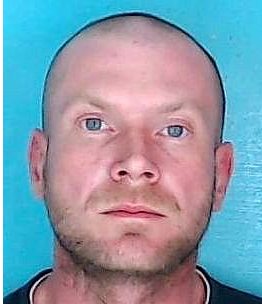
Jason Wineinger waived his preliminary hearing in the case.
The other suspect, Carlyeon Moore, 19, had his preliminary hearing and was bound over for trial.
The state had indicated that if Moore waived the hearing, they would continue with plea negotiations with him as well but Moore declined.
The two are accused of operating a mushroom growing operation inside a Hutchinson business.
On March 18, Hutchinson police served a search warrant at the business at 2534 N. Main. They found the mushroom growing operation. They also found a dog locked in a bathroom with no food and water and living in its own waste. Animal Control was called in and removed the animal.
Reno County District Judge Trish Rose indicated that there might be a plea entered by Wineinger in April.
Jim McNiece- photo Kansas State Board of Education
TOPEKA, Kan. (AP) — The state’s education department is planning to develop a system to measure the academic readiness of kindergartners.
The Kansas State Board of Education this week voted to instruct the Kansas State Department of Education to develop a system designed to identify children who need extra support in their early education.
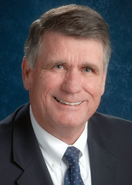
Jim McNiece, a Wichita Republican and chairman of the state board, says the state has long recorded education outcomes but has not concentrated on children who need help when they are young.
The Topeka Capital-Journal reports the board also adopted a five-point framework for school accountability designed to help individual children.
Education commissioner Randy Watson says the state will have to rework its accreditation system to fit the new framework.
WICHITA, Kan. (AP) — A new study shows Kansas’ high sales taxes on groceries have people crossing state lines to shop, particularly residents living in border counties.
The trend hurts low-income families, rural grocery stores and local governments.
Wichita State University’s Kansas Public Finance Center analyzed the latest available food sales data and estimated that Kansas lost $345.6 million in food sales in 2013. The data does not include last year’s sales tax hike that boosted Kansas’ food sales tax to one of the highest in the nation.
The state’s largest county, Johnson County, suffered the biggest losses with an estimated $93 million loss in food sales. But the losses on a per capita basis hit the smaller border counties the hardest.
Kansas is one of only 14 states that taxes groceries. Neighboring Nebraska and Colorado do not.
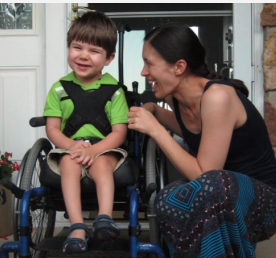
Photo by Ryan Reed/Special to KHI News Service Otis Reed, whose parents moved from Baldwin City to Colorado in search of a cannabis cure for the dozens of seizures he suffers every day, is slowly being weaned off ineffective pharmaceutical treatments and on to an oil derived from marijuana plants. Otis is shown here with his mother, Kathy Reed.
In a house at the foot of the Rocky Mountains in a suburb of Colorado Springs, a “marijuana refugee” who may spur a change in Kansas law is now 4 years old and improving cognitively.
Otis Reed, whose parents moved from Baldwin City to Colorado in search of a cannabis cure for the dozens of seizures he suffers every day, is slowly being weaned off ineffective pharmaceutical treatments and on to an oil derived from marijuana plants. “When you’re dealing with something like uncontrollable seizures, there are ups and downs.
But overall things are definitely up for us here and up for Otis here in Colorado,”
Otis’ father, Ryan Reed, said in a phone interview. “He’s got the best quality of life he’s ever had.” Back in Kansas, the chances of non-intoxicating hemp oil becoming legal for the treatment of seizures are greater than they’ve ever been.
Last year the House voted 81-36 in favor of House Bill 2049, which combined the hemp oil provision with legalization of hemp for industrial use and a lessening of penalties for first and second convictions of possessing small amounts of marijuana.
The bill was introduced by Rep. John Wilson, a Lawrence Democrat who represents the district where the Reeds lived before they moved to Colorado. Wilson calls it “Otis’ Law.”
Barring a veto by Gov. Sam Brownback, the bill needs only a passing vote in the Senate to become law. But this is the second year in a two-year legislative cycle, so if it doesn’t pass this session, proponents would have to start over with a new House and Senate.
Senate President Susan Wagle and other Republican legislative leaders have said they’re shooting for a short session focused on closing a state budget deficit without raising taxes after last year’s record-long session. Wilson said that could stymie the bill, or it could help it. Only “a handful” of legislators actually have sway over the budget, he said, because of the way the Legislature has written its appropriations rules. That leaves a lot of people with time on their hands. “We might find ourselves in a situation where, because most people in the
Legislature can’t work on the big issue, they want to be able to kind of coalesce around something,” Wilson said. “We might find that in the Senate, in particular, they might have the time and energy to focus on the medical hemp issue. But, then again, I could also be wrong.”
The Senate path A spokeswoman for Wagle said via email that the Wichita Republican has no comment on HB 2049. Wagle placed the bill in the Senate Corrections and Juvenile Justice Committee after it passed the House in May.
She and the chairman of that committee, Sen. Greg Smith, took heat from proponents for not scheduling a hearing on it as the tax and budget impasse stretched the session into June. Smith said he heard the complaints, but there was little he could do given how late in the session it was.
“I just told them, ‘Look, I know it’s important to you, so this will be the first bill the corrections committee takes up next session,’” Smith said last week.
He said that’s still the plan, and hearings on the bill are likely to commence the second week of session, after legislators return from the Martin Luther King Jr. holiday break. Smith said the committee will take testimony on all parts of the bill, but he expects the bulk of it to focus on hemp oil, which also is called cannabidoil or CBD. “There’s much more interest in the CBD part of it than anything,” Smith said.
A committee hearing does not guarantee the committee will vote on or “work” the bill, and passage in committee does not guarantee the Senate will take it up or pass it.
Kansas remains far more skeptical of cannabis than its neighbor to the west, which has legalized possession of small amounts of marijuana for recreational use as well as medical use.
Kansas Attorney General Derek Schmidt announced last week that his office is beginning a study of the detrimental effects of pot from Colorado crossing the Kansas border — an announcement that drew a rebuke from a medical marijuana advocacy group called Bleeding Kansas.
The type of broad-based medical marijuana legalization that group wants has never gained legislative traction in Kansas, though Democrats have introduced it several times.
But political winds are shifting nationwide, with 23 states and Washington, D.C., now having legalized medical marijuana in some form. In Kansas, even some Republican legislators with “tough-on-crime” reputations are expressing more openness.
Rep. John Rubin, a Republican from Shawnee who proposed the sentencing changes in HB 2049 as a way to free much-needed prison beds for violent offenders, said last summer that the state needs to “seriously consider” changing its medical marijuana laws.
Senate Vice President Jeff King, a Republican from Independence who sits on Smith’s committee, said he doesn’t think the Legislature will support broad legalization of medical marijuana any time soon. But he said Wilson’s bill is different in that it legalizes only a form of cannabis that cannot produce a high and only for a specific medical condition. “I’m open to a discussion on that,” King said. “
Any solution would have to be very narrowly tailored and very specifically focused on those kids that are really suffering. If I were a parent of a child suffering like that, I would want the state to be open to explore all options.”
The evidence
Whether the hemp oil bill passes or stalls this session, expect groups like Bleeding Kansas to continue to push for broad medical marijuana legalization.
The legal saga of Shona Banda, a Garden City mother, has stirred passions in the pro-cannabis community. Banda was outspoken online about using marijuana to treat her Crohn’s disease, but lost custody of her son after he talked about it at school. She’s facing five marijuana-related criminal charges with an arraignment scheduled for Monday.
Ryan Reed said that based on what he’s seen in Colorado, he’s also in favor of legalizing marijuana for treating a range of conditions like Crohn’s, post-traumatic stress disorder and Parkinson’s disease.
“I’ve seen it do some amazing things out here,” Reed said. “I would like to see it broaden out into other issues people are having.”
But skeptics say the pace of medical marijuana legalization is outstripping the evidence of its effectiveness. A limited study of hemp oil in 2013 spurred widespread hope when 80 percent of the children who participated showed some reduction in their seizures.
But the sample was small and subsequent studies have shown a success rate of closer to 30 percent. Studies on Crohn’s and other illnesses have been similarly limited in size, in large part because the federal Drug Enforcement Agency still categorizes marijuana as a Schedule 1 controlled substance.
“The federal restrictions on that type of research are pretty substantial,” King said. “Oftentimes at levels of government you’re blamed for what the levels of government above you won’t let you do, and I think this is one of those instances where the federal government has really restricted our ability to prospectively get data on these issues.”
Researchers from the Kansas Health Institute, the parent organization of the editorially independent KHI News Service, were unable to find enough reliable data to analyze marijuana’s potential medical benefits.
But by studying states that legalized medical marijuana broadly, they found that marijuana-related car crashes and hospitalizations due to accidental ingestion tended to increase after legalization while crime and illegal consumption did not. But groups like Bleeding Kansas argue that abuse of legal prescription drugs is far more dangerous to society, and marijuana could be a safer alternative.
The debate continues, nationally and in Kansas, but Reed said he sees the tide turning in favor of legal cannabis treatments. “It’s hard to argue against it,” Reed said, “once people get past that stigma of, ‘Oh my gosh, it’s marijuana.’”
Andy Marso is a reporter for KHI News Service in Topeka, a partner in the Heartland Health Monitor team. You can reach him on Twitter @andymarso.
SEDGWICK COUNTY – Four people were injured in an accident just before 10p.m. on Saturday in Sedgwick County.
The Kansas Highway Patrol reported a 2010 Chevy Silverado driven by Bartolome Leyva-Arroyo, 28, Wichita, was southbound on 151st West.
The driver failed to yield at a stop sign at Kansas 96 and pulled out in front of a 2004 Dodge Ram driven by Bryce Nelson, 22, Parkway, that was westbound on Kansas 96.
The Dodge struck the driver’s side of the Silverado.
Leyva-Arroyo and passengers in the Silverado Laura Luna-Sarinana, 27, and Aaron Leyva, 3, both of Wichita and a passenger in the Dodge Kyle Borntrager, 23, Haven, were transported to Wesley Medical Center.
Nelson and passengers in the Dodge John Gehling, 20, Hutchinson, and Cody Powers, 22, Arlington, were not injured.
Luna-Sarinana was not wearing a seat belt and Leyva was not restrained in a child safety seat, according to the KHP.
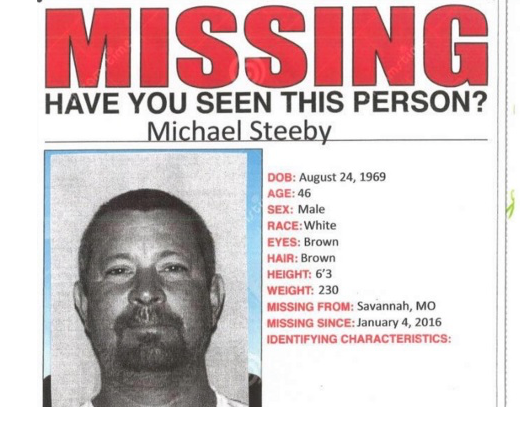
SAVANNAH, Mo. (AP) — The body of a northwest Missouri man who was missing for nearly two weeks has been found near his pickup truck in northeast Kansas.
The St. Joseph News-Press reports 46-year-old Michael Steeby of Savannah was last seen around 1:30 p.m. Jan. 4 at his home. He was reported missing two days later, sparking a search by local police and numerous other law enforcement agencies.
A plane from the Missouri State Highway Patrol that was searching along the Missouri River spotted Steeby’s vehicle around 2 p.m. Friday in a secluded part of Doniphan County, Kansas.
Police say there were no obvious signs of foul play, and that Steeby’s vehicle didn’t appear to be damaged.
The Doniphan County coroner has requested an autopsy to determine the cause of death.
JIM SUHR, Associated Press
JOHN HANNA, Associated Press
TOPEKA, Kan. (AP) — Repeated misses in Kansas’ monthly revenue projections has clouded the state’s ability to balance budgets, and some lawmakers are thinking the process could use reform.
Republican Gov. Sam Brownback’s latest spending plan unveiled days ago for the fiscal year that begins in July projects a $190 million hole. He believes that can be patched by such things as juggling state funds and selling off assets of the privatization-bound Kansas Bioscience Authority.
Kansas has struggled to balance its budget since the Legislature got on board with Brownback’s plan to slash personal income taxes in 2012 and 2013 in hopes of stoking the economy.
But since then, the state’s month-to-month revenue estimates have been volatile.
Republican Sen. Jeff Melcher of Leawood wonders whether it’s time to get outside help with financial modeling.
GARDEN CITY, Kan. (AP) — A man charged with child sex crimes was hired as a Wichita teacher last fall after a background check failed to uncover that he resigned from a southwest Kansas community college amid a child pornography investigation.
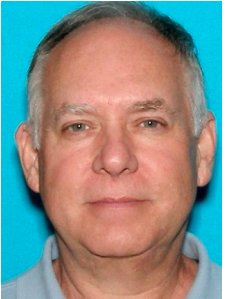
Sixty-two-year-old Steven Thompson, of Wichita, was charged this month with three counts of sexual exploitation of a child in Finney County, where he previously was a tenured computer science instructor at Garden City Community College. Garden City Police Capt. Randy Ralston says school officials reported in September 2013 that child pornography was found on Thompson’s work computer.
Wichita schools spokeswoman Susan Arensman told KWCH-TV that nothing showed up on the background check because Thompson hadn’t been charged when he was hired.
Thompson is free on bond. His attorney didn’t immediately return a phone message.
KANSAS CITY – A Kansas couple was sentenced Monday for fraudulently obtaining loans from the Small Business Administration, according to U.S. Attorney Barry Grissom.
Justin Johnson, 40, Wellsville, Kan., was sentenced to six months house arrest, followed by three years supervised release, and restitution of $53,000. His wife, Penny Johnson, 39, Wellsville, Kan., was sentenced to three years on probation and $53,000 restitution.
The defendants pleaded guilty to one count each of making false statements to the Small Business Administration and one count each of money laundering. Justin Johnson owned and operated several construction–related businesses including J-Right, Midland Concrete, A-Vision Landscape, Stucco Masters, Kingdom Homes and Timberview Construction. Penny Johnson was the bookkeeper for her husband’s businesses.
In their pleas, the Johnsons admitted they received a loan through the SBA Express loan program they claimed was for the purchase of equipment. In fact, the loan funds were used to pay off equipment loans and to make payments on construction loans held by Johnson’s various businesses. Loan funds also were used by the Johnsons for their personal use.
Grissom commended the Small Business Administration, the FBI, the Internal Revenue Service and Assistant U.S. Attorney Jabari Wamble for their work on the case.
The company was forced to take this action because of the impact on SeaPort’s business and operations following the effects of the shortage of airline pilots in the United States, according to a media release.
Stations will be closed and service is to be ceased at each of the following cities: • • Salina, KS • • Great Bend, KS
• • Burbank, CA
• • San Diego, CA
• • Imperial, CA
• • San Felipe, BC (Mexico)
• • Sacramento, CA
• • Visalia, CA
• • Kansas City, MO
Customers with reservations for impacted routes will be issued a full refund for unused tickets, and should call 888-573-2767 if they have additional questions about their refund.
Current service in the Pacific Northwest, Arkansas, Tennessee and Texas will be unaffected and are expected to operate as scheduled and without disruption. Customers with reservations for flights in these regions will continue to receive the quality customer service and airline experience that they have come to expect from SeaPort Airlines.
Customer seeking refunds for discontinued routes should call 888-573-2767.