WICHITA, Kan. (AP) — Federal authorities are warning Sedgwick County officials that asking some health clinic clients about their immigration status would violate federal rules.
U.S. Department of Agriculture officials told the county in emails obtained by The Wichita Eagle that asking participants in the Women, Infants and Children nutrition program about their legal status could put federal grant dollars for the entire county health department at risk.
The county asked the state in October to block illegal immigrants from the WIC program, but there is no eligibility requirement based on immigration status.
A regional WIC official says citizenship status has no bearing on eligibility so there’s no reason for the county to seek that information.
TOPEKA, Kan. (AP) — The Kansas Legislature’s top Democrats are predicting that Republican lawmakers will try to extend a new law for funding public schools that’s been criticized by many educators.
Senate Minority Leader Anthony Hensley of Topeka and House Minority Leader Tom Burroughs of Kansas City said Sunday that they believe the Legislature’s GOP majorities won’t be able to pass another school funding law this year.
The Legislature last year junked a per-pupil formula for distributing state aid to school districts, replacing it with “block grants.”
The new law expires in July 2017, but Hensley and Burroughs predicted Republicans will try to extend it another year.
Democratic lawmakers had a briefing on school funding issues from Deputy Education Commissioner Dale Dennis. They caucused a day before the Legislature opens its annual session.
——————
TOPEKA, Kan. (AP) — Democratic lawmakers were meeting to discuss school funding issues before the Kansas Legislature opened its annual session.
Democrats from both chambers gathered Sunday afternoon for a joint caucus. They were having a briefing on budget issues and hearing from Deputy Education Commissioner Dale Dennis about school funding.
Senate Republicans also planned to have what their leaders described as an orientation meeting Sunday evening. However, they said it would be closed to the public.
Both chambers were scheduled to convene at 2 p.m. Monday to formally open the session.
Lawmakers expect to debate overhauling how the state distributes more than $4 billion a year in aid to its 286 public school districts. But GOP lawmakers aren’t yet sure how far the Legislature will get in drafting a new school finance formula.
LAWRENCE, Kan. (AP) — The estate of a late librarian at the University of Kansas in Lawrence is doling out another gift of hundreds of thousands of dollars, this time to the place where she worked.
The Lawrence Journal-World says Ann Hyde has bequeathed $655,000 to the Kenneth Spencer Research Library.
Hyde retired in 2000 after a long career as manuscripts librarian and died in June 2014.
Her estate previously has donated nearly $500,000 to the Lawrence Humane Society and $230,000 to the Lawrence Public Library.
As part of her job at the library, Hyde catalogued manuscripts and wrote records of what they were, along with assisting people who were interested in using them.
Topeka – Governor Sam Brownback will deliver the 134th State of the State address at 5:30 p.m., Tuesday, Jan. 12 at the invitation of the Speaker of the House of Representatives, Ray Merrick (R-Stillwell.) This year, the State of the State address will be live-streamed on www.kansas.gov.
In addition to the live streaming on www.Kansas.gov, the State of the State address will be carried and live-streamed by several Kansas television and radio stations. Public television will not carry it live as in previous years.
In accordance with Section 5 of Article 1 of the Kansas Constitution, the Governor provides to the Legislature information on the condition of the State.
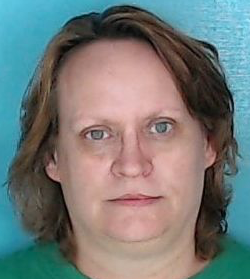
HUTCHINSON -A Kansas woman charged in two drug distribution cases entered a guilty plea in both cases on Friday.
In February of 2014 Lisa McHaley, 51, was arrested and charged with possession of marijuana with intent to distribute, possession of methamphetamine, no tax stamp and possession of drug paraphernalia, according to police.
The state alleged that she had between 25 and 450 grams of marijuana.
She entered pleas to the first two charges and the other two were dismissed as part of a plea agreement.
In August 2014 McHaley was charged with possession of methamphetamine with intent to sell and possession of drug paraphernalia with intent to package. She entered pleas to both charges.
Officers says they found a zip-close bag of a crystal substance in her purse. The substance field tested positive for methamphetamine and weighed about 20 grams.
There was also a lot of cash in that purse as well, according to the arrest report.
Officers testified they also found packaging materials, a scale and owe sheets in her bedroom.
LAWRENCE, Kan. (AP) — A Kansas City, Missouri, man has admitted in a Kansas court that he tried to kill a homeless shelter employee by slashing his throat.
The Lawrence Journal-World reported that 22-year-old Christopher McCay pleaded guilty in Douglas County to attempted first-degree murder.
He admitted that in March 2014 he used a steak knife from the Lawrence Community Shelter’s kitchen and stabbed 46-year-old Robert Shaner.
McCay had been a guest at the site.
He faces between a dozen and 54 years in prison, depending on the findings of his pre-sentence investigation.
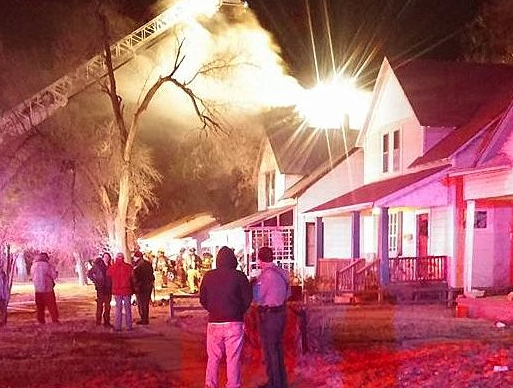
HUTCHINSON –Fire crews in Hutchinson were sent to a house fire just before 7:30 p.m. in the 300 block of West 6th Street, according to a media release.
When crews arrived, they found heavy fire venting from the second floor roof and windows.
Crews made an attempt to enter the structure, but found it to be too hot at the top of the stairs and were removed from the interior of the residence.
The fire was fought from the outside until conditions allowed for reentry and allowed them to extinguish the fire.
The blaze was contained in about 45 minutes with units remaining on scene for three and half hours for investigation and overhaul of the fire floor. Preliminary damage is estimated at $30,000.
Two occupants were home at the time of the fire. One occupant had minor injuries and refused medical care. One firefighter had minor injuries from a fall and also refused medical care.
The cause of the fire has been determined as accidental and being started by a space heater. Investigation cannot rule out other electrical issues.
Just after 7:30 p.m., fire units responded to the 500 block of East 3rd Street for a structure fire. When they arrived they found a fire had occurred outside the residence around the electrical panel. The resident had extinguished most of the fire prior to arrival. Westar was called. No was injured and damage was estimated around $500.
Just before 8 p.m. Fire units responded to the 800 block of East 11Street for a structure fire. Upon arrival, residents met units outside stating they had a fire on the stove that they thought was extinguished. Fire crews found a few small hot spots and the house filled with smoke.
Damage was contained to the kitchen, including the stove, cabinets, and ceiling areas. No one was injured in the fire and damage estimated around $15,000. A cooking fire appears to be the cause.
Since the Kansas cigarette tax rose from 79 cents to $1.29 per pack, revenue from tax stamps is up 65.5 percent over the same period in 2014. CREDIT ANDY MARSO / HEARTLAND HEALTH MONITOR
The 2015 session of the Kansas Legislature began with a budget crisis and Gov. Sam Brownback proposing a large hike in the state tobacco tax to help solve it.
The 2016 session is set to begin in January with the budget again in need of patching. But the kind of tobacco tax increase anti-smoking advocates believe would spur Kansans to kick the habit is less likely.
Last year’s temporary budget fix raised the cigarette tax by 50 cents per pack. That was only one-third what Brownback had requested, but even that level of increase was a source of considerable angst for legislators.
Brownback said in October that he plans to balance the budget in the upcoming session without further tax increases. His spokeswoman, Eileen Hawley, said in an email Friday that he will not propose another cigarette tax hike, even after revenue estimates were lowered in November, leaving another budget hole.
But the fears some legislators voiced about last session’s tax increase have not come to pass, which could crack the door for another increase if the Legislature finds itself scrambling against the clock to balance the budget again.
Taxes on smokeless tobacco products also could be part of the discussion, and hearings on electronic cigarette legislation are almost a certainty.
Border issue
Happy Patel is a big fan of the cigarette tax increase that the Kansas Legislature enacted last session. He believes it’s helped his business.
Patel owns Discount Smokes & Cheap Smokes, a tobacco shop on the Missouri side of State Line Road in Kansas City. Missouri has the lowest cigarette tax in the nation at 17 cents per pack. Across the street in Kansas the tax is now $1.29 per pack, and those who usually shop on the Kansas side of State Line Road seem to like his prices.
“They say, ‘We buy it in Kansas,’” said Patel, adding that customers say the prices at his store in Missouri are much lower.
Patel’s windfall was the nightmare scenario for Kansas legislators. They disregarded Brownback’s larger tax-increase proposal in part because they feared Kansans in border counties would flock to Missouri to buy their cigarettes, nullifying the revenue boost needed to balance the budget.
Despite anecdotes like Patel’s, the aggregate data shows that so far cigarette tax collections in Kansas haven’t suffered.
Since the state tax rose from 79 cents to $1.29 per pack — a 63.3 percent increase — revenue from tax stamps is up 65.5 percent over the same period in 2014. That means cigarette sales actually have climbed a bit in Kansas for the first five months of the higher tax.
Kansas isn’t losing much cigarette business to Missouri. Nor have Kansans cut back on their cigarette use.
“We haven’t seen the decline in consumption that was expected, but don’t have an explanation,” Jeannine Koranda, a spokeswoman for the Kansas Department of Revenue, said in an email.
Public health advocates had warned that the 50-cent increase wasn’t likely to be nearly the deterrent that Brownback’s proposed $1.50-per-pack hike would have been.
But they still expect it to help lower smoking rates somewhat in the long run.
“Regular and significant tobacco tax increases are an effective strategy for reducing tobacco use, particularly when the increase is coupled with funding for proven cessation programs,” said Kevin Walker, regional vice president of advocacy for the American Heart Association, which was part of a coalition of public health groups that pushed for the governor’s $1.50 increase.
Anti-smoking advocates say the state is paid back several times in public health savings for every dollar lost in tobacco taxes when a person quits.
But in the short term, the extra revenue from Kansans continuing to buy cigarettes looks good to legislators weary of budget crises.
Addressing an interim committee last month, Chris Courtright, the legislative research department’s top economist, called the higher-than-expected cigarette tax revenue “the biggest piece of good news” after months of lackluster reports from other revenue streams.
But Courtright also warned that recent history suggests anti-smoking advocates may be right.
“There may be some early indication that the slippage model developed by the Department of Revenue may have overestimated consumer behavior in response to this particular tax increase,” Courtright said. “But I would hasten to add that the last time the state raised cigarette taxes back in 2002-2003, the major slippage for some reason really began showing up in the second fiscal year. So this one will also bear some close scrutiny, I think, over the next 18 months.”
Walker offered a possible explanation for the delayed consumer reaction. Tobacco companies often use coupons and rebates to buffer the effect of a tax increase and ease smokers into paying more.
Walker expects cigarette purchases to fall but said Kansas policymakers still have work to do to deter smoking. The tax rate remains in the bottom half of states nationally, and Kansas doesn’t fund programs that help people quit at recommended levels.
Other products
Brownback’s proposal for the last legislative session would have raised the tax rate on other tobacco products as well, but legislators stripped that part from the final package.
The current tax of 10 percent of wholesale price on products like smokeless tobacco and cigars has not changed in decades. Jodi Radke, regional advocacy director for the Campaign for Tobacco-Free Kids, said not keeping the smokeless tobacco tax in line with the cigarette tax gives smokers an incentive to shift their addiction to smokeless tobacco rather than quit.
“The Legislature’s decision to not include other tobacco products in the final package last session, despite Gov. Brownback’s inclusion in his budget proposal, was disappointing and a missed opportunity that encourages users to choose alternate products to evade the current taxation on cigarettes,” Radke said.
Smokeless tobacco users remain a much smaller share of the overall tobacco market than cigarette smokers, but their numbers have been growing in recent years while cigarette use has declined.
Radke said if the Legislature is willing to consider increasing the tax rate on other tobacco products in the upcoming session, her group would support that.
Anti-smoking advocates will be taking more of a “wait-and-see” approach on e-cigarette taxes, she said.
Last year’s tax package included a levy on the liquid nicotine that e-cigarettes burn to produce an inhalable vapor. The tax goes into effect in July 2016, but e-cigarette industry representatives have called it unworkably vague, given the variation in e-cigarette liquids.
Tax committee leaders have said they’ll take another look at it during the 2016 session, and Radke said anti-smoking advocates will watch what comes of those talks.
“We anticipate that the introduced language last session may change, and thus, will need to see the language before determining any level of involvement or position,” Radke said.
Other health advocates have said they’ll push for e-cigarettes to be included in the state’s smoking ban during the upcoming session. In August, Topeka became the sixth Kansas city to add them to local smoking bans.
Andy Marso is a reporter for KHI News Service in Topeka, a partner in the Heartland Health Monitor team. You can reach him on Twitter @andymarso
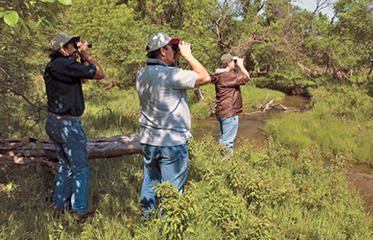
PRATT – New Year’s resolutions often focus on inner change, but what about making a change this coming year that involves the outside? If resolving to learn something new, find a hobby, spend more time outdoors, or become more active is on your plate for 2016, consider entering in the 2016 Kansas Birding Big Year competition.
You may not consider yourself a “birder,” but if you’ve ever watched a hummingbird sip at a feeder, took note of a flock of geese up high, or watched a robin build a nest in your front yard – you’re a birder. And if you can find a way to positively identify each species you spot this year, you just might win the competition running Jan.1-Dec. 31.
Hosted annually by the Kansas Department of Wildlife, Parks and Tourism (KDWPT), the Big Year is an informal competition where birders compete to see who can observe the most bird species in Kansas in one calendar year. Participants can compete in one of three categories: novice, intermediate, and advanced. Winners of each category will receive prizes to be awarded January 2017.
Participants are encouraged to carry a pocket-sized notebook and pencil to record their findings. Jotting down information such as size, color, sounds, and surrounding habitat, followed by a quick thumbnail sketch of the bird can prove to be very helpful for beginners.
Participants are asked to log their findings into the online service, eBird, available through the Cornell University website, www.ebird.org. The data collected is used to aid researchers in the study of species abundance, species range, and more.
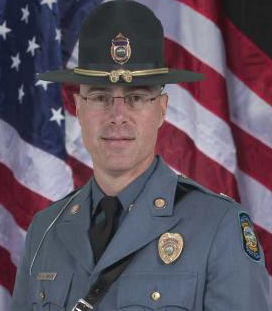
WICHITA, Kan. (AP) — The Kansas Highway Patrol is asking state lawmakers to support a $7.50 increase in vehicle title fees to hire an additional 75 troopers to address a sharp decline in manpower.
The Wichita Eagle reports more than one-third of the counties in Kansas have no Highway Patrol presence, while 29 are served by only one trooper. The other 40 counties are served by two or more officers.
Patrol Superintendent Col. Mark Bruce sent a letter to lawmakers say there were 501 troopers in 2006 but only 419 now.
The patrol also is asking members of the public to fill out a survey focusing on whether troopers should be allowed to have certain types of tattoos. Current policy bars applicants from having visible or offensive tattoos.
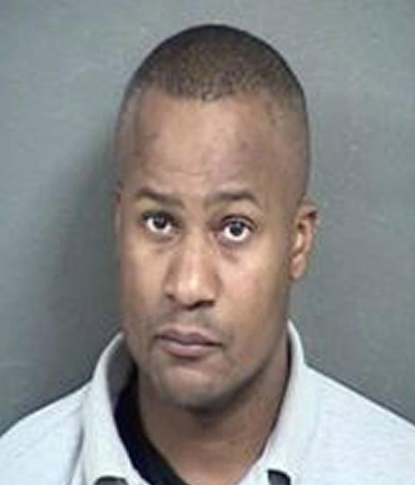
KANSAS CITY, Kan. (AP) — A 45-year-old man has been charged in the shooting death of another man in Kansas City, Kansas.
Franklin Bryant Jr. of Kansas City, Kansas, was charged in Wyandotte County with second-degree murder in Tuesday’s killing of Jerome Simmons. Bryant is jailed on $250,000 bond. It wasn’t immediately known if he had an attorney.
The prosecutor’s office said in a news release that the investigation into the killing is ongoing.
KANSAS CITY, Mo. (AP) — A new elementary school named after President Dwight D. Eisenhower has opened in his boyhood home of Abilene, Kansas, 46 years after he left office.
Parents considered Eisenhower as a name for an Abilene elementary school in the 1960s. But it wasn’t until Thursday that fourth- and fifth-grade students began classes in a building bearing the name of the 34th president and supreme Allied commander during World War II.
The school that some parents wanted to name Eisenhower decades earlier was ultimately named after President John Kennedy based on a tradition of naming district schools after assassinated presidents. The district hadn’t built a new elementary school since then.
 WICHITA, Kan. (AP) — Federal authorities are warning Sedgwick County officials that asking some health clinic clients about their immigration status would violate federal rules.