WASHINGTON (AP) — President Barack Obama is slated to finalize a set of new executive actions tightening the nation’s gun laws.
At a meeting with Attorney General Loretta Lynch, Obama is expected to sign off on a package of proposals aimed at curbing gun violence and cracking down on unregulated gun sales.
The package includes a proposal to expand background checks on gun sales by forcing more sellers to register as federally licensed gun dealers. The changes would be aimed at some sellers who skirt the background check laws by selling at gun shows or informal settings. Another proposal being considered would improve reporting of lost and stolen weapons, according to a person familiar with the plans.
Gun rights groups are likely to challenge the proposals in court.
CANTON, Kan. (AP) — A central Kansas farmer is offering a $5,000 reward for information leading to anyone responsible for killing and mutilating one of his cows.
John Shearer tells KWCH-TV of Wichita that he was feeding his cattle on New Year’s Day in McPherson County when he found one of the cows dead, its eyes gone.
It’s murky how the animal was killed. Shearer says the family’s veterinarian did find an injection mark on the cow’s neck, though it’s unclear whether that was from a previous vaccination.
The cow’s death came roughly two weeks after a farmer in Harvey County found one his bulls dead, its sex organs removed.
WICHITA- Two Kansas women were injured in an accident just after 10p.m. on Sunday in Sedgwick County.
The Kansas Highway Patrol reported a 1993 Mazda Protégé driven by Charlotte L. Bolain, 51, Wichita, was northbound on Interstate 235 just north of Seneca.
The driver lost control while eating and struck the inside guardrail. The vehicle then crossed the roadway and struck the outside guardrail.
Bolain and a passenger Jessica A. Valdovinos, 24, Wichita, were transported to St. Francis Medical Center.
Both were properly restrained at the time of the accident, according to the KHP.
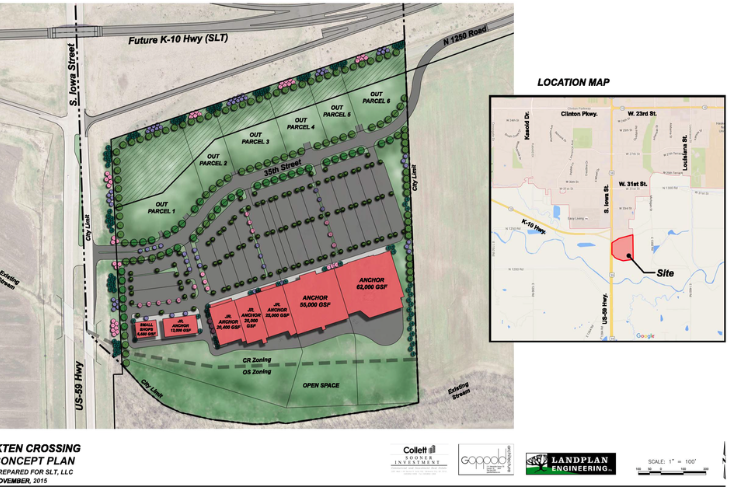
LAWRENCE, Kan. (AP) — The Lawrence City Commission will decide whether to make land-use and zoning changes that would allow for a new 250,000-square-foot shopping development.
The Lawrence Journal-World reportsthat the commission will meet Tuesday to discuss the KTen Crossing project planned on the city’s south side.
Commissioners must agree to rezone about 60 acres at the project’s intersection from residential to commercial property before North Carolina-based development group Collett can move forward. The city’s comprehensive plan must also be altered to reflect commercial use.
The issue was originally scheduled to go before commissioners Dec. 8 but was pulled from the agenda because one commissioner could not attend.
Collett hopes to break ground on the project this summer. The shopping center could open as soon as fall 2017.
INDEPENDENCE, Kan. (AP) — A preliminary hearing is scheduled for next month for a man shot and wounded by police in southeastern Kansas after he allegedly fired at them.
The Parsons Sun reports that 24-year-old Kenneth J. Jones of Parsons remains jailed on $1 million bond in Montgomery County. That’s where he’s charged with attempted second-degree murder and aggravated assault on a law officer.
Court papers show that the felony counts relate to a Nov. 5 confrontation between Jones and Coffeyville police, who were not injured.
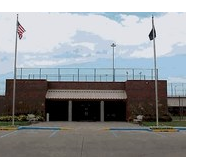
Ellsworth Correctional Facility- photo Kan. Dpt. of Corrections
JOHN HANNA, AP Political Writer
ELLSWORTH, Kan. (AP) — Unemployment is down and wages are up in Kansas — except for corrections officers.
They are leaving state prisons in droves because of low pay. It’s creating a public safety crisis that legislators will have to deal with on top of plugging a budget hole.
Their starting pay is about 33 percent less than the state’s average hourly wage of $20.20.
Their overall wages are about a quarter lower than the national average. The annual turnover rate is up to nearly 30 percent.
Things are so bad that the state is hiring 18-year-olds to manage hardened criminals, despite some prison leaders’ misgivings.
Republican Gov. Sam Brownback says he favors higher wages for corrections officers but state spending will be pinched by at least $160 million in the next fiscal year.
TOPEKA, Kan. (AP) — A Topeka, Kansas, couple has been ordered to stand trial on charges that they sexually assaulted a child since 2008.
The Topeka Capital-Journal reports that 37-year-old Kenneth Seel and 34-year-old Tiffany Seel are to stand trial on felony counts of rape, aggravated indecent liberties with a child, sodomy and endangering a child.
Kenneth Seel was ordered on Thursday to stand trial on 12 counts. His wife was bound over in October for trial on 11 felony counts and a misdemeanor battery count.
Both Seels have pleaded not guilty.
Tiffany Seel’s trial tentatively is scheduled to begin on Jan. 25, while her husband’s trial is set for May 23.
HUTCHINSON, Kan. (AP) — The National Weather Service says its preliminary data shows Kansas had 124 confirmed tornadoes in 2015 — 83 more than in 2014.
The Hutchinson News reports (https://bit.ly/1PA2Ftl ) the number of tornadoes last year tied for the fourth highest number since 1990.
Eric Metzger, a meteorologist in Wichita, Kansas, says moisture from a strong El Nino was a possible factor in 2015’s higher number of tornadoes.
Metzger said that while 124 tornadoes are above normal, Kansas experiences between 70 and 110 tornadoes every year.
The 2015 preliminary data is subject to changes, and official statistics will be released in six or eight months.
TOPEKA, Kan. (AP) — Kansas congressman Tim Huelskamp believes his political fortunes shifted when the U.S. House named a new speaker.
He’s picked up some clout among fellow Republicans but doesn’t plan to tone down the firebrand conservatism that has made him a tea party favorite.
But his combative style still irritates enough Republicans back in his 1st District of western and central Kansas that two opponents are running against him in this year’s GOP primary.
Roger Marshall is a Great Bend obstetrician and hospital CEO. Alan LaPolice is a Clyde educator and farmer who ran against Huelskamp in the 2014 primary.
They said the problem isn’t Huelskamp’s stances on issues such as the budget, health care and agriculture but his style. They argue that he simply can’t work well with others.
Mental health advocates face several changes at the start of the 2016 Kansas Legislature approaches. That includes the departure of Kari Bruffett, secretary of the Kansas Department for Aging and Disability Services, which handles mental health issues. HEARTLAND HEALTH MONTIOR FILE PHOTO
By ANDY MARSO
Kansas mental health advocates will enter the 2016 session at a critical juncture, 25 years into the state’s effort to move away from institutionalization to community-based care.
Crowded prisons and state hospitals have helped create momentum for statewide reforms to fill the gaps in that system — to provide a “continuum of care” to keep Kansans with persistent mental illness out of crisis.
But the state’s ongoing budget problems limit the Legislature’s ability to increase funding for the state hospitals or community-based mental health resources. And last year’s long, bitter tax fight has sapped some of the energy for any major legislative debate before the 2016 elections.
“Every forum I have been to with legislators, they are dreading January,” Amy Campbell, a lobbyist for the Kansas Mental Health Coalition, told the coalition last week. “They don’t want to come back. They want a short session. They want to go home and run for office with relatively few controversial votes on their record.”
At the same time, the Cabinet agency that handles many mental health issues — the Kansas Department for Aging and Disability Services — is in flux.
KDADS Secretary Kari Bruffett has been working for months with a committee of experts on continuum of care reform.
But Bruffett will leave the agency at the end of 2015 to take a job as policy director for the Kansas Health Institute. Her interim replacement, Tim Keck, is a former Kansas Department of Health and Environment attorney who is little-known in the mental health community.
As mental health advocates discuss continuum of care, they remain wary of a legislative change that allowed state regulation of antipsychotic medications prescribed to Medicaid recipients. They also disagree over a proposal allowing treatment centers to hold people involuntarily for up to 72 hours.
Meanwhile, Osawatomie State Hospital remains unable to take more patients as federally mandated renovations continue. Last week federal officials announced they were pulling Medicare reimbursements for Osawatomie patients admitted after Monday because conditions at the facility don’t comply with their regulations. The reported rape of an employee at Osawatomie State Hospital in October exposed security concerns that federal officials cited when they decided to halt Medicare payments to the facility.
All of which adds up to an uncertain session with a lot on the line.
Continuum of care
The Adult Continuum of Care Committee met five times in May and June before issuing a 42-page report in July to Bruffett.
The report’s recommendations included expanding Medicaid eligibility, restoring bed capacity at the Osawatomie hospital, lobbying for changes to federal regulations, limiting Medicaid payments for mental health services provided in large inpatient institutions and creating more crisis intervention services throughout the state.
Rather than disbanding following the report’s release, the continuum of care committee was made part of the Governor’s Behavioral Health Planning Council to continue working with the administration on implementation.
Susan Crain Lewis, president and CEO of Mental Health America of the Heartland in Kansas City, Kan., said Bruffett had been a good partner in that effort and the timing of her departure was unfortunate.
“I’m deeply hopeful that both the interim secretary and whoever ends up in that position will see the wisdom of Secretary Bruffett and of the individuals in that group and really move forward with that,” Lewis said.
KDADS spokeswoman Angela de Rocha said via email that the agency remains committed to continuum of care reform.
“The secretary’s departure does not mean that we are dropping this initiative,” de Rocha said.
Implementing the recommendations could be a challenge if it requires any additional state funding, though.
Campbell said she has been told “a couple of times” that the KDADS budget won’t be reduced, but she advised the mental health coalition members to watch individual program budgets carefully.
“Budget is going to again be a key issue for us,” Campbell said. “For us to be able to identify where money is being moved from and to, and how that is going to affect the programs that we care about is going to be a full-time job this session.”
Campbell said she believes legislative leaders know that the mental health system is “at a crisis point,” but their first priority is balancing the larger state budget.
Ted Jester, KDADS assistant director of mental health services, told the coalition that the agency is considering asking legislators to approve a mental health checkoff on income tax forms to fund “mini-grants that could grow over time” for community-based behavioral health programs.
Details of the checkoff proposal are not yet available, but Lewis said such a measure wouldn’t help financially until 2017 at the earliest, given the legislative schedule and the income tax filing schedule.
She and other advocates say the need to beef up community-based services is more immediate, especially given the limited capacity at Osawatomie, which is one of two state-run inpatient facilities for Kansans with severe and persistent mental illness.
The hospital is down 60 of its 206 beds during renovations, but de Rocha said construction is going well and some existing patients are being shifted into a new unit that could soon restore half the missing capacity.
“At some point we’ll be able to start taking new patients,” de Rocha said. “We are not there yet.”
Involuntary hold proposal
In the absence of better options for crisis management, a coalition of mental health professionals, police and court officials from four high-population counties in northeast Kansas have drafted a proposal to allow community-based treatment facilities to hold people who are having a mental health crisis against their will for up to 72 hours.
The proposal has divided the mental health community. Some argue that it’s a better alternative to the status quo, in which a mental health crisis can land a person in an emergency room or jail — sometimes for more than 72 hours — as they wait for a bed at a state hospital or other inpatient facility.
Other mental health advocates have serious reservations about the proposal’s threat to civil liberties.
“I don’t want people in jail,” Lewis said. “But at least you have due process while you’re in there.”
Lewis said the draft of the proposal she has seen is too broad in terms of when and for whom the 72-hour hold can be used. It also doesn’t provide any liability protection for police officers or mental health workers, which she said gives them an incentive to invoke the involuntary hold whenever possible and then keep the person detained for the full 72 hours.
“I would love to see something that works,” Lewis said. “This one’s got some real problems.”
Lewis and Rick Cagan, executive director of the National Alliance on Mental Illness Kansas office, both said they think some form of the proposal could pop up during the legislative session.
Cagan’s group is still evaluating it, but he said in September that some of his board members are supportive. NAMI’s Texas branch is bullish on a similar program in that state because of its potential to decriminalize mental illness.
Still, Cagan said in a recent interview that even if the involuntary hold measure works as planned, it wouldn’t close the holes in the mental health system.
“This is not a panacea, this is more on the crisis end of the system,” Cagan said. “The desire would be (that) we’re able to focus on building up less intensive, less restrictive aspects of the system.”
The mental health coalition advocates agreed it would be better if Kansans were getting the preventative mental health care they needed to manage their symptoms, so that discussion of holding them against their will was not necessary.
But Kyle Kessler, executive director of the Association of Community Mental Health Centers of Kansas, said that’s not the case. The gap is especially large for Kansans with mental health problems that have exceeded routine maintenance but don’t yet require inpatient hospitalization.
“We don’t have nearly the amount of quick and efficient connectivity to intensive outpatient services that we did before,” Kessler said. “So this is kind of coming about. This is tugging one end and expecting the other not to move.”
Mental health medication committee
Mental health advocates also are closely watching the effects of a law passed last session that allows the state to regulate mental health drugs within Medicaid by using tools like prior authorization requirements.
Medicaid in Kansas is now administered by three private insurance companies through a managed care program called KanCare. The advocates were concerned about how the for-profit companies might use prior authorizations.
But they backed off their opposition after KDHE officials changed the proposal to add an advisory committee of medical professionals to vet new regulations before they go to KDHE’s Drug Utilization Review Board, which writes the actual guidelines.
Now that the Mental Health Medication Advisory Committee has begun meeting, the advocates are again concerned about some of what they’re seeing.
“I think the jury’s still out,” Cagan said.
Lewis and others have said that the committee’s posted agendas are too vague. The committee requires those who wish to provide public comments to sign up ahead of time but doesn’t list which drugs will be discussed.
“It has been pointed out that we are not being given the information we need to provide cogent public comment,” Lewis said.
KDHE spokeswoman Sara Belfry said via email that the agendas list common drug classes like “antipsychotics” and “SNRIs,” and that getting more specific is not necessary.
“We don’t list specific drugs because the subjects listed on the agenda are self-explanatory,” Belfry said.
But Lewis said that’s not what mental health advocates agreed to last session, and if changes aren’t made the advocates might seek help from legislators.
She had similar concerns about the role of the MCO representatives at the meetings. The MCOs have no seats on the actual committee, but Lewis said that from one meeting to the next they’ve gradually moved from the outer ring of seats with the other observers to seats at the inner tables alongside committee members.
“This is not what people signed up for,” Lewis said. “There’s clearly the evidence of excessive influence.”
Andy Marso is a reporter for KHI News Service in Topeka, a partner in the Heartland Health Monitor team. You can reach him on Twitter @andymarso.
Editor’s note: KHI News Service is affiliated with but editorially independent of the Kansas Health Institute.
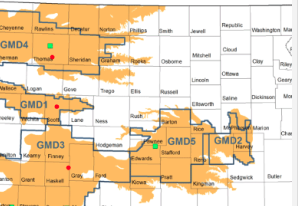
LAWRENCE, Kan. (AP) — Crews are undertaking an annual effort to monitor changes in groundwater levels in western and central Kansas.
The Kansas Geological Survey will measure nearly 570 wells beginning early next month. The Kansas Department of Agriculture’s Division of Water Resources will measure about 830 additional wells.
Ninety percent of the wells to be measured draw water from the massive High Plains aquifer system, which consists largely of the Ogallala aquifer. The remaining 10 percent are drilled into the Dakota aquifer and other deeper systems or shallow alluvial aquifers along creeks and rivers.
The data are used by landowners, state and federal agencies, local groundwater management districts, private entities and the general public.
Water levels in the 1,400-well network declined an average of 0.87 feet during 2014.
TOPEKA, Kan. (AP) — A Kansas program that waives state laws and regulations for participating schools will remain its current size in 2016.
The Topeka Capital-Journal reports no school districts applied to join the Coalition of Innovative School Districts in 2016. The Legislature created the Coalition of Innovative School Districts in 2013 as a deregulation program meant to remove barriers to better school performance.
The coalition includes six districts, while up to 20 percent of the state’s 286 public school districts can join.
Sen. Steve Abrams introduced the legislation creating the program and says the low participation rates aren’t cause for concern.
Among the program’s critics is the Kansas National Education Association, which says the program doesn’t address the real obstacle to innovation in Kansas schools, which KNEA says is insufficient state funding.

 KATHLEEN HENNESSEY, Associated Press