WICHITA, Kan. (AP) — Wichita police are investigating after a 19-year-old woman reported being robbed at gunpoint inside her hotel room.
The Wichita Eagle reports the robbery was reported early Saturday at a west Wichita hotel.
Wichita police Sgt. Joe Kennedy says the victim told police she answered the door to two men who were acquaintances of an acquaintance of hers. He says shortly after they were let into the room, the two men pulled out handguns and demanded money.
After the robbery, the two men got into an SUV and left.
HUTCHINSON, Kan. (AP) — A state official says abundant rainfall last year helped reduce the number of water use violators in Kansas.
The Hutchinson News reports that Kansas Department of Agriculture data show 10 Kansas irrigators were fined in 2015 for tampering with their water meter or falsifying their water use report. About 20 other water users were fined for overpumping their water right for the second or third time.
Most of the cases were for actions in 2014, with a few from 2013. Some other cases are still being completed by state officials.
Lane Letourneau, water appropriations manager for the state, says the rain helped people implement better water management strategies.
He also credited a program that allows irrigators to use more water during drought years and bank water during wet ones.
TOPEKA, Kan. (AP) — Kansas lawmakers have approved a six-month contract with a software company that was criticized for technical delays last year.
The Legislative Coordinating Council this week approved a $293,488 contract for Propylon, a Dublin-based technology firm with a U.S. office in Lawrence. The company will perform technical support and upgrades for the Legislature’s custom software.
The Wichita Eagle reports legislative leaders complained during the last session that software problems slowed down the legislative process and delayed votes. The contract was under review since July.
The state has paid Proplyon about $16 million since 2005 to construct and maintain the Kansas Legislative Information System and Services portal. It is used for writing, researching and publishing bills.
The new contract, which lasts through June, includes measures to ensure greater accountability.
WASHINGTON (AP) — The Department of Homeland Security is planning nationwide raids aimed at deporting adults and children who have already been ordered removed by an immigration judge.
The Washington Post says the U.S. Immigration and Customs Enforcement operation would begin as soon as January and would likely affect hundreds of immigrants who fled violence in Central America.
An ICE spokeswoman said Thursday that the agency focuses on individuals “who pose a threat to national security, public safety and border security,” including those who have been caught trying to illegally enter the U.S. and those who have been ordered removed from the country since January 2014.
The Obama administration disclosed this week that in the 2015 budget year, the U.S. deported the fewest immigrants since 2006.
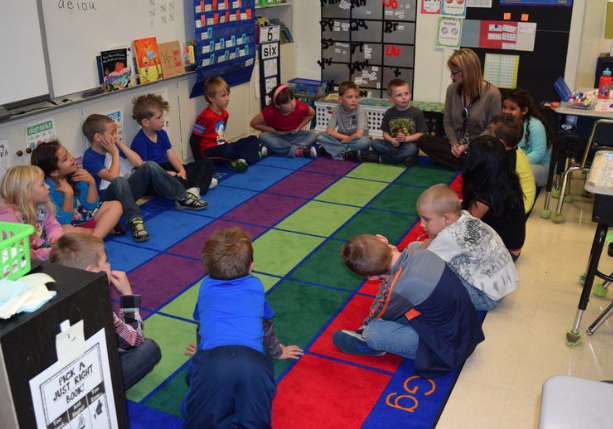
One of the first graders in Lori Williams’ classroom is clearly restless during the students’ morning community circle.
As the children discuss their weekly goals, how to be a good citizen and what integrity means, the young girl is distracted. She wriggles and shifts, pulls both arms through a shirt sleeve and eventually checks out, turning her back to the group and walking her hands up the chalkboard.
First-graders in Lori Williams’ class at Alexander Procter Elementary School take part in their morning community circle. TAMMY WORTH / HEARTLAND HEALTH MONITOR
Williams gently but purposefully touches the young girl’s foot, asking, “Are you OK?” Startled, the diminutive brunette mumbles, “Yes” and turns around, her attention refocused on her classmates.
In some schools, the inattention and fidgeting would be considered grounds for reproach or punishment. Not so with Williams, who’s trained in the practices of trauma-informed, or trauma-sensitive, schools.
A growing movement here in the Kansas City area and across the United States, trauma-informed care has taken root at local mental health and social service providers, hospitals and schools. Gradually but steadily, it’s spreading through school districts and early childhood centers looking to catch and stem childhood behavioral problems in the hope of avoiding hospitalizations and incarceration in adulthood. Although there isn’t much hard data yet showing whether the programs are effective in changing behavior, early results from preschool to high schools are encouraging.
The movement is based on the idea that much of student misbehavior may be the result of a brain that has been overwhelmed by repeated traumatic experiences.
Instead of providing reactive services for students in crisis, teachers in trauma-sensitive schools attempt to diagnose underlying problems and keep children emotionally present, opening their brain up for learning.
“We need to give some extra TLC to these students,” says Amy Hawley, principal of Alexander Procter Elementary School in Independence, Missouri, where Williams teaches. “Maybe provide extra triage and figure out what we can do to help support them inside these walls where we have some control.”
Toxic stress
When someone experiences stress, the body responds by releasing hormones that provide energy for “fight or flight.” When that occurs regularly, it takes longer for the hormones to diminish, affecting children’s brain development.
Trauma can occur at any income level, but tends to be more prevalent among lower-income, urban populations, according to Molly Ticknor, a trauma-sensitive trainer with Truman Medical Centers’ Resilience Incubator. The incubator provides training to area social service agencies, schools and other groups. Ticknor was one of the first to introduce the idea to elementary and secondary education locally when she began working with the Kansas City Public Schools three years ago.
More than 95 percent of students at pilot schools in Truman’s program qualify for free and reduced lunch, meaning they live below the poverty line. Ticknor has worked with districts including Independence, Kansas City, Center, Leavenworth, North Kansas City and Blue Valley. She says connecting the dots between poverty, toxic stress, violence and neglect often leads to a diagnosis of trauma.
The Independence School District took on the issue because administrators knew a large number of students had experienced significant trauma, says John Tramel, director of Family Services & Caring Communities with the district. That’s in part because of the socioeconomic status of its population: A majority of students are low-income and more than 5 percent are homeless.
“We know we have children in every socioeconomic range that suffer from trauma and they walk in not ready to work on reading or math or whatever else we are trying to teach,” says Beth Savidge, an assistant superintendent in the district. “We have to take care of the emotional side as well as the academic side of teaching to create an environment where children are able to learn.”
Paper tigers
When hardwired to remain in a heightened state of awareness, children who experience toxic stress are in constant overdrive. In elementary schools, this can take the form of outbursts, name-calling or putting one’s head down on the desk and refusing to work.
Ticknor says she has seen some early changes in this kind of behavior at schools undergoing her training. Two pilot elementary schools in Kansas City, for instance, had fewer behavioral problems after implementing trauma-sensitive principles. Through October of the 2013-2014 school year, Garfield and Rogers Elementary had 186 disciplinary referrals. At the same point in the 2014-2015, the schools had 139.
Lori Williams interacts with one of her first-grade students at Alexander Procter Elementary School. CREDIT TAMMY WORTH / HEARTLAND HEALTH MONITOR
Catching children early is important because these behaviors only intensify as they age. In middle and high school, they begin to look to drugs, alcohol and other risky behaviors to cope.
At Lincoln High School in Walla Walla, Washington, much of the student population had experienced some sort of childhood trauma, including parental abandonment, sexual abuse and mental illness among family members. The school was a roiling cauldron until 2010, when its principal, Jim Sporleder, went to an educational conference where he learned about trauma-sensitive schools.
Sporleder had grown tired of the traditional way these schools were run, with students acting out, getting suspended and returning to school ready for another fight. This cycle, he says, is “the easy way out.”
“If you can seek the cause … you can the change behavior,” he says in the documentary “Paper Tigers,” which examines the school’s trauma-sensitive journey.
Sporleder began implementing the trauma-sensitive principles and within three years, the number of fights at Lincoln went down by 75 percent and the graduation rate increased five-fold.
After seeing such success with the program, the community decided it would be beneficial to begin this work at a younger age and enlisted the help of Kansas City’s Crittenton Children’s Center to train the community at the early childhood level. Crittenton created Head Start Trauma Smart, a nationally-renowned model used since 2010 in early childhood centers.
Crittenton’s program touches 26 counties across Missouri covering 3,300 children statewide.
Crittenton was also called upon to work in secondary schools locally in 2014, training staff at Summit Ridge Academy, an alternative high school in Lee’s Summit, Missouri. The staff has seen positive results. In the 2014-2015 school year, the attendance rate increased by more than 83 percent among 75 percent of its students; the passing rate onto the next grade level increased by 10 percent; and confrontations fell by 50 percent compared with the previous year.
Janine Hron, CEO of Crittenton, said prior to implementing Trauma Smart in the Head Start program, up to 12 percent of Head Start children were being referred to Crittenton for therapy for behavioral disorders. After the program, that number went down by 50 percent. That equates into educational savings. As children move into elementary school, those with behavioral challenges are placed on what’s known as an individualized education program and receive special education services. Hron says the average cost to teach a child on an IEP is about $32,000 annually – as opposed to about $12,000 for other students.
“If there are two to three kids per class on an IEP and at least one is there because of behavioral reasons … then if 50 percent of those can be accommodated by improving their environment, that’s a lot of money,” Hron says.
In spite of these potential savings, Ticknor says there’s always some pushback against the initiative among districts, schools and staff. About 20 percent of people in the groups she works with don’t buy into the concept because of other issues like curriculum priorities, state standards, teachers’ contracts and testing prep.
Funding is also a challenge for cash-strapped districts. Truman’s program begins at $125 per hour for consulting and coaching and $40 per staff member for initial training. Ticknor said much of her work with schools has been funded through federal grants and other external funding. The Head Start program initially cost about $400 per student a year. Hron said it averages less than that now since they streamlined the training.
Safe zones
Ticknor trains schools on a framework rooted in concepts developed by Massachusetts Advocates for Children, a Boston-based nonprofit, which observed more than a decade ago that students who were frequently expelled or spent a lot of time in detention had often experienced some kind of trauma.
The group generated a series of papers highlighting the impact of domestic violence on children’s brains and adopted general principles of trauma-sensitive educational environments.
Ticknor built on this to create a general framework that instills creative problem solving, mindfulness, self-regulation and trust building. The concepts are supposed to be part of every aspect of the students’ experiences at school.
Hawley has incorporated them wholeheartedly at Procter, with much of the work focusing on goal setting, communication and rituals to make students feel safe.
Instead of saying “good morning,” greeters inquire, “How are you feeling today?” when students arrive.
Amy Hawley, Procter’s principal, with Milli, the school’s certified professional therapy dog. CREDIT TAMMY WORTH / HEARTLAND HEALTH MONITOR
Children are taught to fill each other’s emotional buckets instead of being “dippers.” The staff is encouraged to take “thankful walks” during breaks. To keep students in the room when they are acting out, teachers divert their attention with
tactile objects like Play-Doh and exercise bands to refocus their energy.
If children do need to leave, they are sent to a recovery room where they work on managing their emotions.
When researching ways to help students manage emotions, Hawley came across the idea of professional therapy dogs and adopted a gentle Labrador retriever, Millie. The dog, who spends her days resting in the school’s office, is trained to sense when children are anxious and offer a soft paw of support. If they need extra care, she can spend 15 to 20 minutes acting as a comforting “blanket.”
Since the implementation of trauma-informed teaching, behavior at Procter has changed dramatically. In the 2013-2014 school year, there were 542 referrals to the principal’s office. Last year there were 323 and this year there were only 98 through November.
Back in Williams’ room, the students in the circle discuss how to be respectful, responsible and safe, a mantra repeated in the classroom, on posters throughout the building and in morning announcements.
They show how they feel by giving a thumb’s up, sideways or down. They brainstorm ways to make unhappy students feel better, like smiling or playing with them. One young student reaches over and ties a friend’s shoes. Another – a self-proclaimed animal expert – offers to share his knowledge with anyone interested. The students are sleepy but relaxed and forthcoming with their ideas, goals and emotional state.
“We are teaching kids how to be aware and mindful of their bodies and understand what to do when they are scared or anxious,” Ticknor says. “Because if they don’t know what is happening, how can they be expected to regulate themselves?”
Tammy Worth is a freelance journalist based in Blue Springs, Missouri.
OLATHE, Kan. (AP) — The Kansas Bioscience Authority says it will become a private entity this year.
The Olathe-based authority was established in 2004 to attract bioscience technology to Kansas, using both state and private funds. The Lawrence Journal-World reports it has been criticized in recent years for the types of investments it made. Some lawmakers also said it wasn’t appropriate to use state funds for private equity investments.
Last year, lawmakers cut the authority’s state appropriation to $13 million for each of the next two years, rather than $35 million and $75 million the KBA was expecting.
The authority said Thursday its board of directors voted Dec. 18 to become a private entity. President Duane Cantrell will be replaced by Kevin Lockett, the current chief financial officer and chief operating officer.
TOPEKA, Kan. (AP) — A Kansas Court of Appeals panel has ruled that a Dodge City casino doesn’t have to pay the state’s “use tax” on electronic gaming machines it operates for the Kansas Lottery.
The three-judge appeals panel agreed with a state Board of Tax Appeals decision that said the Kansas Department of Revenue was wrong in collecting $801,588 in compensating use tax from the Boot Hill Casino and Resort in Dodge City.
The Topeka Capital-Journal reports the tax was from the casino’s purchase of out-of-state vendors’ electronic gaming machines on behalf of the Kansas Lottery, the state agency that oversees operations at three state-owned casinos.
The Court of Appeals panel said the casino isn’t obligated to pay the tax because it doesn’t own the equipment but manages them for the lottery.
TOPEKA, Kan. (AP) — A Kansas legislative panel is recommending that hepatitis C patients who drink alcohol or stop using their medications should lose Medicaid coverage.
The KanCare Oversight Committee also recommended this week that the state health department use step therapy, which requires Medicaid patients to try cheaper treatments first and receive more expensive treatments only if the other medicines fail. State law currently forbids that practice.
The Wichita Eagle reports that Sen. Jim Denning, a Republican from Overland Park, suggested the proposals.
Republicans on the panel said the state shouldn’t have to spend hundreds of thousands of dollars on someone with hepatitis C who doesn’t follow doctor’s orders.
The two Democrats on the committee voted against the hepatitis C proposal, with one calling it a “death sentence” for some patients.
NEW YORK (AP) — U.S. drivers saved a bunch of money on gasoline this past year, as Saudi Arabia and other OPEC members kept the pumps going in the face of low oil prices. Massive stockpiles of crude globally turned 2015 into the year of the pain-free fill up. More of the same is expected for 2016 as oil prices remain low. Here’s a quick breakdown of the numbers, courtesy of the AAA.
ONE FOR THE OIL MAN, TWO FOR ME
Americans saved a collective $115 billion plus this year on trips to the gas station. The average licensed driver pocketed more than $550, enough to cover a lease payment or two. The average price for a gallon of gas never broke $3 in 2015, and it dipped below $2 in December, the first time that’s happened since the Great Recession in 2009.
HOW ABOUT A NEW YEAR’S ROADTRIP?
You’ll likely be paying less on average this New Year’s Day than on the past seven. The national average price for a gallon of gas is $2, the lowest since 2008. But you’d likely pay less. About 71 percent of gas stations are selling gas for less than $2 per gallon, and 16,000 stations are charging less than $1.75. But you’ll pay up if you drive to California, Nevada, Washington, Alaska — or rent a car in Hawaii. Those are the five states where gas costs $2.47 or more.
CALIFORNIANS PAY MORE
No one paid as much as Californians for gas, the first time that’s ever happened. The culprit: unplanned maintenance at some major refineries. Still, the average price in the state of $3.16 per gallon was cheap compared with $3.79 in 2014. On the opposite end of the spectrum and the country, the Southeastern U.S. is rolling in gas savings. For the fourth year in a row, South Carolina was the lowest countrywide, at an average of $2.10 per gallon. Other states where the savings were grand included Mississippi, Alabama, Tennessee, and Louisiana.
LOOKING AHEAD
AAA estimates that the annual average price of gas in 2016 will be between $2.25 and $2.45 per gallon, which would be cheaper or at least comparable to the 2015 average of $2.40 per gallon. Some industry analysts believe that cutbacks by U.S. producers will trim the huge surplus in oil, and gasoline prices will rise as a result. But remember, oil is priced globally and with sanctions being eased, Iran could add to the glut and further pressure prices. During a two-day conference in November, some 50 major oil, gas and petrochemical projects were introduced in Tehran. That, for anyone who buys gas, points to a buyer’s market in 2016.
WASHINGTON (AP) — The Supreme Court’s lineup of cases is fit for an election year.
Affirmative action, abortion and another look at the Obama health care law and its contraceptive mandate all are before the court. And they could well be joined by immigration, giving the justices a run of cases that reads like a campaign platform.
Also coming are disputes involving labor unions, the death penalty and the way electoral districts are drawn.
Decisions in these high-profile cases almost certainly will split the court along ideological lines, mirroring the country’s stark partisan split. The most contentious issues won’t be resolved until late June, barely four months before the 2016 presidential election.
WINCHESTER- A Kansas man died in an accident just after 10:30p.m. on New Year’s Eve in Jefferson County.
The Kansas Highway Patrol reported a 1999 Chevy Malibu driven by Jackson, Isaiah J. Jackson, 27, Atchison, was westbound on Kansas192 at 7th Street in Winchester.
The driver missed the curve and continued straight onto Delaware Street.
He lost control of the vehicle. It entered the south ditch and overturned several times. The Driver 1was ejected through the rear window.
Jackson was pronounced dead at the scene and transported to Frontier Forensics.
He was not wearing a seatbelt, according to the KHP.
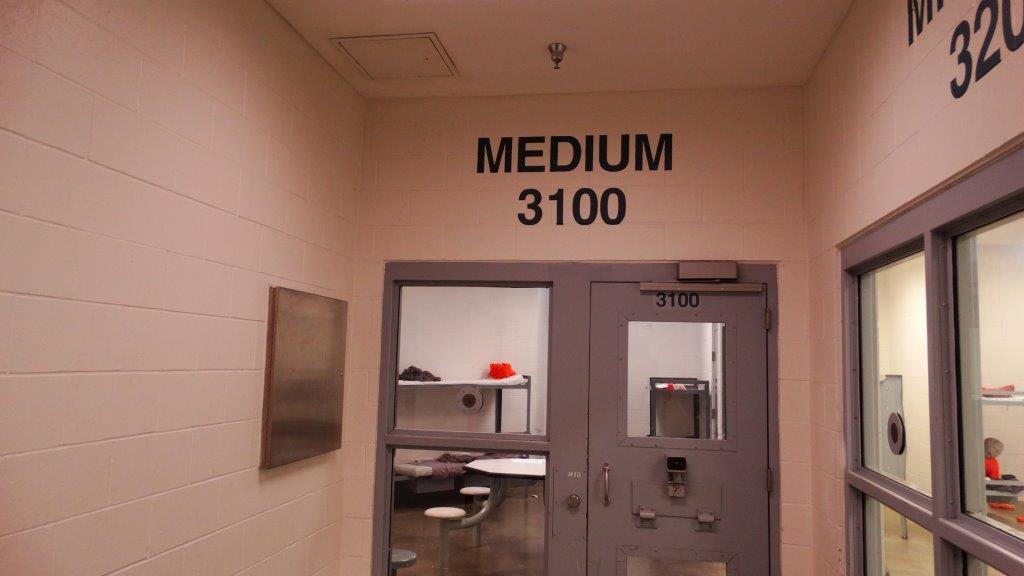
NEW YORK (AP) — Big-city jails grab headlines but a new report shows that small and medium-sized counties have driven the overall explosion in jail growth rates.
There are now nearly 700,000 people locked up in local jails in the country’s roughly 3,000 counties on any given day, up from 157,000 in 1970.
Forty-five years of jail statistics analyzed by the Vera Institute of Justice show smaller counties now account for about 44 percent of all jailed people in the U.S. That’s up from just 28 percent in 1978.
Exactly what’s behind that trend is not clear. But experts say a range of factors likely contribute, from law enforcement’s increased use of summonses and traffic tickets to the closing of state mental hospitals.

 WICHITA, Kan. (AP) — Wichita police are investigating after a 19-year-old woman reported being robbed at gunpoint inside her hotel room.