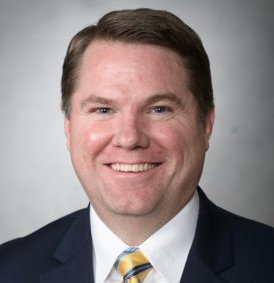
Bethany College President Will Jones is stepping down. Photo courtesy Bethany College
LINDSBORG – Will Jones will step down as Bethany College President this summer, Board of Directors Chair Corey Peterson, ’84, announced.
According to Peterson, an interim president will be identified in the coming weeks for the 2019-2020 academic year. Vice President of Academic Affairs Beth Mauch will serve as acting president until then.
“We have accomplished much at Bethany thanks to Will’s leadership, tireless work ethic, and skills. Fortunately, Will is leaving Bethany in a good place. We have had back-to-back record Freshman classes and strong enrollment growth over the past three years. The college is in good standing with the Higher Learning Commission, has an excellent cabinet, faculty and staff in place, and has enjoyed several years of balanced budgets. Looking forward, Bethany has the pieces and plan needed to continue strengthening its financial standing and to successfully carry on its mission,” Peterson said.
“I am deeply saddened to have Will leave, but am thrilled for him and his family to have an opportunity to move back to his home state to serve an excellent college where they will be near their family and friends. I will be forever grateful to Will and Amy and all they did to allow Bethany to not only survive a very difficult situation, but to thrive. Lindsborg will miss them and their wonderful children, and I wish them the very best.”
Jones said, “Serving Bethany with the college’s faculty, staff, and board the past three years has been a professional honor. I am deeply grateful for the confidence placed in me to help Bethany College to rise. It has been great to have been a Bethany Swede.”
Jones will become the president of Georgetown College effective July 1.
Since arriving at Bethany in the summer of 2016, Jones has led the college in increasing full-time enrollment nearly 25 percent. Jones also led the college in launching the Good Life Scholarship, Swedes to Sweden, and Bethany College Swedish Crafts. The college benefited from a renovation of Alma Swenson Hall and the construction of a new tennis complex during Jones’s tenure. In addition, Bethany also secured a USDA loan to purchase New Hall and refinance the college’s long-term debt and completed a five-year strategic plan.
Following the appointment of an interim president in the coming weeks, the college’s board of directors will begin a national search for a permanent successor.
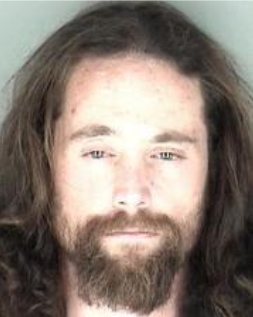
PORTLAND, Ore. (AP) — A man who has spent nearly three decades in prison for the 1989 killing of Oregon’s prisons director was freed Friday while the state appeals the ruling that led to his release.
Frank Gable left prison after a U.S. magistrate found in April that the trial court made an error in excluding evidence of third-party guilt.
U.S. Magistrate Judge John V. Acosta also found that Gable’s attorneys provided him with “ineffective assistance in failing to assert Gable’s federal due process rights in the face of the trial court’s error.”
Gable, now 59, left the prison in Lansing, Kansas, and had to report directly to a federal probation officer in Kansas City. He’ll be allowed to live with his wife in Kansas.
“We don’t really want to talk about the case or nothing, just glad to be out,” Gable told Fox 4 News.
“He thanks those who believed in his innocence all these years,” said Nell Brown, one of two assistant federal public defenders who represented Gable in challenging the murder conviction.
Francke’s brothers, Pat and Kevin Francke, have been staunch defenders of Gable and believe he was wrongly convicted.
Gable was convicted in the stabbing death in Salem of prisons chief Michael Francke, 42, and sentenced to life in prison without the possibility of parole.
Gable leaving the Lansing prison Friday photo courtesy KOIN TV
He must participate in drug and mental health assessments and counseling as directed by the U.S. Pretrial Services Office. Gable was not placed on electronic monitoring, although the state urged it.
The April ruling came after multiple witnesses recanted their testimony and defense lawyers cited a record of improper interrogation and flawed polygraphs used to question witnesses and shape their statements to police.
Acosta then ordered Gable to be released or retried within 90 days of his order.
The state’s appeal contends another man’s confession was unreliable because he had changed his account multiple times.
Acosta agreed to put his order to retry Gable on hold while the state’s appeal is pending before the 9th U.S. Circuit Court of Appeals.
KANSAS CITY (AP) — Authorities say a man has been charged with second-degree murder and other counts in the death of his girlfriend, whose body was found inside her rural Jackson County home near Kansas City earlier this week.
Dana Jones photo Jackson Co.
44-year-old Dana Jones is charged in the death of 54-year-old Kimberly Alcorn.
Jackson County Sheriff’s deputies were called to her home late Tuesday night for a report of a shooting, and arrived to see a car leaving the home and gave chase. Deputies say Jones was driving the car, which soon crashed. Jones, who was naked, was arrested.
Inside the home, deputies found Alcorn and a dog dead. Alcorn, who had also been stabbed, was pronounced dead at the scene.
TOPEKA, Kan. (AP) — A 19-year-old Kansas man was sentenced 30 years in prison for his role in a shooting death and three robberies.
Troupe photo Shawnee Co.
Dion Jha ‘Dantaye Troupe had previously pleaded no contest to second-degree murder and three counts of aggravated robbery.
Shawnee County District Attorney Mike Kagay says Troupe and three others were involved in the February 2018 killing of Tyrone Baggett.
Baggett was shot during a home invasion. He died later at a hospital.
The shooting came less than an hour after Troupe and three others robbed a Daylight Donuts in Topeka.
Two other men have been found guilty in Baggett’s death and the robberies. Erion Dijon Kirtdoll was sentenced to 46 years in prison, while Eli Perry awaits sentencing.
TOPEKA, Kan. (AP) — Two Kansas lawmakers are encouraging teachers to incorporate culturally relevant studies into their lesson plans.
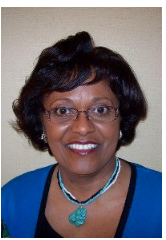
Rep. Winn
Democratic Reps. John Alcala and Valdenia Winn have spearheaded the Kansas Culturally Relevant Pedagogy Summer Intensive program, which is in its second year.
Alcala helped create the initiative after noticing a lack of representation of various ethnic groups in history text books.
The four-week-long program teaches Kansas educators about culturally relevant pedagogy, including Native American, Chicano/Latino, African American and Asian American studies. Teachers then implement the lessons in their classrooms, and share with program directors what did and didn’t work.
Alcala said all teachers who participate will be certified in culturally relevant pedagogy upon completion of the program. Those educators can then share the information with other teachers, he said.
“As far as we know, this model we have created in Kansas is unique,” said Christina Valdivia-Alcala, founder of the Tonantzin Society who also helped organize the program.
Valdivia-Alcala said the program helps educators teach students about “important footprints across America that different cultures have made,” as well as the importance of critical thinking.
Michelle McClaine, an English teacher at the Sumner Academy of Arts and Science school in Kansas City, Kansas, is among the educators participating in the program. She said Mexican American students make up about 60% of her students.
“Having a program like this where you can really ask those uncomfortable questions or get that info that you can be able to show all perspectives of what it means to be Americans, or what that story is of America is very cool and very empowering,” McClaine said.
SHAWNEE COUNTY — After two months, law enforcement authorities have not announced an arrest in the shooting death of 23-year-old Dwane Simmons and wounding of 23-year-old Corey Ballentine, both members of the Washburn University football team.
Dwane Simmons photo Washburn Athletics
Over the past week, an anonymous donor came forward with a $5,000 reward leading to an arrest in the shooting death of Washburn football player Dwane Simmons, according to a media release.
Just before 1a.m. April 28, police responded to the 1400 Block of SW 13th in Topeka after report of a disturbance with gunshots. Upon arrival, officers discovered a victim identified as 23-year-old Dwane Simmons. He was pronounced dead at the scene.
Another victim from the same incident identified as 23-year-old Corey Ballentine arrived at an area hospital by private vehicle with a non- life-threatening gunshot wound.
Simmons was a junior mass media major from Lee’s Summit, Missouri.
Investigation has determined that this incident occurred during a social gathering outside of a residence, according to a media release. There were dozens present at the social gathering.
In addition to the $5,000, Crime Stoppers is also offering up to a $2,000 reward. You can call us to report tips anonymously at 785-234-0007 or online at p3tips.com/128.
Anyone with information regarding this crime is encouraged to contact the Topeka Police.
A vaccine refrigerator at a health clinic in the Coffeyville school district. CELIA LLOPIS-JEPSEN / KANSAS NEWS SERVICE
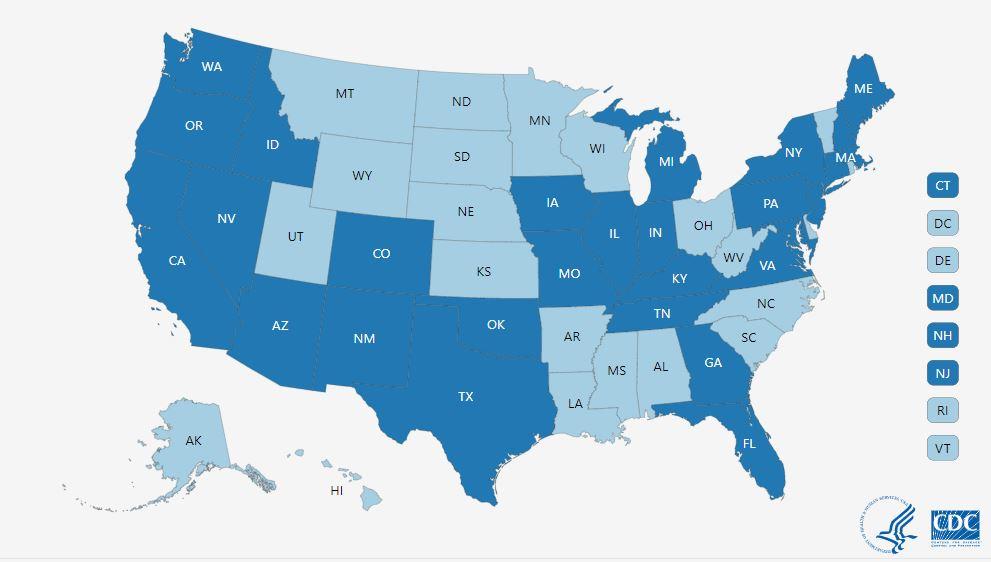
The national measles outbreak — numbering more than 1,000 cases so far — hasn’t hit Kansas yet, but it has crept awfully close to home.
State health officials think a case in Kansas looks nearly inevitable. And the state’s annual survey of kindergartener vaccination rates suggests some counties do better than others at getting little kids their potentially life-saving shots of MMR vaccine.
But while measles snags all the headlines, doctors, nurses, and public health workers worry not just about that, but about other vaccine-preventable diseases that rarely raise the same alarms for the public.
The best evidence suggests hundreds of thousands of Kansans lack one shot or another — or several. Those inoculations have the potential to save lives from pneumonia, cancer and other threats.
Why so many under-vaccinated people?
The latest map of the 2019 measles outbreak. Kansas is in a shrinking minority of states without cases yet (light blue).
CREDIT CDC
As best as public health experts can tell, religious objections and the anti-vaccination movement account for just a tiny sliver of the myriad reasons.
More commonly, the obstacles involve busy work lives, rural distances, poverty, spotty vaccine records, health providers with gaps in vaccine stock or limited walk-in hours, and the public’s lack of knowledge about things like adult vaccine schedules.
You found it! Click on the Golden Egg for a chance to win FREE Wild West Festival VIP tickets!
Every age group is affected, from infants to the elderly. Though Kansas theoretically requires shots against illnesses such as measles, whooping cough and polio for school attendance, 15% of kindergartners last year weren’t up to date on those.
If this all sounds dismal, some public health experts see cause for optimism.
Changing the mind of someone truly opposed to vaccines can seem daunting, even amid outbreaks of illnesses such as measles. This despite the risks of foregoing shots: hospitalization, brain damage, deafness or even death. A 105-degree fever is common with measles, Mayo Clinic says.
The vaccine against measles, mumps and rubella is required to attend school in Kansas.
CREDIT CELIA LLOPIS-JEPSEN / KANSAS NEWS SERVICE
“They cannot be swayed,” pediatrician Barbara Pahud said. “Focus on this ginormous group in the middle …. They’re already on board for some vaccines, so there is hope if you want to see it that way.”
That “ginormous” middle group of under- or unvaccinated people greatly outnumbers those who reject all vaccines based on religion or other beliefs. Researchers peg the latter group at just 1 to 3 percent of the population, said Pahud, a specialist in infectious diseases at Children’s Mercy Hospital in Kansas City and an associate professor at the University of Kansas and University of Missouri-Kansas City.
Read about the known side effects of specific vaccines here. No evidence links vaccines to autism, a myth that got its start with a debunked academic article. Read Autism Speaks’ FAQ page on what does and doesn’t cause autism here.
Likewise, researchers estimate inoculation against the cancer-causing HPV virus would wipe out 80 percent of the tens of thousands of cancer cases it causes across the country each year. (The vast majority of people pick up HPV at some point in their lives, though most clear it out of their bodies naturally without necessarily ever knowing.)
“Just imagine: Almost everybody knows a woman who’s had an abnormal pap smear,” said Edward Ellerbeck, chair of preventive medicine and public health at KU’s School of Medicine. “And imagine now, ‘Oh, I don’t have to worry about abnormal pap smears.’”
The HPV vaccine eliminates the number one cause of those worrying results.
Yet surveys and other sources that the federal government uses to gauge vaccine rates suggest just half of Kansas teens get even the first dose of the two-to-three dose HPV vaccine. The same problematically low rates apply to the state’s elderlyand the recommended pneumonia immunizations.
That frustrates groups trying to rein in the havoc these diseases wreak on our health, happiness and pocketbooks. Compared to other measures we should take to safeguard ourselves — exercise more, eat healthier, quit smoking — a shot in the arm is an easy lift.
“If there was a vaccine against breast cancer or lung cancer or prostate cancer, we’d probably run out of vaccine,” said Dan Leong, of the American Cancer Society in Kansas.
It’s tempting to conclude Kansans simply don’t want the HPV vaccine for cultural reasons. That theory seems less convincing when the best data available, though imperfect, suggest many more teens get the shots in other states. That includes nearby states with similar populations and cultural attitudes.
Checking records
It’s difficult to single out what hurdles stand between Kansans and vaccines — HPV or otherwise. Public health experts see a patchwork of barriers large and small, some of which are counterintuitive.
Last month, the Immunize Kansas Coalition launched a video campaign targeting not just parents but fellow doctors. Why? Because some physicians don’t talk to parents about the HPV vaccine. For that matter, says Wichita pediatrician Gretchen Homan, some don’t talk to patients about other vaccines, either.
Sometimes doctors assume parents will say no. Other times, they may not have the vaccines on hand.
“They don’t even pull up a vaccine record on the kids that they see,” said Homan, a professor at the KU School of Medicine in Wichita. “Because they’re not stocking those vaccines, they don’t even check the status and don’t have the conversation.”
That can leave families mistakenly thinking they’re up to date on all their shots, or that inoculation isn’t important. She encourages doctors and nurses to check vaccine records no matter what, and tell patients about locations that stock what they need.
Families, meanwhile, should feel free to ask.
Hepatitis A vaccine is already required for daycare in Kansas and will likely soon be required for school, too.
CREDIT CELIA LLOPIS-JEPSEN / KANSAS NEWS SERVICE
“Say, ‘Hey, I’ve heard there are three vaccines due at this age,’” she said, “‘and I want to know about all of them.’”
Other hurdles
Getting a handle on the problem is tough in part because of gaping holes in what we know about who does and doesn’t get vaccines.
“Our struggle right now is really being able to know what the true vaccination rate is in any county,” said Phil Griffin, who heads immunization programs at the Kansas State Department of Health and Environment.
State and federal vaccination estimates both have their limits. Kansas calculates rates among kindergartners annually with cooperation from a solid sampling of schools that provide more precise data than some of what the Centers for Disease Control publishes.
The CDC rate calculations, though, cover a wider range of shots and age groups.
But state health officials will gradually get a better picture of immunization rates across the state in coming years. Lawmakers tightened rules for electronic vaccine records starting next year.
That same change will fill in some of the gaps for health providers who often don’t know which shots a new-to-them patient has yet to get. Doctors and pharmacists will gain more consistent access to vaccine histories, as long as the shots occurred in-state.
Kansas lawmakers passed a law to give health providers more consistent access to electronic vaccine records when patients move within the state.
Griffin hopes that will boost vaccine rates. Think of a person dropping by a local pharmacy for a flu shot, for example. He or she could easily find out whether they need a pneumonia shot, too. And if so, get it then and there.
A few other efforts going on to boost vaccine rates in Kansas:
Starting this fall, Kansas plans to phase in two more vaccine requirements (hepatitis A and meningococcal ACWY) for school attendance. Inoculation rates for both would likely increase, though the hep A rates were already fairly strong because they’re required for day care in Kansas. On Thursday, parents opposed to vaccinations protested the state’s plans at a public hearing.
The state recently hired an epidemiologist to dig into vaccine rates across the state, is chasing grants to support the effort, and working closely with individual health providers on a regular basis to improve their practices.
Lawmakers also recently expanded vaccine access by letting pharmacists give more shots. That may particularly benefit teenagers who no longer visit their pediatricians as often, but who still lack a number of vaccines.
Celia Llopis-Jepsen reports on consumer health and education for the Kansas News Service. You can follow her on Twitter @Celia_LJ or email her at celia (at) kcur (dot) org.
PANMUNJOM, Korea (AP) — With wide grins and a historic handshake, President Donald Trump and North Korea’s Kim Jong Un met at the heavily fortified Demilitarized Zone on Sunday and agreed to revive talks on the pariah nation’s nuclear program. Trump, pressing his bid for a legacy-defining deal, became the first sitting American leader to step into North Korea.
The moment President Trump meets Chairman Kim at the DMZ and becomes the first sitting President to enter North Korea: pic.twitter.com/VwqGAEmmxz
What was intended to be an impromptu exchange of pleasantries turned into a 50-minute meeting, another historic first in the yearlong rapprochement between the two technically warring nations. It marked a return to face-to-face contact between the leaders after talks broke down during a summit in Vietnam in February. Significant doubts remain, though, about the future of the negotiations and the North’s willingness to give up its stockpile of nuclear weapons .
The border encounter was a made-for television moment. The men strode toward one another from opposite sides of the Joint Security Area and shook hands over the raised patch of concrete at the Military Demarcation Line as cameras clicked and photographers jostled to capture the scene.
After asking if Kim wanted him to cross, Trump took 10 steps into the North with Kim at his side, then escorted Kim back to the South for talks at Freedom House, where they agreed to revive the stalled negotiations.
The spectacle marked the latest milestone in two years of roller-coaster diplomacy between the two nations. Personal taunts of “Little Rocket Man” (by Trump) and “mentally deranged U.S. dotard” (by Kim) and threats to destroy one other have given way to on-again, off-again talks, professions of love and flowery letters.
“I was proud to step over the line,” Trump told Kim as they met in on the South Korean side of the truce village of Panmunjom. “It is a great day for the world.”
Kim hailed the moment, saying of Trump, “I believe this is an expression of his willingness to eliminate all the unfortunate past and open a new future.” Kim added that he was “surprised” when Trump issued an unorthodox meeting invitation by tweet on Saturday.
Trump had predicted the two would greet one another for about “two minutes,” but they ended up spending more than an hour together. The president was joined in the Freedom House conversation with Kim by his daughter and son-in-law, Ivanka Trump and Jared Kushner, both senior White House advisers.
Substantive talks between the countries had largely broken down after the last Trump-Kim summit in Hanoi, which ended early when the leaders hit an impasse.
The North has balked at Trump’s insistence that it give up its weapons before it sees relief from crushing international sanctions. The U.S. has said the North must submit to “complete, verifiable and irreversible denuclearization” before sanctions are lifted.
As he announced the resumptions of talks, Trump told reporters “we’re not looking for speed. We’re looking to get it right.”
He added that economic sanctions on the North would remain. But he seemed to move off the administration’s previous rejection of scaling back sanctions in return for piecemeal North Korean concessions, saying, “At some point during the negotiation things can happen.”
Peering into North Korea from atop Observation Post Ouellette, Trump told reporters before he greeted Kim that there had been “tremendous” improvement since his first meeting with the North’s leader in Singapore last year.
Trump claimed the situation used to be marked by “tremendous danger” but “after our first summit, all of the danger went away.”
But the North has yet to provide an accounting of its nuclear stockpile, let alone begin the process of dismantling its arsenal.
The latest meeting, with the U.S. president coming to Kim, represented a striking acknowledgement by Trump of the authoritarian Kim’s legitimacy over a nation with an abysmal human rights record.
Trump told reporters he invited the North Korean leader to the United States, and potentially even to the White House.
“I would invite him right now,” Trump said, standing next to Kim. Speaking through a translator, Kim responded that it would be an “honor” to invite Trump to the North Korean capital of Pyongyang “at the right time.”
Trump became the first sitting U.S. president to meet with the leader of the isolated nation last year when they signed an agreement in Singapore to bring the North toward denuclearization.
In the midst of the DMZ gathering, Trump repeatedly complained that he was not receiving more praise for de-escalating tensions on the Korean Peninsula through his personal diplomacy with Kim. Critics say Trump had actually inflamed tensions with his threats to rain “fire and fury” on North Korea, before embracing a diplomatic approach.
North Korea’s nuclear threat has not been contained, according to Richard Haas, president of the New York-based Council on Foreign Relations. He tweeted Sunday that the threat of conflict has subsided only because the Trump administration has decided it can live with North Korea’s “nuclear program while it pursues the chimera of denuclearization.”
Every president since Ronald Reagan has visited the 1953 armistice line, except for George H.W. Bush, who visited when he was vice president. The show of bravado and support for South Korea, one of America’s closest military allies, has evolved over the years to include binoculars and bomber jackets.
While North Korea has not recently tested a long-range missile that could reach the U.S., last month it fired off a series of short-range missiles . Trump has brushed off the significance of those tests, even as his own national security adviser, John Bolton, has said they violated U.N. Security Council resolutions.
The pursuit of higher education can be intimidating, not just for students, but for parents as well. It is a massive monetary investment and many can become overwhelmed by the costs. Expenses and fear often keep individuals from pursuing their dreams and education goals. The State Treasurer’s office is in the business of incentivizing parents to begin saving for their child’s educational success. One of our most unique savings incentives is a matching grant program called Kansas Investments Developing Scholars (K.I.D.S) and since my time as State Treasurer I’ve made spreading the word about this amazing program one of my top priorities.
With the growing price of tuition every year, combined with annual expenses, the dream of college is hard to make a reality.
But with the Kansas K.I.D.S. Matching Grant program individuals in specific income brackets can get an extra boost from the state to save for their children’s education. With a minimum investment of $100 a year into a Learning Quest 529 account, qualified individuals can receive a grant from the state of Kansas matching every dollar you place in your account up to $600 per year. Over the course of 18 years of eligibility a single K.I.D.S. account could potentially be funded with up to $10,800 of state grant dollars. It is a 100% return on investment designed to equip and support families to send their children to college with minimum debt.
The matching grants program has 1200 spots available annually with a budget of $720,000 to match investments.
Chelsea Sexton graduated from Kansas University with help from a K.I.D.S. account.
Cindy Sexton and her daughter Chelsea were one of many who took advantage of this amazing opportunity. Chelsea’s father passed away when she was three years old, leaving Cindy to shoulder the burden of providing for their little family and saving for Chelsea’s future. Cindy set aside $25 from each paycheck for 14 years into a Learning Quest 529 account, and also qualified three times for $600/year in grants through the K.I.D.S. Matching Grant Program. Because of this extra help, Cindy was able to send her daughter to college with minimal debt.
“Thanks to the K.I.D.S. Matching Grant Program, our dream came true,” Cindy says. “It was a no-brainer to take advantage of a program that matches money for saving for college” Cindy says, “I’m so thankful we found out about it.”
For Kansas families concerned about the affordability of higher education a K.I.D.S. account is an amazing opportunity to fund your child’s education. Certain lower-income qualifications are required, but it is important to note that more than 40% of households with children are eligible for this program. With no risk and only reward, it does not even cost a penny to open an account.
A K.I.D.S matching grant can change the course of a child’s future and that is why we are so excited and passionate about this program. Because of Cindy’s hard work, she was able to watch her daughter break the cycle in her family and a college education was a huge part of it. Not only did Chelsea’s degree earn her an amazing job, she was able to pay back her student loans almost immediately, which she only had to take out for her last year of school.
You found it! Click on the Golden Egg for a chance to win FREE Wild West Festival VIP tickets!
“It makes me emotional to see her living this fairy tale life that I always wanted for her,” says Cindy. “No one deserves it more … she’s a wonderful daughter and has my whole heart.”
For more information on how to open a Learning Quest 529 account or find out if you are eligible for the K.I.D.S. Matching Grant, please visit www.LearningQuest.com or contact our office at 785-296-3171.
TOPEKA, KAN. – A Kansas man was sentenced this week to 12 years in federal prison for trafficking in methamphetamine, according to U.S. Attorney Stephen McAllister.
Clearwater photo Shawnee Co.
Charles Wesley Clearwater, 32, Topeka, pleaded guilty to one count of conspiracy to distribute methamphetamine. In his plea, he admitted he sold methamphetamine to investigators working undercover several times. A search warrant served at his home in the 1600 block of S.W. Western Avenue turned up eight firearms that Clearwater used in furtherance of drug trafficking.
McAllister commended the Drug Enforcement Administration and Assistant U.S. Attorney Greg Hough for their work on the case. This case was prosecuted as part of the Department of Justice’s Project Safe Neighborhoods program.
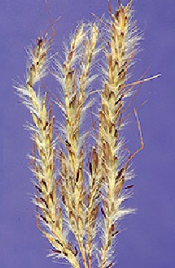
MANHATTAN, Kan. (AP) — Kansas agricultural officials are considering a quarantine to slow the spread of an invasive plant that’s threatening the state’s native grasses.
The Kansas Department of Agriculture recently sought public input on a plan to quarantine invasive yellow and Caucasian bluestem grasses. The varieties have invaded all but three counties in Kansas.
Declaring the quarantine would prohibit the movement of all seeds, plants or parts of bluestem grasses within Kansas or across the border into the state.
The move could affect some ranchers who rely on the species when cutting hay to feed livestock.
Ron Klataske, executive director of environmental nonprofit Audubon of Kansas, expressed support for the proposal, saying bluestems are both difficult and expensive to eradicate.
“It has a dramatic detrimental impact,” Klataske said. “It basically destroys all native plants.”
He said bluestems are inferior to native grasses in terms of livestock forage, erosion control and wildlife habitat.
Kansas Livestock Association Attorney Aaron Popelka acknowledged that bluestem grasses pose a threat to the state’s biodiversity. But Popelka said the livestock group opposes the plan because it could economically hurt producers.
He said the quarantine would prevent hauling hay containing the invasive bluestems, affecting farmers and ranchers in areas where the grasses aren’t posing a big challenge.
Popelka said most of the bluestem grasses “came from the (state) Department of Transportation allowing it to be seeded along roadways.”
He said producers shouldn’t be forced to deal with a problem largely manufactured by the government.
Popelka instead suggested that the state blocks the sale and planting of bluestem seeds in Kansas. He also said the state could list bluestems as a noxious weed. The label would allow the plant to be managed on a county-by-county basis.
The Department of Agriculture doesn’t have a timeline to decide on the quarantine, according to officials.
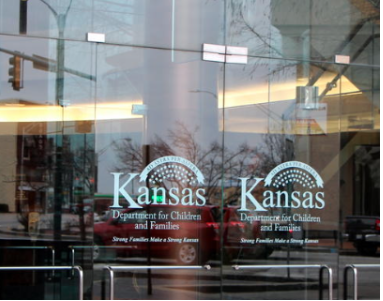
TOPEKA, Kan. (AP) — A dispute is escalating in Kansas between top Republicans and Democratic Gov. Laura Kelly’s administration over a policy change making it easier for adults who are not working to keep receiving food assistance.
The state Department for Children and Families on Friday released an internal analysis defending the legality of the change, made in May. The department has said the change will help the homeless and young adults aging out of state’s foster care system and that recipients could receive extended benefits through September.
The agency released its analysis in responding to a letterearlier this week from Republican Attorney General Derek Schmidt. He told the department’s top administrator, Secretary Laura Howard, that the change “appears to conflict” with a 2015 state law setting tougher rules for food and cash assistance.
Top Republicans in the GOP-controlled Legislature contend the change violates the 2015 law, which included a work requirement and have promised that a committee will review the issue later this year.
House Majority Leader Dan Hawkins, a Wichita Republican, said Friday that the department’s legal analysis does not change his mind. He said a lawsuit to block the change “certainly is a possibility,” though a spokesman for Schmidt said only that his office is reviewing the response.
“There’s an intent out there that they were not to skirt the work requirement in any way, and we’re going to continue to press that,” Hawkins said.
The federal government pays for food assistance and covers half of each state’s administrative costs. It generally limits able-bodied adults age 18 to 49 without dependents to three months of assistance within a three-year period if they aren’t working or enrolled in job training.
The 2015 state law specifies the same policy and says the department can’t ask the federal government for a waiver or start a program to avoid the rule. The law codified stricter policies for food and cash assistance that former Republican Gov. Sam Brownback’s administration set, making them harder to undo.
The federal government gives states some flexibility to grant exemptions to extend food assistance month by month to people who are about to lose it because they aren’t working. Spokesman Mike Deines said the agency expects to grant about 16,000 extensions through September, each good for one month for one adult, with some recipients receiving three.
The agency’s legal analysis said it is not seeking a waiver of federal rules and, “ascribing to ‘program’ its ordinary and common meaning, the one-time grant of an additional three months of benefits does not fit.”
Kelly was a state senator before becoming governor in January and strongly opposed the 2015 law. The measure gained national attention for telling families they can’t use cash assistance to attend concerts, get tattoos, see a psychic or buy lingerie, with the list of don’ts amounting to several dozen items.
Critics like Kelly contend Brownback’s welfare policies punished poor families. DCF announced this week that it is loosening a work requirement for people receiving state childcare subsidies to cover another 3,000 kids. So far, Republicans are not contesting its legality.
“This is a first step in repairing the safety net that was pulled from vulnerable Kansans during the previous eight years,” the governor said.
Hawkins said Kelly has made her opposition to work requirements clear, but taxpayers don’t want people who can work “just living off of the government.” Republicans argue that the stricter rules promote self-sufficiency.
“We want to help the people that honestly need help, but if you can work, go to work,” he said.