We have a brand new updated website! Click here to check it out!

KDHE: It’s not too late to vaccinate

flu shotTopeka – The Kansas Department of Health and Environment (KDHE) urges all Kansans to get a flu vaccine. It is important to protect yourself and your loved ones from the flu, especially as you gather with family and friends during the holidays.

National Influenza Vaccination Week, December 6-12, highlights the importance of continuing flu vaccination through the holiday season. In Kansas, influenza activity typically peaks during the holidays. According to data from the Influenza-like Illness Surveillance Network (ILINet), influenza-like illness in Kansas is just below the national rate. To date, there have been no confirmed influenza cases tested by KDHE.

The best way to prevent seasonal flu is by getting a flu vaccine each year. Everyone 6 months and older should get vaccinated against the flu. Vaccination is especially important for those at high risk for complication including young children, pregnant women, adults 65 years and older, and anyone with chronic health conditions. Those caring for, or in regular contact with, an infant less than six months of age or persons at high risk for complications should also be immunized.

On average, 5 to 20 percent of the U.S. population gets the flu each year. Last year, 95 people in Kansas died as a direct result of the flu. This was the highest number of influenza deaths in the last 20 years in Kansas. For information about influenza and to find a location to get vaccinated, visit: www.kdheks.gov/flu/index.html

Kan. regents to mull transcript notations for sexual assault

Board of regentsTOPEKA, Kan. (AP) — The Kansas Board of Regents is set to discuss a proposal that would require all state universities to add a notation on a student’s transcript if the student is expelled for sexual assault.

The Lawrence Journal-World  reports that the Regents Council of Presidents, made up of leaders of the six state universities, will take up the issue at next Wednesday’s meeting.

Regents spokeswoman Breeze Richardson says the presidents have “confidently” agreed that they want such a requirement. She says the proposal will likely go to the Regents Governance Committee in January, and if approved, will be forwarded to the full Board of Regents for a vote.

The draft policy has not yet been made public.

Kansas woman accused in killing of stepson, 7, hears charges

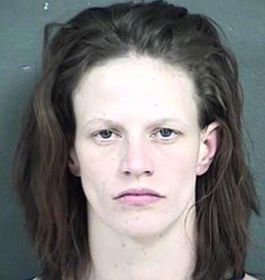
Jones- photo Wyandotte County

KANSAS CITY, Kan. (AP) — A Kansas woman accused in the death of her missing 7-year-old stepson has briefly appeared before a judge.

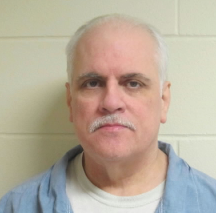
Heather Jones was charged Friday with first-degree murder and child abuse in the death of a child whom authorities believe to be her stepson. She’s in custody on $5 million bond. Her husband, Michael Jones, is in custody on the same charges.

Heather Jones appeared Monday via a video feed before a Wyandotte County judge, who read the charges to her and set her next court appearance for Dec. 22.

No lawyer is listed to comment on her behalf.

Police said the child was reported missing after authorities called to the family’s

Michael A. Jones- photo Wyandotte County Sheriff

home last month found a juvenile’s remains at the property. Tests to identify the remains are expected to take weeks.

Man pleads in money laundering case after I-70 arrest

moneyWICHITA, KAN. – A California man pleaded guilty Monday to a federal money laundering charge in Kansas, according to U.S. Attorney Barry Grissom.

Andris Cukurs, 69, Glendale, Calif., pleaded guilty to one count of conspiracy to commit money laundering. In his plea, he admitted that on Nov. 14, 2014, he was carrying $314,855 in cash in his car when he was stopped on I-70 by the Dickinson County Sheriff’s Department.

Cukurs had an agreement with another person to deliver the money, which he knew was derived from the distribution of drugs.

Sentencing is set for March 3. Both parties have agreed to recommend a sentence of 30 months in federal prison. Grissom commended the Kansas Highway Patrol, the Dickinson County Sheriff’s Department, the Drug Enforcement Administration and Assistant U.S. Attorney Debra Barnett for their work on the case.

Commissioner rejects Pete Rose’s plea for reinstatement

pete roseUSEJOE KAY, AP Sports Writer

CINCINNATI (AP) — Baseball Commissioner Rob Manfred has rejected Pete Rose’s plea for reinstatement, citing his continued gambling and evidence that he bet on games when he was playing for the Cincinnati Reds.


Manfred says in a letter sent to Rose and made public Monday that baseball’s hits king hasn’t been completely honest about his gambling on baseball games. Manfred also noted that Rose continues to bet on baseball games legally, even though his gambling got him into trouble.

Manfred says it’s an unacceptable risk to reinstate Rose under those circumstances.

The commissioner says that Rose’s standing with baseball’s Hall of Fame is a separate matter. He’s currently ineligible to be considered for the ballot.

Obama: U.S. military hitting IS group harder than ever

President Obama at the Pentagon briefing on Monday

JOSH LEDERMAN, Associated Press

WASHINGTON (AP) — President Barack Obama says the United States military and allied forces are hitting the Islamic State group harder than ever.

Obama says the group’s leaders cannot hide, and the group is losing territory. Obama also says the U.S. strategy of hunting down leaders, training forces and stopping the group’s financing and propaganda is progressing.

The president made the remarks after meeting with his national security team at the Pentagon on Monday. The rare meeting outside the White House is part of a public relations drive to ease public worries about domestic terrorism ahead of the holidays.

Obama is making the case for his broad counterterrorism strategy, including his ongoing campaign against the Islamic State group in Iraq and Syria.

Court hears death-penalty appeal in rape, murder of Kan. college student

Kleypas- photo Kan. Dept. of Corrections

JIM SUHR, Associated Press

TOPEKA, Kan. (AP) — A man condemned to death for the 1996 rape and killing of a southeast Kansas college student again is asking the state’s highest court to throw out his sentence.

The Kansas Supreme Court heard two hours of arguments Monday morning involving 60-year-old Gary Kleypas’ appeal.

Kleypas was convicted of attacking and killing 20-year-old Pittsburg State University student Carrie Williams in 1996. He became the state’s first person condemned to die in more than three decades.

After the state Supreme Court in 2001 overturned Kleypas’ death sentence, another jury restored it in 2008.

At the time of Williams’ death, Kleypas was on parole for a 1977 murder in Missouri.

The Kansas Supreme Court last month upheld a death sentence for the first time since the state reinstated capital punishment in 1994.

—————-

TOPEKA, Kan. (AP) — A man condemned to death for the 1996 rape and killing of a southeast Kansas college student again is asking the state’s highest court to throw out his sentence.

The Kansas Supreme Court on Monday morning was to hear arguments involving 60-year-old Gary Kleypas’ appeal.

Kleypas was convicted of attacking and killing 20-year-old Pittsburg State University student Carrie Williams in 1996. He became the state’s first person condemned to die in more than three decades.

After the state Supreme Court in 2001 overturned Kleypas’ death sentence, another jury restored it in 2008.

At the time of Williams’ death, Kleypas was on parole for a 1977 murder in Missouri.

The Kansas Supreme Court last month upheld a death sentence for the first time since the state reinstated capital punishment in 1994.

Sheriff: Puppies perish in Kansas barn fire

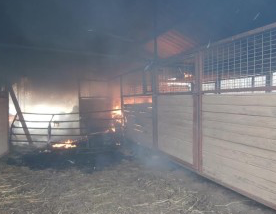
Barn fire Friday in Saline County

SALINE COUNTY – Fire officials say a water bowl heater is responsible for a fire in a pole barn in the 3400 Block of Gypsum Valley Road.

Seven Border collie puppies were killed in the fire on Friday afternoon southeast of Salina, according to Saline County Sheriff’s Captain Roger Soldan.

The water bowl heater was located in a stall where the puppies were housed.

Three hundred bales of hay, 11 saddles and tack were destroyed. A cargo trailer parked next to the 45-foot by 50-foot pole barn was also damaged.

Photos Saline County Sheriff's Office
Photos Saline County Sheriff’s Office

The owner of the property Rosetta Wiles was not at home when the fire was reported

No exact damage estimate was available.

It is expected to be several thousands of dollars, according to Soldan.

Eleven Kansas hospitals face Medicare penalties for safety incidents

By Jordan Rau, KAISER HEALTH NEWS

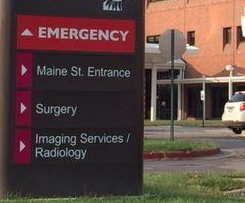
Screen Shot 2015-12-14 at 9.57.47 AMThe federal government is penalizing 758 hospitals with higher rates of patient safety incidents, and more than half of those places also had been fined last year, Medicare records released show.

Eleven of the hospitals are in Kansas. Four of those also were fined last year.

The 11 Kansas hospitals are among 758 nationwide being penalized by Medicare for hospital-acquired infections and other complications that Medicare considers avoidable:

  • South Central Kansas Medical Center*, Arkansas City
  • Susan B. Allen Memorial Hospital, El Dorado
  • Premier Surgical Institute, Galena
  • Mercy Hospital Independence
  • Geary Community Hospital, Junction City
  • University of Kansas Hospital*, Kansas City, Kan.
  • Saint John Hospital*, Leavenworth
  • Blue Valley Hospital, Overland Park
  • Menorah Medical Center*, Overland Park
  • Labette Health, Parsons
  • Salina Surgical Hospital

* Indicates hospitals penalized for the second year.

Among the hospitals getting punished for the first time are some well-known institutions, including Stanford Health Care in Northern California, Denver Health Medical Center and two satellite hospitals run by the Mayo Clinic Health System in Minnesota, according to the federal data.

The fines are based on the government’s assessment of the frequency of several kinds of infections, sepsis, hip fractures and other complications. Medicare will lower all its payments to the penalized hospitals by 1 percent over the course of the federal fiscal year, which runs through September 2016. In total, Medicare estimates the penalties will cost hospitals $364 million.

The penalties, created by the 2010 health law, are the toughest sanctions Medicare has taken on hospital safety, and they remain contentious. Patient safety advocates worry the fines are not large enough to alter hospital behavior and that they only examine a small portion of the types of mistakes that take place.

Medicare plans to add more types of conditions in future years. “I think the penalties are important,” said Helen Haskell, a prominent patient advocate. “I think it’s the only thing that gets people’s attention.

My concern is the measures stay strong or even be strengthened.” Hospitals say the penalties are counterproductive and unfairly levied against places that have made progress in safety but have not caught up to most facilities.

They also object to the health law requirement that Medicare must punish a quarter of hospitals each year. “What bothers me the most is when people are improving and get that penalty, that’s money that could be invested into better care,” said Dr. Mark Jarrett, chief quality officer for the North Shore-LIJ Health System on Long Island, which had several hospitals penalized this year.

“Taking the money away, all you’ve done is to make it harder for hospitals to function.”

‘Complications are still profitable’ 

The penalties are one prong of the health law’s mandate to leverage taxpayer dollars to improve hospital quality. Each year, Medicare also docks the pay of hospitals with too many patients coming back within a month, and it doles out bonuses and penalties to hospitals based on patient satisfaction scores, death rates and other performance measures.

Nonetheless, Medicare payments to most hospitals continue to be based primarily on the number and nature of the services they conduct, a system that health care experts say encourages hospitals to perform more procedures and focus on complex — and lucrative — ones. “For hospitals, complications are still profitable,” said Dr. Martin Makary, a pancreatic surgeon and researcher at Johns Hopkins Medicine in Baltimore who studies safety.

“Much of what we do in health care still has the incentives aligned the wrong way.” This second round of the Hospital-Acquired Condition Reduction Program was based on the government’s assessment of the frequency in 2013 and 2014 of infections in patients with central lines inserted into veins, urinary catheters, and incisions from colon surgeries and hysterectomies.

Those infection rates comprise 75 percent of Medicare’s evaluation. The rest is based on eight other complications, such as surgical tears, collapsed lungs, broken hips and reopened wounds between July 2012 and June 2014. Most of these complications were part of last year’s penalty assessments, but the infections from colon operations and hysterectomies were added to the calculations this year.

In practice, only about one in six hospitals are getting the penalty because Congress exempted veterans hospitals, children’s hospitals and “critical access” hospitals, which are generally the sole providers in their area. In releasing the numbers, Medicare said average hospital performance improved for two of the three measures that the government relied on for the penalties both last year and this year. Infections from catheters used to collect urine from patients who are not mobile increased slightly over the year.

Criticism from hospital industry, researchers 

The HAC penalties have come under criticism by the hospital industry and researchers. A paper in the Journal of the American Medical Association examined the first year of the program and found that the hospitals that were penalized were more likely to have characteristics usually associated with quality.

These included accreditation by the Joint Commission, the presence of the most extensive types of trauma centers and more nurses per patient. Daron Cowley, a spokesman for Intermountain Healthcare in Salt Lake City, said in a statement that the penalty evaluation is “flawed and there are clearly refinements and changes needed.” Intermountain’s flagship hospital in Murray, Utah, has been penalized both years.

Cowley said the penalty assessments do not properly consider the “substantial variations in size and number of procedures performed” by different hospitals. Another paper published in May in The American Journal of Infection Control suggested that while health experts recommend hospitals use urinary catheters as rarely as possible to limit the chance of infections, those same hospitals may look worse because the catheters are mostly used in the sickest patients, who are more prone to infections.

A number of hospitals, such as those run by UCLA Health, have focused on decreasing the use of catheters in response to the penalty program. Both UCLA Medical Center, Santa Monica and Ronald Reagan UCLA Medical Center were penalized this year. Dr. Robert Cherry, chief medical and quality officer of UCLA Health, said in a statement that infection rates decreased this year.

Dr. Brian Whited, vice chair of operations at Mayo, endorsed the penalties even though they were levied against Mayo hospitals in Fairmont and Albert Lea. “As an organization, we’re not satisfied with these results and understand we have work to do to reduce hospital-acquired conditions,” Whited said in a statement.

“We support the objectives of the Hospital-Acquired Condition Reduction Program, and all our practices have been developing improvement strategies and other changes to reduce those conditions.” A total of 407 hospitals were penalized both years of the program.

SW Kan. police officer among suspects given hunting citation

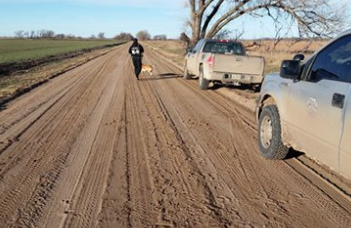
Game Warden and K9 Gypsy tracking a suspect's trail and searching for evidence in Ford County on Dec. 9, - photo KDWPT
Game Warden and K9 Gypsy tracking a suspect’s trail and searching for evidence in Ford County on Dec. 9, – photo KDWPT

DODGE CITY, Kan. (AP) — A Dodge City police officer and at least one other suspect have been cited for illegal deer hunting practices.

The Dodge City Daily Globe reports  that members of the Kansas Wildlife and Parks received reports of a possible illegal deer hunt in Spearville Wednesday. The suspects allegedly used a two-way communication device.

Dodge City Police Chief Craig Mellecker says wildlife officers cited one of his officers who was allegedly involved in the incident. No disciplinary action has been taken on the officer, but an investigation is possible pending more information.

The charges that the suspects could face for using communication devices are misdemeanors if it’s their first offense. The penalties are a fine between $500 and $1,000 or up to 6 months in jail and the possibility of hunting licenses revoked for up to one year.

Kansas sees more tornadoes than normal in 2015

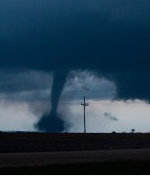
Gove County tornado in November -Photo by Shirley Heier

WICHITA, Kan. (AP) — Meteorologists say Kansas saw more tornadoes than normal this year, but all but a few were weak and short-lived.

The Wichita Eagle reports there were 108 tornadoes in Kansas by the end of August, 18 more than normal for that period. Nationwide there were 971 tornadoes through October compared with the nearly 1,150 that typically touch down each year.

Only a few days qualified as a tornado outbreak in Kansas, including one that came in November when 15 twisters touched down in the southwest and northwest parts of the state.

The National Weather Service says it was the first time tornadoes have touched down in November in northwest Kansas since official tornadoes began being kept more than 50 years ago.

A blizzard hit the same areas the next day.

Memorial fund established for Kan. boy after tragic accident

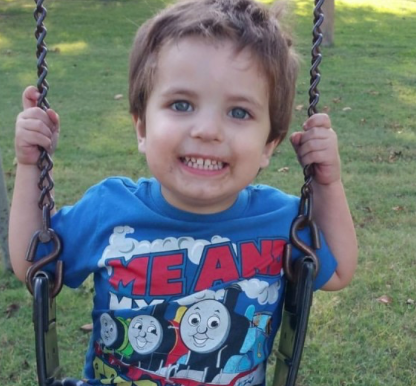
From the Gofundme page

SOUTH HUTCHINSON – The family and friends of a 3-year-old who lost his life in a tragic accident on Friday have established a Gofundme page to raise money to help them with final expenses and to help the family on the path to recovery, according to the Reno County Sheriff’s office. Visit the page here.

Kaden William Nagle was the son of Reno County Sheriffs Deputy Andrew Nagle and Stephanie Rooney.

The boy died from a self-inflicted gunshot after he found a loaded handgun.

Reno County Sheriff Randy Henderson said the boy found a loaded Glock handgun in the apartment his father shares with a friend, according to a media release.

He says Andrew Nagel was in another room and heard a gunshot. He ran to his son and found him with a gunshot wound.

The boy was pronounced dead at the scene. Reno County District Attorney Keith Schroeder says the gun that killed Kaden did not belong to his father.

It belonged to “a friend” of someone at the apartment where Nagel was living temporarily.

Police: Dead body in car stopped in middle of Kan. street

police body found

TOPEKA, Kan. (AP) — A person has been found dead in a car in east Topeka after a woman reported finding a bloody phone near her back door.

The Topeka Capital-Journal reports that the body of a white male was found around 4:25 a.m. Sunday. The body was inside a vehicle that was stopped in the middle of the street.

Officers responded to the scene following a report of “unknown trouble.” Police say the incident is being investigated as a homicide.

No arrests have been made in the incident.

Copyright Eagle Radio | FCC Public Files | EEO Public File