We have a brand new updated website! Click here to check it out!

Meaning of ‘one person, 1 vote’ at stake at Supreme Court

supreme court

MARK SHERMAN, Associated Press


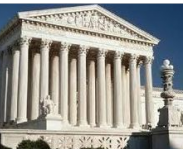
WASHINGTON (AP) — The growing political influence of Latinos could be slowed by a Supreme Court case over the constitutional requirement to make electoral districts roughly equal in population.

Two voters in Texas are asking the court, in arguments set for Tuesday, to order a drastic change in the way Texas and all other states divide their electoral districts. Rather than basing the maps on total population, including non-citizens and children who aren’t old enough to vote, states must count only people who are eligible to vote, the challengers say. They argue that change is needed to carry out the principle of one person, one vote.

They claim that taking account of total population can lead to vast differences in the number of voters in particular districts, along with corresponding differences in the power of those voters.

A court ruling in their favor would shift more power to rural areas and away from urban districts in which there are large immigrant populations that are ineligible to vote because they are too young or not citizens.

Civil rights groups note that Texas was the big winner in the 2010 census when it picked up four congressional seats, due mainly to growth in its Hispanic population.

There’s only one explanation for the court fight, said Thomas Saenz, president and general counsel of the Mexican American Legal Defense Fund. “The plaintiffs in Texas are interested in stemming the growth of Latino political power,” he said.

The legal challenge is being financed by Edward Blum, whose Project on Fair Representation also is behind a Texas affirmative action challenge that will be argued before the high court on Wednesday, as well as the lawsuit that led to the 2013 decision that wiped away a key element of the federal Voting Rights Act.

A second case on Tuesday’s agenda also involves the one-person, one-vote principle that the high court established in Reynolds v. Sims in 1964. The court held that a state’s legislative districts must have roughly equal numbers of people.

In a dispute from Arizona, the justices are weighing whether even small differences in population among districts are appropriate if they are done for partisan advantage or to comply with the now-nullified advance-approval requirement in the Voting Rights Act.

Arizona voters who are challenging the decisions of an independent redistricting commission claim that Democrats benefited from the legislative district boundaries. The commission denies that its maps were drawn to benefit Democratic candidates and maintains that the Supreme Court has upheld small differences in population among districts.

The Texas case poses a question the justices have never answered: Must states count everyone, or just eligible voters? The court also might say states can choose between them without violating the Constitution.

The case brought by Texas residents Sue Evenwel and Edward Pfenninger highlights the difference in eligible voters in the mainly rural districts outside Houston where they live, and those in a downtown Houston district with equal population, but at least 170,000 fewer people eligible to vote.

Evenwel and Pfenninger argue that gives urban voters more sway than they have.

The only reference to population and political districts in the Constitution requires the use of the once-a-decade census as the basis for divvying up congressional districts among the states, said Stanford University law professor and political scientist Nathaniel Persily. He said the challengers are arguing that the only population count prescribed by the Constitution should not be allowed to be used to draw political districts.

Demographers who support the challenge argue in court papers that other samplings of the population produce sufficiently detailed information that already is used in redistricting and focuses on the number of eligible voters. The annual American Community Survey reaches 3.5 million U.S. households each year and helps political line-drawers ensure that districts comply with the Voting Rights Act, said Peter Morrison, former director of the RAND Corp.’s Population Research Center, and other demographers.

But Persily said that while that survey has useful information, it is too imprecise for use in redistricting.

Two players who often end up on opposite sides of court disputes are allies in this case. Texas Republicans, who already dominate the state government using total population, are defending their political line-drawing, in part as the way it’s been “done for decades.” They are joined by the Obama administration.

But the state and administration are seeking somewhat different outcomes. Texas wants the justices to rule that states can choose either total population or the number of eligible voters, a decision that could allow a change. The administration is urging a decision limited to upholding the use of total population, without ruling on any other method.

The difference may be explained in terms of red and blue, said Ohio State University law professor Dan Tokaji.

“Blue states will surely continue to draw districts based on total population, but we can expect red states to choose a narrower metric, one that diminishes the voting strength of minority communities and others with large non-voting populations,” Tokaji said.

While redistricting typically takes place just after the census, some states might not wait for the 2020 census and instead try to draw new maps that would be in place until the next census, he said.

The case is Evenwel v. Abbott, 14-940.

U.S. Attorney collects $9.2 Million for taxpayers in FY 2015

U.S. Attorney Barry Grissom, Kansas district
Office of U.S. Attorney Kansas District

KANSAS CITY–U.S. Attorney Barry Grissom has announced that the District of Kansas collected more than $9.2 million in criminal and civil actions in Fiscal Year 2015. Of this amount, more than $6.2 million was collected in criminal actions and $3 million was collected in civil actions.

Additionally, the District of Kansas worked with other U.S. Attorney’s Offices and components of the Justice Department to collect approximately an additional $402,000 in cases pursued jointly with these offices. Of this amount, approximately $12,000 was collected in criminal actions and $390,000 was collected in civil actions.

Attorney General Loretta E. Lynch has announced that the Justice Department collected $23.1 billion in civil and criminal actions in the fiscal year ending Sept. 30, 2015. Collections in FY 2015 represent more than seven and a half times the approximately $2.93 billion of the Justice Department’s combined appropriations for the 93 U.S. Attorneys’ offices and main litigating divisions in that same period.

“Our job is to litigate vigorously and enforce the collection of debts due to the United States and to victims of federal crimes,” U.S. Attorney Barry Grissom said. “We’re working hard to carry out that responsibility.”

For instance, in FY 2015 the District of Kansas entered a settlement for a payment of $700,000 from Hawker Beechcraft Corporation (HBC) in a False Claims Act lawsuit. The payment was to settle allegations that a subcontractor, TECT Aerospace, improperly formed wing spars, including fracture critical parts, for use by HBC, the prime contractor in the manufacture of the Joint Primary Aircraft Trainers (T-6A) for the Air Force and Navy.

“The Department of Justice is committed to upholding the rule of law, safeguarding taxpayer resources, and protecting the American people from exploitation and abuse,” said Attorney General Loretta Lynch. “The collections we are announcing today demonstrate not only the strength of that commitment, but also the significant return on public investment that our actions deliver. I want to thank the prosecutors and trial attorneys who made this achievement possible, and to reiterate our dedication to this ongoing work.”

The U.S. Attorney’s Offices, along with the department’s litigating divisions are responsible for enforcing and collecting civil and criminal debts owed to the U.S. and criminal debts owed to federal crime victims. The law requires defendants to pay restitution to victims of certain federal crimes who have suffered a physical injury or financial loss. While restitution is paid to the victim, criminal fines and felony assessments are paid to the department’s Crime Victims’ Fund, which distributes the funds to state victim compensation and victim assistance programs.

The Justice Department’s largest civil collections were from affirmative civil enforcement cases, in which the United States recovered government money lost to fraud or other misconduct or collected fines imposed on individuals and/or corporations for violations of federal financial, health, safety, civil rights and environmental laws. In addition, civil debts were collected on behalf of several federal agencies, including the U.S. Department of Housing and Urban Development, Health and Human Services, Internal Revenue Service, Small Business Administration and Department of Education.

Additionally, the U.S. Attorney’s office in the District of Kansas, working with partner agencies and divisions, collected more than $3.7 million in asset forfeiture actions in FY 2015. Forfeited assets deposited into the Department of Justice Assets Forfeiture Fund are used to restore funds to crime victims and for a variety of law enforcement purposes.

2 KC firefighters were in ‘collapse zone’ when they died

photo courtesy KMBC
photo courtesy KMBC

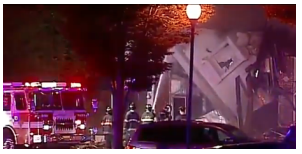
KANSAS CITY, Mo. (AP) — Two Kansas City firefighters who were killed when a building collapsed had been positioned in a dangerous place where building debris could fall.

The Kansas City Star reports that the alley where 39-nine-year-old John Mesh and 43-year-old Larry Leggio died on Oct. 12 had been declared a “collapse zone.” Mesh and Leggio were among a half-dozen firefighters working to keep a fire from spreading to an empty grocery store next door.

There is no written protocol at the Kansas City Fire Department dealing with collapse zones. But the National Institute for Occupational Safety and Health is very clear about what is acceptable inside those zones.

The institute said “no building is worth a firefighter’s life” in a report on a 2012 Philadelphia building collapse that also killed two firefighters.

Kan. man hospitalized after vehicle vaults, rolls into a ditch

Screen-Shot-2014-07-03-at-5.13.15-AM.pngRENO COUNTY- A Kansas man was injured in an accident just before 4p.m. on Monday in Reno County.

The Kansas Highway Patrol reported a 2004 Pontiac Grand Prix driven by Kristopher Kirkbride, 23, Pretty Prairie, was southbound on Kansas 14 seven miles northeast of Pretty Prairie.

The vehicle crossed the northbound lanes, entered the east ditch, struck a culvert, vaulted and rolled into the east ditch.

Kirkbride was transported to Hutchinson Regional Medical Center.

He was properly restrained at the time of the accident, according to the KHP.

Popular statewide festival to end

ks sampler festival 2016Kansas Sampler Foundation

INMAN–The Kansas Sampler Foundation announced today that the long-time Kansas Sampler Festival will come to an end after being hosted in 2016 and 2017 in Winfield.

Marci Penner, Kansas Sampler Foundation Executive Director

Foundation director Marci Penner said, “The festival has been a tremendous event for the whole state and has helped people see that Kansas has a lot to offer. It’s exciting to now think of the festival as part of a progression in helping share what there is to see and do. We have some ideas for what is next and will start that conversation in January.”

In 1990, the late Mil Penner and daughter Marci Penner held a book-signing party on the family farm near Inman. About thirty places included in the new Kansas Weekend Guide came to promote under one tent. When a thousand people attended this event on a cold November day, it was clear that the public wanted to know more about Kansas day trips. The event was given a name and the Kansas Sampler Festival was born. It was held for seven more years on the Penner Farm.

The festival went on the road in 1998 as host communities were chosen for a two-year stint through a rigorous application process. Pratt was the first to organize the traveling event followed by Ottawa, Independence, Newton, Garden City, Concordia, Leavenworth, Liberal, and Wamego. Winfield will have the honor of hosting the final two years. “We could not have continued the festival without the amazing commitment of local host organizers and volunteers. They have taken such good care of the festival and given it a special flair in each location.” Penner said.

WenDee LaPlant, Kansas Sampler Foundation Assistant Director

WenDee LaPlant, assistant director, came to work at the Kansas Sampler Foundation after serving as local festival director in Garden City. She said, “I love how the festival has been great for the smallest towns and large ones, as well. It’s brought towns together from every part of the state. It has helped make Kansas explorers out of the public. It’s always such a happy, positive weekend. It’s sad to see it come to an end but exciting to think of new possibilities.”

Winfield’s local director Sarah Werner when told of the news Monday morning said, “We feel very fortunate to be the site for the final two Kansas Sampler Festivals. This event has really been a springboard for many small Kansas communities to promote to a larger audience. I have no doubt that whatever the Kansas Sampler Foundation comes up with next will be just as important for rural Kansas.”

Representatives from more than 150 communities will meet in Winfield’s Island Park on May 7-8 2016, to share what there is to see, do, hear, taste, buy, and learn in Kansas. For more information go to www.kansassamplerfestival.com.

Few University of Kansas students use free gun storage

photo Univ. of Kansas

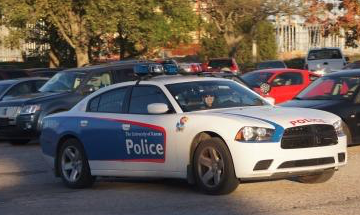
LAWRENCE, Kan. (AP) — The University of Kansas is one of two universities in the state that provides storage for guns on campus, though only a handful of students use the service.

The Lawrence Journal World reports the university’s Office of Public Safety has provided gun storage for students, faculty and staff living on campus since 2009.

University police Capt. James Anguiano says the free storage is aimed at hunters who want to bring their firearms to school, but are not allowed to keep the weapons in their on-campus residence halls or apartments. He says about four to five students per semester store their guns.

Emporia State University also provides gun storage for students.

Under state law, Kansas public universities must allow concealed weapons on campus beginning July 2017. The Kansas Board of Regents and individual universities are working on policies to implement the change.

Despite tragic deaths, new rules for Kan. home-schools not necessary

Rep. Ron Highland
Rep. Ron Highland

BILL DRAPER, Associated Press

KANSAS CITY, Kan. (AP) — The case of a missing 7-year-old Kansas boy who is believed to be dead has renewed calls for better oversight of home-schooled children, but state lawmakers say there’s no reason to make any changes to home-schooling laws.

Earlier this year two home-school children were found in a freezer in Detroit two years after they vanished, while an 11-year-old Florida girl also turned up in a family freezer after being missing more than a year.

Home-schooling researcher Rob Kunzman says such horrific events often create a short-term effort to increase regulations in states where they happen, but rarely lead to new restrictions.

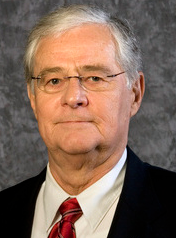
Kansas House Education Committee Chairman Ron Highland, a Wamego Republican, says no matter how many regulations are in place, people are going to do some bad things.

Kansas hunter takes down rare antlered doe

courtesy photo
courtesy photo

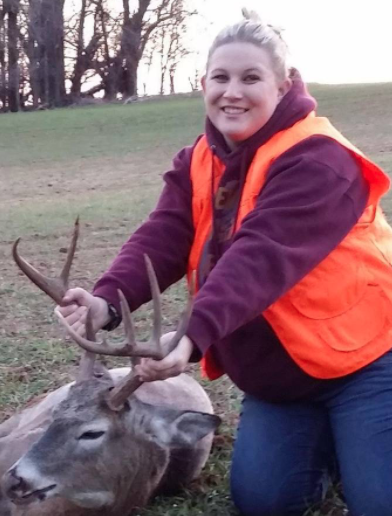
KINGMAN, Kan. (AP) — A Kansas hunter has taken down an antlered doe in Kingman County.

The Wichita Eagle  reports Jerika Francis thought she shot a 10-point buck on Saturday afternoon on land owned by her husband’s family. She said that her husband, Russell Francis, realized the animal was a doe with antlers as he prepared to clean it.

Grant Woods, a Missouri-based biologist who researches whitetail deer, said antlered does are females with unusually high levels of testosterone.

Woods said that all does have testosterone, but some have enough to grow male-like antlers.

Keith Sexson with the Kansas Department of Wildlife, Parks and Tourism last year estimated he’d heard of fewer than 15 antlered does in the 50 years the state has had deer seasons.

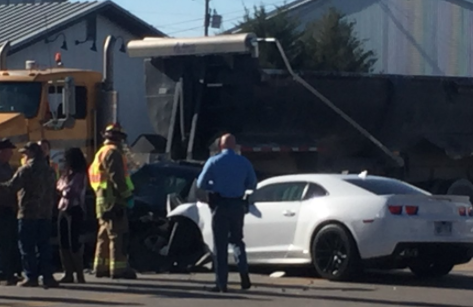
4-vehicle cement mixer crash still under investigation

4-vehicle accident in Riley County.

MANHATTAN – Law enforcement authorities in Riley County continue to investigate an accident that injured two people just before noon on Friday.

The Riley County Police Department reported a 2013 Chevy Camaro driven by Robert Penn, 40, Manhattan, was westbound on Fort Riley Boulevard.

The Camaro struck a 2007 Buick Lucerne driven by Alice Walker, 77, Dwight, which was turning north onto 4th Street.

After the collision, the Camaro struck a 2007 Ford Fusion driven by Michael Rogel, 20, Junction City. Then the Ford collided with a 1996 Kenworth Cement Mixing Truck driven by Dale Gardner, 60, Junction City.

Penn and a passenger in the Ford Kathryn Culler, 54, Junction City, were transported to Via Christi Hospital.

From HIV to cholesterol, new well check guidelines issued for kids

Screen Shot 2015-12-07 at 8.44.18 AMThe American Academy of Pediatrics on Monday released, in an online report, an updated schedule of its Recommendations for Preventive Pediatric Health Care.

Outlining evidence-based screenings and assessments that should be addressed at well-child visits, the revised schedule reflects new and revised recommendations published by the AAP over the past year.

Changes include:
The recommendation for routine vision screening at age 18 has been changed to risk-based assessment, based on evidence showing that fewer new vision problems develop in low-risk young adults.

To help reduce dental cavities, the top chronic disease affecting young children, a recommendation has been added for fluoride varnish applications from 6 months through 5 years.

Pediatricians are advised to use the CRAFFT (Car, Relax, Forget, Friends, Trouble) screening questionnaire as a tool to screen adolescents for drug and alcohol use.

Depression screening has been added, with suggested screenings every year from ages 11 through 21, with suicide now a leading cause of death among adolescents.

A screening for dyslipidemia, or high blood cholesterol levels, has been added for patients between 9 and 11 years old. The change reflected growing concerns about the growing epidemic of obesity in children.

A risk assessment is added at 15 and 30 months for hematocrit or hemoglobin screening to help detect anemia, an iron deficiency.

An HIV screen was added for adolescents between 16 and 18 years to address federal statistics showing that 1 in 4 new HIV infections occurs in youth ages 13 to 24 years old, and that about 60% of all youth with HIV do not know they are infected.

Screen for cervical dysplasia, the presence of pre-cancerous cells on the surface of the cervix, only at 21 years (instead of risk assessment every year from ages 11 through 21).

A screening for critical congenital heart disease using pulse oximetry has been added and should be performed in the hospital before newborn discharge.

Kan. woman killed after running onto Arizona freeway

Pedestrian accident smallPHOENIX (AP) — A pedestrian who died after being struck by a commercial tractor-trailer and then run over by four other vehicles has been identified as a Kansas woman.

The Arizona Department of Public Safety says the identity of 29-year-old April Lanae Rhodes, of Montezuma, was confirmed by fingerprints.

DPS investigators say it’s still unclear why Rhodes was running onto the westbound lanes of Interstate 10 traffic west of Dysart Road around 6 p.m. Sunday.

The roadway was closed for about six hours while authorities investigated the death.

Montezuma is a city in Gray County, located in southwest Kansas.

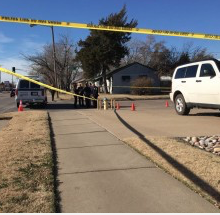
Police search for clues in Salina shooting

Officers investigate a shooting in west Salina Friday afternoon (Photo by Terry Tebrugge/Salina Post)

SALINA – Law enforcement authorities in Saline County continue to investigate a Friday afternoon shooting in Salina.

Police officers were called to the area of Crawford Street and Duvall Avenue just after 12:30p.m., after reports of gunshots near The Hair Loft and First Bank Kansas, according to Police Captain Mike Sweeney.

Witnesses reported seeing a white male open fire on what appeared to be another individual, though it is still unknown whom or what was specifically being targeted. There were no injuries reported.

In addition to bullet damage to a pedestrian crosswalk sign in front of The Hair Loft, officers also found damage to a window at Cave Divers, 1103 W. Crawford, according to Sweeney.

Officers also found a bullet fragment from a handgun at the business. Sweeney declined to say what type or caliber of handgun was used.

Anyone with information regarding the incident or the suspect is asked to call the Salina Police Department at 785-826-7210, Crime Stoppers at 785-825-TIPS, text SATIPS to CRIMES (274637), or visit www.pd.salina.org and follow the Crime Stoppers link to submit a web tip. You may receive a cash reward of up to $1,000 and you are not required to give your name.

Police search for suspect in Barton Co. armed robbery

photos Great Bend Police

GREAT BEND – Law enforcement authorities in Barton County are investigating a convenience store robbery.

Just before 3:30 a.m. on Monday, officers from the Great Bend Police Department responded to the Casey’s Convenience Store at 2716 10th Street in reference to an armed robbery, according to a media release.

The clerk at Casey’s reported that a man entered the store wearing a black stocking cap and a facemask.

He brandished a handgun and ordered her to hand over all the cash from the register.

The clerk complied and the subject fled the building on foot.

Screen Shot 2015-12-07 at 12.23.21 PMNo one was injured during the incident.

Anyone who has information about this incident is encouraged to call the Great Bend Police Department Detectives Unit. They may also report any information they have via Crimestoppers by calling 792-1300. Crimestoppers allows people to report information anonymously, and you could also be eligible for a cash reward if the information you provide leads to an arrest.

Copyright Eagle Radio | FCC Public Files | EEO Public File