PIERRE, S.D. (AP) — A sobriety program aimed at curbing drunken driving that was pioneered in South Dakota has made it onto the federal stage as a provision tucked into the $305 billion transportation law President Barack Obama has signed.
The practice offers those accused or convicted of an alcohol-related crime an alternative to jail. The 24-7 provision in the highway law creates an incentive grant totaling about $18 million over four years for states.
An independent study released in 2013 by a nonprofit think tank found that South Dakota’s program cut the rate of repeat DUI arrests at the county level by 12 percent and domestic violence offenses by 9 percent in its first five years.
West Virginia Attorney General Patrick Morrisey says South Dakota’s “very positive” results warrant examination for the state.
TOPEKA–As the holidays approach, Kansans are becoming increasingly excited about adorning their homes with Christmas trees, Menorahs, ornaments and garlands. Holiday decorations, as beautiful as they are, can also be a home fire hazard. The Office of the State Fire Marshal wants to help Kansans have a truly Happy Holiday season by offering tips to reduce the chance for home fires which would spoil this wonderful time of year.
Christmas Trees
National estimates of reported home structure fires derived from the U.S. Fire Administration’s National Fire Incident Reporting System (NFIRS) and NFPA’s annual Fire Department Experience Survey show that in 2009-2013, Christmas trees were the item first ignited in an estimated average of 210 reported home structure fires per year, resulting in an annual average of seven civilian fire deaths, 19 civilian fire injuries, and $17.5 million in direct property damage.
· Look for flame-resistant artificial trees. Keep tree at least three feet away from heat sources.
· Ensure your natural tree is kept fresh in water throughout its recommended two-week life.
Watch this video demonstrating how quickly a dried-out Christmas tree will burn compared to a well-watered tree:
Candles
December is the peak time of year for home candle fires. In December, 11% of home candle fires began with decorations compared to 4% the rest of the year.
· Never leave a burning candle unattended.
· Make sure candles are in stable bases and have plenty of space around them. Place them where they cannot be easily knocked down or turned over.
· Flashlights or battery-powered lamps should be used during a power outage (not candles). Be sure to keep fresh batteries on-hand.
Holiday Lights
· Inspect holiday lights before using for frayed wires, bare spots, gaps in the insulation, or broken sockets.
· Only use lights that have been tested and labeled by a recognized testing laboratory.
· Avoid overloading — do not link more than three strands.
· Unplug decorative lights when leaving the home.
Cooking
Cooking is, and has long been, the leading cause of home structure fires and home fire injuries, and according to the records collected from reporting fire departments in Kansas, home cooking fires increase significantly around the times of major holidays such as Christmas.
· Always stay in the kitchen while frying, grilling or broiling food. If you have to leave the kitchen for even a short period of time, turn off the stove. Have a lid handy to slide over a skillet or pot that has caught on fire.
· Keep things that can catch fire such as oven mitts, wooden utensils, food packaging, towels and curtains away from the cooking area.
Heating and Fireplaces
During the holidays, a nice roaring fire in the fireplace can add to the season ambiance, but can also increase the chances of a home fire. The use of portable space heaters also increases significantly during the colder months, which is also a major cause of home fires. Half (50%) of all home heating fires occurred in December, January and February.
· Make sure the fireplace has a sturdy screen to stop sparks from flying into the room. Ashes should be cool before putting them in a metal container. Keep the container a safe distance away from your home.
· Keep anything that can burn at least three feet away from heating equipment, like the furnace, fireplace, wood stove, or portable space heater.
· Have a three-foot “kid-free zone” around open fires and space heaters.
· Have heating equipment and chimneys cleaned and inspected every year by a qualified professional.
· Remember to turn portable heaters off when leaving the room or going to bed.
Smoke Alarms
· Working smoke alarms should be a priority at any time of the year.
· Test smoke alarms monthly to ensure they are functioning properly and replace outdated smoke alarms with units featuring 10-year sealed lithium batteries.
For more fire safety tips, visit the Website for the Office of the State Fire Marshal at https://firemarshal.ks.gov.
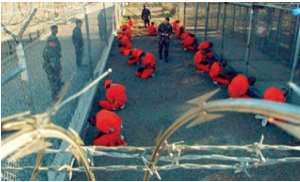
WASHINGTON, D.C.– According to the Wall Street Journal, the Pentagon’s latest proposal to close the Guantanamo Bay (GTMO) detention center “would require as much as $600 million.” It has been reported that President Obama rejected this plan and sent it back for revisions to make it more cost effective. After learning of the report, Congresswoman Lynn Jenkins (KS-02) released the following statement:
“This report is yet another reason why it would be a mistake to close Guantanamo Bay. It’s time for President Obama to listen to the American people and drop his reckless, expensive plans to close the detention center. Folks in Kansas agree – we don’t want Guantanamo Bay terrorists living next door.”
Additionally, the Wall Street Journal reported that in order to help cut costs, “one idea is to eliminate the requirement that detainees be tried by military commissions, and instead to try them in the federal court system, according to one senior defense official.”
Said Congresswoman Jenkins: “These are enemy combatants; they should be tried as such instead of through the federal court system as if they were a common criminal. The idea that the President would even consider this reckless scheme to cut costs and establish a false rationale to close GTMO shows that he is willing to try anything to keep his campaign promise – even potentially jeopardizing our national security. “
SALINA— A Kansas high school psychologist and her husband are scheduled for arraignment on Monday in Salina.
They are in custody after more than 14 pounds of marijuana were found in the trunk of her car as she and her husband returned from Colorado.
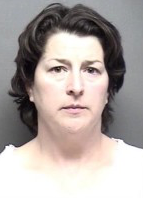
Shelly Moore, 46, and Frank Moore, 44, were arrested early Thursday after a Saline County deputy pulled the couple over on Interstate 135 just south of Salina, smelled the odor of pot, and found the marijuana in the trunk.
Shelly Moore is a psychologist at Wichita Southeast High School. She and her husband were being held at the Saline County Jail on drug possession and related charges.
Frank Mooreon suspicion of drug possession and related charges.
It was unclear whether either has obtained an attorney.
MANHATTAN – A Kansas State University football player was arrested on Saturday.
Kaleb Earl Prewett, 20, Blue Springs, Mo., was booked for the purchase, consumption of liquor by a minor, according to a media release from the Riley County Police.
Almost every day, Jay Mellies leaves his home in Clay Center and drives about 20 miles north to visit his wife at a nursing home in neighboring Washington County.
At 22.15 percent, Clay County, Kansas, has the highest recorded rate of Alzheimer’s among Medicare beneficiaries of any county in the United States. ANDY MARSO HEARTLAND HEALTH MONITOR
Some days when he comes in she tells staff, “I don’t know that guy.” Then she smiles. It’s a joke, but Mellies knows someday it may not be. His wife has Alzheimer’s disease.
If at some point she no longer remembers him, he will continue to come, nearly every day, to read to her and listen to her favorite music. They’ve been married 55 years, after all, and he believes others would do the same for their spouses.
“There’s no way you can just walk away and throw them under the bus,” Mellies said. “You’ve got to be there.”
There are about 5.3 million Americans with Alzheimer’s, almost all of them 65 and over and on Medicare.
That number is expected to grow by almost 2 million in the next 10 years as the aging of the baby boomer generation puts more Americans at risk for the memory-sapping illness.
Clay County, population 8,406, is at the tip of that spear.
According to the federal Centers for Medicare and Medicaid Services, 392 of the north-central Kansas county’s 1,770 residents in traditional Medicare had been diagnosed with Alzheimer’s or a related form of dementia as of 2013.
At 22.15 percent, that was the highest recorded rate of Alzheimer’s among Medicare beneficiaries of any county in the United States — just above Florida’s Miami-Dade County.
Jay Mellies of Clay Center drives nearly every day to visit his wife at Linn Community Nursing Home, where all the residents are on the same floor and participate in the same activities. Linn also has a program called Music & Memory, which Mellies says has been helpful for his wife. CREDIT ANDY MARSO / HEARTLAND HEALTH MONITOR
It’s challenging to pin down why the Kansas county stands out statistically.
Most other counties have more people in Medicare Advantage, privately run plans whose members are harder to track. That could be a factor.
Researchers also believe there’s a genetic component to Alzheimer’s. So if a handful of large families in a lower-population area like Clay County are predisposed to having the disease, it could affect the Alzheimer’s rate.
Alzheimer’s is a tricky diagnosis, and Clay County’s doctors might be better at spotting it than others. The county also has lots of senior housing. According to census data, almost 22 percent of Clay County residents were 65 or over in 2014, compared to 14.3 percent in Kansas as a whole.
Rankings aside, about 5 percent of the population in Clay County has Alzheimer’s or a related form of dementia, which is triple the national rate. Other Kansas counties — all low-population counties with aging residents — aren’t far behind. More than 4 percent of Trego County residents had Alzheimer’s or dementia as of 2013. In Gove County the rate was about 3.7 percent, and in Logan County it was about 3.5 percent.
There will be financial consequences as the Kansas population continues to age and the Alzheimer’s rate grows. A recent study found that the health care costs for treating people with dementia in the last five years of their lives are greater than any other illness.
With Alzheimer’s and dementia, the emotional toll on families also is high.
But Clay County is finding ways to cope.
Like many counties nationwide, Clay County lacks enough skilled caregivers for its elderly population, but it has otherwise largely adjusted to the increase in Alzheimer’s without additional help from government agencies or even large nonprofits.
Instead, Clay County has thrived through a localized “people-helping-people” approach that has produced lessons that may help larger population centers handle the coming Alzheimer’s boom.
An initial resource
For many years Rita Wollenberg was the go-to resource for people in Clay Center caring for a loved one with dementia.
Wollenberg recently retired from a long career in nursing. She was relatively new to the profession when her mother-in-law was diagnosed with Alzheimer’s in 1983.
“Which was before they had a lot of information (about the illness),” she said.
Wollenberg educated herself. Then she and another nurse taught a course on Alzheimer’s caregiving to nursing students at nearby Cloud County Community College from 1987 to 1997.
In the middle of those years she joined a local Pilot International Club focused on brain disorders.
“In the process of teaching that class and becoming a member of Pilot Club, I kept saying and thinking (that) we needed a support group in Clay Center,” Wollenberg said.
She helped found that group in 1994.
One of the participants in the early years was Brenda Heeren, whose mother and father developed Alzheimer’s toward the end of their lives.
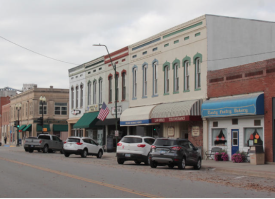
Heeren works at a law office on Clay Center’s main square, where the county courthouse sits. Talking about those days is still painful for her.
“These are not things you choose to remember,” she said.
Heeren’s father was a farmer, and she remembers him as a big, strong man.
He started to show signs of Alzheimer’s in his 70s. Heeren remembers several times when he would drive his pickup out to go check on cattle and not come home.
Her mother would send a neighbor out to find him.
“Sure enough, he’d be sitting in a pasture somewhere,” Heeren said. “He’d forgotten what he was going after.”
Heeren’s mother cared for her own mother with Alzheimer’s at home until she could no longer do it physically. With Heeren’s father, that was not an option. Like many with Alzheimer’s, he developed anger issues.
“He got real belligerent,” she said. “I don’t know that he would have ever hurt her, but he came awfully close.”
Brenda Heeren was an early member of Clay Center’s Pilot International Club focused on brain disorders. Her parents developed dementia toward the end of their lives. CREDIT ANDY MARSO / HEARTLAND HEALTH MONITOR
At that time, 20 years ago, there were only three facilities in the area that could take him, and the family didn’t have the time to shop around. They needed the first open bed.
A few years later, the illness hit Heeren’s mother, and Heeren and her siblings started getting frantic phone calls from her in the middle of the night.
By morning, their mother would realize what she’d done and be embarrassed. She made the decision to go to a nursing facility herself.
The family had sold the farm when her dad moved out and divided the assets 50-50 to pay for their parents’ nursing home care.
“Dad went through his half to the month,” Heeren said. “If he would have lived 30 days more, we’d have had to apply for assistance. And Mom well outlived her half. So basically they worked for 57 years on the farm, and it all went to the nursing homes.”
Heeren is 61 now and every memory slip scares her, given her family history. She’s warned her children that if she has to go to a nursing home someday, she won’t go quietly.
“I told my kids I fully intend to be hell on wheels,” Heeren said with a laugh.
Then she turned serious.
“But I also told them to watch and see what we are doing for Grandma and Grandpa,” she said. “We’re treating them the way we would like to be treated.”
If Heeren does develop Alzheimer’s, she and her family will find that much has changed in Clay County in the last 20 years.
‘People are really surprised’
Mike Derousseau, executive director of Clay Center Presbyterian Manor, guides a visitor to the third-floor skilled nursing unit where residents with advanced dementia stay.
About two dozen residents sit in a large room adjacent to the nurses’ station while a staff member leads them in stretching exercises before lunch. Behind them floor-to-ceiling windows provide a view of quiet, tree-lined streets and well-kept houses.
“It’s absolutely the sunniest floor, by far,” Derousseau said.
At Presbyterian Manor the lighting is soft and natural, the floors are carpeted and residents can choose when they eat and how they decorate their rooms.
“A lot of times people are really surprised when they come here,” Derousseau said. “It’s nothing like what they think it is, in a good way.”
The stereotype of the sterile nursing home is slowly being replaced, he said, with an emphasis on “person-centered” care. That’s especially key to quality of life for people with memory issues like Alzheimer’s.
Presbyterian Manor has no designated memory care unit. Residents with advanced dementia likely will end up in the skilled nursing unit. But before their condition deteriorates, they may be on the second floor in assisted living or the first floor in independent apartments.
It’s a continuum of care, and residents of all floors interact with each other and use the amenities throughout the facility.
Keeping people busy and engaged is key to health, Derousseau said, especially if they have memory issues.
“The type of program you use and the training you do is going to be just really crucial,” he said of the growing dementia population. “That’s going to make all the difference in the world. That’s going to reduce psychotropic meds. … You’re not trying to make people behave. You’re just trying to live a normal life like you would in your home.”
People with Alzheimer’s benefit from mental stimulation, which slows the progression of the disease.
But too much noise can be jarring. The carpet at Presbyterian Manor helps dampen it, and employees are outfitted with vibrating pagers that tell them when a resident needs help, rather than audible call buttons.
Home-based facilities
Small, home-based assisted living facilities also are popping up across Kansas to serve people with dementia who need a lower level of care than skilled nursing.
Roberta Keen and her family have run the Keen Family Boarding Care Home for 25 years in their house next to the country club just south of Clay Center. The Keens have four beds and provide assisted living for seniors who don’t need intense physical care but may need to be reminded to take their medications or eat three meals a day.
Keen said she’s had a number of residents with Alzheimer’s over the years, ranging in age from 55 to 101.
“I’ve had a few that have said if I have to leave here, I don’t want to live,” she said.
The Keens also have a nightly rate for respite care to give family caregivers a break, but they’re only able to do that if they’re down a resident and have an empty bed. Keen said that’s rarely the case these days.
Demand for beds is growing in the county.
Derousseau has not ruled out opening a memory care unit at some point. But it would take more staff. And though he currently staffs well above state-mandated levels, he said he already could use more help.
“That is always a challenge, in terms of hiring good staff,” he said. “Seems like we have a core group of staff that have been here for quite some time, and that part is very stable. And then there’s a smaller percentage that maybe just due to other things, (like) moving or sometimes (leaving for) health reasons.”
Finding home health workers is also a challenge, and that factors into the discussion for families deciding whether it’s time for a loved one to move to a facility like Presbyterian Manor.
While each conversation Derousseau has with those families is different, he said they’re rarely easy. By the time they come to him, most caregivers have been through a lot.
“This is just my opinion,” he said. “When it comes to dementia, I don’t feel sorry for the person who has it as much as the caregivers.”
Embracing technology
Jay Mellies knew when he could no longer take care of his wife, now 77, at home.
She had a stroke in April and lost her mobility, some of her sight and her ability to feed herself.
The neurologist from Salina who diagnosed her put her on a couple medications, but Mellies isn’t sure either of them helped.
From his perspective, there was a steady decline in her function in the years following the Alzheimer’s diagnosis five years ago. He was concerned with her driving and watched her struggle to remember how to dress herself. She once left the house early in the morning when he was still asleep and got lost.
“That was before I started locking the door,” Mellies said. “She was across the street at Wendy’s, and I got a call from the police department early in the morning.”
Mellies said the police were kind about it.
The Clay County Sheriff’s Department has adjusted to the growing number of residents with Alzheimer’s — in part by embracing technology.
It’s one of 1,400 public agencies in the United States, Canada and Australia that have teamed with Project Lifesaver International, a nonprofit that provides GPS tracking bracelets that agencies distribute to families with loved ones who have dementia, autism or other conditions that might cause them to become lost.
Only the local agency has access to the frequencies needed to track the devices.
The devices cost hundreds of dollars, but in Clay County the money doesn’t come from the budgets of the families or the sheriff’s office. It’s donated by the Pilot Club.
Each person who has one of the bracelets in Clay County is assigned to a specific officer, who comes out to change the battery once a month. The monthly meetings help the wearers gain familiarity with their officer, which increases the chances of a calm interaction if they have to be found.
According to the Project Lifesaver website, the Clay County Sheriff’s Department is one of only six agencies in Kansas that employ the devices. The others are the Pratt Police Department, Saline County Sheriff’s Office, Westwood Police Department, Douglas County Sheriff’s Office and Fairview Volunteer Search and Rescue.
Mellies was able to care for his wife without GPS and eschewed sending her to respite care as well. He wasn’t sure she’d understand it was only for the day.
“I was thinking about that,” Mellies said. “And it’s kind of a problem, because they don’t understand why you’re dumping them off.”
The stroke took the choice to continue caring for his wife out of his hands, but Mellies still had to make difficult decisions about where to place her.
The list of facilities in the area had grown, and he spent time visiting several. Some of them had memory care units, but he ultimately decided those weren’t the right fit for his wife.
Her condition was not as advanced as most of the people he saw there, and he wanted her in a group that included people without memory conditions.
“My observation is that the dementia units, those people who are in there, they’re pretty comatose,” Mellies said.
He ultimately settled on Linn Community Nursing Home, where all the residents are on the same floor and participate in the same activities.
Linn also has a program called Music & Memory, which Mellies said has been helpful for his wife.
The program pairs people who have Alzheimer’s with iPods preloaded with some of their favorite songs. The therapeutic benefits of music for people with dementia are backed by research, which found using it to soothe a resident with behavior problems is more humane and less expensive than using psychotropic drugs as sedation.
“That’s one thing with Linn, they’re against giving any drugs to people up there,” Mellies said. “Which I really like.”
The Wisconsin Department of Health Services has adopted the Music & Memory program and sponsored equipment and training for 250 of the state’s nursing homes to implement it.
At Linn, funding it has been a community effort. A local high school raised $750 to purchase iPods and headphones, which the facility gets for $50 per set.
“That can really help out these residents,” said Mellies, who added that he’d like to see the program expand throughout the state.
When he goes to visit his wife, they listen to her music together. Her playlist includes musicals they saw live in their younger years, like “Cats” and “Les Miserables.”
When he reads to her, it’s frequently from books by P.G. Wodehouse, a mutual favorite. He pauses every now and then to ask her questions about the story. Mellies wants her to stay engaged, not just listen passively.
He’s determined to help her stay as mentally sharp as possible for as long as possible.
There were signs of Alzheimer’s before her diagnosis that he now wishes they would have caught earlier, including a couple of frightening fainting incidents and a seizure that temporarily wiped her memory.
She also had family members with Alzheimer’s.
Mellies now advises others who know it’s part of their family history to consider purchasing long-term care insurance and locking in low rates when they’re relatively young. He didn’t do that, but he said he’s financially fortunate compared to others in his situation. He had a long career with Hewlett-Packard and the monthly rates are reasonable at Linn.
Besides, there’s little point in dwelling on the what-ifs and warning signs now, he said. Mellies and his wife will move forward and take on Alzheimer’s together.
“I figure that she put up with me for 55, 60 years,” Mellies said. “I can do this for her in the last part of her life.”
Andy Marso is a reporter for KHI News Service in Topeka, a partner in the Heartland Health Monitor team. You can reach him on Twitter @andymarso
HUTCHINSON– Law enforcement authorities in Reno County continue to investigate an accidental shooting that injured a teenager on Thursday.
Eric Valleau, 18, was shot in the face with a 22-caliber rifle around 9:40 p.m., at an apartment in the 500 Block of East 3rd Street in Hutchinson, according to Hutchinson Police.
He was shot by 18-year-old Luke Dawson in the kitchen area of the apartment while three others were also present.
Valleau was first taken to Hutchinson Regional Medical Center and then airlifted to Wesley Medical Center in Wichita.
Police detectives have spoken with all five who were there and have determined that as of now, the shooting appears accidental and no arrests have been made.
The Reno County District Attorney’s Office is working with law enforcement to determine if any charges should be filed in the case.
TOPEKA, Kan. (AP) — The Kansas Turnpike Authority says it might not meet a federal deadline for allowing people to use the state’s electronic transponders, known as K-Tag, on other states’ toll roads.
The federal government wants all state toll highways to be “inter-operable” by Oct. 1.
KTA spokeswoman Rachel Bell says the agency is working with other states and agencies but the federal legislation doesn’t specify exactly how the systems are supposed to work together. And states have different types of automatic pay systems. Some were developed by private companies and serve several states, while others — such as K-Tag — are developed and owned by a specific state.
The Lawrence Journal-World reports K-Tag is linked with Oklahoma’s system and the state is working with two systems used by commercial truckers.
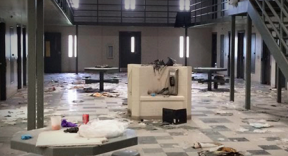
LINCOLN, Neb. (AP) — Fixing the damage caused by a southeast Nebraska prison riot cost far more than initially predicted and will take until mid-2016 to complete.
The Department of Correctional Services says it needs nearly $1.3 million from lawmakers to replacement equipment, supplies, walls, doors and window grilles that were destroyed during the May 10 riot at the prison in Tecumseh. The state previously paid a $200,000 deductible to its insurer, which has already covered slightly more than $1 million in expenses.
The estimate far exceeds earlier tallies of the damage total that wasn’t covered by insurance. Corrections director Scott Frakes told a legislative committee in May that his best cost estimate was between $350,000 and $500,000.
Corrections spokeswoman Dawn-Renee Smith says inspections after the riot revealed “much more extensive” damage than expected.
WICHITA, Kan. (AP) — The U.S. Army Corps of Engineers says disagreements between the construction contractor and the government over final inspections of Fort Riley’s new hospital sparked the latest delay in its opening.
But the contractor who built the hospital said Friday it is working to complete items that have no bearing on the hospital’s opening.
The hospital was originally set to open in 2012 to replace Irwin Army Community Hospital, the oldest Army hospital in the nation. Now a planned opening in mid-January has been scrapped.
Political pressure is building to finish the work — even if that means issuing new construction contracts to get it done.
Sen. Jerry Moran says he is meeting with the Corps this month to determine what it will take to get the hospital up and running.
PITTSBURG, Kan. (AP) — The Kansas Lottery has granted an extension to a planned state-owned casino for a second time due to a lawsuit filed by Cherokee County and another casino company that wanted the contract to build and run it.
The Joplin Globe reports that the lottery granted a 90-day extension to the Kansas Crossing Casino and Hotel Wednesday. The casino was originally supposed to open in July 2016.
Cherokee County and casino company Castle Rock filed a lawsuit claiming that the decision by state regulators to award the casino contract to Kansas Crossing in Crawford County was arbitrary.
Kansas Crossing got the contract even though its $70 million proposal was dwarfed by Castle Rock’s plans for a $145 million development.
Developer Bruce Christenson, the lead investor in the project, said the delay is a frivolous legal action.
WICHITA, Kan. (AP) — Wichita police say a black teenager was in critical condition after being shot by police as he ran with a gun toward the doors of a high school where a girls’ basketball game was being played.
The Wichita Eagle reports the teen fled after police pulled over a pickup truck that was pulling into the West High School parking lot around 6:30 p.m. Friday. Deputy Police Chief Hassan Ramzah says there were four people in the truck, and one got out with a handgun and started running toward the south doors of the school.
Ramzah says multiple shots were fired at the teen after he ignored verbal warnings to stop and got closer to the door. He was taken to Via Christi Hospital St. Francis in critical condition.
TOPEKA–The Kansas Corporation Commission opened a General Investigation into the Environmental Protection Agency’s (EPA) Clean Power Plan rule. The General Investigation also provides a mechanism for soliciting comments from members of the general public to be entered into the record.
The Commission will hold legislative-style public hearings, as well as an informational session regarding the Clean Power Plan. In addition, the Commission has also set up a public comment form on its website at https://kcc.ks.gov/pi/public_comment.htm for submission of public comments.
During the 2015 legislative session, the Kansas Legislature directed the Kansas Corporation Commission to study and report back to the Clean Power Plan Implementation Study Committee during the 2016 legislative session. The scope of the investigation and subsequent report to the legislature will focus on the following:
· Each utility’s re-dispatch options along with the cost of each option.
· The lowest possible cost re-dispatch options on a state-wide basis.
· The impacts of each re-dispatch option on the reliability of Kansas’ integrated electric systems.
The EPA released the Clean Power Plan rule in August 2015. The rule calls for states to develop a plan to reduce the proportion of energy that is produced with coal and fossil fuels. If a state fails to implement a plan that complies with the rule, the federal government will impose its own plan. A state compliance plan is due to the EPA by 2018, and initial targets for carbon reduction will begin in 2022.
“This rule will impact the electric industry in a way that has not been seen since rural electrification in the 1930’s. It will affect every budget, every business and every utility company in Kansas,” said Commissioner Pat Apple. “I’m pleased that the Commission has opened a docket into this matter, so that we can take a closer look into the rule’s implications, as well as to give members of the public a chance to weigh in, on-the-record.”
Nearly two-thirds of electrical generation in Kansas is produced from coal. If the Clean Power Plan is implemented as currently structured, electric rates are expected to increase significantly.
This order directs staff to provide a timeline by January 30, 2016 for holding legislative-style hearings to solicit input from staff, consultants, stakeholders, and members of the public.
An education session will be held on January 12, 2016 immediately following the regularly scheduled Commission meeting. The session will provide an opportunity for Kansas Corporation Commission staff, the Kansas Department of Health and Environment, and the Attorney General’s office to present information to the Commission regarding the Clean Power Plan.

 JAMES NORD, Associated Press