LOS ANGELES (AP) — Despite his nearly two decades as an international sex symbol, British soccer star David Beckham says he’s still flattered to be named People magazine’s 30th-anniversary Sexiest Man Alive.
“It’s a huge honor,” the 40-year-old Beckham told the magazine, which announced its choice on ABC’s “Jimmy Kimmel Live” on Tuesday night. “I’m very pleased to accept,” he said.
And his famous fashion designer wife, Victoria Beckham, approves, too, Beckham said.
“I would hope that she feels this way about me all the time anyway!” he said.
But the father of four insists he doesn’t think of himself as being all that hot. “I never feel that I’m an attractive, sexy person,” Beckham told People — presumably with a straight face.
TOPEKA, Kan. (AP) — A Topeka man has been sentenced to 24 years in federal prison for producing child pornography.
WIBW-TV reports that 40-year-old Jonathan Kearn was convicted in May on counts of producing, distributing and possessing child pornography.
Homeland Security Investigators received information in April 2013 from authorities in Australia that an investigator had received emails that contained child pornography from Kearn.
WICHITA, Kan. (AP) — A man has been charged with first-degree murder in the death of his girlfriend’s 17-month-old daughter over the weekend.
The Wichita Eagle reports that 21-year-old Michael Ross was charged with murder and one count of child abuse Tuesday.
Police say Ross was supervising Grace Harris while her mother was at work. Police responded to a call that the girl had fallen. Police say she died after sustaining multiple bruises, internal injuries and a brain bleed.
Ross appeared in court over a closed-circuit monitor from the Sedgwick County Jail and said he didn’t understand the murder charge against him and didn’t have a chance to tell his “side of the story.”
Ross is being held on a $500,000 bond and is set to appear in court Nov. 25.
LANSING, Mich. (AP) — The White House has held a 90-minute conference call with governors about plans to increase the number of refugees accepted in the United States after governors raised concerns related to last week’s attacks in Paris.
The governors of Michigan, Pennsylvania, Vermont and other states participated Tuesday and asked questions of senior Obama administration officials.
We must take immediate action to ensure terrorists don’t enter Kansas under the guise of refugee resettlement #ksleghttps://t.co/KSPvQn8fQQ
A spokeswoman for Michigan Republican Gov. Rick Snyder says he appreciated the discussion and told officials he’d like “more robust data” on the refugee system.
Vermont Democratic Gov. Peter Shumlin says he has faith in the “rigorous” screening process outlined by administration officials and he reiterated to governors that terrorists win “when we give into fear.”
More than half of governors object to plans to resettle Syrian refugees here. But the federal government controls resettlement programs.
JUNCTION CITY -The Kansas Governor’s Council on Fitness hosted the 4th annual Kansas Obesity Summit in Junction City Tuesday.
Approximately 200 people from across the state and region attended the summit that highlighted initiatives being done throughout the state to fight obesity. It offered the opportunity for different communities to collaborate and learn about the different initiatives which is one benefit of the summit according to Dr. Susan Mosier, Secretary, Kansas Department of Health and Environment.
“You’ve got great things going on in different communities, but not everyone knows what else is going on,” said Mosier. “Plus we’ve got Dr. Terry O’Toole here from the CDC, so he’s also bringing things from other states and other ideas. So it’s really that cross-fertilization of ideas that people can take back to their communities and start different initiatives there.”
One of the initiatives that was highlighted during one of the afternoon break out sessions involved a local initiative being undertaken by Geary Community Hospital, the Farmers Market.
Nikki Davies, Director of Marketing and Public Relations at GCH went over how the hospital has increased access to healthy foods and wellness opportunities through the Farmers Market and other projects during the session.
The summit also included a walk audit of the neighborhoods surrounding the convention center to learn how conducive the city is to active transportation (biking, walking), physical activity, and other aspects of wellness.
During the audit concerns about the condition of certain sidewalks and the ADA Accessibility of different sidewalks were discussed. City Commissioners Jim Sands and Mike Ryan attended the summit and participated in the walk.
“Sidewalks are rated from 1-10, and we’re a little biased, but we’ll probably give it anywhere between a six and a seven,”said Sands. “Because we do have lights in a lot of areas that we walked today.”
The sidewalk issue is something that both Sands and Ryan would like to look further into in the future.
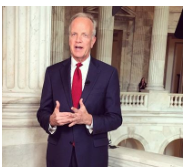
WASHINGTON – U.S. Senator Jerry Moran (R-Kan.) and U.S. Senator Cory Booker (D-N.J.) introduced a Senate resolution today to recognize the contributions of American entrepreneurs and officially establish National Entrepreneurs’ Day as a federally recognized observance day. The Moran-Booker Senate resolution aims to have Congress identify the third Tuesday of every November as National Entrepreneurs’ Day.
“National Entrepreneurs’ Day celebrates the individuals who are the foundation of our country and strength of our economy,” Sen. Moran said. “We recognize that innovative new businesses are critical components of economic growth, and devoting one day a year to celebrating startups is a small step toward securing future economic success and a better tomorrow.”
“Today and every day of the year, entrepreneurs deserve to be honored and celebrated for their contributions,” Sen. Booker said. “National Entrepreneurs’ Day recognizes the role these innovative individuals play in fueling our economy and expanding opportunity in New Jersey and communities across the country. Now more than ever, we need their entrepreneurial energy to inspire the next generation of business leaders.”
This year, National Entrepreneurs’ Day is celebrated today, Nov. 17, 2015. National Entrepreneurs’ Day was established in 2010 by David Hauser and Siamak Taghaddos, co-founders of Grasshopper, an organization that helps entrepreneurs to establish a phone system for their businesses, and Amir Tehrani, entrepreneur and co-founder of The Legacy Foundation, a nonpartisan educational organization that promotes free enterprise. The group successfully petitioned President Obama to proclaim National Entrepreneurs’ Day as a holiday in 2010.
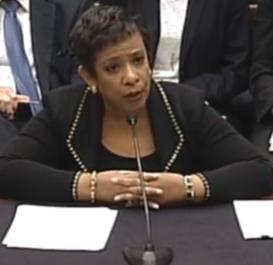
WASHINGTON (AP) — House Republicans are pressing Attorney General Loretta Lynch on the Obama administration’s plan to allow thousands more Syrian war refugees into the country following the Paris attacks.
Lynch appeared Tuesday before the House Judiciary Committee for the first time since taking office in April. She said protecting the U.S. from the threat of the Islamic State and other terrorist groups is the Justice Department’s top priority. She said more than 70 people have been charged in the last two years for alleged conduct related to foreign-fighter activity and homegrown violent extremism.
In response to a question about the risk of terrorists posing as refugees, Lynch said the “robust” screening process for those considered for immigration to the United States is more stringent than that in place in Europe.
LAWRENCE, Kan. (AP) — University of Kansas student leaders who are facing an attempt to oust them have outlined proposals for increasing diversity within student government.
Student Body President Jessie Pringle, Vice President Zach George and Chief of Staff Adam Moon issued a joint statement Monday night outlining 11 proposals.
A student government committee is pushing for their resignations or impeachment, based in part on what members see as an inadequate response to demands to the university from a campus protest group called Rock Chalk Invisible Hawk.
Their proposals include increasing the number of student senators from the current 86 to increase the Senate’s diversity, and creating an election fund to help students who want to run for office. The measures also include raising a student fee to increase diversity programs.
A top official at the University of Kansas says it is creating a team to address demands from student protesters and expects to release an “action plan” by mid-January.
Provost Jeffrey Vitter released a statement Tuesday in response to demands made last week by the Rock Chalk Invisible Hawk group. They include increasing faculty diversity, forming a team of counselors for students of color and requiring “inclusion and belonging” training for all students and staff.
Vitter said messages from across the university have expressed solidarity with the group’s aims.
He said the team would include faculty, students, staff and administrators. He said its action plan would include mandatory education for students and staff.
Leaders of the student group did not immediately respond to cell phone and email messages seeking comment.
WICHITA, Kan. (AP) — A Wichita man is sentenced to more than 16 years in prison for his role in the death of his girlfriend’s 3-year-old daughter.
The Wichita Eagle reports Evan Schuessler was sentenced to 165 months for second-degree intentional murder and 34 months for child abuse, the maximum he could have received.
Sedgwick County District Judge Steve Ternes rejected recommendations from state and defense attorneys for the two terms to run concurrently, saying the murder of a child deserves the maximum penalty allowed by law.
Emma Krueger was taken to Wesley Medical Center unresponsive and covered in bruises on June 2, 2014. She was pronounced two days later after being removed from life support.
Police have said Emma suffered beatings for perhaps a month before she was taken to the hospital.
NEW YORK (AP) — Tyson Foods Inc. is recalling more than 52,000 pounds of chicken wings after customers complained that they had a bad odor.
The U.S. Department of Agriculture also says that some customers reported falling ill after eating the wings.
The recall is for its 28-ounce bags of fully-cooked Tyson Any’tizers Hot Wings prepared last month in a Buffalo style coated with a tangy sauce. The bags have “Best If Used By” dates of Oct. 24, 2016 and Oct. 25, 2016. They were sold nationwide.
The USDA says customers should throw out the recalled products or bring it back to where it was purchased.
TOPEKA, Kan. (AP) — A Kansas legislative committee’s chairman has raised questions about whether gays and lesbians should be allowed to serve as foster parents for abused and neglected children.
Sen. Forrest Knox had the Special Committee on Foster Care Adequacy hear testimony Monday on “family structure considerations” in placing children in foster care.
The Altoona Republican said he scheduled the testimony because family environments influence how well children do in school and life.
Equality Kansas Executive Director Tom Witt called the hearing “reprehensible.”
The study committee heard conflicting testimony on whether children of same-sex parents are at a disadvantage.
A Catholic priest and sociology professor said a study shows the children are at a disadvantage, while an official from the American Psychological Association said they are not.
Kelli Johnsen, right, was diagnosed seven years ago with amyotrophic lateral sclerosis, also known as Lou Gehrig’s disease. Kansas lawmakers are promoting bills intended to streamline the drug approva process for people like Johnsen. ANDY MARSO HEARTLAND HEALTH MONITOR
Signs of the toll amyotrophic lateral sclerosis has taken on Kelli Johnsen’s body are scattered throughout the living room of her Emporia, Kansas, home.
A wheelchair in one corner. A lift in another. A walker near the television.
Next to her chair there’s an Eyegaze system — a screen that tracks her eye movement and blinks — that she uses to control the TV, lights and other devices. She can still move her hands, but not much.
Before she got sick, Johnsen, 45, was a critical care emergency veterinary technician and had a paper on tracheal trauma published in a veterinary trade magazine. Then she began struggling to hoist 60-pound animals onto operating tables. Then she started slurring her speech. Seven years ago a neurologist explained why, diagnosing her with ALS, also known as Lou Gehrig’s disease.
Though Johnsen now struggles to move and talk, her mind remains sharp. She spends six to eight hours a day using the Eyegaze to scour the Internet while researching medical breakthroughs that could save or at least prolong her life.
That’s how she heard about Eric Valor, a man with late-stage ALS who is in a trial for a drug made by a company called Genervon. Her face lights up when she talks about the improvement he reports in his breathing and swallowing.
“Last I heard, he had held on to the gains,” Johnsen says.
Johnsen would like to try the drug too, but it’s in the middle of U.S. Food and Drug Administration clinical trials. In fact, so many ALS survivors and their caregivers are interested in the medication that Genervon issued a news release in March updating them on its status.
The company has applied to fast-track the drug through an accelerated approval FDA program. But if that’s not granted and it remains in Phase 3 clinical trials, it could be three more years before the drug hits the open market.
Johnsen doesn’t believe she can wait that long. People with ALS, statistically, are expected to live two to five years after their diagnosis.
Kansas lawmakers are promoting bills at the state and federal level intended to streamline the FDA approval process or let people like Johnsen bypass portions of it and access experimental drugs sooner.
But some fear those efforts could allow profit-seeking drug companies and medical device manufacturers to rush products to market before anyone knows the potential risks or side effects.
Right to try
Don Hill grabs a chair from the kitchen and pulls it across the hardwood floor to where Johnsen and her mother, Vicki Triemer, are sitting.
Hill is a pharmacist. He’s also Johnsen’s representative in the Kansas House.
He’s considered a moderate Republican, but last session he joined with three of his more Libertarian-leaning colleagues to promote a “Right to Try” bill on Johnsen’s behalf.
House Bill 2004 seeks to give Kansans with terminal illnesses access to drugs in the early phases of FDA clinical trials. It’s based on model legislation from the Goldwater Institute, a small-government advocacy think tank.
The bill did not get a House vote last year. But Kansas is in the middle of a two-year legislative cycle, Hill explains, which means the bill remains eligible for a vote after the Legislature reconvenes in January.
Johnsen wonders what the holdup is. She’s watched as other states, enact aid-in-dying laws and wonders why some Americans with terminal illness are being given the right to die while she’s not allowed the right to try a potentially lifesaving medicine.
“I have a big problem with that,” Johnsen says.
Hill — one of the calmest, most measured speakers in the Kansas Legislature — slowly and carefully explains the political landscape.
The “Right to Try” bill in Kansas is crafted for a narrow set of very sick people, he says. But the fear is that other legislators will try to broaden it with amendments if it comes up for a House vote.
For example, Hill says Rep. Mario Goico, a Wichita Republican, would like to extend access to experimental drugs to patients like his wife, who has late-stage cancer.
Hill says he understands Goico’s position, but some of his House colleagues already were concerned about the medical ethics of the bill. Opening untested drugs to a wider patient population would have increased those concerns.
“It would have no doubt drawn more opposition and controversy,” Hill says. “The bottom line is the speaker — and I didn’t necessarily disagree — decided to hold it.”
‘Protect the public’
In a phone interview a few days later, Goico says he has decided to introduce his bill as a standalone measure next session, rather than as an amendment.
He says he believes the current version of Right to Try proposed in Kansas is too broad because it allows any medical provider with prescribing power to approve their patients’ access to drugs early in the FDA testing process.
He would like a bill that allows only those working at the University of Kansas Cancer Center to prescribe drugs that are well into clinical trials. That would provide more protection for patients like his wife, he says, who is going through her second bout with cancer.
“It seems to me that we need to protect the public,” Goico says. “By being in the last stage of testing, you already know it will work. You know there won’t be any negative consequences.”
Back at Johnsen’s house, Hill says medical marijuana is another issue “playing in the background” of the Right to Try bill. He’s not sure medical cannabis advocates could shoehorn a germane amendment into the legislation, but he’s guessing they could try. That’s an issue with enough political baggage to sink the whole thing.
By the end of the conversation, it’s clear there are varied opinions at the state level about who should be able to access treatments not approved by the FDA — and when.
Johnsen is disappointed but not deterred.
She will keep pushing for Right to Try, but it’s only part of the battle. Even if the bill passes, it still requires a drug company to agree to provide her experimental drugs against the wishes of the FDA.
She’s read about patients still unable to access unapproved medications in other states that have passed similar legislation.
Hill says he’ll keep working on it anyway. More than 20 states, including Missouri, have passed some version of Right to Try. The more states that push back on the FDA, he says, the more pressure there will be for federal changes.
“The action on the federal level, that would be the best fix,” Hill says.
21st Century Cures Act
Earlier this year, Kansas Congressman Kevin Yoder made national headlines as a relatively conservative Republican pushing for more government spending.
Yoder was quick to point out he’s advocating not for an overall spending increase but for a funding bump with a specific purpose: medical research.
He has pushed to double the annual budget of the National Institutes of Health, a federal research agency that has doled out millions in grants to KU medical facilities in his Kansas City-area district.
Increased funding for research that could cure terrible diseases is an economic and moral imperative for the country, Yoder says.
“We know every year 600,000 people will die of cancer,” he said in a floor speech this summer. “We know each year in the United States 700,000 people will die of Alzheimer’s. These are real people, real families that are in anguish over these and many other diseases.”
The legislation Yoder is co-sponsoring, the 21st Century Cures Act, would put more money into research for new treatments and smooth the regulatory pathway for those treatments to get to market.
It would infuse the FDA with about $550 million in cash while requiring the agency to make changes that would speed the approval of new antibiotics and medical devices. The bill passed the U.S. House 344-77 and awaits action in the U.S. Senate.
Supporters of the legislation say it will modernize a ponderous FDA approval process, get treatments to patients sooner and encourage companies to invest in more research and development.
Some have hailed it as a rare beacon of bipartisanship in an increasingly polarized Congress.
But others have asked whether it has bipartisan support not because it’s good legislation but because both political parties have been bought through campaign donations by drug companies and medical device manufacturers who would benefit from it.
The House Energy and Commerce Committee, which originally passed the bill, is chaired by U.S. Rep. Fred Upton, a Michigan Republican who is the House’s top recipient of campaign contributions from the pharmaceutical and health care products industries.
Provisions in the bill that allow the FDA to approve drugs and devices based on evidence outside of randomized, controlled clinical trials drew concern from physicians in an op-ed published in June in the New England Journal of Medicine.
A former FDA medical officer, an orthopedic surgeon and a professor of clinical medicine teamed on a separate op-ed in September arguing that, if anything, the FDA’s current approval process is too lenient and already allows too many potentially dangerous products to market.
Unintended consequences
John Parisi sits in his downtown Kansas City, Mo., law office and scrolls through a long list of pending multidistrict litigation.
These cases combine similar lawsuits filed across several legal jurisdictions. Some are related to things like airplane crashes or asbestos exposure, but many are related to pharmaceutical drugs and medical devices.
Parisi is a personal injury attorney who, over the years, has represented many plaintiffs who claim they or their loved ones were injured or even killed by prescription drugs or devices.
The current list of pending multidistrict defendants includes the makers of Prempro, an estrogen supplement; the Zimmer NexGen knee implant; Pradaxa, a blood thinner; NuvaRing, a birth control device; and the Biomet M2a Magnum hip implant. More than 1,000 lawsuits have been filed related to each of these products.
Others — like the birth control pill Yasmin, the anti-inflammatory drug Vioxx and several pelvic repair products — have more than 10,000 suits filed against them.
“This is a list of unintended consequences, if you will,” Parisi says.
In some cases Parisi says those consequences were not known prior to the product’s FDA approval, but in other cases the companies involved shaded their research reports to hide evidence of potentially harmful side effects and federal regulators didn’t do enough independent checking.
Either way, patients end up being harmed, he says.
“Once you get the drug onto the market and once you find out it has devastating consequences that weren’t researched, it’s hard to put the genie back in the bottle,” Parisi says.
Drug and device companies are under pressure to get their products to market quickly to maximize profits before patents expire, he says. And the “revolving door” of people going from working for drug and device companies to working for the FDA has created a cozy regulatory relationship.
Parisi has not read the 21st Century Cures Act in detail. But in general he says he believes more FDA funding is a good thing, although quicker drug and device approvals might not be.
“I think we need more scrutiny, not less,” Parisi says. “That would be the bottom line.”
Parisi says he understands the position of people like Johnsen. If he or anyone in his family had ALS, he would want access to new treatments too.
The question is how to create a regulatory environment that provides access to drugs for people like Johnsen who are seriously ill but also provides rigorous oversight.
“It’s a balance, right?” Parisi says. “Where is the fulcrum on that seesaw?”
An advocate
Back at Johnsen’s house, her meeting with Hill is wrapping up.
Triemer is talking about some of the other people in town who have ALS. The illness seems to be more prevalent in Emporia than elsewhere — or maybe she and Johnsen just hear from more families who are dealing with it than most people.
Johnsen’s willingness to be open and upfront about her illness has made her a magnet for other ALS sufferers in need of support and information about what to expect as the disease progresses.
It’s a role she embraces, with a strength and courage that impresses Hill and others.
Before the visit ends, Johnsen is asked if she has anything more she would like to say about the FDA. She nods. Her mother gets her a drink of water, so she can speak as clearly as possible.
“As far as the FDA goes,” Johnsen says, “I would like to see a little more flexibility and (that) they be more willing to listen to patients and understand that we are able to make an informed choice when we have all the information.”
Andy Marso is a reporter for KHI News Service in Topeka, a partner in the Heartland Health Monitor team. You can reach him on Twitter @andymarso