SALINA – Law enforcement authorities in Saline County are investigating a suspect arrested on drug charges after an interstate traffic stop.
Matthew Aitch, 29, Wichita, was driving a 2013 Nissan on Interstate 135 near the Interstate 70 Junction on Thursday just after 11:30 p.m. Deputies stopped him for driving 87 miles per hour, according to Saline County Sheriff Glen Kochanowski
Aitch had several cigarettes lit in his car and he was acting nervous, according to deputies.
A K-9 indicated there were drugs in the car. Deputies found a baggie of 390 grams of processed marijuana, rolling papers and receipts for purchase of rolling papers were also found in the car.
Aitch was booked into the Saline County Jail on requested charges of speeding, driving with a suspended drivers license, possession of marijuana with intent to distribute, possession of drug paraphernalia, and no drug tax stamp.
WICHITA, Kan. (AP) — A magistrate judge has released on $25,000 bond the passenger who allegedly threatened to bring down an American Airlines flight after being refused a beer.
Thirty-eight-year-old Jason Baroletti of Holbrook, New York, was ordered on Friday as one of his release conditions not to travel by commercial airline. He is also is not to use alcohol while he awaits trial on one count of interfering with the performance of a flight crew.
The disruption caused American Airlines to divert a Phoenix-to-New York flight Tuesday evening to Wichita, Kansas.
An FBI affidavit contends an inflight dispute escalated after he was forbidden to smoke an electronic cigarette. Baroletti became agitated and allegedly threatened to kill a passenger after flight attendants refused to serve him beer, which he claimed he needed for anxiety.
TOPEKA, Kan. (AP) — Kansas has slashed its revenue projections, and Republican Gov. Sam Brownback’s budget director has announced immediate budget adjustments so the state keeps paying its bills on time.
State officials and university economists on Friday issued a new, more pessimistic forecast for state government. The new forecast predicts $354 million less in state revenues from now through June 2017 than previously predicted.
The new forecast created a deficit in the state’s current budget. Budget director Shawn Sullivan immediately announced $124 million in budget adjustments to close the gap and avoid delays in meeting the state’s bills.
The new forecast came hours after the Kansas Supreme Court heard arguments about whether a school funding law enacted earlier this year is valid and whether school districts are owed another $54 million in aid.
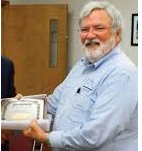
Dwight Young also served on the USD 428 School board for 15 years until stepping down in 2014
Great Bend Post
GREAT BEND- A federal lawsuit has been filed against the Center for Counseling and Consultation in Great Bend.
The lawsuit alleges sexual harassment of staff by the agency’s former executive director Dwight Young and inappropriate contact with clients.
In a media release, the center acknowledges the lawsuit and that since it involves personnel matters the current executive director Douglas McNett is not allowed to make additional comments.
The center, according to the media statement, respects the judicial process and asks that the media and public respect the privacy of current and former staff.
While the filing of the lawsuit now places the allegations before the court of public opinion, upon being notified in August of 2014, the Governing Board of the Center for Counseling & Consultation took immediate and appropriate actions to safeguard that safe environment for our staff and clients existed while the allegations were investigated, according to the release.
McNett said it was his understanding that due to the federal docket size and the discovery process, it may be fall of 2017 before this case is heard. “It’s not something that is going away tomorrow,” he said.
LAWRENCE, Kan. (AP) — A Kansas woman has been charged after she fled to Europe with her 9-year-old and 11-year-old daughters.
The Douglas County District Attorney’s Office says Samantha Elmer was charged Friday with two counts of aggravated interference with parental custody.
Authorities say Elmer and the girls were was last seen Oct. 26 in Lawrence. The girls’ father, Justin Bush of Smithville, Missouri, says he contacted Elmer after the girls missed several days of school and Elmer told him the girls were ill.
Bush contacted Lawrence police a few days later and they traced Elmer to Europe.
Sgt. Trent McKinley says missing person profiles have been created on Interpol, which assists in solving international crimes.
Bush says Elmer left ahead of a custody hearing and a Nov. 2 trial on theft charges.
——-
LAWRENCE, Kan. (AP) — Kansas authorities say a woman has fled to Europe with her 9-year-old and 11-year-old daughters who have been missing since late October.
The Lawrence Journal World reports Samantha Elmer was last seen in Lawrence, Kansas, with the girls on Oct. 26. The girls’ father, Justin Bush of Missouri, says he contacted Elmer after the girls missed several days of school and Elmer told him the girls were ill.
After his daughters missed four more days of school with no doctor’s note, Bush contacted Lawrence police, who traced Elmer to Europe. Sgt. Trent McKinley says missing person profiles have been created on Interpol, which assists in solving international crimes.
Bush says Elmer left ahead of a custody hearing concerning their daughters. They have joint custody of the children. Elmer was also set to stand trial Nov. 2. to face theft charges.
TOPEKA, Kan. (AP) — An attorney for four Kansas school districts says the state Supreme Court needs to take “prompt action” to fix funding shortfalls.
Attorney Alan Rupe told the court on Friday that “the kids of Kansas deserve nothing less.” He is requesting $54 million that he says poor schools were shortchanged last year and this year.
Earlier Friday, the state’s attorney, Stephen McAllister, told the court school funding increases in 2014 were an improvement over previous years. He argued the decision to adopt block grant funding while lawmakers look for a better school funding formula shouldn’t be punished.
A Shawnee County District Court panel found in June that the state’s new strategy for financing 286 school districts and cuts to state aid for low-income school districts were unconstitutional.
———————
TOPEKA, Kan. (AP) — The state of Kansas is defending its public education funding as “appropriate and laudable.”
The state’s attorney, Stephen McAllister, told the Kansas Supreme Court Friday that school funding increases in 2014 were an improvement over previous years. He argued the decision to adopt block grant funding while lawmakers look for a better school funding formula shouldn’t be punished.
The court is considering claims by four school districts that school funding is inadequate. The justices will hear next from the districts’ attorney.
A Shawnee County District Court panel found in June that the state’s new strategy for financing 286 school districts and cuts to state aid for low-income school districts were unconstitutional. The order was stayed while Kansas Attorney General Derek Schmidt’s office pursued an appeal.
——————
TOPEKA, Kan. (AP) — The Kansas Supreme Court is hearing arguments in a school funding case on the same day state officials and university economists are meeting to issue new tax collection projections.
The new forecast coming out Friday is expected to be more pessimistic than the existing one, which could create challenges if the state is ordered to spend more on its schools.
A Shawnee County District Court panel found in June that the state’s newly enacted strategy for financing 286 school districts and cuts to state aid for low-income school districts were unconstitutional. The Supreme Court granted Kansas Attorney General Derek Schmidt’s request for a stay on the order while pursued an appeal.
Schmidt and Gov. Sam Brownback say the judicial panel in the school finance case overstepped its constitutional authority.
STATEMENT BY THE PRESIDENT
ON THE KEYSTONE XL PIPELINE
Roosevelt Room
11:58 A.M. EST
THE PRESIDENT: Good morning, everybody. Several years ago, the State Department began a review process for the proposed construction of a pipeline that would carry Canadian crude oil through our heartland to ports in the Gulf of Mexico and out into the world market.
This morning, Secretary Kerry informed me that, after extensive public outreach and consultation with other Cabinet agencies, the State Department has decided that the Keystone XL Pipeline would not serve the national interest of the United States. I agree with that decision.
This morning, I also had the opportunity to speak with Prime Minister Trudeau of Canada. And while he expressed his disappointment, given Canada’s position on this issue, we both agreed that our close friendship on a whole range of issues, including energy and climate change, should provide the basis for even closer coordination between our countries going forward. And in the coming weeks, senior members of my team will be engaging with theirs in order to help deepen that cooperation.
Now, for years, the Keystone Pipeline has occupied what I, frankly, consider an overinflated role in our political discourse. It became a symbol too often used as a campaign cudgel by both parties rather than a serious policy matter. And all of this obscured the fact that this pipeline would neither be a silver bullet for the economy, as was promised by some, nor the express lane to climate disaster proclaimed by others.
To illustrate this, let me briefly comment on some of the reasons why the State Department rejected this pipeline.
First: The pipeline would not make a meaningful long-term contribution to our economy. So if Congress is serious about wanting to create jobs, this was not the way to do it. If they want to do it, what we should be doing is passing a bipartisan infrastructure plan that, in the short term, could create more than 30 times as many jobs per year as the pipeline would, and in the long run would benefit our economy and our workers for decades to come.
Our businesses created 268,000 new jobs last month. They’ve created 13.5 million new jobs over the past 68 straight months — the longest streak on record. The unemployment rate fell to 5 percent. This Congress should pass a serious infrastructure plan, and keep those jobs coming. That would make a difference. The pipeline would not have made a serious impact on those numbers and on the American people’s prospects for the future.
Second: The pipeline would not lower gas prices for American consumers. In fact, gas prices have already been falling — steadily. The national average gas price is down about 77 cents over a year ago. It’s down a dollar over two years ago. It’s down $1.27 over three years ago. Today, in 41 states, drivers can find at least one gas station selling gas for less than two bucks a gallon. So while our politics have been consumed by a debate over whether or not this pipeline would create jobs and lower gas prices, we’ve gone ahead and created jobs and lowered gas prices.
Third: Shipping dirtier crude oil into our country would not increase America’s energy security. What has increased America’s energy security is our strategy over the past several years to reduce our reliance on dirty fossil fuels from unstable parts of the world. Three years ago, I set a goal to cut our oil imports in half by 2020. Between producing more oil here at home, and using less oil throughout our economy, we met that goal last year — five years early. In fact, for the first time in two decades, the United States of America now produces more oil than we buy from other countries.
Now, the truth is, the United States will continue to rely on oil and gas as we transition — as we must transition — to a clean energy economy. That transition will take some time. But it’s also going more quickly than many anticipated. Think about it. Since I took office, we’ve doubled the distance our cars will go on a gallon of gas by 2025; tripled the power we generate from the wind; multiplied the power we generate from the sun 20 times over. Our biggest and most successful businesses are going all-in on clean energy. And thanks in part to the investments we’ve made, there are already parts of America where clean power from the wind or the sun is finally cheaper than dirtier, conventional power.
The point is the old rules said we couldn’t promote economic growth and protect our environment at the same time. The old rules said we couldn’t transition to clean energy without squeezing businesses and consumers. But this is America, and we have come up with new ways and new technologies to break down the old rules, so that today, homegrown American energy is booming, energy prices are falling, and over the past decade, even as our economy has continued to grow, America has cut our total carbon pollution more than any other country on Earth.
Today, the United States of America is leading on climate change with our investments in clean energy and energy efficiency. America is leading on climate change with new rules on power plants that will protect our air so that our kids can breathe. America is leading on climate change by working with other big emitters like China to encourage and announce new commitments to reduce harmful greenhouse gas emissions. In part because of that American leadership, more than 150 nations representing nearly 90 percent of global emissions have put forward plans to cut pollution.
America is now a global leader when it comes to taking serious action to fight climate change. And frankly, approving this project would have undercut that global leadership. And that’s the biggest risk we face — not acting.
Today, we’re continuing to lead by example. Because ultimately, if we’re going to prevent large parts of this Earth from becoming not only inhospitable but uninhabitable in our lifetimes, we’re going to have to keep some fossil fuels in the ground rather than burn them and release more dangerous pollution into the sky.
As long as I’m President of the United States, America is going to hold ourselves to the same high standards to which we hold the rest of the world. And three weeks from now, I look forward to joining my fellow world leaders in Paris, where we’ve got to come together around an ambitious framework to protect the one planet that we’ve got while we still can.
If we want to prevent the worst effects of climate change before it’s too late, the time to act is now. Not later. Not someday. Right here, right now. And I’m optimistic about what we can accomplish together. I’m optimistic because our own country proves, every day — one step at a time — that not only do we have the power to combat this threat, we can do it while creating new jobs, while growing our economy, while saving money, while helping consumers, and most of all, leaving our kids a cleaner, safer planet at the same time.
That’s what our own ingenuity and action can do. That’s what we can accomplish. And America is prepared to show the rest of the world the way forward.
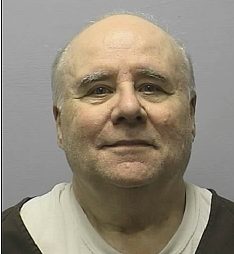
John E. Robinson Sr.-photo Kan. Dept. of Corrections
JOHN HANNA, Associated Press
TOPEKA, Kan. (AP) — The Kansas Supreme Court has upheld the death sentence for a convicted serial killer who stuffed several of the bodies of his female victims into barrels.
The ruling Friday in the case of John E. Robinson Sr. marks the first time justices have upheld a death sentence since Kansas reinstated capital punishment in 1994.
Robinson was sentenced to death for killing two women in Kansas, in 1999 and 2000. The justices upheld his death sentence in a 415-page ruling that also addressed numerous technical arguments raised by Robinson’s attorneys.
Robinson also was convicted for the 1985 death of a third young Kansas woman whose body was never found. Robinson, now 71, was sentenced to life in prison for killing four other women and a teenage girl in Missouri.
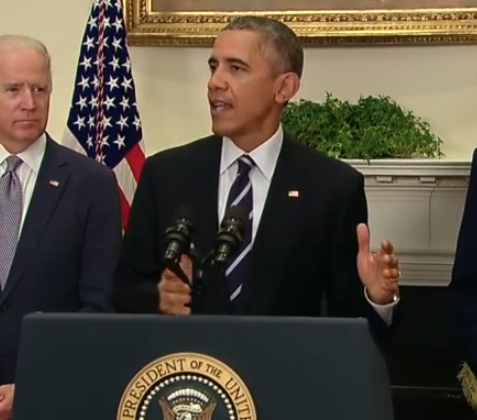
President Obama discusses the pipeline Friday at the White House
JOSH LEDERMAN, Associated Press
WASHINGTON (AP) — President Barack Obama says he’s rejecting the Keystone XL pipeline because he does not believe it serves the national interest.
Obama says the pipeline has played an overinflated role in political discourse.
Obama is speaking at the White House after meeting with Secretary of State John Kerry.
The decision caps a seven-year saga that became a flashpoint in Obama’s presidency. Killing the pipeline allows Obama to claim aggressive action on the environment.
————
WASHINGTON (AP) — A decision by President Barack Obama to reject the Keystone X-L pipeline isn’t likely to end the debate over the project.
Backers of the pipeline are expected to challenge the decision in court. And Republicans who control Congress may try to override the president.
The project could also get a fresh look in 2017 if a Republican wins the White House and invites TransCanada to re-apply.
Another open question is whether TransCanada will try to recoup the more-than $2 billion it says it has already spent on the project’s development. Earlier in the year, the company left the door open to suing the U.S. government under the North American Free Trade Agreement.
TransCanada first applied for Keystone permits in September of 2008, shortly before Obama was elected.
As envisioned, Keystone would snake from Canada’s tar sands through Montana, South Dakota and Nebraska — and then connect with existing pipelines to carry more than 800,000 barrels of crude oil a day to specialized refineries along the Texas Gulf Coast.
—————-
JOSH LEDERMAN, Associated Press
WASHINGTON (AP) — The Obama administration has rejected Canadian energy giant TransCanada’s application to build the Keystone XL pipeline.
That’s according to three sources familiar with the decision who aren’t authorized to comment publicly and spoke on condition of anonymity.
The decision caps a 7-year saga that became one of the biggest environmental flashpoints of Barack Obama’s presidency.
Killing the pipeline allows Obama to claim aggressive action on the environment. That could strengthen his hand as world leaders prepare to finalize major global climate pact next month that Obama hopes will be a crowning jewel for his legacy.
Yet it also puts the president in a direct confrontation with Republicans and energy advocates that will almost surely spill over into the 2016 presidential election.
The Topeka Capital-Journal reports that Topeka Habitat for Humanity is auctioning the diamond pendant, which came from an anonymous donor. The 1.59-carat round diamond pendant has an estimated value of $20,000.
The charity says in a release that the donor wanted to give the heirloom to honor her mother-in-law.
Michele De la Isla, executive director of Topeka Habitat for Humanity, says the starting bid is $12,500. The silent auction runs through Wednesday.
Photo by Dave Ranney Sue Huber of Atchison has worked with 13 case managers in four years while seeking help from the state’s vocational rehabilitation program for Kansans with disabilities.
By DAVE RANNEY
A state agency charged with helping people with disabilities find and maintain employment has returned $15 million to the federal government.
The decision, according to Michael Donnelly, director of rehabilitation services at the Kansas Department for Children and Families, was made because fewer people were asking the agency for help.
“The number of people coming in and applying for VR (vocational rehabilitation) assistance has dropped dramatically since 2011, when we were at the height of the recession,” Donnelly said. In fiscal year 2011, he said, almost 8,300 adults with disabilities asked for the department’s help in finding employment.
In FY 2015, which ended June 30, only 4,600 had applied. Donnelly attributed much of the drop to improvements in the state’s economy.
“The job market has opened up,” he said. “There are employers in areas of our state that are begging for employees and, for the first time, are looking to people with disabilities as a good resource.”
Subsequently, Kansans with disabilities may not need as much help landing jobs as they had in the past, Donnelly said. Most of the drop-off in vocational rehabilitation assistance, he said, has been in the state’s rural areas. “We continue to get large numbers of applications in the more urban areas,” he said.
Relinquished funds
If Kansas hadn’t returned the $15 million to the Rehabilitation Services Administration (RSA), an agency within the U.S. Department of Education, it would have had to put up roughly $3.5 million in matching funds, he said.
It didn’t make sense, Donnelly said, for DCF to spend state dollars on federal funds it wasn’t in a position to spend amid a tight Kansas budget situation. The $15 million constituted nearly 60 percent of the state’s $25.5 million federal allotment of vocational rehabilitation funding for the year.
No other state, according to RSA reports, relinquished a higher percentage of the money set aside for it. Of the 80 entities that received RSA funding in the last federal fiscal year — a category that includes states and national organizations — 16 relinquished $139.3 million. Kansas’ $15 million was the fifth-largest amount. The unspent funds have been made available to employment programs in other states.
Kansas also returned $7.5 million in FY 2014, Donnelly said. News of the relinquishment, which happened in August and wasn’t announced, surprised groups that advocate for people with disabilities.
“No one knew about this,” said Mike Oxford, executive director of the Topeka Independent Living Resource Center, a program that provides and oversees services for hundreds of people with disabilities in Shawnee County.
“If their (vocational rehabilitation) numbers were down, there should have been a strategy, a plan for reaching out to more people, for exploring every possible avenue for using this money to benefit Kansans instead of just giving it back,” Oxford said.
‘Incredibly frustrating’
The state’s decision to return the federal funding is disappointing to Sue Huber, who receives Social Security disability payments due to degenerative disc disease, spinal stenosis, depression, post-traumatic stress syndrome and diabetes.
Huber, who lives in Atchison, recently lost a 12-hour-a-week caregiving job because she doesn’t have a way to take her client to doctor’s appointments.
“I asked them help in buying transportation, but they said they couldn’t because they didn’t have the money,” Huber said. “Then, after I lost the job, they said they couldn’t help me get a car because I wasn’t working.”
Huber, 56, said she wasn’t surprised to hear that fewer people with disabilities were applying for help in finding employment.
“In the past four years, I’ve had 13 case managers,” she said. “I’m barely hanging on by a thread, and I really want to get a job that I can do. But every time we get something going, we have to stop because my case manager quit and we have to start over. “I can see why people wouldn’t go to them; it’s incredibly frustrating. I feel like a giant hamster in this big wheel just going around and around.”
Rosie Cooper, executive director of the Kansas Association for Independent Living Centers, said the application process for employment assistance is known for its long waits.
“When someone goes to a VR office and fills out an application, it’ll be 90 days before something actually gets going for them,” she said. “A lot of people can’t wait that long, so they don’t apply. They see it as a waste of time.” However, she said, there are a lot of Kansans with disabilities who want to work and need help finding a job.
Time-consuming process
Theresa Freed, DCF director of communications, said it often takes more than 30 days to determine whether an applicant is eligible for services. Collecting the required medical records and disability documentation also takes time, she said, as does setting up and completing assessments.
It’s also well-known, Cooper said, that DCF has had a hard time hiring and retaining vocational rehabilitation counselors and that some of the larger service providers have pulled out of the program because reimbursement rates do not cover their costs.
“We got out a little over a year ago,” said Ron Pasmore, president and CEO of the Kansas Elks Training Center in Wichita. “It just got to a point where we couldn’t keep doing it for what they (DCF) were paying. We were having to subsidize a lot of the operations, and we couldn’t afford to do that.”
At the time, Kansas Elks Training Center was one of the largest vocational rehabilitation providers in the state. DCF, Donnelly said, had contracts with 125 service providers in FY 2012; it now has contracts with 110. Some providers, he said, did not renew their contracts because they weren’t getting enough referrals, had little success in helping people find jobs or were unable to meet the contract payment requirement that clients stay on the job for 90 days.
Donnelly said some vocational rehabilitation counselors have retired, while others left after realizing that “the complexity and accountability associated with the job … isn’t a good fit for them.” Recruiting counselors is difficult, he said, because the position requires a master’s degree in rehabilitation counseling. ‘
‘Collaborative effort’ in the works
Donnelly defended the decision to relinquish the $15 million, noting the department has enough money in a reserve fund to cover the program’s projected costs for this year and will have access to its allotment — roughly $29 million — in the next federal fiscal year.
If more people had applied for services, he said, DCF likely would have held on to the funds. “We can only spend money on people who’ve been determined eligible for VR,” he said. “If there are people who may be eligible for VR that they (advocates) are not referring to us, then that’s where they should be spending their energies: getting those people referred to us.”
The RSA allotment, Donnelly said, is not part of End Dependence Kansas, a still-in-the-making employment initiative that Lt. Gov. Jeff Colyer unveiled during a news conference in October 2014.
That initiative, he said, will be a “collaborative effort” among DCF and several other state departments: aging and disability services, health and environment, commerce and corrections.
“It will be more of an outreach effort for people with disabilities who aren’t even seeking employment — to encourage them to consider thinking about getting a job,” Donnelly said.
A Boston firm, Public Consulting Group, has been hired to oversee the project. “We hope to put out an RFI (request for information) within the next 30 days,” Donnelly said. After that, he said, a request for proposals will be issued for direct services.
Dave Ranney is a reporter for Heartland Health Monitor, a news collaboration focusing on health issues and their impact in Missouri and Kansas.
SEVERY- Two people were injured in an accident just before 6p.m. on Thursday in Greenwood County.
The Kansas Highway Patrol reported a 2007 Freightliner Semi driven by Kimberly R Holloman, 36, Jacksonville, FL., was eastbound on U.S. 400 ten miles west of Severy.
The vehicle attempted to pass and struck a westbound 2009 Nissan Altima driven by Jeffrey J. Reynolds, 52, Andover, head on.
Holloman was transported to Greenwood County Hospital.
Reynolds was transported to Wesley Medical Center.
Both drivers were properly restrained at the time of the accident, according to the KHP.
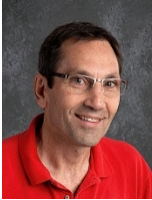
CONWAY SPRINGS, Kan. (AP) — A Conway Springs teacher at the center of a controversy over showing an anti-bullying video says he has changed his mind and has decided not to resign.
The Wichita Eagles reports that Tom Leahy’s decision to return to the classroom could force a school board vote on whether or not he can continue teaching.
Leahy and Superintendent Clay Murphy were scheduled to address the community at a joint news conference Thursday. Murphy said the event was cancelled shortly after noon at Leahy’s request.
The social studies teacher has been on leave since Oct. 21. He was asked to resign after showing eighth-grade history students “Love Is All You Need,” a short film depicting a fictional world in which heterosexual children are bullied by homosexual children.

 SALINA – Law enforcement authorities in Saline County are investigating a suspect arrested on drug charges after an interstate traffic stop.