OMAHA, Neb. (AP) — Figures have plunged in a third straight monthly survey of supply managers in nine Midwest and Plains states, providing more evidence of a slowdown in the region’s economy.
A report issued Monday says the overall Mid-American Business Conditions Index dropped to 41.9 last month, compared with 47.7 in September and 46.9 6 in August.
Creighton University economist Ernie Goss oversees the survey, and he again cites the strong U.S. dollar and global economic weakness among the reasons for the region’s economic slide.
The survey results are compiled into a collection of indexes ranging from zero to 100. Survey organizers say any score above 50 suggests economic growth. A score below that suggests decline.
The survey covers Arkansas, Iowa, Kansas, Minnesota, Missouri, Nebraska, North Dakota, Oklahoma and South Dakota.
NASHVILLE, Tenn. (AP) — Bouncing from politics to the big screen and back, Fred Thompson played many roles well and those who knew him say the folksy former U.S. senator from Tennessee leaves a big mark on American life and the arts.
Thompson died Sunday at 73.
A lawyer, prosecutor, hard-driving Senate counsel at the Watergate hearings, film and TV actor and even a fleeting presidential hopeful, Thompson commanded audiences with a booming voice and outsized charisma.
“Very few people can light up the room the way Fred Thompson did,” said U.S. Sen. Lamar Alexander.
Thompson, who appeared in feature films and television, including a role on the NBC drama series “Law & Order,” died in Nashville after a recurrence of lymphoma, his family says.
John Richard Schrock is a professor at Emporia State University.
Western press coverage of China’s recent announcement of moving back to a two-child policy has been an abysmal example of shallow reporting. Newspaper, television, radio and online “news” combine a failure to conduct background research with our expectation that every culture in the world should be just like us.
Media are all claiming the Party is hesitant to abandon the one-child policy because it would reveal the longtime Party policy was wrong. That is nonsense. Mao was not happy with any birth control policy; he viewed maximum growth as essential to building a modern nation. Mao died in 1976. China’s limitation on children was introduced in 1978 for enforcement in 1979. Science voices had long pointed to their massive growing population as creating a terrible burden on solving economic, social and environmental problems in China. They finally prevailed after Mao was gone. The initial restriction was a mild two-child policy, but the need for a one-child policy rapidly followed.
During World War II, our film director Frank Capra made famous the example that if Chinese came marching past you four abreast, they would never stop coming because more would be born, grow up, and join the march. That was when China had 400 million people. Today, with 1.4 billion, they can march past us 14 abreast and never stop coming! And without the one-child policy, that number today would be an additional 400 million more or 18 abreast!
Western news makes this last week’s decision appear to be a recent turnaround motivated by an aging population and the increasing burden of workers supporting the retired elderly. Again not true. In 2008, the deputy director of China’s National Population and Family Planning Commission indicated that the one-child policy would only remain in place until 2015.
Even in 2008, a spokesman for the Committee on the One-Child Policy pointed out that only 36 percent of China’s population was subject to a one-child restriction. It applied only to Han Chinese. There were no restrictions on the minorities or foreigners living in China. Residents of Hong Kong and Macau are also exempt. Natural twins or triplets are also permitted. And recently, admittedly due to the financial burden of a single child caring for two parents and four grandparents, the only-child-of-an-only-child who marries an only-child-of-an-only-child can have two children.
While I was teaching at a Chinese university in 2012, my wife tutored ten university students in English. Only three of the ten were only-children; the seven others had brothers and/or sisters and those siblings were also getting an education with full civil rights, not suffering as non-citizens as portrayed in the American press.
While lecturing at over 25 Chinese universities in the last 23 years, I have seen major changes in quality of life and attitudes toward family. In Shanghai and Beijing, the ratio of boys-to-girls is 105.5-to-100, the exact same ratio of boys-to-girls as in America. The surplus of males in less developed areas of China is a relic of a boy preference we also had in the last century; they call it “feudal thinking.” Farmers not only wanted bigger families to work the fields, but preferred boys. So yes, there are unwanted girls in orphanages. But no one can fault the People’s Republic who from their beginning ended arranged marriages and foot binding, and championed equal rights and education for women.
In contrast, India remains an economic basket case with uncontrolled growth that will surpass China. Every effort to modernize India is impeded by their ever-increasing population. Japan however made birth control accessible after World War II, curbed its population growth, and achieved a higher standard of living. It has even fewer workers supporting their elderly population when compared to China.
With the world population having passed 7 billion and growing to over 9 billion by 2050 and 11 billion by 2100, China’s policy was critical. Without it, China would not have received a United Nations award for having pulled 400 million people out of poverty.
“Why do Americans think our one-child policy is a human rights issue?” is a question I am asked every summer I go to China. I can only reply that Americans have not walked the terribly crowded streets of China or experienced the pollution caused by five times the population on less land.
TOPEKA, Kan. (AP) — Kansas lawmakers will study instituting a statewide policy requiring law enforcement officers to wear body cameras. A similar proposal failed to gain traction last spring.
Rep. John Rubin, a Shawnee Republican, will hold a hearing next week of a joint committee on corrections and juvenile justice oversight. He supports police body cameras.
The Kansas City Star reports that the issue has bipartisan support but lawmakers don’t agree on the specifics. For example, the committee will consider whether to require all levels of law enforcement to use body-worn cameras, how to pay for them and rules about the storage and access of recordings,
In Missouri last year, some lawmakers stalled a statewide requirement for body-worn cameras because they did not believe the state should impose an unfunded mandate.
OMAHA, Neb. (AP) — A meat company based in Nebraska is recalling 167,427 pounds of ground beef that might be tainted with E. coli bacteria.
The U.S. Department of Agriculture said Sunday that All American Meats Inc. is recalling the meat that was sold to retailers nationwide. No illnesses have been linked to the beef.
The recalled meat was produced on Oct. 16, and it was sold in either 60-pound or 80-pound packages.
All the meat that is being recalled had a sell-by date of Nov. 3 and establishment number 20420 in the USDA inspection stamp.
TOPEKA, Kan. (AP) — A new multimillion-dollar forensic science laboratory is set to open Monday on the Washburn University campus in Topeka.
The four-story building, which had a $55 million budget, will be used by the Kansas Bureau of Investigation. It replaces an old lab in the basement of a renovated junior high school.
The Topeka Capital-Journal reports the public will be able to tour the building later this week.
KBI Director Kirk Thompson says the new building was designed to meet current and future needs of the KBI. The current lab processes about 10,000 pieces of evidence each year for law enforcement agencies across the state.
Washburn University’s forensic science classes will also be located in the building.
TOPEKA– Kansas consumers wanting health insurance through the federally-facilitated marketplace beginning Nov. 1 continue to have choices of health insurance companies, despite the recent loss of some company options.
Companies available through the Affordable Care Act (ACA) federal marketplace enrollment are Blue Cross and Blue Shield of Kansas, Inc., BlueCross BlueShield Kansas Solutions, Inc., Blue Cross and Blue Shield of Kansas City (for consumers in Johnson and Wyandotte counties), and UnitedHealthcare of the Midwest, Inc.
Two Coventry health insurance companies will not participate in the state’s 2016 federally-facilitated marketplace, officials announced last week. They are Coventry Health and Life Insurance Co., which offers preferred provider plans; and Coventry Health Care of Kansas Inc., a health maintenance organization. Both companies are part of the corporate structure of Inc., a national health insurance organization.
Consumers wanting to look at the marketplace plan information prior to enrollment will be able to do so on a special section of the Kansas Insurance Department’s website, www.ksinsurance.org
Department statistics now show that fewer than three percent of the Kansas population of 2.9 million has insurance through marketplace enrollment.
“Coventry’s departure from the federal marketplace was a company decision, but Kansans still have a choice of other companies for the upcoming open enrollment period,” said Ken Selzer, CPA, Kansas Commissioner of Insurance. “Those who currently have Coventry health plans purchased from the online marketplace should be prepared to change companies when the open enrollment period begins Nov. 1.”
The two Coventry companies covered approximately 45,000 lives through federal marketplace plans as of Sept. 30, 2015, according to the Kansas Insurance Department (KID).
“We know that marketplace consumers will have questions of both KID and of the navigator programs in the state,” Commissioner Selzer said. “We will assist callers through our Consumer Assistance Division by answering questions they have or by referring them to the proper agencies for help. We are expecting Coventry to send notices to their customers explaining their position and providing information on their coverage now and in the future.”
The online marketplace exchange in Kansas is operated by the United States Department of Health and Human Services, whose website is www.healthcare.gov.
“Kansans’ concerns about insurance are a major priority for the department, and we will assist those impacted by the Coventry decision in working through their health insurance issues,” Commissioner Selzer said.
The department’s Consumer Assistance Hotline is 800-432-2484.
Photo by Ashley Booker Shawn Sullivan, Gov. Brownback’s budget director
JOHN HANNA, AP Political Writer
TOPEKA, Kan. (AP) — A budget deficit is all but certain to emerge in Kansas with new, more pessimistic revenue projections expected in the coming week.
Republican Gov. Sam Brownback already has ruled out further tax increases after sales and cigarette taxes went up in July. And legislators aren’t much interested anyway after the bitter, record-long annual session.
State officials learn Monday whether tax collections in October met expectations after falling short in recent months.
Then, economists, legislative researchers and state officials are scheduled Friday to issue new revenue projections to guide budget decisions.
Brownback budget director Shawn Sullivan said the governor and his aides are likely to consider targeted spending cuts and other budget adjustments, such as shuffling money among various government accounts.
WASHINGTON (AP) — The Supreme Court has agreed to hear appeals from two Maine men who say their guilty pleas for hitting their partners should not disqualify them from owning guns.
The justices on Friday said they would review lower court rulings that upheld convictions against Stephen Voisine and William Armstrong III for owning guns even after Voisine was convicted of slapping his girlfriend and Armstrong was convicted of hitting his wife. Voisine’s gun ownership came to light only after an anonymous report that he shot a bald eagle.
Federal law bars a person convicted of misdemeanor domestic violence involving the use of physical force or a deadly weapon from possessing a firearm. Voisine and Armstrong argue that Maine’s law and their guilty pleas are too vague to bar them from gun ownership.
Supporters of banning the sale of cigarettes to teens and young adults in the Kansas City area may be close to landing their first major coup.
On Monday night, a legislative committee of the Unified Government of Wyandotte County/Kansas City, Kansas, one of the region’s largest municipalities, endorsed revising its legal code to ban the sale of cigarettes to anyone under the age of 21. The current age under state law is 18.
“We know it’s important,” Commissioner Melissa Bynum told representatives of the Tobacco 21 | KC campaign, an initiative of Healthy KC, which is a partnership between the Greater Kansas City Chamber of Commerce and Blue Cross and Blue Shield of Kansas City.
The full commission could consider the revisions as early as next month, said Commissioner Ann Brandau-Murguia, who is championing the campaign among elected officials in the unified government.
Announced last Thursday, Tobacco 21 | KC aims to make 21 the legal age of sale of tobacco products in all of the roughly 100 municipalities in the Kansas City region. Proponents argue that stopping people from smoking at an early age should cut down on the number of lifelong smokers.
With a population of nearly 162,000 residents, Wyandotte County has about 8 percent of the population in and around Kansas City. The county is nearly as large as Overland Park and has more people than Olathe, with 128,000 residents.
Commissioner Mike Kane was the lone dissenter Monday among the five members of the Administration and Human Services Committee.
“You did have a good presentation, but I’m not interested in it,” Kane told the Tobacco 21 | KC representatives. “We are here to govern, not dictate.”
He said that members of the armed forces are under a lot of stress – even those who are younger than 21 – and that they should have the right to purchase cigarettes if that helps them relax.
But as a self-employed optometrist, Commissioner Jane Philbrook identified with arguments from the Tobacco 21 | KC representatives that smokers can hurt the bottom line. Productivity suffers when smokers go outside to have a cigarette, she said.
The Tobacco 21 | KC campaign also points to research estimating that increasing the age at which people can buy cigarettes to 21 around the country would only decrease tobacco retailer and industry sales by about 2 percent.
Murguia and other campaign officials stressed that it’s not their intent to criminalize possession of cigarettes among older teens or even target people who might buy cigarettes for under-aged youths.
“It is not a gotcha game,” Brandau-Murguia said.
She didn’t rule out a move in that direction, though.
Brandau-Murguia said other commissioners likely share Kane’s sentiments but the limited scope of the proposed ordinance change could garner a majority on the full commission.
The region-wide campaign comes at a fortuitous time for the unified government, said Wesley McKain, supervisor of the Health Department’s Healthy Communities Division.
With the help of a Chronic Disease Risk Reduction Grant from the Kansas Department of Health and Environment, the health department has just hired a tobacco-reduction coordinator.
The new coordinator is providing staff support to a newly created Tobacco-Free-Wyandotte Action Team, which has joined the five other long-standing teams that are part of Healthy Communities Wyandotte. The unified government began the effort six years ago when it finished last among all Kansas counties in overall health outcomes.
Mike Sherry is a reporter for Heartland Health Monitor, a news collaboration focusing on health issues and their impact in Missouri and Kansas.
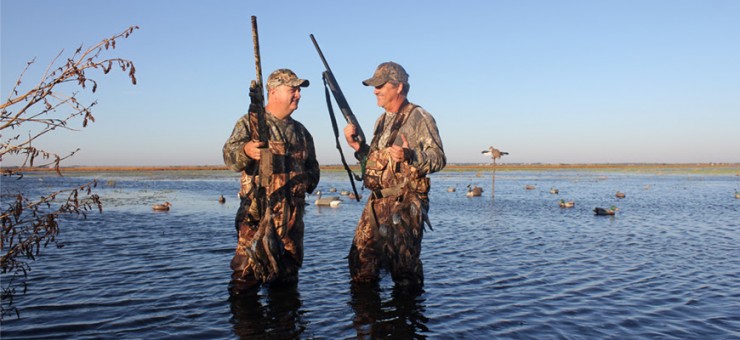
BURLINGTON–The Kansas Wildlife, Parks and Tourism (KDWPT) Commission approved a proposal to raise fees for fishing and hunting licenses at their public meeting in Burlington on October 22, 2015. The new fees will be effective January 1, 2016. KDWPT staff have been discussing fee increases since early last spring and presented a draft proposal before the Commission at their public meeting in August.
Fee increases were deemed necessary to ensure pivotal programs important to hunters and anglers can be maintained and enhanced. Basic hunting and fishing license fees haven’t increased since 2002, and the price of resident deer and turkey permits haven’t increased since 1984. Inflation has increased the cost of doing business by almost 30 percent since 2002, and the uncommitted balance of the Wildlife Fee Fund was beginning to decline. License and permit revenues go into the Wildlife Fee Fund to pay for wildlife and fisheries programs, which receive no State General Fund money.
By unanimously approving the proposed increases, the Commission ensured that programs such as Walk-in Hunting Access (WIHA), Community Fisheries Assistance (CFAP), Pass It On, Fishing Impoundment and Stream Access (FISH), and Wildlife Habitat Improvement (WHIP) will continue to provide hunters and anglers with high-quality outdoor opportunities. Increased revenues will also help fund day-to-day business such as operation of four fish hatcheries, law enforcement, public lands management and private land programs.
Beginning January 1, 2016 a resident annual hunting or fishing license will cost $25. The current fee is $18. However, value-added options are built into the new fee structure, including a discount for purchasing a combination hunt/fish annual license ($45) and an early-buy combination discount ($40) if purchased before February 1. Also included are multi-year hunting and fishing licenses that will provide savings. A five-year fishing or hunting license is priced at $100, and a five-year combination hunting/fishing license is $180, a savings of $70 if those licenses were purchased individually each year.
Nonresidents will pay $95 for an annual hunting license and $50 for an annual fishing license.
Resident deer permits will go from $30 to $40; nonresidents will pay $415 for the combination (one antlered deer/one antlerless whitetail) permit. Resident turkey permits are set at $25 and nonresidents will pay $50 for a fall turkey permit and $60 for a spring turkey permit.
Lifetime hunting and fishing licenses will go from $440 to $500 and $880 to $960 for a combination.
Youth license and permit fees were not changed, and the senior lifetime hunt/fish combination license ($40) will not change.
In other business, commissioners approved an amendment to the definition of a setline, allowing anglers to anchor a setline with a 25-pound weight, and use a closed-cell float to mark it. Amendments to the creel and length limit reference document were approved, including several changes to length and slot-length limits for blue catfish. To see all approved creel and length limits see K.A.R. 115-25-14 at: https://ksoutdoors.com/KDWPT-Info/Commission/Upcoming-Commission-Meetings/October-22-2015/October-22-2015-Approved-Regulations
And in final action, commissioners approved staff’s proposal for duck zone boundaries. After months of public meetings, discussion and surveys, KDWPT staff proposed a new map that will go into effect for the 2016 fall duck seasons and remain in place for five years. The only change was a boundary shift to move Cedar Bluff Reservoir out of the Low Plains Early Zone and into the Low Plains Late Zone. All other duck zone boundaries remained the same.
HUTCHINSON- Law enforcement authorities in Reno County had good news to report on Saturday evening.
The owner of the missing falcon was reunited with his bird.
The owner, Michael Garcia, in town from Illinois for a bird handler’s convention reported the valuable white falcon missing on Wednesday.
“I’ve been driving all over the area following leads, using a tank of gas every day,” Garcia said. “I received calls all hours of the day and night and I really appreciated it.”
About 4 p.m. on Saturday, Garcia received a call that the bird was sitting on a pole near Carey Park, just 100 yards from where he lost the bird.
“I’d driven around Sedgwick County and through that park earlier in the day,” he said.
Garcia had some of the falcon’s favorite food and the two were easily reunited.
He told police he wanted to thank the public for their help to locate the bird. He stopped by the Hutchinson police station and allowed trick or treat kids and officers to see the bird.
Hutchinson will host the North American Falconer’s Convention the week of November 8.
“There will be a couple hundred bird handlers in town and the public will have the chance to see a lot of amazing birds,” said Garcia.
WICHITA, Kan. (AP) — A member of a panel discussing renovations of a Wichita State University chapel says she agrees that the chapel should be open to all races and faiths but only if those using the chapel are encouraged to become Christians.
Lisa Ritchie was the only opponent of the renovations on the panel, which held a public hearing Friday to air disagreements about the chapel renovations.
The May renovation of the Harvey D. Grace Memorial Chapel removed an altar and replaced pews with chairs. Supporters said it made the chapel a more flexible worship space. Opponents contended the renovations favored Muslims over Christians.
The Wichita Eagle reports Wichita State vice president Eric Sexton said a committee overseeing the chapel will consider the input from Friday’s meeting and might make changes.

 OMAHA, Neb. (AP) — Figures have plunged in a third straight monthly survey of supply managers in nine Midwest and Plains states, providing more evidence of a slowdown in the region’s economy.