Kansas Senate Vice President Jeff King is taking issue with Gov. Sam Brownback’s reasons for opposing Medicaid expansion. Melika Willoughby, Brownback’s deputy communications director, outlined those reasons in an Oct. 6 email to supporters. Referring to expansion as a “masquerading component of Obamacare,”
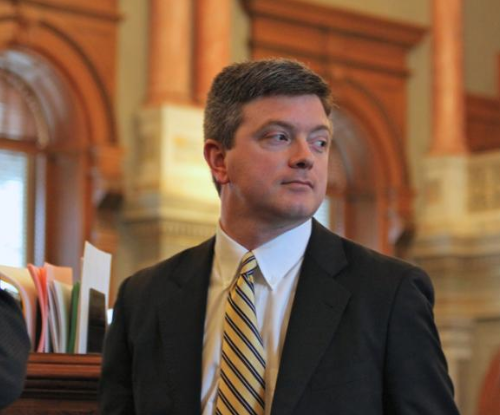
Photo by KHI News Service Kansas Senate Vice President Jeff King, a Republican from Independence, is taking issue with Gov. Sam Brownback’s reasons for opposing Medicaid expansion.
Willoughby said the governor believes it would be “morally reprehensible” for the state to provide health coverage to low-income Kansans “who choose not to work” before providing support services to all of the disabled Kansans now on waiting lists. In addition,
Willoughby accused expansion supporters of “lying” by claiming the additional federal funding that expansion would have generated might have prevented the closure earlier this month of Mercy Hospital in King’s hometown of Independence. In a response posted Thursday on his website, King pushed back.
He said contrary to Willoughby’s assertion the “vast majority” of uninsured Kansans who would be eligible for coverage under expansion are “working adults and students.”
“I refuse to make moral judgments based on a person’s view of Medicaid expansion. I wish Ms. Willoughby would have done the same,” King wrote. “Maybe if her hospital was closing. Maybe if her parents were wondering where to go for emergency care. Maybe if she faced uncertainty in her health care future, she would view those looking for health care answers in a little less judgmental light.”
King, a self-described conservative Republican and former expansion opponent, now supports the kind of private-sector approach being taken in other Republican-controlled states.
“We are looking at using federal funds to help small businesses provide private health insurance for their employees and assist colleges in getting private insurance for their students,” King wrote. “Conservative states like Indiana have shown that this can work. Far from expanding ‘government-run health care,’ the Indiana model and those like it expand private health care, limiting the role of government.”
Indiana’s expansion plan, approved by federal officials in January, uses Medicaid dollars to purchase high-deductible health insurance plans for adults making up to 100 percent of the federal poverty level, annually $11,770 for individuals and $24,250 for a family of four. The state then contributes money to a Personal Wellness and Responsibility, or POWER, account that beneficiaries can use to cover out-of-pocket costs.
The Indiana plan also requires beneficiaries to contribute to the account.
Forum to focus on Indiana plan
The Indiana expansion plan will be the focus of a Nov. 3 forum in Wichita sponsored by several Kansas hospitals and health foundations. Doug Leonard, president of the Indiana Hospital Association, and Jonathan Nalli, chief executive of St. Vincent hospital in Indianapolis, will participate in a panel discussion about the Indiana expansion plan.
A second panel discussion will feature King and three other Kansas legislators: Sen. Michael O’Donnell, a Wichita Republican, Rep. Dan Hawkins, a Wichita Republican who serves as chairman of the House Health and Human Services Committee, and the ranking Democrat on the committee, Rep. Jim Ward, also from Wichita.
Jeff Korsmo, CEO of Via Christi Health, one of the sponsoring hospitals, said organizers would like to create some momentum on the expansion issue heading into the 2016 legislative session.
“Our hope is that it’s a series of conversations that can lead to some productive sharing of information and maybe start generating some answers that can move us forward,” Korsmo said.
King appears ready to help lead that discussion.
“Our health care system failed Independence and it is failing tens of thousands of hard-working Kansans,” King said in the column posted to his website. “I don’t have all the answers, but saying no to everything isn’t an option.”
But other Republican leaders remain opposed. A talking-points memo they recently commissioned to sharpen their arguments says that costs have far exceeded estimates in many expansion states. It also asserts that the low-income adults who would gain coverage under expansion are capable of taking care of themselves.
“The population Medicaid expansion would cover consists of healthy adults without children who could receive private coverage if they work 33 hours a week at the minimum wage,” the memo says, referring to the income level at which people can qualify for federal tax credits to help them purchase coverage on the Affordable Care Act marketplace.
KanCare eligibility limits
Brownback privatized the Kansas Medicaid program in 2013. Now called KanCare, the nearly $3 billion program is administered by three managed care organizations. KanCare now covers about 425,000 low-income children and families, plus disabled and low-income elderly adults. Adults with dependent children are eligible for KanCare coverage only if they have incomes below 33 percent of the federal poverty level, annually $7,870 for a family of four.
Non-disabled adults without children aren’t eligible regardless of income. Expansion would extend KanCare coverage to non-disabled, childless adults with incomes up to 138 percent of poverty: annually $16,105 for an individual and $32,913 for a family of four.
Jim McLean is executive editor of KHI News Service in Topeka, a partner in the Heartland Health Monitor team.
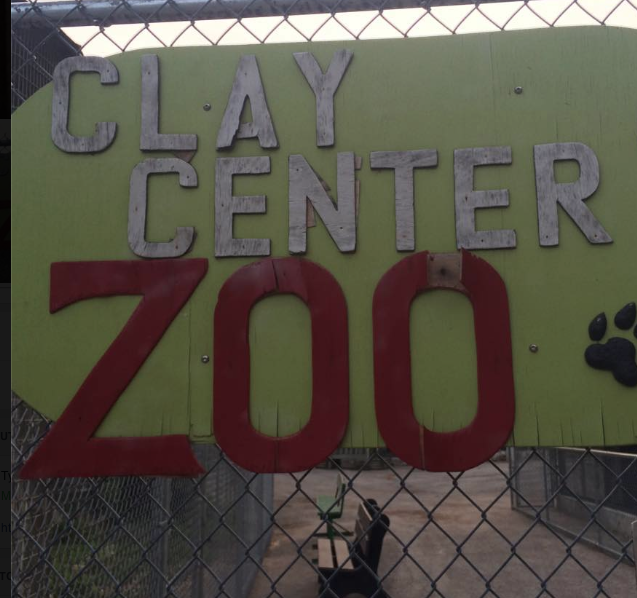
CLAY CENTER, Kan. (AP) — The Clay Center Zoo is trying to raise $500,000 in order to keep the zoo open. They have a gofundme page
Bill Callaway, director of Clay Center Public Utilities Commission, told The Salina Journal that as of Friday afternoon, the zoo was $320,000 short of the initial goal.
He says the 70-year-old zoo needs to be modernized, and first-phase plans include a new main entry building, indoor and outdoor exhibit space, utility improvements and landscaping.
The fundraising effort comes after the U.S. Department of Agriculture cited the zoo over the past three years for infractions, including such things as a loose wire in a fence, a watering pond with moss growing in it and paperwork.
Callaway says the zoo was eventually fined $7,500.
The Public Utility Commission has a “self-imposed” deadline to raise the money by December 31, to move forward with construction.
OTTAWA COUNTY– A Kansas man died in a small plane crash just after 5:30p.m. on Sunday in Ottawa County.
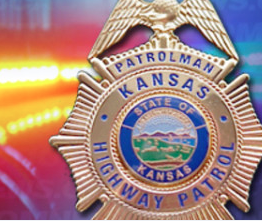
The Kansas Highway Patrol reported the home built, experimental aircraft piloted by Delwyn Schmidt, 62, Bennington, took off from his residence at 93 Autumn Lane and was off on ascent.
The pilot tried to make a turn to return home and lost power.
Schmidt, who was the only person on board, was transported to the Salina Regional Medical Center before being transferred to a hospital in Wichita where he died.
An FAA spokesman says the plane was destroyed when it crashed.
MANHATTAN–The 2015 Taiwan Agricultural Youth Exchange Program is currently accepting applications from high school seniors and college freshmen who are passionate about agriculture and are interested in representing Kansas in a week-long exchange program December 7-11, 2015.
Each year the National Taichung Agricultural Senior High School in central Taiwan hosts students from the Midwest for this program. Selected students will tour agricultural facilities and businesses in Taiwan, and will learn about Taiwanese agriculture.
Exports play an important role in Kansas agriculture. According to Euromonitor, in 2014 Kansas exported just over $100.8 million in agricultural goods to Taiwan including beef, oil seeds, cereal grains and wheat flour. In 2013, exports of farm and ranch products contributed nearly $5 billion to the Kansas economy.
“The Taiwan Youth Exchange Program provides an opportunity for Kansas youth to experience agriculture on a global platform. Agriculture contributes nearly $63 billion to the Kansas economy, equaling approximately 43 percent of the state’s economy,” said Kerry Wefald, Agriculture Marketing Director for the Kansas Department of Agriculture. “It is important that our students understand that many commodities grown and harvested in their home communities contribute to fulfilling free trade orders with countries like Taiwan.”
Three students will be selected to represent Kansas. In order to be eligible to apply, students must meet the following requirements:
· Be a high school senior or college freshman;
· Be at least 18 years of age by December 7, 2015;
· Have a strong Kansas agricultural background;
· Have a valid U.S. passport by the time of exchange program selection; and
· Be able and willing to pay for airfare costs (approximately $1,000).
WICHITA, Kan. (AP) — Authorities are investigating after a man was discovered with a critical head injury on a field near Newman University.
The Wichita Eagle reports that campus security called police Friday evening to check on a man lying in a field near the school. According to Wichita police Sgt. Jason Bartel, police found a man in his 40s with injuries to the face. He was taken to Via Christi Hospital St. Francis in critical condition.
Authorities say they are looking for a suspect in the area.
Missouri Gov. Jay Nixon and New York Gov. Andrew Cuomo on Sunday announced in a media release they have made a friendly wager on the outcome of this year’s World Series between the Kansas City Royals and the New York Mets. The series opens on Tuesday in Kansas City.
“The Royals have earned their second consecutive berth in the Fall Classic through strong pitching, discipline at the plate, spectacular defense, and a dedicated fan base at the K that is second-to-none,” Gov. Nixon said. “Good as the Metropolitans have been in the postseason, I don’t see them overcoming this playoff-seasoned team. In the highly unlikely event the Mets prevail, I’ve wagered a few items representative of the best of Kansas City and Missouri food, sports and technology. But with the Royals’ home-field advantage and never-say-die spirit, I look forward to having Gov. Cuomo send us the offerings from New York, come November.”
To show his confidence in the Royals, Gov. Nixon has wagered a commemorative jersey from the Negro Leagues Baseball Museum, a Kansas City landmark that commemorates the accomplishments of the great players of the Negro Leagues such as Satchel Paige, Josh Gibson and Buck O’Neill who played for the Kansas City Monarchs, New York Cuban Giants and other teams; a bag of 20th anniversary platinum edition blend coffee from The Roasterie in Kansas City; world-famous barbecue ribs from Kansas City’s own Gates BBQ; and a Ford F-150 baseball cap, to signify how Missouri is at the forefront of the American auto industry, with the award-winning F-150 truck built at the Kansas City Assembly Plant, which produces more vehicles than any other Ford plant in the world.
In addition, the Governors have agreed that the Governor who loses the bet also will wear the jersey of the opposing team for one day.
“This year’s World Series is a matchup between two truly great teams – but there is no doubt in my mind that the Miracle Mets are going on to win it all,” said Gov. Cuomo. “The Mets’ strength, skill and leadership sets them apart from every other team, and their fans are truly without equal. From my hometown of Queens to stadiums across the country, this team has proven that they have what it takes to clinch the World Series, and I’m confident that is exactly what they will do. I thank Governor Nixon for his participation in this friendly wager and think he will look great in blue and orange.”
If the Royals win, Gov. Cuomo will send Gov. Nixon a hat from the Baseball Hall of Fame, a Cooperstown institution that celebrates the history of baseball and its place in American culture; bagels from Jrs Bagel factory in Queens; original anchor bar wing sauce from Western New York; Gianelli’s hot Italian sausage from Central New York; a sampling of great products from New York’s burgeoning craft beverage industry including Sheldrake Point Winery’s award-winning Riesling from the Finger Lakes, Hudson maple cask rye from Tuthilltown Spirits in the Hudson Valley, Nine Pin Cider from the Capital Region, Pumking from the Southern Tier Brewing Company, Big Slide IPA from the Lake Placid Brewing Company in the North Country, and Toasted Lager from the Blue Point Brewing Company on Long Island.
Last fall, Gov. Nixon and Gov. Cuomo traveled together to Afghanistan as part of a four-governor delegation to meet with U.S. troops and be briefed on security matters.
TOPEKA, Kan. (AP) — Supporters of legalizing medical marijuana in Kansas are planning a silent protest at the Capitol next month.
A group called Bleeding Kansas is planning the “Day of the Kansas Dead” rally in Topeka on Nov. 7.
Lisa Sublett, founder of the organization, said the protest will memorialize those who have died without the right to use marijuana to heal or ease their pain. Sublett contends a majority of Kansas residents support medical use of marijuana but the proposal has not advanced in the Kansas Legislature
The Topeka Capital-Journal reports (https://bit.ly/1O1edrx ) Sublett hopes to eventually organize an educational forum for legislators to hear from scientists on the subject.
TOPEKA, Kan. (AP) — Chocolate lovers will be in luck next year.
The Topeka Capital-Journal reports that candy giant Mars Inc. is working with a Topeka tourism group to put on the Kansas Chocolate Festival. Visit Topeka CEO Brett Oetting says the Sept. 24, 2016, festival will take place in the city’s downtown.
He said Mars will be on the main stage, with a chocolatier who works for the company giving cooking demonstrations. Other chocolatiers also may give demonstrations, although that isn’t set in stone.
Mars has a large presence in the city. It opened its 500,000-square-foot plant in late 2013 to produce Snickers and peanut M&Ms. It announced in July that it would build a $100 million addition to the plant and hire 70 additional people.
TOPEKA, Kan. (AP) — Lower energy prices benefiting consumers at gasoline pumps have hit oil- and natural gas-producing counties in western Kansas hard.
It’s forcing counties to cut spending or increase property tax levies just as the state is ending an aid program meant to insulate them.
The state Department of Revenue said oil and gas property values declined an average of 52 percent this year. Sixteen western Kansas counties saw their total property values decrease more than 20 percent, crimping their ability to raise local tax revenues.
Kansas created a trust fund in 2005 and set aside taxes collected from oil and gas production for counties to tap when the industry experiences a bad downturn. But legislators in 2014 halted the program, and the last payments to counties were made earlier this month.
HUTCHINSON– A Kansas man convicted on two counts of aggravated assault, two counts of criminal threat and criminal damage was sentenced in Reno County court on Friday.
Judge Trish Rose sentenced Deandre Pannell, 28, Hutchinson, to a total of two-years, three months in prison, then granted him two-years community corrections. The judge denied a motion for judgment of acquittal or a new trial.
The case involves an incident in July of 2014 when Pannell took a vehicle that didn’t belong to him and when the victims in the case confronted him to get the vehicle back, he allegedly came out of the vehicle, broke a window in a van the victims were in and threatened them with a hatchet.
The defense argued that there was not hatchet found at the time of his arrest. Senior Assistant District Attorney Steve Maxwell noted there was some time before he was arrested giving him plenty of time to ditch it.
He was also ordered to pay $305.00 in restitution.
For two years now, the staff at Kansas Action for Children has been trying to unravel a mystery: Why is Medicaid enrollment dropping among the state’s youngest children?
Kansas Medicaid officials says they don’t know why enrollment is dropping among young children. CREDIT IAN D. KEATING / FLICKR — CREATIVE COMMONS
Enrollment of low-income children 1-5 peaked in October 2012 and has been dropping steadily since.
Enrollment of infants younger than 1 in low-income families also dropped during that period. Shannon Cotsoradis, president and CEO of Kansas Action for Children, a Topeka-based nonprofit, said she wants more research to determine whether eligible children are missing out on health coverage.
“It’s possible there’s a benign reason for this, but it’s not possible to determine whether or not this is a trend that should be raising the red flag without more data,” Cotsoradis said. “Which is really the bottom line.”
In Kansas, children age 1 to 5 are eligible for the state’s privatized Medicaid program, known as KanCare, if they live in families earning less than 150 percent of the federal poverty level, or $36,144 annually for a family of four. Children under the age of 1 are eligible in families earning up to 171 percent of the poverty level, or $41,472 annually for a family of four.
The overall child poverty rate in Kansas is trending down, declining from 19 percent in 2013 to 18 percent in 2014, but Cotsoradis said it is “highly unlikely” that explains the drop in Medicaid enrollment.
Families with younger children, she said, are statistically more likely to be below the poverty line than families with older children.
Cassie Sparks, a spokesperson for the Kansas Department of Health and Environment, said officials at the state’s lead Medicaid agency don’t know why enrollment is dropping among young children.
“We do know there have been no policy changes in eligibility relative to this group,” Sparks said in an email.
Cotsoradis suspects the drop in Medicaid enrollment could be related to a decision made by officials in another state agency, the Kansas Department for Children and Families.
In November 2011, DCF officials decoupled applications for Medicaid and Temporary Assistance for Needy Families (TANF), a cash-assistance program for low-income families. Cotsoradis said the change creates another step for families new to TANF and Medicaid, and Kansas Action for Children issued a report focused on the drop in TANF participation since 2011.
About a year after the DCF decision, Cotsoradis started noticing a decline in the number of families enrolling young children in Medicaid. She said the lag time made sense because only children born after the TANF changes or children whose family incomes had changed dramatically would have been affected.
“You wouldn’t expect to see an immediate impact, right, because you’d have kids who were already eligible,” Cotsoradis said. “It would be the new crop of kids coming in and applying for TANF that would be impacted, and we start to see a decline after 2013.”
A new state computer program, the Kansas Eligibility Enforcement System (KEES), was expected to coordinate eligibility for a number of assistance programs, including Medicaid and TANF, starting in October 2013. The new system is expected to make the enrollment process easier for recipients and less cumbersome for state officials as well.
But full rollout of the system has been delayed numerous times.
Cotsoradis said the state should not wait to find out if KEES will change the enrollment numbers, especially if its youngest citizens are missing routine vaccinations and health screenings due to lack of health coverage.
“These are the most disadvantaged young children in our state who are going without access to health care,” Cotsoradis said.
It’s possible that more of the state’s youngest children are getting coverage through another government health program with less restrictive income limits.
All Kansas children whose families make up to 244 percent of the federal poverty level are eligible for coverage under the Children’s Health Insurance Program, or CHIP, a federal Medicaid expansion approved in 1997.
Kansas Action for Children representatives say they’re not sure whether low-income Kansans in the 0-5 age group are falling off the Medicaid rolls and landing on CHIP, which provides the same coverage.
Average CHIP enrollment has fluctuated the last few years. For fiscal year 2015 it was 54,417, up from 51,176 in fiscal year 2013.
Andy Marso is a reporter for Heartland Health Monitor, a news collaboration focusing on health issues and their impact in Missouri and Kansas.

 WICHITA –Law enforcement authorities in Sedgwick County are investigating a cyber crime.