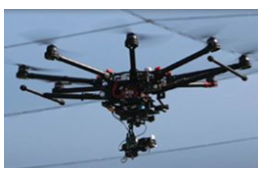
WICHITA, Kan. (AP) — Kansas is trying to position itself as an industry leader in the emerging field of unmanned aerial system.
The state is building on the framework already in place as an aviation manufacturing cluster and in its technology-driven agricultural sector. Major Kansas universities are doing cutting-edge research on drones and training the skilled workforce needed to support it.
On Thursday, industry and business leaders gathered in Wichita for a UAS summit that marked the culmination of a series of workshops this year on the use of the technology.
Joel Anderson, the development director at Kansas State University’s office, says the industry is going to have a huge impact in Kansas.
Part of that is driven by precision agriculture which uses data is used to pinpoint fertilizer and water needs within fields.
TOPEKA, Kan. (AP) — Gov. Sam Brownback says his administration is working on developing a new program to provide volunteer mentors to poor Kansas residents receiving social services from the state.
Brownback said Thursday that the discussions he’s having with Department for Children and Families officials are inspired by successes seen with programs that provide mentors for adult prison inmates and juvenile offenders.
The Republican governor had a Statehouse news conference to promote the mentoring programs and urge more Kansans to volunteer.
His news conference was the last of four events across the state this week with retiring Corrections Secretary Ray Roberts to promote programs aimed at helping ex-offenders succeed after they’re released from custody.
Brownback said he has no timetable for unveiling details of a new mentoring program for the poor.
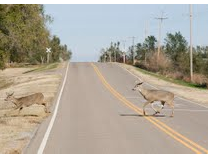
WICHITA, Kan. (AP) — Officials are warning drivers to watch for deer on the Kansas highways this fall.
The Wichita Eagle reports the state Department of Transportation and the Kansas Highway Patrol want drivers to know that car accidents involving deer become more prevalent in the fall.
The agencies said in a release that 15 percent of vehicle crashes last year were deer-related, and Sedgwick County had the most, with 422 deer-vehicle crashes in 2014.
Officials say if a deer jumps in front a car, it’s best to keep driving and avoid swerving, even if it means hitting the deer. KDOT also says to avoid a collision with deer in the first place, reduce speed in or around wooded areas and be watchful at dusk and dawn when deer are more active.
WASHINGTON (AP) — The government says there will be no benefit increase next year for millions of Social Security recipients, disabled veterans and federal retirees.
It’s just the third time in 40 years that benefits will remain flat. All three times have come since 2010.
The main reason for no increase next year is low gas prices.
By law, the annual cost-of-living adjustment — or COLA — is based on a government measure of inflation. The government said Thursday that inflation is being pulled down by lower gasoline prices.
The announcement will affect benefits for more than 70 million people — that’s more than one-fifth of the nation’s population.
The total includes almost 60 million retirees, disabled workers, spouses and children who get Social Security benefits.
SALINE COUNTY – A Kansas man was injured in an accident just after 4p.m. on Thursday in Saline County.
The Kansas Highway Patrol reported a 2004 Hyundai Santa Fe driven by Nickolaus W. Anderson, 27, Chapman, was westbound on Interstate 70 just west of Niles Road.
Several witnesses observed the SUV veer into the median and back across the passing and driving lanes, according to the KHP.
The vehicle ran off the roadway on the north side, traveled through a fence and overturned.
Anderson was transported to Salina Regional Health Center.
He was properly restrained at the time of the accident, according to the KHP.
HUTCHINSON – A Kansas man was busy in Reno County Court on Wednesday.
The judge read the charges in two new cases against Brandon Matthew Mounce, 37, Hutchinson, and they also discussed issues in a third case against him.
Mounce is charged in one case with two counts of failing to register as a sex offender because of a conviction for sexual assault in Dallas in 2007.
The second case involves aggravated failure to appear in court on charges of attempted aggravated arson.
He’s alleged to have set a pair of jeans on fire at Hutchinson Regional Medical Center on July 7, 2014.
His bond was set at $123,000 and he’s due back in court on November 18.
DOUGLAS COUNTY- A Kansas man was injured in an accident just before 2p.m. on Thursday in Douglas County.
The Kansas Highway Patrol reported a 2003 Yamaha driven by Gerald J. Jones, 67, Tecumseh, was traveling in the 2100 Block of East 150th Road three miles northwest of Lecompton
The motorcycle failed to negotiate a turn due to speed.
Jones was transported to Lawrence Memorial Hospital.
He was wearing a helmet and eye protection, according to the KHP.
OLATHE, Kan. (AP) — A suburban Kansas City man was sentenced to nearly 14 years in prison for the abuse death of a 3-year-old girl.
Johnson County authorities say 40-year-old Kham Khamchanh, of Shawnee, was sentenced Thursday in the January 2009 death of Yamarawit “Yami” Sahle of Merriam.
Yami was the daughter of Khamchanh’s then-girlfriend.
The Kansas City Star reports he admitted that he threw the girl to the floor five to 10 times. He also admitted that he had previously punched and slapped her several times.
As part of the plea agreement, Khamchanh was sentenced to the maximum of 13 years and nine months.
Bates served as bishop of the Great Bend Ward of the Church of Jesus Christ of Latter-day Saints. Langston was the Elders Quorum president and Young Men’s president, according to church officials.
Both men were pronounced dead at the scene around noon Tuesday after their Beechcraft 35 Bonanza went down near Greeley.
Jared Langston is survived by his wife and 2 children- photo from Langston gofundme page
Rebecca Proctor, executive director of the Kansas Organization of State Employees labor union, says the premium hike will hurt employees, who haven’t received a pay raise since 2009. CREDIT KHI NEWS SERVICE FILE PHOTO
Over the past year, Kansas has changed its state employee health plan so employees shoulder more of the cost burden while the cash-strapped state pays less.
State officials say the changes correct imbalances within the plan and shore up a reserve fund for the future.
But Rebecca Proctor, executive director of the Kansas Organization of State Employees labor union, said the cost shift will be hard to bear for employees who haven’t had an across-the-board pay raise since 2009.
“It used to be that a job working for the state was a good job,” Proctor said. “Maybe you didn’t earn as much as the private sector, but you had really good benefits and good working conditions. It’s not that way anymore.”
The state employee health plan is administered separately from the state general fund, but the state’s portion of the annual premiums come from the general fund.
State contribution fell in 2014
The state employee health plan, which includes thousands of workers at public colleges and universities as well as state agencies, is administered by the Kansas Department of Health and Environment.
But all changes must be approved by the five-person Health Care Commission, which is made up of the secretary of the Department of Administration, the Kansas insurance commissioner and three appointees who represent current state employees, retired state employees and the general public.
In August 2014, the commission unanimously approved an 8.5 percent decrease in what the state pays into the plan. Contributions from employees stayed the same.
“The reserve fund was significantly higher than the target reserves set by the actuary, so employee premiums were kept in check despite cost increases and the employer contributions were decreased,” KDHE spokeswoman Sara Belfry said in an email.
Sandy Praeger, a Republican who was insurance commissioner at the time, said she voted for the reduction as a member of the Health Care Commission because it looked like the state was on track to continue building its health plan reserves.
“It was certainly never intended to shift more responsibility onto the employees,” Praeger said.
But that’s what happened this year, after the reserves began to dwindle.
As it turned out, 2014 was a heavy year for state employee health care claims. That, coupled with the decreased state contributions, meant KDHE had to dip into the plan reserves more than in recent years to cover payments to health care providers.
According to Aon, a consulting group the state contracts with to analyze health care trends, claims are dropping back to forecasted levels in 2015. But KDHE’s health plan administrators cited 2014’s increased use and the dropping reserves as reasons to increase what employees now must contribute to the plan.
Former Kansas Insurance Commissioner Sandy Praeger says she voted in 2014 to reduce what the state pays into the plan but the reduction was not meant to shift more responsibility onto employees. CREDIT FILE PHOTO
They also recommended higher deductibles, a $5 increase in the office visit co-pays and increased premiums, especially for employees who also cover their spouse and children.
The family plans that cover dependents were changed to draw in an average of 37 percent more revenue from those employees. Employees in other plans saw smaller cost increases and even non-state employers, like the universities, were asked to pay more.
The only contributor to the health plan that was not asked to pay more was the state of Kansas.
Smoothing the ‘imbalances’
Minutes from the July 6 Health Care Commission meeting show that the recommendations were adopted 4-1, with the lone “no” vote coming from commissioner Steve Dechant, a Hutchinson resident who was appointed by former Democratic Gov. Mark Parkinson in 2009 to represent retired state employees.
Dechant said the projections made it clear the reserve was being spent down and the plan needed to be altered. He said there were “imbalances” in the plan that favored employees enrolled in high-deductible family plans, and those imbalances should be gradually smoothed out.
But he could not support the size of the cost increases levied on those plans this year.
“I did not vote for the plan this year, I voted against it,” Dechant said. “Not because I totally opposed it, but because I did not want to raise the employees’ (share) quite that much.”
Scott Day, a Topeka insurance agent appointed by Republican Gov. Sam Brownback to represent the general public on the Health Care Commission, voted for the plan.
He said the state was spending a lot on the family plans, which even after the premium hikes remain generous compared to what’s offered in other states.
“I was in support of raising what the family rates went to,” Day said. “We needed to get that more in line with other private and public plans.”
According to an April 2014 paper published by the American Enterprise Institute for Public Policy Research, Kansas public employees received more generous health benefits than similar private sector workers, but their total benefits package was not enough to offset a 19 percent deficit in wages.
The American Enterprise Institute, a conservative-leaning think tank, determined that Kansas state workers received 4 percent lower total compensation — wages and benefits — than their private sector counterparts, which tied them with Indiana workers for the nation’s largest deficit.
That was before the Health Care Commission approved the latest premium increases.
Sharing the pain
Praeger, whose term on the commission ended in January when she left office after serving three terms, said she would have been skeptical of shifting so much cost to the employees without increasing the state’s contribution at all.
“If (health care) costs are going up — and I don’t doubt that’s the case — there ought to be shared pain,” Praeger said. “Especially because we just reduced the state’s portion thinking we were OK in terms of reserves.”
But there’s little room in the general fund right now for the state to share in the pain.
Legislators took a record 114 days last session to pass a budget that barely balanced. In the early months of the fiscal year that started July 1, tax revenues have come in more than $60 million below projections, making the budget situation even more perilous.
Most legislative observers expect that when the state’s tax revenue estimators convene next month they will revise projections downward for the fourth straight time. If that happens, Brownback and legislators will be forced to balance the budget through spending cuts or additional transfers from the Kansas Department of Transportation.
With the changes approved by the Health Care Commission in the past year, the employers in the plan, including the state, still will be paying more than twice the amount paid by employees.
But the state and other employers will pay in about $25 million less in 2016. The recent changes will require employees to contribute $23 million more in 2016 than they did in 2014.
Keeping an eye on reserves
The reserve fund will continue to be depleted if health care costs continue to rise. KDHE’s Division of Health Care Finance’s 10-year projections assume that the reserves will be replenished through 27 percent increases in both the employee and employer contributions in 2017, but those increases have not been approved and are speculative.
The reserve fund is a trust fund that the governor is not authorized to sweep money from, even in dire budget times.
But Sen. Laura Kelly, a Democrat whose Topeka district includes many state employees, said that the administration’s recommendations still use the reserves to help balance the budget by reducing the state’s annual contribution.
“It appears that the state will use reserves instead of state general funds to cover some of the employer’s contributions in Plan Year (20)16, then use state general funds for Plan Years (20)17 and beyond,” Kelly said in an email. “One might suspect the fact that 2016 is an election year is driving the administration’s strategy for funding the state employee health plan.”
Spending down the health plan’s reserves means the state can hold on to general fund dollars and minimize the need for additional tax increases.
Proctor said she believes state workers are unfairly being asked to pay more because of budget crises that stem from a 2012 law that lowered income tax rates and exempted 300,000 businesses from paying any state income tax.
“I do think it’s just another example of where the working people in Kansas are being asked to foot the bill for tax breaks to business, and it’s not appropriate,” Proctor said.
Belfry said health care costs and health insurance premiums have risen nationwide since the federal Affordable Care Act was passed in 2010, and the state raised its contribution to employee health plans in 2010, 2011 and 2012.
“Higher premiums to the state, along with projected (spending) growth rates, have resulted in an increase in (employee) premium rates this year,” Belfry said.
But health care costs and premiums were rising long before the ACA , and this time the state is not sharing the increased cost burden.
Praeger said that’s short-term thinking.
“The more we shift those costs to individuals, the more likely it is they’re not going to be able to afford needed health care services,” Praeger said. “They’ll just delay. And ultimately if it develops into something serious, then it will be more costly for everyone, including the state.”
Andy Marso is a reporter for Heartland Health Monitor, a news collaboration focusing on health issues and their impact in Missouri and Kansas.
JEFFERSON COUNTY – A Kansas man injured in an accident just before 5a.m. on Monday in Jefferson County has died, according to the Kansas Highway Patrol.
A 2001 Hyundai Accent driven by Kyle Christopher Inscho, 25, Topeka, was traveling southbound on U.S. 59 five miles south of Oskaloosa.
The vehicle traveled off the roadway into west ditch, hit a tree, rolled onto its side and caught fire.
Inscho was transported to KU Medical Center and died of his injuries on Tuesday night.
He was not wearing a seat belt, according to the KHP.
HUTCHINSON – A record number of people attended the Kansas State Fair September 11-20 in Hutchinson.
The best-ever crowd also set new record for Midway revenue and Kansas Lottery ticket sales, according to a media release.
A Jackalope carved from a piece of wood with a chainsaw was one of the many highlights at this year’s fair- photo Kansas State Fair
The audited audience for 2015 was 369,322, beating the previous record, set in 1995, by more than 7,500 attendees. Mother Nature was definitely on the Fair’s side, delivering pleasant, cooperating weather throughout.
Pat Repp, of North American Midway, said the 2014 Fair set the record for largest Midway growth, and the 2015 Midway surpassed that with another 8.1 percent increase.
With the help of a strong Grandstand entertainment lineup and talented performers at the free stages, the Fair continued to attract crowds throughout the grounds. Pumpkin growers got in on the act, too. The largest-ever pumpkin weighed in at 1,034 pounds – so big the judges had to call in a special scale in order to confirm its victory.
The Kansas Lottery has been a presence at the Kansas State Fair since the first lottery ticket was sold, and this year provided the most excitement yet. Players visited the Lottery building in large numbers to buy $1 Fried N’ Joy instant scratch tickets and other lottery products, driving sales to a new record.
Inspired by the record turnout, the Kansas State fair has already planning for next year with the fair scheduled for Sept. 9 through 18, 2016.