We have a brand new updated website! Click here to check it out!

Private database lets police skirt license plate data limits

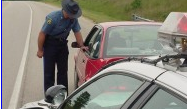
Police traffic stopTAMI ABDOLLAH, Associated Press

LONG BEACH, Calif. (AP) — For years, police nationwide have used patrol car-mounted scanners to automatically photograph and log the whereabouts of peoples’ cars, uploading the images into databases they’ve used to identify suspects in crimes from theft to murder.

Nowadays, they are also increasingly buying access to expansive databases run by private companies whose repo men and tow-truck drivers photograph license plates of vehicles every day.

Civil libertarians and lawmakers are raising concerns about the latest practice, arguing that there are few, if any, protections against abuse and that the private databases go back years at a time when agencies are limiting how long such information is stored.

Some argue police should get a warrant from a judge to access the databases, much as they would if they wanted to obtain emails.

“The public is understandably concerned about how this information is going to be used,” said Chuck Wexler, executive director of the Police Executive Research Forum, but for police, the databases, just like surveillance cameras, are an important investigative tool.

License plate scans have been at the forefront of a privacy debate in recent years.

The license plate reader companies say their scans are useless without access to motor vehicle department rolls — which police have. They say lawmakers should focus on strengthening data access laws, rather than eliminating police tools.

The largest firm, Livermore, California-based Vigilant Solutions, has filed a lawsuit or actively lobbied in at least 22 states and the District of Columbia for its technology, said Todd Hodnett, founder of Digital Recognition Network, which provides the data it collects to law enforcement through its sister company Vigilant.

He said as of June that roughly 30,000 law enforcement officers nationwide subscribe to their LEARN database.

Hodnett said when he tells legislators that the data his company gathers is protected, “I can’t tell you how many times I’ve heard legislators say this sounds like a solution in search of a problem.”

The plate readers can collect 1,600 plates an hour. Vigilant has collected scans since 2007 and has more than 3 billion license plates, growing at a rate of 100 million a month from every major metro area. There are roughly 254 million registered vehicles in the U.S.

Law enforcement agencies have acknowledged privacy concerns over how long they store scans — which includes a photo of the vehicle, its plate, and a GPS and time marker — and have voluntarily instituted policies to limit that storage.

The Long Beach, California, police have used the license plate technology since 2005 and in December signed on with Vigilant. The department retains its own scans for two years, primarily because of server space and funding, like many other agencies.

“If somebody has more (scans), why would we not look at it?” Lt. Chris Morgan said.

Departments with retention policies, however, are able to still use private databases, which keep their scans forever, calling up information they wouldn’t have access to otherwise. It is up to departments to activate any limits in the private database to prevent employee access.

“There needs to be a balance,” said Morgan, who calls the technology the department’s No. 1, go-to investigative tool. “It obviously adds value. We know there’s value there. We know that it’s something we don’t want to go away. Does it need to be regulated? Maybe.”

When state governments have tried to ban private license plate scan collection and use, for example in Utah, they’ve faced a lawsuit arguing that the law violated the First Amendment by preventing private companies from taking photos of publicly visible license plates.

They ultimately amended their law to only bar law enforcement from using the privately collected scans.

Civil libertarians say they are concerned that police can use the database to establish a detailed pattern about a person’s behaviors, habits and lifestyle, such as what mosque they frequent, strip club or gun store they shop at.

Requiring a warrant to access such databases “provides a little bit of oversight,” said Kade Crockford, director of the technology for liberty program at the ACLU of Massachusetts.

The roots of the license plate scanning business lie in the repossession world. DRN provides license-plate snapping cameras to tow trucks and repossession workers. Banks and insurance companies have used it to track down tens of thousands of vehicles that are no longer being paid for.

Vigilant this year stopped offering a limited free search to thousands of law enforcement agencies in hopes that they’ll sign on for a paid version. Vigilant won’t disclose client numbers or the value of its law enforcement contracts. A review by The Associated Press, however, of nearly a dozen publicly available contracts indicates a value well into the millions.

The Los Angeles County Sheriff’s Department, the nation’s largest sheriff’s department, is participating. For smaller departments, which can’t afford to build up their own databases, the sheer amount of data found in the Vigilant system can be a game changer.

The Fairfield, Connecticut, police department had few clues last year after a man wearing a hoodie grabbed a pregnant woman’s purse at a gas station and jumped into a car that dragged her along the road.

Though the department has its own data collected from a few cameras, nothing came up.

Police were able to use the Vigilant database to identify a car spotted less than a quarter mile from the crime scene. Officers were sent over, and an hour later pulled over a man wearing a hoodie and a woman, both of whom confessed to the crime.

“We’ve had tremendous success with it,” said Deputy Chief Chris Lyddy. “Usually I first go to the private data if I’m looking for somebody.”

KSU launches $1B fundraising campaign

The Manhattan campus was lit up in purple last night in honor of KSU Foundation's new billion dollar campaign- photo KSU Foundation
The KSU Manhattan campus was lit up in purple last night in honor of KSU Foundation’s new billion dollar campaign- photo KSU Foundation

MANHATTAN— Before hundreds of purple-clad supporters, Kansas State University President Kirk Schulz on Friday night announced the most ambitious fundraising campaign in university history.

“The journey toward our 2025 vision takes another huge step forward tonightwith the public launch of the Innovation and Inspiration Campaign” Schulz said. “The tremendous generosity of alumni and friends who believe in Kansas State University’s future is truly the foundation for our success and the inspiration for this historic campaign.”

Innovation and Inspiration will raise $1 billion to drive Kansas State University toward its strategic vision to become a Top 50 public research university by 2025. The campaign will grow the university’s endowment, providing resources to improve student retention and graduation rates, invest in faculty development and launch new research endeavors — all key initiatives of the K-State 2025 strategic plan. In the five years leading up to the Oct. 9 public announcement, alumni, friends and corporations invested more than $766 million in the university through the Innovation and Inspiration Campaign.

“K-State is a family, and nothing demonstrates that more than the way our supporters have rallied around this campaign,” said Greg Willems president and CEO of the Kansas State University Foundation. “This is a momentous occasion for K-Staters to unite and create a bright future for the university we love.”

The Innovation and Inspiration Campaign will drive investment in scholarships, faculty, facilities and programs. It is co-chaired by Rand and Patti Berney,McKinney, Texas, and Richard and Mary Jo Myers, Arlington, Virginia.

“It is an honor to provide leadership for K-State during this critical moment in the university’s history,” said Rand Berney, a 1977 K-State graduate. “Through generous gifts from the K-State family, the Innovation and Inspiration Campaign is making significant progress toward the goals of K-State 2025 and driving the university forward to a prosperous, sustainable future.”

Retired Air Force Gen. Richard Myers, a 1965 Kansas State University graduate and former chairman of the Joint Chiefs of Staff, noted the campaign supports the university’s land-grant mission.

“Because of its land-grant heritage, K-State has a long history of extraordinary student experiences, innovative research and academics, plus a solid record of significant achievements,” Myers said. “The Innovation and Inspiration Campaign will provide the means to expand outreach and make a college education more accessible, which are hallmarks of a university like K-State.”

The KSU Foundation is leading Innovation and Inspiration: The Campaign for Kansas State University to raise $1 billion for student success, faculty development, facility enhancement and programmatic excellence.

Kan. man hospitalized after Yamaha hits a Chevy

Motorcycle smallWICHITA – A Kansas man was injured in an accident just before 7p.m. on Saturday in Sedgwick County.

The Kansas Highway Patrol reported a 2003 Yamaha motorcycle driven by Cory M. Ballard, 19, Whitewater, was northbound Greenwich Road at 101st Street North

The motorcycle struck a 2005 Chevy Impala that was eastbound 101st Street North.

Ballard was transported to Wesley Medical Center.

The driver of the Impala was not injured.

Ballard was wearing a helmet, according to the KHP.

Kansas judge eases back into work after football injury

ELLSWORTH, Kan. (AP) — A central Kansas judge is done volunteering at high school football games after suffering a concussion last month.

The Salina Journal reports that 73-year-old Ron Svaty got caught up in a play while working the chains during a Sept. 11 game between Beloit and Ellsworth. The Ellsworth County District Court judge says his head hit a concrete barrier on the track when he fell backward. He was unconscious for several minutes.

Svaty took some time off work to recover. He says he’s been trying to transition slowly from patient back to judge.

Svaty says in the years that he was a high school football player, he never suffered a concussion. That meant his recent injury was his first experience with the dizziness, nausea and memory loss they can cause.

43-year-old Kan. man fatally shot after an argument

.PoliceTOPEKA, Kan. (AP) — Authorities say a Topeka man has been fatally shot after an argument.

Topeka police said in a news release that the victim was 43-year-old Keith Leon Reed. Officers responded around 12:30 p.m. Saturday and found him wounded. The release said he was taken to a hospital, where he died about an hour later.

Police said the shooting followed an argument. No other information was immediately available.

2 Kan. teens, child hospitalized after collision

ELLSWORTH- Four people were injured in an accident just after 2p.m. on Saturday in Ellsworth County.

The Kansas Highway Patrol reported a 2007 Toyota Camry driven by Alan C. Rice, 16, Ellsworth, was westbound on Kansas 140 just west of the Kansas 156 Junction.

The driver failed to yield and made an unsafe left turn in front of a 1995 Honda Prelude driven by Dania O. Gonzalez, 16, Wichita, that was eastbound on Kansas 140

Rice, Gonzalez, and passengers in the Honda Candelaria Navarrete-Barron, 44, and a 6-year-old both of Wichita were transported to Ellsworth County Medical Center.

All were properly restrained at the time of the accident, according to the KHP.


Kan. motorcyclist dies after leading police on pursuit

chase police

TOPEKA, Kan. (AP) — Topeka police say a fleeing motorcyclist has died after colliding with a pole.

The Topeka Capital-Journal reports that the crash happened late Friday night. Police Lt. Joe Perry said in a news release that the motorcyclist who was killed was 42-year-old Joseph A. Thomas.

Police attempted to stop Thomas at 10:26 p.m. for a turn violation. He sped away, initiating a pursuit. But after just a minute, officers terminated the chase as Thomas passed Interstate 70 northbound, driving over 80 mph.

Perry says that soon afterward, officers discovered the motorcycle had collided with a light pole. Thomas was transported to a hospital, where emergency room doctors declared him dead at 10:59 p.m.

Affidavit: Suspects in Kan. killing had wrong address

Jacob Daniel Strouse-- Kan. Dept. of Corrections
Jacob Daniel Strouse– Kan. Dept. of Corrections

WICHITA, Kan. (AP) — A newly released affidavit says two homicide suspects apparently were at the wrong house when a 66-year-old Wichita woman was killed.

The Wichita Eagle reports that Jacob Strouse and Brittany McDay are charged in the September death of Jacquelyn Harvey. The affidavit says Strouse’s girlfriend told police that Strouse went to collect money at a house on the same block as Harvey’s. She says he shot Harvey before realizing he was at the wrong house.

The affidavit says a friend of McDay’s told police that McDay was standing outside the house when she heard a shot.

Harvey’s son found her dead the next morning, when he was dropping off his son so Harvey could take the boy to school.

It wasn’t immediately clear if Strouse or McDay had attorneys.

Kansas student $10K richer after Late Night in the Phog

Martin celebrates- photo Jeff Jacobsen University of Kansas Athletics

LAWRENCE, Kan. (AP) — A half-court basket has made a Kansas Jayhawks fan $10,000 richer.

The Lawrence Journal-World reports that Brennan Bechard, a former Jayhawk and the team’s current director of basketball operations, made the shot Friday night during the latest edition of Late Night in the Phog. The basket won Kansas sophomore Jerrod Martin a $10,000 personal check from head coach Bill Self. In the contest, fans got to choose someone to shoot for them.

The evening of entertainment kicks off the start of the 2015-16 season. The festivities also included speeches, a lip-sync competition and dance performances by members of the men’s and women’s teams. Fans also got a chance to watch the players scrimmage.

Moran introduces legislation to train medics as physician assistants for VA

va-logo

Office of Sen. Jerry Moran

WASHINGTON, DC–U.S. Senator Jerry Moran (R-Kan.), member of the Senate Veterans’ Affairs Committee, introduced legislation this week to increase the number of health professionals serving veterans at the Department of Veterans Affairs (VA). Sen. Moran’s bill, introduced with U.S. Sen. Jon Tester (D-Mont.), will provide veterans who served as medics in the armed forces with the opportunity to attain the education and training needed to become a physician assistant.

“I am proud to introduce this initiative to support the servicemen and women who are transitioning back to civilian life,” Sen. Moran said. “The GOOD Pilot Program would allow veterans who have served their country and fellow service members as medics to leverage their unique skills and training to further their careers. It would also help to make certain their fellow veterans have greater access to timely, quality care.”

Currently, veterans who served as medics have the opportunity to work at the VA through the Intermediate Care Technicians (ICT) Pilot Program, but they do not receive the additional training they need to advance their careers at the VA.

Sen. Moran’s bill would authorize the Grow Our Own Directive (GOOD) Pilot Program for five years to advance training and education opportunities for participants of the ICT program, individuals who agree to work in VA facilities in underserved states, and former service members with military health experience. Once veterans are certified as physician assistants, they would be required to work at the VA for at least three years. Additionally, this bill would require the VA to establish competitive pay for physician assistants employed by the department.

Physician assistants are one of the most in-demand positions at the VA. In September, USA Today reported that there is a 23 percent vacancy rate at the VA for physician assistants. According to the Veterans Affairs Physicians Assistants Association, there are an estimated 30,000 open physician assistant positions in the United States, making it difficult for the VA to recruit and retain physician assistants.

This bill is endorsed by the Veteran Affairs Physician Assistant Association, the American Academy of Physician Assistants, the Blinded Veterans Association, Vietnam Veterans of America, the American Federation of Government Employees, and the National Guard Association of the United States (NGAUS).

“Ready access to quality patient care is among the most critical issues facing our nation’s veterans at VA healthcare facilities. We are thrilled that Senators Tester and Moran have sponsored legislation to increase the PA workforce, while creating a pathway for veterans to be educated in this critical healthcare profession. This creative model, along with needed policy improvements, holds great promise for the recruitment and retention of PAs at the VA,” said Jennifer L. Dorn CEO of the American Academy of Physician Assistants.

To read the full text of Sen. Moran’s bill, click here.

SW Kan. man hospitalized after driver fails to yield

Screen Shot 2014-07-03 at 5.13.15 AMENSIGN – A Kansas man was injured in an accident just after 8:30a.m. on Saturday in Gray County.

The Kansas Highway Patrol reported a 2000 Ford SUV driven by James Robert Miller, 29, Cimarron, was traveling southeast on county road Y.

The vehicle failed to yield at the stop sign and struck a 2008 Dodge Sedan driven by Rick Sena, 48, Kismet, that was eastbound on U.S. 56.

Sena was transported to Western Plains Regional Medical Center.

Miller was not injured.

Both drivers were properly restrained a the time of the accident, according to the KHP.

Western U.S. water leaders gather in Manhattan

Kansas Department of Agriculture
WSWC_Logo_Banner
MANHATTAN–Water leaders from across the western United States convened in Manhattan this week for the fall meetings of the Western States Water Council. During the 3.5 days of meetings, the organization, which consists of leaders from state government, federal government representatives, and industry, held policy-related business meetings and educational sessions. The group also had the opportunity to tour Kansas’ largest lake, Milford Reservoir.

Established in 1965, the WSWC seeks to provide a platform for cooperation among western states on water-related issues and analysis of state and federal laws and regulations while maintaining individual state priorities.

“Conserving water resources and providing water users across Kansas with innovative water development and management tools is a top priority. But water issues do not stop at our state’s borders, and participation in groups like the WSWC allows us to better cooperate with our partners in the western United States,” said Kansas Secretary of Agriculture Jackie McClaskey in a news release. “As federal laws and regulations become more complex, and sometimes overly burdensome, and as demands increase on water supplies, it is important to understand the challenges our neighboring states may face and also find areas of common agreement where we can work together.”

A significant portion of the fall meeting was spent developing a better understanding of the nexus between water quality and water quantity issues. Kansas Water Office Director Tracy Streeter said as Kansas and our partners throughout the western United States advance conservation, management and development priorities for water resources, focus must be put on water quality as well as water quantity. Pointing to specific policy initiatives and water project initiatives, Streeter highlighted how Kansas works to balance the issues.

“Reduction of sediment and nutrient runoff into our reservoirs is the cornerstone of our efforts to protect our water supply storage and reduce the occurrence of harmful blue-green algae outbreaks,” said Streeter. “There are many strategies in the Water Vision to address sediment such as increasing stream bank stabilization, riparian area restoration and encouraging filter strips above the reservoirs to reduce the sediment and nutrient impacts.”

On Wednesday, Oct. 7, the WSWC group traveled to the Milford Reservoir, which provides water resources for flood control, navigation, recreation and fish and wildlife. The reservoir also provides water supply to communities and industry in northeast Kansas. Like other Kansas reservoirs, Milford Reservoir has lost capacity due to sedimentation, which has had a compounding effect of increased outbreaks of harmful algae blooms. The group also toured the Milford Fish Hatchery, one of only a few warm water, intensive-culture fish hatcheries in the country.

During subcommittee meetings, WSWC members heard from federal officials, including Shaun McGrath, Environmental Protection Agency Region 8 administrator. Administrator McGrath will provide an update on EPA issues during the final day of the WSWC meeting, but EPA’s Waters of the United States Rule, including discussions related to the multiple lawsuits filed over the rule as well as implementation guidelines, was a topic during multiple subcommittee meetings. In addition to the EPA, representatives from agencies within the U.S. Department of Agriculture and U.S. Department of the Interior provided updates on issues ranging from drought response, the Endangered Species Act, water transfers, tribal water rights and more.

For more information about the WSWC, visit https://www.westernstateswater.org/.

Former Kan. special ed teacher pleads guilty to battering student

courtPITTSBURG, Kan. (AP) — A southeast Kansas special education teacher has pleaded guilty to misdemeanor battery involving a 15-year-old boy who has cerebral palsy, is blind and confined to a wheelchair.

The Pittsburg Morning Sun reports Matthew Ward DeMoss was sentenced Thursday to three months in jail for the Jan. 15 incident in Pittsburg. The sentence was suspended and DeMoss was placed on unsupervised probation for a year and ordered to write a letter of apology to the victim.

The boy’s mother says DeMoss grabbed her son by the nose and screamed at the child, who could not defend himself.

DeMoss was allowed to resign his position with SEK Interlocal 637 after he was charged earlier this year.

The Kansas Department of Education says DeMoss still holds a valid teaching certificate in the state.

Copyright Eagle Radio | FCC Public Files | EEO Public File